
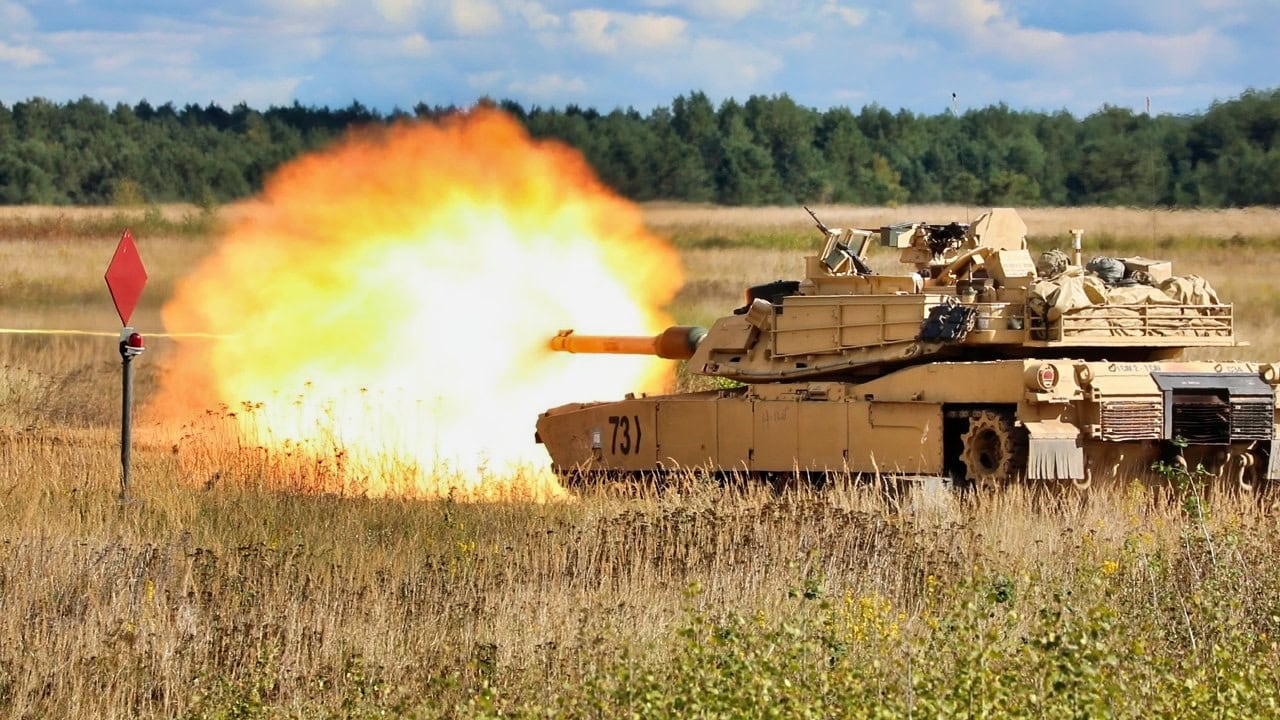
In recent years, major powers worldwide have been unveiling their next-generation Main Battle Tanks (MBTs). The Challenger 3 is the UK’s upcoming next-gen MBT. Built upon the proven Challenger 2 platform, the Challenger 3 incorporates a completely new turret design with state-of-the-art sights and sensors for enhanced situational awareness.
Meanwhile, in the United States, the M1A2 SEPv3 currently forms the backbone of the U.S. Army’s tank forces. Although the M1E3 is under development, it is not expected to enter operational service until 2027 or 2028, if not later.
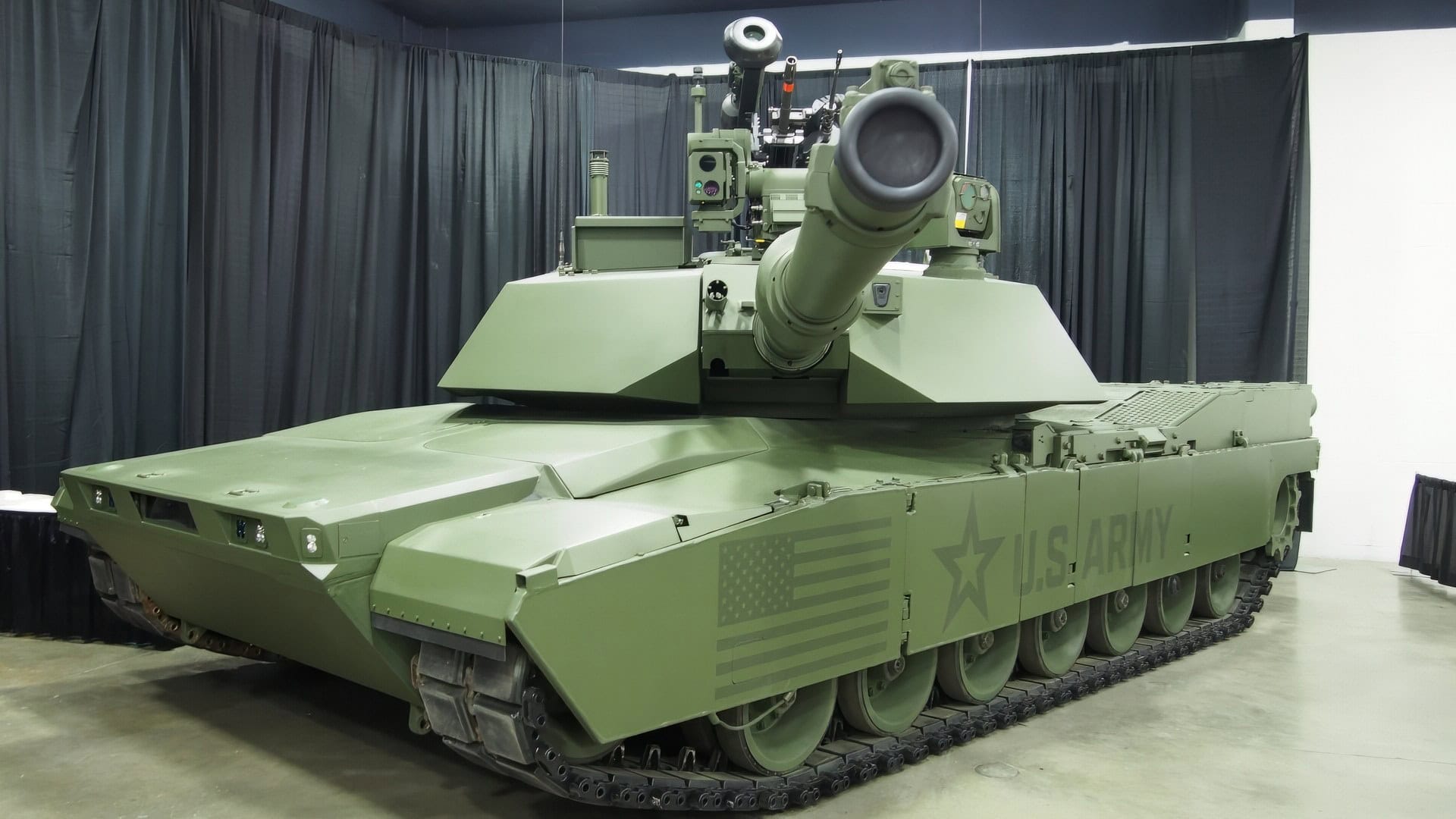
Photo taken on 1/17/2026 of the M1E3 Tank at the Detroit Auto Show. Image by 19FortyFive, All Rights Reserved.
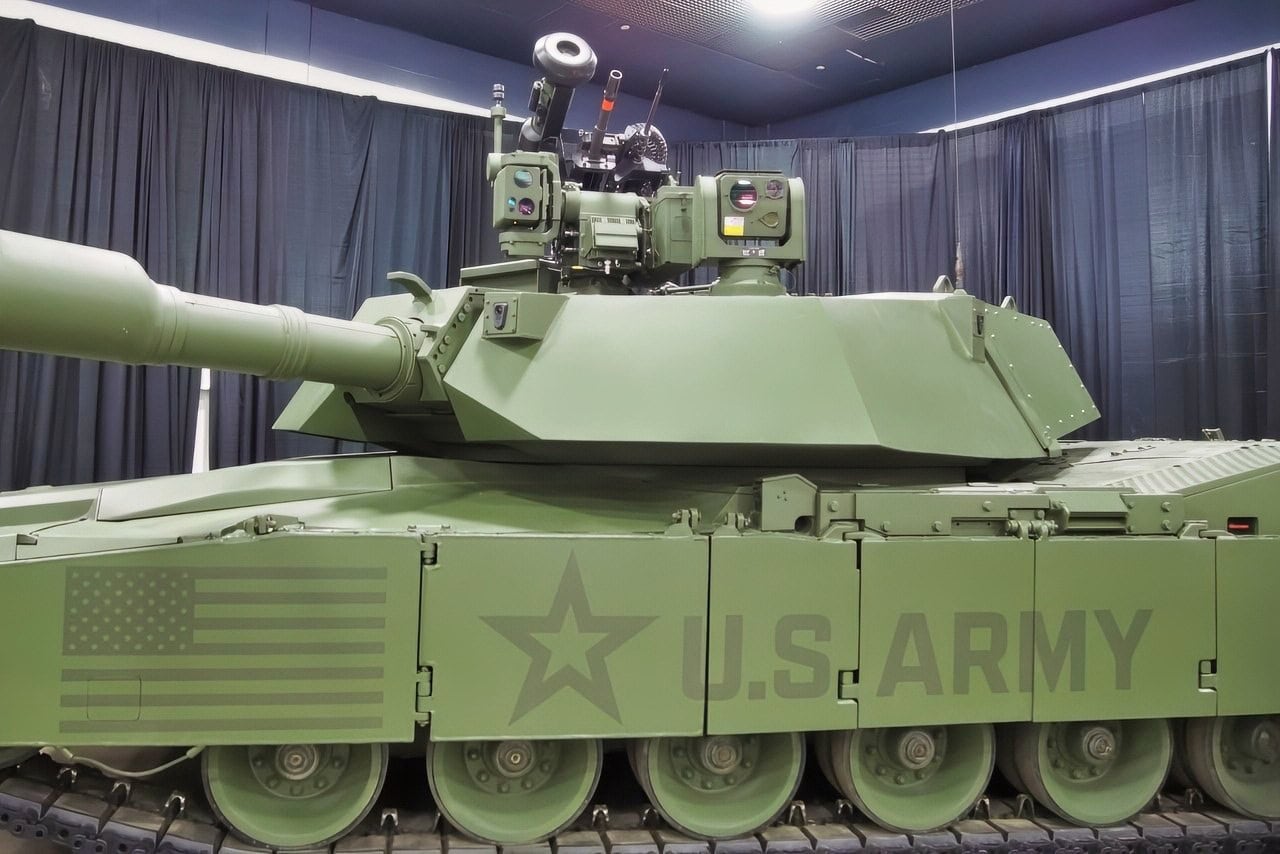
M1E3 from the Detroit Auto Show. Taken by 19FortyFive.com on 1/17/2026.
So, how does the SEPv3 compare to Britain’s new Challenger 3?
The Challenger 3 vs the SEPv3
The Challenger 3 grew out of the Challenger 2 Life Extension Program (LEP), which originally sought to extend the Challenger 2’s service life to the 2030s.
The program was then expanded to overhaul the tank almost completely, making it an entirely new beast.
The Challenger 3 sports a completely redesigned turret, a new gun, better armor, an improved engine, reworked suspension, and much more.
The program was conceived to address the lack of modernization efforts for the Challenger 2, which allowed the tank to stagnate and fall behind some of its NATO contemporaries.
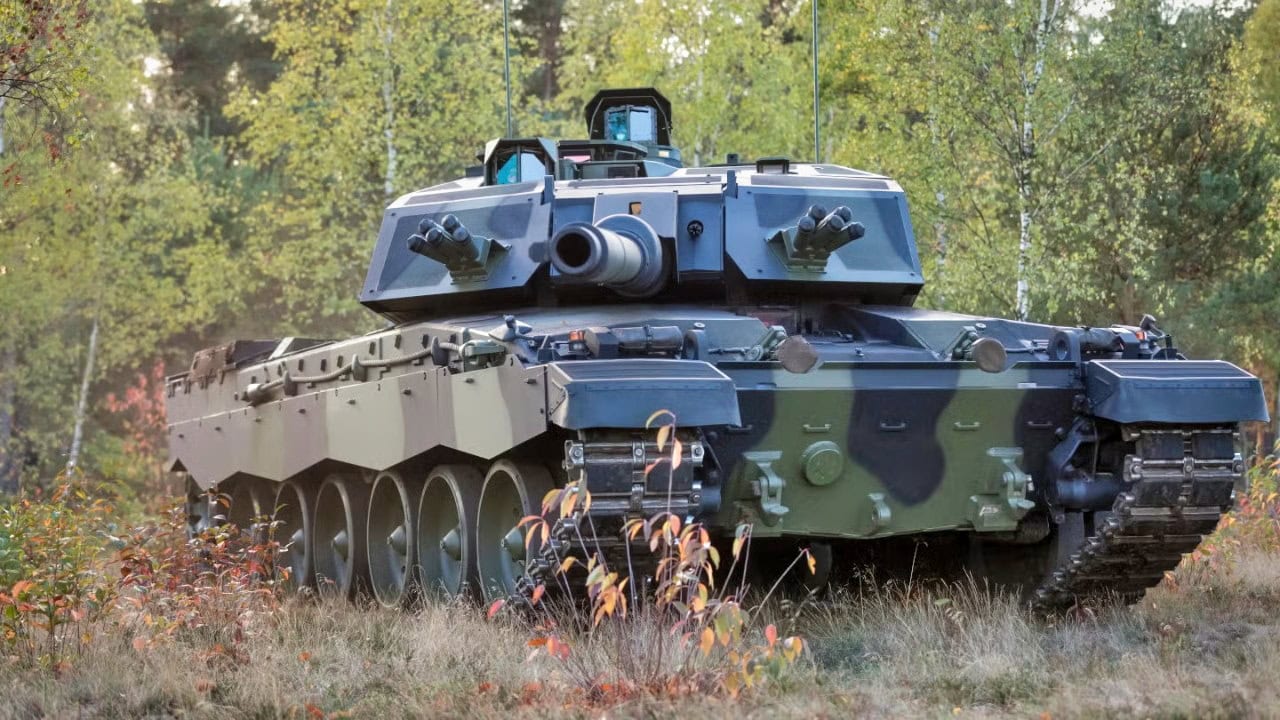
Challenger 3 Tank. Image Credit: Creative Commons.
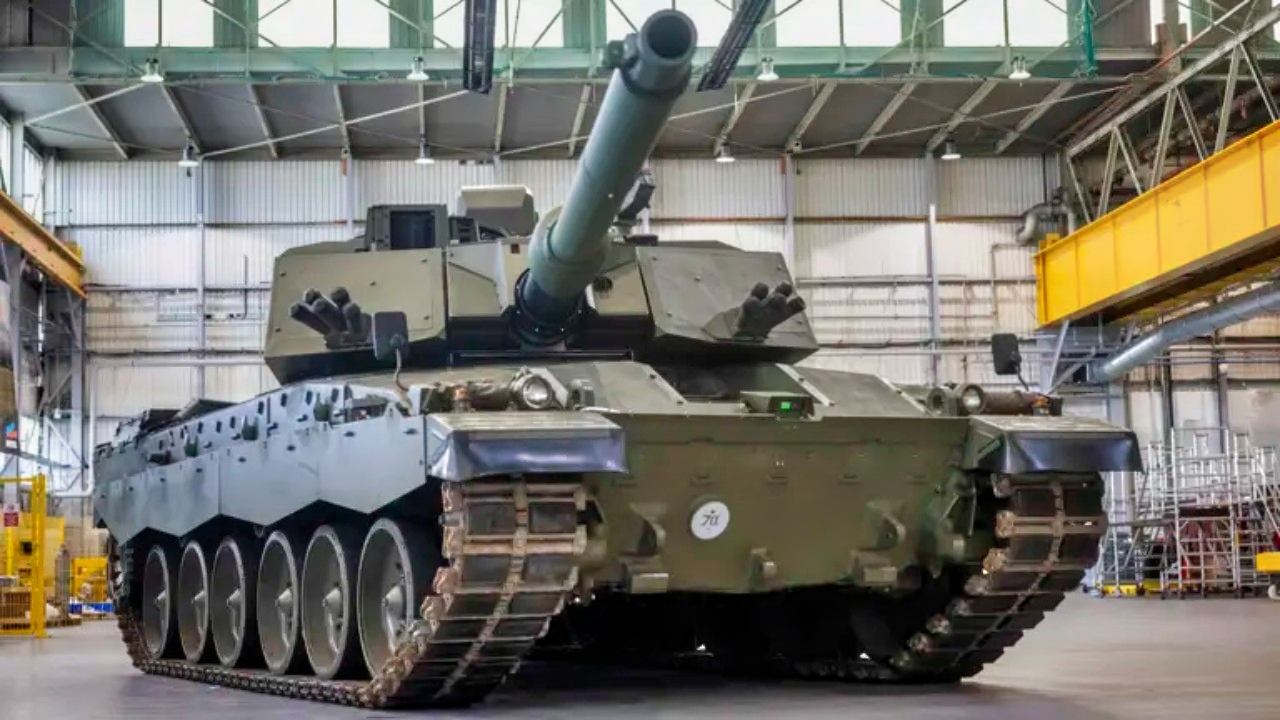
Challenger 3 Tank. Image Credit: Creative Commons.
The Challenger 3 is the UK’s solution to that problem and is expected to become the new backbone of the Royal Army’s tank forces.
The M1A2 SEPv3, by contrast, is the culmination of decades’ worth of Abrams upgrades and modernization efforts.
Since its introduction in the 1980s, Americans have gradually improved the tank’s capabilities by replacing its electronics and augmenting its armor.
The Systems Enhancement Package (SEP) was first introduced in the late 90s and improved the Abrams’ survivability and situational awareness, with other SEP variants following in the 2000s.
The SEPv3 builds upon its predecessors and is perhaps one of the most comprehensive Abrams upgrade packages.
Many M1A2 upgrades, especially after the 9/11 attacks, focused on improving performance in urban environments against irregular insurgents, but make no mistake: the Abrams remains highly effective against conventional adversaries.
Protection and Firepower
Both tanks feature advanced composite armor for protection against shaped charges and kinetic penetrators.
The Challenger 3 is reportedly equipped with next-generation “Farnham” armor along with external modular armor for enhanced survivability.
The tank will also have the option to receive an Active Protection System (APS), which many suspect will be a version of the Rafale Trophy system or perhaps the ROSY or the Iron Fist systems.
When it comes to survivability, the M1 Abrams is a tough opponent to beat.
Previous upgrades introduced next-generation depleted uranium armor, while the SEPv3 introduced new counter-IED armor packages along with new mountings for Abrams Reactive Armor Tile (ARAT) Explosive Reactive Armor (ERA).
Firepower on the SEPv3 remains unchanged aside from further improvements to its fire-control systems (FCS). The Challenger 3, by contrast, receives an entirely new gun.
Its predecessor carried a rifled L30A1, which provided decent accuracy (the notion that rifled guns are more accurate than smoothbore guns is a myth) but required more maintenance because it wore out faster.
Now, the Challenger 3 is equipped with a Rheinmetall L55A1 smoothbore gun, which not only increases longevity but also improves range, accuracy, and power.
Interestingly, the tank does not appear to have a roof-mounted Remote Weapons Station (RWS) like the SEPv3, though that may change when the Challenger finally enters full-scale production.
Mobility and Onboard Systems
Mobility has always been a strong point of the Abrams family.
Despite its massive size and weight, the tank can reach 72 km/h on paved roads, making it one of the world’s fastest MBTs.
However, the Honeywell AGT1500 gas turbine is somewhat of a double-edged sword.
Although it provides enough horsepower to propel the Abrams at breakneck speeds, it is notoriously fuel-hungry and requires a decent amount of maintenance (though some tankers insist the gas turbine is not as bad as some people make it out to be).
The Challenger 3, meanwhile, is equipped with an improved Perkins CV12-9A V12 diesel engine.
Its exact specs are still classified, but it reportedly provides a much better power-to-weight ratio and is more energy-efficient.
The Challenger 3’s reduced weight also improves mobility, down from 75 metric tons to 66 metric tons (granted, the tank has yet to receive all its armor modules).
Both tanks have sophisticated sensors and onboard digital systems.
The SEPv3, in particular, is equipped with newer communications and networking equipment, along with a significantly improved FCS and ammunition datalinks.
Complementing these systems is a series of sights for both the commander and gunner, which massively improves situational awareness.
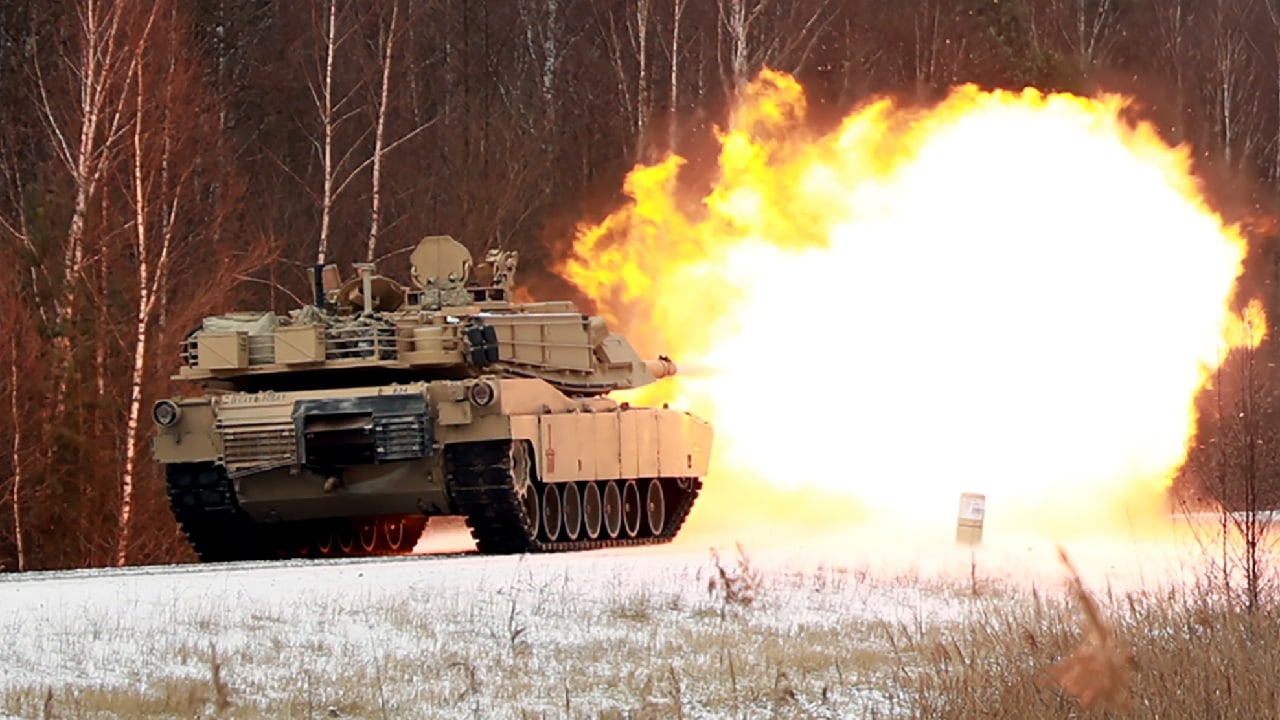
M1 Abrams Tanks for Ukraine. Image: Creative Commons.
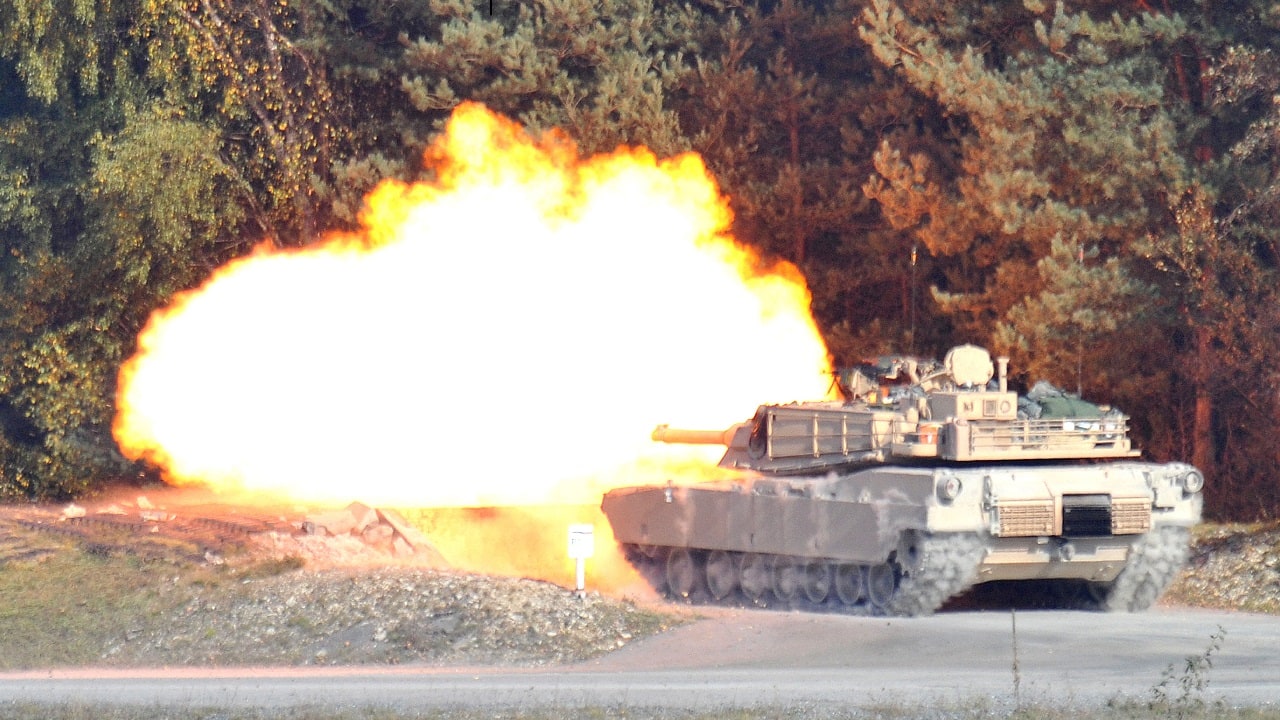
M1 Abrams. Image Credit: Creative Commons.
The tank has next-generation Forward-Looking Infrared (FLIR) technology, and the CROWS weapon station has multiple wide-FOV cameras.
Meanwhile, the Challenger 3 also places great emphasis on its digital backbone and situational awareness.
Although most of its new systems are highly classified, both the commander and gunner have next-generation thermal imagers, and the system architecture has been completely overhauled in favor of new digital systems.
Again, most of these systems are classified, but the Challenger 3 likely has excellent situational awareness and onboard computer systems.
Is One Tank Better?
The SEPv3 and the Challenger 3 are both excellent tanks.
The Abrams has excellent armor, mobility, firepower, and onboard systems; as does the Challenger. However, the Abrams has several drawbacks.
It is exceptionally heavy and maintenance-intensive, whereas the Challenger 3, having not yet entered service, has not had enough time in the field to identify its major areas of concern.
The Abrams has had decades to evolve and mature, while the Challenger 3 is from a much younger lineage and hasn’t even reached full-scale production.
Describing one tank as “better,” in my opinion, is a fool’s errand.
One could argue that the Challenger 3 is better because of its lighter weight or its digital systems, or whatever, but in the hands of the right crew, either tank could easily beat the other.
About the Author: Isaac Seitz
Isaac Seitz, a Defense Columnist, graduated from Patrick Henry College’s Strategic Intelligence and National Security program. He has also studied Russian at Middlebury Language Schools and has worked as an intelligence Analyst in the private sector.