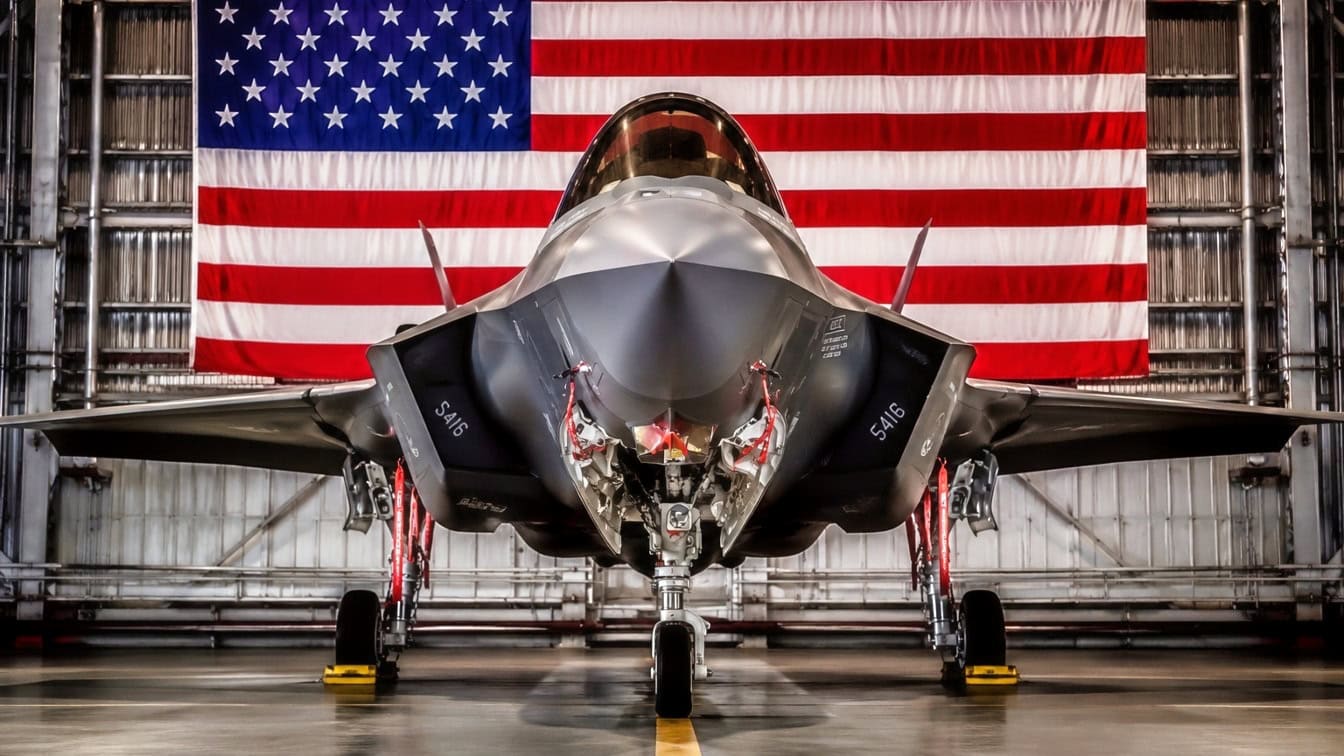
On September 16, two F-35s touched down in Greenland. The newsworthy part of this story is that the jets are owned by Denmark, not the U.S.
The landing at Kangerlussuaq Airport marked the inaugural arrival of Denmark’s shiny, new fighter on a Greenlandic runway following a multinational training mission.
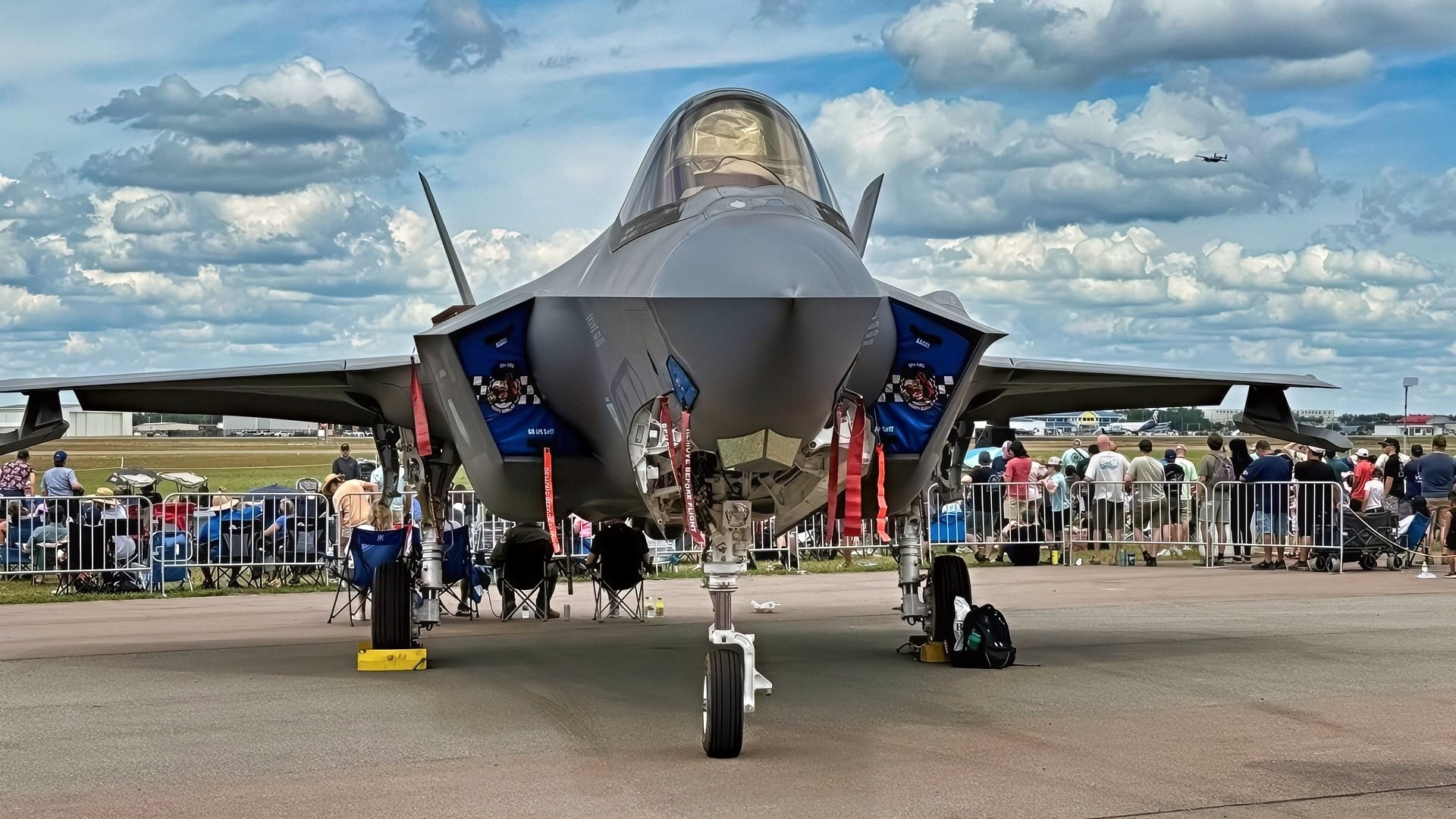
F-35 Fun and Sun Lakeland 19FortyFive.com Photo Taken on 4/19/2026
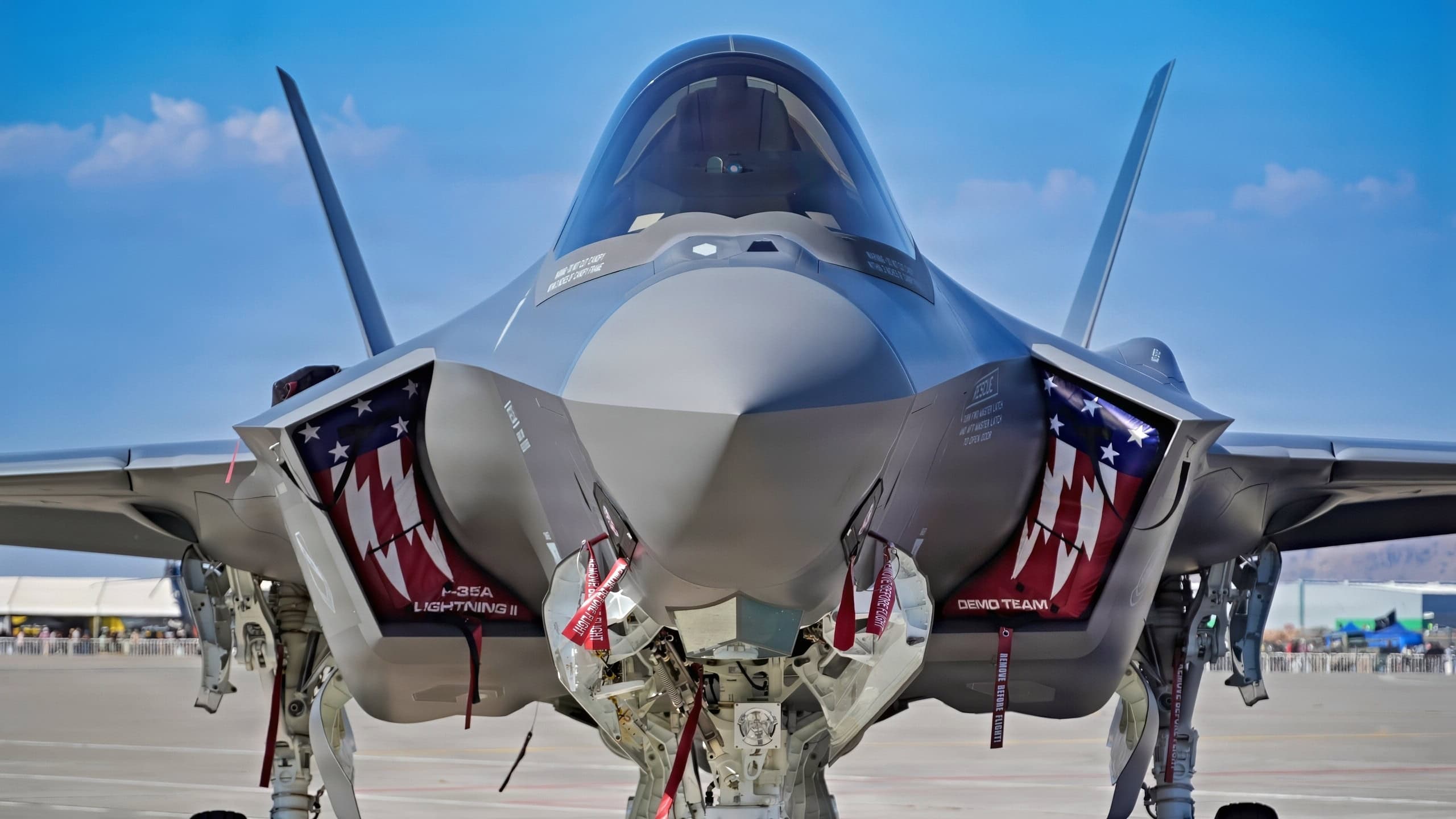
An F-35A Lightning II from the 388th Fighter Wing on display on a taxiway during Feria Internacional del Aire y del Espacio (FIDAE) in Santiago, Chile, April 11, 2026. The F-35A Lightning II is a fifth-generation multirole fighter designed for air superiority and precision strike missions. (U.S. Air Force photo by Staff Sgt. Derek Gutierrez)
The F-35As trained with four U.S. F-16s and two Canadian CF-18s.
The aircraft had traveled from Iceland’s Keflavik Air Base.
Meanwhile, American and Canadian aircraft flew from Goose Bay, Canada.
A French A330 Multi Role Tanker Transport refueled the Danish F-35s, a NATO AWACS aircraft watched and coordinated the airspace, and a Danish Challenger was on hand to offer search-and-rescue cover.
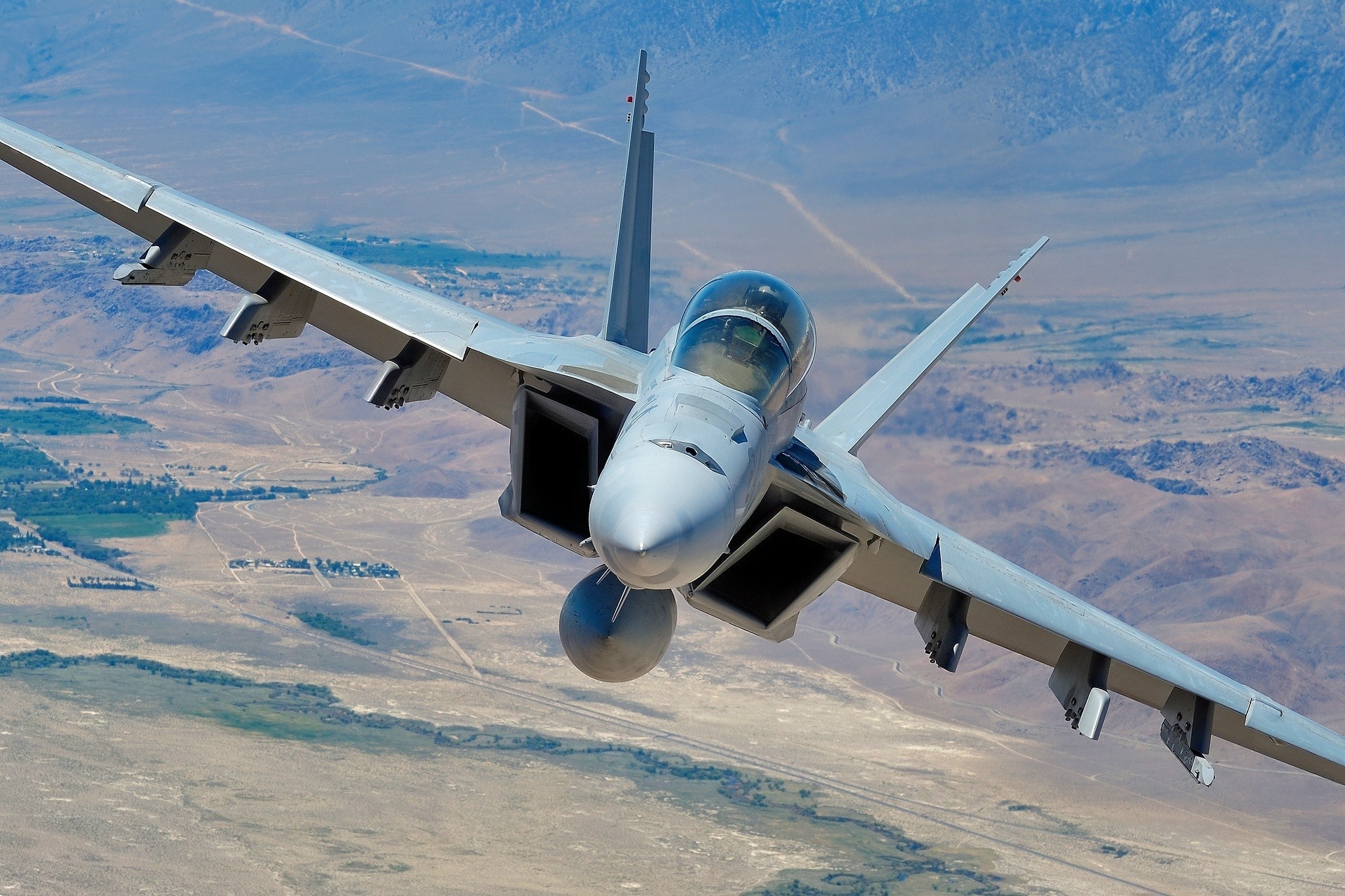
CF-18 Canada. Image Credit: Creative Commons.
Aerotime translated a quote from an unnamed Danish pilot that noted: “There are many cogs in motion for an operation like this to be carried out safely and as planned.”
The Importance of Greenland
This visit was not for appearances alone, but also concrete practice for defense and combat in a tricky region.
Greenland’s harsh weather and geography mean that there are slim opportunities to divert. Weather conditions in and around the island, which has the world’s second-largest ice sheet, can rapidly deteriorate.
Danish F-16s had operated from Kangerlussuaq before Denmark retired the type back in January, meaning that the F-35A is now its only fighter.
Its F-35s had also patrolled Greenland’s east coast from Iceland, but none had actually landed on the island.
The U.S. elements operated under Operation Arctic Vanguard, a joint multinational air defense initiative directed by NORAD (North American Aerospace Defense Command) and U.S. Northern Command. “Operation Arctic Vanguard demonstrates that austere conditions and vast distances present no barrier to NORAD’s collective defense,” said Air Force Lt. Gen. Robert D. Davis, commander of the Alaskan NORAD Region.
Six days before the landing, the Danish military said 400-plus troops from 11 NATO countries were training on land, at sea, and in the air around southern Greenland as part of Arctic Shield 2026.
Danish Chief of Defense Gen. Michael Hyldgaard said: “It is clear that the nations want to be here. They regard the exercise as important and are seizing the opportunity to show that we are united in this task. There is also excellent cooperation with both the local authorities and the public.”
Last year, Copenhagen made a combined pledge of more than 88 billion Danish kroner, the equivalent of around $13.7 billion toward defense, including in the Arctic.
This funding will cover a pair of Boeing P-8A Poseidon patrol aircraft, along with maritime-surveillance drones.
Both activities sit under Arctic Sentry, the NATO enhanced vigilance activity launched in February and directed by Joint Force Command Norfolk.
NATO said it was created to “bolster security in the Arctic and High North” as Russia increases military activity and China’s interest in the region expands.
Tensions are rising far beyond Greenland’s chilly shores, however.
Just two days before the Greenland flight, Denmark reported a Russian frigate fired two flares at one of its Fennec helicopters that had been photographing it in international waters.
One came within “a matter of meters” of the aircraft, according to Defense Minister Jeppe Bruus.
Prime Minister Mette Frederiksen complained that Russia was aiming to “sow fear and discord,” while Moscow claimed that the Danish helicopter had conducted “dangerous maneuvers.”
Earlier this year, Denmark expanded military conscription to include women and increased its service period from four to eleven months amid rising fears of conflict. In March 2025, the European Union advised its 450 million residents to keep at least 72 hours’ worth of food, water, medicine, cash and emergency supplies.
A New Agreement
On September 22, Denmark, Greenland, and the United States will sign a new security agreement concerning Greenland.
At the time of writing, the precise text of the agreement has not been published.
President Donald Trump, who earlier this year controversially expressed interest in acquiring the territory, said the deal offers Washington “permanent control” over the territory’s security and “all other needs.” Copenhagen’s Foreign Minister Lars Løkke Rasmussen stated that these responsibilities would not rest on Danish or American work alone, as NATO as a whole also “looks after the Arctic.”
An anonymous NATO representative said that the agreement would encourage “security, stability and cooperation” in the Arctic. Greenland’s Prime Minister Jens-Frederik Nielsen stressed that it “recognizes the sovereignty and territorial integrity of our Kingdom and the right of the Greenlandic people to self-determination.”
About the Author: Georgia Gilholy
Georgia Gilholy is a journalist based in the United Kingdom who has been published in Newsweek, The Times of Israel, and the Spectator. Gilholy writes about international politics, culture, and education.