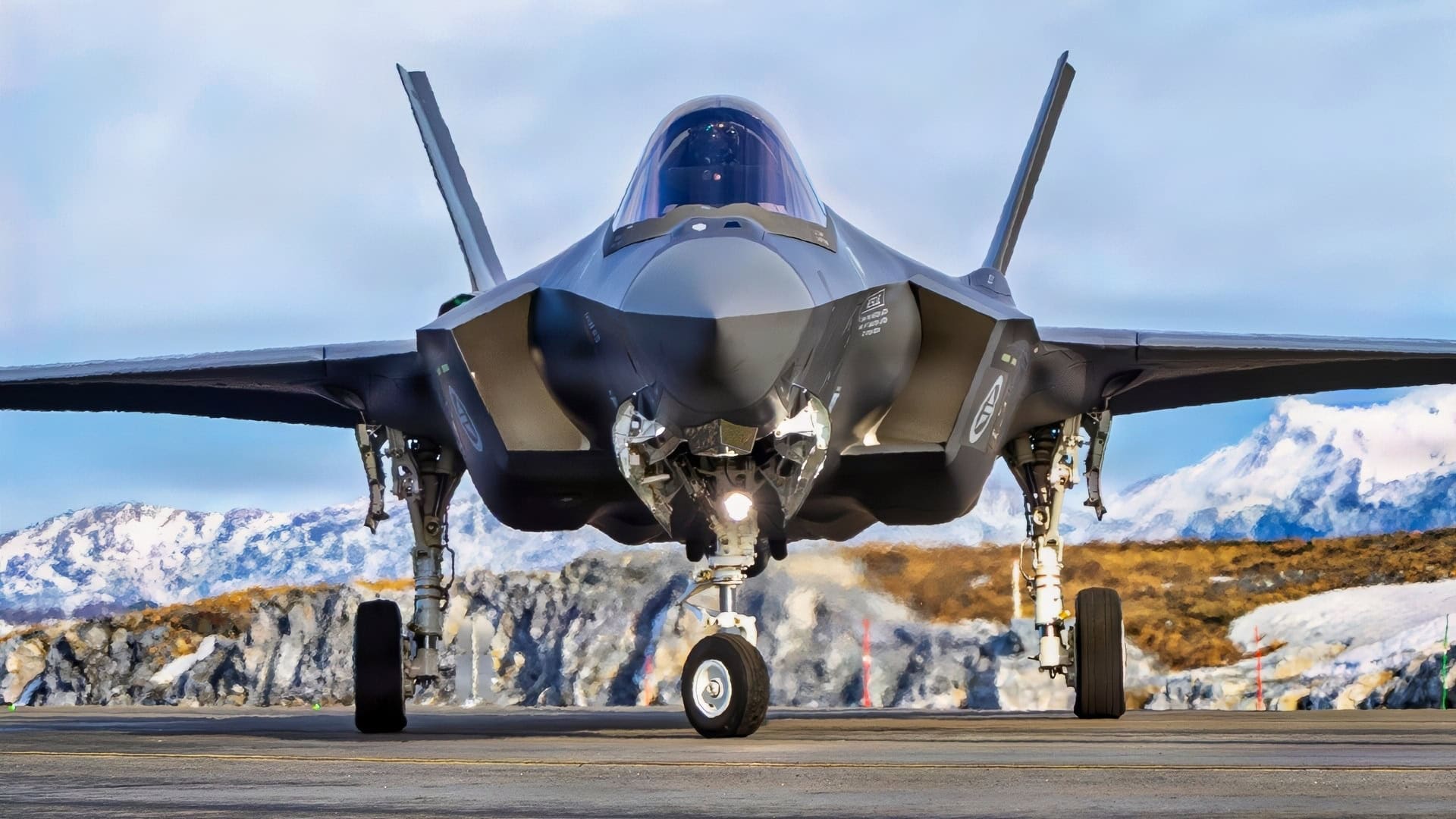
Summary and Key Points: Canada’s long-running argument over the F-35 has landed with a man who spent more than a decade arguing against it. Stephen Fuhr, a former Royal Canadian Air Force CF-18 pilot, is now Canada’s secretary of state for defence procurement and heads the Defence Investment Agency created under Prime Minister Mark Carney. “It may be a great airplane, it’s not the right plane for Canada,” Fuhr told the CBC in 2011. More than a decade later he was still calling it unaffordable.
Canada’s F-35 Debate Won’t Seem to End
Canada’s long-running argument over the F-35 has landed in the hands of a man who spent years arguing that Canada should not buy it.
Fuhr’s Long-Standing Criticism
Stephen Fuhr, a former Royal Canadian Air Force CF-18 pilot, is now Canada’s secretary of state for defense procurement and heads the Defence Investment Agency created by Prime Minister Mark Carney’s government.
CBC News reported last week that Fuhr remains something of an outsider within the fighter-pilot community, in part because of his long record of criticizing Lockheed Martin’s stealth jet.
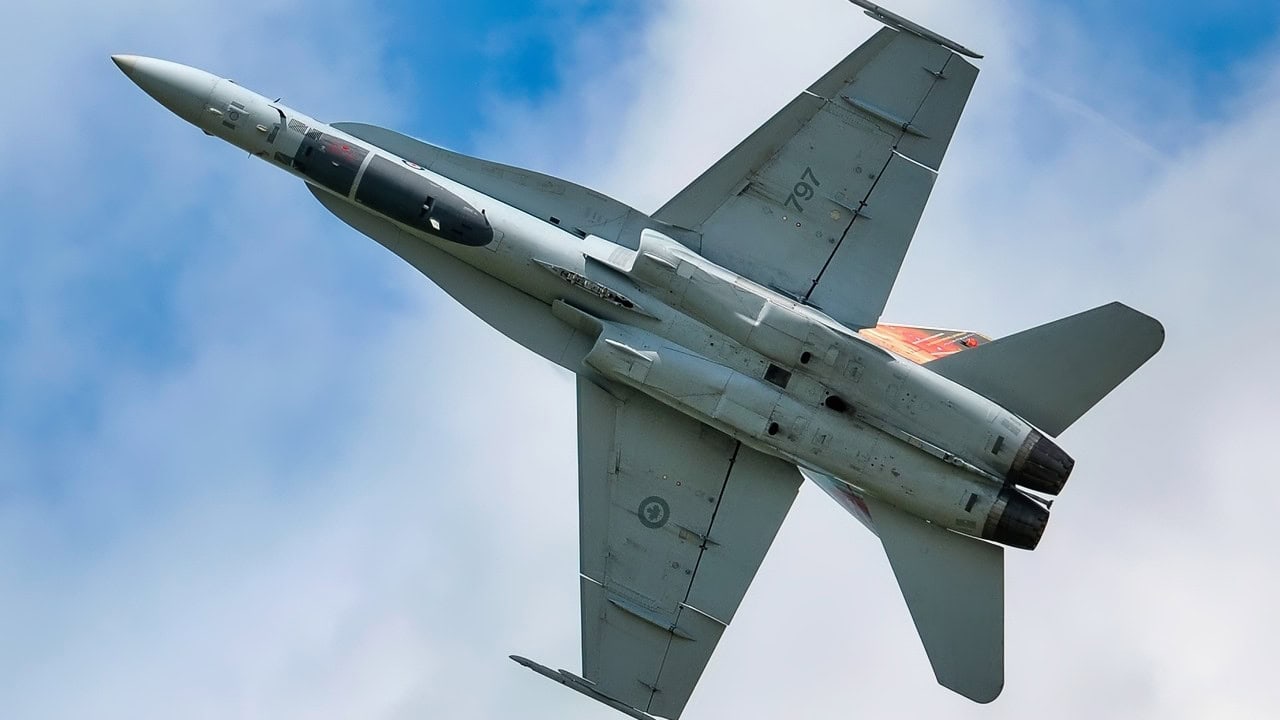
Canada CF-18 Hornet Fighter
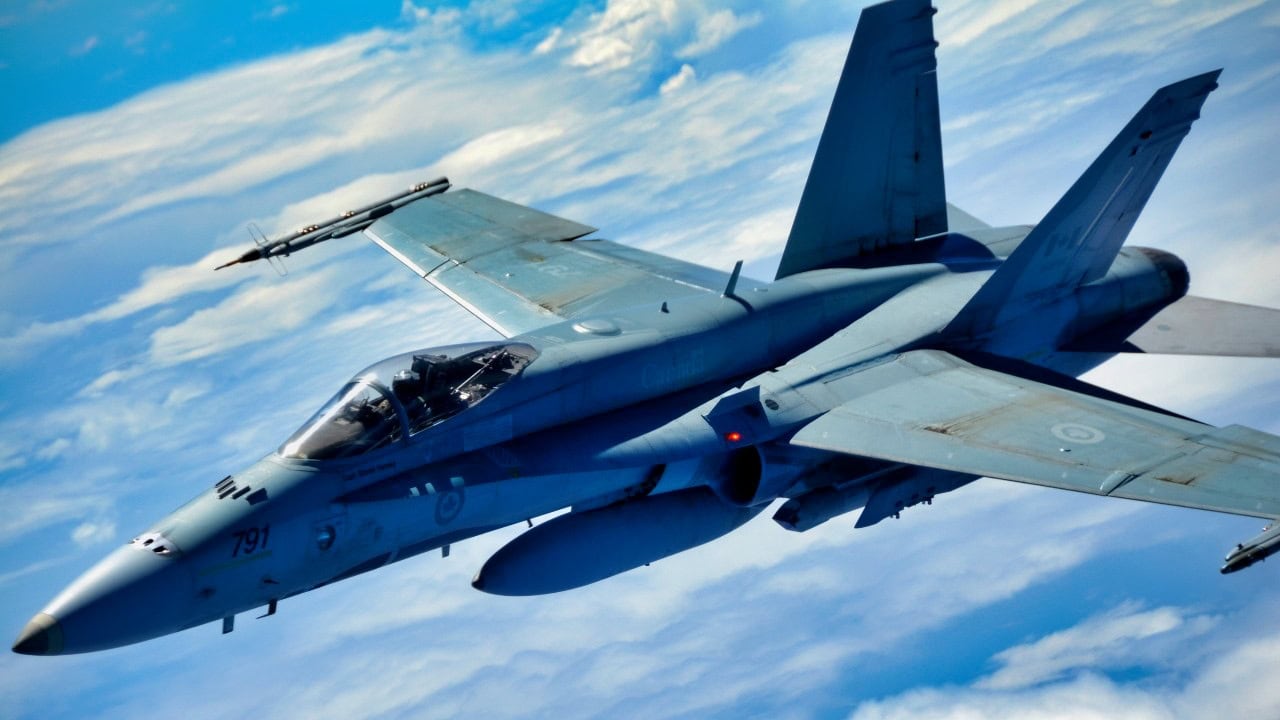
JOINT BASE PEARL HARBOR-HICKAM (July 11, 2016) A Royal Canadian Air Force CF-18 Hornet flies alongside a KC-135 Stratotanker flown by a crew from the 465th Air Refueling Squadron, Tinker Air Force Base, Okla., in support of Rim of the Pacific 2016. Twenty-six nations, more than 40 ships and submarines, more than 200 aircraft and 25,000 personnel are participating in RIMPAC from June 30 to Aug. 4, in and around the Hawaiian Islands and Southern California. The world’s largest international maritime exercise, RIMPAC provides a unique training opportunity that helps participants foster and sustain the cooperative relationships that are critical to ensuring the safety of sea lanes and security on the world’s oceans. RIMPAC 2016 is the 25th exercise in the series that began in 1971. (U.S. Air Force photo/Master Sgt. Grady Epperly)
“It may be a great airplane, it’s not the right plane for Canada,” Fuhr told CBC in 2011. Over a decade later and he was still slamming the F-35 as “unaffordable.”
Back in 2023, Ottawa said it would buy 88 new F-35As to replace its aging CF-18s.
In March 2025, the purchase was placed under review as U.S. ties soured amid President Donald Trump’s trade war threats. The review, despite being slated to end last fall, remains ongoing.
Asked at a House of Commons defense committee hearing in May how many aircraft were on order, Defense Minister David McGuinty answered: “There are 16.” Pressed about the rest, he added: “There’s not a formal commitment beyond the 16 number.”
The government’s current acquisition budget is C$27.7 billion for the planned 88 aircraft, associated equipment, support, and new fighter facilities.
The first Canadian jets are due to be delivered for pilot training at Luke Air Force Base in Arizona before aircraft begin arriving at CFB Cold Lake in 2028.
Canada Keeping Options Open
Still, Canada has poured cash into keeping its options open. In February, CBC said Canada started paying for long-lead components for another 14 F-35s in order to avoid losing its place in the queue.
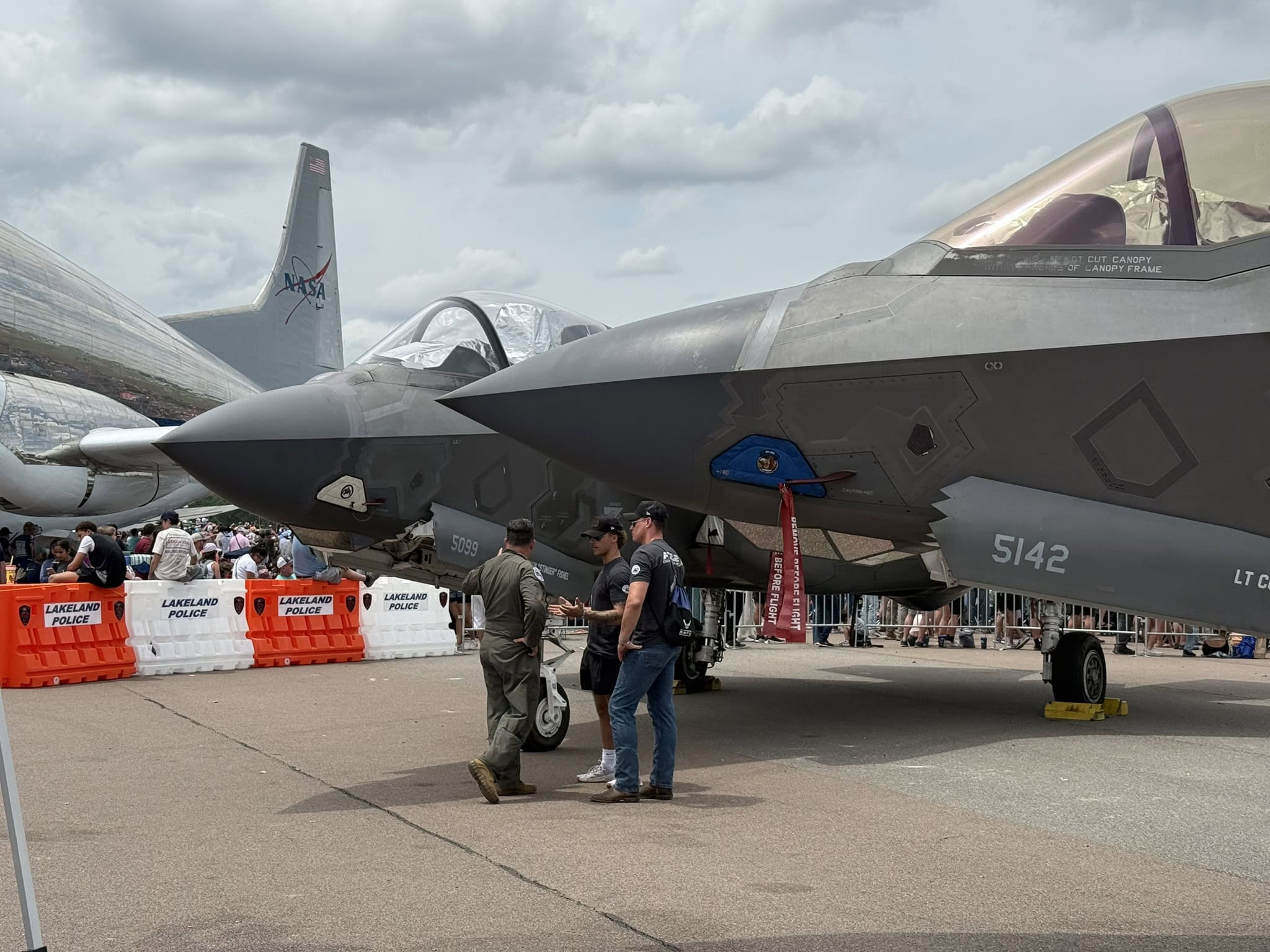
F-35C. Image Credit: 19FortyFive.com taken on 4/19/2026.
David Eby, Premier of Canada’s British Columbia province, said last month: “When your friend kicks you in the back, you don’t then go and buy $12 billion of fighter jets from that person.”
F-35 Is Often Best-Equipped Jet
Lt. Gen. Jamie Speiser-Blanchet, commander of the RCAF, told lawmakers in January that the F-35 is currently the only available fighter capable of meeting the most advanced threats posed by Russia and China.
She has also pointed to its stealth, sensor fusion and lethality.
That puts Fuhr in an unusual position.
The official responsible for shaking up Canada’s procurement system is openly skeptical of one of the principal objections to buying Saab’s Swedish Gripen alongside the F-35: that operating two fighter types would be too complicated.
“Many of our allies … run a mixed fleet with fighters,” Fuhr told CBC. “I don’t necessarily subscribe to the fact that we can’t do it.”
A mixed fleet would hardly be without its drawbacks and would require entirely separate training, maintenance, logistics, and support systems for the Gripen and F-35. It would also still have to gradually retire the CF-18.
Fuhr claimed to CBC that Canada was “going to become less reliant and more resilient,” under such plans.
In May, Fuhr announced that Canada had selected the Swedish company as the preferred supplier for talks over a new airborne early-warning fleet using its GlobalEye aircraft, built around Bombardier’s Canadian-made Global 6500.
The government stressed that negotiations did not yet amount to a purchase.
The Economic Case
Fuhr was even more explicit about the philosophy behind that decision in a subsequent CBC interview.
“We need to leverage this money to stimulate our own economy,” he said. “We need to become more independent.”
Saab remains open to a wider Gripen order.
In July, it signed an agreement with Canadian training company CAE which included pilot training, simulators and support in Canada if Ottawa were to insert Gripen Es into its future fighter force.
In July, Ottawa also became the inaugural observer nation to the British-Italian-Japanese Global Combat Air Program (GCAP).
Under this initiative, the countries are developing a sixth-generation fighter set to be rolled out from around 2035.
Ottawa has argued that observer status allows it better access to the program’s governance and structure.
Despite all of these lingering question marks, Canada is still moving ahead with its purchase of the initial 16 jets.
About the Author: Georgia Gilholy
Georgia Gilholy is a journalist based in the United Kingdom who has been published in Newsweek, The Times of Israel, and the Spectator. Gilholy writes about international politics, culture, and education.