
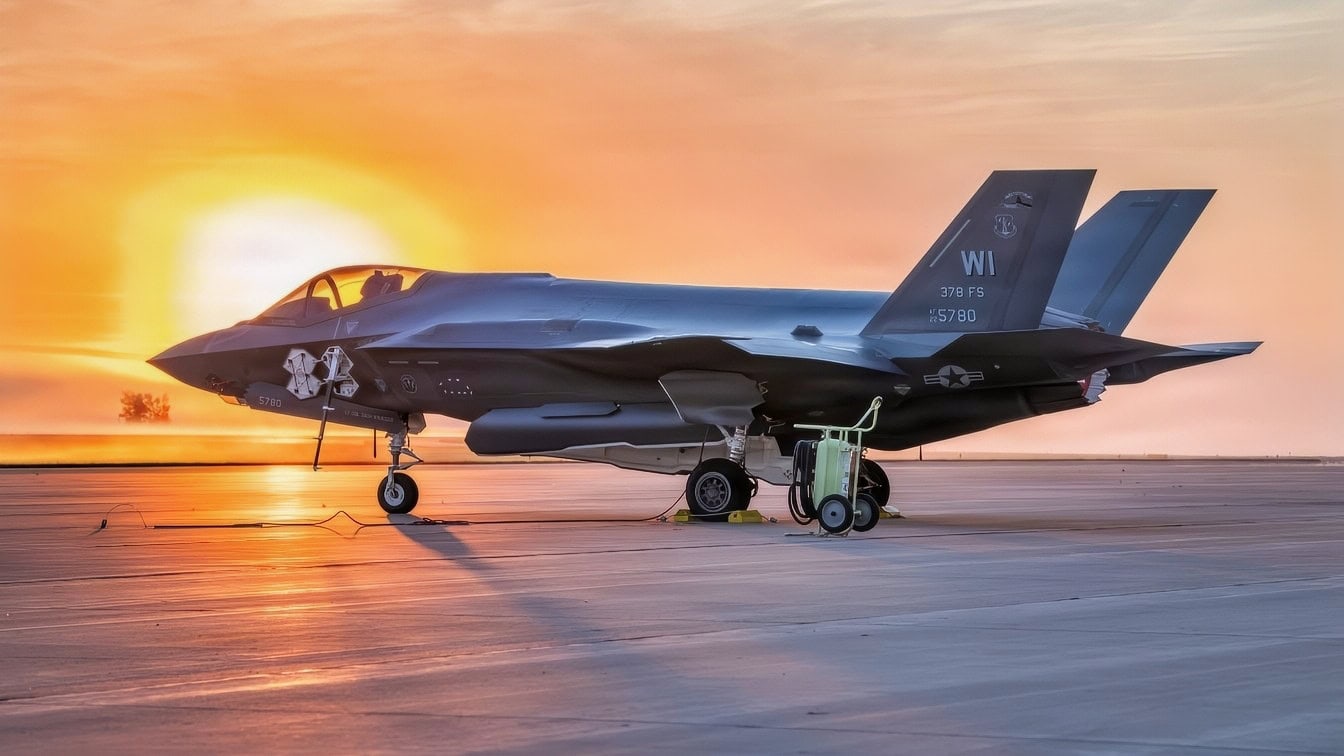
Summary and Key Points: On March 14, 2025, days after becoming prime minister, Mark Carney ordered a review of Canada’s agreement to buy 88 Lockheed Martin F-35A fighter jets. It was supposed to be finished within a year. Almost eighteen months later, there is no decision, no public deadline, and no indication one is coming. In the meantime, Ottawa’s position has become genuinely strange: the Carney government is contractually committed to only the first 16 aircraft, is openly exploring a mixed fleet built around Saab’s Gripen E, and is still on schedule to take delivery of its first F-35As at Luke Air Force Base in Arizona before the end of 2026 — where Canadian pilots will begin training on an aircraft the government has not decided to buy.
Canada’s F-35 Decision Is Still On Hold
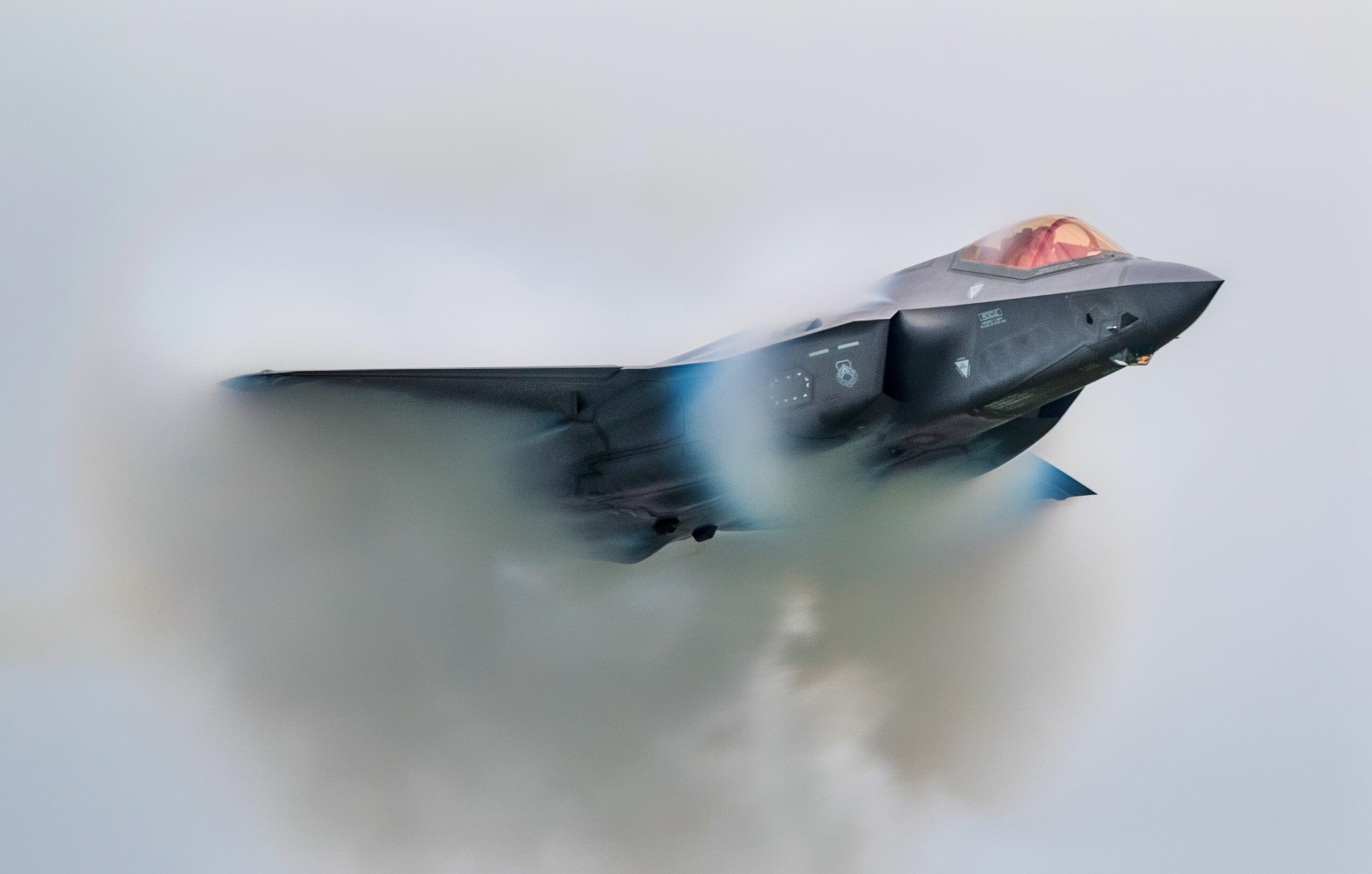
Capt. Andrew “Dojo” Olson, F-35 Demo Team pilot and commander performs aerial maneuvers during the Aero Gatineau-Ottawa Airshow in Quebec, Canada, Sept. 7, 2019. The team consists of 10 Airmen who help showcase the world’s most technologically advanced fifth-generation fighter jet. (U.S. Air Force photo by Senior Airman Alexander Cook)
Almost 18 months after Canadian Prime Minister Mark Carney ordered a review of the purchase of 88 F-35 fighter jets from the United States, a decision still hasn’t been made. The review was launched in March 2025 and was originally expected to be wrapped up that same year. But amid an ongoing trade dispute with the United States and changing geopolitical circumstances, Canada is still reviewing the purchase and exploring the possibility of fielding a mixed fleet of fifth-generation and 4.5-generation aircraft.
Developments This Week
The ongoing review should perhaps come as no surprise. On September 7, U.S. President Donald Trump escalated the trade conflict with Canada, threatening to bar Canadian aircraft manufacturer Bombardier from selling its jets in the United States unless it moved its manufacturing operations to the U.S.
Two days later, Bombardier announced that it was continuing U.S. deliveries while Washington said it was preparing to take action against the firm.
At the same time, Stephen Fuhr, Canada’s secretary of state for defense procurement and the official leading the government’s Defence Investment Agency, is attracting more media attention for his long-standing criticism of the F-35 purchase.
Fuhr, who is a former Royal Canadian Air Force CF-18 pilot, previously said that the aircraft was “unaffordable” and argued that its development program had failed to meet so many objectives that it was no longer a viable option.
But despite the ongoing complications and bitter dispute, Canada is still preparing to receive its first F-35s this year regardless of what happens to the remainder of the order.
A Review Lasting 18 Months
Carney ordered Defense Minister Bill Blair on March 14, 2025, shortly after becoming prime minister, to review Canada’s planned acquisition of 88 Lockheed Martin F-35As. The review was launched amid deteriorating relations with Washington, and Carney asked officials to determine whether the F-35 was Canada’s best option for its future fighter fleet.
The review began examining Canada’s operational requirements, its commitments to NORAD and NATO, various industrial benefits and strategic relationships. The review is also considering alternative fighter jets and the possibility of operating multiple fighter types
Although the review was expected to be completed in less than a year, no public deadline has been announced, and there is no indication that a decision is coming soon.
This month, Defense Minister David McGuinty said Ottawa was not acting on a timeline and would take as long as necessary to make the right decision, arguing that industrial benefits and Canada’s relationship with the United States needed to be considered.
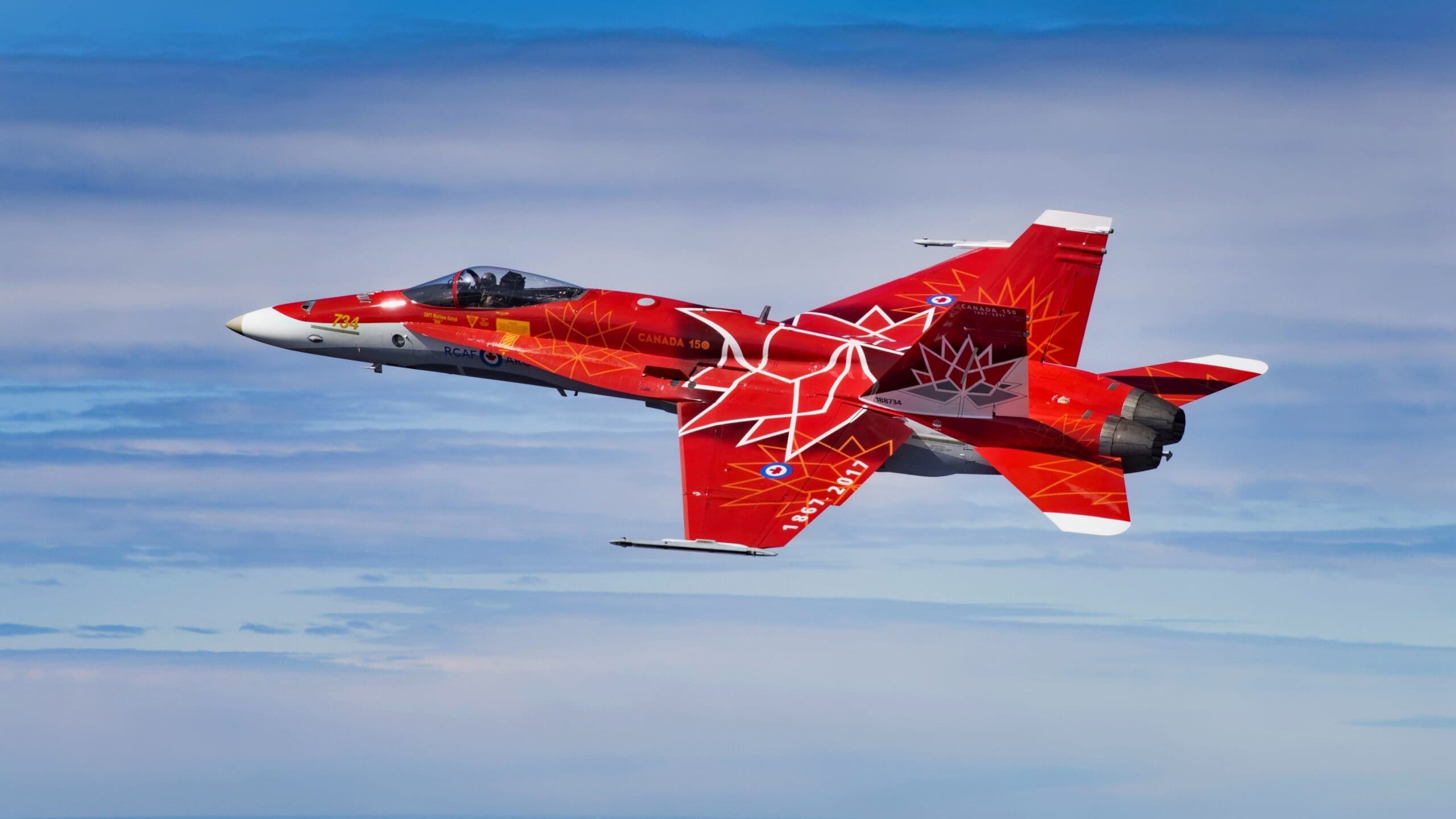
CF-18 Fighter from Canada. Image Credit: Creative Commons.
And, given the constantly varying state of the relationship between the two countries, it should come as no surprise that the review has not yet concluded.
After all, even if the F-35 is the ideal fit for Canada in terms of pure capability, maintaining a long-term relationship with the United States through a close defense partnership may not be ideal for a government currently at odds with the U.S. president.
Saab Steps Up Gripen Offer
Throughout the process, Saab has sought to sweeten the deal and encourage Canada to establish a mixed fleet that includes its own Gripen E fighters. Most recently, Saab representatives have been pushing plans that would give Canada greater control over maintenance and support for their Gripen aircraft, should Canada purchase a fleet.
The Gripen uses General Electric’s American-made F414 engine, meaning that choosing the Swedish aircraft would not completely eliminate Canada’s dependence on U.S. defense technology.
The engine remains subject to U.S. export controls, but Saab is looking to reduce that vulnerability somewhat.
On July 22, GE Aerospace and Ontario-based Magellan Aerospace signed an agreement that would allow Gripen engines to be maintained and overhauled in Mississauga if Canada purchases the aircraft, rather than routinely sending them to the United States.
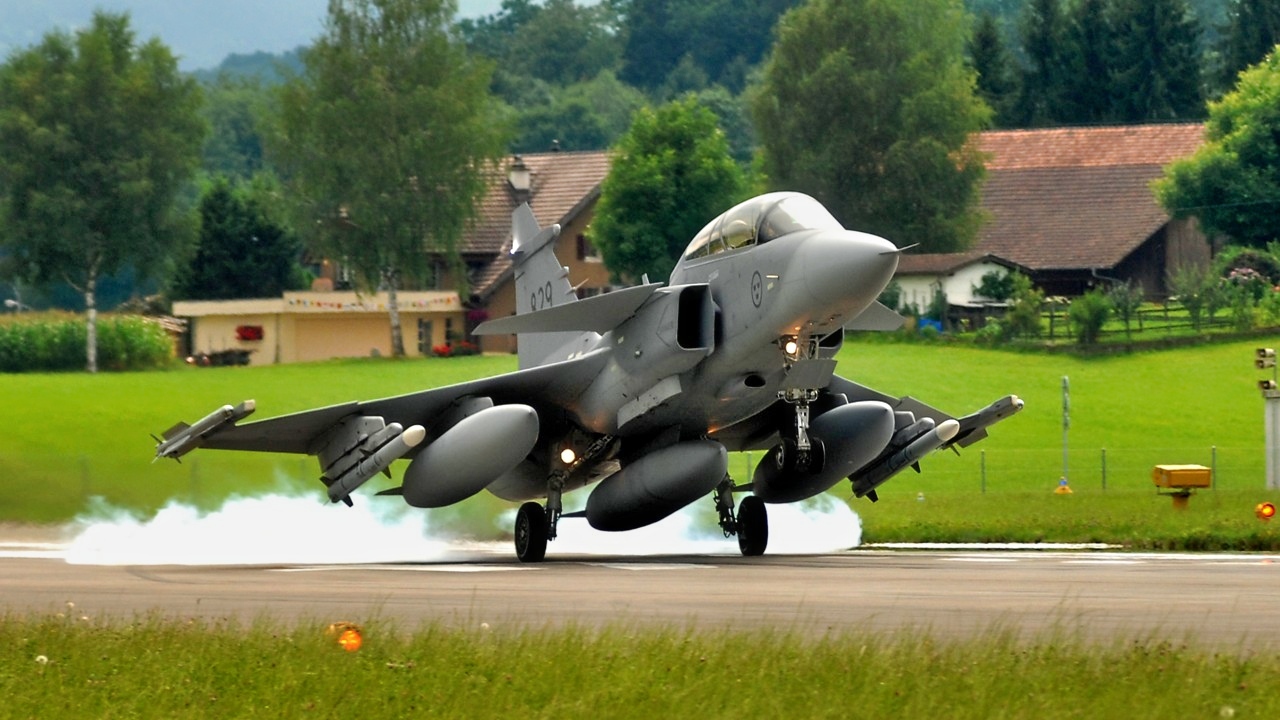
JAS 39 Gripen Fighter. Image Credit: Creative Commons.
Fuhr’s office has also confirmed that Canadian procurement representatives are actively engaging with defense companies, including Saab, although it stressed that the news does not constitute a formal commitment to purchase the Gripen or to launch a new procurement process.
Canada’s First F-35s Are Still Coming
Whatever Carney ultimately decides, Canada’s F-35 program is moving forward regardless — because some jets have already been purchased.
The Department of National Defense says Canada remains on schedule to receive its first F-35As at Luke Air Force Base in Arizona before the end of 2026. Canadian pilot training is also scheduled to begin there as the Royal Canadian Air Force prepares to transition away from its aging CF-18s.
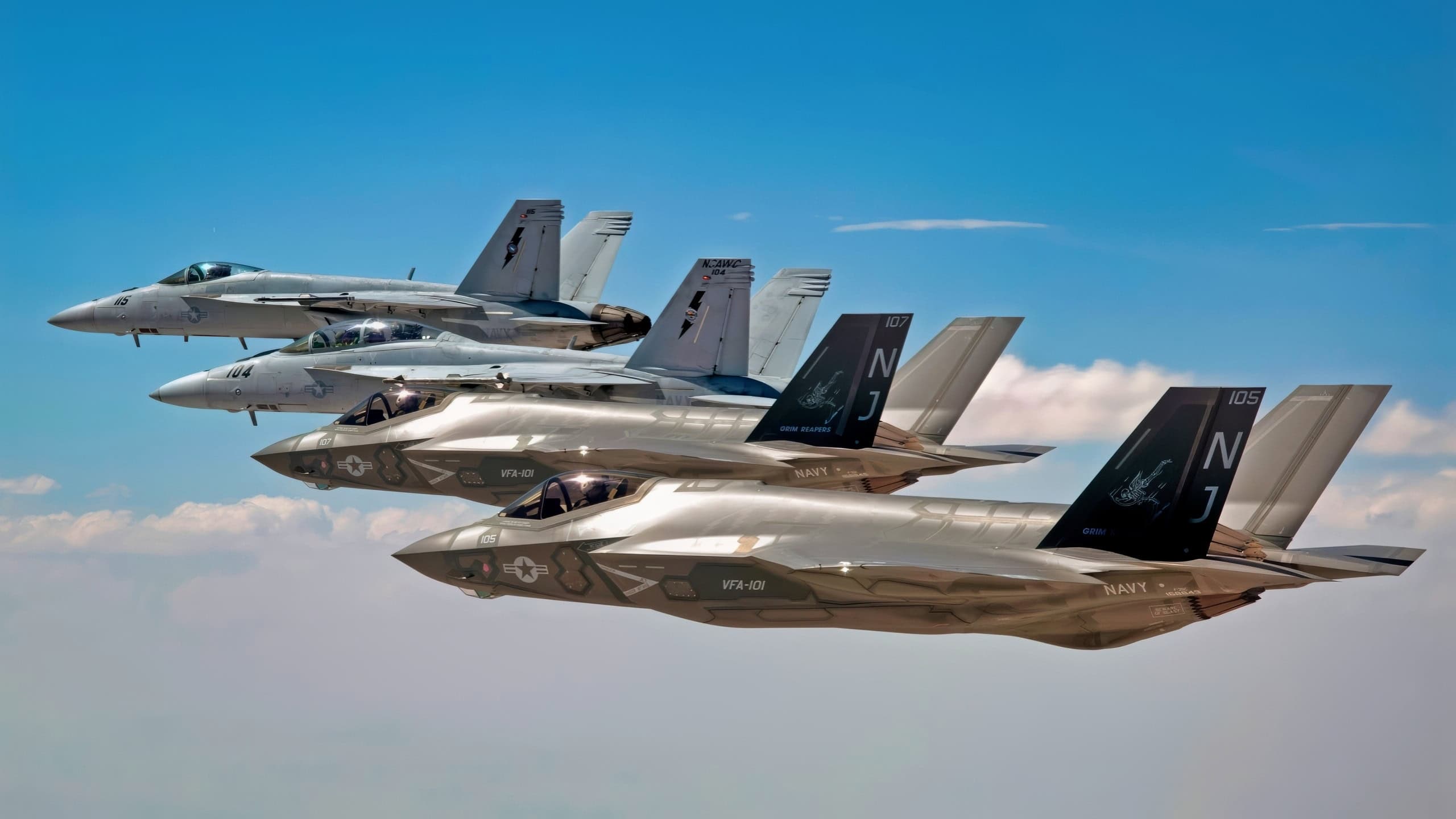
FALLON, Nev. (Sept. 3, 2015) F-35C Lightning IIs, assigned to the Grim Reapers of Strike Fighter Squadron (VFA) 101, and an F/A-18E/F Super Hornets assigned to the Naval Aviation Warfighter Development Center (NAWDC) fly over Naval Air Station Fallon’s (NASF) Range Training Complex. VFA 101, based out of Eglin Air Force Base, is conducting an F-35C cross-country visit to NASF. The purpose is to begin integration of F-35C with the Fallon Range Training Complex and work with NAWDC to refine tactics, techniques and procedures (TTP) of F-35C as it integrates into the carrier air wing. (U.S. Navy photo by Lt. Cmdr. Darin Russell/Released)
The original agreement to acquire 88 F-35s was finalized by the Justin Trudeau government in January 2023, following a competition in which the Gripen E was beaten by the F-35, but the Carney government is so far only committed to following through on the purchase of the first 16 F-35s.
About the Author: Jack Buckby
Jack Buckby is a British researcher and analyst specializing in defense and national security, based in New York. His work focuses on military capability, procurement, and strategic competition, producing and editing analysis for policy and defense audiences. He brings extensive editorial experience, with a career output spanning over 1,000 articles at 19FortyFive, and has previously authored books and papers on extremism and deradicalization.