
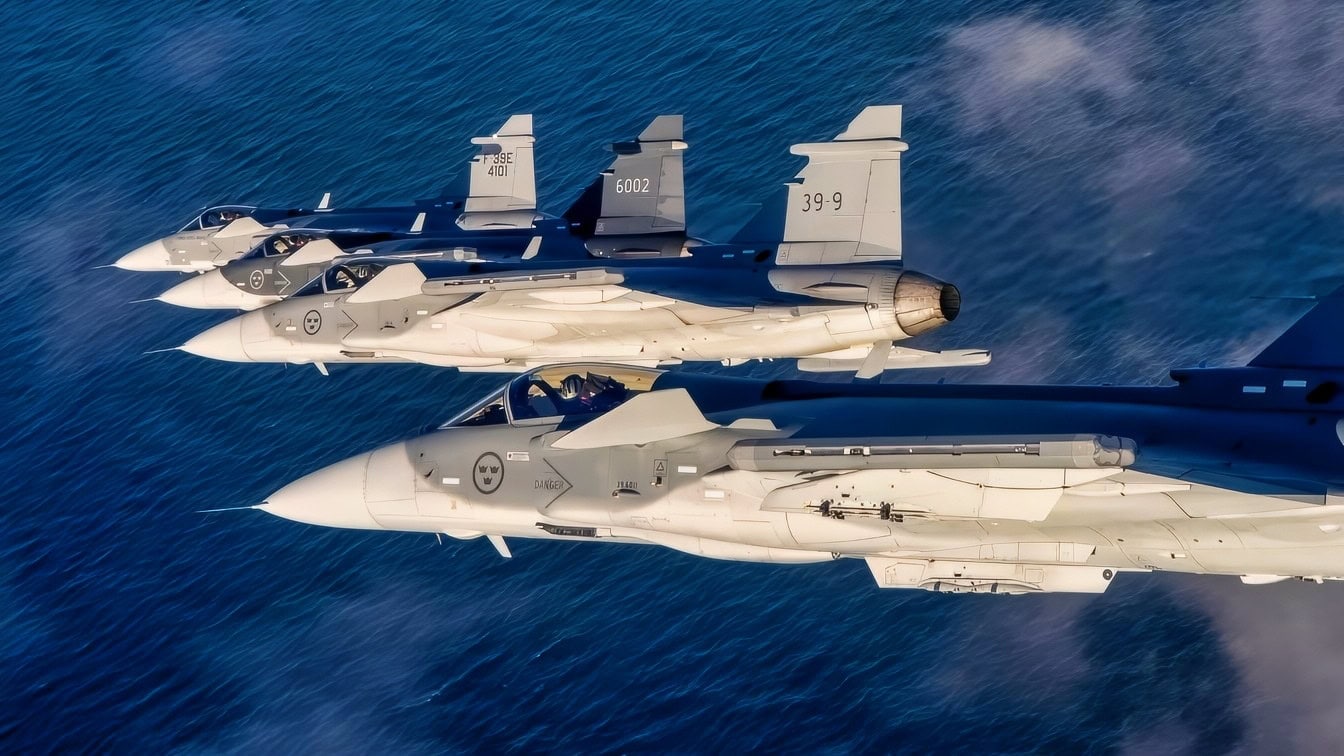
Summary and Key Points: Canada agreed in January 2023 to buy 88 Lockheed Martin F-35As. Almost eighteen months into Prime Minister Mark Carney’s review of that decision, Ottawa is contractually committed to only the first 16 — leaving 72 aircraft unspoken for — and Saab has now specified how many of them it wants. Speaking to reporters in Sweden on August 22, chief executive Micael Johansson said a minimum order of 40 Gripen E fighters would justify establishing final assembly in Canada. That would make Canada the third Gripen production center after Sweden and Brazil, and Saab has its own reason for wanting it: the company says it needs a third assembly line to meet international demand, so Canadian workers would be building aircraft for other customers as well.
The Saab JAS 39 vs. F-35 Showdown
Swedish defense company Saab has given Canada a new, detailed proposal to build JAS 39 Gripen E fighter jets domestically if Ottawa moves forward with reported plans to field a mixed fleet of fighter jets, combining 16 F-35s purchased from the United States with Saab’s 4.5-generation Gripens.
Saab CEO Micael Johansson disclosed details of the proposal during a press briefing in Sweden on August 22, held alongside celebrations marking the centenary of the Swedish Air Force.
Johansson said Saab has presented the Canadian government with plans to establish a Gripen production operation in Canada and confirmed that the company believes an order for at least 40 aircraft would be needed to make Canadian final assembly viable.
The Saab CEO also said that his company is proposing the Gripen as part of a mixed Canadian fleet, noting the commitment to the first 16 F-35s that cannot be reversed.
He explicitly stated that Saab is looking to work with Canada on building a mixed fleet that will work for the country, and even suggested he doesn’t know exactly how many F-35s will be in the fleet in the end – a comment that indicates Canada could still move forward with additional F-35 purchases while also leaning on Saab to fill the rest of the fleet.
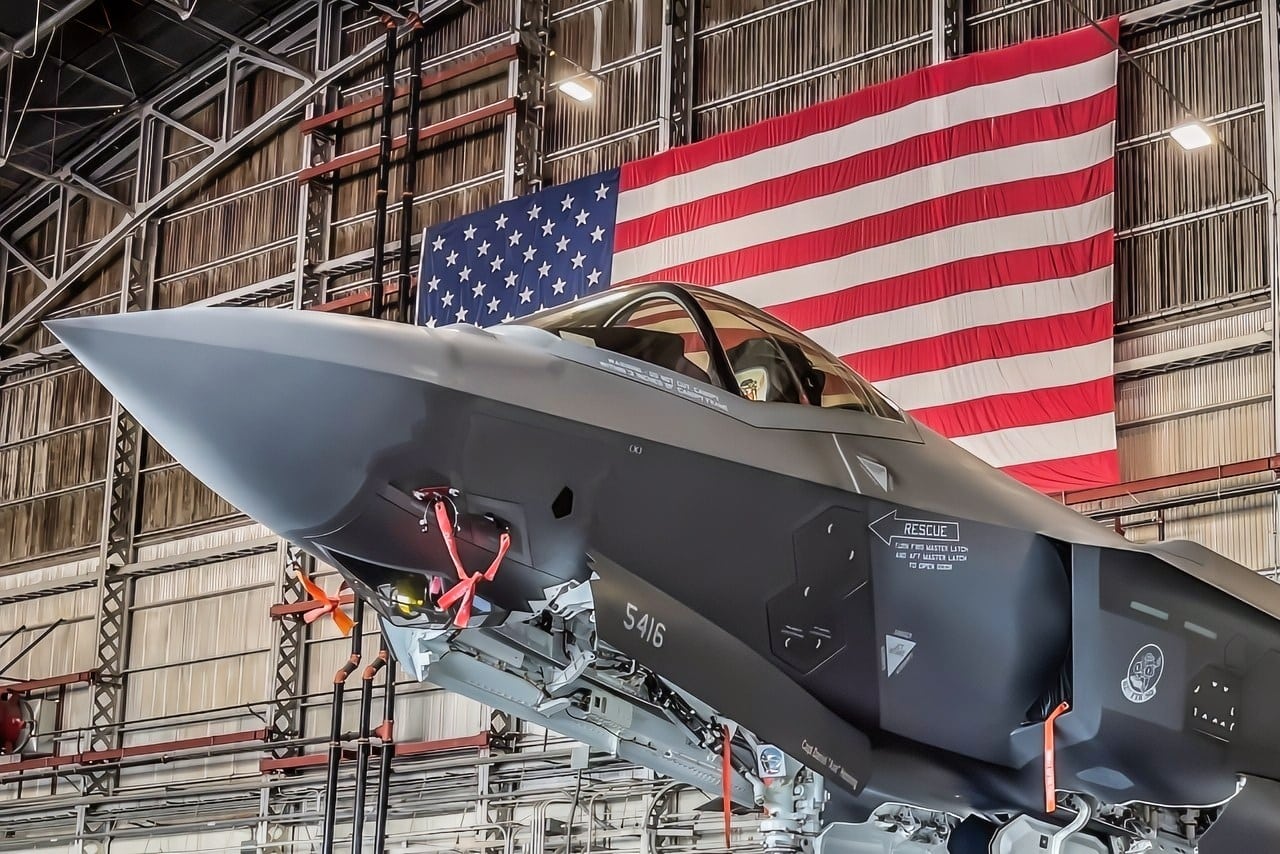
An F-35 Lightning II assigned to the 62nd Fighter Squadron, Luke Air Force Base, Ariz., sits in a hangar ahead of operations for the F-35 Lightning II TDY, Oct. 28, 2021, at Joint Base San Antonio-Kelly Field, Texas. The 62nd FS will be training with F-16s from the 149th Fighter Wing and the 301st Fighter Wing, along with T-38s from the 301st Fighter Wing. The multi-role capabilities of the F-35 allows them to perform missions which traditionally required numerous specialized aircraft. The complimentary air superiority capabilities of the F-35 will augment our air superiority fleet and ensure we continue to “own the skies” over future battlefields. (U.S. Air Force photo by Brian G. Rhodes)
It offers a clear picture of what Saab is offering, and where Ottawa may be going, as Carney’s review of the original purchase of 88 F-35s remains ongoing after almost 18 months.
Saab Says It Needs At Least 40 Canadian Gripens
Saab also revealed its expectations of Canada to make the deal work. While an additional 72 Gripen jets would not be out of the question, which is the remainder of the 88 jets Canada originally committed to, Saab is now arguing that a minimum purchase of 40 Gripen E fighters would justify establishing a final-assembly operation in Canada that would deliver industrial benefits and jobs.
Canada, should the deal be made, would become another Gripen production center working alongside operations in Brazil and Sweden.
That extra facility is critical for Saab because the company says it needs a third final-assembly line for the Gripen aircraft to meet growing international demand – meaning that a new Canadian operation would not be strictly to finalize the construction of Canadian Gripens, but other aircraft purchased on the international market.
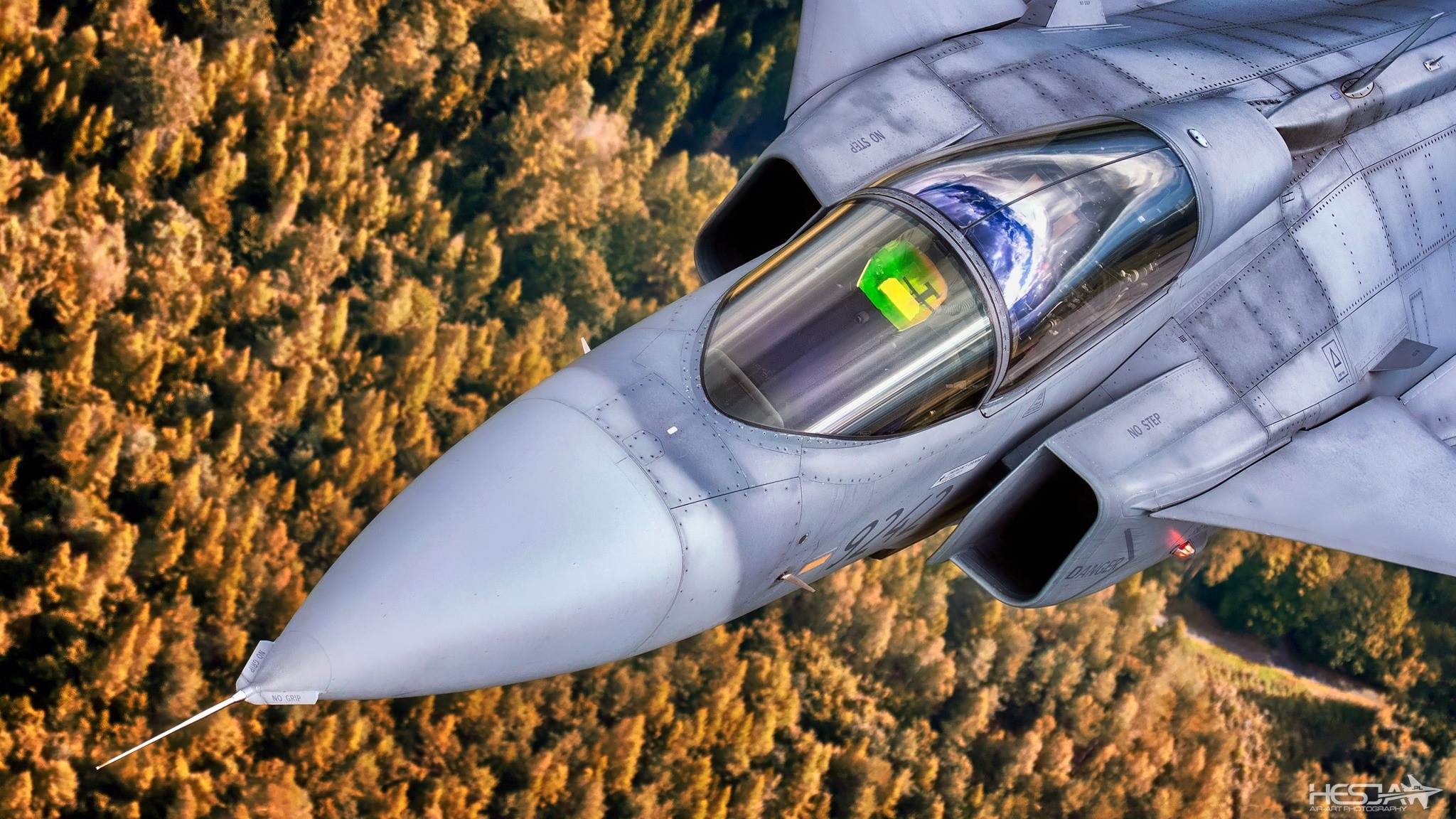
JAS 39 Gripen. Image Credit: Creative Commons.
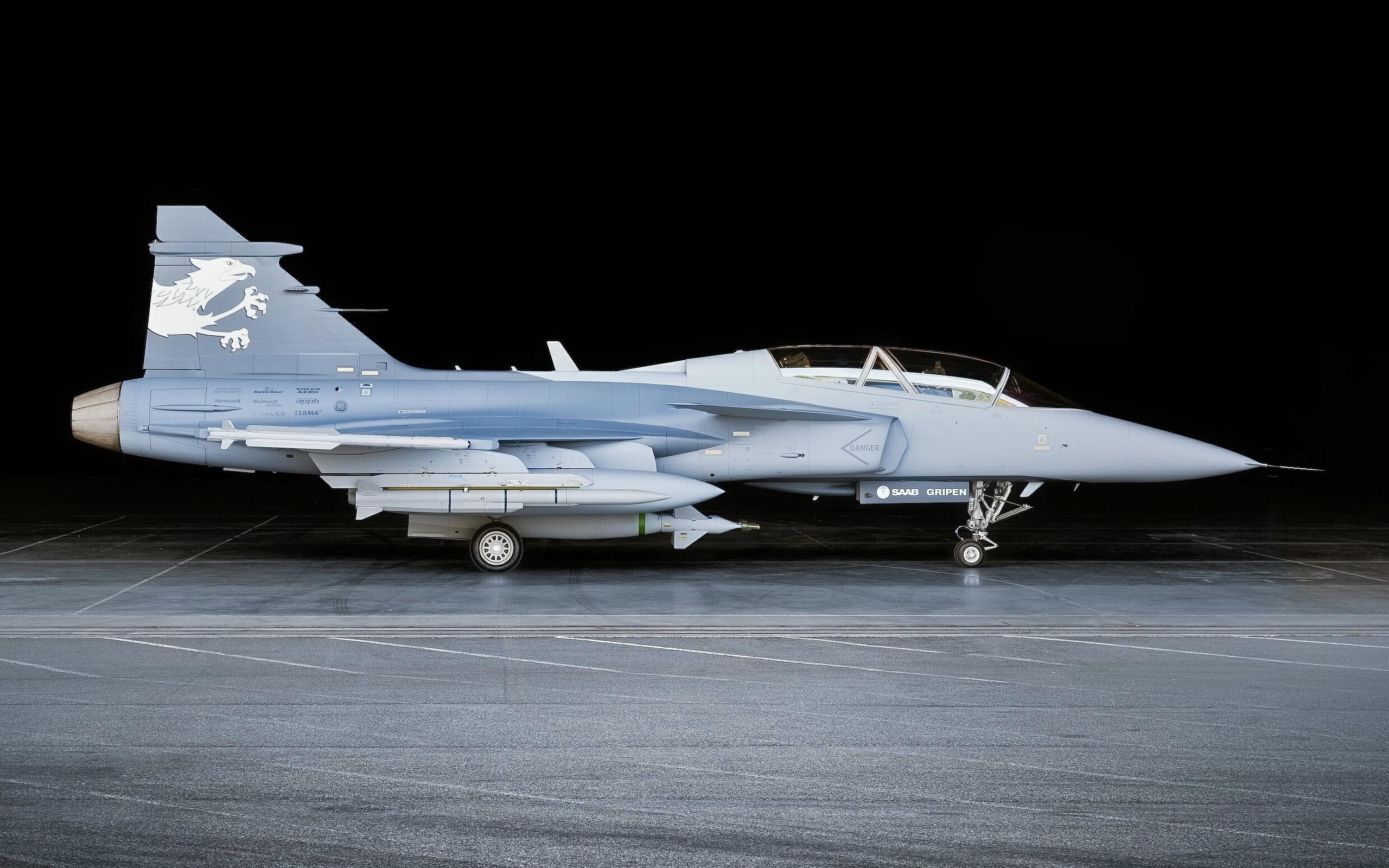
JAS 39 Gripen. Image Credit: Creative Commons.
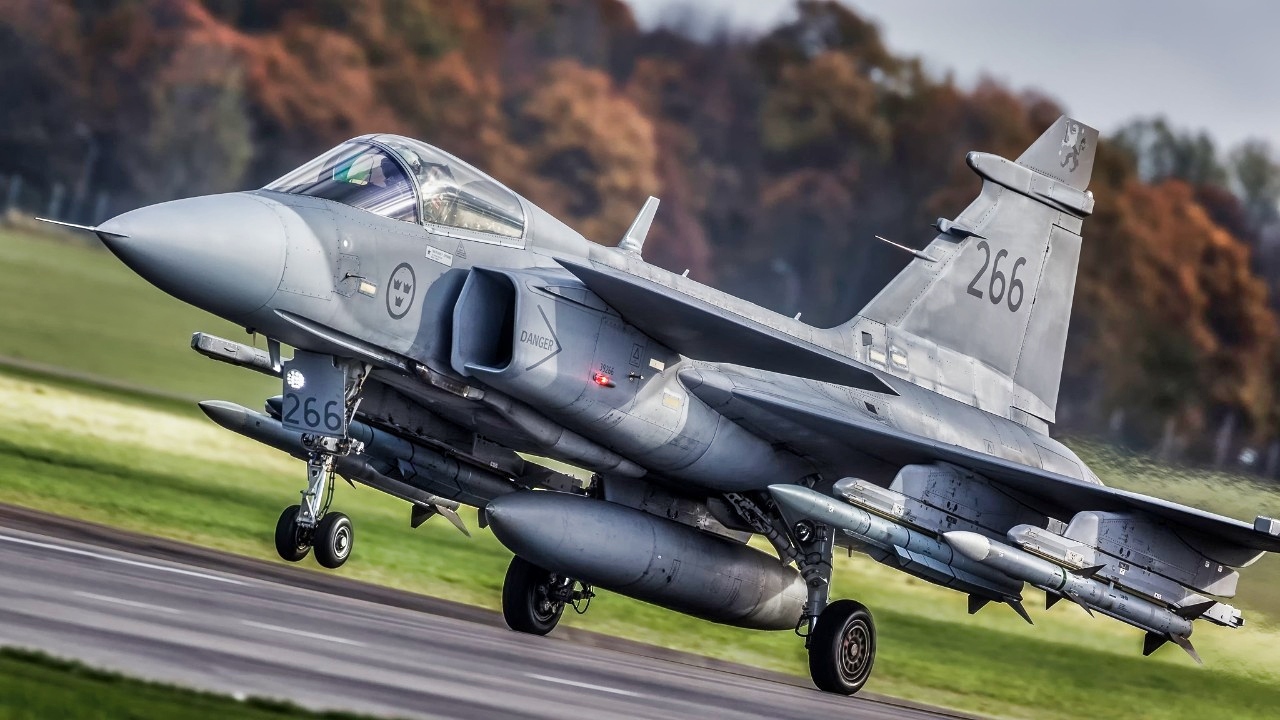
JAS 39 Gripen. Image Credit: Creative Commons.
Under the company’s proposal to Canada, roughly 10 major industrial partners and 250 suppliers would work together to build the aircraft, with Saab estimating that 50% of the work associated with its proposed Gripen and GlobalEye programs would take place in Quebec.
26% would take place in Ontario, 14% in Western Canada, and 10% in Atlantic Canada.
Saab Offers Job Benefits
With Saab’s industrial offers come jobs. The company says that a Canadian Gripen program would deliver thousands of jobs – and the number has steadily increased as the company has attempted to woo Ottawa.
What started as a promise of 6,000 jobs has now become a commitment to as many as 10,000.
In November 2025, Saab CEO Micael Johansson said establishing Gripen production in Canada could create as many as 10,000 Canadian jobs over 40 years.
Those jobs would not be limited to assembling fighter jets, either. Johansson said that Saab was discussing Canadian production with manufacturer Bombardier and other domestic companies, and that the proposal covered manufacturing, research, and development.
On July 17 this year, Saab also signed a memorandum of understanding with Montreal-based CAE.
Under the agreement, CAE would provide Canadian-based training for Gripen pilots and technicians and both develop and operate simulators.
CAE would also conduct engineering work for mission systems and provide long-term support if the aircraft is ultimately chosen.
Sweden Invests Hundreds Of Millions In Next-Generation Aircraft
Saab continues to push for the Canada deal as Sweden invests hundreds of millions of dollars in the company’s next-generation combat aircraft.
On September 9, Saab announced that Sweden’s Defence Materiel Administration had awarded it a 2.9 billion Swedish crown contract, worth about $303 million, to continue developing technologies for Sweden’s future fighter system.
The new contract covers work between 2026 and 2028, with the potential to continue until 2030, and Saab said the program includes flying and ground-based demonstrators.
Work will also begin on advanced studies and new concepts for manned and unmanned combat aircraft.
The end result of that investment is relevant to Canada, too, because Saab has offered Ottawa not just participation in current Gripen production but also in future aircraft production.
The company has discussed granting Canadian industry access to the next generation of Saab aircraft if Ottawa chooses the Gripen, potentially expanding the industrial relationship between the two countries for decades to come.
Canada is also examining its own route to a next-generation fighter; however, Ottawa became the first observer nation in the British-Italian-Japanese Global Combat Air Program (GCAP) on July 21.
About the Author: Jack Buckby
Jack Buckby is a British researcher and analyst specializing in defense and national security, based in New York. His work focuses on military capability, procurement, and strategic competition, producing and editing analysis for policy and defense audiences. He brings extensive editorial experience, with a career output spanning over 1,000 articles at 19FortyFive and National Security Journal, and has previously authored books and papers on extremism and deradicalization.