
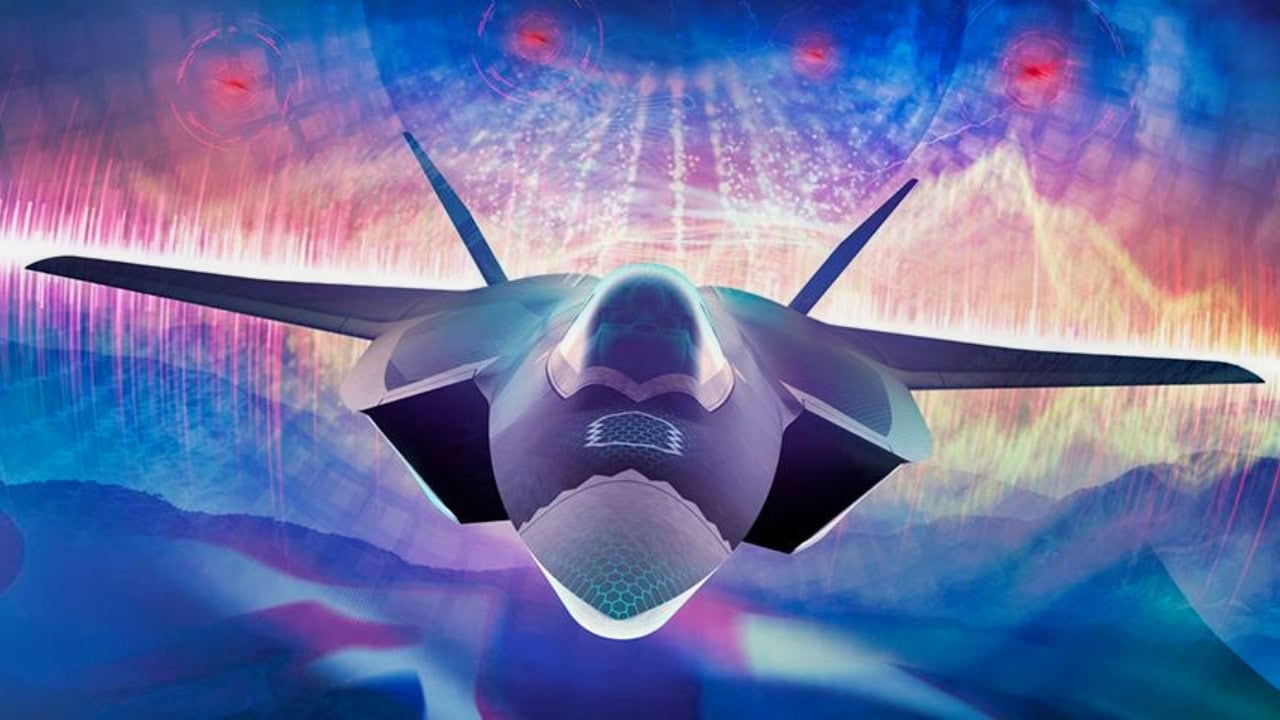
Summary and Key Points: Britain, Japan, and Italy intend to field a sixth-generation stealth fighter by 2035, and the money behind it tells you how hard that will be. Japan allocated $1,270,000,000 to the Global Combat Air Programme this year. Italy committed €8,800,000,000, roughly $10,000,000,000. Britain has set aside £8,600,000,000 (around $11,000,000,000) over the next four years. Total investment in GCAP is estimated at about $21,000,000,000 so far. The aircraft it is competing against, the F-35, had cost the United States roughly $412,000,000,000 as of 2022 — and Lockheed Martin came to that program having already built the F-117 and the F-22.
GCAP Is Coming
Developing a fifth-generation aircraft is a difficult endeavor. For this reason, only three nations currently field fifth-generation stealth fighters.
Most European powers did not even try to develop their own stealth fighters, instead opting to purchase the F-35 from the United States.
Now that the technology is maturing, states beyond the U.S., China, and Russia are attempting to create their own next-generation aircraft.
The Global Combat Air Program (GCAP) is one of the more promising upcoming projects.
Currently being developed as a joint effort by the UK, Japan, and Italy, the GCAP program aims to create a sixth-generation, multi-role stealth fighter for the three nations, with plans to reach operational status by 2035 at the latest.
Developing GCAP’s Engines
Development of GCAP’s engines is currently being carried out by Rolls-Royce in collaboration with Italy’s Avio Aero and Japan’s IHI Corporation.
In 2024, Rolls-Royce said at the Farnborough International Air Show that it was working on a demonstrator engine.
According to Janes, this demonstrator would serve as a testbed for the future engines that would power the initial prototypes and, later, the production aircraft.
In 2025, the consortium signed a collaborative agreement formalizing the three parties’ roles in the Edgewing joint venture.
This step formally brought the three industries together into a single team, streamlining collaboration.
Rolls-Royce also reported that the consortium successfully completed tests on the new engine’s combustor design.
In 2026, the consortium said it had completed design reviews of more than 100 smaller engine components.
The data will reportedly help inform the final design of GCAP’s propulsion system.
At this year’s Farnborough International Air Show, the consortium unveiled a scale model that showcases some of the technologies behind the new engines.
For confidentiality reasons, Rolls-Royce clarified that the model did not replicate the actual design but rather “shows how we think in terms of technology and concept.”
No publicly available timeline exists for when the new engines will be ready, but with full service expected in the early- to mid-2030s, the engines should be ready by 2028 if all goes well.
What Do We Actually Know About GCAP?
Regarding specifications, there is no reliable information on the GCAP’s expected performance. Japan, however, wants the aircraft to have a significantly expanded range.
Operating in the vast expanse of the Pacific Ocean, the F-15J has the longest range out of Japan’s fleet, with a combat range of around 1,100 nautical miles according to some estimates.
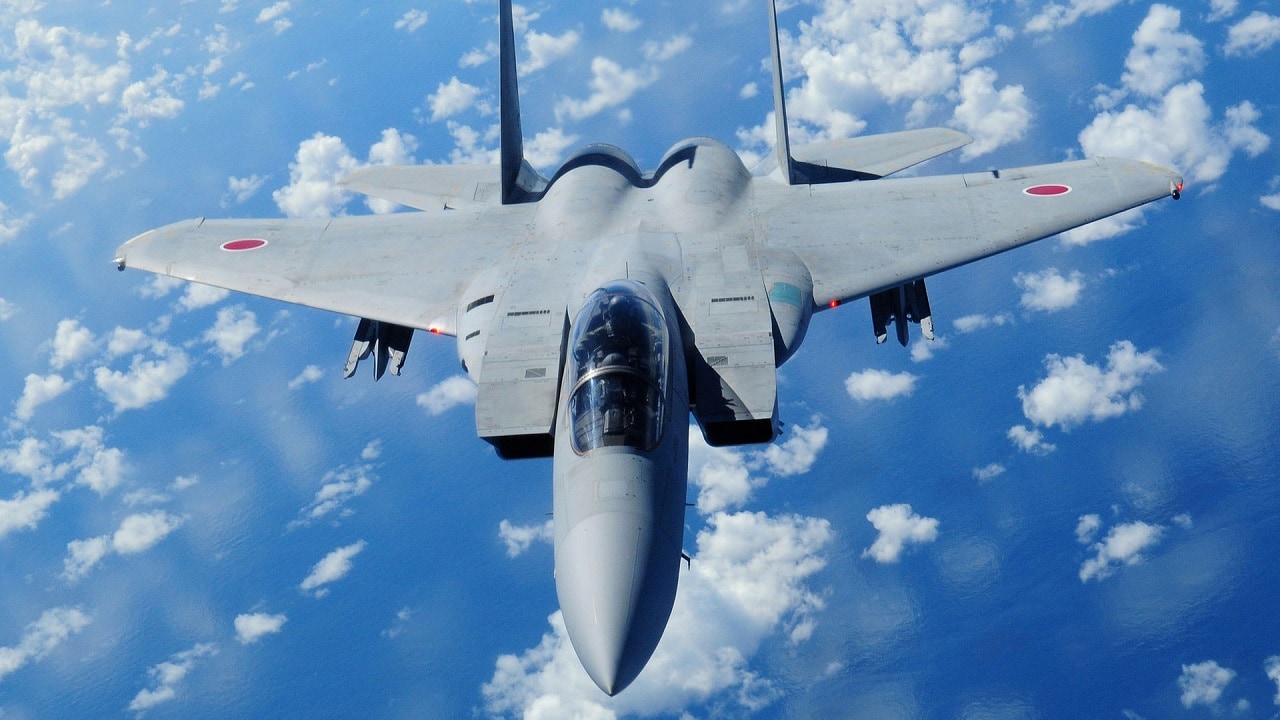
A Japan Air Self Defense Force F-15 (F-15DJ) in flight, as viewed from the boom operator position of a U.S. Air Force KC-135 from the 909th Air Refueling Squadron, Kadena Air Base, after being refueled during air refueling training July 30, 2009.
The GCAP can be expected to have similar, if not greater, performance.
These extended-range requirements are intended to fill the gaps left by the F-35, whose range leaves much to be desired.
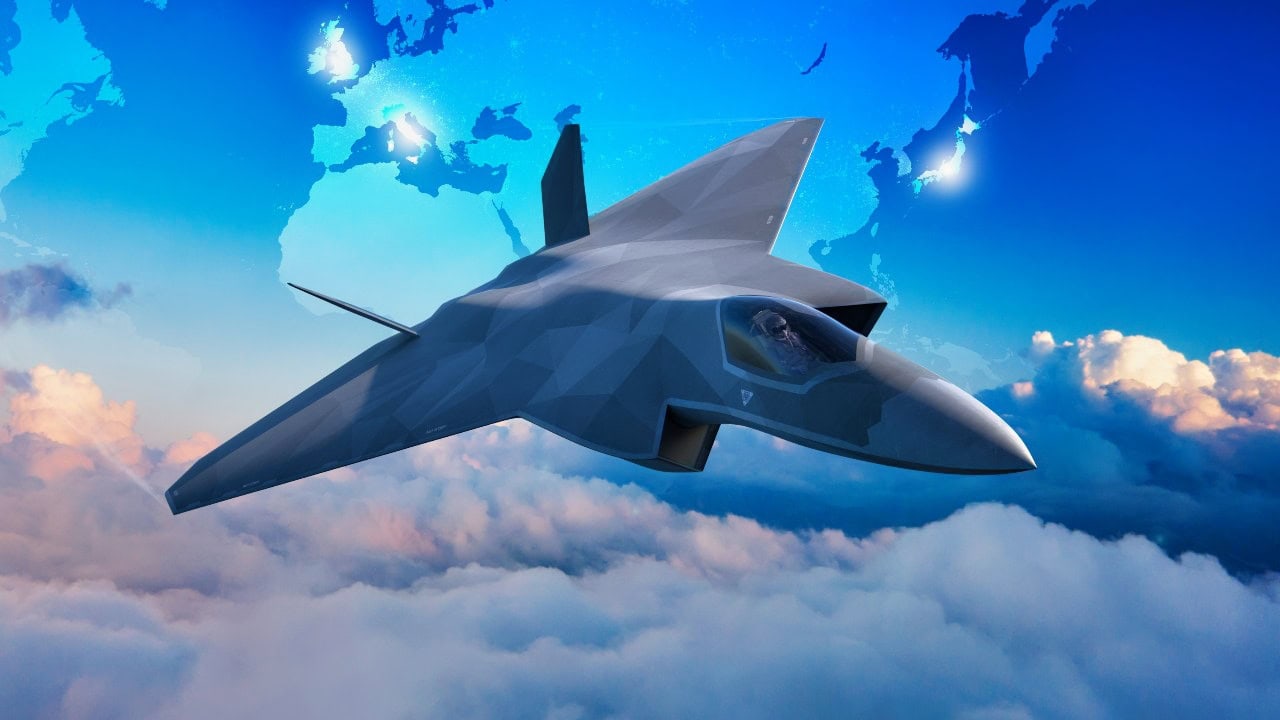
GCAP. Image Credit: Industry Handout.
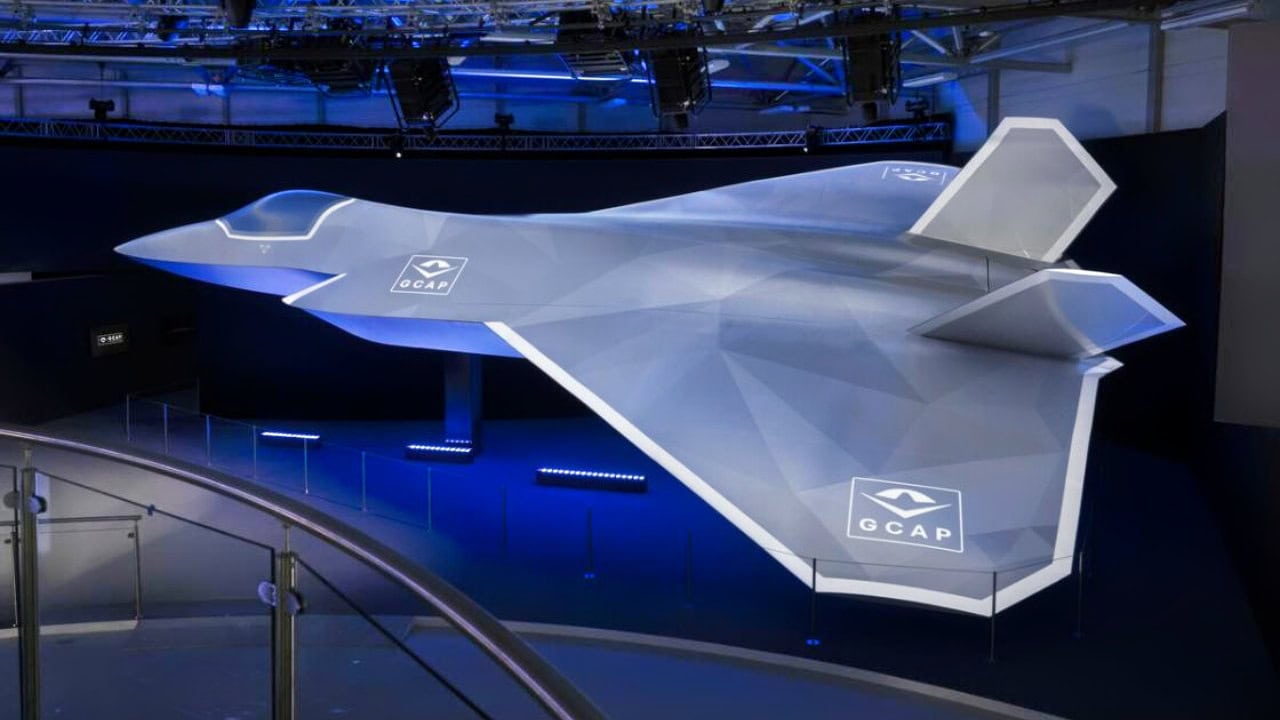
GCAP 6th Generation Fighter
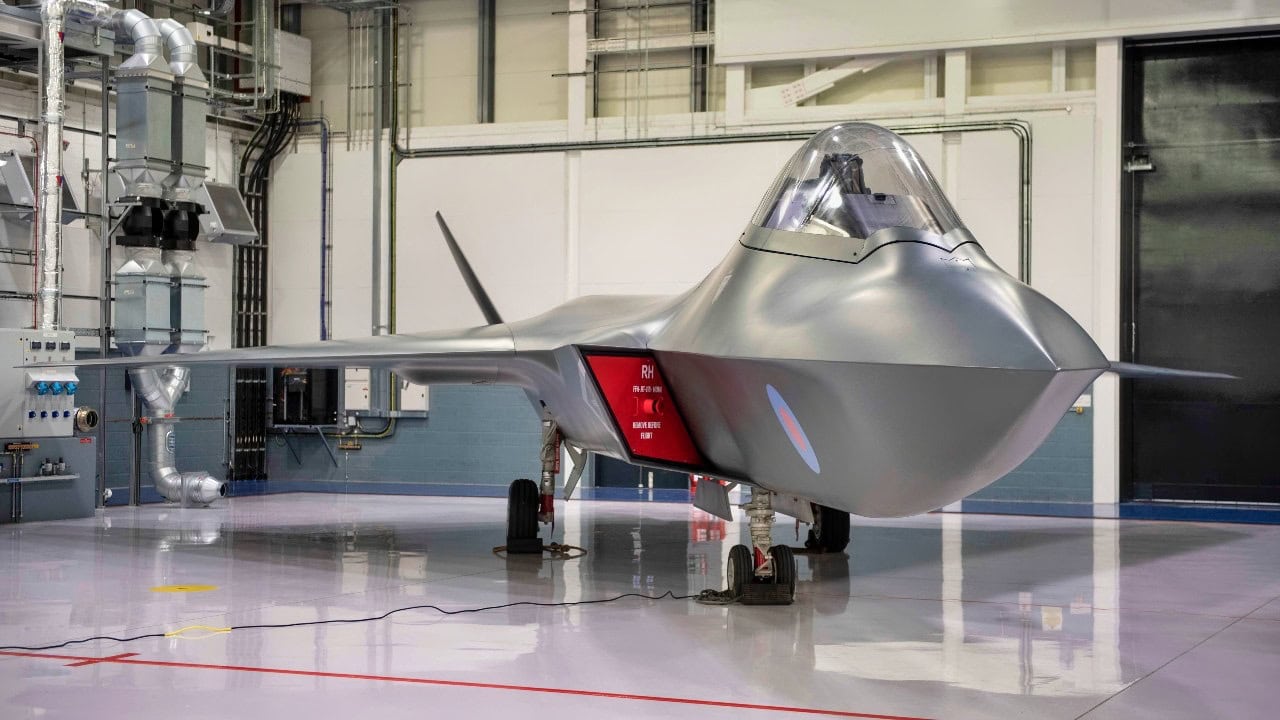
Image of the UK’s concept model for the next generation jet fighter “Tempest”, which was unveiled by Defence Secretary, at Farnborough International Air Show back in 2018.
How fast will the aircraft travel, and how great is its maximum takeoff weight? Unfortunately, no one knows except for the designers.
A concept model was displayed at the 2024 Farnborough International Air Show, though the consortium repeatedly stressed that it was not representative of the aircraft’s final design.
Some details about GCAP’s expected capabilities have been teased here and there.
An official from the UK Ministry of Defense said the aircraft was expected to carry twice the internal weapons payload of an F-35 and control other unmanned aircraft.
As a sixth-generation aircraft, GCAP is expected to incorporate advanced stealth systems, such as stealth shaping and radar-absorbent materials, to reduce its radar cross-section.
Its avionics are also expected to include a sophisticated electronic warfare suite, enabling the aircraft to operate in highly contested environments without support from airborne early-warning aircraft.
Sixth-Generation Programs Are Expensive
The program has already received significant financial investment from its current member states.
In 2026, Japan allocated $1.27 billion toward the program, Italy committed €8.8 billion (roughly $10 billion) this year, and the UK has allocated £8.6 billion (roughly $11 billion) to GCAP over the next four years.
This does not include contracts awarded by other companies or investments from other interested nations.
Altogether, investment in the GCAP program is estimated at around $21 billion, and the program’s total cost is expected to increase significantly throughout development.
While the flyaway cost of the aircraft remains unknown, some analysts estimate that GCAP could cost up to $600 million per aircraft. This is, of course, purely speculative.
Currently, the main obstacle to the GCAP is competition from the F-35.
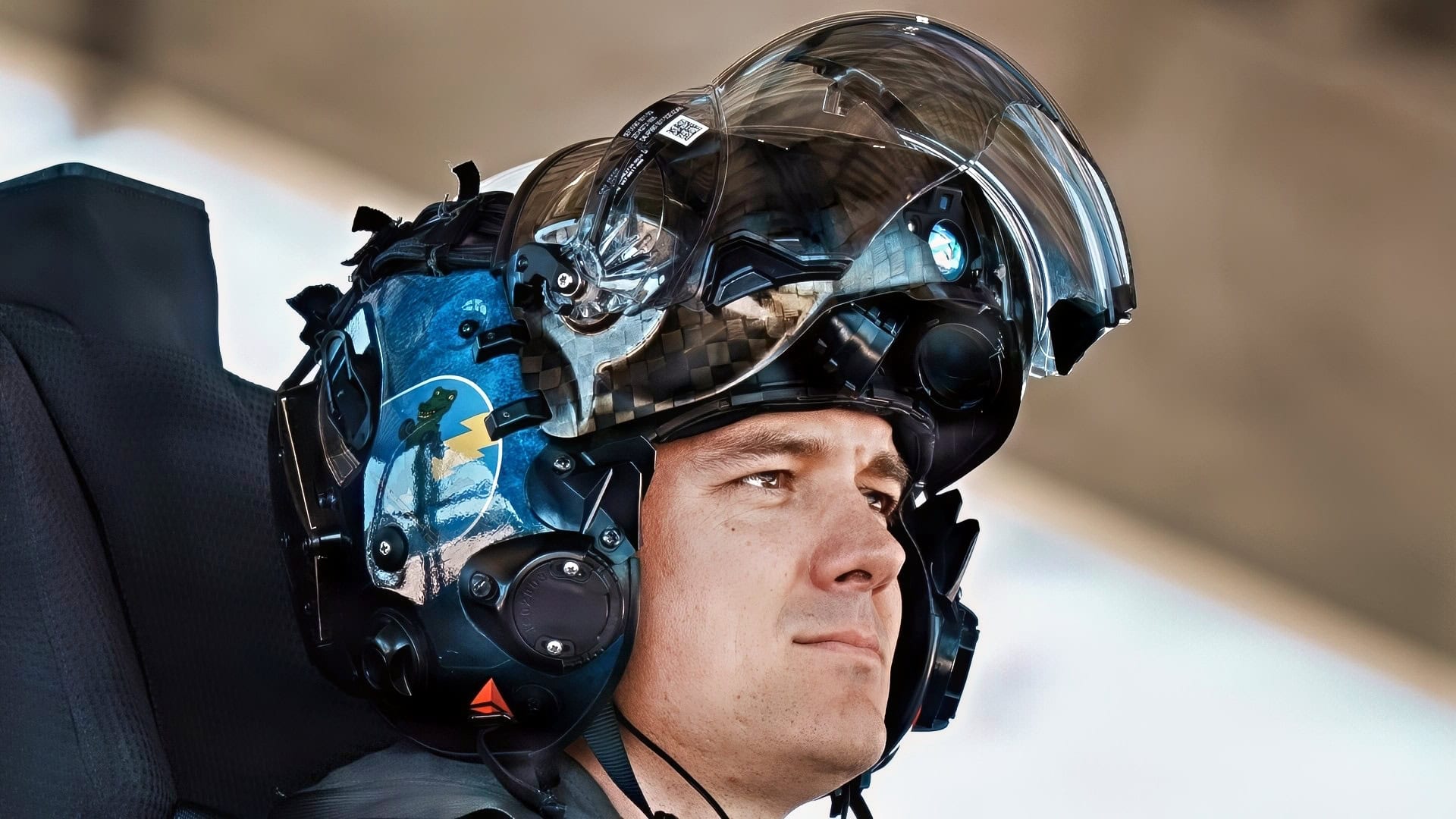
An F-35A Lightning II pilot assigned to the 125th Fighter Wing conducts a preflight maintenance check at Jacksonville Air National Guard Base, Florida, April 15, 2026. Coordination between pilots and maintainers ensures aircraft are mission-ready to execute aerospace control and air defense missions under Air Combat Command. The 125th FW sustains readiness to support federal and state missions, including combat operations, humanitarian assistance, and disaster response. (U.S. Air National Guard photo by Staff Sgt. N.W. Huertas)
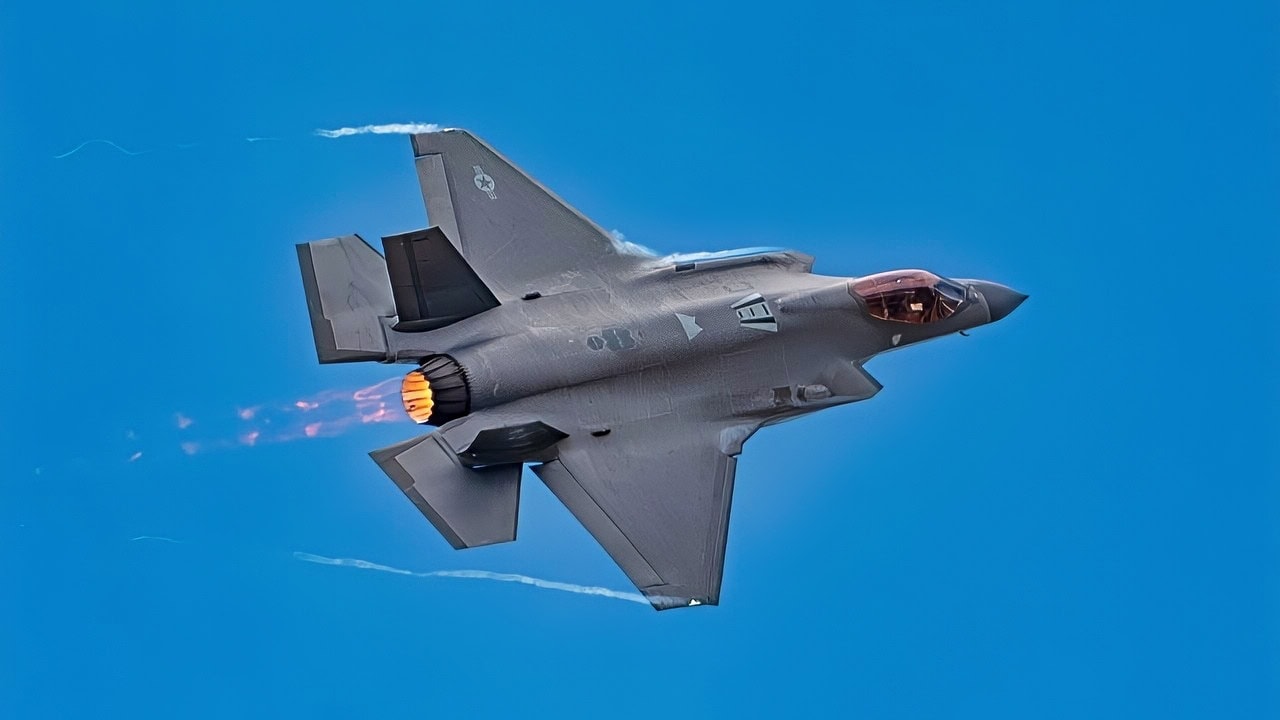
A U.S. Air Force F-35 Lighting II from the 62nd Fighter Squadron at Luke AFB, AZ, performs during the Fairchild SkyFest 2024 airshow and open house at Fairchild Air Force Base, Washington, June 22, 2024. Team Fairchild hosted the Fairchild SkyFest 2024 airshow June 22 and 23 to thank the local community for their support and partnerships. The airshow included the A-10 Thunderbolt II Demonstration team, Wings of Blue parachute team, UH-1N Huey and several other aerial acts and static displays. (U.S. Air Force photo by Airman 1st Class Stephanie Orta Carranza)
The F-35 program cost the U.S. roughly $412 billion as of 2022, an investment that the three GCAP states are unlikely to match on their own.
The U.S. had the advantage of splitting some of the cost with nation-states interested in the Joint Strike Fighter program, including the UK, Italy, and Japan.
Likewise, Lockheed Martin, the primary manufacturer of the F-35, benefited from decades of experience manufacturing stealth fighters like the F-22 and the F-117.

Four F-117 Nighthawks fly in formation during a sortie over the Antelope Valley recently. After 25 years of history, the aircraft is set to retire soon. As the Air Force’s first stealth fighter, the F-117 is capable of performing reconnaissance missions and bombing critical targets, all without the enemy’s knowledge. (Photo by Bobbi Zapka)
Meanwhile, none of GCAP’s current members have any experience designing or manufacturing next-generation technology.
This is not to say that GCAP is impossible or a lost cause, but the current consortium faces a serious uphill battle as things currently stand.
About the Author: Isaac Seitz
Isaac Seitz, a Defense Columnist, graduated from Patrick Henry College’s Strategic Intelligence and National Security program. He has also studied Russian at Middlebury Language Schools and has worked as an intelligence Analyst in the private sector.