
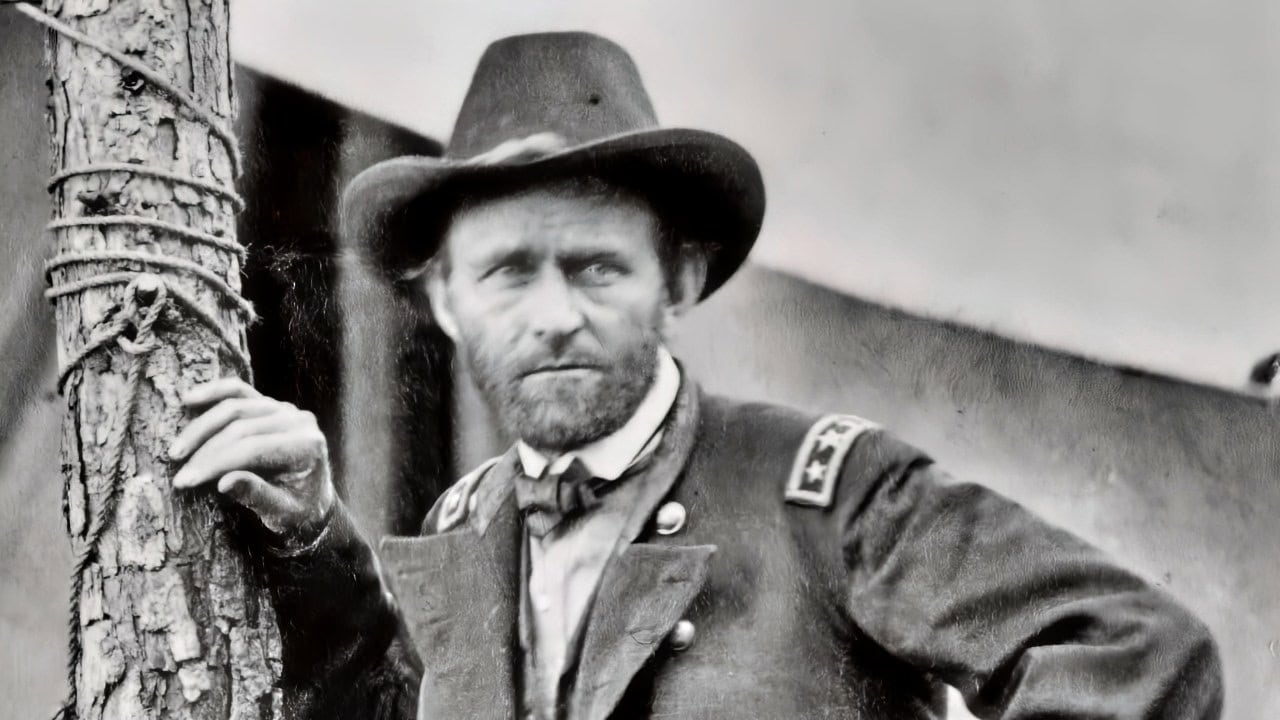
Summary and Key Points: “In every battle there comes a time when both sides consider themselves beaten; then he who continues the attack wins.” The line has been attributed to Ulysses S. Grant for so long that historians still argue over when, or whether, he said it, and it survives because it sounds like the man. Grant’s war was built on refusing to stop: “No terms except an unconditional and immediate surrender can be accepted,” he told the garrison at Fort Donelson in 1862, and three years later, in April 1865, he accepted Robert E. Lee’s surrender, ending the Civil War.
The Words of Ulysses S. Grant
Military Quote of the Day: “In every battle there comes a time when both sides consider themselves beaten; then he who continues the attack wins.”- Ulysses S. Grant
Ulysses S. Grant led the Union army to victory in the Civil War and later served as the 18th president of the United States for eight years, presiding over Reconstruction.
According to a History Channel biography, Grant was born in Ohio in 1822. Born as Hiram Ulysses Grant, Grant went to West Point in 1839, when he was 17, and there, the member of Congress who appointed him mistakenly listed his middle name, giving him the initials “U.S.” Grant never corrected the mistake and was known as “Ulysses S. Grant” for the rest of his life.
Grant graduated from West Point in 1843, where he was “known as a skilled horseman but an otherwise undistinguished student.” He was commissioned as a brevet second lieutenant in the 4th U.S. Infantry and served in the Mexican-American War. Grant resigned from the Army in 1854.

Cannon Firing. Image Credit: Creative Commons.
Grant in the Civil War
Grant spent the next few years in civilian life, with his wife and four children.
But when the Civil War started in 1861, Grant became a colonel of the 21st Illinois Volunteers; President Lincoln soon made him a brigadier general, and in 1862, his troops captured Fort Donelson in Tennessee. This led to another famous Grant quotation: “No terms except an unconditional and immediate surrender can be accepted.”
The following year, Grant and his troops captured Vicksburg in Mississippi, and in March of 1964, Lincoln promoted him to lieutenant-general and put him in command of all U.S. armies.
In April of 1865, Grant accepted Gen. Robert E. Lee’s surrender, bringing the Civil War to a close.
The History Channel biography noted that Grant and his wife had been invited to attend the play at Ford’s Theatre with President Lincoln, the night he was assassinated, but had declined.
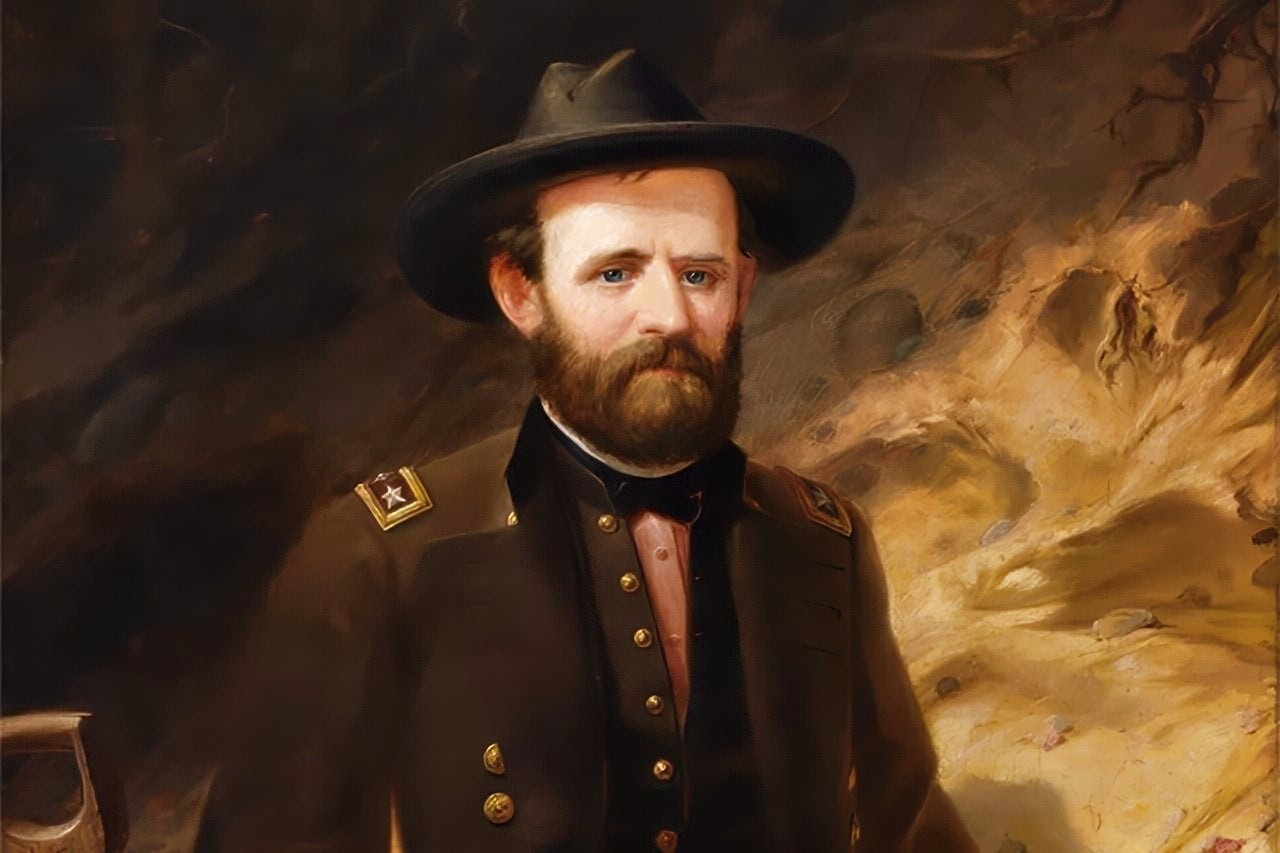
General Grant U.S. Army. Image Credit: Creative Commons.
President Grant
After Lincoln’s death, President Andrew Johnson appointed Grant a four-star general, the first in the nation’s history.
Johnson later tried to remove Secretary of War Edwin Stanton and replace him with Grant, although Johnson’s impeachment, also the first in history, resulted from that.
The Republican Party then nominated Grant for president, and in 1868 he was elected the 18th president, becoming the youngest man elected to the presidency.
During his presidency, Grant oversaw Reconstruction and the ratification of the 15th Amendment, which enshrined voting rights.
“In addition to focusing on Reconstruction, Grant signed legislation establishing the Department of Justice, the Weather Bureau (now known as the National Weather Service), and Yellowstone National Park, America’s first national park,” the History Channel biography said. “He also tried, with limited success, to improve conditions for Native Americans.” Grant was easily re-elected in 1872.
Grant’s presidency was also marked, according to the History Channel, by “scandal and corruption,” although the president himself did not “participate in or profit from the misdeeds perpetrated by some of his associates and appointees.”

Ulysses S. Grant. Image: Creative Commons.
After leaving office, Grant spent two years traveling around the world with his family. Later, he relocated to New York City.
He died in 1885 at the age of 63. As the old joke goes, Grant is not “buried” in Grant’s Tomb, located in Morningside Heights; rather, he is entombed there, above ground.
The Quote
A quote often attributed to Grant is: “In every battle there comes a time when both sides consider themselves beaten; then he who continues the attack wins.” This presumably refers to the Civil War he fought in. Quotery interprets it as Grant stating that “battles are as much contests of morale and perception as of firepower.”
“Read more broadly, it argues for persistence at the moment when quitting feels most justified—because that is precisely when the opponent may be closest to breaking as well,” Quotery notes.
The quote is widely attributed to Grant and is thought to reflect his philosophy, though historians and history buffs have sometimes debated when or where he said it.
About the Author: Stephen Silver
Stephen Silver is an award-winning journalist, essayist, and film critic, and contributor to the Philadelphia Inquirer, the Jewish Telegraphic Agency, Broad Street Review, and Splice Today. The co-founder of the Philadelphia Film Critics Circle, Stephen lives in suburban Philadelphia with his wife and two sons. For over a decade, Stephen has authored thousands of articles that focus on politics, national security, technology, and the economy. Follow him on X (formerly Twitter) at @StephenSilver, and subscribe to his Substack newsletter.