
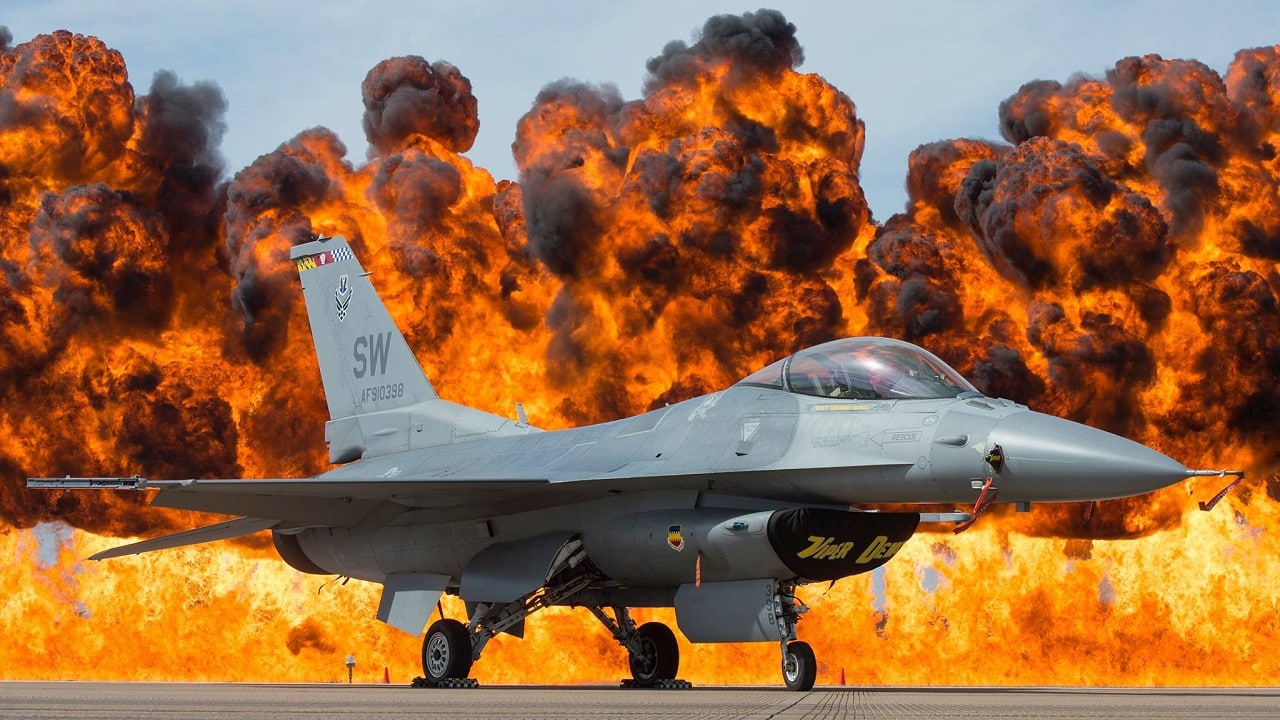
Summary and Key Points: In 1982, during the last Red Flag exercise to fly an Avro Vulcan, an F-16 crashed at Nellis Air Force Base in Nevada and the pilot ejected. The jet’s emergency power unit ran on hydrazine, a fuel that is toxic and highly flammable, and the spill put a cloud over the ramp. Air traffic told every crew to shut hatches, windows, and doors and stay inside.
The F-16 Accident and the Vulcan Crew
The military often uses training programs to prepare crews before deploying them to combat operations.
The United States Air Force (USAF) is no exception.
For decades, the USAF has conducted Red Flag exercises at Nellis Air Force Base in Nevada to prepare aircrews for intensive air combat sorties in a safe training environment.
Held only three times a year, Red Flag exercises involve participants from the Five Eyes, including the United Kingdom.
Accidents can happen, and one such incident left a crew trapped in their aircraft because of hazardous chemicals in the surrounding airspace.
Red Flag History
Established in 1975 as the brainchild of Lt. Col. Richard “Moody” Suter and one of the initiatives directed by General Robert J. Dixon, Red Flag exercises prepare USAF personnel for combat.
During the Vietnam War, many aircrews lost in combat had fewer than ten missions under their belts. Alas, Red Flag was introduced to provide that experience before wingmen took to the skies in real combat.
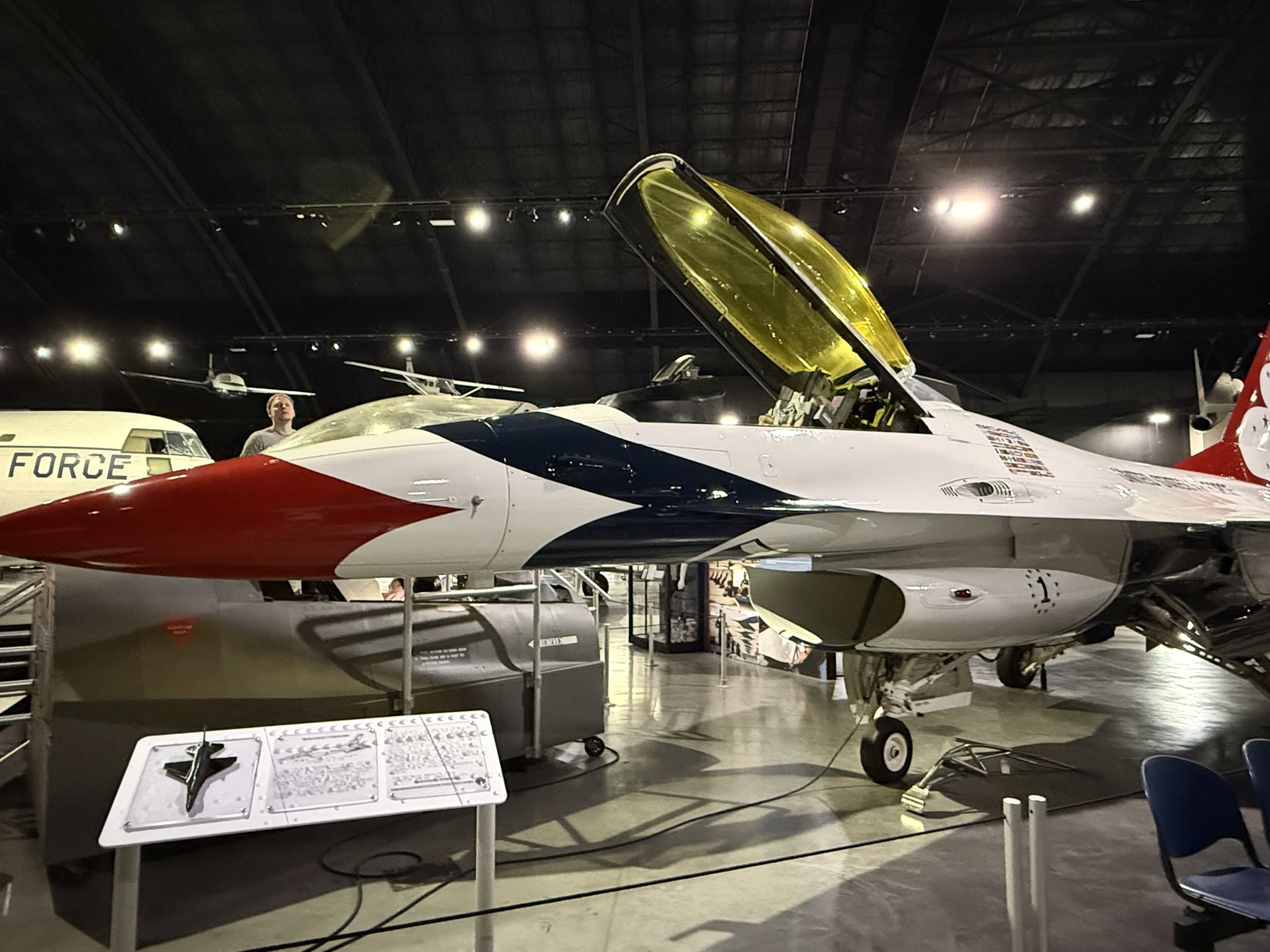
F-16 Fighter. 19FortyFive.com Image from the National Museum of the U.S. Air Force.
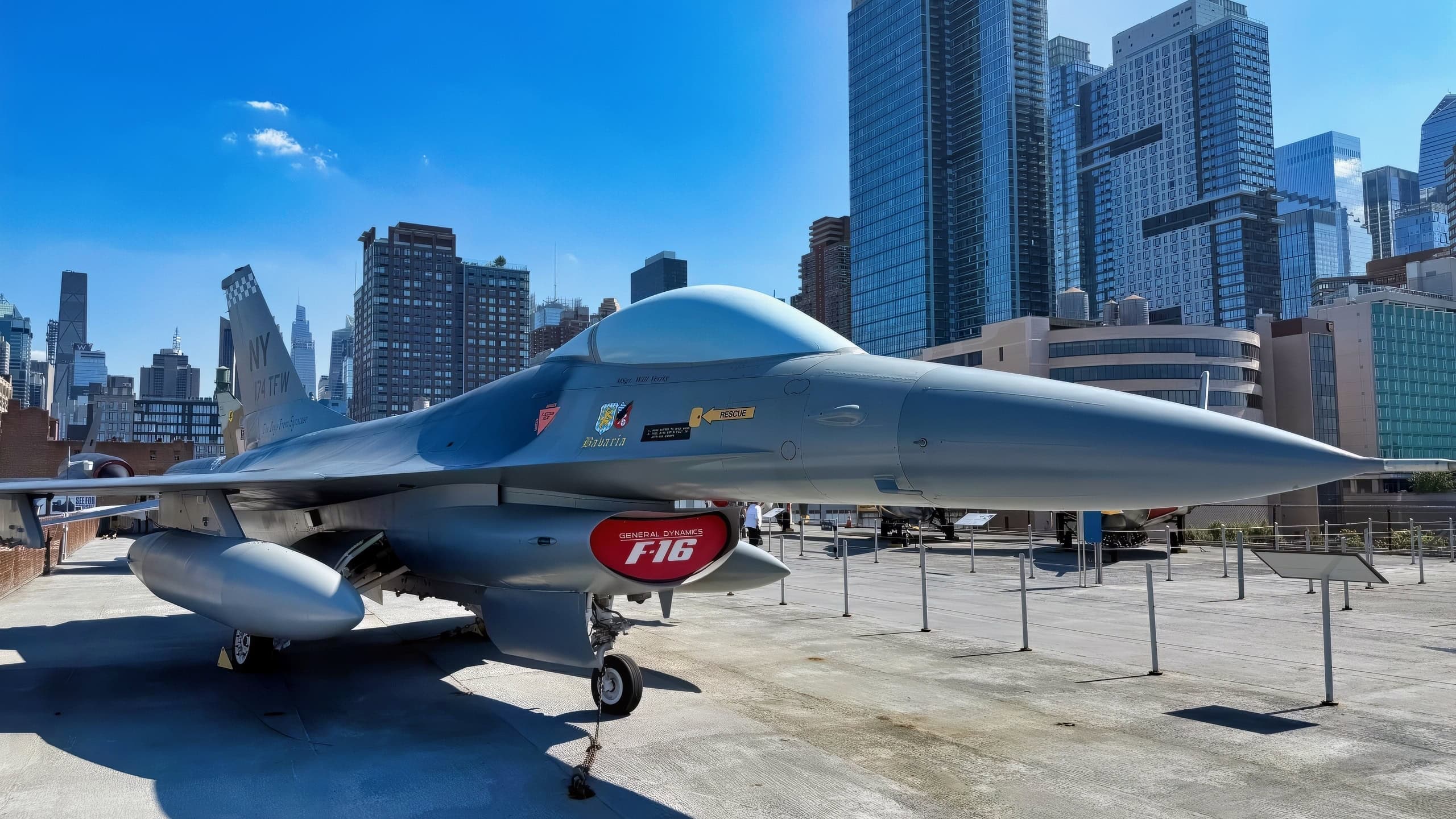
F-16 Fighter On USS Intrepid. 19FortyFive.com Image.
According to the Aviation Geek Club, Red Flag established a training complex to simulate Soviet air defenses and their operating procedures, providing crews with experience using radars, electronic countermeasures, guns, and missiles.
RAF Introduced
By 1977, the Royal Air Force (RAF) was invited to participate with tactical aircraft and the Avro Vulcan bomber.
Equipped only with offensive weaponry and designed as part of the U.K.’s nuclear deterrent, the Vulcan served with the RAF for 28 years, until March 1984.
The high-speed, high-altitude bomber could be used for conventional, low-level bombing missions, most notably during the Falklands War with Argentina in 1982.
In 1982, the last Red Flag exercise to use a Vulcan took place.
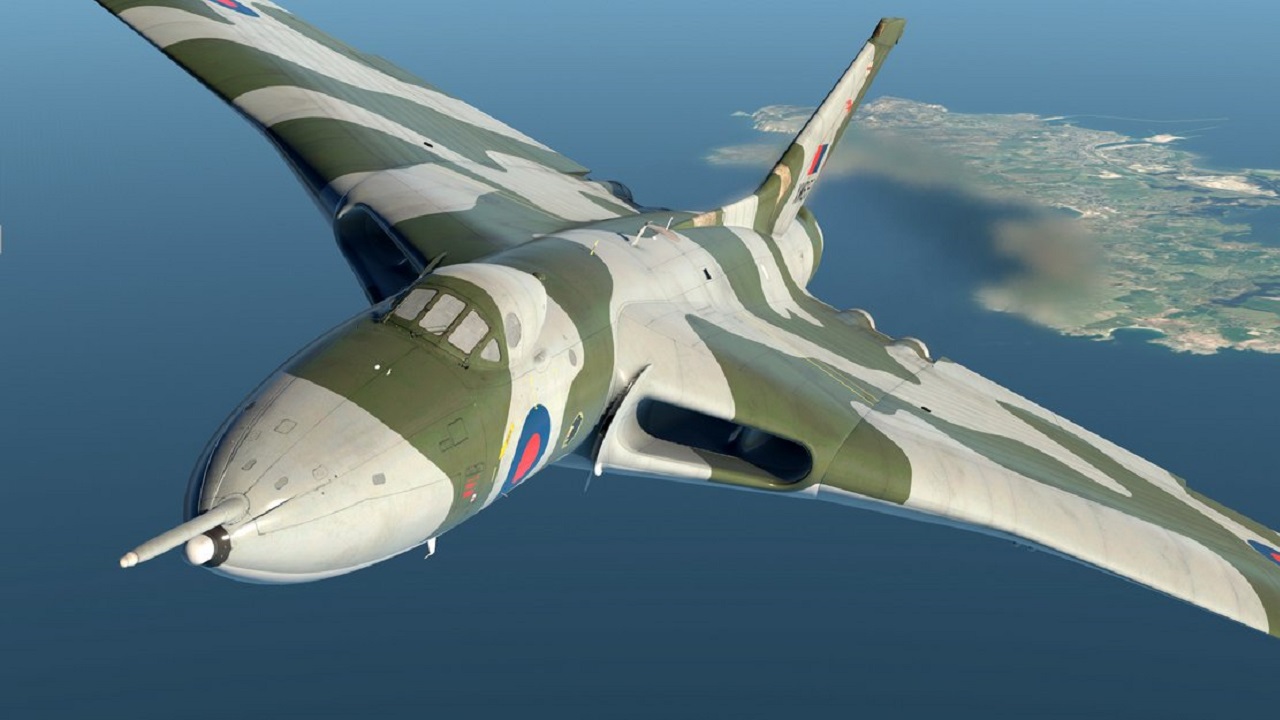
Avro Vulcan. Image Credit: Creative Commons.
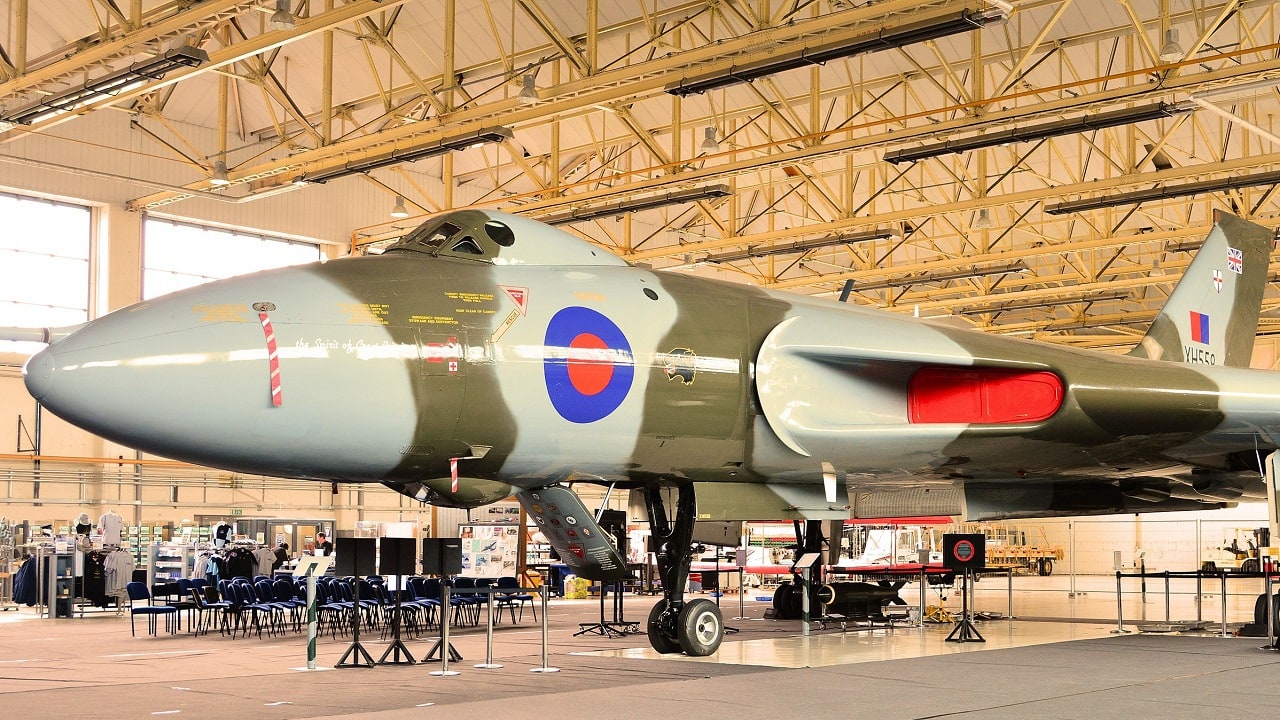
Avro Vulcan. Image Credit: Creative Commons.

Avro Vulcan. Image Credit: Creative Commons.
It was an eventful conclusion to the aircraft’s life in Nevada, as Anthony Wright, Vulcan Navigator Radar, explained in Tony Blackman’s Vulcan Boys True Tales of the Iconic Delta V Bomber.
“Because we were operating at low level, at night, flying across miles of uninhabited desert, apart from take-off and landing at Nellis, our pilots were flying practically blind in the darkness and had to trust the navigation teams,” said Wright. “It was only on returning from the desert range and climbing to height that sometime later a huge bright area suddenly appeared and attracted the pilots’ attention. It was the lights of Las Vegas.”
F-16 Crash
As part of the Red Flag exercise, the General Dynamics (now Lockheed Martin) F-16 was used to simulate a Soviet fighter jet.
After landing, they had a quick debrief before all personnel returned to Nellis officers’ club to wind down. Most would then head to the nearest casino.
However, one night, the schedule was unexpectedly interrupted when an F-16 crashed.
“One evening just as we were about to enter base operations, I heard a shout and turned round to see an F-16 on fire, smoke billowing out behind it, flying, or not as the case might be, low across the airfield parallel to the runway, and with a bang the pilot ejected,” Wright said. “I had my camera on my shoulder and was just able to take a photograph of the aircraft on fire as it hit the ground. It was that quick.”
Wright’s crew carried on as normal, even despite the large plumes of smoke rising from the F-16. Only once they entered the Vulcan were they informed of the impromptu change of plan.
Hazardous Surroundings
“When we got into the aircraft and onto intercom, we were told by air traffic control that all aircraft crews were to close any hatches, windows and doors and not to venture outside as it was hazardous,” Wright said. “We complied and were then told the reason.
Unknown to us, the F-16 used hydrazine, which is highly toxic and highly inflammable, to fuel the aircraft’s emergency power unit [EPU]. If the F-16’s engine failed, then there was no power to restart the engine or operate the flying controls.”
He continued: “The EPU was there to try a restart.
If the EPU failed to generate power, the pilot had no option but to eject.
This one did.
Once the fire teams and others in breathing apparatus and contamination suits got the situation under control, we were cleared for take-off.”
Remarkably, nobody was harmed in the crash, and the mission continued as normal.
“Looking back, the flying on Red Flag was very testing, with much adrenaline used by all concerned,” Wright concluded. “Despite that, we learnt a good deal and were extremely satisfied to have completed it… definitely an exercise not to be missed.”
About the Author: Shay Bottomley
Shay Bottomley is a British journalist. He has written for the Western Standard, Business Insider, Maidenhead Advertiser, Slough Express, Windsor Express, Berkshire Live and Southend Echo.