
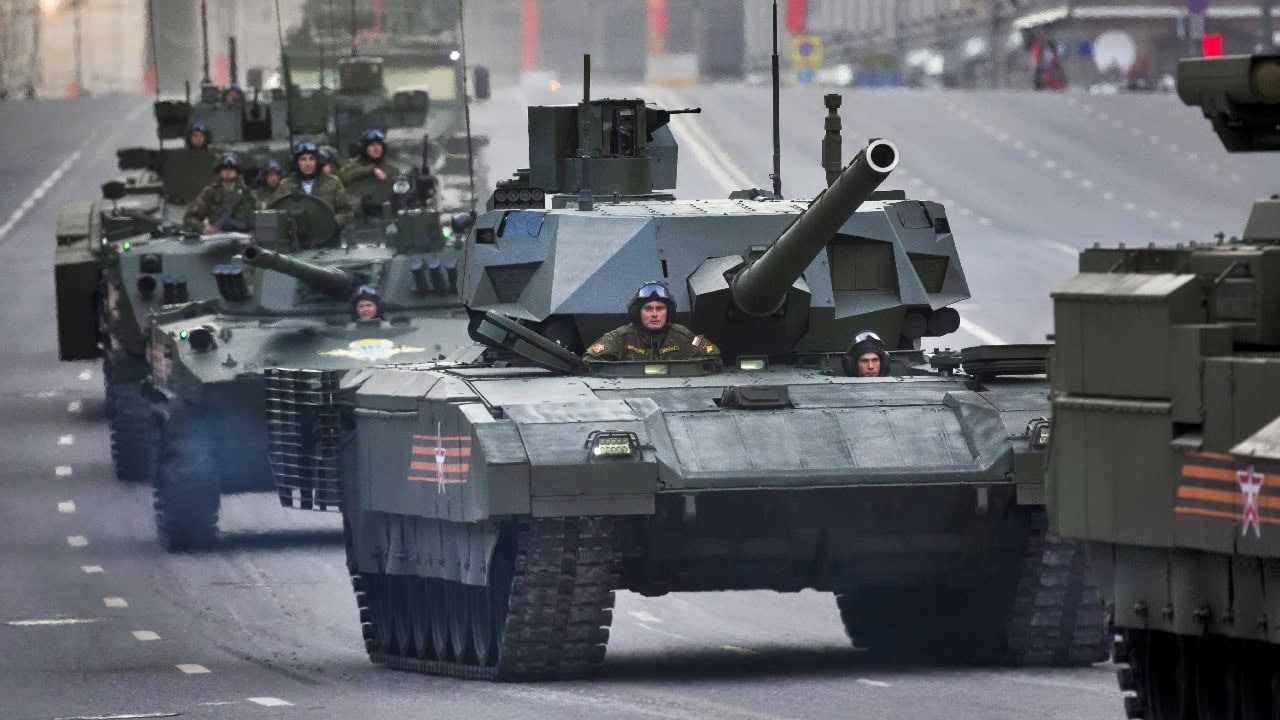
The war between Russia and Ukraine is shifting. For years, Russia has attacked Ukrainian infrastructure not solely linked to its enemy’s military supply lines.
Every winter since the full-scale invasion began, Russia has struck energy facilities to plunge large parts of Ukraine into darkness during the freezing winter months.
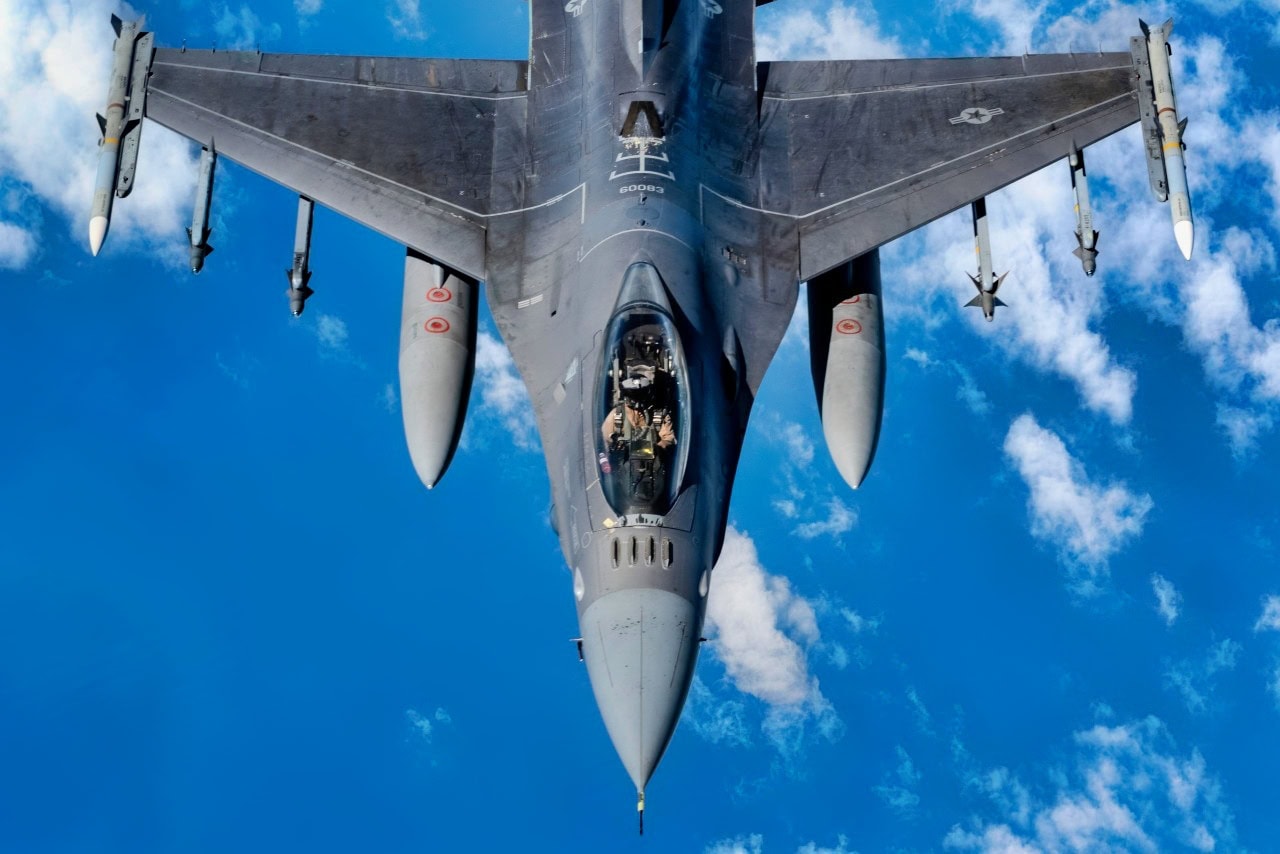
A U.S. Air Force F-16 Fighting Falcon flies a presence patrol over the U.S. Central Command area of responsibility, Feb. 23, 2025. Fighting Falcons fly routine patrols over the AOR to deter aggression and bolster the regional defensive posture. (U.S. Air Force photo by Staff Sgt. Jackson Manske)

Trump Meeting in the Vatican with Ukraine. Image Credit: White House.
Attacks on civilian infrastructure are well documented, while the atrocities committed in areas once occupied by Moscow’s forces are widely known.
Over the past year, Ukraine has retaliated, launching nightly drone attacks on critical infrastructure across its aggressor’s territory.
Justifiable, arguably, given how little interest Russia has shown in keeping the conflict between the two military forces.
Oil refineries are frequently targeted, disrupting supply lines and limiting Moscow’s ability to trade and provide adequate fuel for its large population.
However, these approaches are escalating on both sides, steering the conflict in a new, economically focused direction.
Overnight Attacks
Assaults on energy infrastructure naturally have further ramifications from disrupting supply lines.
A reduced supply means higher costs for civilians, and hours in darkness with no heating when temperatures sit well below freezing are often demoralizing.
Overnight leading into Thursday, 17th September, Russia’s Ministry of Defense said its forces targeted metallurgical and electronics plants, industrial factories connected to Ukraine’s military, and energy and transport facilities in three regions of Ukraine.
19 were injured, and Ukraine’s Air Force said 131 Russian aerial targets were destroyed or shot down predominantly across Kyiv, Zaporizhzhia and Odesa.
Similarly, Ukrainian forces struck a military airfield in Russia’s Rostov Oblast, with a fire reported at the Yaroslavl oil refinery after a drone attack.
Such overnight fighting is not a one-off occurrence.
Over the past year, both Russia and Ukraine have launched hundreds of projectiles towards critical infrastructure in the other’s territory each night.
Energy Warfare
The latest attacks come days after U.S. President Donald Trump claimed that both sides had agreed to halt attacks on energy infrastructure.
“Ukraine has agreed not to hit Russian energy targets. Russia has agreed to do, likewise!” wrote Trump in a Truth Social post on Monday.
Over the previous weekend, the President had urged his Ukrainian counterpart Volodymyr Zelensky to cease strikes on Russian oil refineries amid a worldwide shortage of diesel.
Both Russia and Ukraine welcomed the idea, even if it was not subsequently implemented.
Kremlin spokesman Dimitry Peskov said Trump’s proposal for an “energy truce” was a “very good idea,” even if it was unlikely to solve global energy shortages.
President Zelensky also proposed an agreement to halt strikes on energy infrastructure, but added that his country could do so only if international guarantees ensured that Russia would abide by the truce.
A Truce Unlikely
The fact remains that there’s deep distrust between Moscow and Kyiv.
The full-scale invasion itself is a blatant example of how the Kremlin may not act on its very own words.
Hence Zelensky’s call for guarantees; it’s highly unlikely Russia will adhere to any agreement.
For Ukraine, the drone campaign is a necessary evil, and one that is causing significant disruption to Russian energy.
Two Rosneft-owned oil refineries on the Volga River have reportedly stopped processing following Ukrainian attacks, with repairs at Syzran expected to take at least a month.
Ukraine, therefore, is not just retaliating, but inflicting major disruption on Russian infrastructure on a nightly basis.
A New Form of War
This demonstrates how the war has adapted over the past four and a half years.
The priorities for both sides have changed, given how the 745-mile frontline has seen minimal changes for much of the conflict.
The two sides differ so much on what it will take to bring peace that it’s hardly worth considering without a major change in the status quo.
Zelensky will never concede territory his country’s forces have paid the ultimate sacrifice to defend – a proposition that is non-negotiable for Russian President Vladimir Putin.
In its fifth year, the conflict has shifted to one of economic endurance, where a concession will only be worthwhile when one side can no longer economically afford to keep fighting.
Energy remains key for both Russia and Ukraine, so infrastructure in each country will only ever grow as a target. Truce or no truce, that fact is unlikely to change anytime soon.
About the Author: Shay Bottomley
Shay Bottomley is a British journalist. He has written for the Western Standard, Business Insider, Maidenhead Advertiser, Slough Express, Windsor Express, Berkshire Live and Southend Echo.