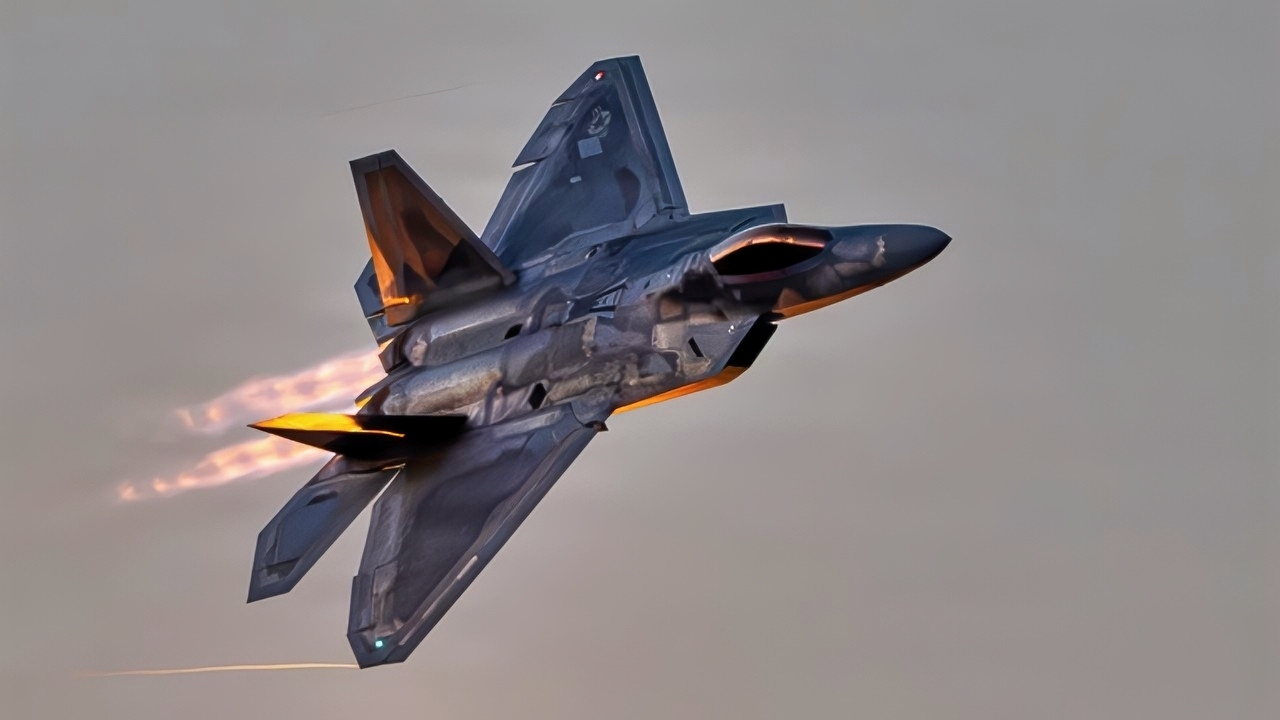
Summary and Key Points – Russia’s newest air defense system may matter most in Asia. Sputnik reports Moscow intends to sell the S-500 to China and India, and even a stripped-down export version could give Chinese engineers a close look at Russian radar, sensor, and integration concepts they could fold into their own systems. That could erode America’s edge in stealth, electronic warfare, and missile defense, tighten Russia-China military ties, and force the Pentagon to plan for linked crises in Europe and the Pacific.
S-500 vs. F-22 and F-35: Who Wins?
Russia insists that its advanced S-400 surface-to-air missile system—and now the new S-500—has been upgraded to track and defeat stealth aircraft. The claim is as ambitious as it is unverified. Russia’s S-500 air defenses do appear to present a threat to U.S. and allied fighter jets. The systems integrate advanced digital multi-node networking and employ precise, long-range radar.
These attributes enable the system to detect aircraft at greater distances on a broader range of frequencies.
However, detecting a stealth jet with a lower-frequency surveillance radar is different from establishing a track on a moving stealth jet with an engagement radar.
Advanced S-500s might detect that something is there, but they are less likely to track and engage a stealth jet.
S-500 vs U.S. 5th-Gen Stealth (F-22, F-35 and Even B-21 Raider Bomber)
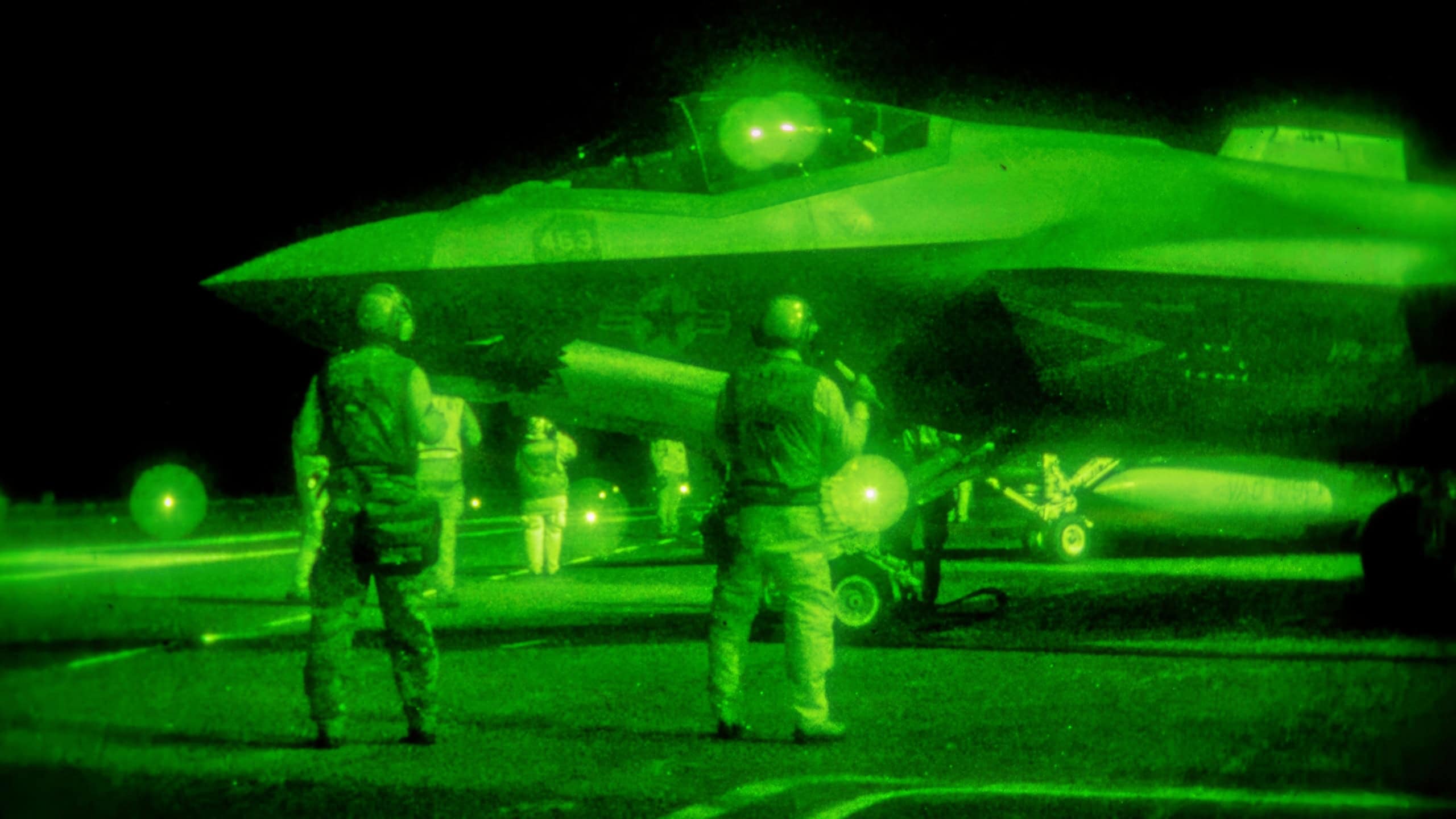
PACIFIC OCEAN (Jan. 23, 2026) –U.S. Navy Sailors conduct routine flight operations on the flight deck of the Nimitz-class aircraft carrier USS Theodore Roosevelt (CVN 71) Jan. 23, 2026. Theodore Roosevelt, flagship of Carrier Strike Group (CSG) 9, is underway conducting exercises to bolster strike group readiness and capability in the U.S. 3rd Fleet area of operations. (U.S. Navy photo by Mass Communication Specialist 2nd Class Ryan Holloway)
If the S-500’s available specs are accurate, the system is a threat to the West.
RIA Novosti claims the S-500 has an operational range of approximately 370 miles and can detect and counter up to 10 supersonic ballistic missile warheads traveling at 4.34 miles per second. The most pressing question concerns the S-500’s networking range—the speed and fidelity of its digital processing.
Radar nodes must be able to quickly share target track details across distances. Only an integrated system could maintain a continuous track of a jet flying at high speed from one radar’s field of view to another’s.
If the S-500 operates with a range of 370 miles, it could monitor airspace in Eastern Europe, complicating NATO efforts to maintain air superiority in any engagement with Russia.
In the event of a potential war, this could offset Russia’s large air-superiority deficit relative to NATO.
NATO operates hundreds of F-35s, positioned to easily achieve and maintain air superiority over Russia’s small number of Su-57 fifth-generation stealth fighters.
If S-500s could neutralize, or at least significantly reduce, the U.S. and NATO air advantage, it could shift the balance in a Russia-NATO conflict.
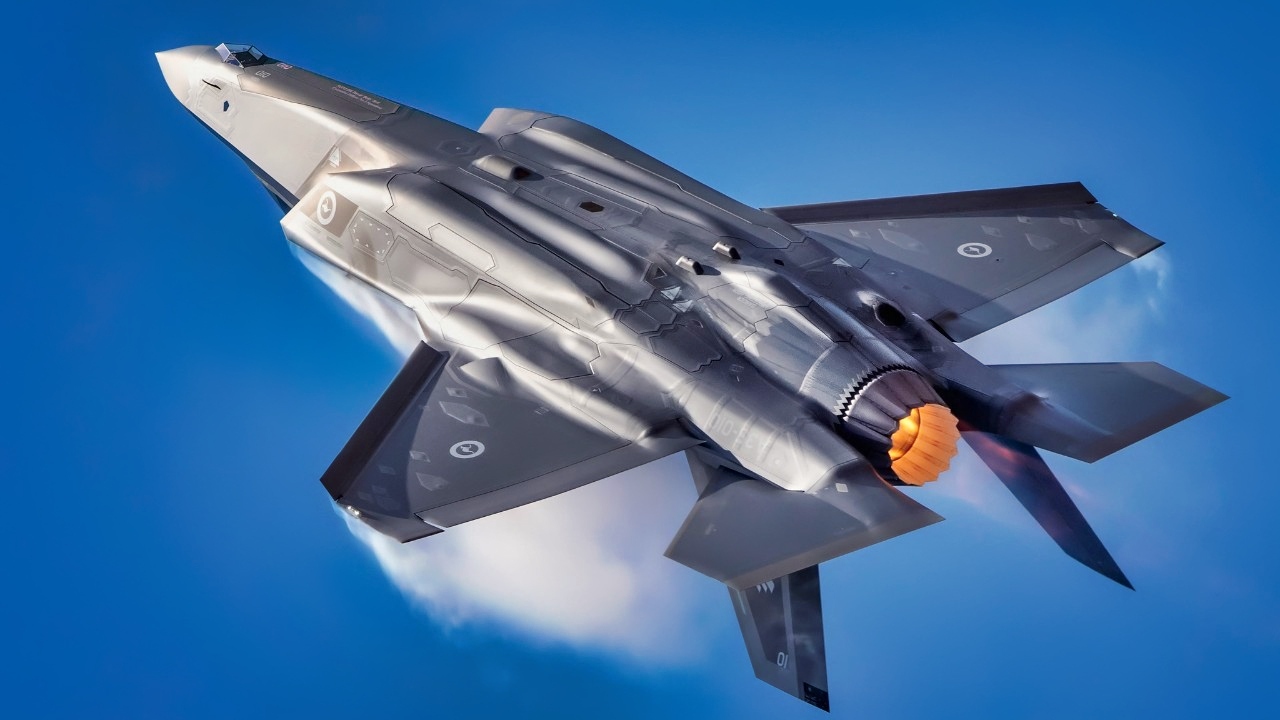
F-35 fighter. Image Credit: Creative Commons.
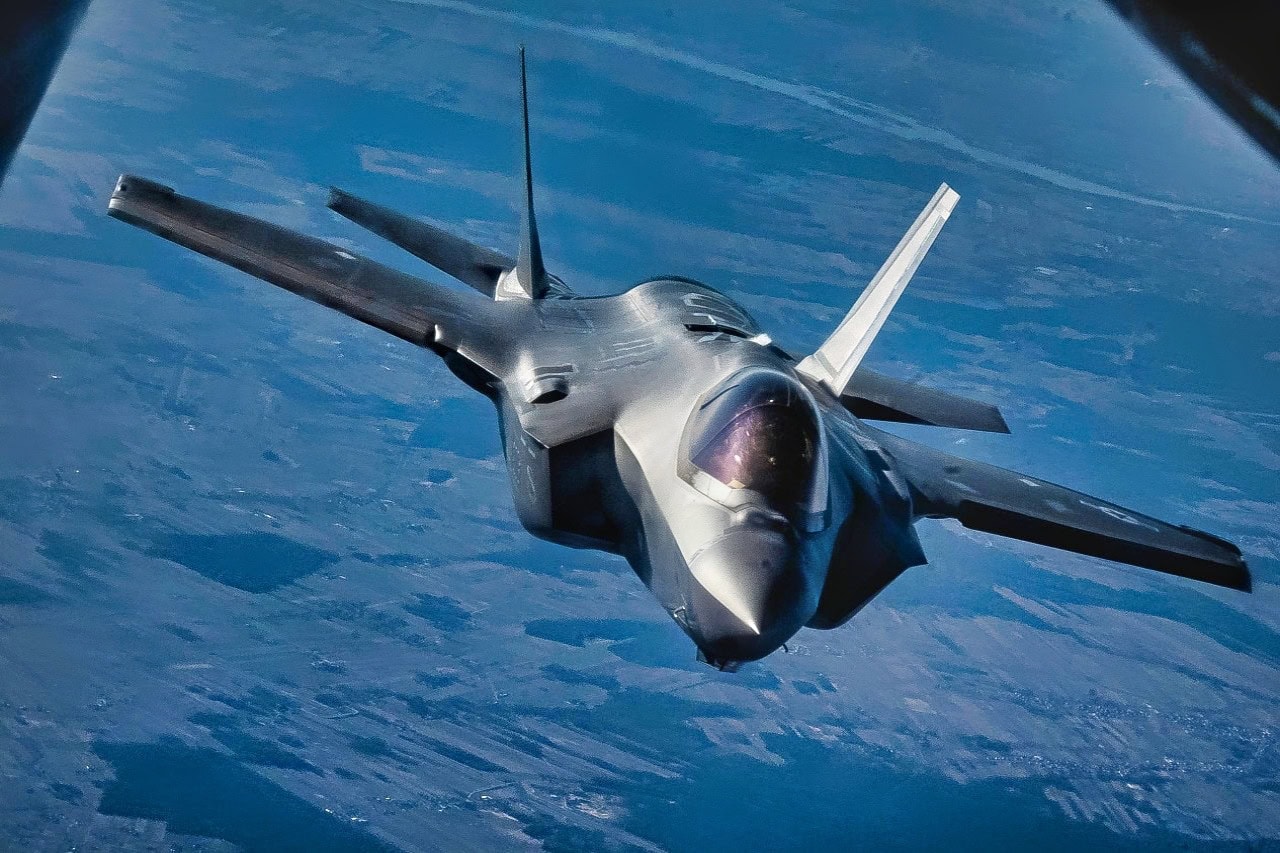
The 388th Fighter Wing’s F-35 Lightning II fifth-generation fighter cruises in Eastern European airspace, Feb. 28, 2022, in support of NATO’s collective defense. U.S. Air Forces in Europe – Air Forces Africa’s ability to support and integrate with NATO’s air policing missions continually hardens the alliance’s solidarity, collective resolve, and ability to adapt to a dynamic warfighting environment. (U.S. Air Force photo by Airman 1st Class Edgar Grimaldo)
S-500 to China & India?
Sputnik has reported that Russia intends to sell the S-500 to China and India—a move that could shift the balance of power in the Pacific for the U.S. and its allies.
A sale of the S-500 could provide China with valuable technological insights. Even if Russia held back the system’s most sensitive features, Chinese engineers could study its radar, sensors, and integration concepts to enhance indigenous systems.
Over time, this could erode the technological edge the United States has worked to maintain in stealth, electronic warfare, and missile defense, especially if Chinese systems are designed specifically to counter U.S. platforms.
By selling the S-500 to China, Moscow would also deepen its military cooperation with Beijing and signal a more coordinated challenge to U.S. global influence.
A tighter Russia-China defense relationship could complicate U.S. strategic planning by forcing the Pentagon to consider simultaneous or linked crises in Europe and Asia.

F-22 Raptor At National Museum of the Air Force. Photo Taken by Harry J. Kazianis for 19FortyFive Back in July 2025.

F-22 Raptor Exhibit Explainer 19FortyFive Photo. Taken By Harry J. Kazianis in July 2025 at the National Museum of the Air Force.

F-22 Raptor Model. Image Credit: 19FortyFive.com
This would strain U.S. resources and alliance commitments, particularly if adversaries perceived the United States as overstretched.
Finally, the proliferation of advanced air defense systems increases the risk of miscalculation.
As U.S. aircraft and ships operate closer to Chinese-defended areas, the chance of an incident or escalation grows.
About the Author: Kris Osborn
Kris Osborn is the President of Warrior Maven – Center for Military Modernization. Osborn previously served at the Pentagon as a highly qualified expert in the Office of the Assistant Secretary of the Army—Acquisition, Logistics & Technology. Osborn has also worked as an anchor and on-air military specialist at national TV networks. He has appeared as a guest military expert on Fox News, MSNBC, The Military Channel, and The History Channel. He also has a Masters Degree in Comparative Literature from Columbia University.