
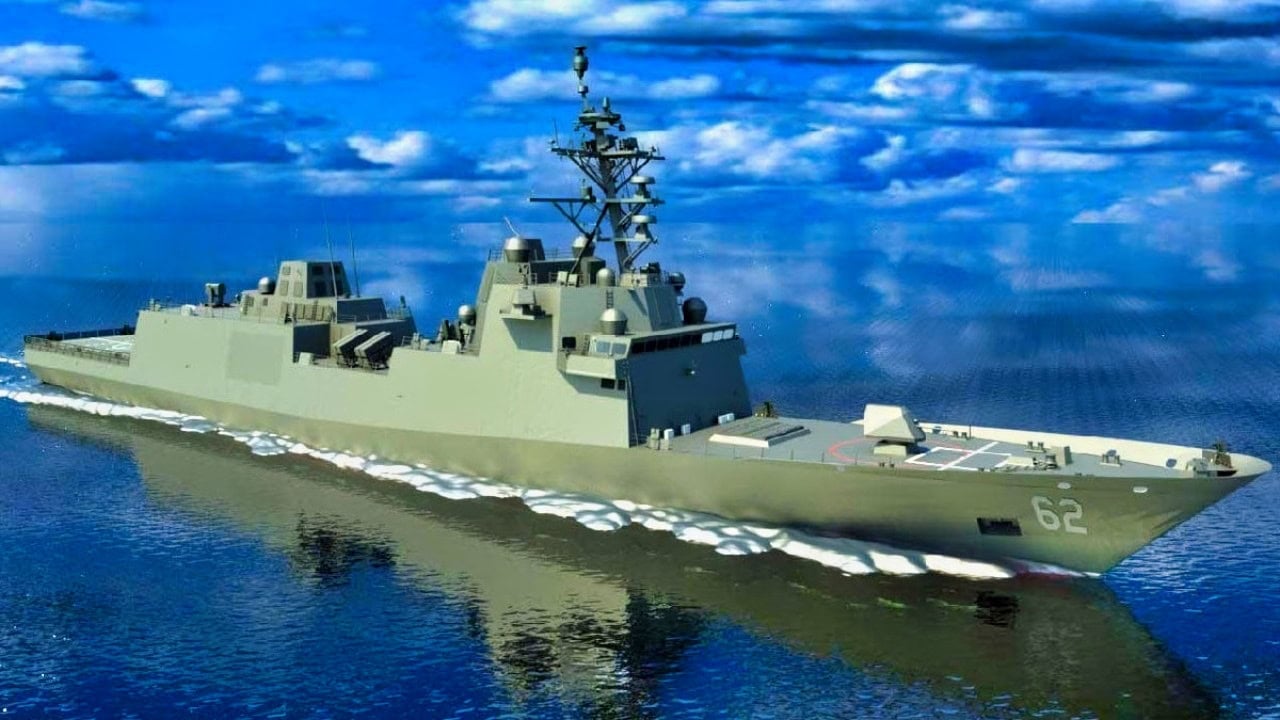
The U.S. Navy is currently developing a whole new class of smaller warships known as the FF(X) — a frigate designed to perform missions that don’t require one of the much larger and more expensive Arleigh Burke-class destroyers.
The new vessel will be based on the Coast Guard’s operational Legend-class National Security Cutter, and the Navy hopes the first ship will be in the water in 2028.
But even as work on FF(X) gets underway, the United States is considering a different, more radical option to get frigates into service much faster.
Reports this month revealed that the White House and the Navy are looking at existing frigate designs from Japan, South Korea, and Turkey, with a view to allowing up to two ships to be built overseas before production moves to American shipyards. In short, the U.S. is looking for existing designs and trying to manufacture them more quickly. Currently under consideration are a Japanese Mogami-derived design, South Korea’s Chungnam-class, and Turkey’s Istanbul-class.
That foreign frigate study is completely separate from FF(X), but the two efforts stem from the same problem: the Navy needs smaller warships, needs them quickly, and Washington is looking to avoid the delays that crippled its previous frigate program.
Why the Navy Wants FF(X)
Today, the Navy depends on its advanced Arleigh Burke-class guided-missile destroyers. The sophisticated warships are capable of performing a wide range of missions spanning air and missile defense to anti-submarine warfare.
They can also launch long-range attacks with Tomahawk cruise missiles. But not every naval operation requires that level of capability, and a frigate offers something smaller, more maneuverable, more available, and less valuable.
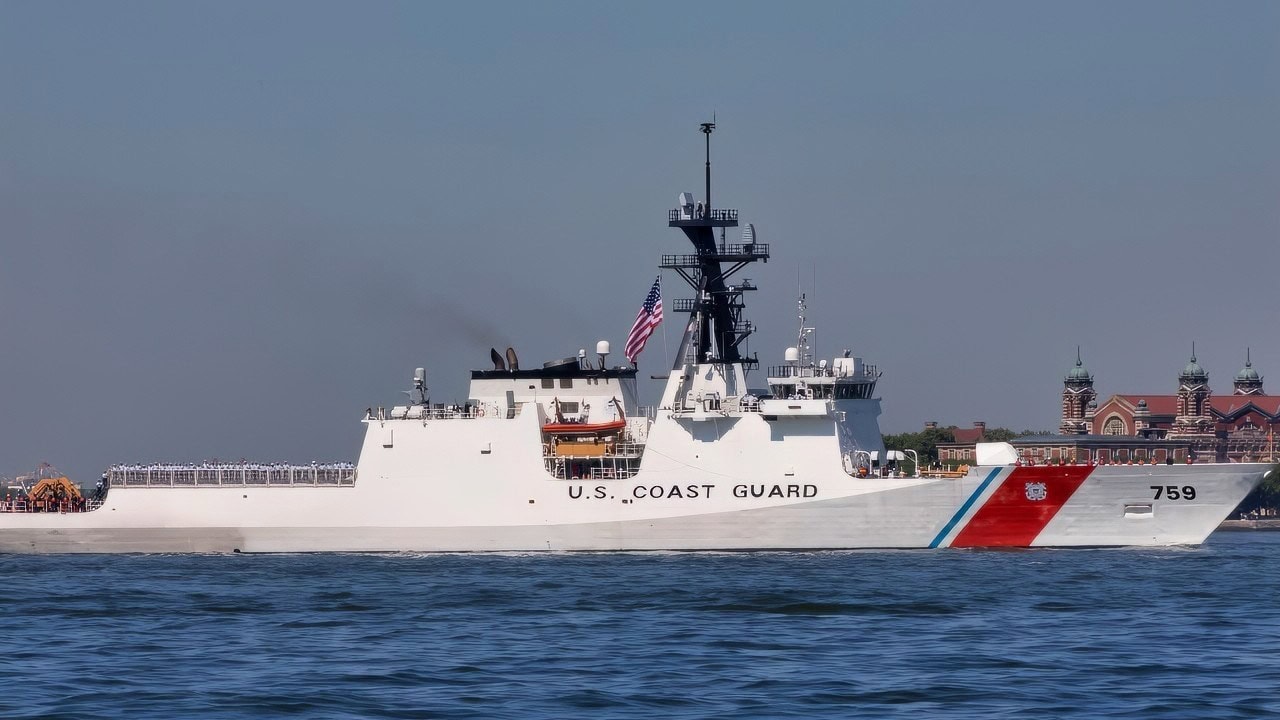
NEW YORK (May 22, 2024) The USCGC Calhoun (WMSL 759) sails in for Fleet Week New York, May 22. Navy and Coast Guard ships arrived in New York marking the beginning of Fleet Week New York. Fleet Week New York is a time-honored sea service celebration that allows citizens of New York City and the surrounding tri-state region to witness today’s maritime capabilities first-hand. The 2024 celebration will host nearly 3,000 Sailors, Marines, and Coast Guardsmen. (Mass Communication Specialist 3rd Class Leah Moore)
FF(X) is primarily being designed for surface warfare, meaning operations against other ships, while modular equipment will allow it to perform additional missions and work with unmanned vessels.
Frigates could escort valuable ships, conduct patrols, and operate in less dangerous waters, leaving destroyers available for the most demanding combat missions.
In June, Rear Adm. Brian Metcalf summed it up well, noting that the Navy cannot operate effectively with only one size of surface warship.
Constellation Was Meant to Fill the Gap
FF(X) also exists because the Navy’s previous attempt to build a modern frigate went so badly wrong. The Constellation class, as it was known, began in 2020.
It was originally meant to produce at least 20 ships, and the design was based on the European FREMM frigate — meaning that this isn’t the first time the U.S. has looked overseas for existing designs.
In theory, the Constellation-class was meant to reduce the risks of building a new warship, but it ended up creating more problems.
The Navy made extensive changes to the original design, and the program fell years behind schedule as a result.
In 2025, the Navy announced plans to effectively terminate the program after the first two ships, canceling four others that had already been ordered.
The first Constellation was reportedly only around 12% complete at the time.
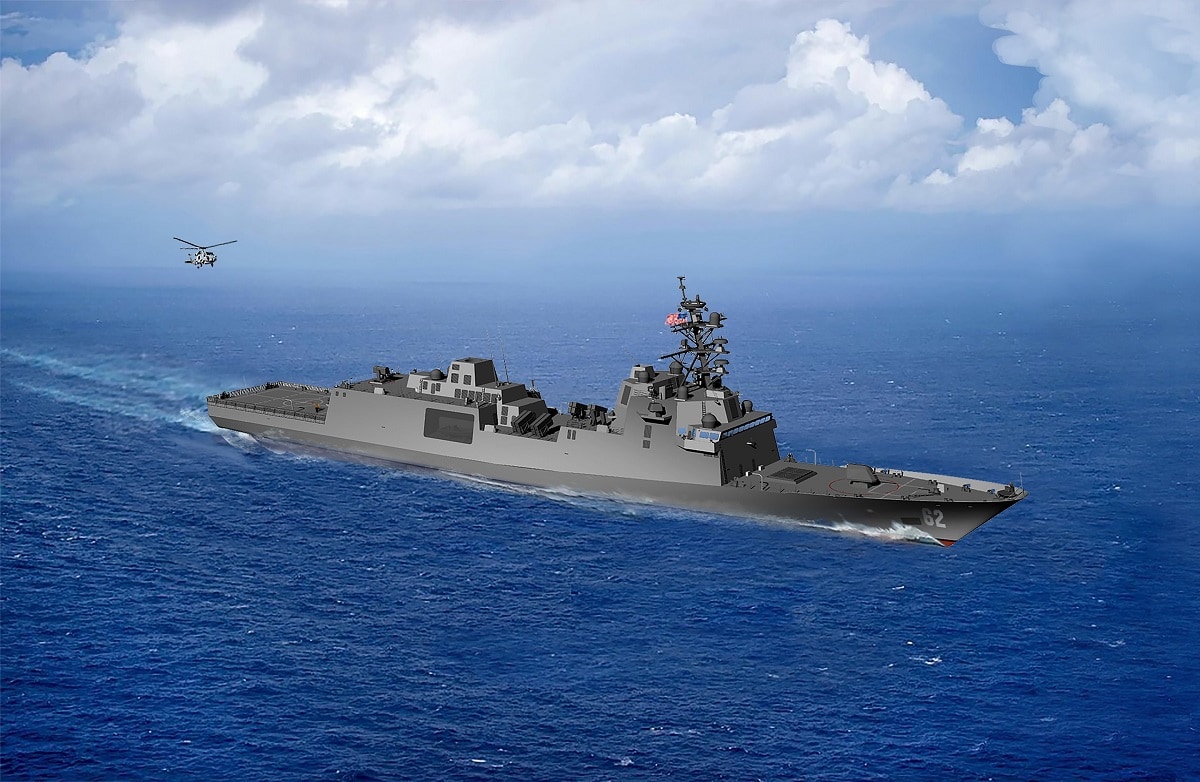
An artist rendering of the U.S. Navy guided-missile frigate FFG(X). The new small surface combatant will have multi-mission capability to conduct air warfare, anti-submarine warfare, surface warfare, electronic warfare, and information operations. The design is based on the FREMM multipurpose frigate. A contract for ten ships was awarded to Marinette Marine Corporation, Wisconsin (USA), on 30 April 2020.
It was a disaster, and it shaped the thinking behind FF(X): the Navy could start with something that already works but avoid unnecessary changes.
Starting With A Coast Guard Ship
This time around, the Navy is using the Legend-class National Security Cutter as the foundation for the FF(X). Those 418-foot-long cutters were originally designed for the Coast Guard, meaning they are not high-end naval combat ships by any means.
Their benefit, though, is that they are a mature design that American shipyards already know how to build.
They’re quick and comparatively easy to make, and as long as the modifications are minimal and not unnecessarily complex, the problems seen in the Constellation-class debacle may not arise.
HII’s Ingalls Shipbuilding in Mississippi has already delivered 10 Legend-class cutters.
In April, the Navy awarded Ingalls a $282.9 million contract covering design work, long-lead materials and pre-construction work for FF(X). Now, the Navy plans to modify the design for military service, with speed as the objective.
The Navy Wants Ships By 2030
The Navy expects the first FF(X) to be delivered as soon as 2030. Current plans call for additional ships to follow, with Ingalls initially serving as the lead shipyard.
Over time, the Navy wants other American yards to be involved to increase production and continue delivering the frigates at a rapid pace.
But the foreign frigate study could also provide another route, with a review of international designs now expected to conclude in November.
Congress, however, may resist allowing U.S. warships to be built overseas — so much is yet to be seen.
Either way, the objective is the same: the U.S. is looking to strengthen its naval power and readiness quickly and cost-effectively.
About the Author: Jack Buckby
Jack Buckby is a British researcher and analyst specializing in defense and national security, based in New York. His work focuses on military capability, procurement, and strategic competition, and he produces and edits analysis for policy and defense audiences. He brings extensive editorial experience, with a career output spanning over 1,000 articles at 19FortyFive and National Security Journal, and has previously authored books and papers on extremism and deradicalization.