

Summary and Key Points: The Trump-class battleship, designated BBG(X), was ridiculed by naval experts and enthusiasts the moment it was unveiled, on the well-worn grounds that battleships have been obsolete for eighty years. The first serious technical argument on the other side did not come from the US Navy. It came from Wang Lei, a military scientist at the People’s Liberation Army Dalian Naval Academy, in a paper published in the Chinese journal Command, Control & Simulation. Wang modeled thirty Russian-made Lancet-3 drones — each weighing 26 pounds with a warhead of up to 6.6 pounds — attacking a warship defended by large-caliber gunfire.
The Trump-Class Battleship: Could China Be a Fan?
When President Donald Trump unveiled the “Trump-class” (BBG(X)) battleship, naval experts and enthusiasts alike ridiculed the idea, citing the obsolescence of battleships in modern naval warfare.
However, no one expected that military researchers from China, of all places, would err on the side of Trump in the battleship debate.
A recent study from China argued that large-caliber naval guns may help ships defend against drone swarms.
The study complements other developments within the PLAN, as China tests larger-caliber naval guns that analysts initially assumed were for shore bombardment.
Battleships are unlikely to return in 2026, but the recent studies could suggest the concept isn’t as ridiculous as everyone initially thought.
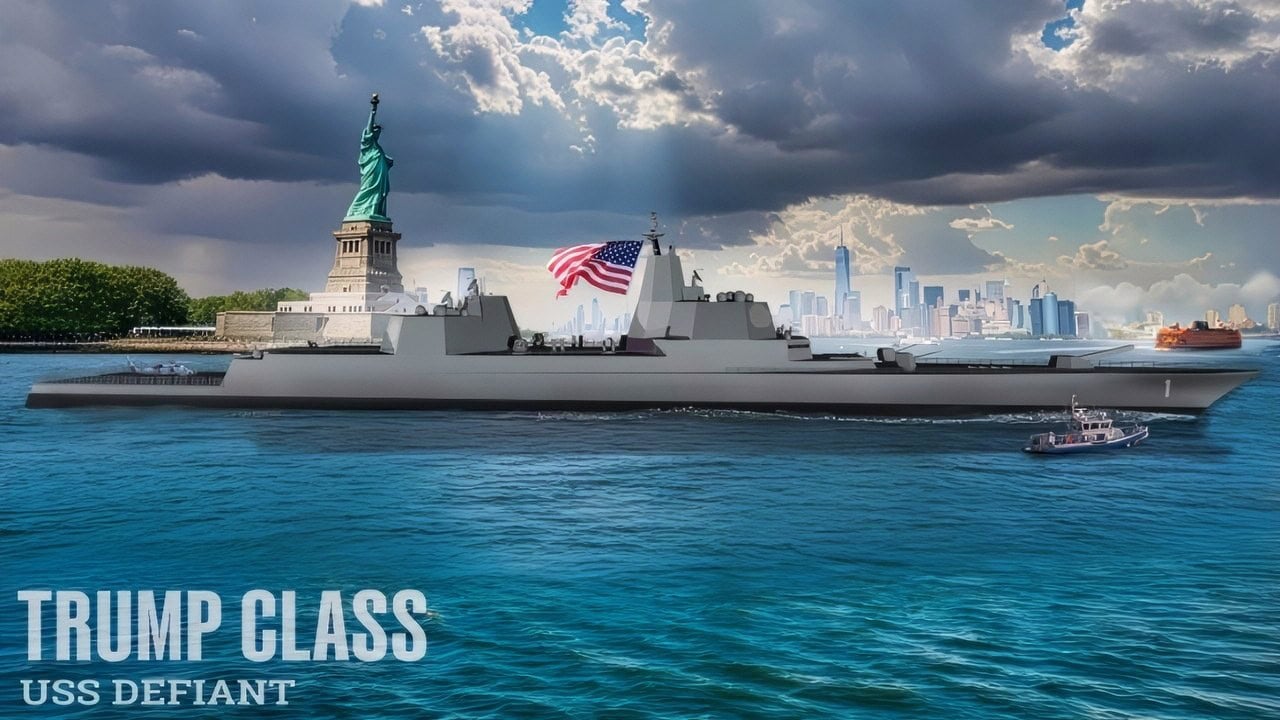
Trump-Class Battleship. Image Credit: Creative Commons/White House.
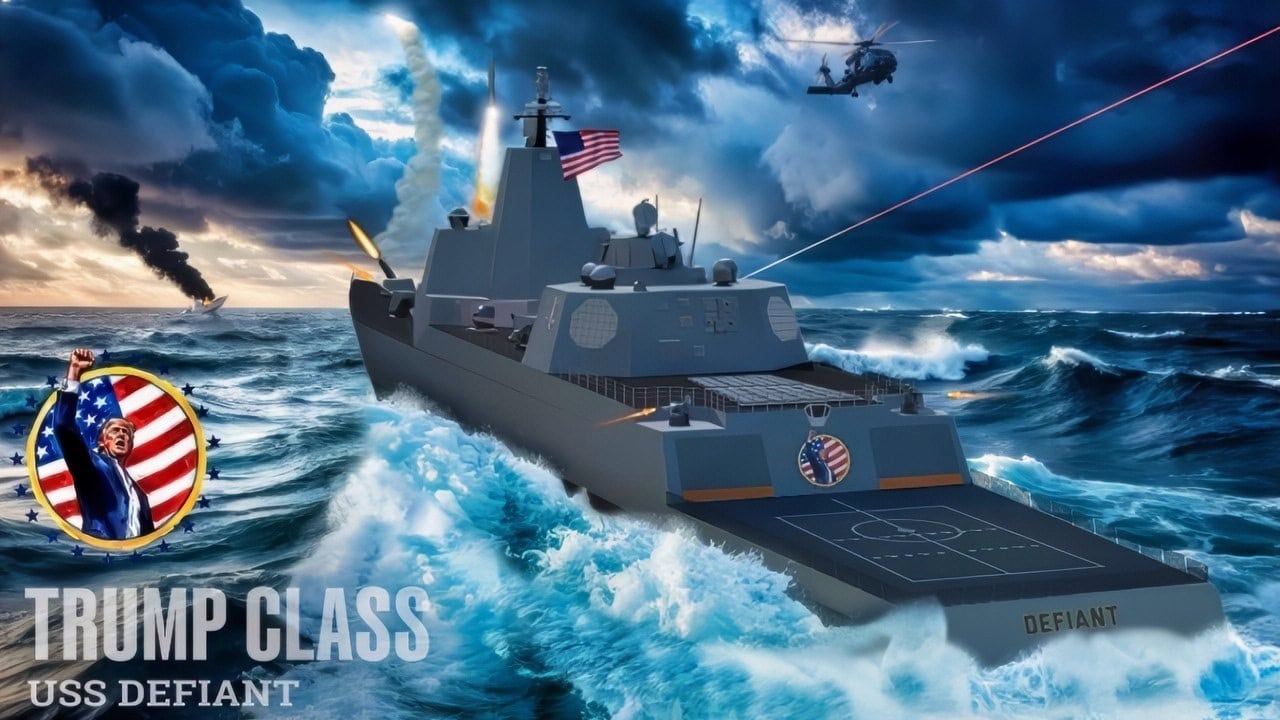
Trump-Class Battleship. Image Credit: Creative Commons/White House Photo.
Using Large-Caliber Guns Against Drones
The study was conducted by Wang Lei, a Chinese military scientist at the People’s Liberation Army Dalian Naval Academy, and published in Command, Control, & Simulation.
The study aimed to examine how effective large-caliber guns could be at deterring swarms of small unmanned systems.
In this simulation, the researchers used a swarm of 30 Russian-made Lancet-3 drones, each weighing 26 lbs and carrying a warhead of up to 6.6 lbs.
As an aside, this is the strangest aspect of the test, considering the fact that the Russians use rocket-powered Geran-4/Geran-5 drones to strike ships, but I’m sure the researchers had their reasons.
In their simulation, one high-explosive shell, of unspecified caliber, could produce roughly 2,000 fragments.
According to the researchers’ findings, a single shell had a 3.95% chance of damaging a single drone, but each shot damaged 1.19 drones.
In other words, each shot had a high probability of damaging more than one drone at a time.
In the model, the fragment cloud from each frag shot extended 49 feet around the initial explosion, allowing the gun to engage multiple drones at once without needing a direct hit.
The study concludes that artillery alone would not be sufficient to defend against a drone swarm, but that large-caliber guns could supplement other systems within a broader fleet-defense strategy.
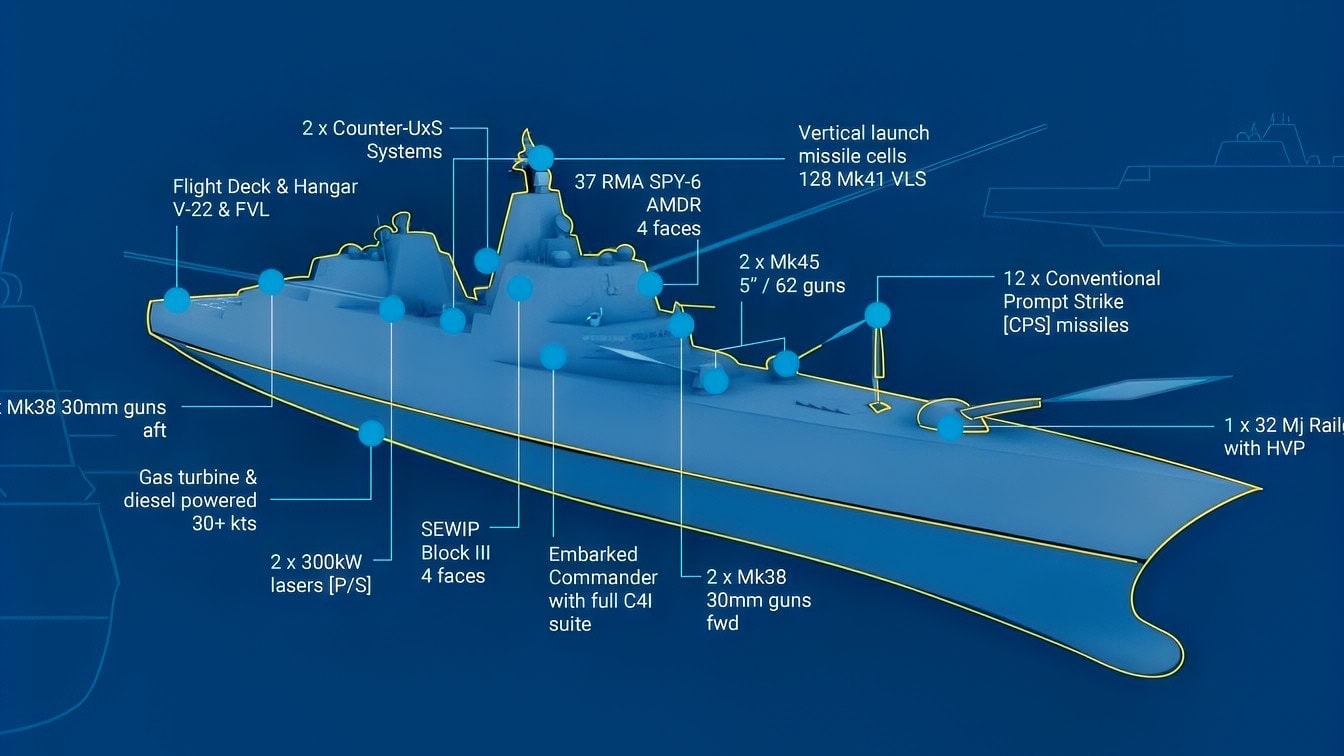
Trump-Class Battleship Creative Commons Image
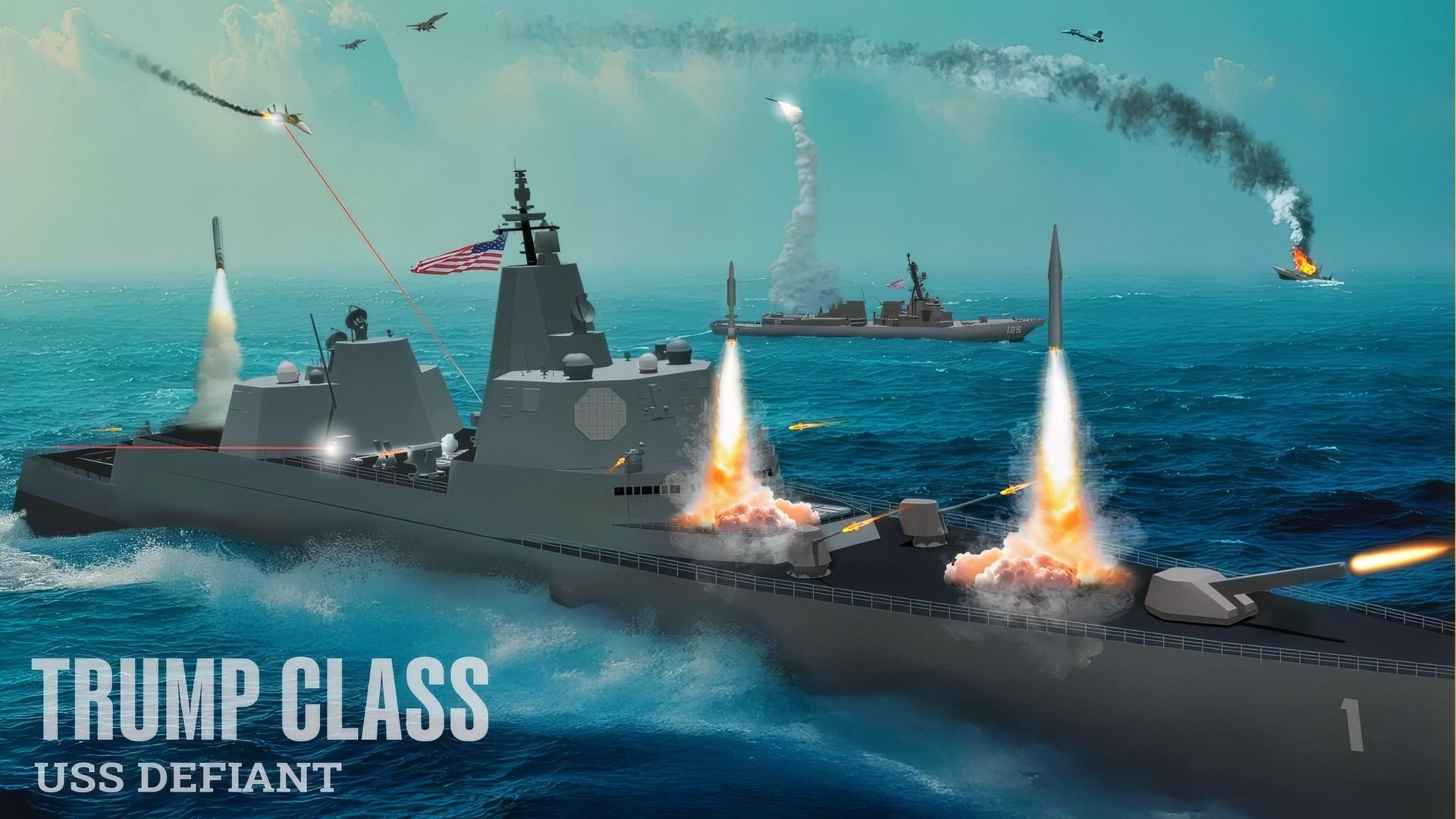
Trump-Class Battleship USS Defiant. Image Credit: Creative Commons.
Furthermore, using artillery for drone defense would require adequate fire-control systems and precisely programmable fuses, both of which are available in modern artillery systems.
Building a Layered Defense
Overall, the team recommended combining naval guns with other anti-drone systems, such as directed-energy weapons and electronic-warfare systems, to create multiple layers of defense around a single warship.
No single defensive system can adequately protect warships, and no defensive system can guarantee protection against all drones.
By creating layers of defense, however, naval planners can significantly reduce the probability of a drone swarm penetrating a ship’s defenses.
Furthermore, artillery shells cost far less than a single interceptor missile and may be more effective against drone swarms than close-in weapon systems (CIWS), but further studies are needed to confirm that claim.
The study follows earlier reports this year indicating that China was testing larger-caliber naval guns.
In February, images from the Dalian Liaoning South Shipyard showed a Type 910 test vessel fitted with a new type of naval gun, noticeably larger than the 130mm gun currently fitted on Type 055 destroyers.
It is speculated that the new gun is around 155mm in caliber and will be used for shore bombardment or anti-ship operations.
Although some have speculated that the new cannon will use new types of ammunition, such as ramjet-powered guided rounds or whatnot, it is also possible that it will be able to fire HE-frag rounds for defense against drones.
Obviously, there is no confirmation of this, but in light of the recently released study, the PLAN is at least curious about the role of larger-caliber guns in C-UAS roles.
Modern Battleships: Too Costly to be Useful?
Advocating for larger-caliber guns isn’t inherently the same as advocating for a battleship.
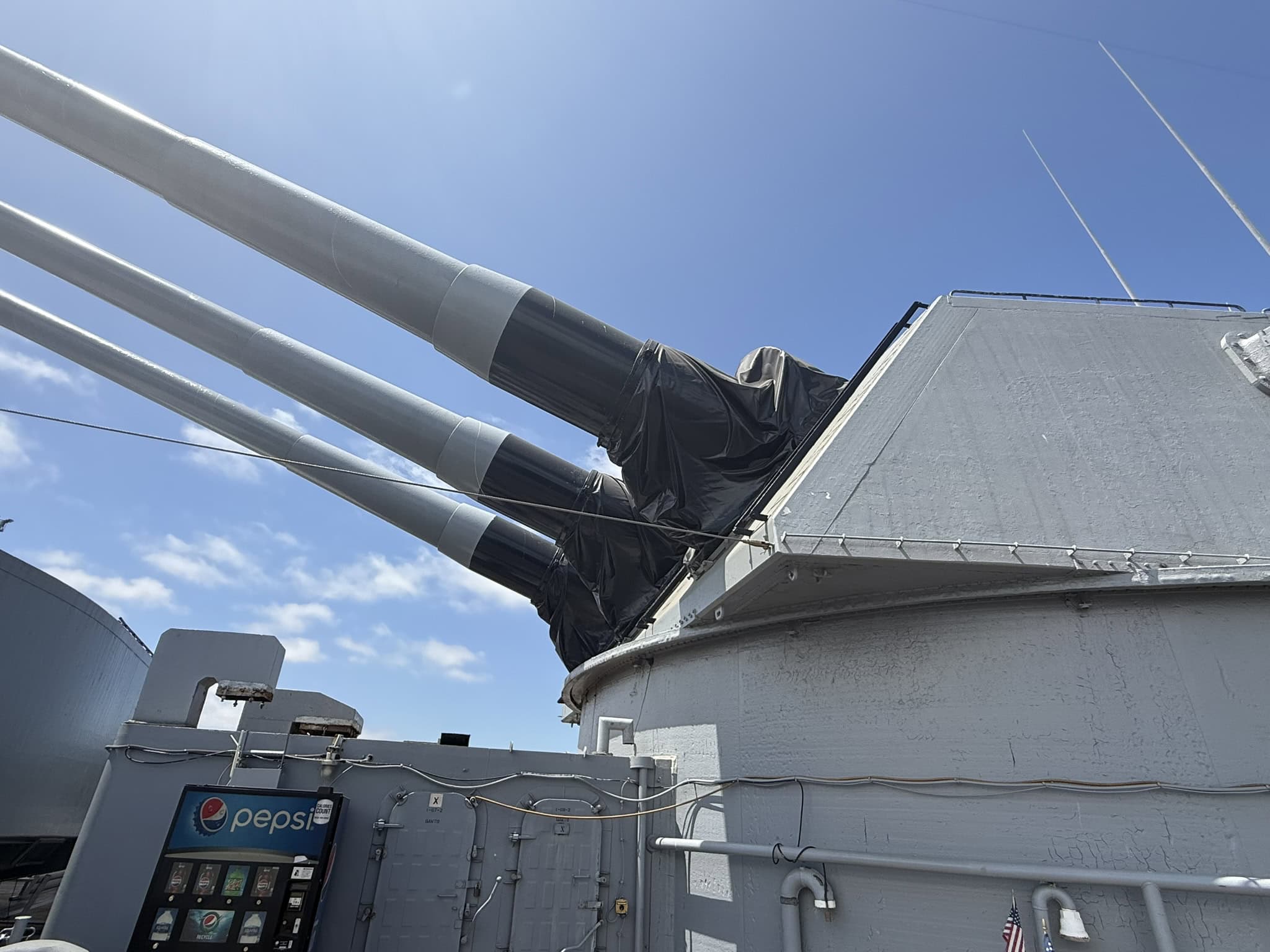
USS Iowa Battleship Guns. Taken by 19FortyFive on a Tour of the Battleship USS Iowa in August, 2025.
Current or new types of destroyers could be fitted with larger guns at a fraction of the cost of creating a battleship from the ground up.
Furthermore, China’s defense community isn’t sold on the prospects of using artillery for drone defense.
Some specialists in China claimed that Wang Lei’s study failed to prove that large naval guns could reliably defeat drone swarms, and dismissed the experiments as a promotion-driven paper.
Even if large naval guns could reliably defeat drone swarms, or were at least integrated into a broader layered defense approach, the main downside for the modern “battleship” is its cost.
Today, shipbuilding endeavors are expensive.
For example, the lead ship of the Trump-class, the USS Defiant, is estimated to cost a whopping $23.4 billion.
That price tag alone is more likely to kill the project than any issues with modern battleships, perceived or otherwise.
Although fielding a large surface ship with an extended magazine has benefits, arguing for them compared to the ship’s cost is an uphill battle.
About the Author: Isaac Seitz
Isaac Seitz, a Defense Columnist, graduated from Patrick Henry College’s Strategic Intelligence and National Security program. He has also studied Russian at Middlebury Language Schools and has worked as an intelligence Analyst in the private sector.