
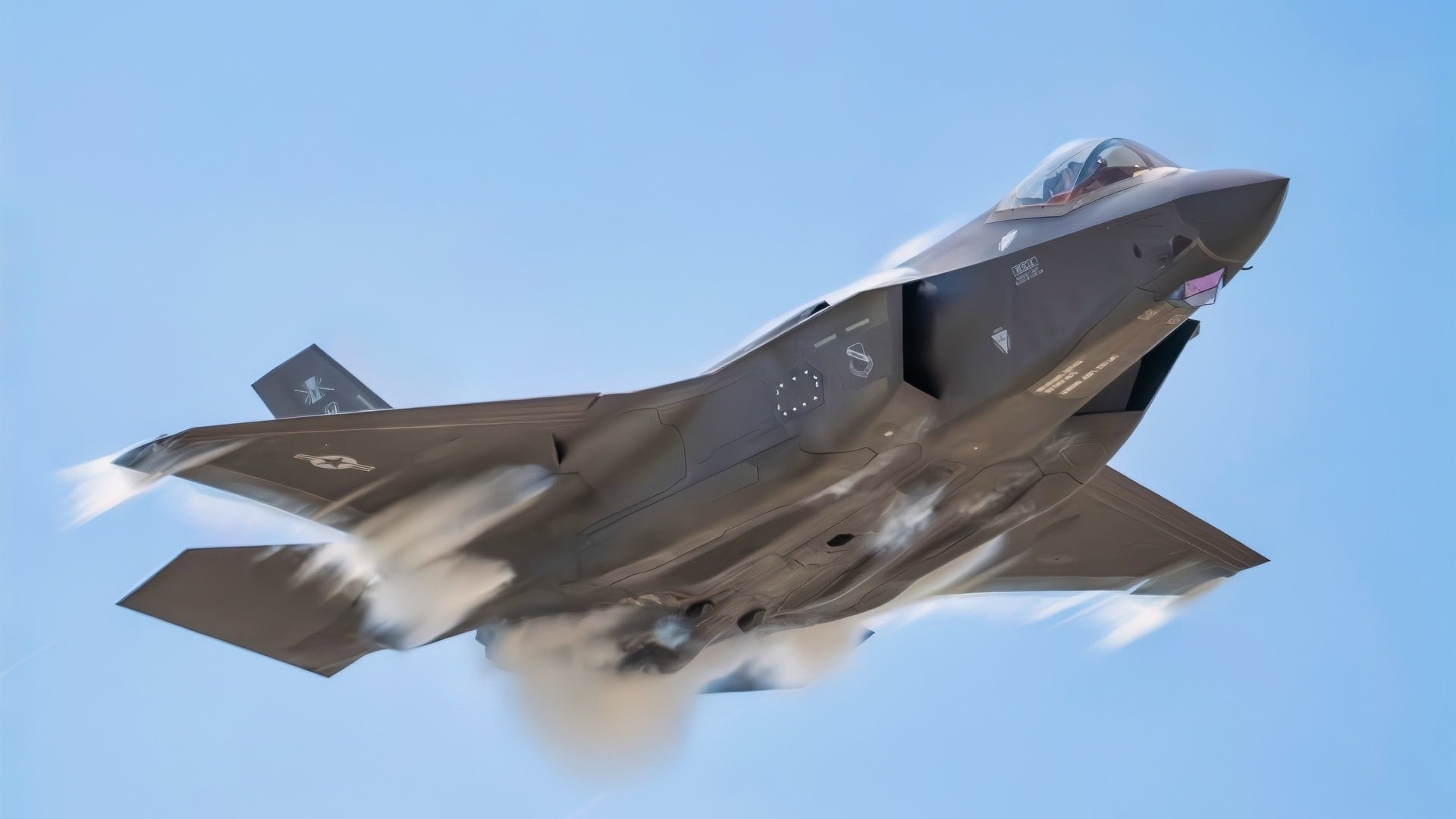
Summary and Key Points: The Lockheed Martin F-35 Lightning II is the product of the Joint Strike Fighter program, built for export and allied use, and the F-35A entered service in 2016. Its stealth comes from shaping first and coatings second: without radar-absorbent material, the jet presents an estimated radar cross-section of 0.06 square meters; with it, roughly 0.0001, while its AN/APG-81 radar and Distributed Aperture System fuse into a single picture for the pilot. China’s Chengdu J-20, in service since 2017 and in mass production since 2020, is a much larger aircraft at 69.7 feet, has transitioned from Russian AL-31 engines to domestic WS-15s, reaches Mach 2, and claims 1,100 nautical miles of combat range, compared with the F-35A’s 669.
Lockheed Martin US Air Force F-35 vs. J-20: The Breakdown
The F-35 Lightning II is one of the most advanced fighter jets in the world, if not the most advanced.
It is the culmination of decades of stealth manufacturing by Lockheed Martin, incorporating the most cutting-edge techniques and state-of-the-art avionics and sensors.
In stark contrast, the Chengdu J-20 is the first fifth-generation aircraft China has produced, whereas its predecessors mostly relied on reverse-engineered Soviet designs.
Over time, the aircraft has undergone numerous refinements to its stealth profile, engines, and avionics, making it a highly capable stealth fighter. But how well does it hold up compared to the legendary F-35?
America and China’s Most Advanced Fighters
The F-35 was developed under the Joint Strike Fighter (JSF) program, one of the most ambitious and expensive aviation projects the United States has ever undertaken.
The program sought to develop a new multi-role fifth-generation strike fighter available in both conventional takeoff and short takeoff and vertical landing (STOVL) configurations.
The idea was that all branches of the military and allied nations would use the aircraft, if interested.
Unlike the Advanced Tactical Fighter (ATF), which spawned the F-22, the JSF program was designed for export and interoperability with allies.
Several nations partnered with the U.S. during the F-35’s development, which helped to alleviate some of the staggeringly high development costs.
The F-35A, the main version we will focus on today, entered service in 2016.
The J-20, by contrast, began development in the 1990s under a program colloquially titled the J-XX program. Many details of the aircraft’s development remain unknown because of the lack of English sources and the program’s secrecy.
Some sources speculate that its development may have been based on the Soviet MiG 1.44. Others insist that the J-20 was built using secrets stolen from Lockheed Martin.
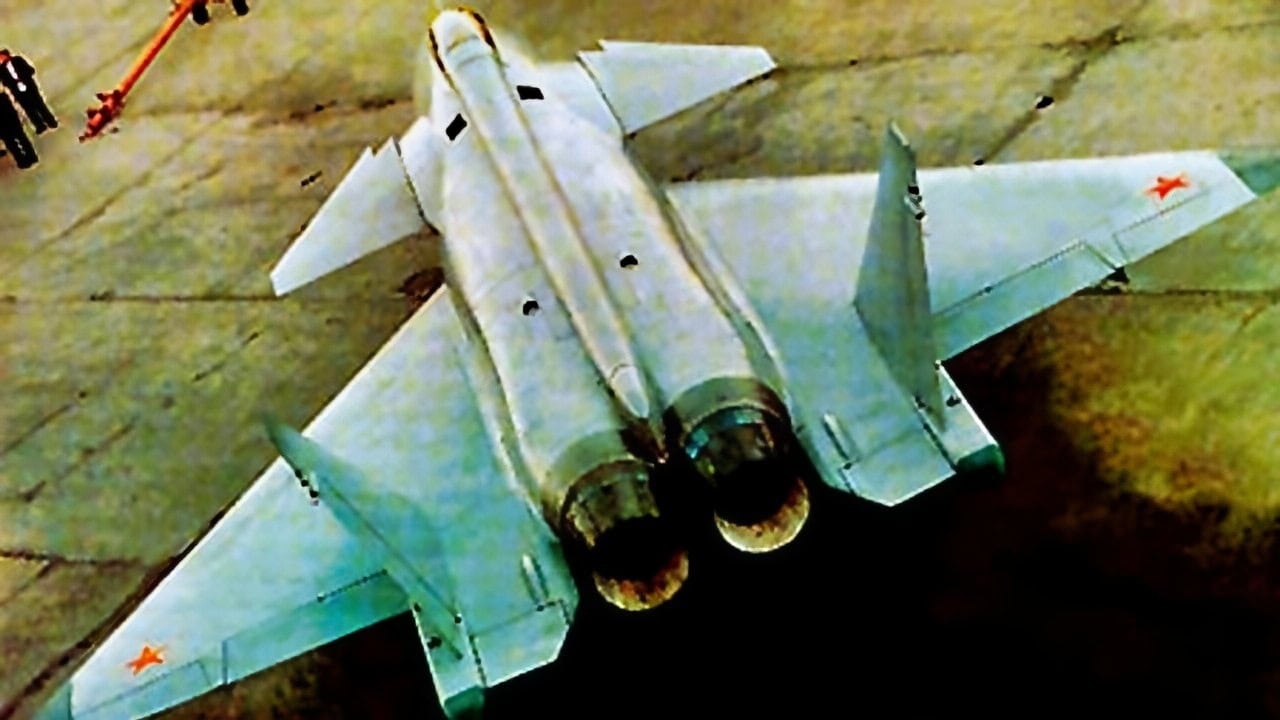
MiG-1.44. Image Credit: Russian State Media.
Either way, there is no definitive proof of either claim (though the latter is certainly possible).
Unlike the F-35, the J-20 is designed for air superiority first and foremost, with air-to-ground options available in certain configurations.
The first prototype took its maiden flight in 2012, followed by the second prototype a few months later.
The third prototype took flight in 2014 and featured several refinements that later informed the final production aircraft.
The aircraft was officially accepted into PLAAF service in 2017, with mass production beginning in 2020.
Design and Stealth Capabilities
The F-35A features a conventional single-engine layout with two vertical stabilizers canted for low observability.
The aircraft has a relatively short wingspan to meet requirements for fitting aboard amphibious assault ships. Every aspect of the F-35 is tailor-made to minimize its radar cross-section (RCS).
It uses divertless supersonic inlets (DSI intakes), which hide its engine fans from radar waves.
The aircraft uses careful shaping and serrated patterns to scatter radar waves without relying on radar-absorbent materials (RAM).
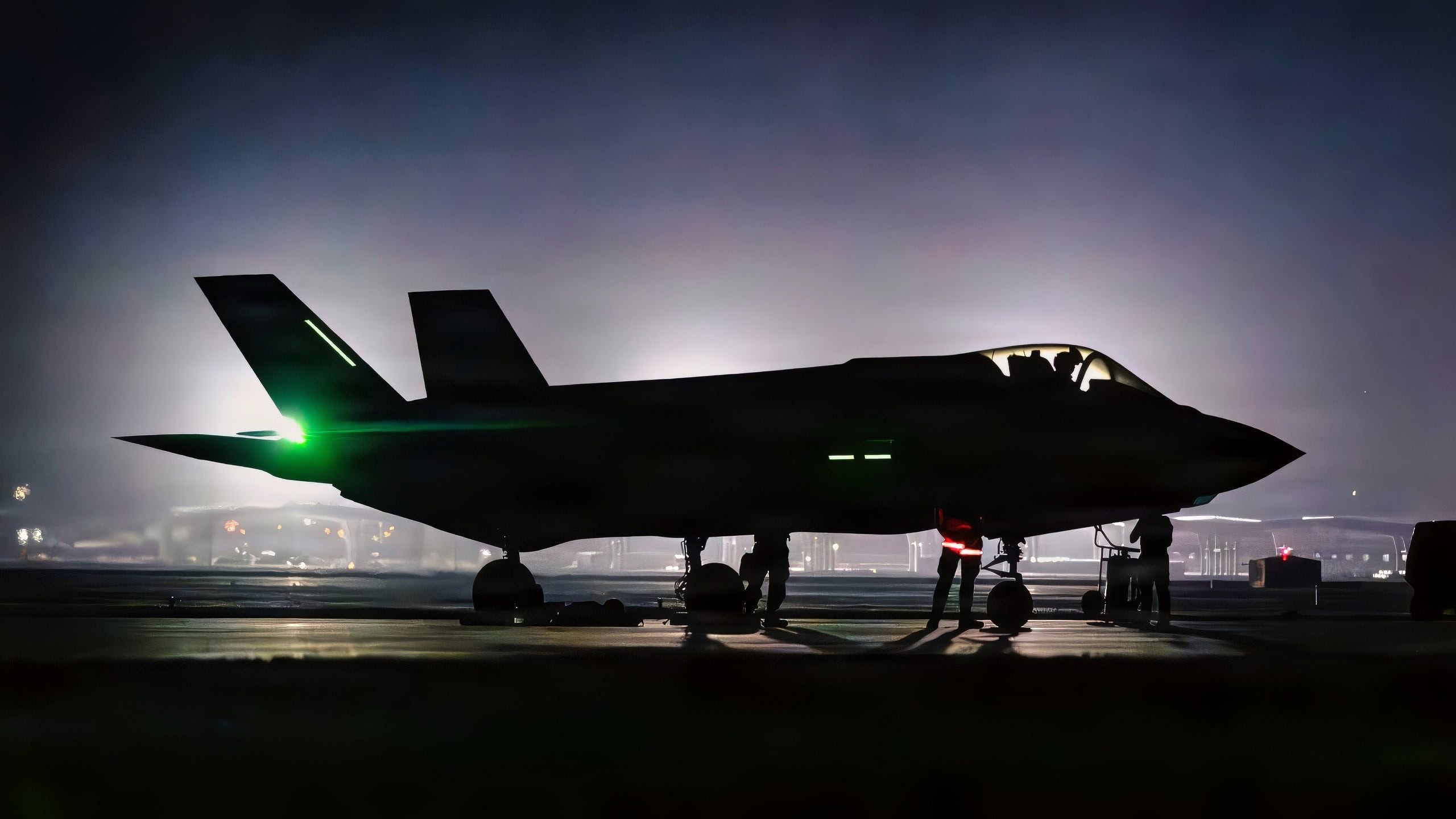
A U.S. Air Force F-35A Lightning II assigned to the 95th Fighter Squadron is parked on the flightline during exercise Noble Panther 26-4 at Tyndall Air Force Base, Florida, March 9, 2026. Airmen participated in night sorties, requiring them to perform their tasks in low-light conditions while staying watch for potential simulated attacks. These high-intensity, realistic scenarios were designed to build the confidence and muscle memory required for combat operations. (U.S. Air Force photo by Senior Airman Zeeshan Naeem)
Without RAM coatings, the F-35 has an estimated RCS of around 0.06 square meters.
RAM treatment, however, further lowers its RCS to an estimated 0.0001 square meters from the front, arguably giving it the best stealth profile of all fifth-generation aircraft.
Measuring 69.7 feet long and 42.8 feet wide, the J-20 is much larger.
The aircraft uses a blended fuselage, with leading-edge extensions that merge into its delta wings and forward-swept trailing edges.
The aircraft makes notable use of canards for increased stability, placed behind the low-observable DSI intakes.
Like the F-35, the J-20 is also purpose-built to reduce its RCS.
The aircraft uses stealth shaping and serrated patterns to reduce radar returns, and more recent variants use jagged-edged nozzles to reduce rear-aspect observability.
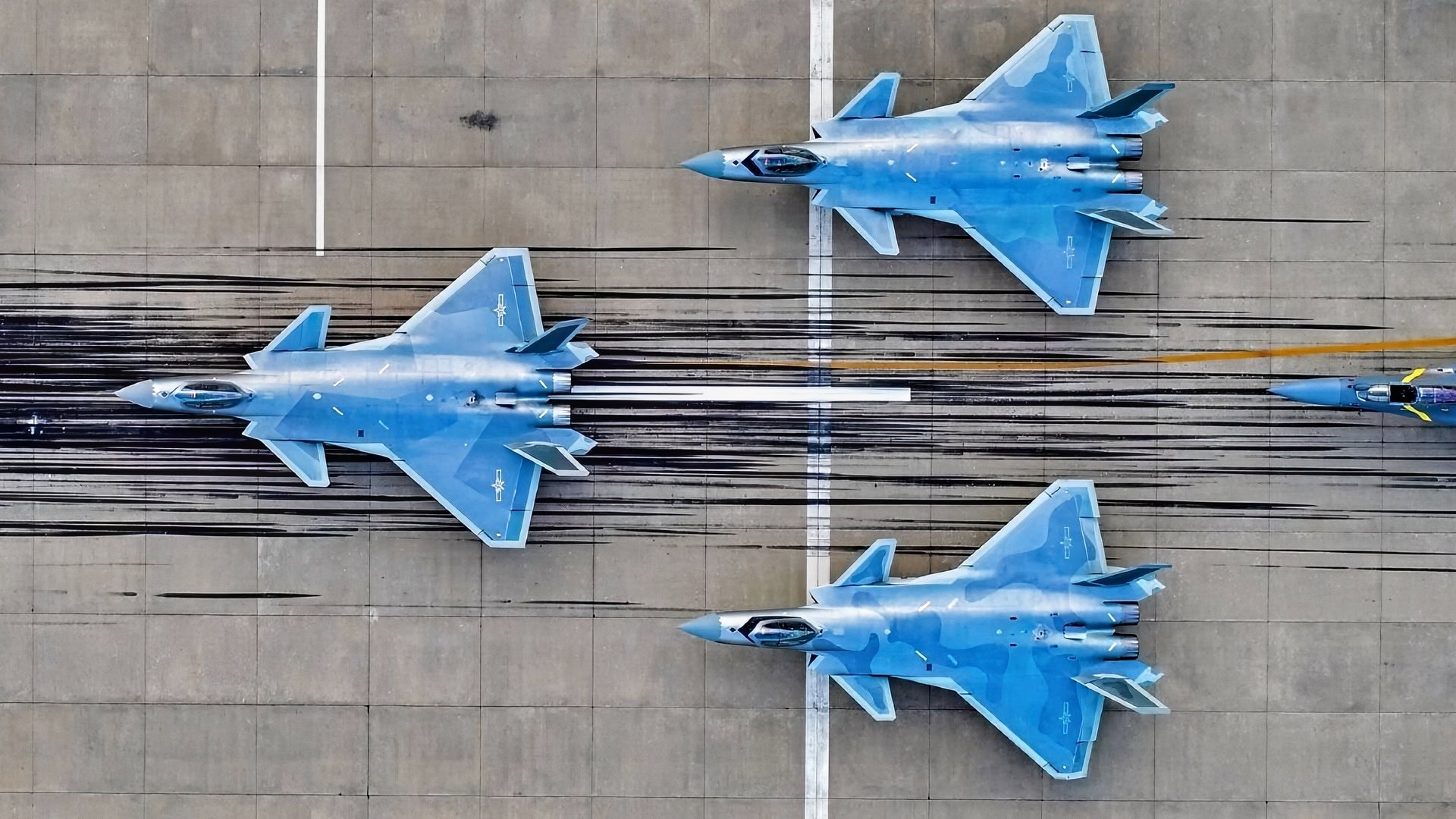
J-20S. Image Credit: Creative Commons.
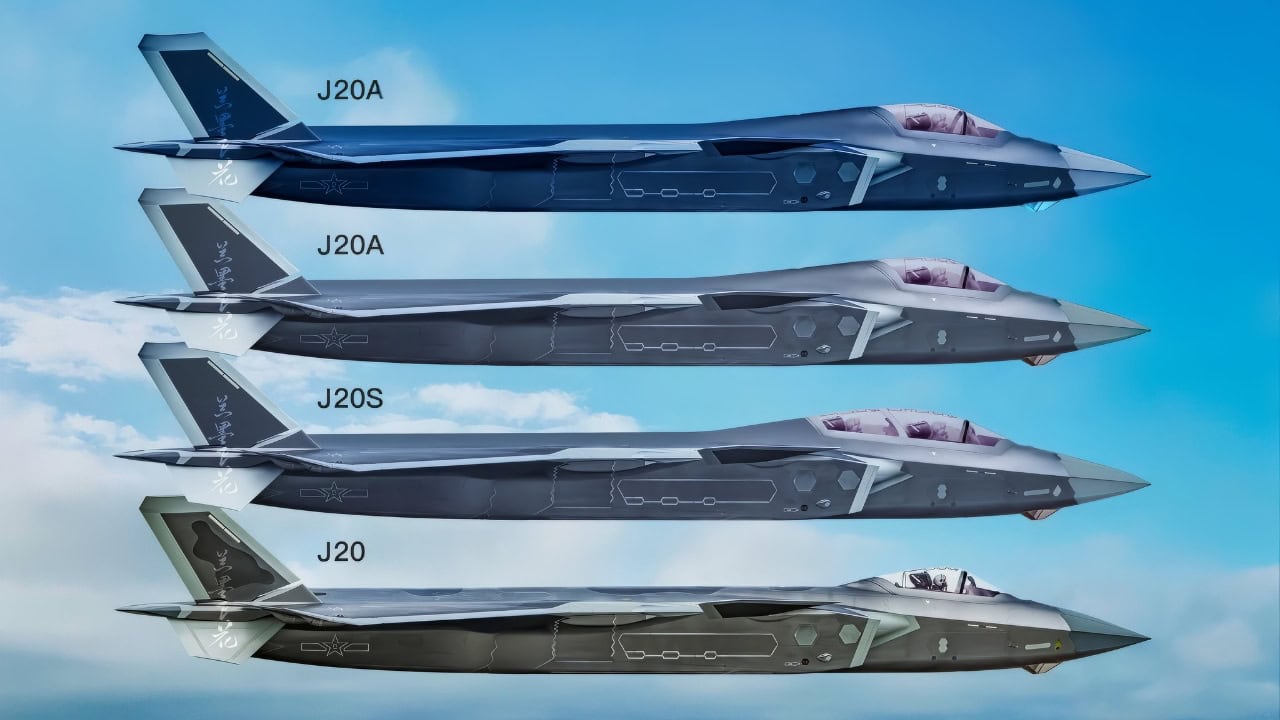
J-20 fighter diagram. Image Credit: Creative Commons.
Many Western experts initially derided the J-20, thinking that the canards would compromise its stealth profile.
However, radar simulations suggest the canards blend fairly well into the aircraft, keeping its RCS low from the front.
Although the aircraft likely has a worse stealth profile than the F-35, for a first stealth fighter, the Chinese could have done much worse.
Avionics and Engines
Avionics are the F-35’s strong suit.
The aircraft was built for sensor fusion and networked warfare and includes a powerful suite of advanced sensors and electronic systems.
The aircraft uses the AN/APG-81 AESA radar, the AN/AAQ-37 Electro-Optical Distributed Aperture System (DAS), the AN/AAQ-40 Electro-Optical Targeting System (EOTS), the AN/ASQ-239 electronic warfare system, and much more.
The computers aboard the F-35 synthesize data from these sources and create a full picture for the pilot, maximizing situational awareness while reducing the pilot’s workload.
By comparison, less is known about the J-20’s avionics.
According to some estimates, the aircraft uses a KLJ-5 AESA radar, chin-mounted EOTS, and Infrared Search and Track (IRST) capabilities.
Some say the J-20 has comparable sensor-fusion capabilities, but these claims are hard to confirm.
The F-35 is powered by a single Pratt & Whitney F135-PW-100 engine, giving it a top speed of Mach 1.6 and a range of 669.
The J-20 has undergone several engine changes, beginning with Russian-made AL-31FM2 engines and culminating in domestically made WS-15 engines.
The aircraft can fly at Mach 2.0, with some reports suggesting it can supercruise at around Mach 1.8.
Its newer engines also feature 2D thrust-vectoring, making it much more maneuverable than the F-35.
The J-20 also has a stated combat range of around 1,100 nautical miles, giving it much better range than its American counterpart.
About the Author: Isaac Seitz
Isaac Seitz, a Defense Columnist, graduated from Patrick Henry College’s Strategic Intelligence and National Security program. He has also studied Russian at Middlebury Language Schools and has worked as an intelligence Analyst in the private sector.