
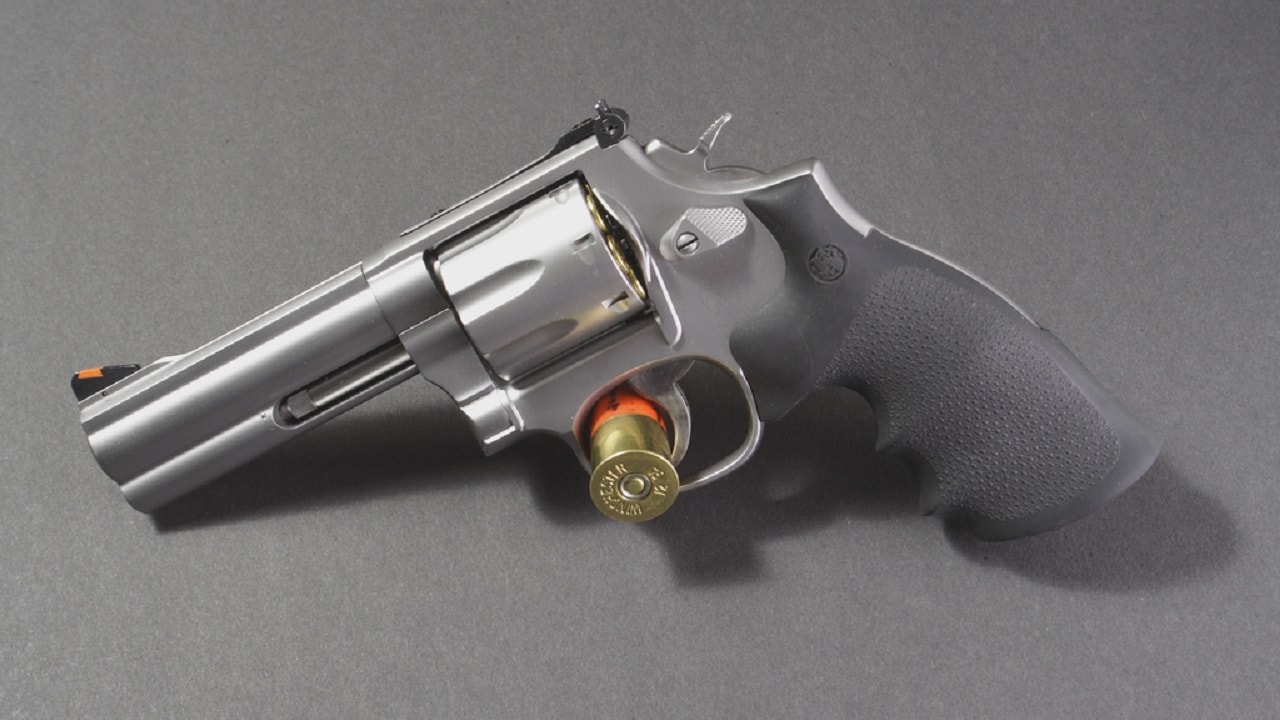
No argument in the gun world is older than revolver versus semi-automatic. It’s also one of the few that depends almost entirely on who’s holding the gun.
As I’ve written here many, many times, it is one of my favorite debate topics because there isn’t a definitive right or wrong answer.
That lies within each individual.
What works for them, what doesn’t, and how much training they have.
For a 30-year-old with a strong grip and regular range time, the debate is mostly about preference.
For a senior citizen whose hands, eyesight, and accuracy aren’t what they used to be, it’s a practical question with real consequences.
The gun that made sense at 35 or 40 may be the wrong gun at 75.
So let’s look at both sides honestly, then get to what actually works.
The Case For The Revolver
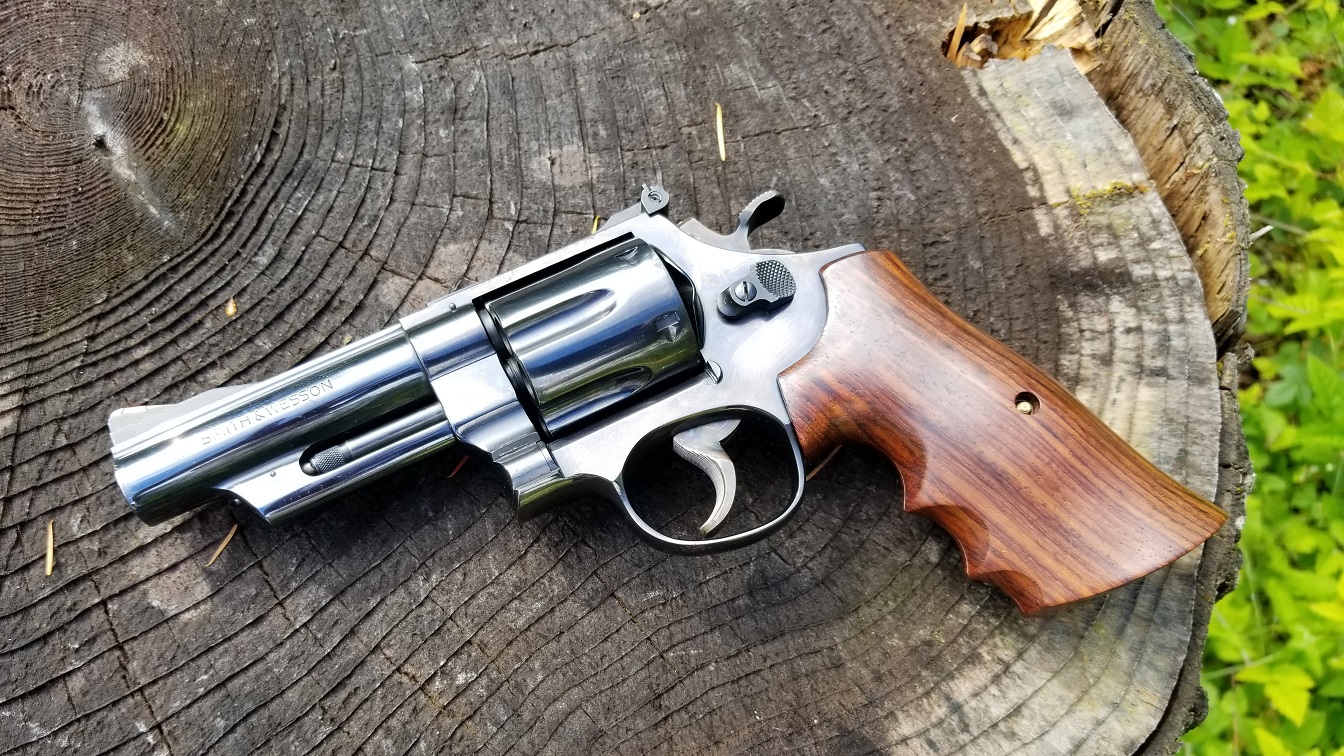
Smith and Wesson Model 57. Image Credit: Creative Commons.
The traditional advice has always been to hand Grandma a revolver.
There’s logic behind it, based on simplicity and training…or the lack of it.
A double-action revolver has no slide to rack, no magazine to load, and no manual safety to forget under stress.
You point it and pull the trigger.
If a round doesn’t fire, you pull the trigger again, and the cylinder brings a fresh one under the hammer.
There’s no malfunction drill to remember.
A revolver also doesn’t care how firmly you hold it.
That matters more than most people realize.
A semi-auto needs a solid grip to cycle properly.
If the frame moves too much under recoil, the slide may not travel far enough to eject the spent case and feed the next round.
Shooters call it limp-wristing, and weaker hands make it more likely. A revolver will fire every chamber no matter how the shooter holds it.
The Revolver’s Issues Start With Trigger Pull
However, the revolver isn’t the easy answer many think it is.
The first problem is the trigger.
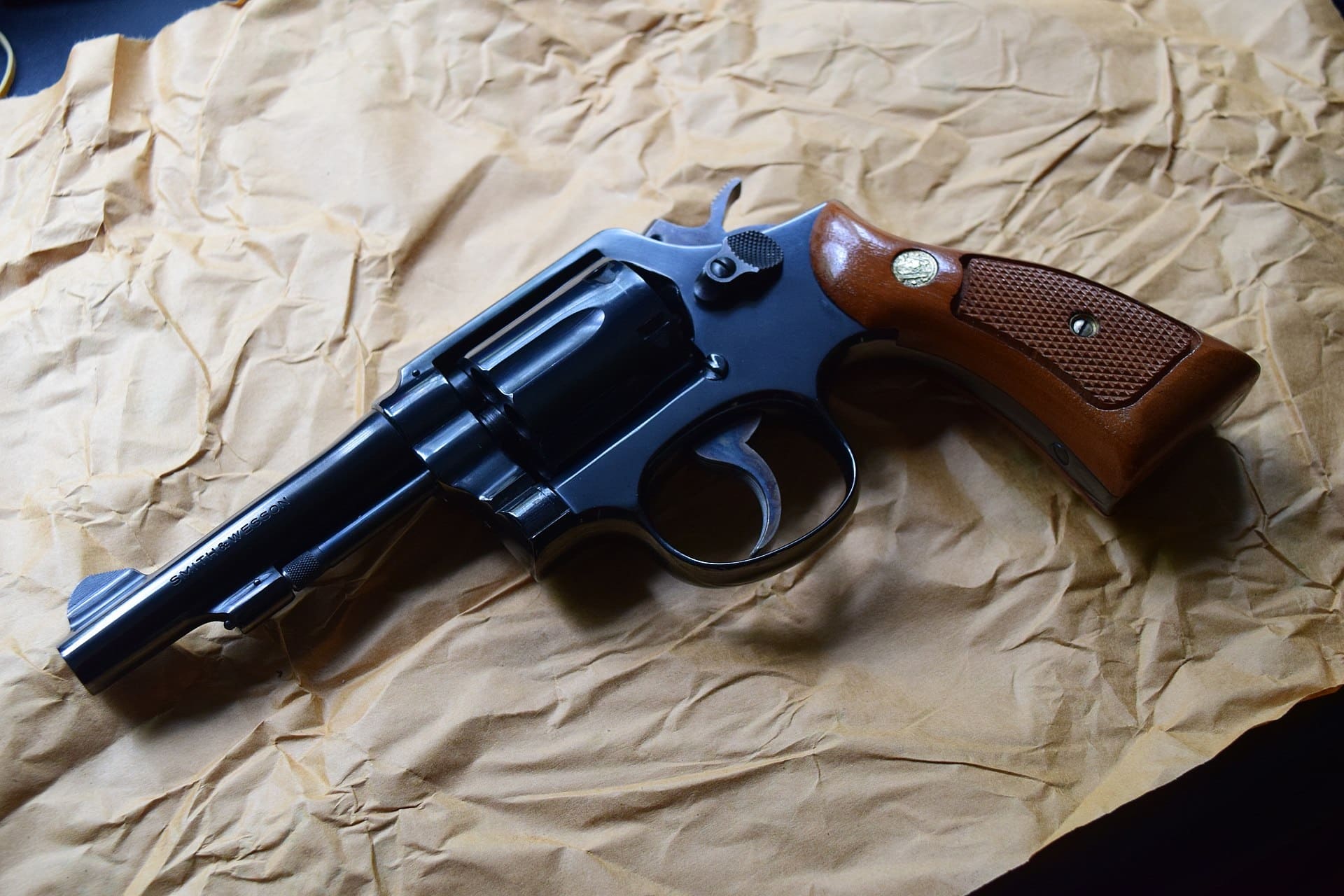
Smith and Wesson Model 10
A double-action pull on a typical snub-nose revolver runs somewhere around 10 to 12 pounds, and often more on a factory gun.
For someone with arthritis or reduced finger strength, that long, heavy pull is hard to manage.
It’s even harder to keep the sights on target.
The second problem is recoil.
The revolvers most often sold to seniors are the small, lightweight carry guns.
A Ruger LCR weighs as little as 13.5 ounces depending on the chambering.
That’s great for carrying.
It’s terrible for shooting a .38 Special +P.
A light gun plus stout load equals sharp recoil, and sharp recoil in arthritic hands means the owner stops practicing.
A gun you won’t practice with is a gun you can’t count on when your life depends on it.
Then there’s capacity and reloading.
Five rounds is standard on a small-frame revolver.
Reloading with a speedloader takes fine motor skills that tend to fade with age. In my opinion, that’s a bigger issue for a senior than the five-round capacity itself.
The Case For The Semi-Auto
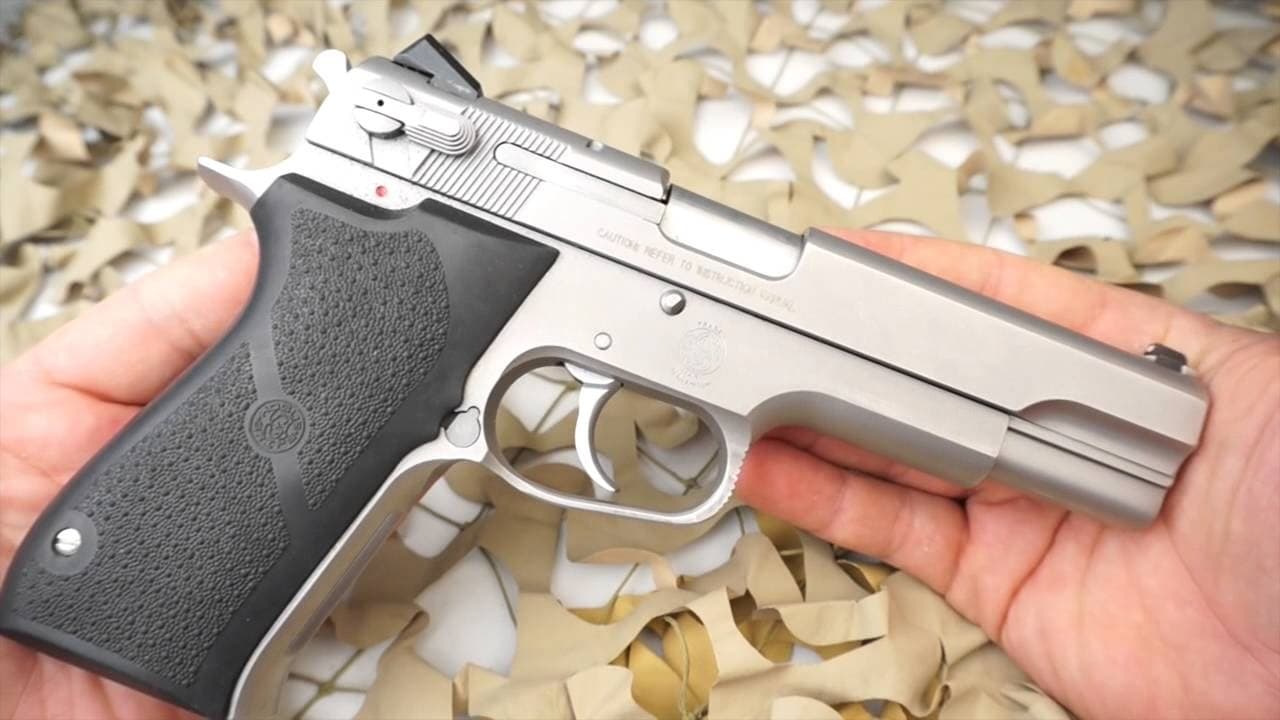
Smith & Wesson Model 1006
A good semi-auto fixes several of those problems.
The trigger is typically much lighter and shorter.
Felt recoil is softer because the moving slide soaks up some of the energy.
Capacity is higher, and the sights are usually better, which helps eyes that need all the help they can get.
Traditional knock-on semi-autos for seniors have used a slide.
Racking the slide on a typical compact 9mm takes real hand strength, and so does clearing a malfunction or locking the slide back.
For many older shooters, that was a deal-breaker.
My wife, while not elderly, has issues racking the slide (at times) on my SIG P-365XL due to the beginnings of arthritis in her hands.
Sometimes she has trouble chambering a round.
That’s changed.
The Easy-Rack Pistols Changed The Debate
Over the last several years, manufacturers have built pistols specifically for shooters who struggle with a conventional slide.
The Smith & Wesson M&P380 Shield EZ is the best known.
It weighs about 18.7 ounces, holds 8+1 rounds of .380 ACP, and has a 3.675-inch barrel.
The slide has enlarged rear wings and requires far less force to manipulate than most compact pistols.
It also has a grip safety, and S&W offers versions with an ambidextrous thumb safety.
The recoil is mild.
Smith & Wesson later added a 9mm version for shooters who want more power and can handle a little more snap.
The Ruger Security-380 Lite Rack takes a similar approach.
It weighs 20.1 ounces, ships with 10- and 15-round magazines, and uses lightening cuts in the slide to reduce the effort needed to rack it.
American Rifleman measured the trigger at about 4 pounds, 6 ounces, roughly a third of a typical snub-nose double-action pull.
Its testers averaged 1.11-inch groups at 7 yards with Hornady Black ammunition, which is the kind of accuracy that builds a shooter’s confidence instead of eroding it.
Those numbers are the heart of the argument. A lighter trigger and softer recoil in a slightly heavier gun make for better hits, and hits are what count.
So What’s Best For A Senior?
For most seniors with reduced hand strength or accuracy, I’d opt for an easy-rack .380 like the Shield EZ or the Security-380.
But I am a firm believer in semi-automatics, but I digress.
The lighter trigger, mild recoil, higher capacity, and better sights outweigh the extra steps of loading a magazine and racking a slide.
That’s especially true now that manufacturers have engineered those steps to be much easier.
However, the revolver still has a place.
If a shooter can’t manage any slide at all, or simply won’t train on clearing malfunctions, a revolver remains the simpler tool.
In that case, I’d skip the featherweight snub-nose revolver.
Choose a heavier steel-frame .38 Special with a 3- or 4-inch barrel and shoot standard-pressure loads. The added weight tames recoil, and the longer barrel helps with sight picture.
For those who truly can’t handle centerfire recoil, the LCR is also offered in .22 Magnum with eight rounds, which beats a gun that stays in the drawer.
Whatever you pick, try before you buy.
Rent both types at a local range. Load the magazine.
Rack the slide.
Pull the double-action trigger 20 times.
You’ll learn more in an hour than in a week of reading reviews (except for here, of course).
The revolver-versus-semi-auto debate will never be settled.
For senior shooters, it doesn’t need to be.
The best self-defense weapon is the one you can load, fire, and hit with.
And, most importantly, one you’ll feel comfortable enough with to take to the range regularly.
At 75, that may not be the gun you carried at 35.
But it may still save your life in an emergency situation.
About the Author: Steve Balestrieri
Steve Balestrieri is a National Security Columnist. He served as a US Army Special Forces NCO and Warrant Officer. In addition to writing on defense, he covers the NFL for PatsFans.com and is a member of the Pro Football Writers of America (PFWA). His work was regularly featured in many military publications.