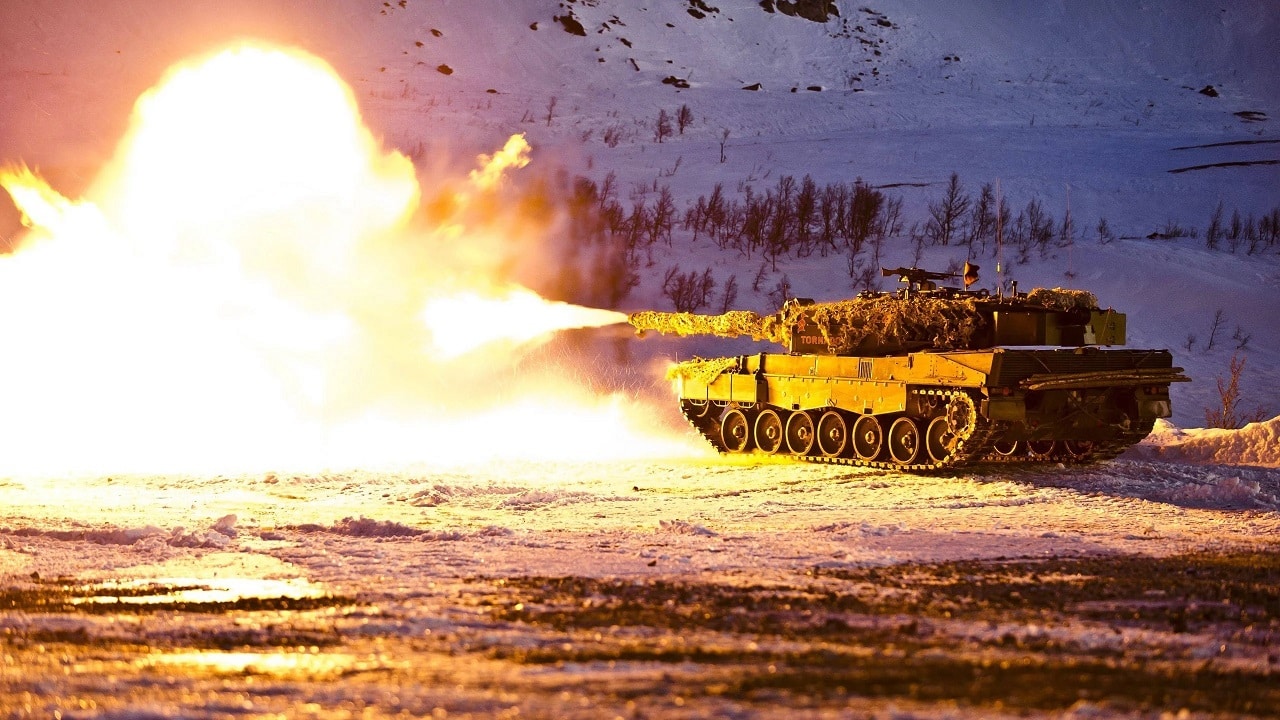
Key Points and Summary: Ukraine’s Kursk offensive demonstrated a tactical shift from defensive operations to effective Combined Arms Maneuvers.
-Supported by Western-supplied heavy armor like Challenger 2 tanks and Bradley fighting vehicles, Ukraine leveraged ISR capabilities to identify weak points in Russian defenses.
-The offensive showcased Ukraine’s ability to take and hold ground using precise artillery fire and long-range rockets to enable armored breakthroughs.
-While Russian counteroffensives have regained territory, the Kursk assault highlighted Ukraine’s evolving strategy and adaptability in modern warfare.
-Despite challenges in sustaining gains, Kursk remains a key example of Ukraine’s growing capability to counter Russian advances.
Kursk Offensive: Why Ukraine’s Tactics Shifted the War’s Momentum
These days, the narrative in most media outlets is that the war in Ukraine has now flipped to where Russia has most of the momentum and is slowly clawing back territory. And yet, just a few months ago, Ukraine’s Kursk ‘invasion’ was praised as a significant success.
However, even now, with North Korea entering the war to help Russia in this key sector, some say Ukraine made a mistake with this military undertaking.
If taking the long view, the Kursk offensive appears to have been largely successful in some key respects.
While “holding” ground continues to be a challenge for Ukrainian forces, and key factors are likely contributing to this, the Kursk offensive showed that classic mechanized maneuver operations with heavy armor were effective against Russian defenses.
Kursk: A Success for Ukraine? Yes.
While there are current Russian offenses that are taking ground slowly, and it may not be clear exactly how much “taken” ground Ukrainian troops will be able to hold, the Kursk offensive has proven highly effective in a number to a certain degree.
There are several interesting and key variables likely contributing to this, such as Ukraine’s effective use of ISR (Intelligence, Reconnaissance, Surveillance) and the progressive arrival of large amounts of heavy armor.
Prior to the arrival of British Challenger 2 tanks, German Leopard IIs, and US-provided Bradleys, the Ukrainian force was largely defensive.
Although quite effective, the Ukrainians used anti-armor weapons, hit-and-run ambush-style tactics, and dispersed formations to blunt, slow-down, or simply destroy Russia’s armored assault.
However, before Kursk and some other minor incursions, artillery fire, and land-fired rockets, such as the Guided Multiple Launch Rocket Systems (GMLRS), the Ukrainians did not “take” and “hold” new ground.
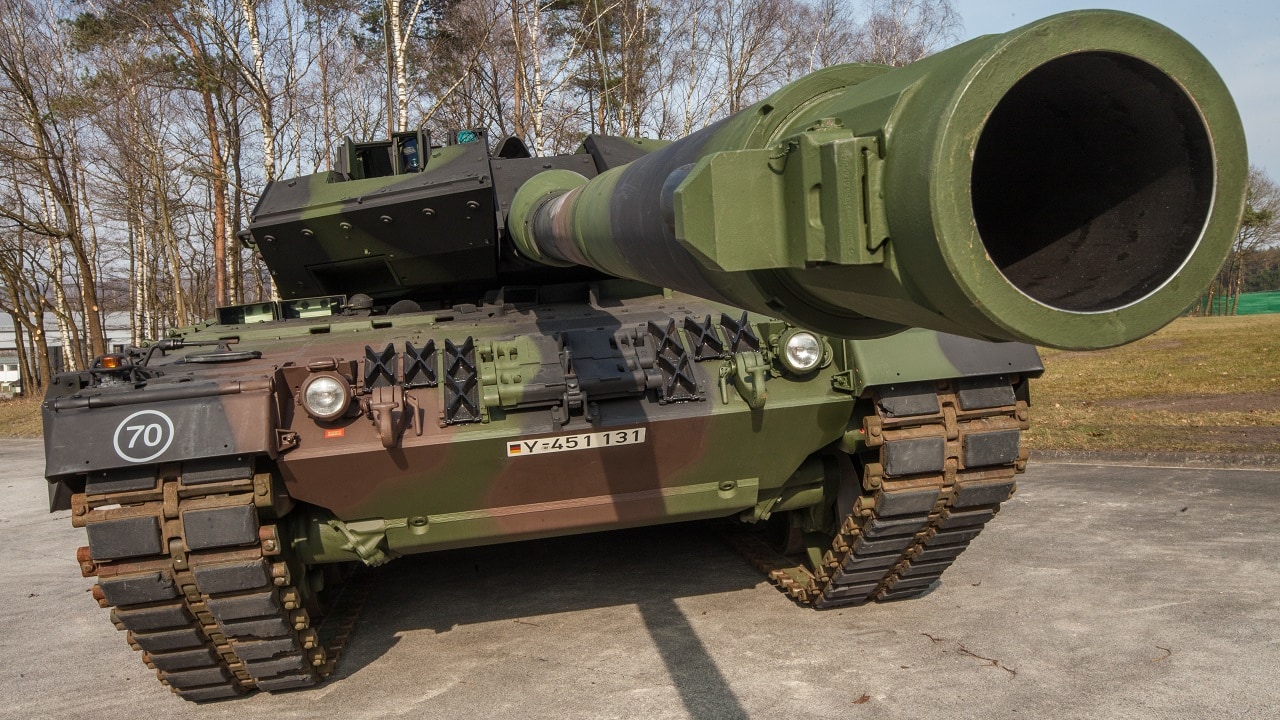
NATO Leopard 2 Tank. Image Credit: Creative Commons.
This did not seem to happen until the Pentagon and other allies began sending heavy armor and logistical support to Ukraine in the form of tactical trucks, medical supplies, troop transport support, and of course, heavy armor.
Disaggregated and largely defensive maneuvers were quite effective, yet “breaking” through an enemy perimeter in any kind of larger maneuver formation would likely require the use of heavier armor.
It would seem reasonable to posit that perhaps Ukraine saw a weaker point along the Russian perimeter and planned a classic Combined Arms Maneuver assault.
Since the beginning of the war, Ukraine has operated with ISR from NATO and the West and has also used innovative tactics to develop and launch its own drones and surveillance systems. This would suggest that Ukraine did in fact have the ability to “see” or “survey” the Russian perimeter to assess potential areas of attack.
Should Ukraine essentially “know” where Russian defenses were weakest, they might be well positioned to launch a counteroffensive. A traditional Combined Arms Maneuver assault would have likely involved using long-range land rockets to soften defensive lines, followed by closer-in artillery fire used for both precise and suppressive attacks to enable heavier forces to “maneuver” into attack formations.
Ukraine’s Kursk Assault Was No Failure
While results or outcomes remain unclear, the Kursk offensive did represent a decided and significant tactical and strategic “shift” for Ukraine as its military demonstrated it could take and “hold” ground behind Russian defenses.
Instead of simply attacking with long-range ground fire, something which has proven quite effective, the Ukrainians have been able to conduct heavier Combined Arms Maneuvers with the support of ISR and more heavily armored vehicles.
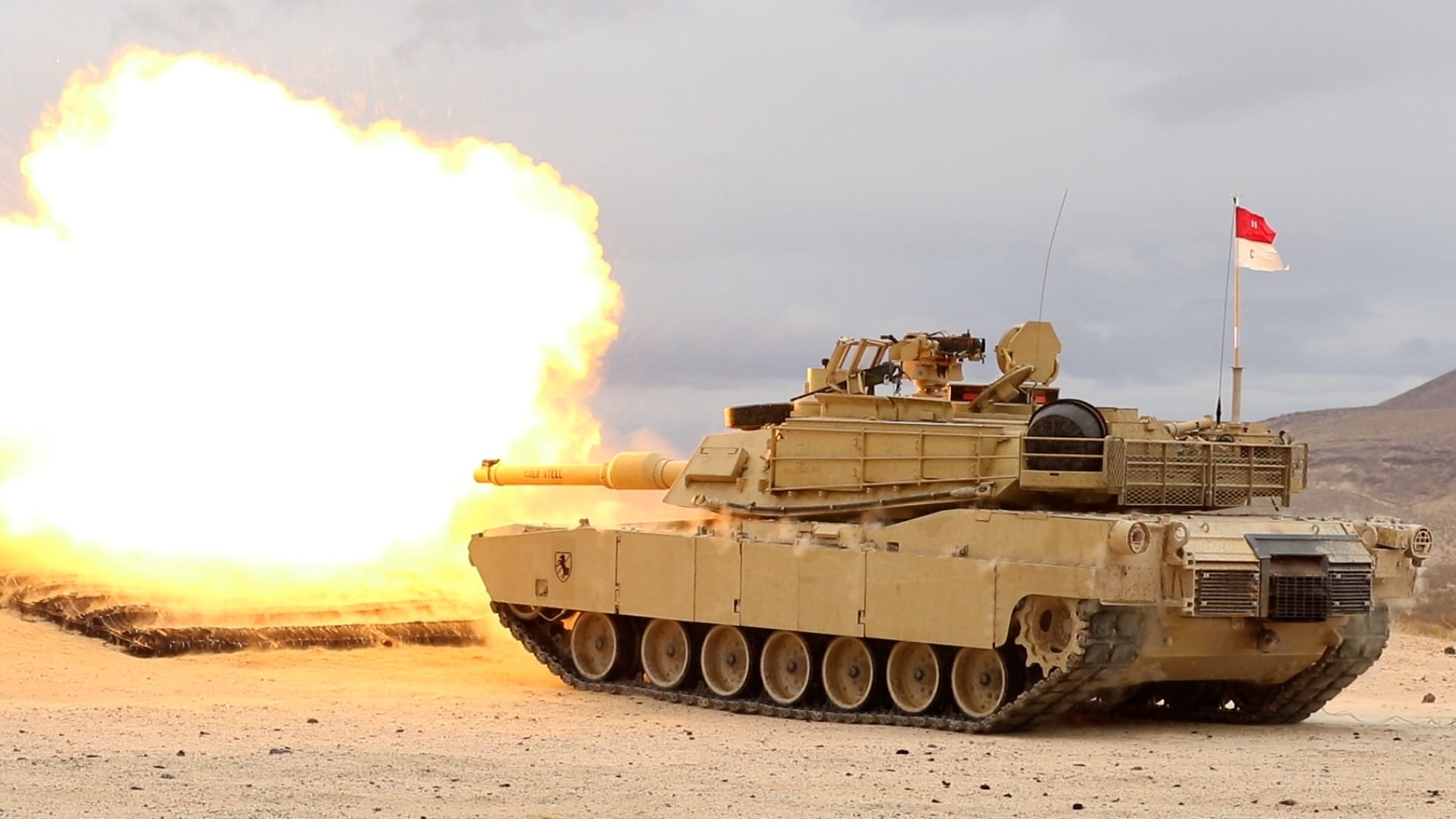
An M1A2 Abrams SEP V2 main battle tank, assigned to Cold Steel Troop, 1st Squadron, 11th Armored Cavalry Regiment, fires a M865 target practice cone stabilized discarding sabot with tracer on December 9, 2021, at the National Training Center and Fort Irwin training area.
About the Author: Kris Osborn
Kris Osborn is the Military Technology Editor of 19FortyFive and President of Warrior Maven – Center for Military Modernization. Osborn previously served at the Pentagon as a highly qualified expert in the Office of the Assistant Secretary of the Army—Acquisition, Logistics & Technology. Osborn has also worked as an anchor and on-air military specialist at national TV networks. He has appeared as a guest military expert on Fox News, MSNBC, The Military Channel, and The History Channel. He also has a Masters Degree in Comparative Literature from Columbia University.