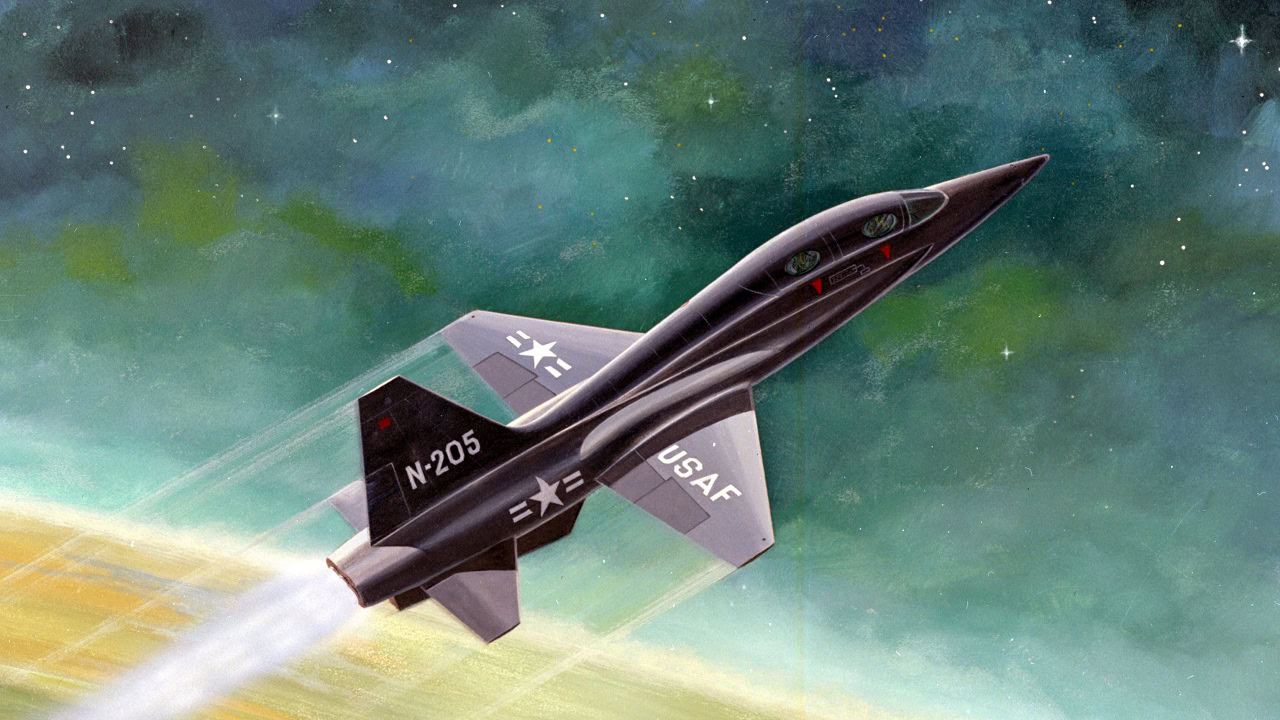
Article Summary – The Lockheed XF-104 Starfighter emerged directly from Korean War combat lessons, after U.S. pilots found their F-86 Sabres outclassed by MiG-15s.
-Lockheed responded with a radical, missile-shaped interceptor: the F-104, a lightweight, single-engine jet with razor-thin trapezoidal wings and minimal avionics, built for blistering speed.
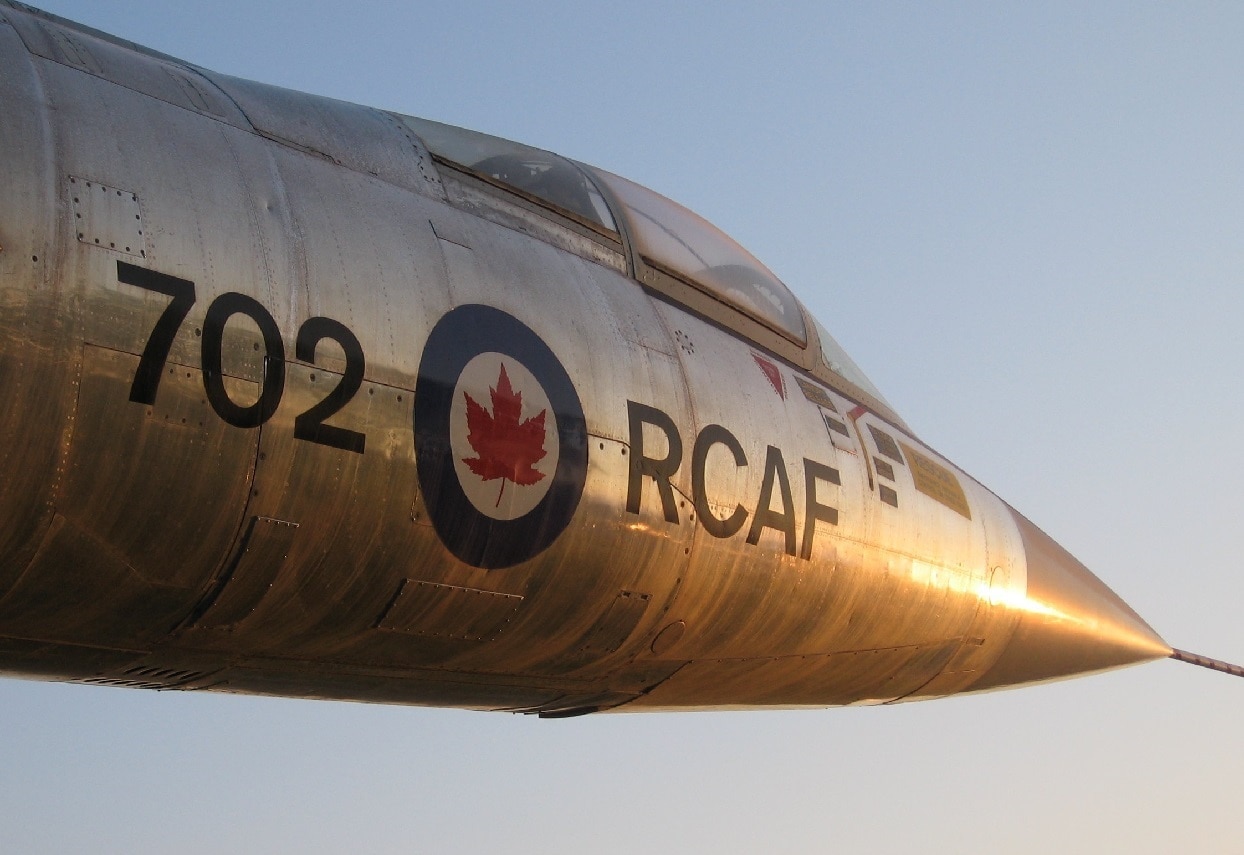
F-104 Starfighter. Image: Creative Commons.
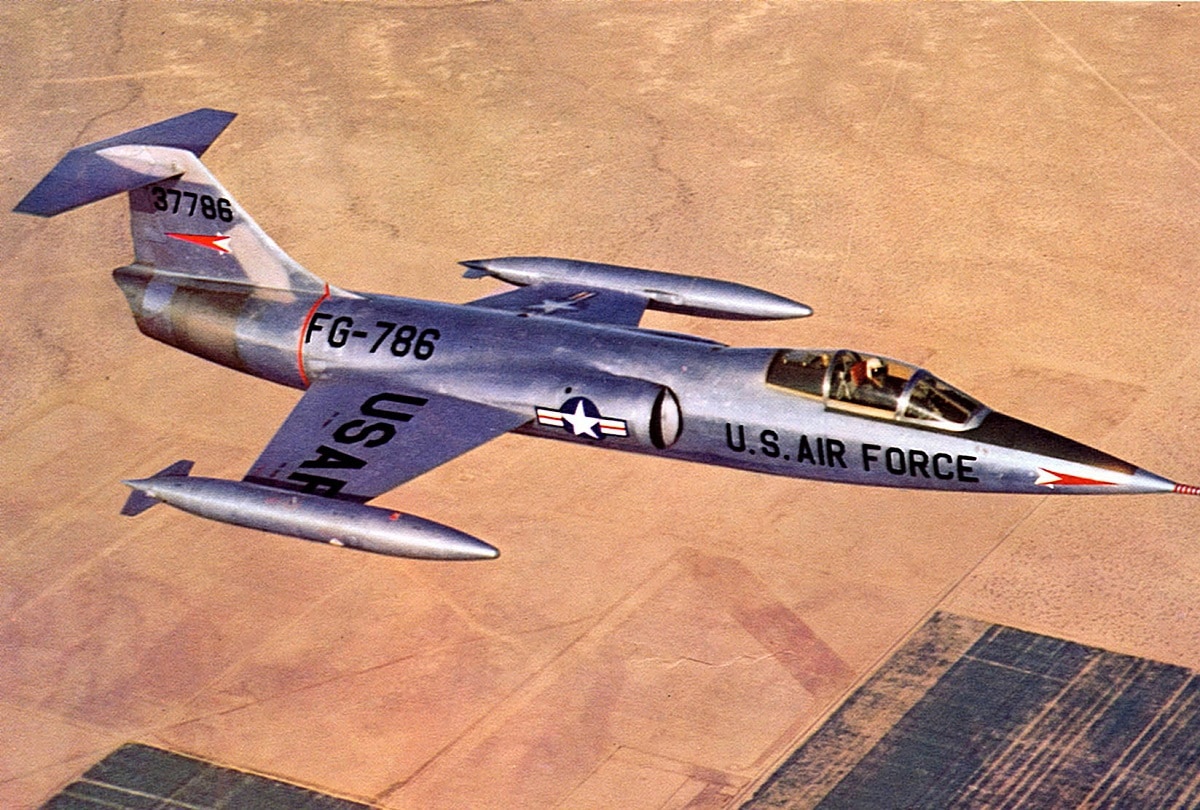
Image: Creative Commons.
-It became the first fighter to sustain Mach 2 and served widely with U.S. allies, even carrying nuclear weapons.
-But its tiny wings drove high wing loading and a brutal accident rate, earning the “widowmaker” label. Still, its sleek layout and performance influenced later designs—most notably the F-16—cementing the Starfighter’s place in jet fighter evolution.
The F-104 Starfighter: The ‘Missile With a Man in It’ That Changed Fighter Design
Roughly one year after the 1953 armistice paused fighting in the Korean War, Lockheed’s XF-104 Starfighter single-engine supersonic jet took flight as part of a deliberate effort to leverage lessons learned from the conflict.
U.S. Air Force pilots fighting in support of South Korea reported that their F-86 Sabre jets were less agile and effective than Russian-built MiG-15 fighters flown by North Korea.
Seeking to immediately build on lessons from tactical experience in a real aerial war, Lockheed sought to engineer a fast, sleek, high-performance prototype jet with thin wings and a missile-shaped fuselage.
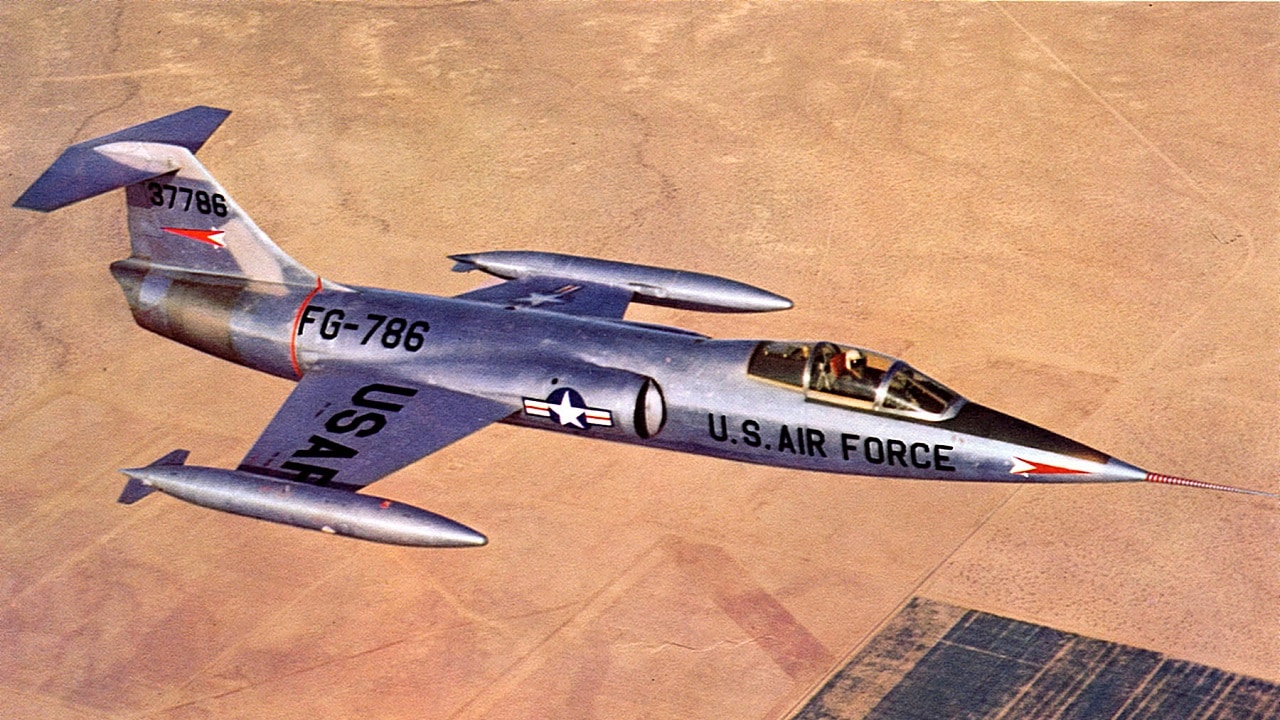
Lockheed XF-104 (S/N 53-7786) in flight. This aircraft crashed on 11 July 1957 due to uncontrollable tail flutter. The pilot, Bill Park, ejected safely.
The first F-104 Starfighter prototypes took to the sky in 1954, and even though two were lost to accidents, once in production Starfighters were well received.
The aircraft served with a number of countries, such as Jordan, Turkey and Japan. Lockheed and the U.S. Air Force ultimately produced more than 2,500 F-104s, and the jets claim an important space in the development arc of U.S. fighter jets.
The Starfighter was enthusiastically referred to as the “missile with a man in it”—it was designed as a low-cost, lightweight, high-speed interceptor with little room for fuel or extensive avionics.
F-104 Influenced F-16
The F-104’s single-engine and pointed, sleek fuselage seems to prefigure the shape of the F-16, which followed several decades later.
F-16 engineers may well have been inspired by the F-104 Starfighter’s design. The Starfighter also had nearly missile-shaped structures attached at the end of wide thin wings— an element that may have influenced the rounded structures attached to the wings on F-16s.
Breaking from the swept-wing designs of its era, the F-104 featured extremely thin, mid-mounted, trapezoidal wings with a very short span of just under 22 feet.
The leading edges were so sharp that protective guards were required for ground crews.
First Mach 2 Jet
The F-104 was the first aircraft to reach Mach 2, but its high accident rate earned it the nickname “widowmaker.”
The high accident rate is owed in part to the F-104’s small wings. These resulted in high wing loading, which helps maintain stability at high speeds and low altitudes, but makes it much more difficult to maneuver at lower speeds.
While fast and agile, the Starfighter was also a multi-role aircraft capable of operating as both a fighter and a bomber. The aircraft was even capable of carrying nuclear weapons, which contributed to its multi-role functionality.
Built for Speed
The thin, lightweight F-104 was an aircraft engineered explicitly for speed.
The U.S. Air Force built it in an effort to correct the speed deficit F-86 Sabres encountered during the Korean War.
Its design probably offered insights into aerodynamics; the smooth, thin, rounded fuselage likely generated a favorable airflow boundary layer, resulting in less drag and fewer protruding, heavy structures such as external fuel tanks.
This is largely why the aircraft, while extremely fast, lacked an ability to achieve the ranges, payload size, versatility, and bomb-carrying capacity of other aircraft.
Performance trade-offs always drive design decisions with these kinds of fighters. An aircraft with greater bomb-carrying capacity or heavier fuel tanks would achieve much greater range and mission-time capability.
About the Author: Kris Osborn
Kris Osborn is the President of Warrior Maven – Center for Military Modernization. Osborn previously served at the Pentagon as a highly qualified expert in the Office of the Assistant Secretary of the Army—Acquisition, Logistics & Technology. Osborn has also worked as an anchor and on-air military specialist at national TV networks. He has appeared as a guest military expert on Fox News, MSNBC, The Military Channel, and The History Channel.