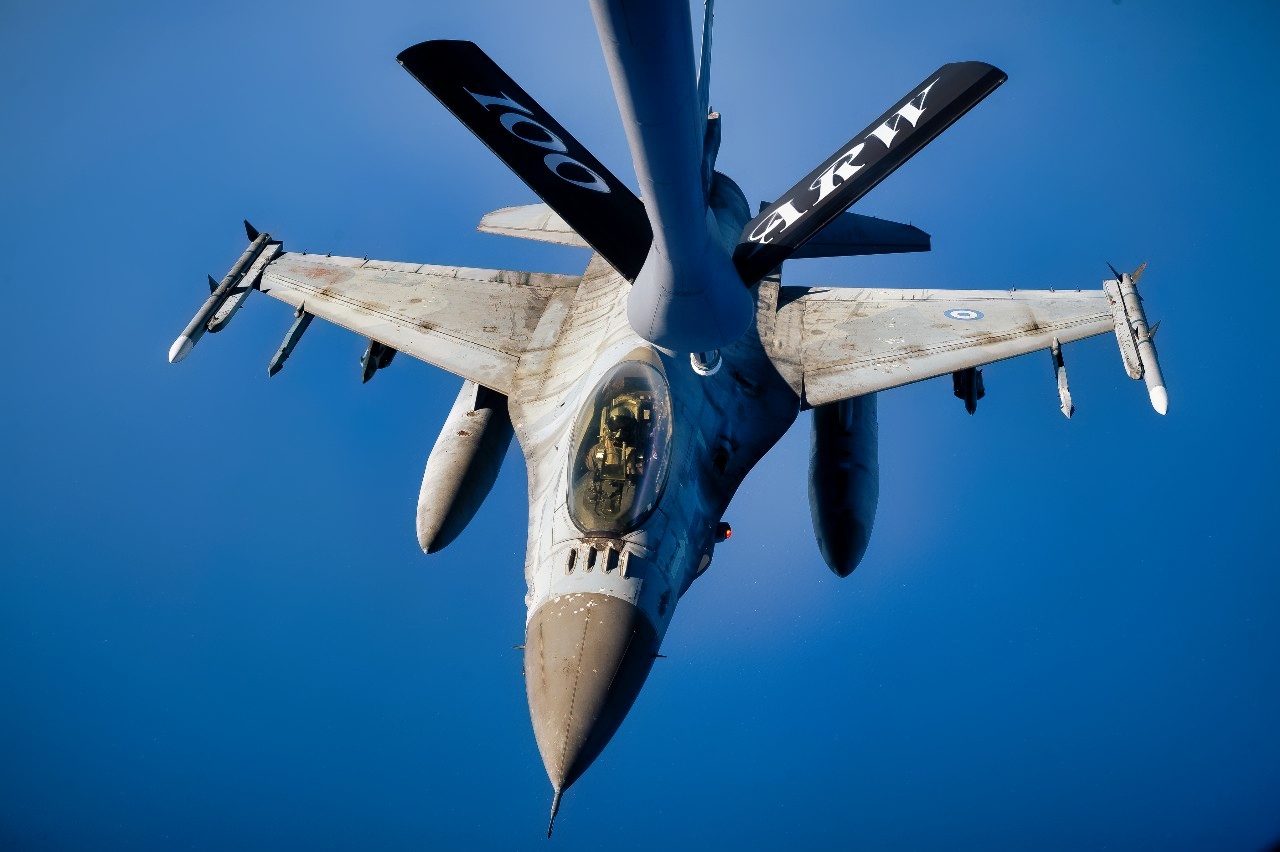
F-16 In Ukraine: “Some of the Most Intense Combat Ever” – On May 16, at approximately 0330 Kyiv time, the Ukrainian Air Force (PSU) lost its third F-16 fighter aircraft while on a combat mission.
According to the service, the US-made fighter aircraft was participating in an air defense mission against Russian airborne targets when ground controllers lost contact with it.
Unlike the previous two aircraft that crashed, this aircraft was not struck by any ground fire or airborne debris, but “according to preliminary data… an unusual situation arose on board. The pilot moved the aircraft away from the settlement and successfully ejected,” wrote a PSU spokesperson on the service’s Telegram messaging platform channel.
Following his ejection, the pilot was picked up by a Ukraine Armed Forces (ZSU) search-and-rescue team, according to an official statement from the PSU. “The pilot’s condition is satisfactory, he is safe, and his life and health are not in danger,” the statement also read. The PSU did not provide further details on the plane’s ultimate disposition, the nature of the onboard emergency, or the location of its most likely crash site.
Air Defense Mission for F-16
According to initial data from the PSU, this F-16 pilot had already destroyed three Russian aerial targets and was in the process of attacking a fourth with the aircraft’s onboard 20mm M61 Vulcan cannon when he was forced to disengage and eject.
The PSU has extensively used fighter aircraft to combat Russian cruise missiles, large attack drones, and even ballistic missiles. Employing the F-16s for these missions is a continuation of the service’s practice at the very beginning of the war of utilizing Ukraine’s own MiG-29s in this same role.
Ukraine received its first US-made fourth-generation F-16 fighters from The Netherlands and Denmark in 2024. These NATO member states are retiring these aircraft and are now taking delivery of the F-35, considered to be the fifth-generation replacement for many F-16 user nations.
This air defense mission is how the PSU decided to initially deploy its F-16s—rather than using them in offensive missions to strike Russian military targets on the ground. Employing the aircraft to counter Russian cruise missile and drone attacks across Ukraine has been largely successful. Still, these air defense missions are frequently conducted in conjunction with surface-to-air missile batteries on the ground. This has proven to have some associated occupational hazards.
Losses to Date
The PSU lost its first F-16 aircraft in a crash in August 2024, leading to the death of its pilot, Oleksii Mes. This aircraft was assessed at the time to have been lost when the pilot flew through a debris field created by the successful intercept of an incoming Russian missile by one of the PSU ground-based air defense batteries. Before his aircraft crashed, he had shot down three Russian cruise missiles and an attack drone.
A second F-16 pilot, Pavlo Ivanov, was killed during a combat mission this April. He was posthumously awarded the title of Hero of Ukraine, according to the website of Ukraine President Volodymyr Zelenskiy.
“For personal courage and heroism, demonstrated in the protection of the state sovereignty and territorial integrity of Ukraine, and selfless service to the Ukrainian people, I decree to award the title of Hero of Ukraine with the award of the “Golden Star” order to Ivanov Pavlo Ivanovych,” the official statement from Zelensky’s office read.
The F-16s are now being used in offensive and defensive operations. While the aircraft has been used for these intercept missions to take down the increasing numbers of Russian missiles and drones being launched against Ukrainian cities, they have also proven to be increasingly effective in launching missiles and bombs against Russian front-line positions.
Questions are being asked about the F-16’s combat survivability, given that three of this type have now been lost in Ukraine. But “those asking ignore the fact that outside of some of the engagements that we have seen with the Israeli Air Force in the Middle East, these F-16s are engaging in some of the highest op-tempo that this aircraft has ever seen,” said a Ukraine defense industry official.
“Given the number of missions being flown and the hazardous nature of the air defense mission profile, it is surprising that more aircraft have not been lost,” he said.
F-16 Fighters in the Sky
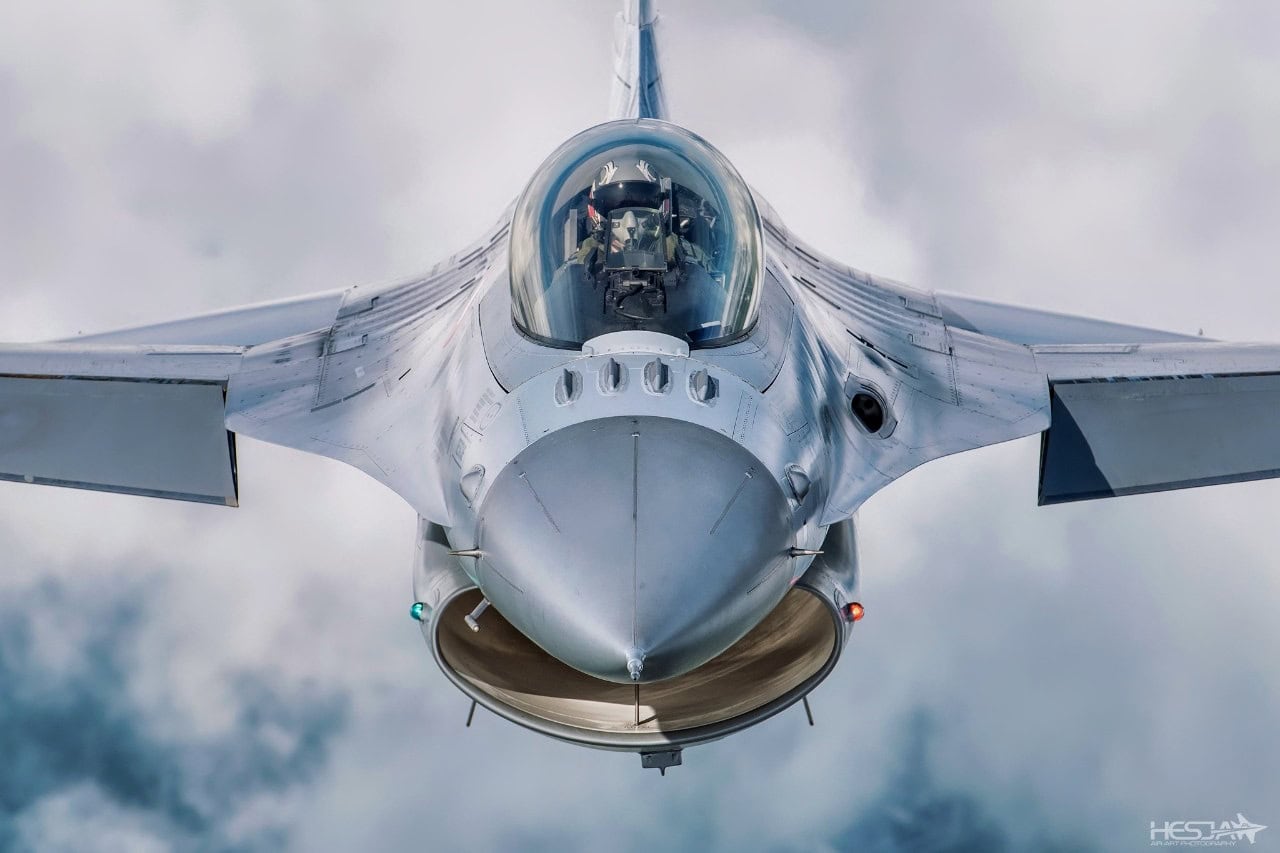
F-16 Fighter. Image Credit: Creative Commons.
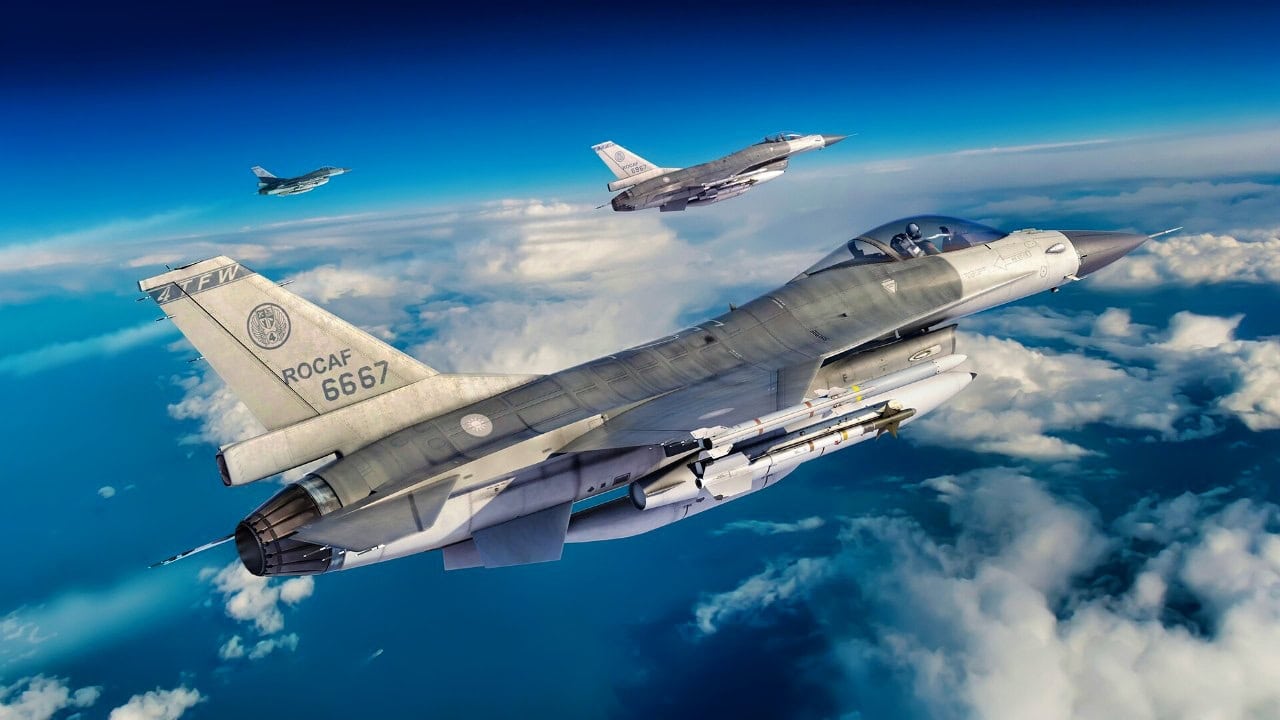
F-16V Fighter Jet. Image Credit: Creative Commons.
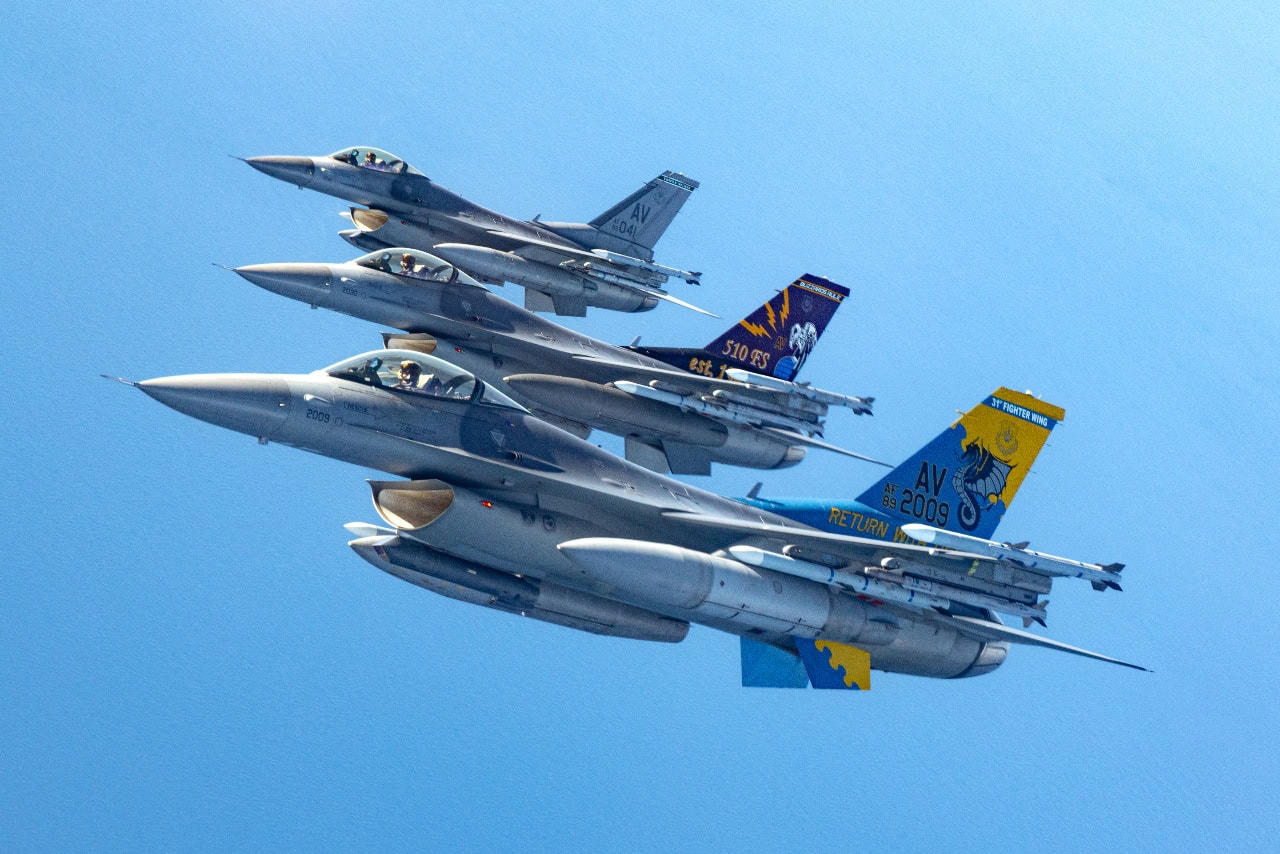
Three F-16 Fighting Falcons from the 31st Fighter Wing fly above Aviano Air Base, Italy, November 21, 2024. The F-16’s enduring appeal lies in its technological relevance, with continual upgrades to avionics, radar systems and weaponry ensuring it remains a formidable force in modern air warfare. (Courtesy photo by Frank Crebas)
About the Author:
Reuben F. Johnson is a survivor of the February 2022 Russian invasion of Ukraine and is an Expert on Foreign Military Affairs with the Fundacja im. Kazimierza Pułaskiego in Warsaw. He has been a consultant to the Pentagon, several NATO governments and the Australian government in the fields of defense technology and weapon systems design. Over the past 30 years he has resided in and reported from Russia, Ukraine, Poland, Brazil, the People’s Republic of China and Australia.