Key Points and Summary: The U.S. Army is significantly upgrading ground vehicle lethality by integrating a next-generation 50mm Bushmaster Chain Gun onto the emerging XM30 Mechanized Infantry Combat Vehicle.
-Developed by Northrop Grumman and derived from Apache helicopter technology, the new “linkless” cannon offers a range of over 4km—more than double that of the current Bradley Fighting Vehicle.
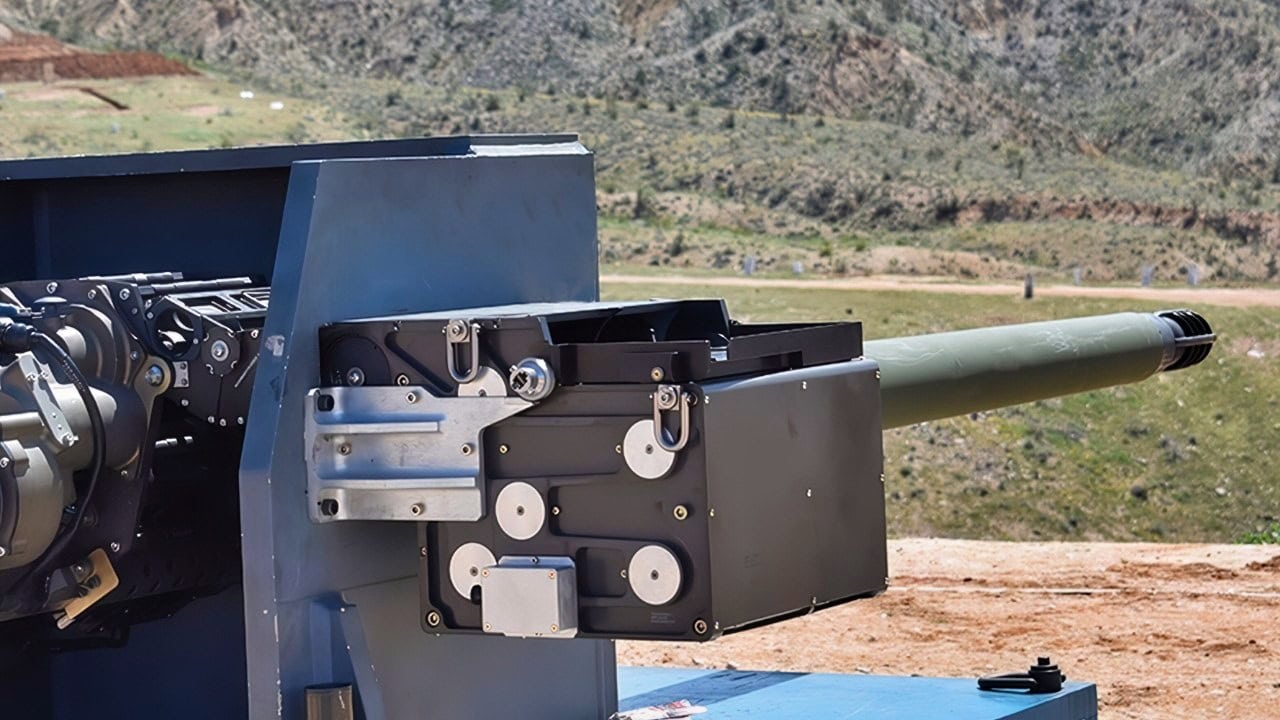
50mm Cannon. Image Credit: U.S. Army.
-Designed to close the gap between lighter 30mm guns and heavy 120mm tank cannons, the system features advanced fire control and utilizes guided, proximity, and airburst ammunition to destroy targets in defilade.
Apache Firepower on the Ground: US Army Integrates 50mm Bushmaster Gun onto XM30 Vehicle
The US Army is bringing Apache-helicopter-like chain gun firepower to its ground armored vehicles through the integration of a next-generation 50mm Bushmaster Chain Gun onto its emerging XM30 Mechanized Infantry Combat Vehicle.
The 50mm canon, built by Northrop Grumman, is engineered to integrate a variety of emerging, high-tech armored vehicle attack technologies into a single system, including advanced fire control, automated targeting sensors, next-gen ammunition, increased computer processing speed, and longer-range medium-caliber attack options. According to Northrop information, the new 50mm cannon can hit ranges more than twice as far as the roughly 2-kilometer range of the Bradley Fighting Vehicle’s existing M242 25mm cannon.
“Dozens of countries have either parity or overmatch to the Bradley Fighting Vehicle’s M242,” a Northrop statement says. The 50mm is being engineered to address this potential disparity by hitting ranges well over 4km.
Army-Industry Cooperation
The Army’s Combat Capabilities Development Command at Picatinny Arsenal and Northrop Grumman’s Armament Systems have partnered to engineer, test, and deliver the new cannon. While called a 50mm cannon, the latest weapon represents a new, high-tech iteration of Chain Gun technology first developed as a high-speed 30mm gun for the Apache Attack helicopter.
Chain Gun Technology
The evolution of Chain Gun attack technology has gone through several significant steps. The Apache 30mm gun, called the M230, provides an initial technological foundation from which subsequent land-fire applications have emerged – such as the existing vehicle-mounted 30mm Bushmaster Chain Gun and the new 50mm Chain Gun (or cannon).
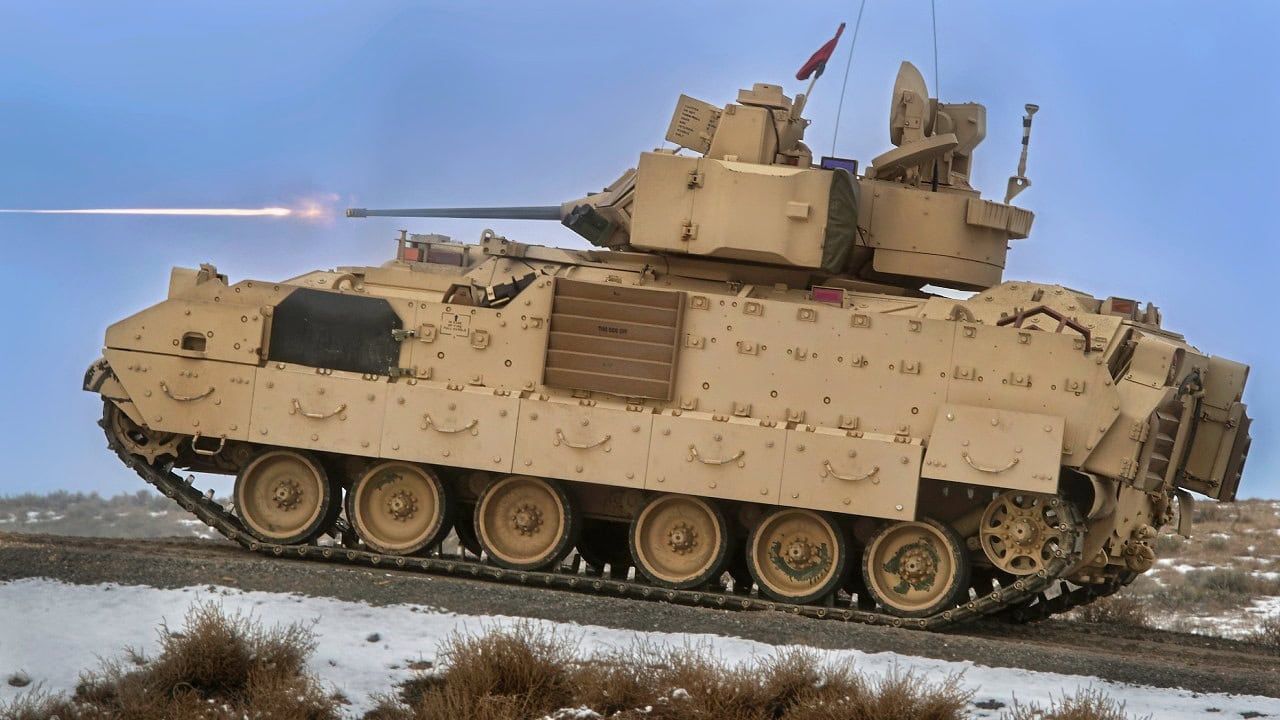
The Bradley Fighting Vehicle cuts loose several rounds from the 25mm main gun on the orchard Combat Training Center Range.
Soldiers completed training this week of the Bradley Commanders Course with the 204th Regional Training Institute, (RTI), of the Idaho Army National Guard on Gowen Field. The course is designed to train active duty, reserve and national guard officers and non-commissioned officers in combat critical M3 Bradley Fighting Vehicle Commander Skills. Field exercises were conducted on the newest Range 10, the Digital Air Ground Integrated Range (DAGIR), on the Orchard Combat Training Center grounds.
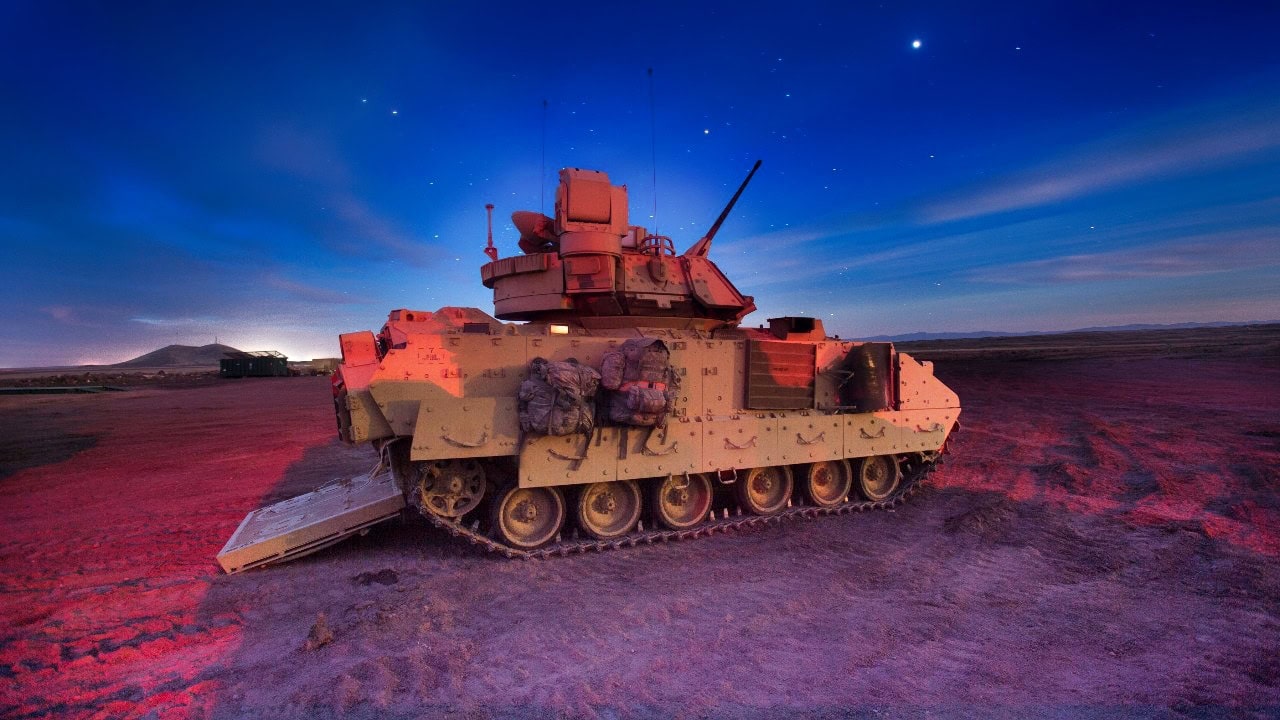
Engineers with the 116th Brigade Engineer Battalion conduct M2A3 Bradley fighting vehicle gunnery qualification on March 27, 2018, Orchard Combat Training Center, south of Boise, Idaho. Combat engineers with the 116th BEB trained through gunnery table XII, evaluating their ability to execute collective platoon-level tasks in a tactical live-fire environment; including integrating dismounted soldiers with their assigned BFV. (U.S. Army National Guard photo by 1LT Robert Barney)
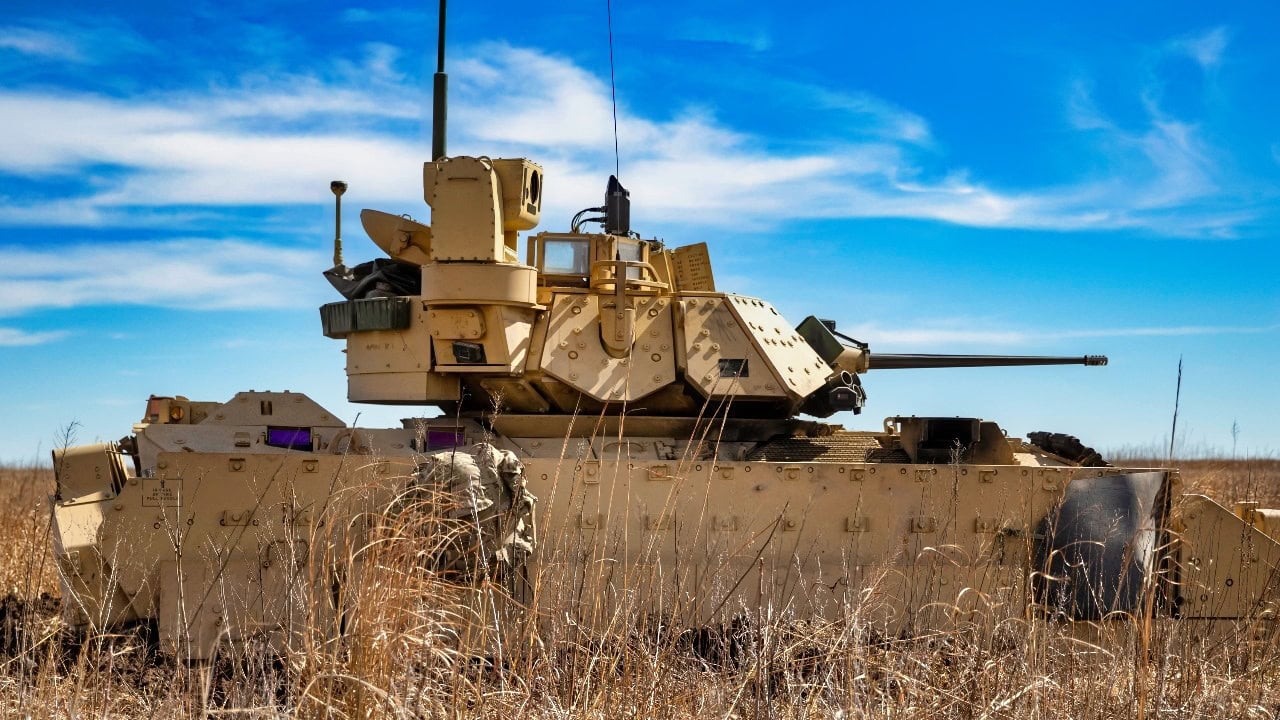
U.S. Army Soldiers with the 3rd Battalion, 66th Armored Regiment, 1st Infantry Division, participated in a battalion wide training event consisting of attacking and defending Bradley Fighting Vehicles and M1 Abrams Main Battle Tanks, on Fort Riley, February 4, 2024. The defending teams dug hasty trench defenses to further conceal and provide cover for their tanks. (U.S. Army Photo by Spc. Kenneth Barnet)
A Chain Gun is described as a type of auto-cannon that uses “an external source of power to cycle the weapon rather than diverting energy from the cartridge,” using a continuous loop.
The 50mm cannon incorporates adaptations of the original Apache 30mm Chain Gun technology, which fires a fast-paced belt of “linked” ammunition. While equipped with targeting technology for individual targets, the Apache 30mm can often be used as a somewhat “area” weapon to blanket an area with dispersed, mobile, rapid-fire attack. Such a tactic can both lay down suppressive fire, enabling ground troops to maneuver, or itself directly destroy small, moving ground targets.
The new 50mm evolved Chain Gun systems make use of a “linkless” ammunition technology. This can slow down the pace of fire, from 600 to 200 shots per minute in some cases, bringing precision and higher levels of destruction upon heavier enemy targets, In development for roughly 12 years, the 50mm cannon represents a new technical effort to engineer what might be called a “middle ground” kind of attack cannon; it must not only bring more firepower, range, precision and lethality to armored combat, but also integrate into the kinds of expeditionary future armored vehicles sought after by the Army. In effect, the new cannon represents a new sphere of attack options, lodging itself as a new attack option positioned between a 30mm chain gun, such as that fired by the Stryker, and a heavier 120mm cannon fired by an Abrams tank.
The Army’s 50mm cannon aligns with the services’ future armored combat vehicle strategy, which aims to harness the lethality and survivability afforded by new technologies while merging them with unprecedented levels of maneuverability, speed, and deployability.
Guided Ammunition
Emerging guided ammunition for the 50mm could extend the range to more than 7km, according to Northrop.
The guided technology, weapons developers say, could draw on GPS and Inertial Measurement Unit technology to enable a round to slightly adjust course while “in-flight,” improving the weapon’s ability to hit a moving target.
A proximity fuse, for instance, is an existing technology now being adapted to the 50mm, Northrop weapons developers say; it will enable a round to explode in the area of a target instead of attacking more narrowly or linearly.
This kind of blast effect allows the dispersion of lethal, explosive materials across a wider area and the destruction of various targets, such as groups of on-the-move enemy fighters.
Given this ability to use proximity and airburst fuses, the 50mm will enable it to destroy targets in “defilade” or otherwise not observable to attackers due to an obstruction such as a rock or wall.
By exploding at a predetermined point above or near the intended target, airburst rounds disperse lethal explosive material, enabling them to destroy an enemy hiding behind a rock.
While airburst rounds already exist and can, for instance, be fired from a Stryker-mounted 30mm gun, the Army and Northrop are adapting the technology to the 50mm.
About the Author: Military Expert Kris Osborn
Kris Osborn is the President of Warrior Maven – Center for Military Modernization. Osborn previously served at the Pentagon as a highly qualified expert in the Office of the Assistant Secretary of the Army—Acquisition, Logistics & Technology. Osborn has also worked as an anchor and on-air military specialist at national TV networks. He has appeared as a guest military expert on Fox News, MSNBC, The Military Channel, and The History Channel. He also has a Masters Degree in Comparative Literature from Columbia University.