
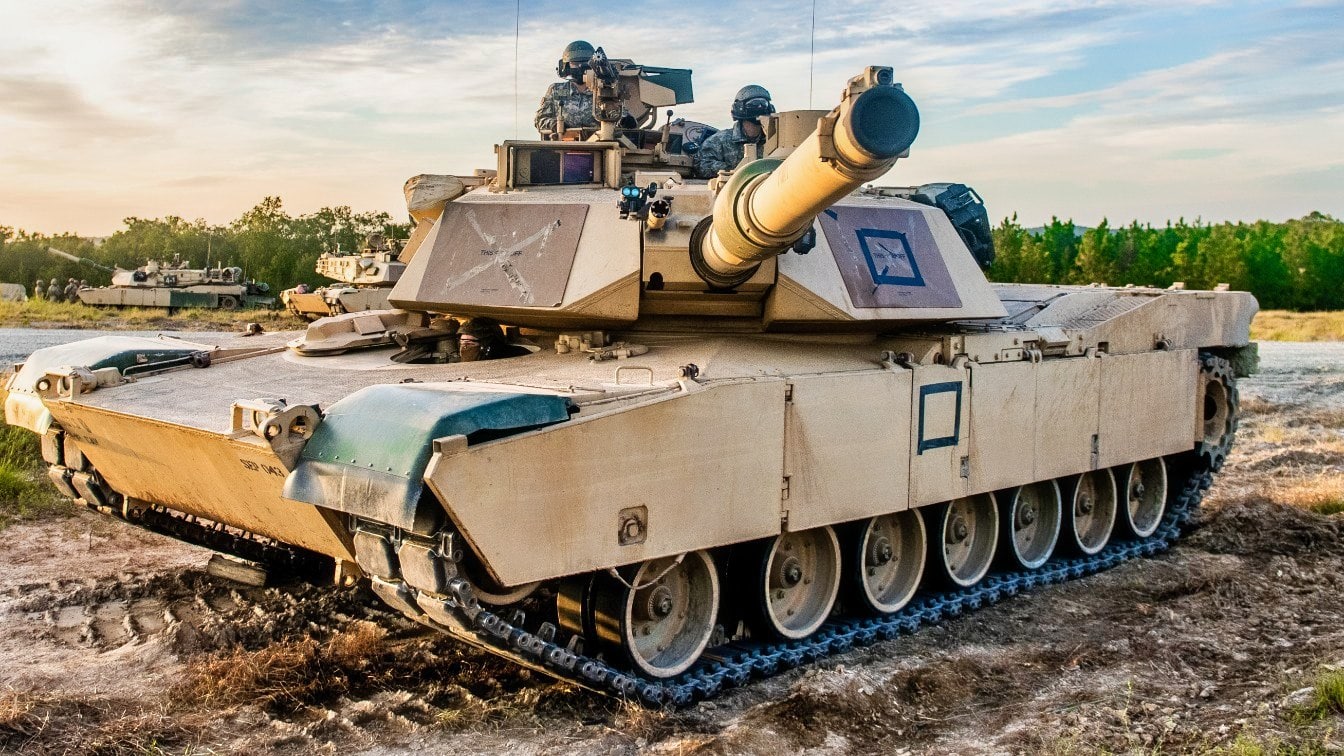
Summary and Key Points: The Army’s Abrams M1E3 is positioned as the next main battle tank built for a battlefield shaped by drones, precision artillery, and modern anti-tank missiles.
-The design emphasizes a lighter, more maneuverable platform with a three-person crew, a 120mm smoothbore gun, and improved fuel efficiency.
-Survivability is framed around modular upgrades and the Trophy Active Protection System, with software aimed at countering unmanned threats.
-A major shift is propulsion: a hybrid-electric system meant to cut noise, heat, and emissions to reduce detectability. The concept leans heavily on combined-arms integration—drones, jamming, air cover, and long-range fires—to help the tank “see first” and “strike first.”
-Critics of mechanized warfare wonder about the survivability of tanks in the modern era.
The M1E3 Abrams Tank: Hybrid Power, Trophy Protection, and a 3-Person Crew
The war in Ukraine has shown that the armored beasts are vulnerable to swarming drones and anti-tank missile systems. But the U.S. Army is still forging ahead with a new vehicle called the Abrams M1E3. This will be the Army’s main battle tank for the next few decades and will bring a high level of lethality, speed, and agility to the battlefield.
The Army is proud of its latest tank, and the service branch is showing it off in high fashion. The M1E3 will make an appearance at the North American International Auto Show in Detroit, Michigan, starting January 14. We’ll be there to document the proceedings and gauge the public’s interest.
Improvements to Speed and Maneuverability
This armored vehicle should be a hit. There will be a three-person crew, better fuel efficiency, and improved handling in dangerous terrain. The main gun will be a 120mm smoothbore model. The lighter weight compared to other tanks in the M1 Abrams family will allow for higher speed and enviable maneuverability.
The new prototype has been designed by Roush. The Army is requesting $723.5 million in the FY2026 National Defense Authorization Act to build it in numbers. Serial production will happen at the General Dynamics Land Systems factory in Lima, Ohio.
The Tank Is Still Relevant
While the tank’s demise may be exaggerated, there is still a need on the battlefield for the tank to take and seize territory. Plus, armored vehicles are better able to punch holes in the enemy defenses and speed to the rear, causing mayhem and destruction.
However, the war in Ukraine has shown that a determined enemy with loitering kamikaze drones, accurate artillery fire, and anti-tank missiles can place even the best armor in a difficult predicament.
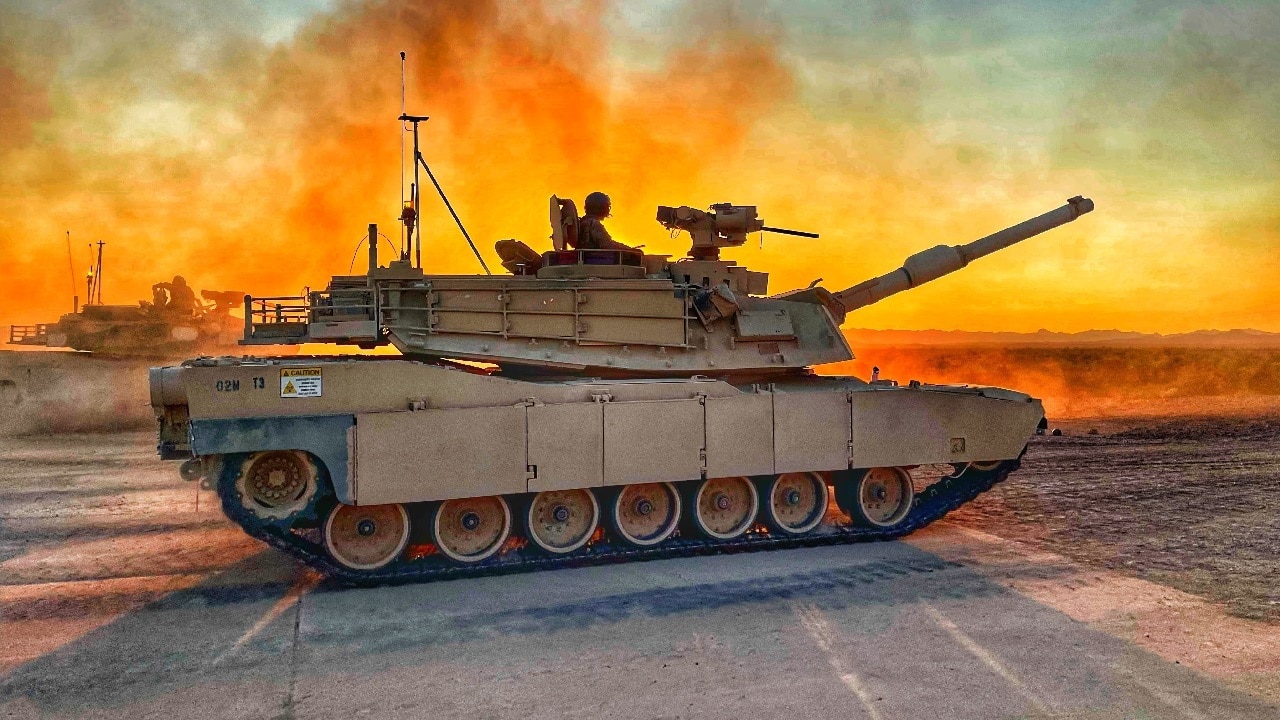
US Army M1 Abrams Tank. Image Credit: Creative Commons.
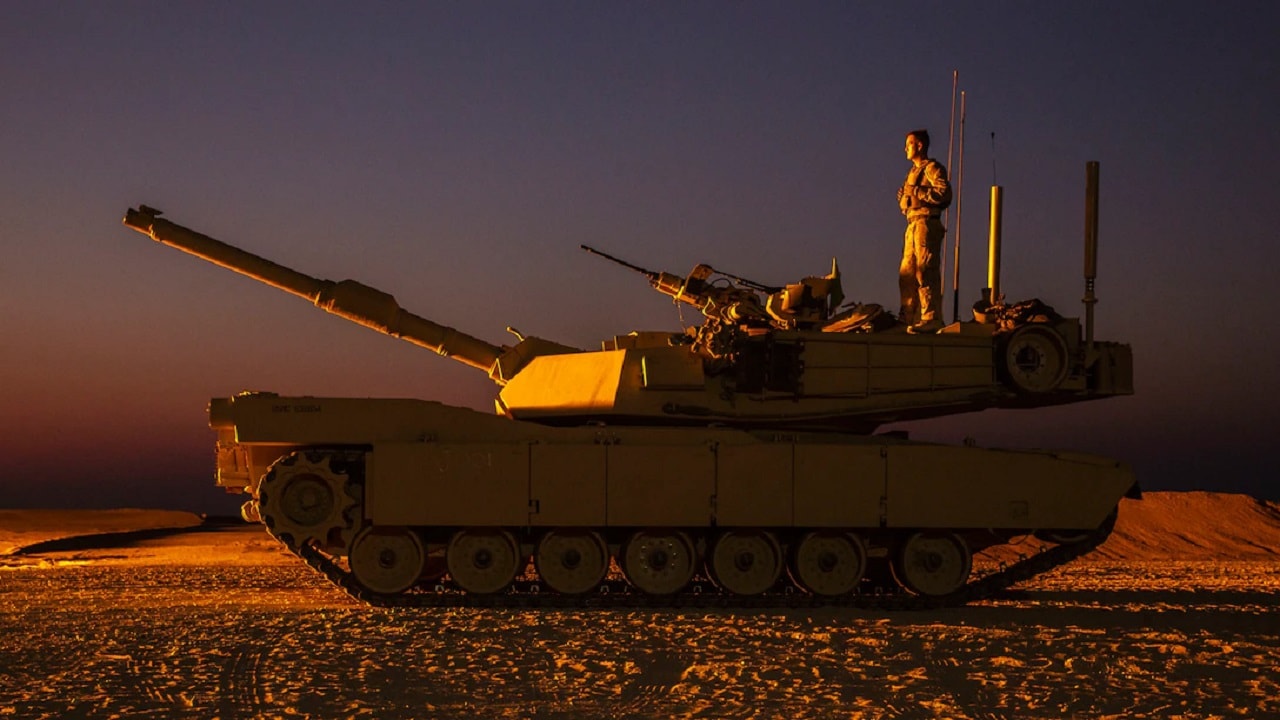
M1 Abrams Tank. Image Credit: US Marine Corp.
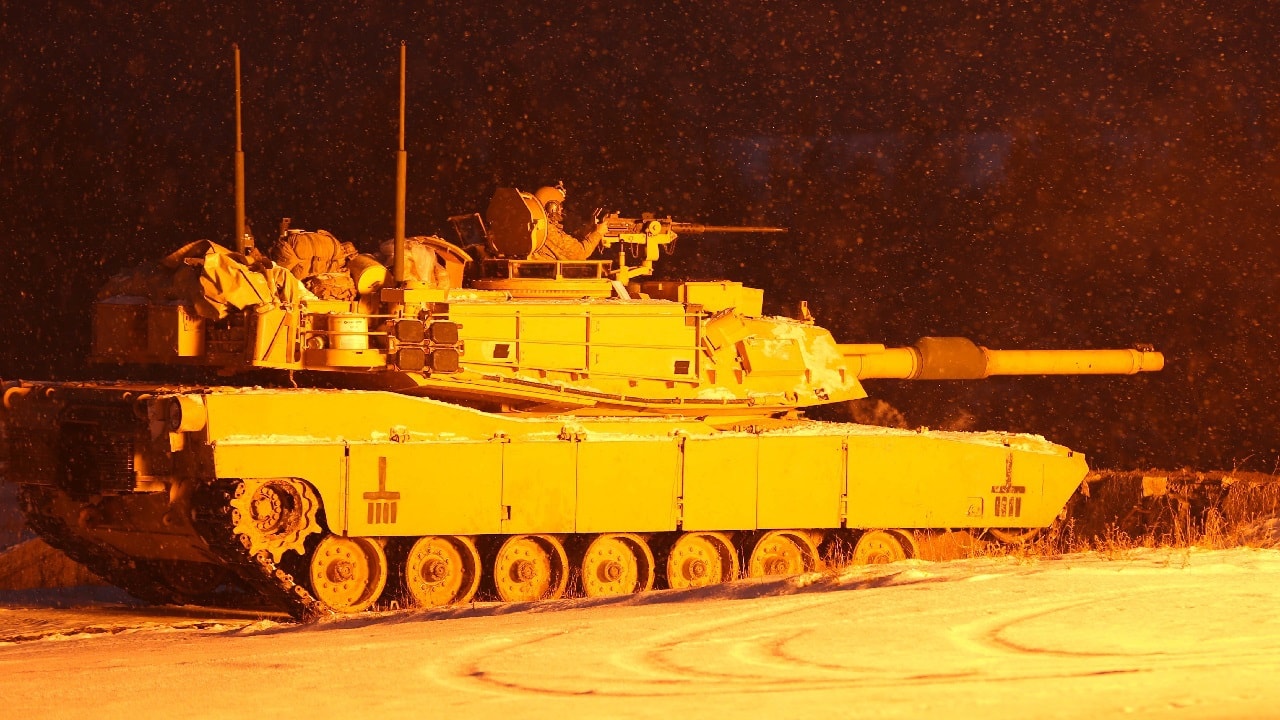
U.S. Soldiers assigned to 1st Squadron, 7th Cavalry Regiment, 1st Armored Brigade Combat Team, sit ready to engage targets in an M1 Abrams Main Battle Tank during Combined Resolve XV live fire exercise at Grafenwoehr Training Area, Germany, Feb. 9, 2021. Combined Resolve XV is a Headquarters Department of the Army directed Multinational exercise designed to build 1st Armored Brigade Combat Team, 1st Cavalry Divisions’s readiness and enhance interoperability with allied forces to fight and win against any adversary. (U.S. Army photo by Sgt. Randis Monroe)
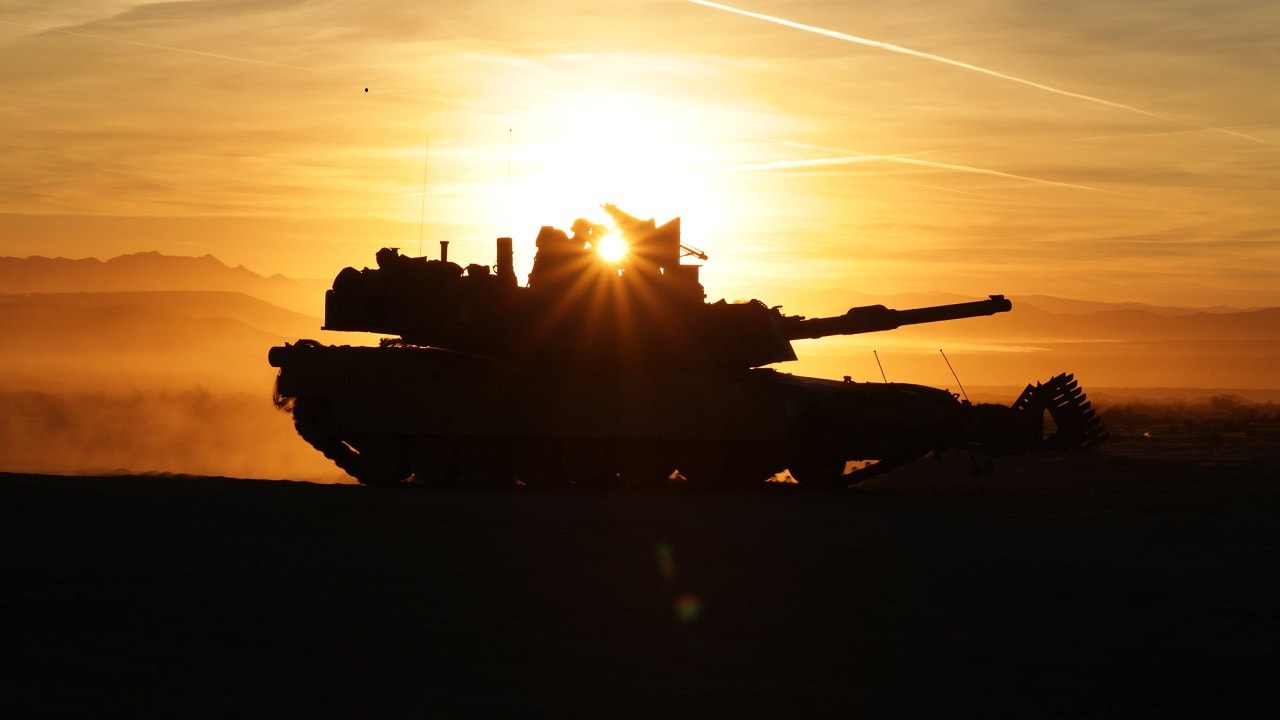
U.S. Army Soldiers, assigned to 3rd Brigade Combat Team, 1st Cavalry Division, maneuver their M1A2 Abrams tank to avoid indirect fire during training at the National Training Center at Fort Irwin, Calif., Oct. 7, 2016.
Upgradable Threat Management and Mitigation
The M1E3 will have the Trophy Active Protection System with the kind of software that can counter unmanned vehicles. This tank will be “modular from the start, allowing for faster integration of new armor, sensor, and protection systems as threats evolve,” according to Task and Purpose.
New Engine Will Keep the Enemy Guessing
One aspect of the M1E3 that will be different is the propulsion system. Instead of a gas turbine engine that gets hot and loud, the new Abrams will have a hybrid-electric system that will reduce noise and its thermal signature. This will make it more difficult to track during combat. The M1E3 will also have lower electromagnetic emissions that can better mask it when fighting.
The M1E3 will need to fuse incoming sensor data and automate threat detection to give crews greater ability to control the tank and track enemy targets for destruction.
The Tactical Advantage Has Never Been Better
The new tank won’t be fighting alone. I foresee a future in which a tank column will include armored personnel carriers carrying anti-drone jamming equipment and perhaps lasers to shoot down remotely piloted vehicles.
Friendly unmanned systems will be flying ahead of the spearhead to spot enemy soldiers with loitering drones and anti-tank missile launchers. No tank battalion will move without air cover from attack helicopters such as the AH-64 Apache that can use its deadly fire to suppress the enemy.
Fighting With AI and Data Science
This means the future battlefield will be awash with data, and crews will need artificial intelligence to sniff out threats and target enemy tanks quickly and accurately.
Unmanned teaming with friendly reconnaissance and attack drones can clear a path for the M1E3. The tank will also have high-resolution cameras one day that can better identify threats.
The Army may have to create new doctrine and tactics for the M1E3 since its innovative capabilities haven’t been seen on previous tanks.
Integration with the Best Land-Attack Missiles in the Business
The M1E3 will also be able to call in artillery and missile fire to help protect its movements. HIMARS launchers firing devastating long-range ATACMS projectiles can punish enemy positions and keep them from deploying their anti-tank systems or launching drones at marauding M1E3s.
Tethered drones will fly in overwatch. Each crew member will be an expert in counter-drone warfare, able to leverage technology and the wherewithal and courage to send the tank into harm’s way.
The new emphasis placed on heat and noise reduction is a step in the right direction. Older Abrams tanks are easy to spot and track, giving the enemy the time to react quickly with anti-tank weapons. This signature-reduction effort will help the M1E3 succeed in a multi-threat environment.
Fighting One Battle After Another
The M1E3 must also “see” first to identify threats and “strike” first before the enemy can react. The new doctrine of “anytime, everywhere, all at once” will overwhelm adversaries.
This ability to flood the zone with friendly missiles, artillery fire, defensive reconnaissance drones, and loitering munitions will allow the M1E3 to thrive in dangerous areas.
Overall, the Abrams M1E3 has the answer for modern armored warfare. Complete survivability is never assured, as battlefields will constantly evolve. But the Army has peered into the future and created a tank that can dominate – even in an age where older armored vehicles are at a tremendous disadvantage.
The best armor could still sustain losses to drones, even though the crews in M1E3s will be better able to counter threats and use combined-arms tactics with air and artillery support to help the M1E3 survive on the most dangerous battlefields.
About the Author: Brent M. Eastwood
Author of now over 3,000 articles on defense issues, Brent M. Eastwood, PhD is the author of Don’t Turn Your Back On the World: a Conservative Foreign Policy and Humans, Machines, and Data: Future Trends in Warfare plus two other books. Brent was the founder and CEO of a tech firm that predicted world events using artificial intelligence. He served as a legislative fellow for US Senator Tim Scott and advised the senator on defense and foreign policy issues. He has taught at American University, George Washington University, and George Mason University. Brent is a former US Army Infantry officer. He can be followed on X @BMEastwood.