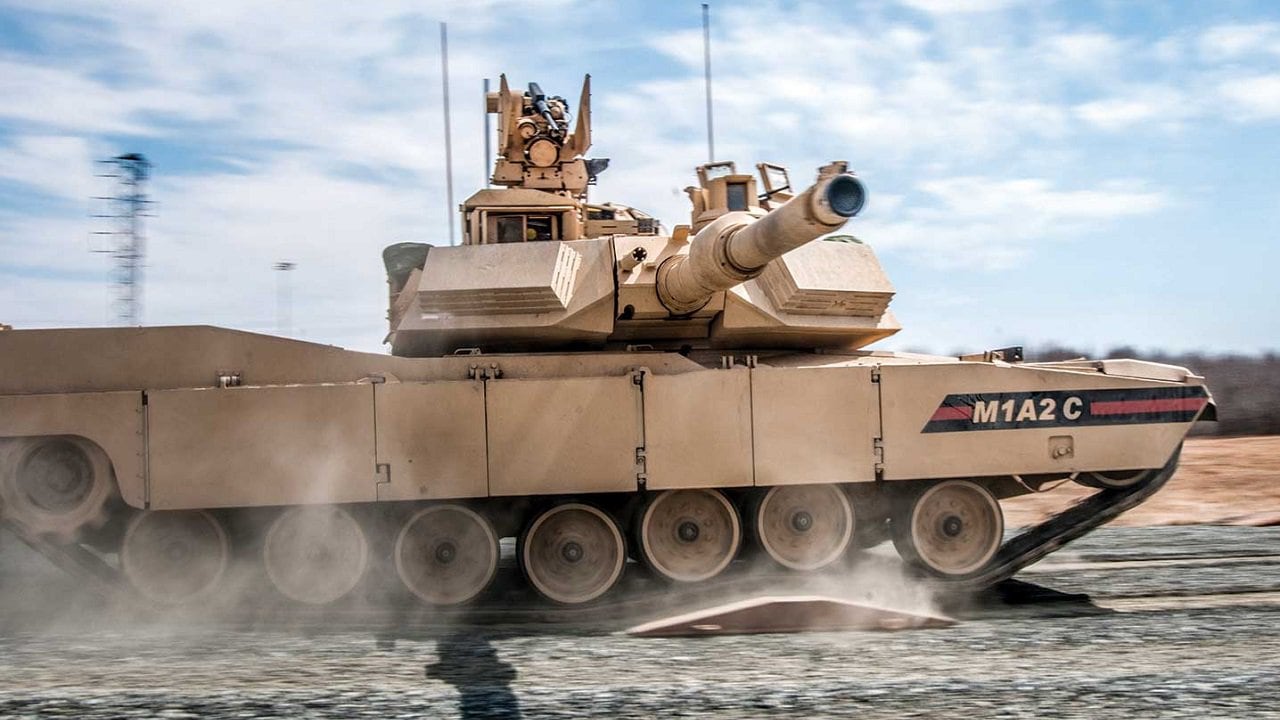
Summary and Key Points on the New M1E3 Tank – The U.S. Army has received the first prototype of the M1E3 Abrams, initiating a new testing phase that prioritizes rapid acquisition and early soldier evaluation over traditional, lengthy procurement cycles.
-Unlike previous upgrades, the M1E3 represents a “clean break” in design, featuring a three-person crew, an unmanned turret, and a hybrid electric drive for “silent watch” capabilities.
-With AI-aided targeting, active protection systems, and an autoloader, this “reset” of the Abrams platform aims to deliver a lighter, more sustainable, and technologically advanced main battle tank to the field faster.
First M1E3 Abrams Prototype Delivered: Inside the Army’s Radical Redesign of the Main Battle Tank
Fort Lauderdale, Florida, USA – As reported by Defense Daily on 12 December 2025, the US Army confirmed it has received the first prototype of the M1E3 Abrams main battle tank (MBT). This delivery is the next major step in the tank’s program as it moves from the design and development phase and will now begin testing and evaluation.
However, with this program, the US Army leadership is not just testing an entirely new MBT design concept.
The service is also beginning what it describes as a “revised acquisition approach focused on shortened development timelines and early soldier evaluation.”
The current procurement “rain dance” that the US and other Western nations follow is simply “not a good fit with the pace at which military situations develop and evolve,” said more than one NATO-nation defense official who spoke to 19FortyFive.
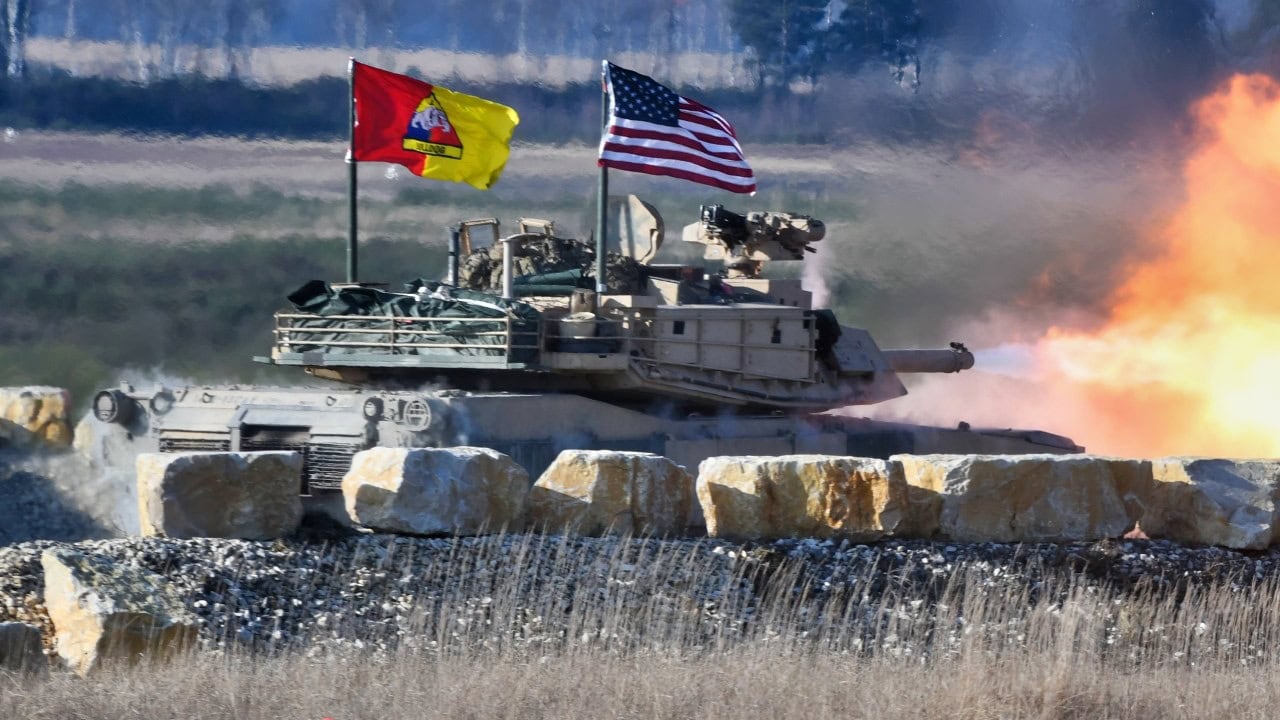
A U.S. M1 Abrams engages a target during the final event on Feb. 17, 2025 as part of the U.S. Army Europe and Africa International Tank Challenge at 7th Army Training Command’s Grafenwoehr Training Area, Germany. The USAREUR- AF International Tank Challenge builds tactical skills and enhances esprit de corps across the 11 teams from five participating allied and partner for peace nations. (U.S. Army photo by Sgt. Collin Mackall)
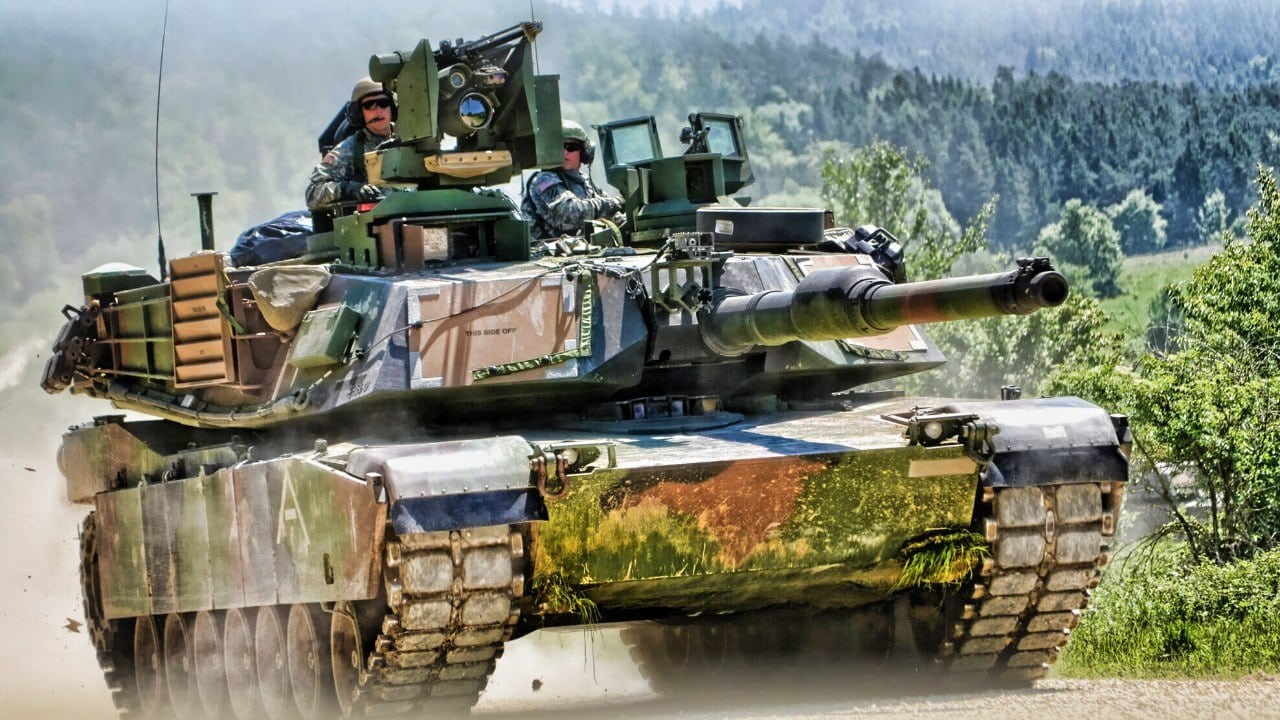
Poland M1 Abrams Tank. Image Credit: General Dynamics.
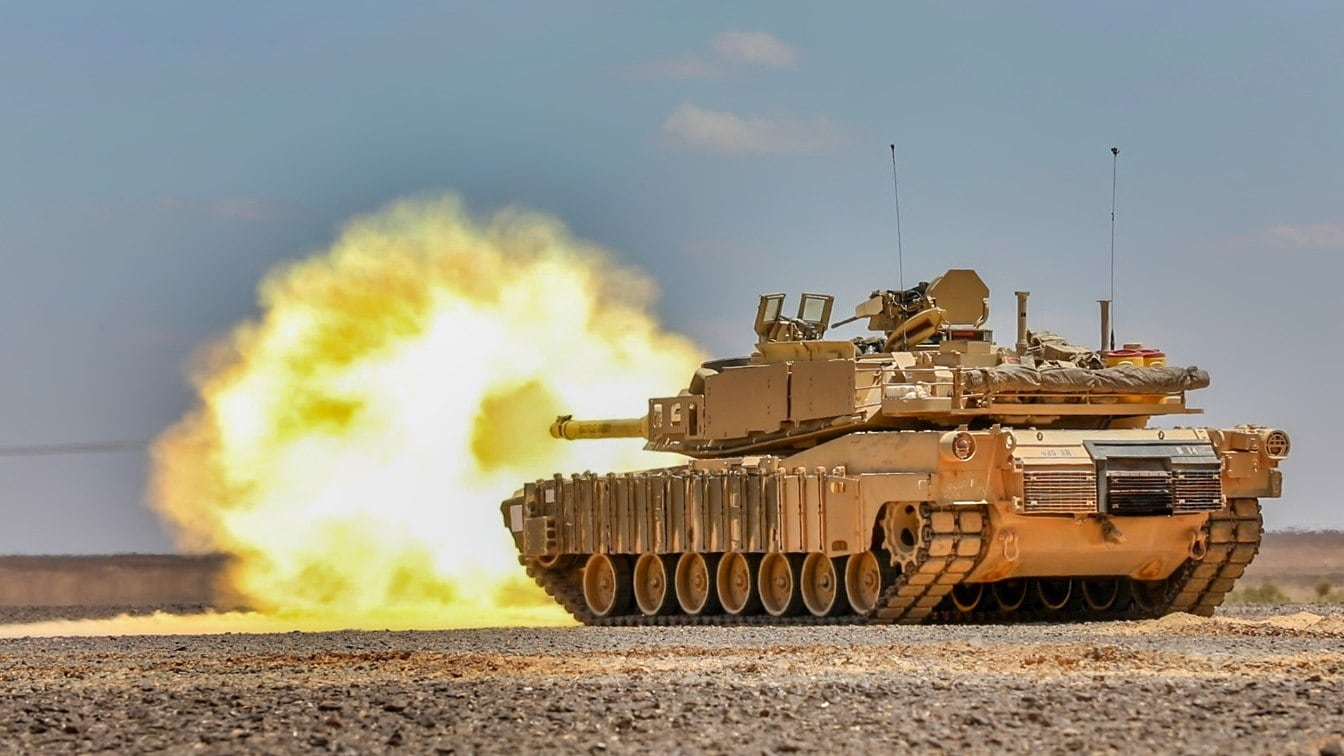
A U.S. Army M1A1 Abrams tank fires as part of Eager Lion 2024 at Training Area 5, Jordan, May 13, 2024. Eager Lion 24 is a multilateral exercise, with 33 participating nations, hosted by the Hashemite Kingdom of Jordan, designed to exchange military expertise, and improve interoperability among partner nations, and considered the capstone of a broader U.S. military relationship with the Jordanian Armed Forces. Jordan is one of U.S. Central Command’s strongest and most reliable partners in the Levant sub-region. (U.S. Army photo by Spc. Nataja Ford)
“The process of RfI to responses to RfP to evaluation of proposals to picking a ‘winner’ to contract negotiation to prototype development to OT&E [Operational Test and Evaluation] to production can end up 7 years or more in duration – and that is provided there are no hiccups in funding or other delays,” said one officer who had begun his career in the amor corps. “That is an eternity in today’s world of challenges to our defense establishment. In today’s world development timelines of this length also run the risk of the final product losing relevancy in comparison with the requirements of the day.”
M1E3 A New Design From the Bottom Up
The M1E3 design is also not just another improvement or modernization in the history of the M1 design. The US Army is instead making a clean break from the design concepts used in earlier Abrams tank models.
The “new and improved” M1 variants to date have largely involved adding new capabilities to an existing platform.
The Army’s approach with the M1E3 is to make a “reset” of the baseline design, which will ultimately make the insertion of new capabilities more like the “plug and play” seen in modern-day open architecture weapon systems like fighter aircraft.
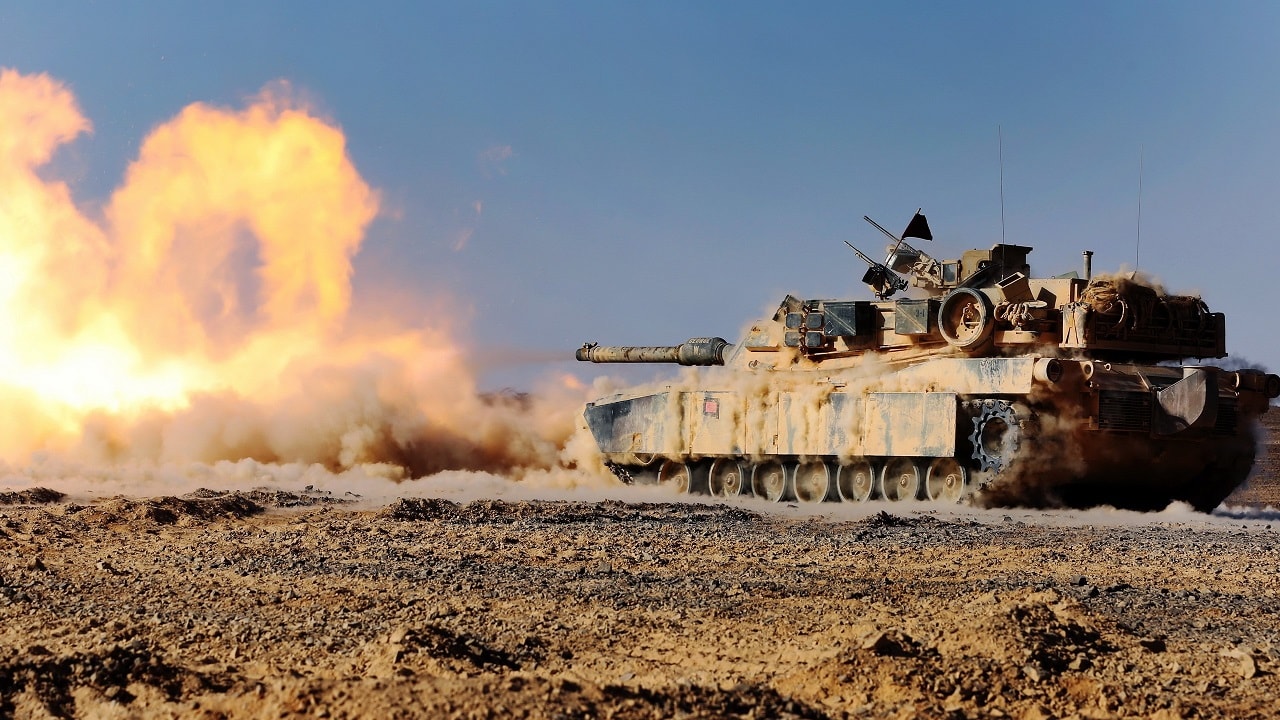
M1 Abrams Tank
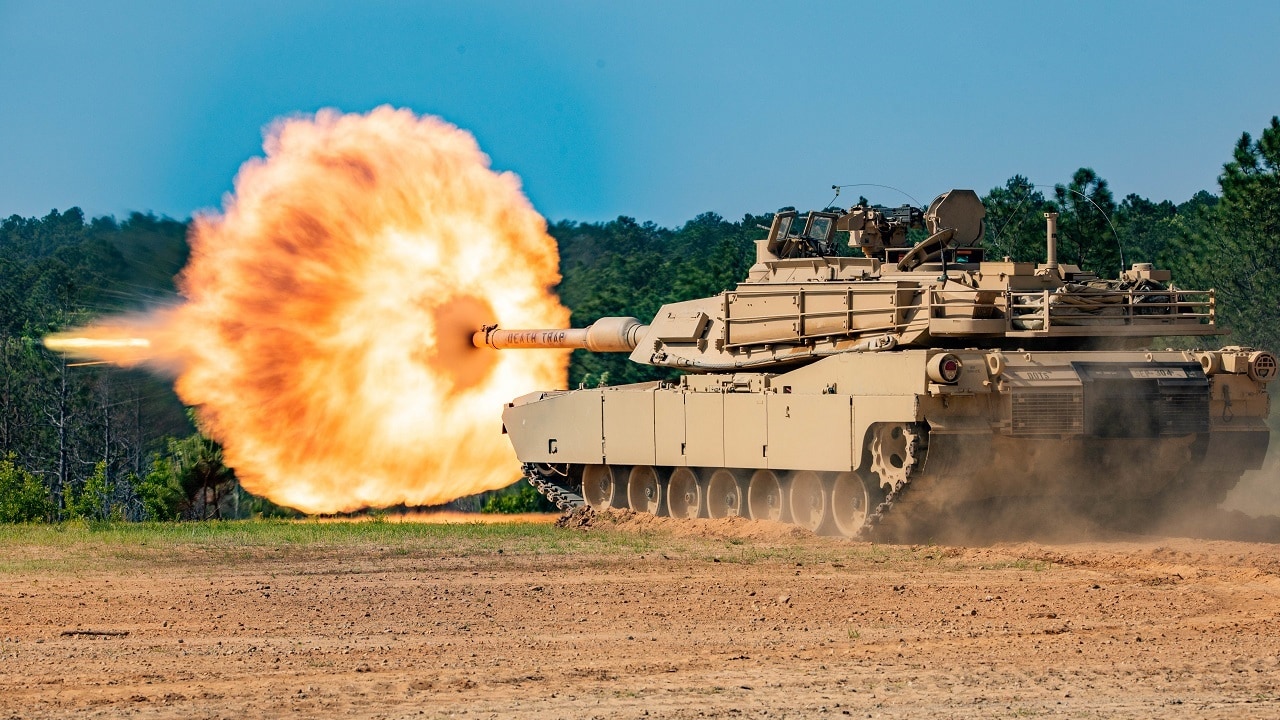
M1 Abrams. Image Credit: Creative Commons.
Some of the main attributes of this new design are:
-A 3-person crew with an unmanned turret and a remote-control weapon system.
-A hybrid electric drive (Caterpillar engine + SAPA transmission) and greater fuel efficiency. The engine is rated as quieter and enables what the army calls “silent watch” for extended sensor/communication use with a smaller logistical footprint.
-An autoloader with a new main gun.
-An AI-aided threat-ranking and targeting fire control system.
-A fire control system that supports gun-launched maneuvering hypersonic and guided missiles.
-An integrated active protection system similar to the Israeli-designed Iron Fist that would protect the tank again drones and missiles coupled to an advanced armor.
-Active counter-drone capabilities.
-Improved command, control, and networking capabilities
-Artificial intelligence (AI) applications that give the ability to network with drones and robotic vehicles.
-Suppression technologies that reduce the vehicle’s thermal and electromagnetic signatures.
The Next Steps
The US Army Chief of Staff, Gen. Randy A. George, has stated that three additional M1E3 prototypes are expected to be delivered in 2026.
This is the most visible sign that the service is taking concrete measures to compress the 7 or more years’ developmental cycle that many have decried as too slow, too costly, and too unresponsive to the demands of modern warfare.
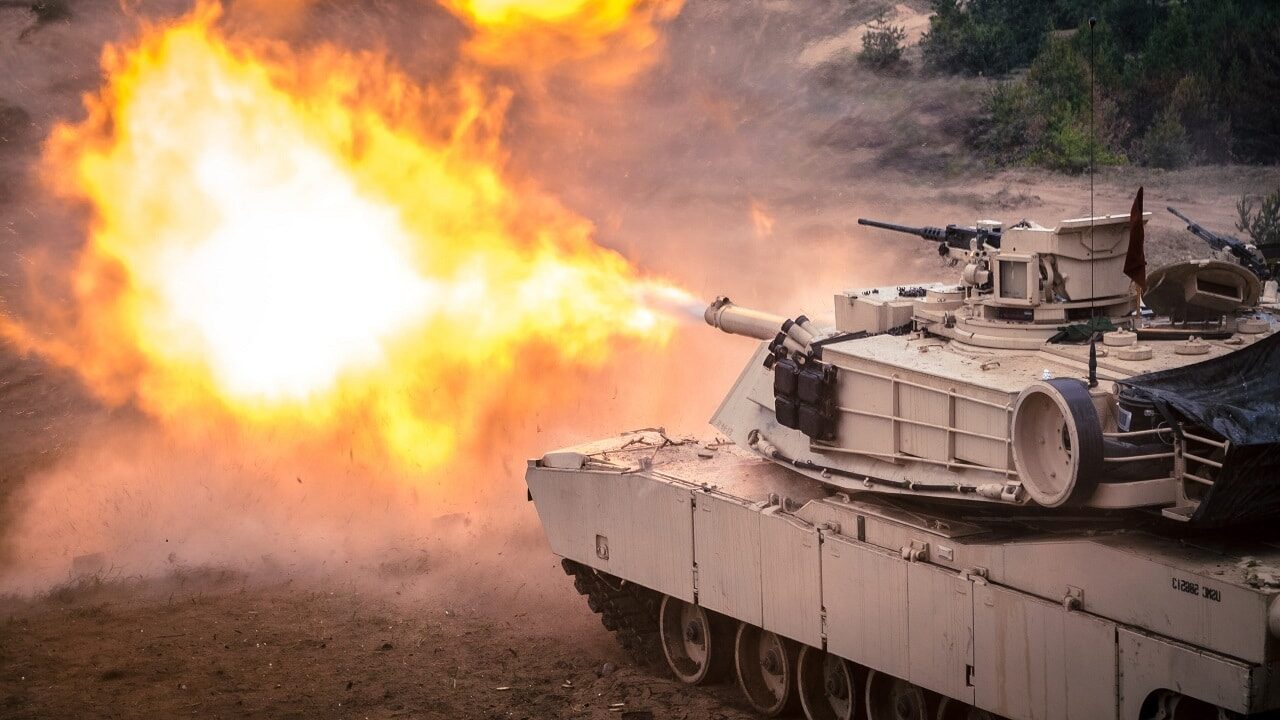
M1 Abrams Tank firing. Image Credit: Creative Commons.
Senior Army leadership is now touting the M1E3 as a hallmark of the service’s efforts to accelerate acquisition processes and put new platforms into the hands of “trigger pullers” in real time.
This is a process, say officials connected to the new MBT design, that places an increased emphasis on “early feedback, iterative changes, and acceptance of managed risk rather than waiting for a finalized configuration.”
In this environment, the delivery of the first prototype is “less as an end state and more as a starting point for rapid refinement.”
Also, according to the current program plan, the earliest prototypes’ job one will be to evaluate the effectiveness of crew operations, active protection concepts, and how best to integrate this new design within armored units.
The Army is also increasing the use of “commercially supportable components” where feasible.
The objective is to reduce sustainment costs, simplify access to and availability of spare parts, and improve a logistical system that, overall, has been too reliant on limited supplier bases.
About the Author: Reuben F. Johnson
Reuben F. Johnson has thirty-six years of experience analyzing and reporting on foreign weapons systems, defense technologies, and international arms export policy. Johnson is the Director of Research at the Casimir Pulaski Foundation. He is also a survivor of the Russian invasion of Ukraine in February 2022. He worked for years in the American defense industry as a foreign technology analyst and later as a consultant for the U.S. Department of Defense, the Departments of the Navy and Air Force, and the governments of the United Kingdom and Australia. In 2022-2023, he won two awards in a row for his defense reporting. He holds a bachelor’s degree from DePauw University and a master’s degree from Miami University in Ohio, specializing in Soviet and Russian studies. He lives in Warsaw.