The “Game of Drones” Exposed Russia’s Command Weakness in Ukraine
A weekend report from the New York Times dives into the subject of how drones are now playing a central role on the battlefield in Russia’s war in Ukraine. The manner in which combat is now conducted on the front lines bears very little resemblance to the scenes of combat that took place in the early days back in 2022.
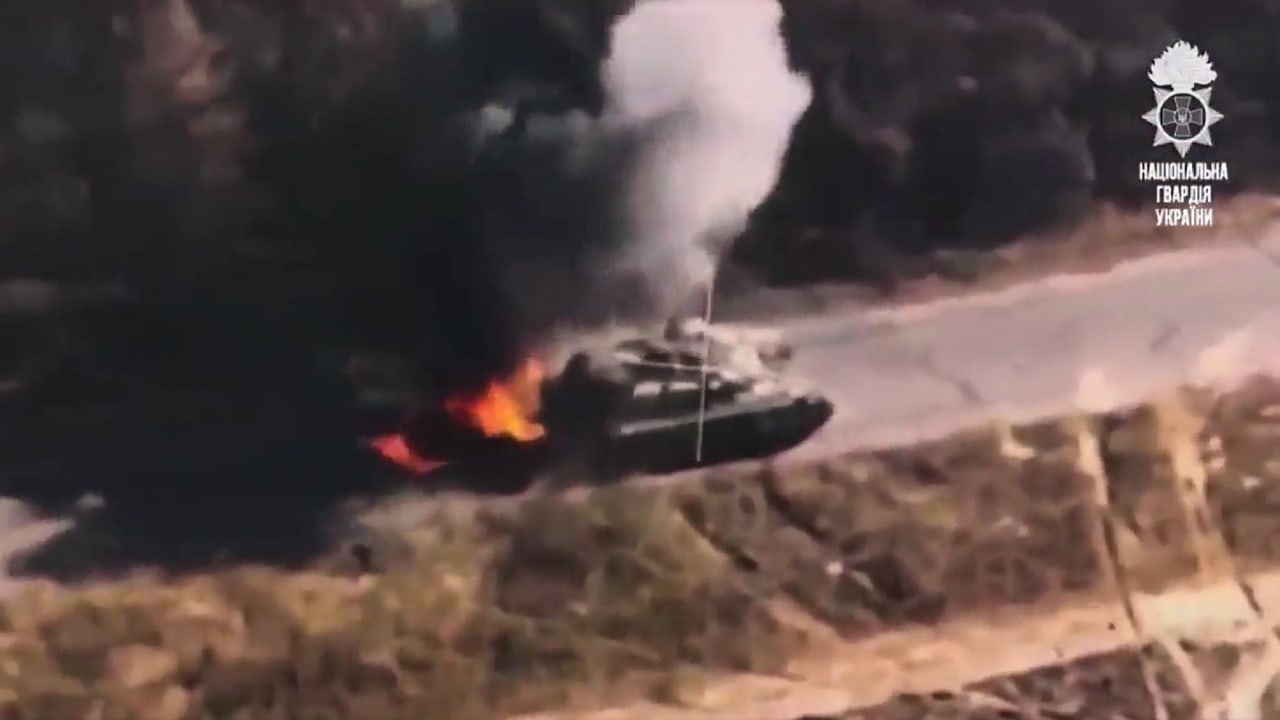
Ukraine T-90 Tank Attack Image Credit – Creative Commons
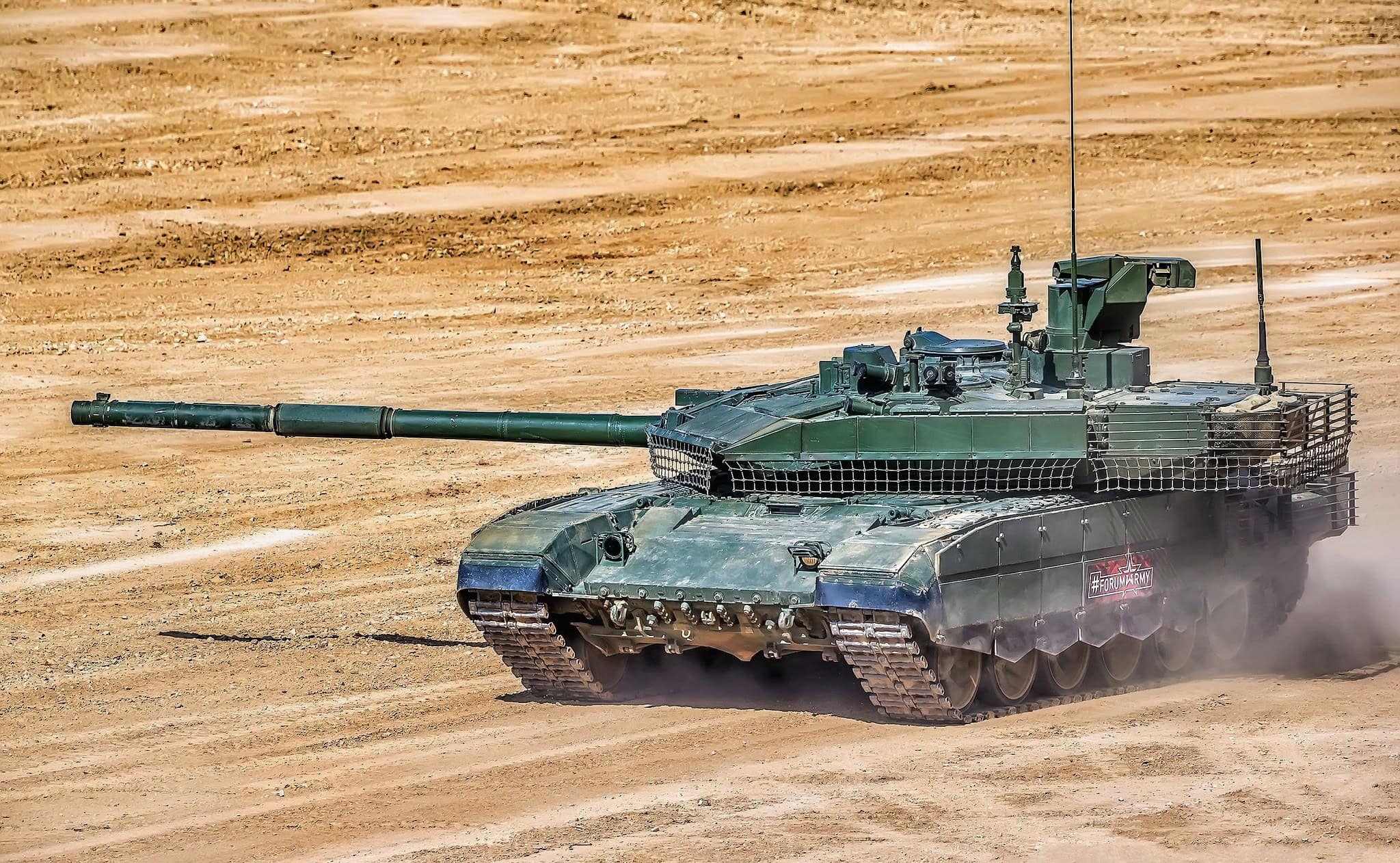
T-90M. Image Credit: Creative Commons.
The question the authors of the report attempt to answer is whether or not the Russian military is learning the lessons of drone warfare and whether they are adapting tactics and planning accordingly.
The overall assessment is from Russian military specialists who have published articles on the war and been interviewed. They have stated that Moscow’s planners still suffer from an outdated organizational structure that does not lend itself to this kind of adaptation.
Specialists like Dara Massicot from the Carnegie Endowment for International Peace in Washington, DC, point to this as one of the chief reasons Russia’s military is unable to “keep pace with the way the war is being fought.”
A report from the Foreign Policy Research Institute (FPRI) from almost three years ago, entitled “The Roots of Russian Military Dysfunction,” drew the same conclusions. It details how “unwillingness to decentralize decision-making authority is symptomatic of over five centuries of Russian autocracy. It is why Russia lacks an effective noncommissioned officer (NCO) corps and has a top-down command-and-control system, which is slow to provide timely direction to forces at the front.”
This raises the inevitable question: what comes next in the conflict?
Russian Historical Reliance on Mass No Longer Works
Moscow’s historical and almost unchanging approach to warfare has always relied on mass. Ever since the 1904-1905 Russo-Japanese War, Moscow’s battle plan has been to assemble forces that would overpower an enemy with far greater numbers of troops, tanks, and artillery.
Numbers that would eventually roll over an adversary’s positions.
Stephen Kotkin, the pre-eminent US historian of Russia during the Stalin years, has famously described how the Soviet military was able to eventually defeat Nazi Germany’s Wehrmacht through this very practice. This approach by the Kremlin also cared even less for the number of casualties that were suffered than Russian President Vladimir Putin does today.
He describes “how Comrade Stalin defeated Hitler on the battlefield” in this manner. “Stalin would send these soldiers, which are essentially enslaved collective farm workers against the German positions. When they were all killed,” as he explained, “Stalin had a simple solution. He would assemble up another million enslaved collective farm workers to take their place.”
Unfortunately for Putin’s military, the Ukrainians have discovered how that tradition can be upended by what many are now referring to in lighter moments as the “Game of Drones.” Large Russian formations are now so vulnerable to drone attacks that the Russian military has forced to completely change how it deploys its forces – sending small fire teams of between three to five soldiers to try to take territory.
Nothing Happens After a Breakthrough
However, this tactic has not produced any significant territorial gains for Russia’s military. Its progress is sometimes measured in inches and usually takes a huge toll in personnel losses.
But that tactic has not allowed the military to take much land. Russian units are barely inching forward, amid heavy losses. In more normal circumstances, military academics and journalists could create a public dialogue that could lead to a change in Moscow’s planning.
Military analysts in Russia and combat bloggers can make specific criticisms of how the war is being prosecuted, provided they do not question the premise of why the war was started in the first place. These commentators “cannot blame the Kremlin directly” for any problems, said long-time Russian military analyst Aleksandr Golts. Instead, he explained their criticisms have to be limited to blaming Russian “military science.”
Russian T-90 Tank. Image Credit: Creative Commons.
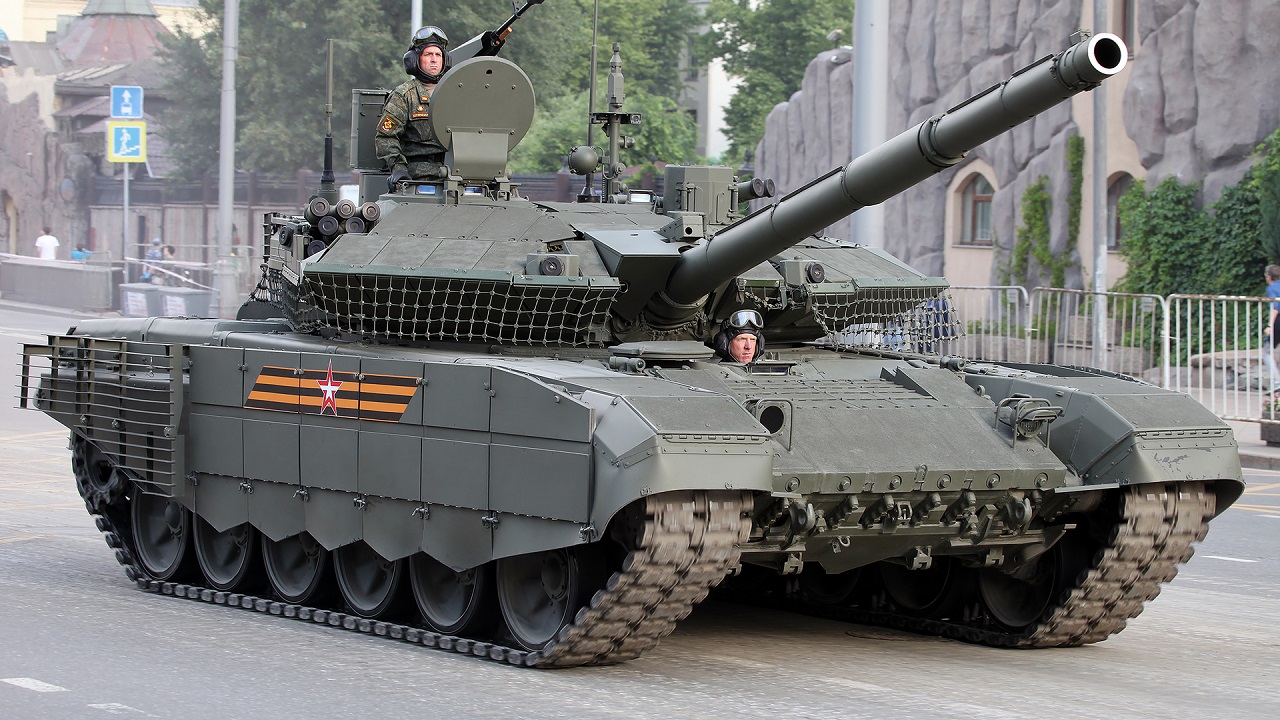
T-90M. Image Credit: Vitaly M. Kuzmin.
For years, Golts himself was one of Putin’s harshest critics over the way he was mishandling Russian military affairs.
Like many critics of Putin and his Defense Minister at the time, Sergei Shoigu, he was forced to leave Russia after the February 2022 full-scale invasion of Ukraine.
His denunciations of how Russia’s leaders are throwing away the lives of their soldiers in feckless operations illustrate the nature of the problem in an age of drone warfare. Russia had about 10,000 tanks in its inventory when the war began, Golts explained. He estimates that this number has dropped to over 3,000. At the current production tempo, it can only generate about 200 new units per year.
Without significant, armored formations, Russia cannot exploit any breakthroughs in Ukrainian lines and push through with what Russian military doctrine calls “follow-on forces.” Ukrainian counterattacks quickly neutralize the few troops that get through.
“The current tactics are a road to nowhere,” Golts explained when speaking to the New York Times. “So, you can break through Ukrainian defenses — then what?” This more or less encapsulates how Russia has failed to adapt to the challenges of drone warfare.
About the Author: Reuben F. Johnson
Reuben F. Johnson has thirty-six years of experience analyzing and reporting on foreign weapons systems, defense technologies, and international arms export policy. Johnson is the Director of Research at the Casimir Pulaski Foundation. He is also a survivor of the Russian invasion of Ukraine in February 2022. He worked for years in the American defense industry as a foreign technology analyst and later as a consultant for the U.S. Department of Defense, the Departments of the Navy and Air Force, and the governments of the United Kingdom and Australia. In 2022-2023, he won two awards in a row for his defense reporting. He holds a bachelor’s degree from DePauw University and a master’s degree from Miami University in Ohio, specializing in Soviet and Russian studies. He lives in Warsaw.