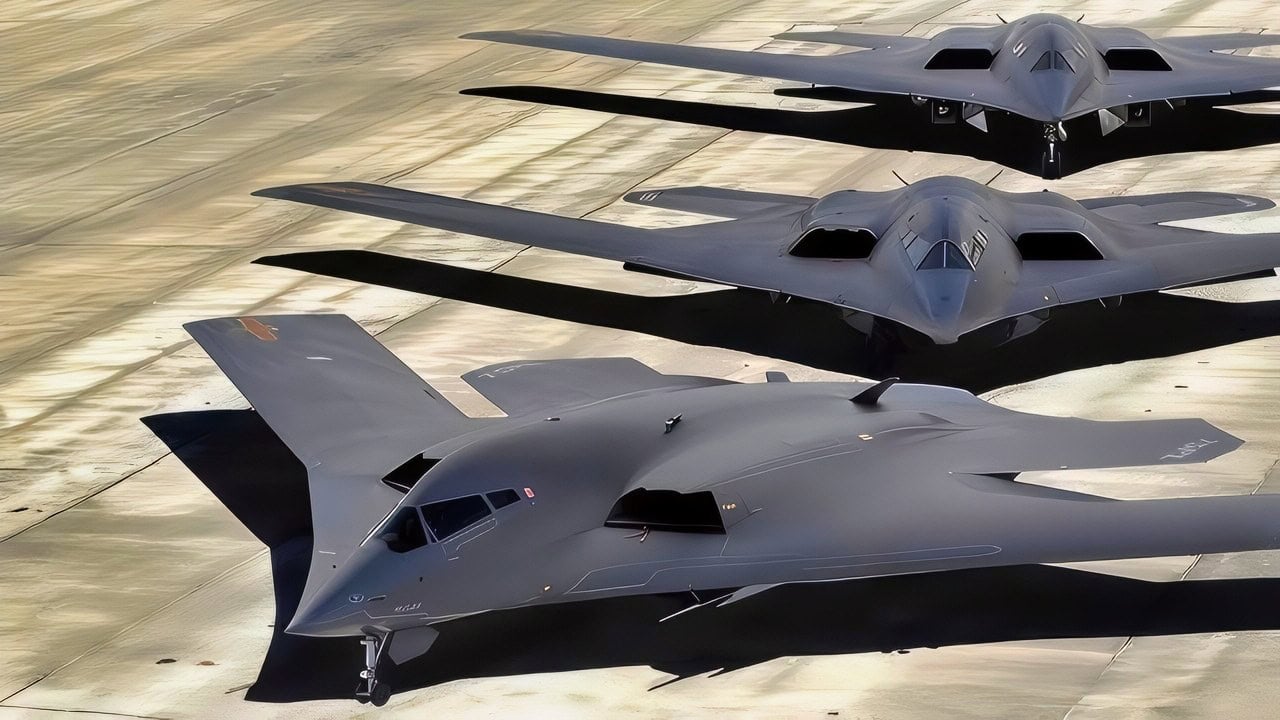
Summary and Key Points: General Stephen L. Davis, Commander of Air Force Global Strike Command, has categorized the PLAAF as a “regional bomber force at best,” downplaying the immediate threat of China’s H-20 stealth bomber.
-While the H-20 aims to mimic the B-2 and B-21’s flying-wing design, U.S. intelligence suggests it faces severe engineering hurdles in low-observable (LO) technology and system integration.
-In contrast, the B-21 Raider is evolving into a sixth-generation “sensor node” capable of vacuuming battle-space data.
-For now, Beijing remains reliant on the aging H-6 fleet, a Cold War derivative that lacks the global, penetrating reach of American strategic assets.
In an interview with The War Zone, a website, the Commander of Air Force Global Strike Command, General Stephen L. Davis, acknowledged advances made by the Chinese Communist Party (CCP) in fielding aircraft of ever-increasing sophistication for the People’s Liberation Army Air Force (PLAAF), particularly regarding the bomber fleet. But Davis added an important caveat: despite the progress, there are lingering operational and technical hurdles.
“I can certainly understand their desire to have a long-range strike capability like the United States, and I know that they’re pursuing it aggressively,” General Davis explained. However, he added, “What I can tell you is they’re just not there yet. I think our adversaries look at our long-range strike capabilities, and … want to mimic them, but they can’t.”
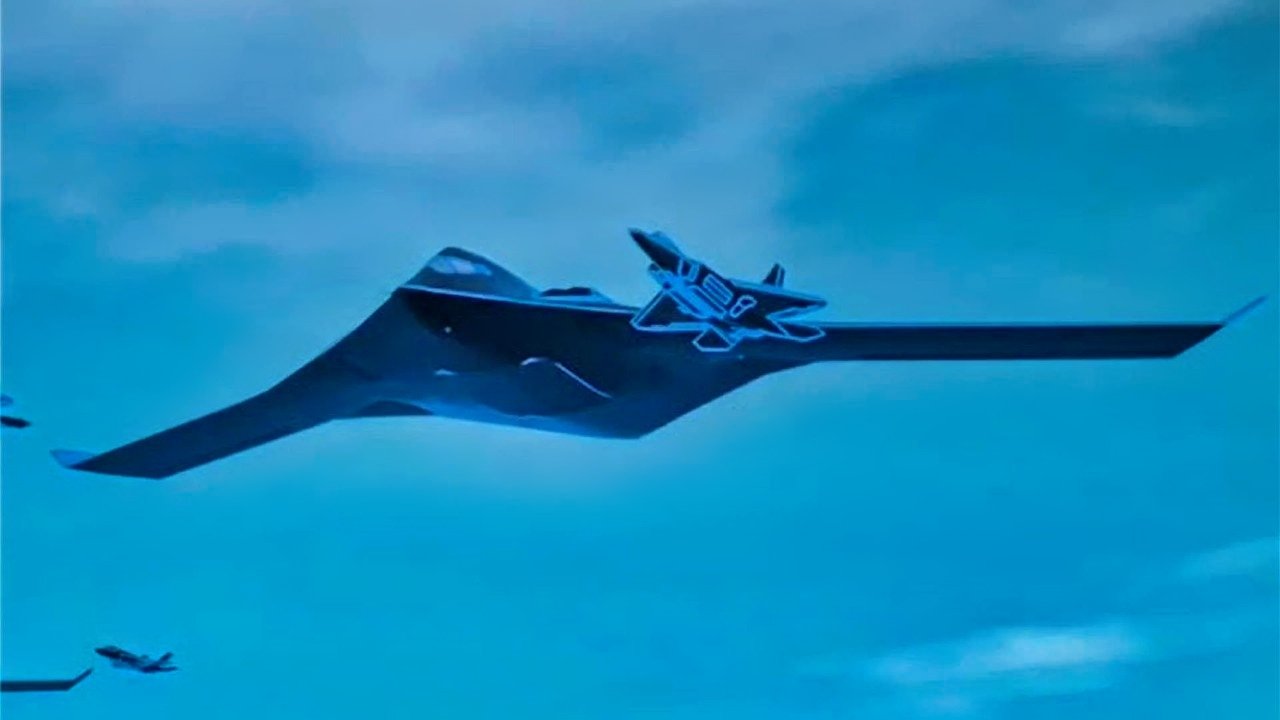
H-20 Bomber Image. Image Credit X Screeenshot.
H-20 Stealth Bomber from China: Imitated, but not Copied
The United States Air Force operates the world’s sole fleet of fifth-generation stealth bombers, and is poised to field the world’s first sixth-generation bomber in the near future: the B-2 Spirit and B-21 Raider, respectively.
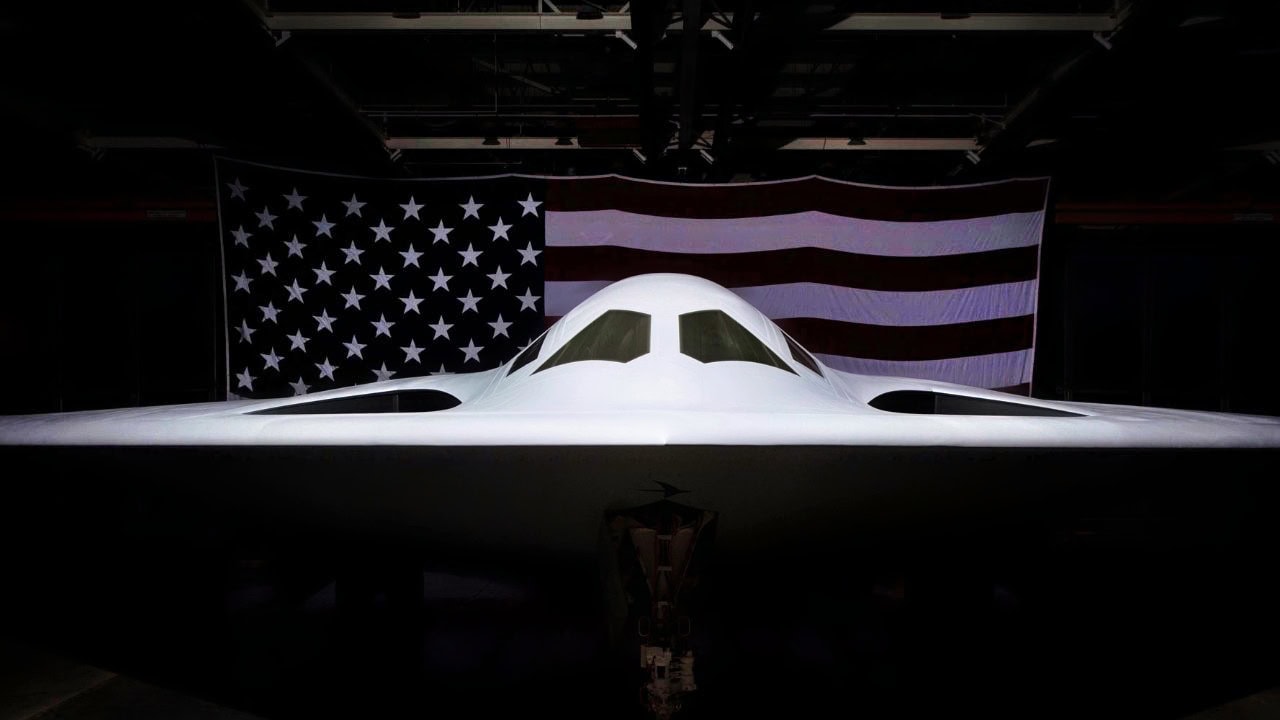
B-21 Raider Bomber. Image Credit: Creative Commons.
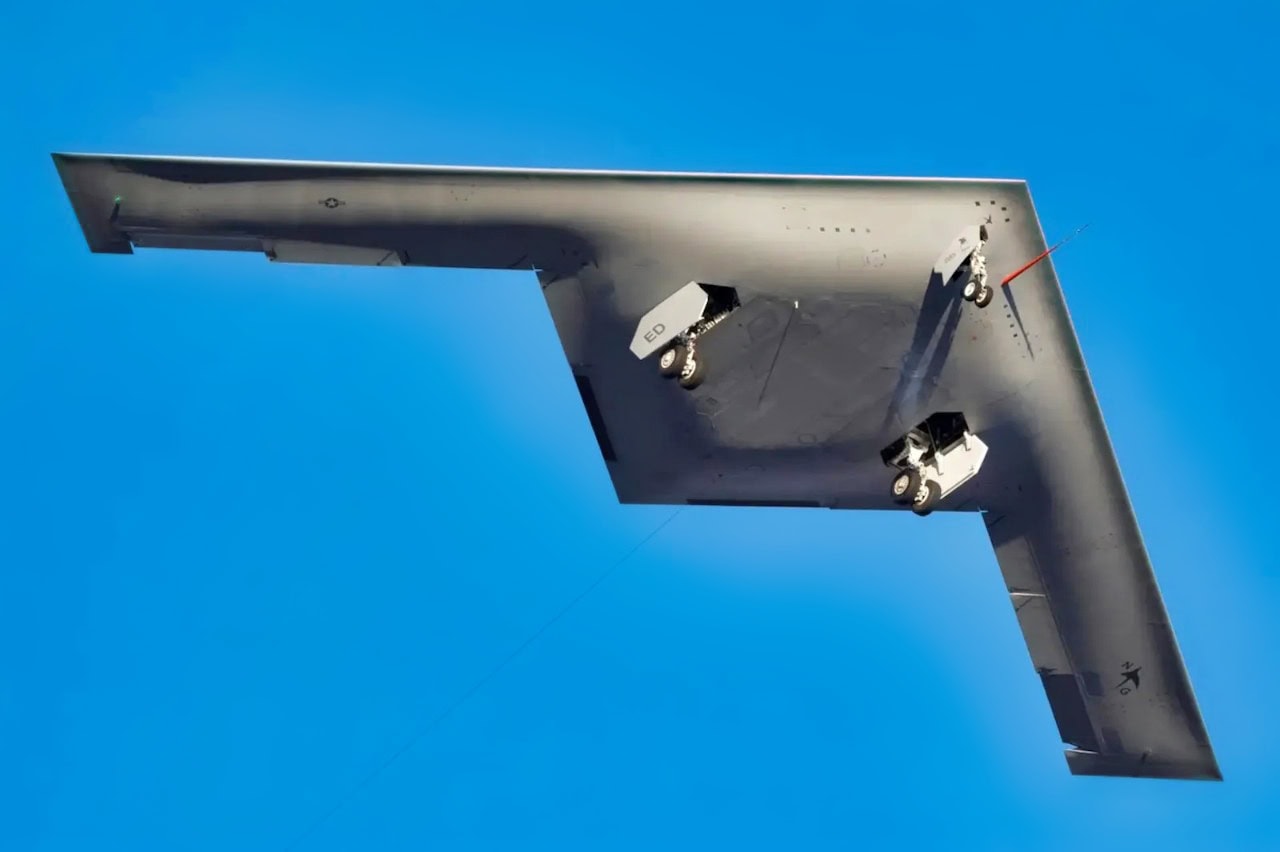
B-21 Raider. Image Credit: Creative Commons.
Beijing, too, hopes to put a fifth-generation bomber into service, an aircraft called the H-20 that, in terms of outward appearance, looks rather akin to the B-2 and B-21, and that aircraft makes a brief appearance at the end of a PLAAF promotional video. When that aircraft enters service is unclear.
Until then, the PLAAF relies on what has long been the mainstay of China’s bomber fleet: the H-6 bomber.
That decidedly aged design is based on the Soviet Union’s Tu-16 Badger, a Cold War-era bomber that Moscow fielded for decades. For the role of airborne nuclear weapons delivery, the PLAAF fields its H-6N, an upgraded variant of that earlier design.
“There’s no other country in the world that can take and deliver a long-range strike platform pretty much on any day, in any time and place that they’re choosing, right?” General Davis added, emphasizing the more limited scope of the PLAAF’s bomber capabilities with respect to those of the United States Air Force. “Really, China is a regional bomber force at best. I think they’re trying to continue to develop that.”
No Stealth Bomber Threat from China…Yet
In 2024, a member of the Department of Defense intelligence community explained to Breaking Defense, a website, how China’s H-20 compares to the B-2 and B-21 — and why they do not lose sleep over that Chinese bomber.
“The thing with the H-20 is when you actually look at the system design, it’s probably nowhere near as good as US LO platforms, particularly more advanced ones that we have coming down,” that official said. He added that the Chinese have “run into a lot of engineering design challenges, in terms of how do you actually make that system capability function similarly to, like, a B-2 or a B-21.”
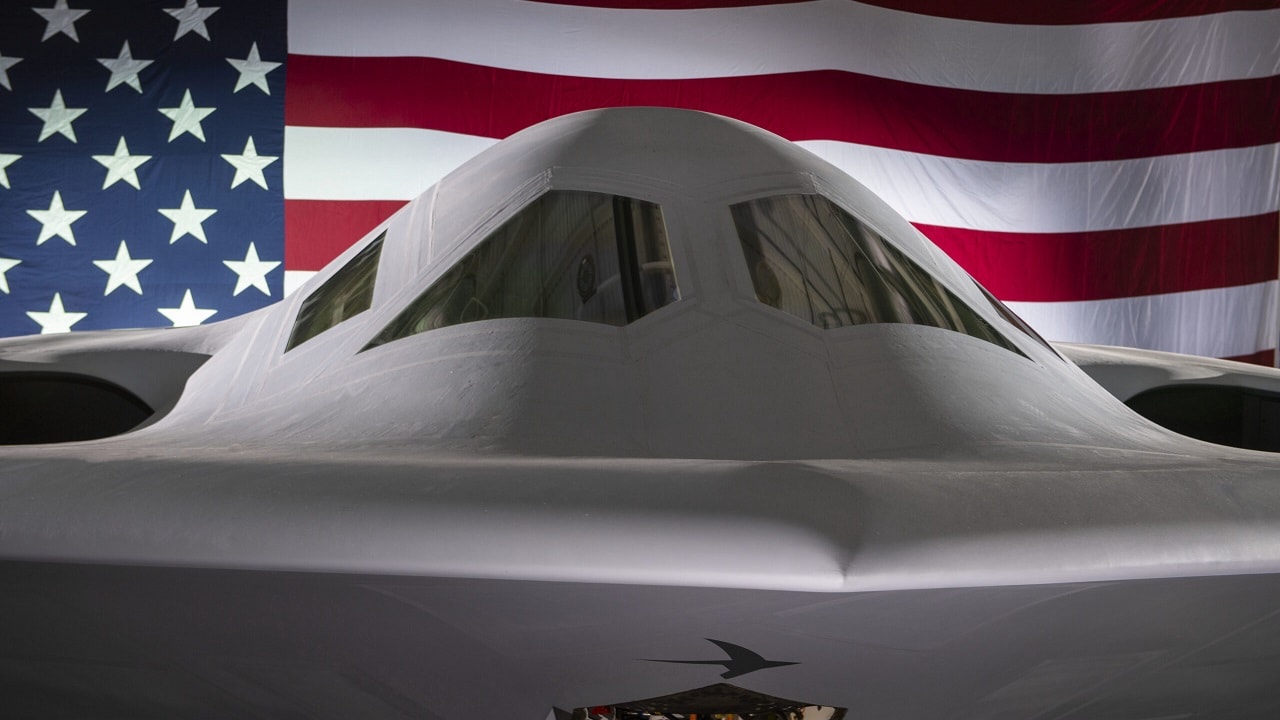
The B-21 Raider was unveiled to the public at a ceremony December 2, 2022 in
Palmdale, Calif. Designed to operate in tomorrow’s high-end threat environment, the B-21 will play a critical role in ensuring America’s enduring airpower capability. (U.S. Air Force photo)
Assessing a foreign country’s military capabilities is notoriously difficult, though it is regularly tackled in intelligence assessments. Naturally, much of that information is not publicly available, though some of the general capabilities of, say, the PLAAF bomber fleet can be estimated.
Is the H-20 a cause for concern to the United States Air Force? Does it significantly alter the threat landscape, that official was asked? The official responded in no uncertain terms. “Not really,” they said.
B-2 and B-21 Rule: Significant Technological Edge Over China
Despite similar appearances, the B-2 and B-21 are essentially different bombers. Though their operational roles overlap to a large extent — long-range stealthy strike of both nuclear and conventional nature — the B-21 is significantly more sophisticated than its Cold War predecessor.
While the B-2 was tasked with penetrating heavily contested airspace worldwide and dropping bombs on critical ground targets, General Davis explained that the B-21 is also capable of collecting critical battle-space information and relaying it to other assets in the air or on the ground.
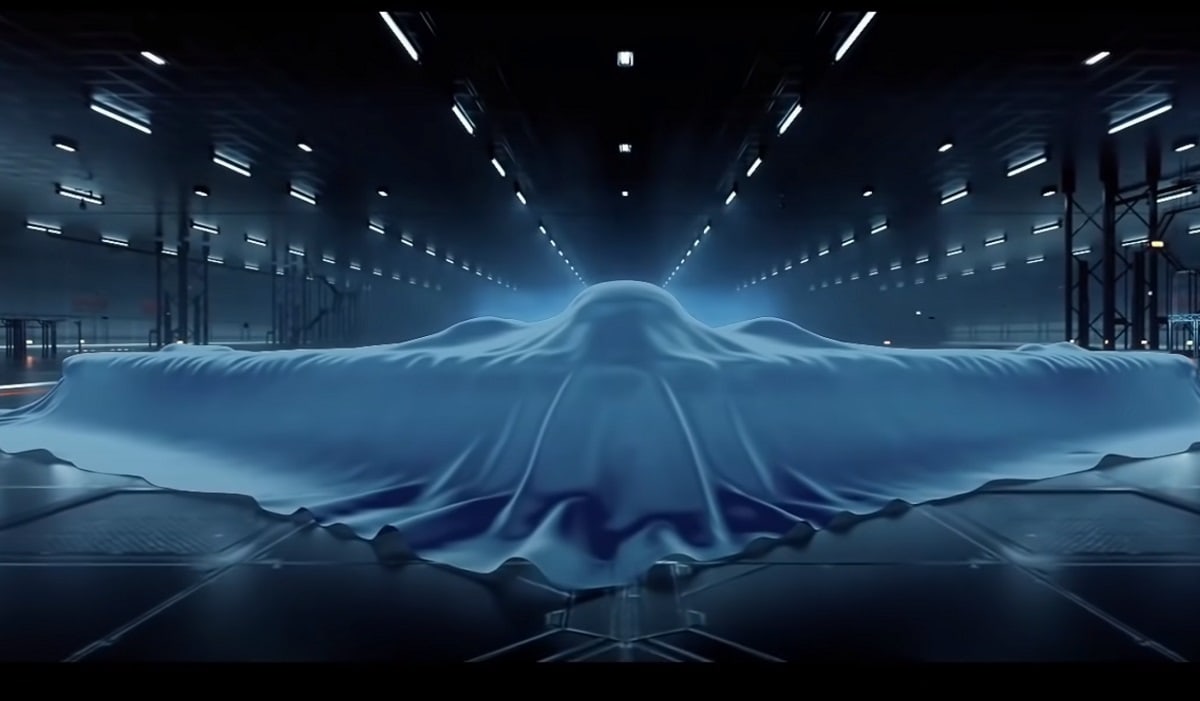
What could be China’s H-20 Stealth Bomber. Image: YouTube Screenshot.
“We have a requirement to be able to do that, day-to-day, for the President. We have to be able to penetrate adversary air defenses and deliver capabilities as directed,” General Davis explained.
“We’ll continue to do that, as I said, by essentially, you know, taking all the information we can get, and integrating the B-21. Obviously, one of the great things about the B-21 is it’s going to be much more capable, it will have more sensors, it will have more inputs to it that will make it even stronger and more capable as a penetrating bomber.”
Unknown Timelines for China’s New Stealth Bomber
The timeline for the H-20’s introduction into Chinese service — as well as more concrete details about that bomber — is, for the moment, rather opaque.
No doubt, new information in the future will reveal some of that bomber’s more mysterious aspects, including its approximate entry-into-service timeline.
But at the moment, the United States Air Force bomber fleet appears to hold a distinct edge.
About the Author: Caleb Larson
Caleb Larson is an American multiformat journalist based in Berlin, Germany. His work covers the intersection of conflict and society, focusing on American foreign policy and European security. He has reported from Germany, Russia, and the United States. Most recently, he covered the war in Ukraine, reporting extensively on the war’s shifting battle lines from Donbas and writing on the war’s civilian and humanitarian toll. Previously, he worked as a Defense Reporter for POLITICO Europe. You can follow his latest work on X.