
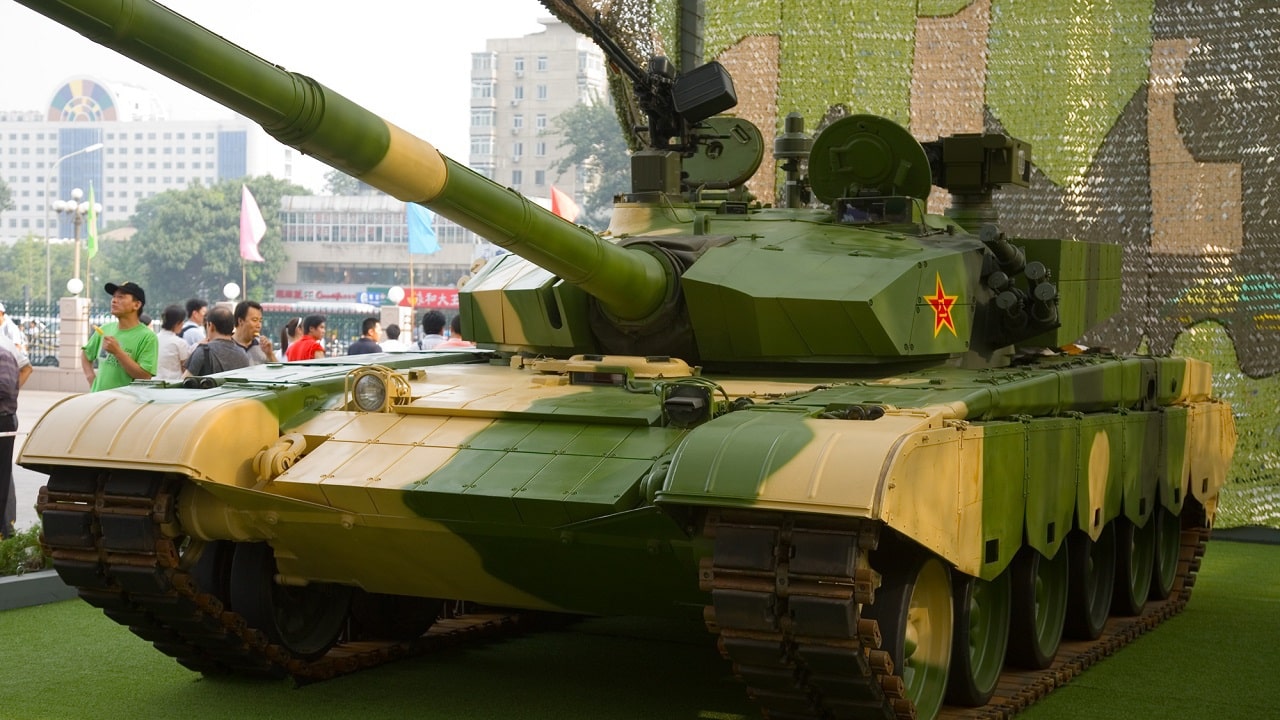
Summary and Key Points: China’s Type 99B Tank Is a Powerhouse Built for Land Combat
-As of February 2026, the Type 99B (ZTZ-99B) is China’s most advanced main battle tank, specifically optimized for high-altitude and extreme cold-weather operations.
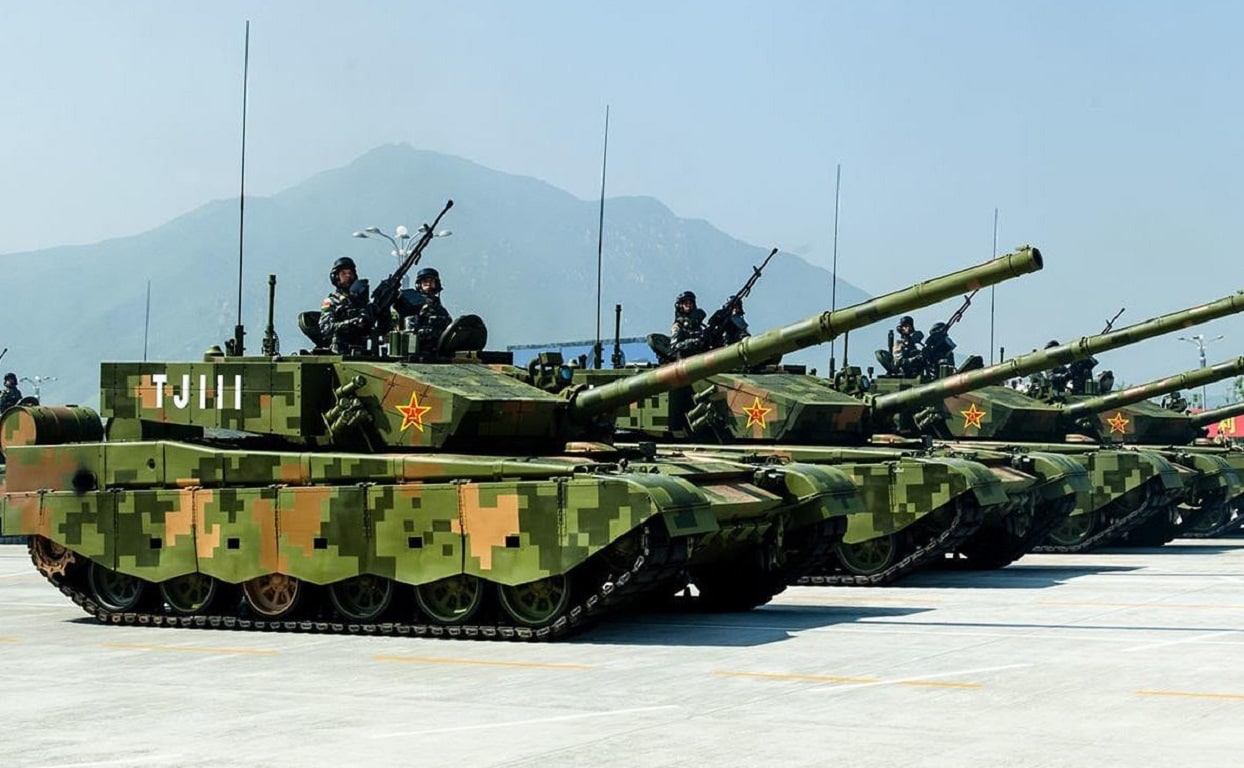
Type 99 Tank from China. Image: Creative Commons.
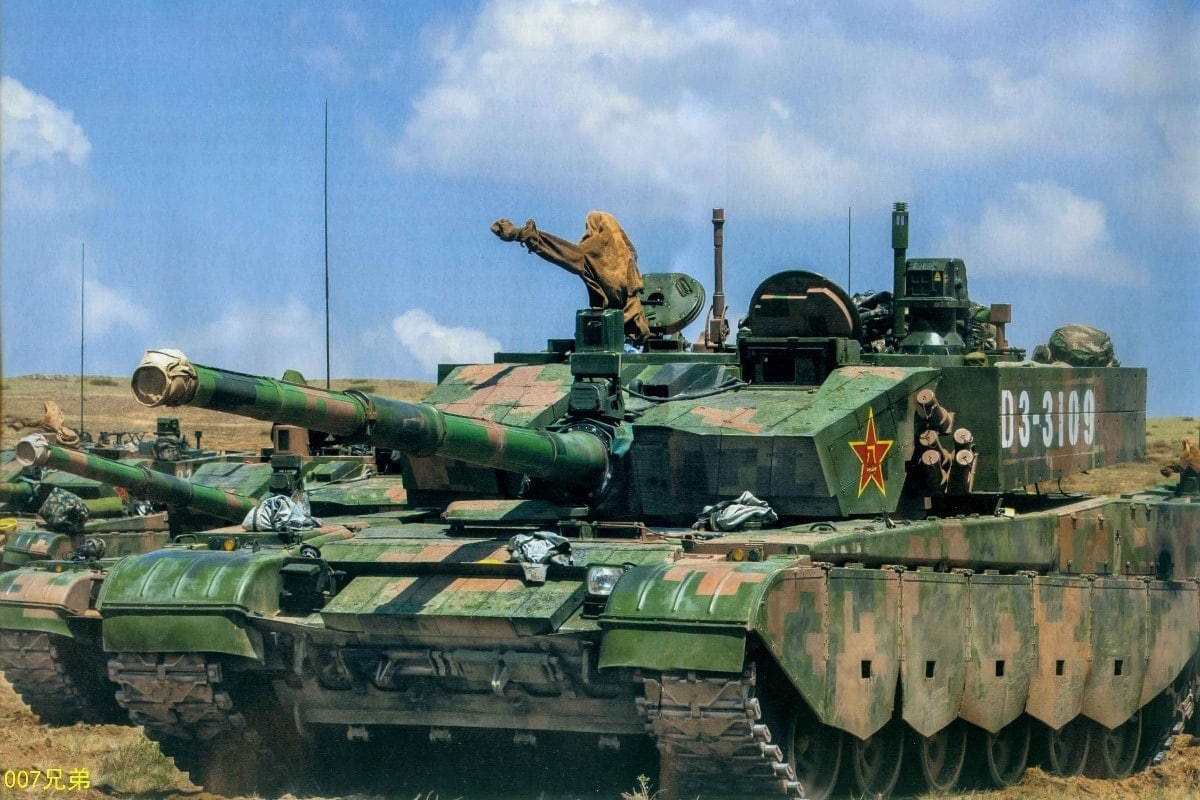
Type 99. Image: Creative Commons.
-Building on the ZTZ-98 and ZTZ-99A lineage, the 99B integrates the GL-6 hard-kill Active Protection System (APS) and 360-degree situational awareness sensors to counter top-attack munitions and drone swarms.
-By functioning as a networked node in a “sensor-to-shooter” ecosystem, the Type 99B enables rapid target acquisition and shortened kill chains, making it the centerpiece of the PLA’s 2026 armored modernization on the Tibetan Plateau.
Big Firepower: The Secrets of the Type 99B’s 2026 Live-Fire Breakthrough
The Type 99 (ZTZ-99) has been an important staple of China’s tank forces since 2001. The tank is based on the Soviet T-72 chassis but has undergone a number of changes, making it a uniquely Chinese main battle tank. Over time, the Type 99 has received numerous modernization packages, gradually increasing its capabilities.
The Type 99B is the most recent iteration of this tank. Officially revealed in 2024, the new variant sports upgraded ERA, hard-kill APS, improved networking capabilities, and more, making it one of China’s most advanced tanks in its service.
Development of the Type 99 Series
The Type 99 began with the Type 90-II prototypes, which established key technologies such as modular composite armor, a 125 mm gun with an autoloader, and improved fire control, all of which informed the Type 98 proof-of-concept and the serial Type 99.
The Type 99, itself derived in part from extensive study of the T-72 chassis, introduced a three-person crew with an autoloader, a 125 mm smoothbore gun capable of missile launch, and tandem-charge defeating ERA modules, thereby becoming China’s first mass-produced third-generation MBT. Over roughly two decades, about 1,300 vehicles across the 99/99A series were manufactured, anchoring PLA heavy armor modernization.

China’s Type 99 MBT
The 99B departs from this trajectory not by abandoning proven fundamentals, but by integrating them into a more digitally connected, sensor-rich platform.
The Type 99B first appeared during the September 3, 2025, military parade in Beijing. The 99B was shown leading the ground-vehicle column, reportedly drawn from the 112th Combined Arms Brigade of the 82nd Group Army.
This event offered the first unambiguous look at the tank’s revised sensor and protection architecture compared to the 99A. Soon thereafter, Chinese state broadcaster CCTV released the first live-fire footage in December 2025, signaling that the variant had progressed beyond prototypes and into realistic training sequences.
Together, the parade and live-fire demonstrations framed the 99B as a production-intent system prioritized for frontline units, rather than a purely experimental vehicle.
Firepower and Survivability
The Type-99B retains the 125 mm ZPT-98 smoothbore gun and can fire a variety of projectiles and gun-launched anti-tank guided missiles. The Soviet-style carousel autoloader supports the traditional three-crew layout of driver, gunner, and commander, maintaining a compact internal footprint and a lower silhouette relative to four-crew Western designs.
It also retains the problems inherent to the autoloader, which pose a risk to the crew in the event of an ammo detonation. While China has not disclosed official rate-of-fire data, open-source estimates hover around eight rounds per minute, with secondary armament comprising a remotely operated 12.7 mm QJC-88 heavy machine gun and a coaxial 7.62 mm machine gun.
Survivability is a central design priority for the 99B. The tank integrates an advanced active protection suite identified as GL-series, though sources differ on whether it’s the GL-6 or the GL-XX. The tank combines two APS projectile launchers with four fire-control radars.
The four radars provide hemispheric coverage to detect, classify, and cue countermeasures against incoming threats. At the same time, the dual launchers are positioned to defeat anti-tank guided missiles and top-attack munitions, a class of threats that has grown notably more dangerous in recent battlefields.
The 99B also features redesigned, higher-performance explosive reactive armor modules intended to counter both cumulative and kinetic penetrators, complementing its underlying composite and modular armor scheme.
Inside the Type 99B
Where the Type 99B most decisively advances beyond the 99A is in its fire-control and sensor architecture. While details are sparse, China claims the tank includes improved thermal imaging, a 360-degree crew vision system, and updated photoelectric and ranging sensors.
The cumulative effect is to accelerate target acquisition and engagement in all weather and lighting conditions, while reducing the crew’s cognitive load. Some accounts further suggest the presence of AI-assisted target recognition, though this remains speculative and unconfirmed by official sources. Even without that feature, the comprehensiveness of the sensor package represents a significant modernization of the PLA’s heavy-armor situational awareness toolkit.
Mobility is another area where the 99B remains relatively unchanged. The tank reportedly retains a 1,500-horsepower diesel engine, a high output that allows road speeds of 79–80 km/h despite a combat weight estimated in the mid-50-ton range. With such a high power-to-weight ratio, the Type-99 is comparable in speed to tanks like the M1 Abrams.
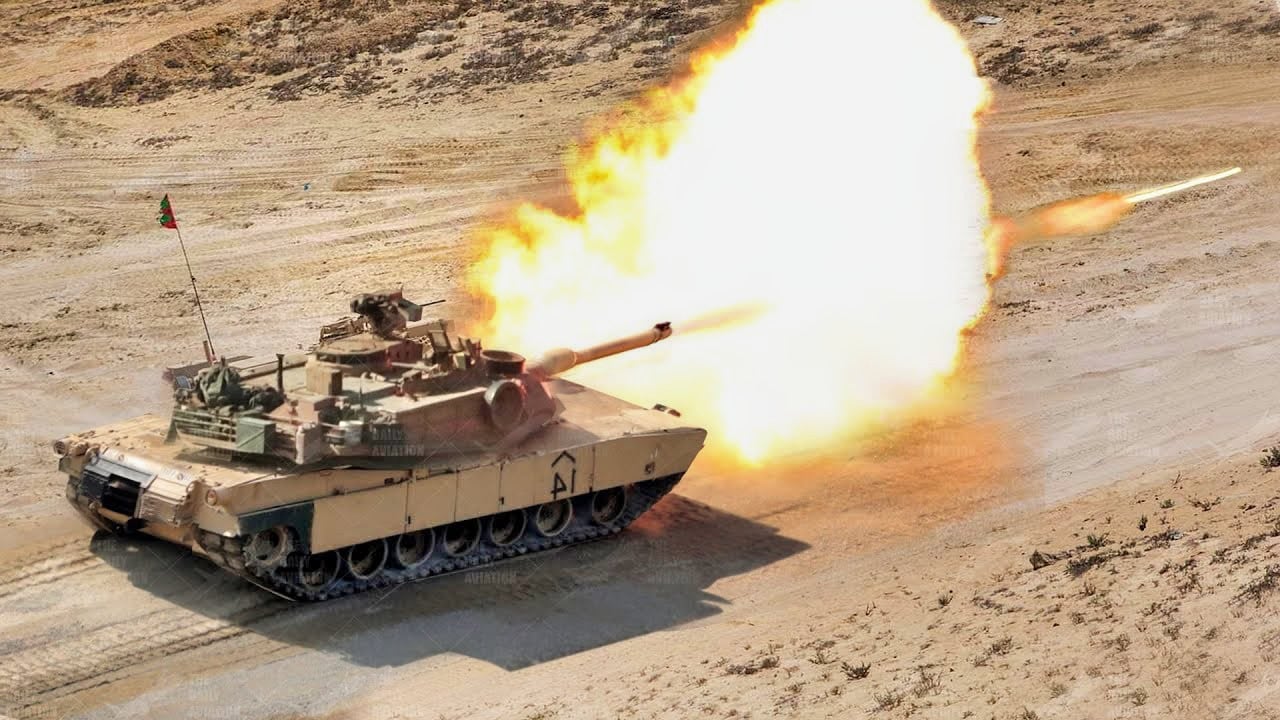
M1 Abrams Firing. Image Credit: Creative Commons.
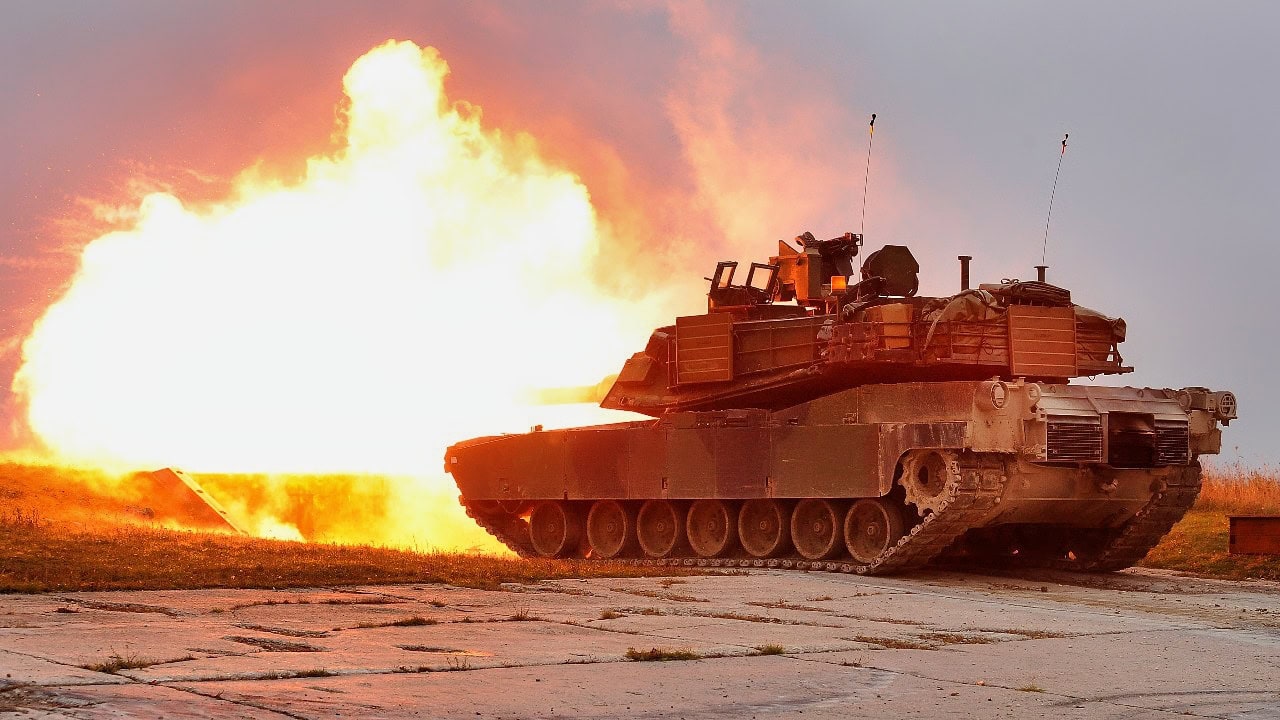
U.S. Soldiers, assigned to the 1st Battalion, 64th Armor Regiment, 1st Armored Brigade Combat Team, 3rd Infantry Division, conduct gunnery with M1A2 Abrams tanks during exercise Combined Resolve V at 7th Army Joint Multinational Training Command in Grafenwoehr, Germany, Oct. 8, 2015. Combined Resolve is designed to exercise the U.S. Army’s regionally aligned force to the U.S. European Command area of responsibility with multinational training at all echelons. Approximately 4,600 participants from 13 NATO and European partner nations will participate. The exercise involves around 2,000 U.S. troops and 2,600 NATO and Partner for Peace nations. Combined Resolve is a preplanned exercise that does not fall under Operation Atlantic Resolve. This exercise will train participants to function together in a joint, multinational and integrated environment and train U.S. rotational forces to be more flexible, agile and to better operate alongside our NATO Allies. (U.S. Army photo by Visual Information Specialist Gertrud Zach/released)
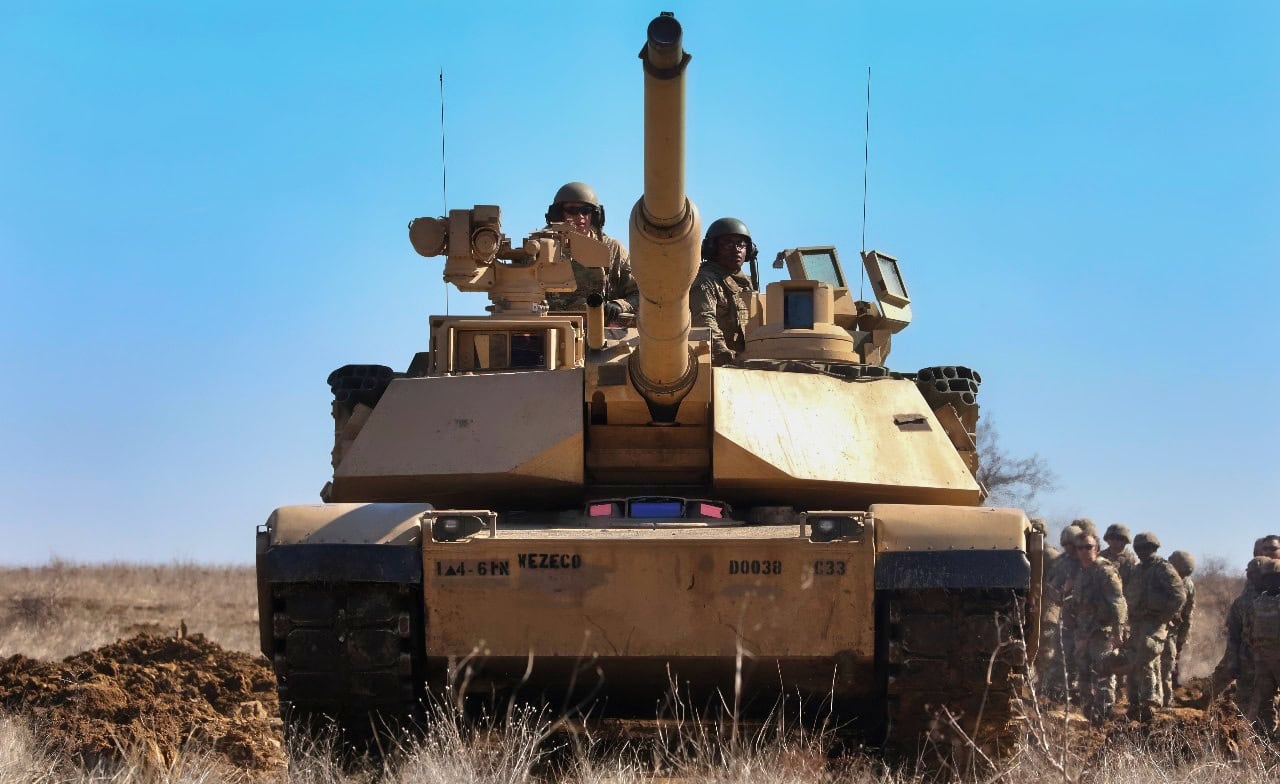
A U.S. Army M1 Abrams, assigned to 4th Battalion, 6th Infantry Regiment, 3rd Armored Brigade Combat Team, 1st Armored Division, fully emerges from the tank firing point to engage the simulated enemy at Novo Selo Training Area, Bulgaria, March 5, 2025. 1st Armored Division, a rotational force supporting V Corps, conducts training with engineers and tank operators in the European Theatre to maintain readiness and instill fundamental Soldier skills that are vital in maintaining lethality. (U.S. Army photo by Spc. Kyle Kimble)
However, it inevitably imposes greater maintenance and logistical demands, especially compared to China’s larger, lighter, and lower-cost Type 96 fleet.
Perhaps the most consequential evolution in the 99B lies in its integration into China’s network-centric command architecture. Rather than treating the MBT as an isolated platform, the Type 99B is fitted with upgraded communication suites, data links, and battlefield management systems that tie the tank into a broader sensor-to-shooter ecosystem.
The ability to ingest, share, and act on real-time targeting data from drones, reconnaissance elements, and higher echelons enables shorter kill chains and a higher operational tempo, particularly important in the complex terrain and rapidly changing tactical situations the PLA anticipates along its western frontiers.
About the Author: Isaac Seitz
Isaac Seitz, a Defense Columnist, graduated from Patrick Henry College’s Strategic Intelligence and National Security program. He has also studied Russian at Middlebury Language Schools and has worked as an intelligence Analyst in the private sector.