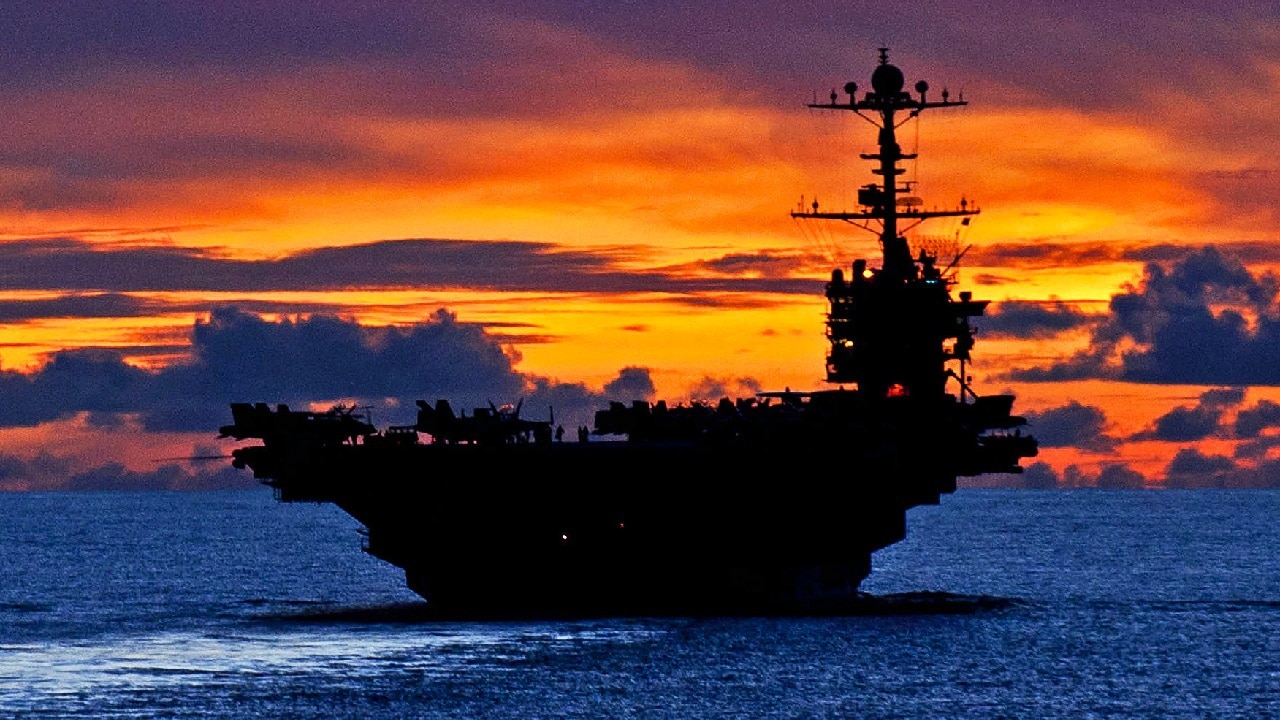
Summary and Key Points: Defense analyst Caleb Larson evaluates the mounting “danger from the deep” in the Strait of Hormuz.
-As Operation Epic Fury enters a critical phase, U.S. intelligence confirms Iran has begun mining the waterway using rocket-deployed mines and small boats.
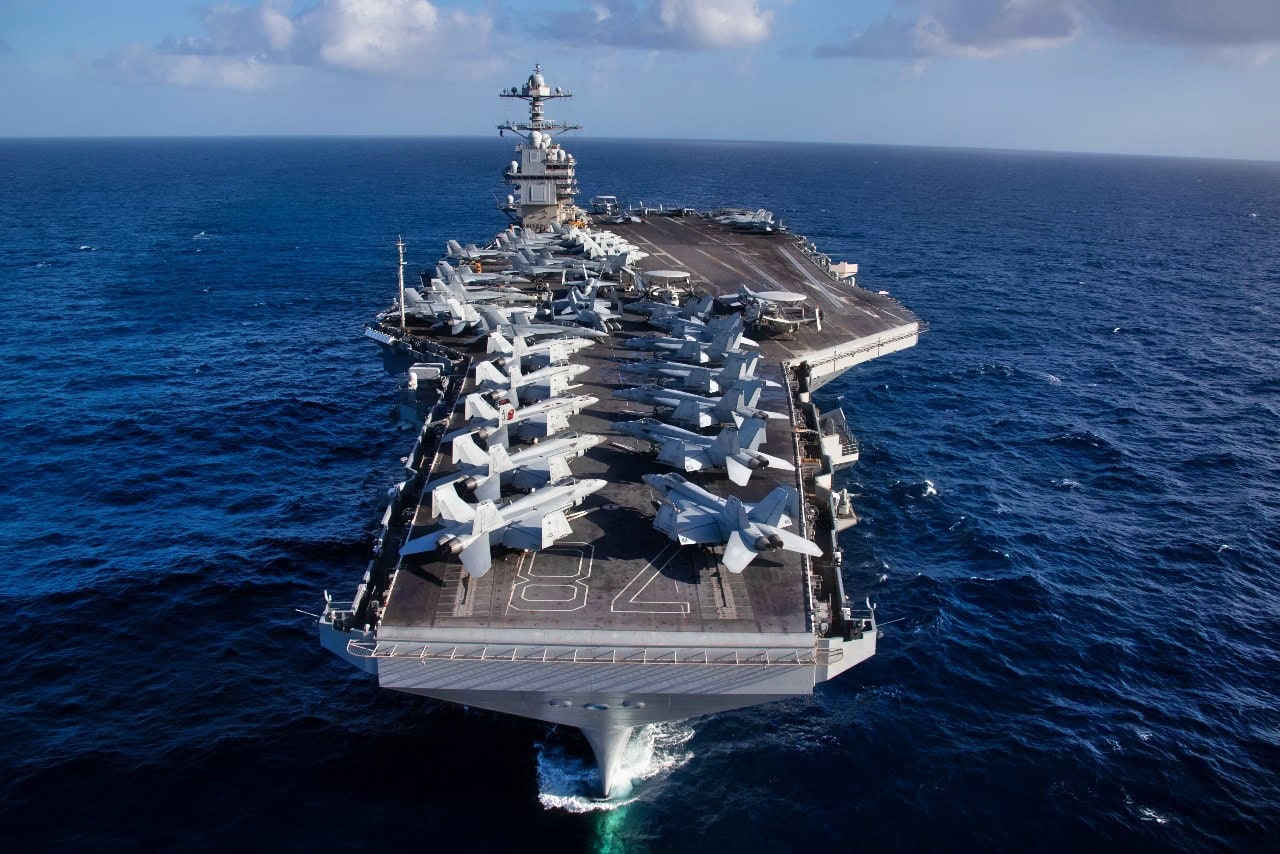
The world’s largest aircraft carrier USS Gerald R. Ford (CVN 78), steams in the Mediterranean Sea, Dec. 24, 2023. The Gerald R. Ford Carrier Strike Group is currently operating in the Mediterranean Sea. The U.S. maintains forward-deployed, ready, and postured forces to deter aggression and support security and stability around the world. (U.S. Navy photo by Mass Communication Specialist 2nd Class Jacob Mattingly)
-This report analyzes the historic “Quiet Death” strike—the first U.S. submarine torpedo kill since WWII—which sank the frigate IRIS Dena.
-Larson explores the 2026 capability gap created by the decommissioning of Avenger-class minesweepers, concluding that the transition to Independence-class LCS platforms remains unproven as oil prices hit $100.00/barrel.
The Hormuz Mining Threat: Why Iran’s Asymmetric Warfare is Paralyzing Global Energy Markets
The Strait of Hormuz is one of the world’s more difficult waterways. And now Iran has raised the stakes, attacking vessels on the move near or around the strait.
It is narrow, with visibility often obscured by dust, haze, and humidity.
The waterway is very shallow, and high ground on the coast offers commanding views as well as potentially providing overwatch to anyone planted on those summits.
Since the beginning of the joint Israeli-American Operation Epic Fury — called Operation Roaring Lion in Israel — few vessels have dared to transit the strait, for fear of Iranian missile launches from the Iranian coast or from whatever remains of Iran’s warships.
But the safety of those waters appears poised to sink even further.
Danger from the Deep
CNN reports that Iran has begun mining the Strait of Hormuz, citing American intelligence reports. “The mining is not extensive yet, with a few dozen having been laid in recent days,” the sources told CNN. “But Iran still retains upward of 80% to 90% of its small boats and mine layers,” one source added, “so its forces could feasibly lay hundreds of mines in the waterway.”
The Strait is controlled now by Iran’s Islamic Revolutionary Guard Corps and the Iranian Navy, both of which can leverage different tools to block the waterway, including anti-ship missiles fired from shore, fast-attack boats armed with heavy machine guns, recoilless rifles, rockets, and other weaponry, and via the mine-laying boats. But Iran’s maritime forces have suffered several crippling blows since the eruption of hostilities last month.
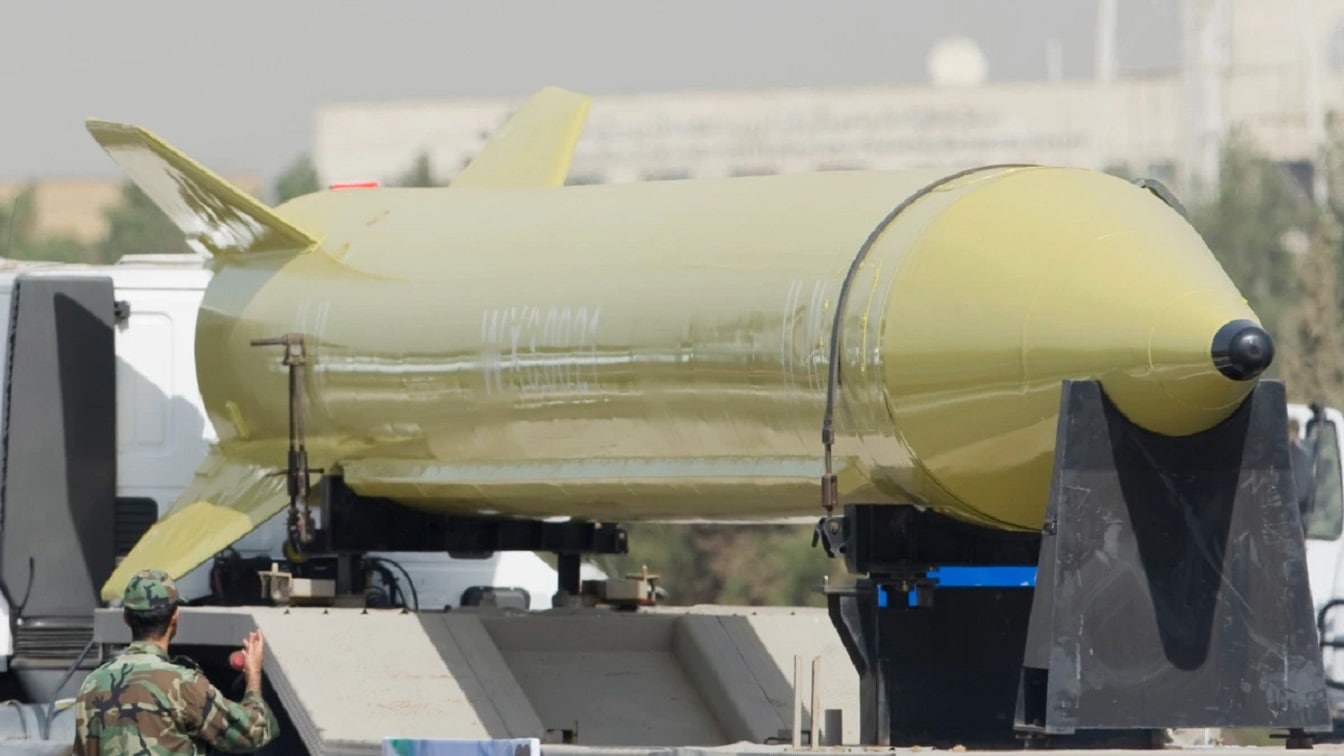
Iranian Ballistic Missile. Image Credit: Creative Commons.
In a social media post, American President Donald Trump warned Iran. “If, for any reason, mines were placed, and they are not removed forthwith, the Military consequences to Iran will be at a level never seen before,” the president wrote. “If, on the other hand, they remove what may have been placed, it will be a giant step in the right direction!”
Although the president did not explicitly confirm CNN’s reporting that Iran is already planting mines in the Strait of Hormuz, he did, in a separate post, announce that the United States “hit, and completely destroyed, 10 inactive mine laying boats and/or ships,” and promised, “more to follow.”
How many Iranian warships are still afloat is unknown, but that number is decreasing. On March 10th, United States Central Command posted a video to X (formerly Twitter) that compiled strikes against Iranian ships. “U.S. forces eliminated multiple Iranian naval vessels,” the video’s caption reads, “including 16 minelayers near the Strait of Hormuz.”
The impact of mining the Strait of Hormuz would likely be very large at first, though it would be unlikely to close the waterway on a more permanent basis. The crux of the issue, however, is the psychological impact of mining on water. Even a small number of mines can close maritime routes and disrupt shipping, and a few successful mine strikes against ships would significantly affect risk calculations and those of shipping insurers.
The Strait of Hormuz is easily one of the most important maritime chokepoints in the world. Around 20 million barrels of oil transit the strait per day, representing about twenty percent of global oil consumption, and is the primary export route for Saudi Arabia, Iraq, Iran, Qatar, and the United Arab Emirates.
A Numbers Game
It is difficult to estimate the number of mines Iran has, though some estimates range from 2,000 to 6,000 of various types.
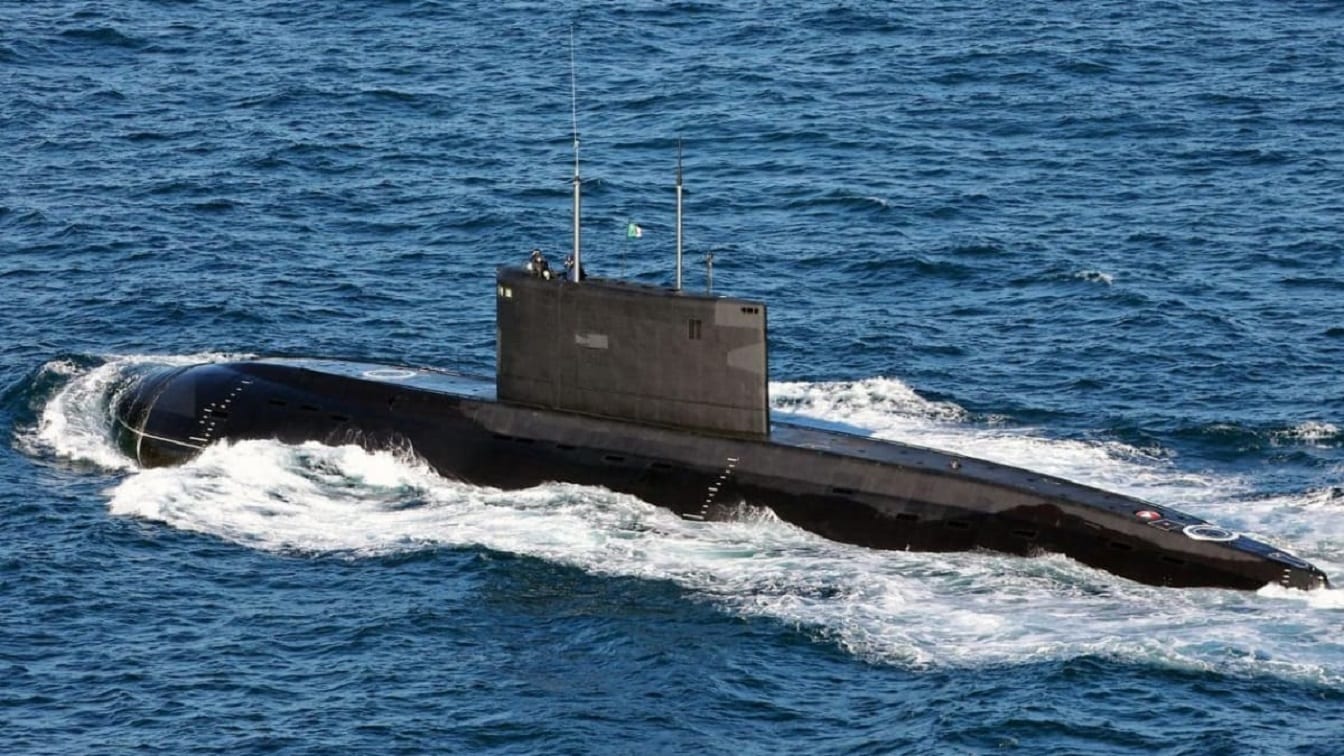
Iran’s Navy Has Kilo-Class Submarines. Image Credit: Creative Commons.
But these are thought to include contact mines that explode when hit, influence mines triggered by acoustic or magnetic signatures, and bottom mines that lie on the sea floor. Though Iran’s navy has been severely battered by the United States, mines could be laid, in theory, by Iranian submarines, small boats, dedicated mine-laying vessels, or by civilian boats.
And because the Strait of Hormuz is only a few miles wide, Iran would not need to lay thousands of mines to effectively close the strait.
But Iran can also deploy naval mines from land. Video from Iranian state television demonstrates how rocket-deployed mines can be launched from the Iranian coast and deploy potentially hundreds of mines in a short period of time.
Operation Epic Fury is ongoing, and the situation is very much in flux. Strikes against Iranian targets are ongoing, and both Israel and the United States have launched thousands of strikes against Iran, including the Iranian Navy. Just last week, a U.S. Navy submarine fired a Mk 48 heavyweight torpedo at an Iranian frigate, the IRIS Dena, off the coast of Sri Lanka. The footage was incredible, and marked the first time since the Second World War that the United States Navy sank another ship using a torpedo.
“An American submarine sank an Iranian warship that thought it was safe in international waters,” United States Secretary of Defense Pete Hegseth said of the attack. “Instead, it was sunk by a torpedo. Quiet death.”
The Problem
Measured in terms of cost, naval mines are one of the cheaper weapons in naval warfare. Hard to detect — particularly modern influence-type mines — costing just a few thousand to perhaps tens of thousands of dollars each, just a single mine can, in theory, cripple a warship. Their psychological impact is, therefore, outsized. Clearing them would require a massive response, but it is unclear how long Iran could keep the Strait of Hormuz bottled up.
Unfortunately for the United States and the Gulf countries, four decommissioned Avenger-class Mine Countermeasures ships left Bahrain in January, handing over their counter-mine mission to Independence-class Littoral Combat Ships. “Decommissioned Avenger-class mine countermeasures ships were safely moved as part of ongoing U.S. Navy force transition efforts in the region,” a U.S. Navy statement covering the decommissioning explains. It adds that “these efforts support continued fleet readiness and responsible transition of legacy platforms, while sustaining operational momentum and mission effectiveness across the maritime [domain].”
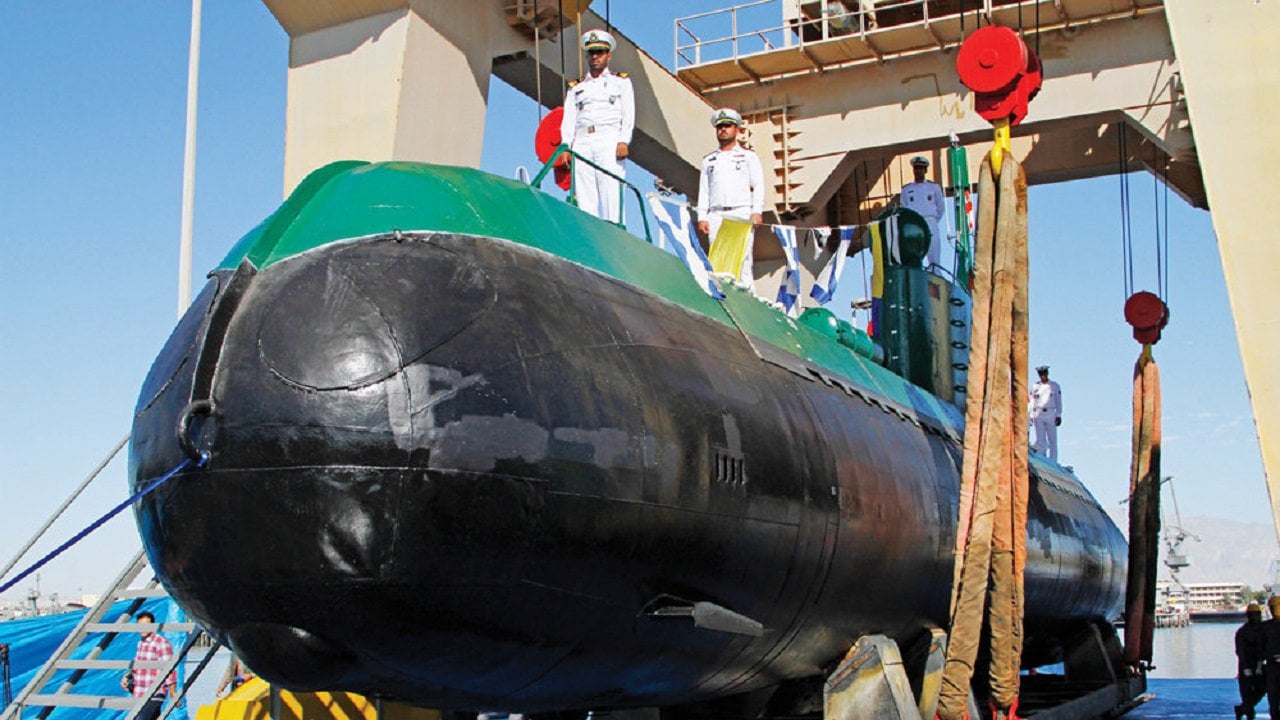
Ghadir Submarine. Image Credit: Iran State Media.
The Avenger-class ships were designed to locate and neutralize moored naval mines as well as those planted on the sea floor, and to support that mission, much of the ship’s hull is fiberglass-covered wood, which helps evade magnetic anomaly-detecting mines. The LCS ships that would take over the Avenger-class mine duties have sustained criticism in the past due to several high-profile breakdowns, but the ship’s metallic hulls raise new questions about their ability to perform mine clearance.
In any case, now that the Avenger-class has left the Middle East — four are still deployed in Japan — it seems likely that the primary vehicle for the United States Navy’s counter-mining operations will be the Independence-class Littoral Combat ships. But their ability to perform that mission, particularly in waters that are likely to be hotly contested, is an open question.
Escort Options?
Even without laying any mines, traffic through the Strait of Hormuz has slowed to a trickle, with seemingly very few ships willing to make a run through that maritime gauntlet. But calming markets and cooling the energy price spikes witnessed over the past week or more would likely require warship escorts for commercial vessels. The United States Navy has rebuffed requests from the shipping industry for military escorts, citing the high risks involved.
But in a social media post on Tuesday, Secretary of Energy Chris Wright wrote that the United States Navy had escorted an oil tanker through the strait. His post was later deleted, however, and the White House Press Secretary Karoline Leavitt contradicted Wright’s account to reporters, denying the escort had happened. But the post injected an additional measure of volatility into energy markets, with futures for gasoline, diesel, and oil all sliding.
Mark Montgomery, a retired Rear Admiral in the United States Navy, thinks that it would take a week or two for the United States Navy to organize convoys to escort civilian shipping through the strait, while in the meantime, American and Israeli forces would continue to hunt down Iranian assets that could pose a threat to vessels in the area. But, he explained, risk would be unlikely to be eliminated completely. Instead, it could potentially be reduced to what he called a “manageable level.”
Montgomery estimates that U.S. Navy warships could escort at most two civilian ships, given the narrowness of the Strait of Hormuz and the presumably limited time they would have to respond to an incoming threat.
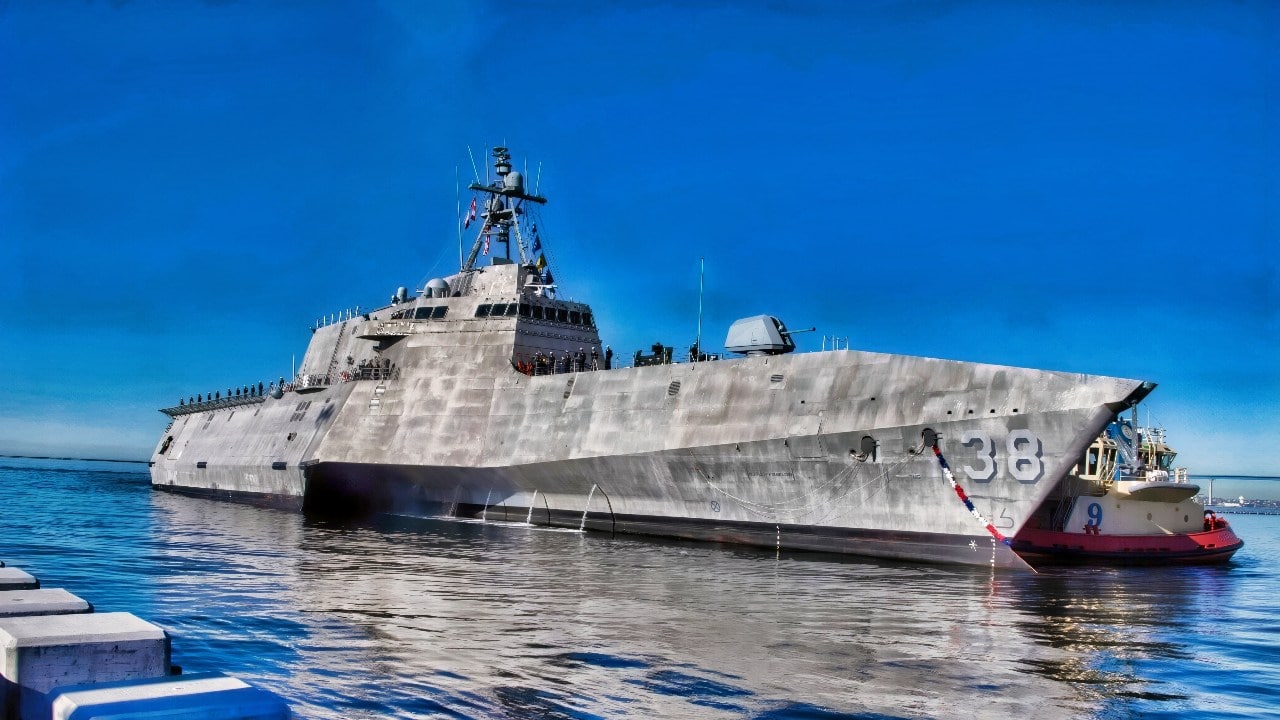
The Independence-Variant littoral combat ship USS Pierre (LCS 38) prepares to moor pier side during its arrival to its homeport of San Diego for the first time, Dec. 5, 2025. Pierre, the second U.S. Navy ship to bear this name, commissioned in Panama City, Fla. Nov. 15 as the final independence-variant LCS. Littoral combat ships are fast, optimally-manned, mission-tailored surface combatants that operate in near-shore and open-ocean environments, winning against 21st-century coastal threats.
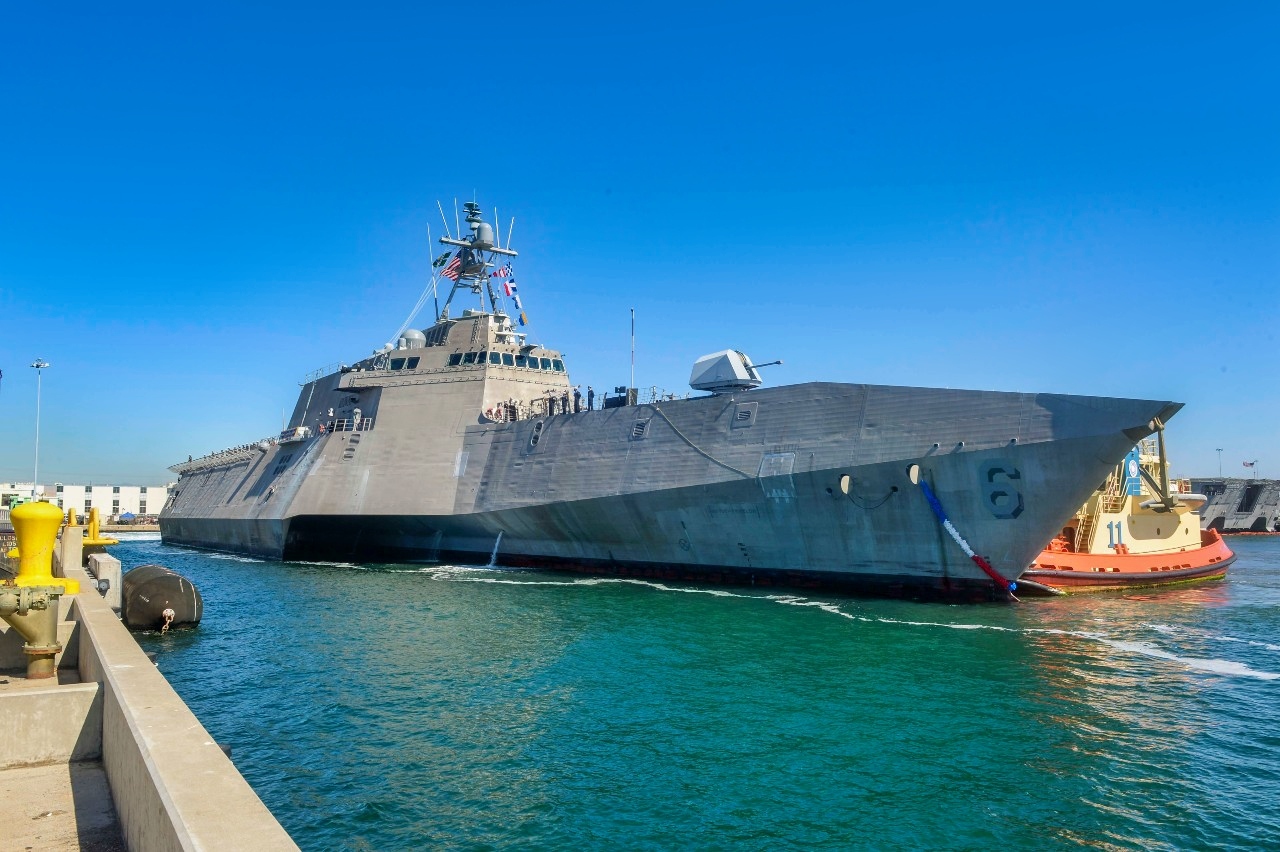
NAVAL BASE SAN DIEGO — The Independence-variant littoral combat ship USS Jackson (LCS 6) returns to its San Diego homeport, Oct. 6, 2023. Littoral Combat Ships are fast, optimally-manned, mission-tailored surface combatants that operate in near-shore and open-ocean environments, winning against 21st-century coastal threats. (U.S. Navy photo by Mass Communication Specialist 1st Class Vance Hand)
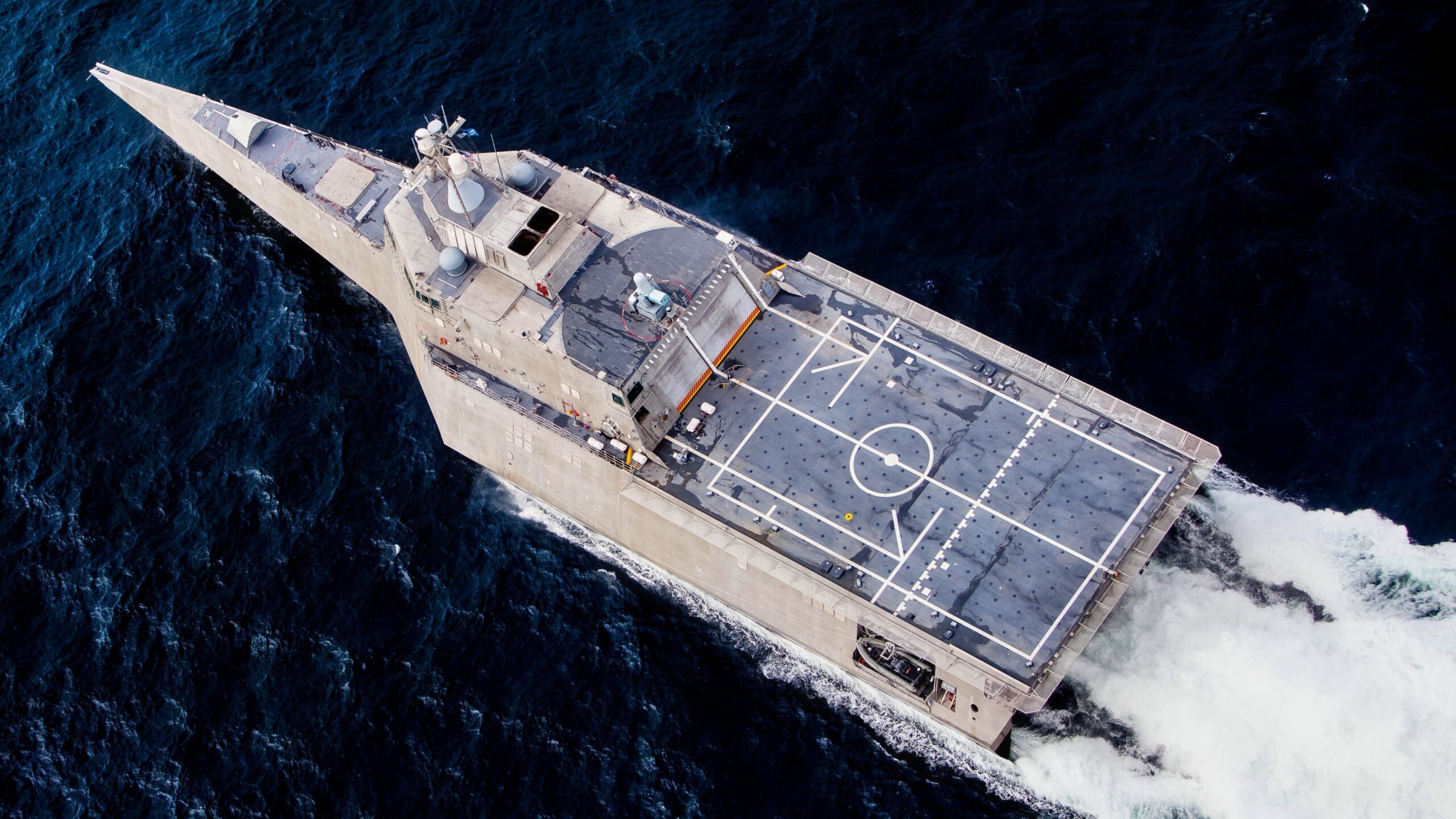
US Navy Littoral Combat Ship. Image Credit: Creative Commons.
“What you couldn’t do is have one ship trying to protect five tankers,” Montgomery explained to The Observer. “The tighter the geography, the closer you have to be to the protective asset.”
Though numbers fluctuate, an analysis by the Center for Strategic and International Studies, a Washington-based think tank, shows that traffic through the strait has dropped precipitously since the outbreak of hostilities against Iran. Their data shows that in previous years, comfortably more than 100 vessels per day would pass that waterway. Today, that number is in the single digits.
To Escort or Not to Escort
Though the United States Navy is one of the world’s largest, it would struggle mightily to escort maritime traffic through the strait at pre-war levels alone. The idea of an expanded international escort coalition, one that perhaps includes warships from Europe, the Gulf countries, and elsewhere, would be needed to keep traffic moving through that passage safely. Operation Prosperity Guardian, the U.S.-led coalition that formed in late 2023 to defend shipping from Houthi attacks in the Red Sea, and Operation Aspides, the European Union-led complementary mission, are perhaps two templates for a renewed escort mission.
But any international escort mission would require vastly more ships than either of those operations counted. One looming issue would be the depletion of air defense interceptors. And the risks are significant: the loss of an American or European warship would be both a high-profile loss as well as a significant propaganda coup for Iran.
With midterm elections in the United States looming, crude oil futures are closely watched. Though they have not shot up as metrically as some particularly pessimistic predictions promised, the prospects of a protected strait closure do not bode well for energy prices, the president, or global commerce. Breaking Iran’s closure of the strait will require significant cooperation with allies, willpower, and a willingness to swallow not-insignificant risks.
About the Author: Caleb Larson
Caleb Larson is an American multiformat journalist based in Berlin, Germany. His work covers the intersection of conflict and society, focusing on American foreign policy and European security. He has reported from Germany, Russia, and the United States. Most recently, he covered the war in Ukraine, reporting extensively on the shifting battle lines in Donbas and writing about the war’s civilian and humanitarian toll. Previously, he worked as a Defense Reporter for POLITICO Europe. You can follow his latest work on X.