
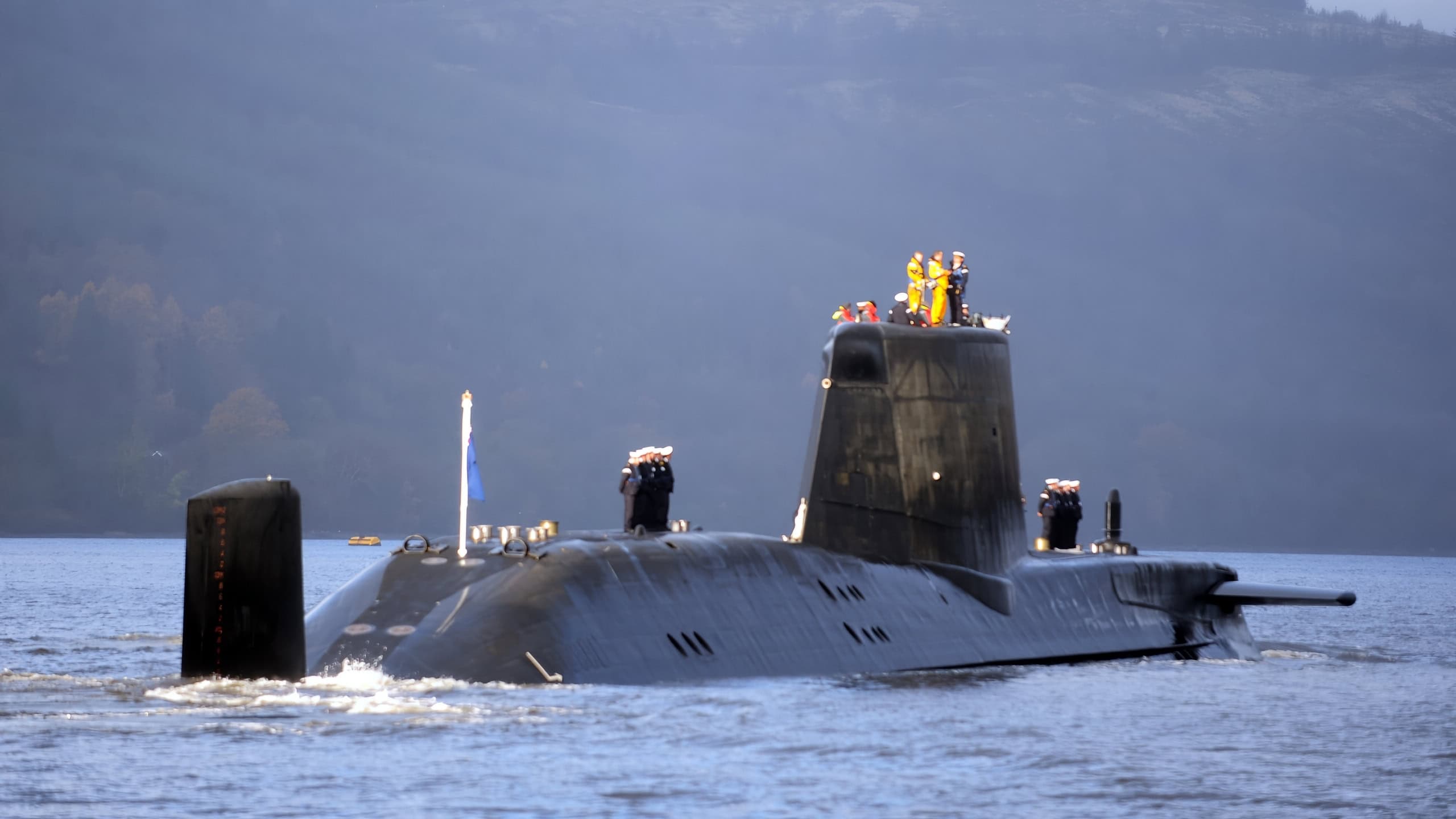
The Royal Navy currently faces many issues, nearly all of which stem from a small budget that doesn’t allow it to build new warships or refurbish older vessels.
The Royal Navy has an outstanding submarine platform in the Astute-class submarines, which are the U.K.’s version of the U.S. Virginia-class, and are exceptional in stealth, speed, and lethality. But the Astute-class submarines are behind schedule in production and their maintenance and upkeep.
However, the U.K. is planning to replace the Astute-class with 12 next-generation nuclear-powered attack submarines (SSNs). These subs are derived from the AUKUS platforms being jointly developed with Australia and the United States.
The plan is to build a submarine every 18 months, which is very ambitious, considering it seeks to produce a fleet of 12 new submarines in the same timeframe it took to build just one Astute-class boat.
James Cartlidge, Conservative Party member and shadow defense secretary, said at the time of the government announcement that there was no plan for how to pay for the submarine.
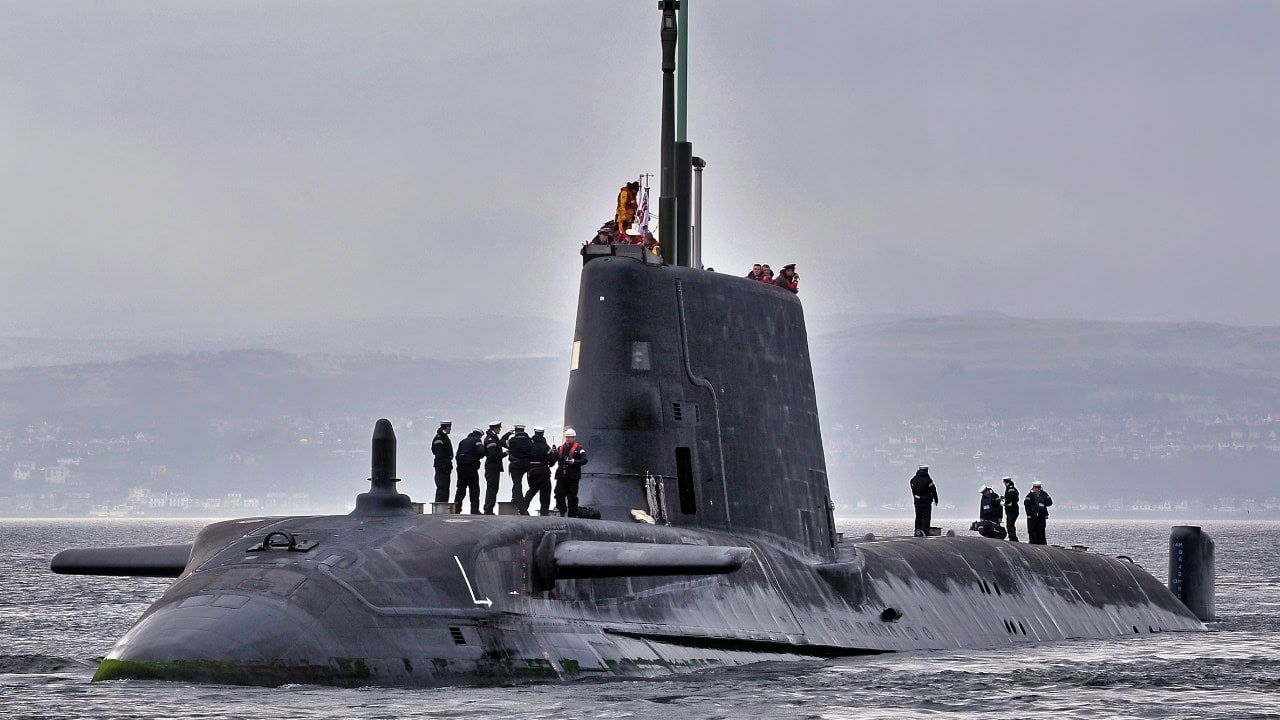
Astute-Class Submarine. Image Credit. Creative Commons.
“The biggest headline announcement of the SDR was 12 new attack submarines – but the Secretary of State on the media round was completely flummoxed when asked how many would actually be built, and how much they would cost,” Cartlidge said.
He added that the submarines and ships promised were a “fantasy fleet” based on “fantasy funding.”
Meet the Astute-Class Submarines
Built by BAE Systems and equipped with powerful Rolls-Royce nuclear reactors that require minimal maintenance, the Astute-class submarines move silently at up to 30 knots.
The Astute boats deploy Spearfish heavyweight torpedoes and Tomahawk missiles, enabling precise, long-range strikes. Advanced electronic warfare suites and sonar systems provide excellent survivability, while quieting technology makes them nearly undetectable.
A significant feature of the Astute-class subs is that, like their American counterparts, they can deploy small Special Operations Forces scuba teams from the Special Boat Service or SAS, using their stealth to sneak in close to an enemy shore to take out designated high-value targets.
Not Enough Submarines, And Availability Rates Are Poor
The Royal Navy currently operates six Astute-class SSNs, though low operational availability and maintenance backlogs often limit the active fleet to one or two deployed vessels.
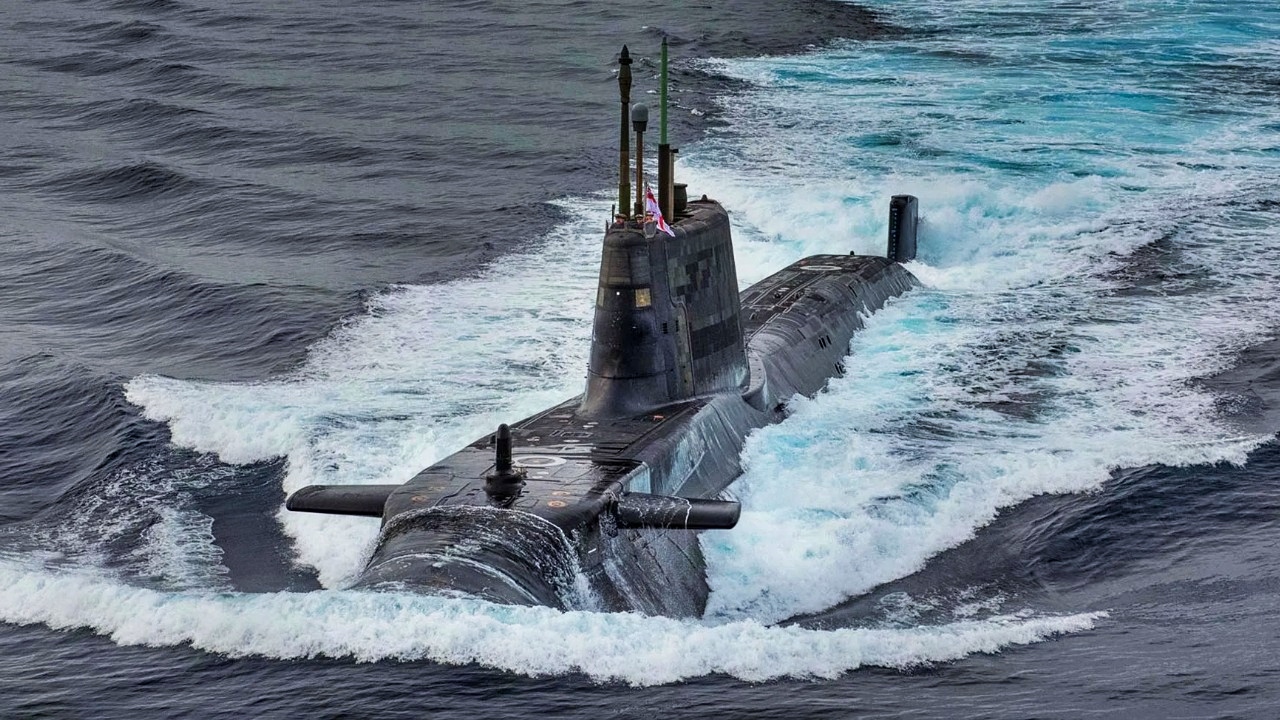
Astute-Class Royal Navy Submarine. Image Credit: Royal Navy.
HMS Anson (S123) is in service, while HMS Agamemnon (S124) was commissioned in late 2025 but is still undergoing operational trials before being considered operational. HMS Achilles (S125) is expected in late 2026 but has suffered delays.
The U.K. has sent the HMS Anson, an Astute-class nuclear-powered attack submarine, to Australia as part of the AUKUS agreement.
Sending one of its few operational attack submarines to the Indo-Pacific is concerning, given that the Royal Navy is stretched very thin at present. The move has seen criticism from both U.K. citizens and lawmakers.
The HMS Anson departed Faslane on January 10, 2026, beginning a long-distance deployment in the Indo-Pacific via Gibraltar, where it arrived last month, while drastically reducing the number of U.K. attack submarines available for operations in the North Atlantic and European waters.
HMS Anson Rotation Helps Australia/AUKUS Pact
Sending the HMS Anson to Australia serves as a rotational piece rather than a permanent part of the AUKUS submarine force.
The purpose of the AUKUS agreement (between Australia, the U.K., and the United States) is to deepen security and defense cooperation in the Indo-Pacific, primarily to counter China’s growing influence, enhance regional stability, and upgrade Australia’s military capabilities.
This is accomplished by providing Australia with conventionally armed, nuclear-powered submarines (Pillar 1) and by collaborating on advanced defense technologies such as artificial intelligence, cyber, and hypersonics (Pillar 2).
This agreement allows Australian naval personnel to gain experience on nuclear-powered submarine operations, maintenance routines, and support requirements before Australia fields its own nuclear submarines.
It also provides Australia with an allied undersea presence in the Indo-Pacific during the transition period before future Australian Virginia-class submarines enter service.
Minister Luke Pollard said, “The agreement that we have with our Australian and American friends is that there will be rotations between a UK Astute boat and the Virginia Class American submarine operating out of Western Australia. That will build the knowledge Australians need to operate those boats.”
“In particular for the UK context, this is about understanding how they would operate a UK-designed and operated boat. Effectively, the SSN-AUKUS will be a similar boat in terms of some of the design principles and operating style that you would see with an Astute Class submarine.”
UK Submarines Tied Up in Maintenance and Sea Trials
This is a difficult time for the Royal Navy. The British surface fleet has been greatly diminished, while the U.K. submarine fleet, the core of British naval strength for decades, is facing alarming readiness challenges. Only two of the 10 submarines in the Royal Navy’s nuclear-powered fleet were able to go to sea immediately at one stage. Only one of the six Astute-class attack submarines is currently at high readiness, while four others were assessed as at low or very low readiness due to maintenance and refit cycles.
HMS Astute is scheduled to enter dry dock for a mid-life refit once another submarine completes maintenance.
Why The Royal Navy Needs the SSN AUKUS Class Submarines
The SSN-AUKUS (or submersible ship nuclear replacement, SSNR) is the designated successor to the Royal Navy’s Astute-class attack submarines.
Developed under the AUKUS pact, these next-generation, nuclear-powered vessels are expected to enter service in the late 2030s. The U.K. plans to acquire up to 12 of these submarines to replace all seven existing Astute-class boats.
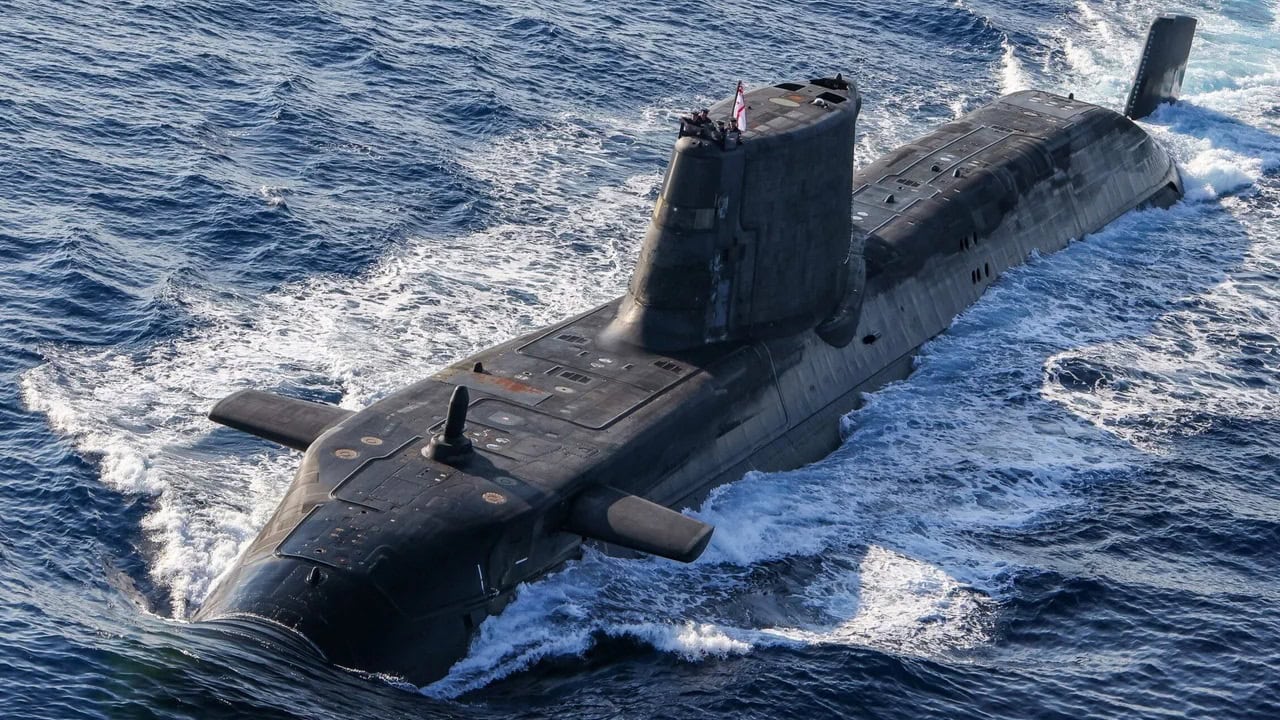
Astute-Class Submarine. Image Credit: Royal Navy.
The submarines will be nuclear-powered, featuring the Rolls-Royce PWR3 nuclear reactor and a pump-jet propulsor. They are expected to have a displacement of over 10,000 tons.
The vessels will feature advanced X-rudders for enhanced maneuverability and stealth. They will be equipped with Spearfish torpedoes and Tomahawk cruise missiles.
The planned production schedule is quite ambitious. The submarines will be built in the U.K. (Barrow-in-Furness) and Australia (Osborne), with a planned build rate of one every 18 months.
The British Ministry of Defense says: “The boost to the SSN-AUKUS program will see a major expansion of industrial capability at Barrow and Raynesway, Derby, with the build of a new submarine every 18 months in the future.”
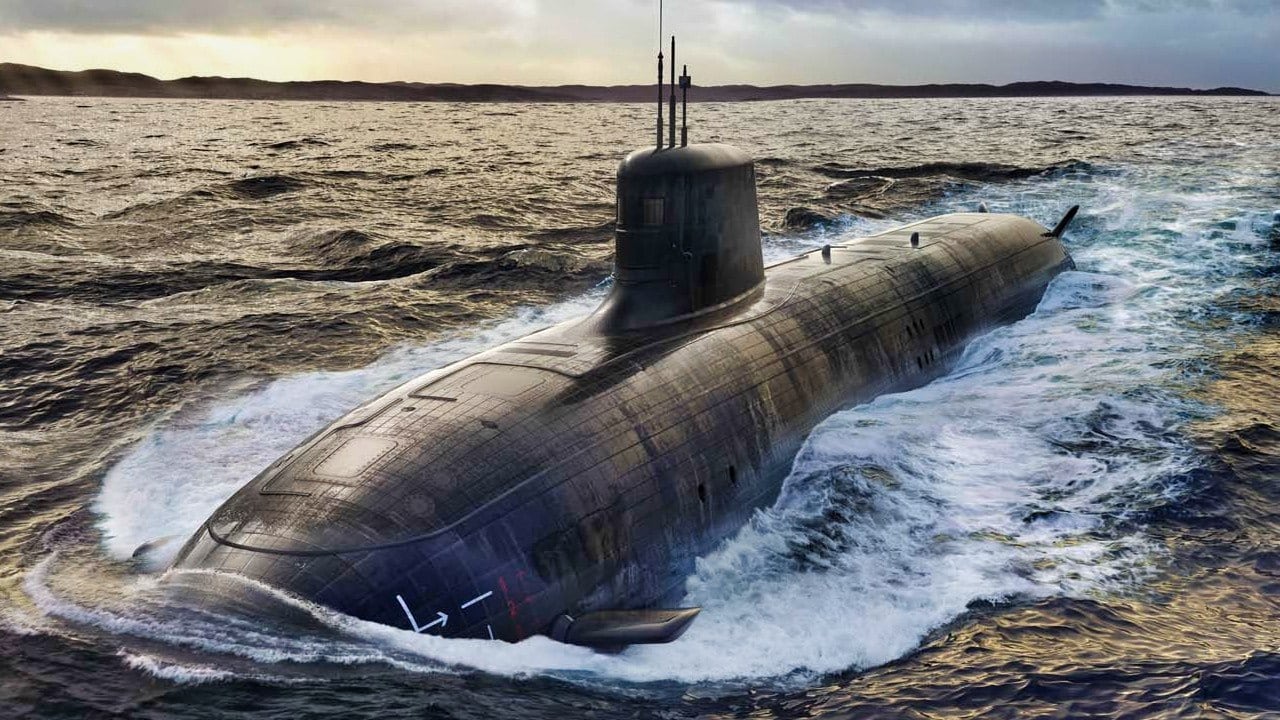
SSN-AUKUS Submarine. Image is Creative Commons Artist Rendering.
But NavyLookout says the current Royal Navy program “does not inspire great confidence.”
About the Author: Steve Balestrieri
Steve Balestrieri is a National Security Columnist. He served as a US Army Special Forces NCO and Warrant Officer. In addition to writing on defense, he covers the NFL for PatsFans.com and is a member of the Pro Football Writers of America (PFWA). His work was regularly featured in many military publications.