
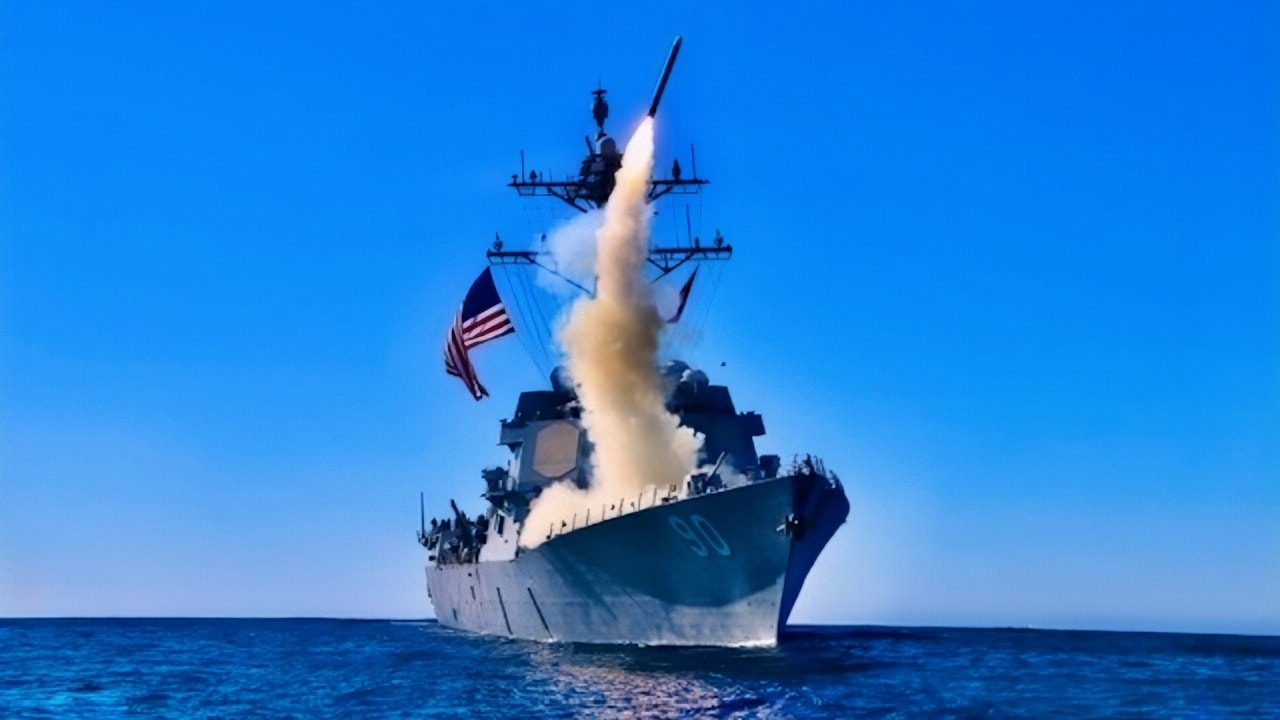
During the Operation Epic Fury in Iran, which now appears to have been temporarily paused with a two-week ceasefire, the U.S. reportedly used a massive amount of Tomahawk missiles to the point where there were questions about possibly running out, and that replacing them could take a matter of years.
The Washington Post reported in late March that the U.S. had “burned through” 850 Tomahawk long-range cruise missiles in the first month of the war.
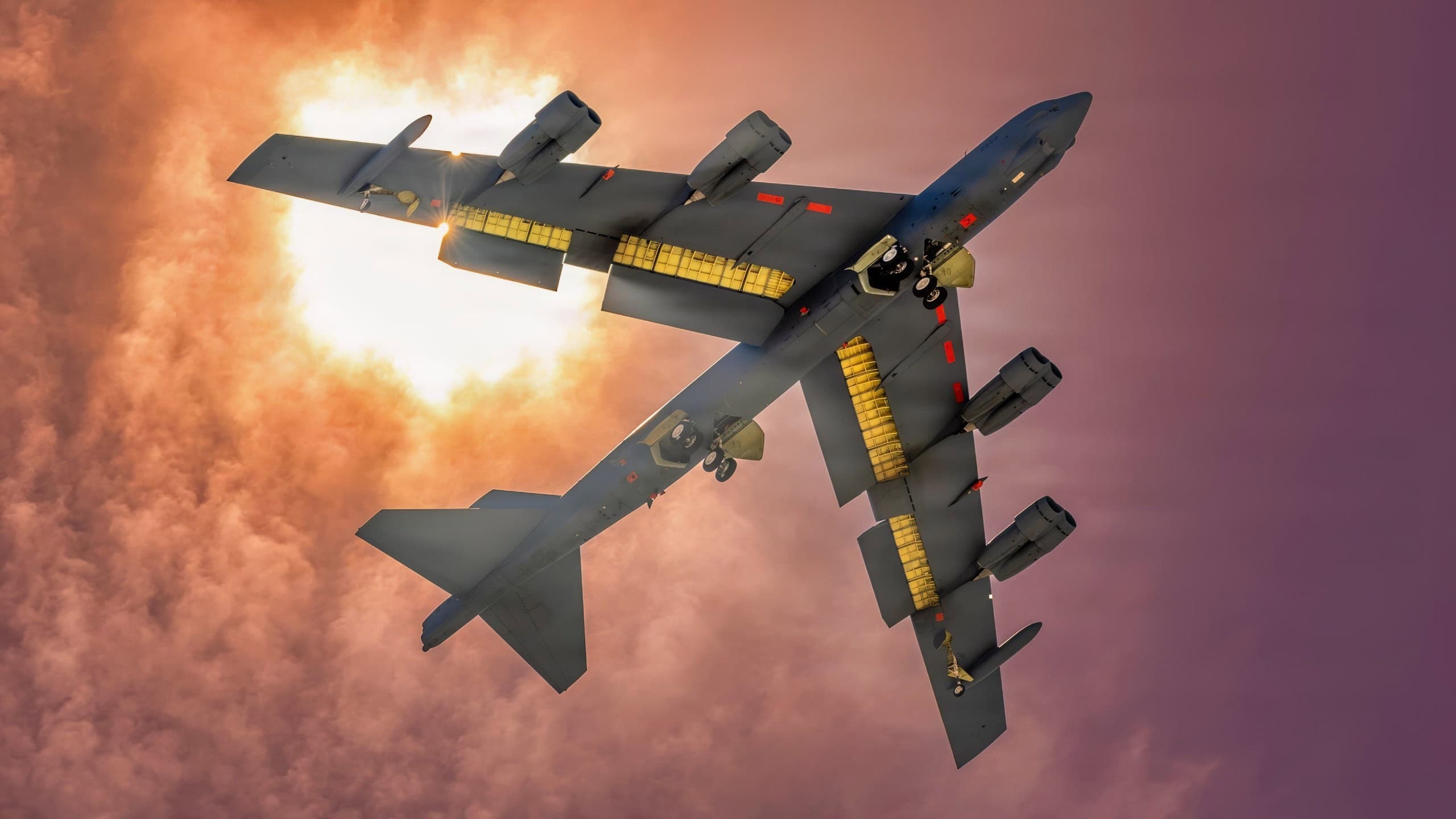
A B-52H Stratofortress assigned to the 419th Flight Test Squadron at Edwards Air Force Base, California, departs for an evening test mission over the Mojave Desert. The B-52H test fleet is in high demand, testing a variety of advanced capabilities for the joint-force. The 412th Test Wing will soon begin developmental test work on new avionics, radar, and engines as part of the B-52J effort, allowing the Stratofortress to serve the warfighter into the 2050’s. (Air Force photo by Todd Schannuth)
A study by the Center for Strategic and International Studies on March 27 found that this was the largest number of such missiles that have ever been fired by the U.S. in any conflict, exceeding the 802 that were fired during Operation Iraqi Freedom, beginning in 2003. The third-most was Operation Desert Fox, the 1998 launch of missiles at Iraq, with 325, while 288 were used in Operation Desert Storm in 1991, which was the first major war in which those missiles were used.
CSS also said that Tomahawks cost $3.6 million per shot, and that 850 such missiles “would account for around half of available launchers in the region.”
That report added that the Navy was set to receive 110 Tomahawks, a fraction of what was used during Epic Fury, in FY 2026, while “existing stockpiles are estimated to be in the low-3,000s.”
“The maximum rate of production is estimated to be 2,330 per year: Three contracts from Raytheon each have a capacity of 600, and a BAE has a contract to produce up to 530 missiles per year,” CBS News reported in late March, citing the CSIS report.
“Replenishing inventory after this campaign will take time and creates near-term risk for the United States,” the Center for Strategic and International Studies said in the report.
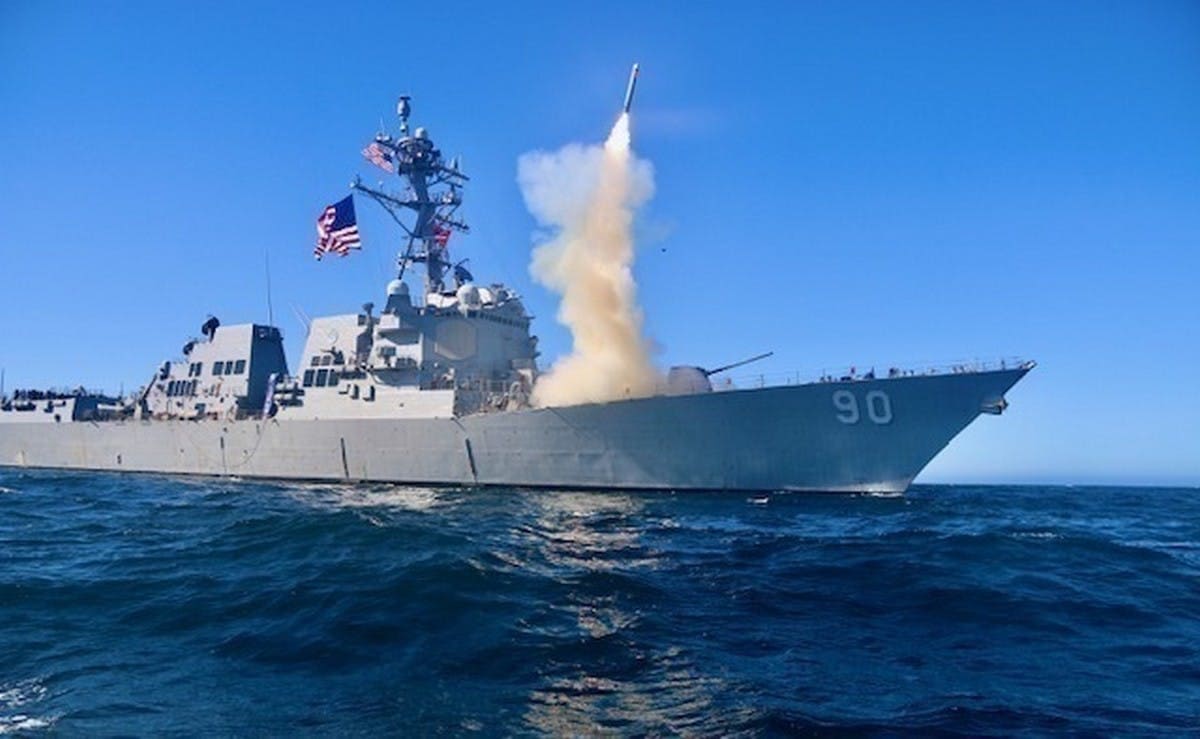
Tomahawk Missile. Image: Creative Commons.
Tomahawk Missiles: How Fast Can They Be Replenished?
According to a report on Wednesday by Defense News, the Navy is now asking Congress to “subsidize the production of 785 Tomahawk missiles for a little over $3 billion, including roughly $1.5 billion for Tomahawk missile modifications.”
That request, if granted, would “largely replenish the bulk of the missiles used during Operation Epic Fury.” However, replenishing those stockpiles won’t happen overnight.
That’s according to Mark Cancian, one of the authors of that study by the Center for Strategic Studies, who discussed the issue in an interview with Military.com.
Cancian noted that most of the Tomahawks were fired in the early stages of the operation, before the U.S. and Israel had established air superiority, while their use tapered off after that, in favor of other weapons.
The bigger concern, he said, was that the Tomahawk stockpile might be needed elsewhere in the world, both for deterrence and for actual use.
“The problem is the effect on other theaters like Ukraine and the Western Pacific, a conflict against China. And strategists are very worried that depletion of inventories will weaken our ability to deter or to fight a conflict there,” Cancian told Military Times. On the question of Taiwan, the Chinese have “a tremendous number of missiles.”
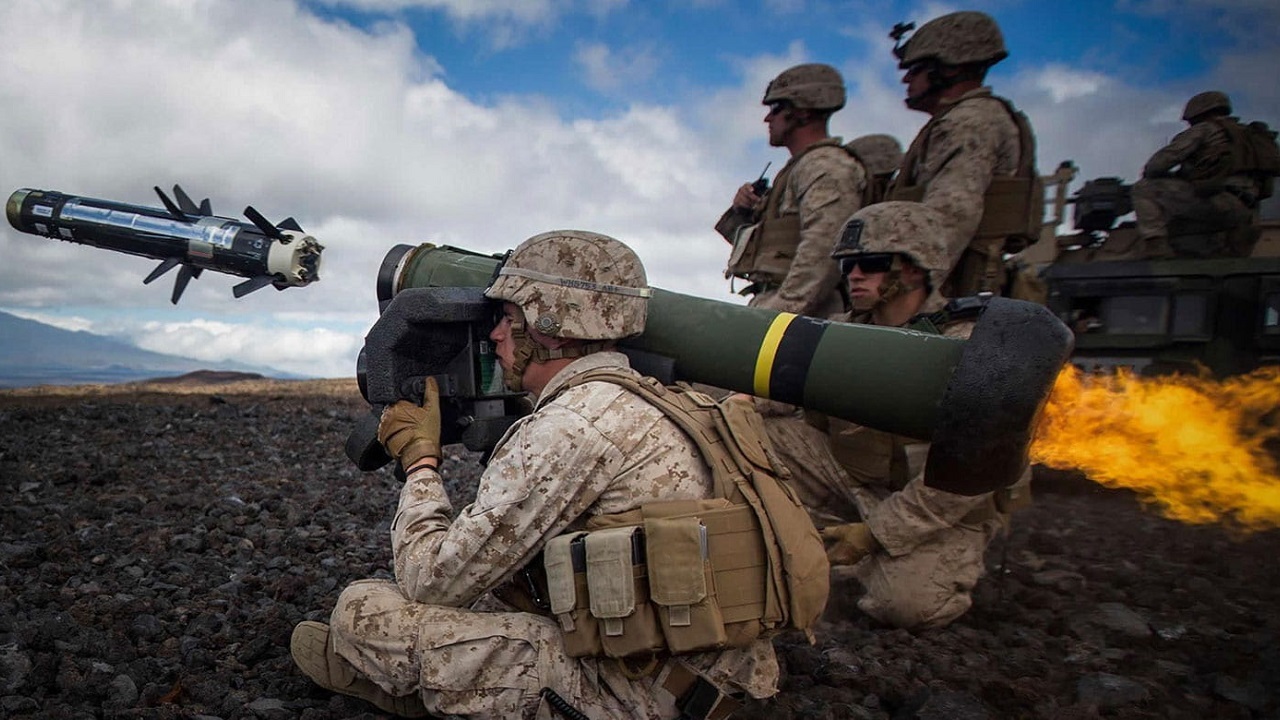
Javelin Anti-Tank Missile. Image Credit: Creative Commons.
As for how long it will take to replenish the American stockpile after Epic Fury?
Cancian stated that increasing capacity and production speed has been a goal of both the Biden and Trump Administrations.
“Bottom line, I think currently, to replace the 850 to 1,000 that we’ve expended, you’re talking two or three years,” he told Military Times.
About Tomahawks: The Ultimate Cruise Missile
The technology that became the Tomahawk missile was developed in the 1970s at John Hopkins’ Applied Physics Laboratory. Developed in various variants over the years, the Tomahawk is now on Block V. The 1991 Gulf War was the first major conflict in which the United States used them.
The current version has a 1,000-pound warhead. The selling point of Tomahawks, Cancian told Military.com, is their versatility and flexibility.
“Its long range and accuracy have always been its great strength. Plus, the fact that it can be launched from sea means that you can move ships around and launch it,” Cancian said in the interview.
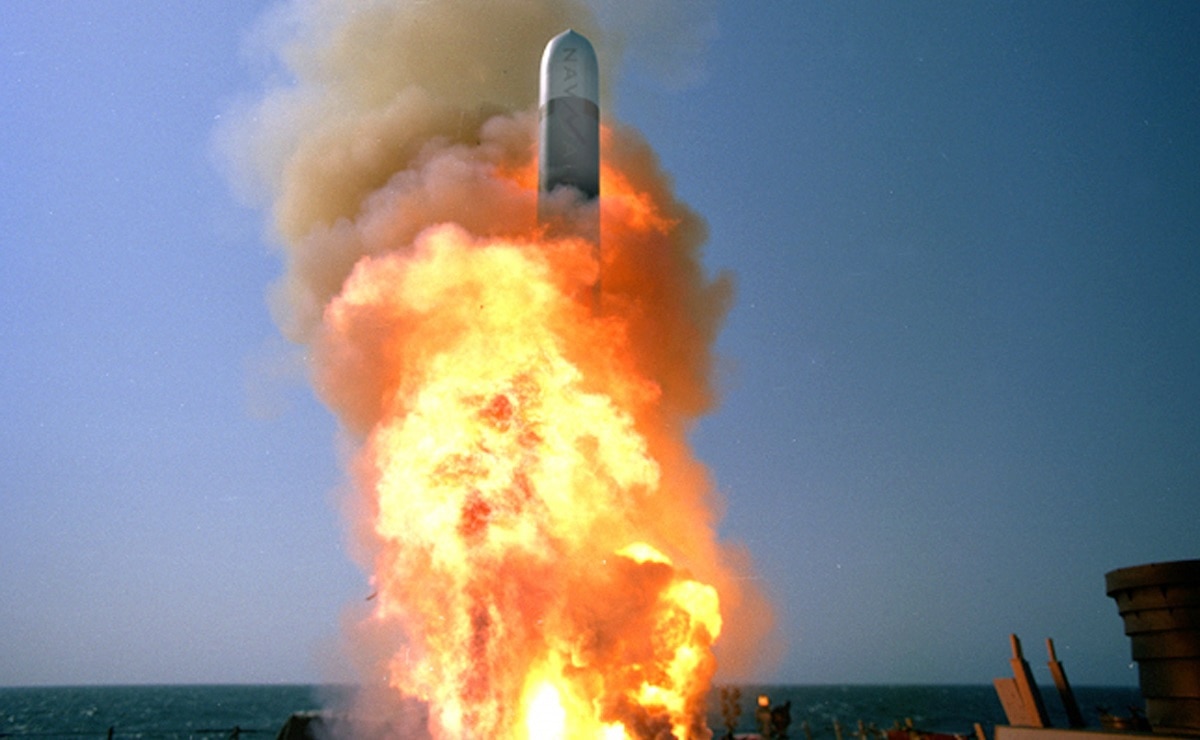
At sea aboard USS Stethem (DDG 63) Ð A Tactical Tomahawk Cruise Missile launches from the guided missile destroyer USS Stethem (DDG 63) during a live-warhead test. The missile traveled 760 nautical miles to successfully impact itÕs intended target on San Clemente Island, part of the Naval Air Systems Command (NAVAIR) test range in Southern California. The Tactical Tomahawk is the next generation of Tomahawk cruise missile, adds the capability to reprogram the missile while in-flight to strike any of 15 preprogrammed alternate targets, or redirect the missile to any Global Positioning System (GPS) target coordinates. It also will be able to loiter over a target area for some hours, and with its on-board TV camera, will allow the war fighting commanders to assess battle damage of the target, and, if necessary redirect the missile to any other target. Launched from the Navy’s forward-deployed ships and submarines, Tactical Tomahawk will provide a greater flexibility to the on-scene commander. Tactical Tomahawk is scheduled to join the fleet in 2004. U.S. Navy photo. (RELEASED)
The U.S. also sells Tomahawks to other countries, although Bloomberg News reported in early April that an order of about 400 of the missiles for Japan had been delayed due to their use in Iran. Per DefenseIndustry.eu, Japan signed a $2.35 billion deal in 2024, with the deliveries expected to run through 2028; the initial shipment has been received. The purchase by Japan was “in response to regional threats from China and North Korea.”
The use of Tomahawks was part of a controversy in the opening days of a war, when an Iranian girls’ school was struck on February 28, killing 175 people. Footage showed that it was a Tomahawk missile that hit the school, which almost certainly meant that the U.S. was responsible.
Trump, in a press briefing, said that the Tomahawk was “sold and used by other countries” and that Iran “also has some Tomahawks.”
As noted by a Politifact fact check, while other countries do use the missiles, Iran does not have them and never has.
Mark Cancian told the fact-checking agency that this was the case.
“The only other countries using Tomahawks are Japan, the United Kingdom, Australia, and the Netherlands,” Cancian said in the story. “Iran has none, though it has lots of missiles of different kinds.” Other experts quoted in that story noted that Iran’s missiles are distinct and look nothing like American-made Tomahawks.
According to calculations by the news website Zeteo, the 850 missiles fired by the U.S. in the first month of the war cost about $3.1 billion.
About the Author: Stephen Silver
Stephen Silver is an award-winning journalist, essayist, and film critic, and contributor to the Philadelphia Inquirer, the Jewish Telegraphic Agency, Broad Street Review, and Splice Today. The co-founder of the Philadelphia Film Critics Circle, Stephen lives in suburban Philadelphia with his wife and two sons. For over a decade, Stephen has authored thousands of articles that focus on politics, national security, technology, and the economy. Follow him on X (formerly Twitter) at @StephenSilver, and subscribe to his Substack newsletter.