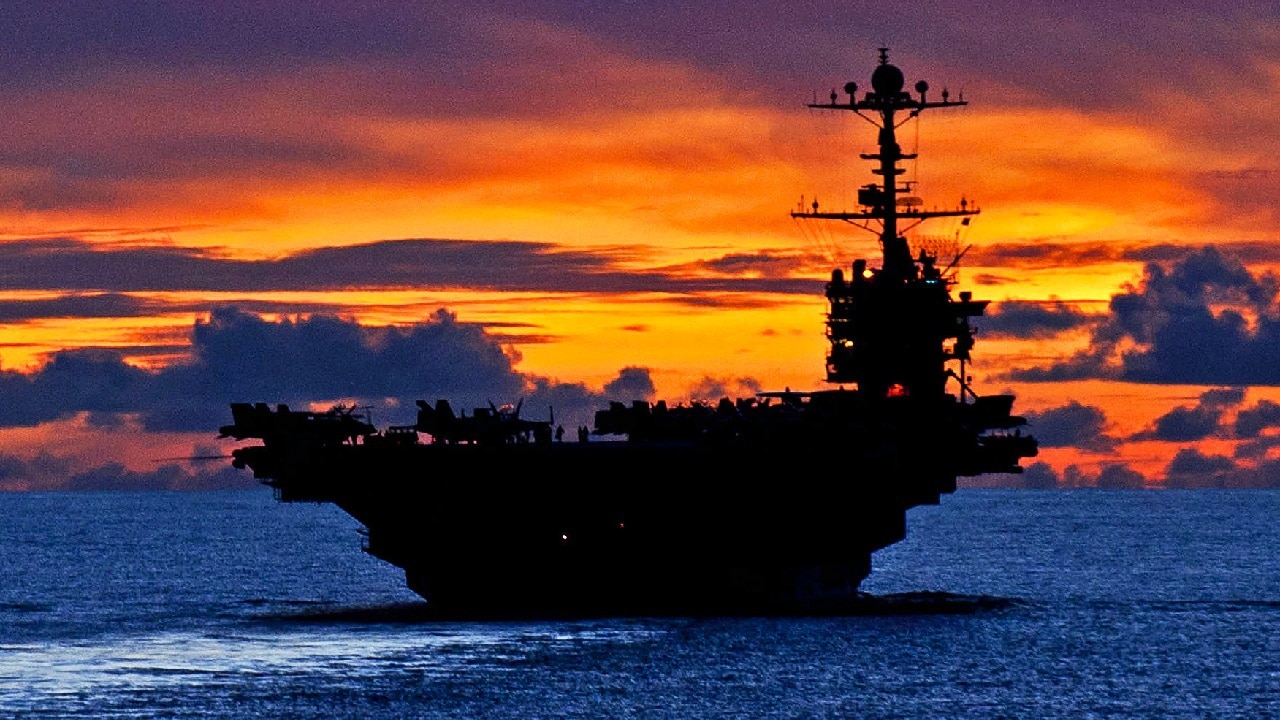
Yes, Sweden’s Submarine Was Able to ‘Sink’ a U.S. Navy Aircraft Carrier: Some of the best-known submarines are the nuclear-powered leviathans in the world’s leading navies.
Those in the United States, Russia, and China are among the largest and most technologically complex. And while those nuclear-powered (and often nuclear-armed) submarines are among the world’s most destructive, they are not the world’s quietest.

San Diego (Oct. 1, 2005) The Swedish diesel-powered attack submarine HMS Gotland transits through San Diego Harbor with the Nimitz-class aircraft carrier USS Ronald Reagan (CVN 76) following close behind during the ÒSea and Air ParadeÓ held as part of Fleet Week San Diego 2005. Fleet Week San Diego is a three-week tribute to Southern California-area military members and their families. U.S. Navy photo by Photographer’s Mate 1st Class Michael Moriatis (RELEASED)
Thanks to their nuclear reactor coolant pumps, they emit noise that, in some cases, is detectable.
Which submarines are quieter?
Those with Air-Independent Propulsion, or AIP.
Several technologies, including Stirling engines, closed-cycle steam turbines, and high-output fuel cells, fall under the umbrella of AIP technology. But at their heart, these systems allow submarines to remain submerged for weeks rather than just days, as with their diesel-electric predecessors.
Perhaps one of the more notorious examples of the utility of AIP technology emerged following American naval drills with Sweden, in which a Swedish Gotland-class submarine, built by Saab, reportedly remained undetected even by a United States Navy Carrier Strike Group in 2005.
Since then, the technology has matured significantly. But not every navy in the world can leverage the technology — and some that can choose not to.
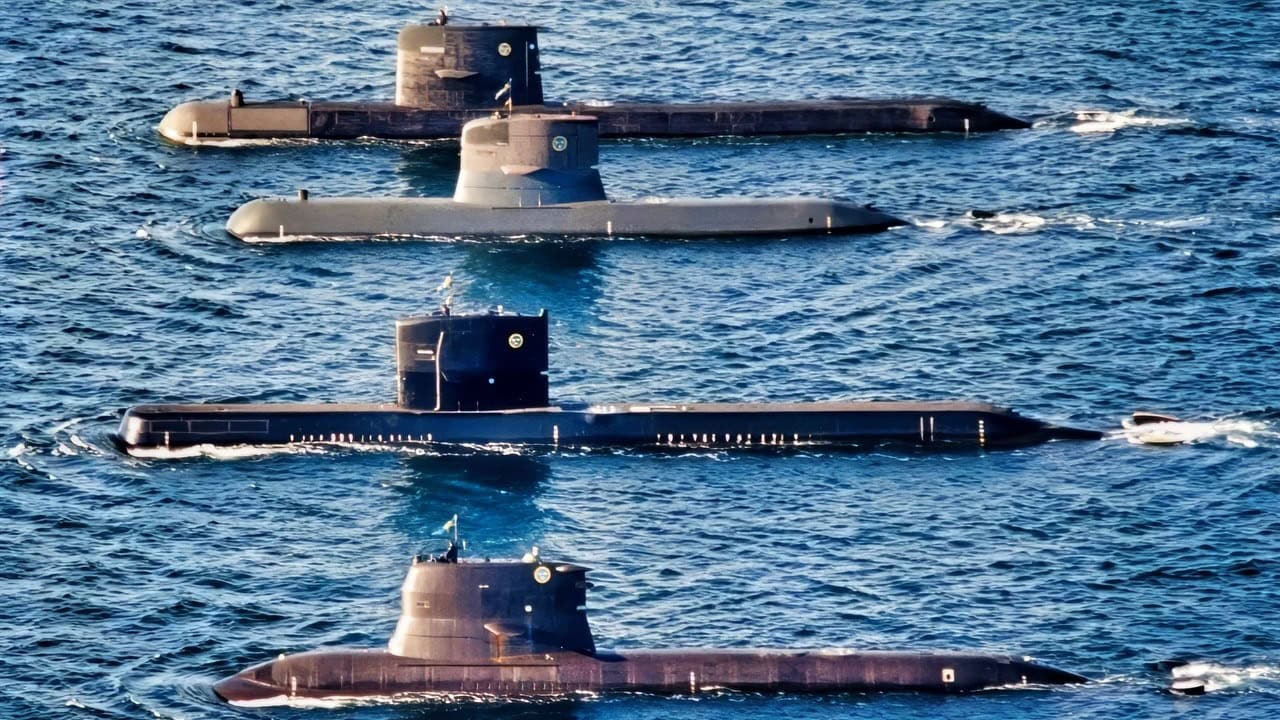
Gotland-Class Fleet of Submarines. Image Credit: Creative Commons.
Native Submarine-building Industries
Like automobiles, sports cars, airplanes, and commercial ships, the construction of submarines is limited to a handful of countries, and when it comes to nuclear-powered submarines, that pool of nations shrinks even further.
A quick look at the statistics shows that besides the United States, only China, the United Kingdom, France, Russia, and India build nuclear-powered subs. However, the countries that build non-nuclear submarines are larger and include a handful in Europe and Asia, as well as Iran.
Several other countries have what naval expert HI Sutton calls “emerging” projects: Taiwan, Brazil, and Turkey.
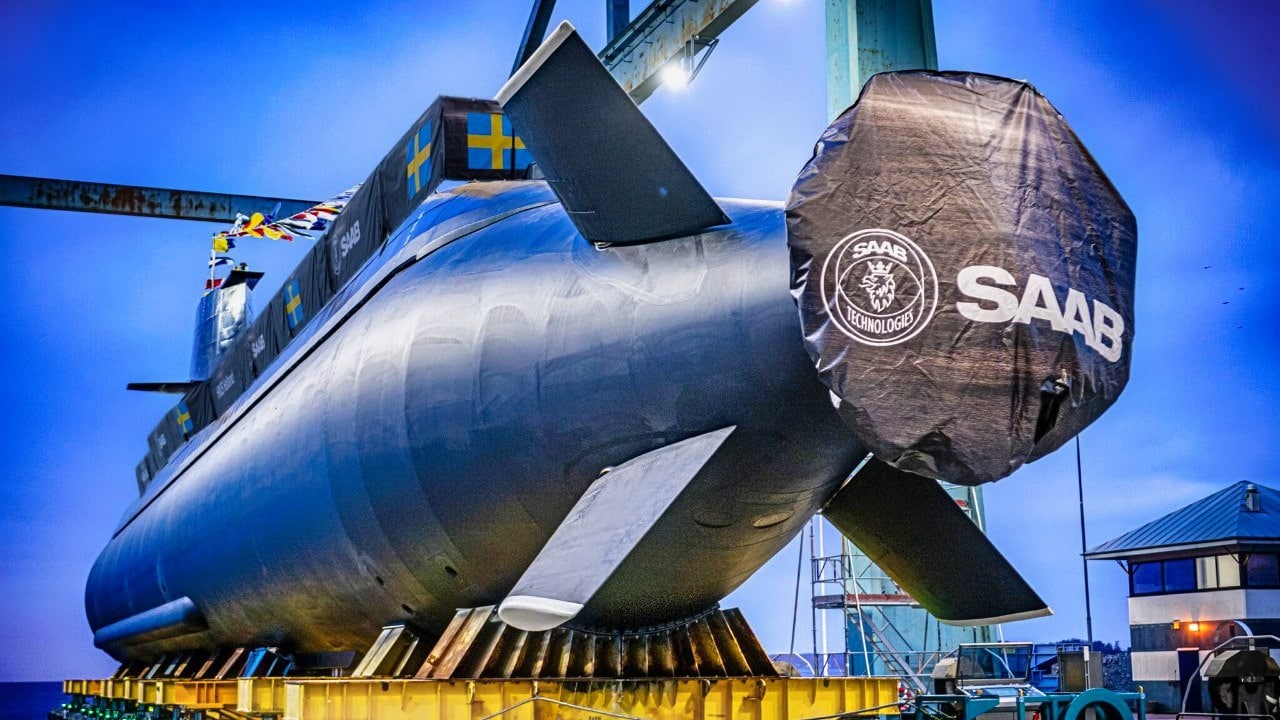
Gotland-Class. Image Credit: Saab.
Application to the Indo-Pacific in Particular
Despite their lower underwater endurance compared to nuclear submarines, non-nuclear submarines equipped with AIP technology offer significant cost benefits, particularly for navies with modest budgets.
Take the U.S. Navy’s Virginia-class submarines, for example.
With a price tag of approximately $4.3 billion — as well as their estimated $58 million annual maintenance costs — these are among the most expensive submarines ever built, and are impractical for most Pacific nations, especially those without an indigenous nuclear program. There are, however, potential solutions.
Japan builds the Taigei-class, non-nuclear diesel-electric submarines with AIP technology.
Those submarines cost around $635 million each and are among the leading non-nuclear submarines today.
Thanks to its air-independent propulsion technology, the submarine is believed to be particularly quiet when operating on its onboard lithium-ion batteries. Range and endurance are, by nature, unknown publicly.
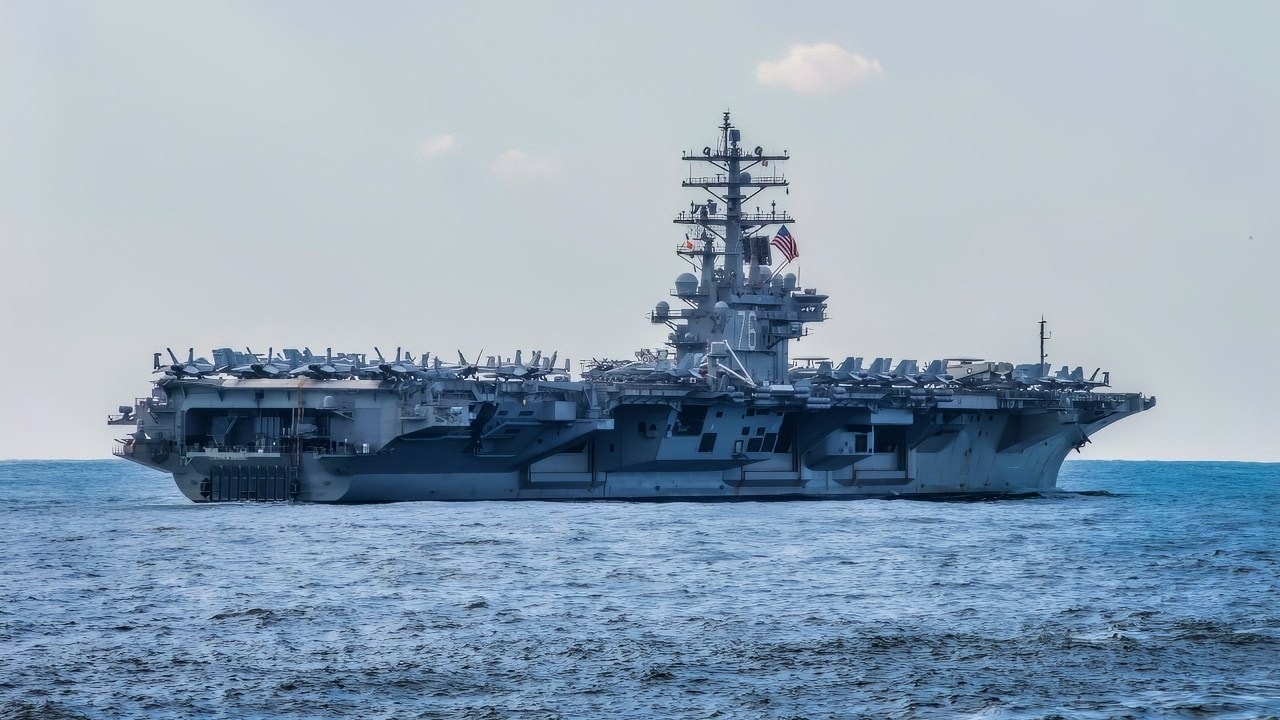
WESTERN PACIFIC (Nov. 12, 2017) The aircraft carrier USS Theodore Roosevelt (CVN 71) transits the Western Pacific during a three-carrier strike force photo exercise. The USS Ronald Reagan (CVN 76), USS Theodore Roosevelt (CVN 71) and USS Nimitz (CVN 68) Strike Groups are underway and conducting operations in international waters as part of a three-carrier strike force exercise. The U.S. Navy has patrolled the Indo-Asia Pacific region routinely for more than 70 years promoting regional security, stability and prosperity. (U.S. Navy photo by Mass Communication Specialist 3rd Class Kelsey J. Hockenberger/Released)
Barring new orders from either the Japan Self-Defense Forces or international customers, the class will total only 10 boats. But Japan’s reputation for quality shipbuilding, as well as its proximity to potential customers in Asia, are unique advantages.
Denial versus Control
Given their smaller size compared to nuclear-powered submarines, AIP-equipped submarines offer advantages in certain scenarios.
Generally speaking, AIP-equipped submarines have smaller crews and are smaller in length and diameter than nuclear-powered submarines, giving them maneuverability advantages in some of the world’s most important shallow seas, namely the Persian Gulf, the South China Sea, and the Baltic, but also in other areas of the world as well.
In these seas, AIP submarines’ sustained underwater capability and low acoustic signature make them particularly potent platforms for ambush or sea denial. Somewhat akin to sea mines, the threat of a submarine’s presence can be enough to deny easy sailing on the surface.
Complete control of vital sea lanes is not required to hamper adversary activity on the surface — even the threat of a silent AIP-equipped submarine’s presence in the area can deny the use of the sea to an enemy.
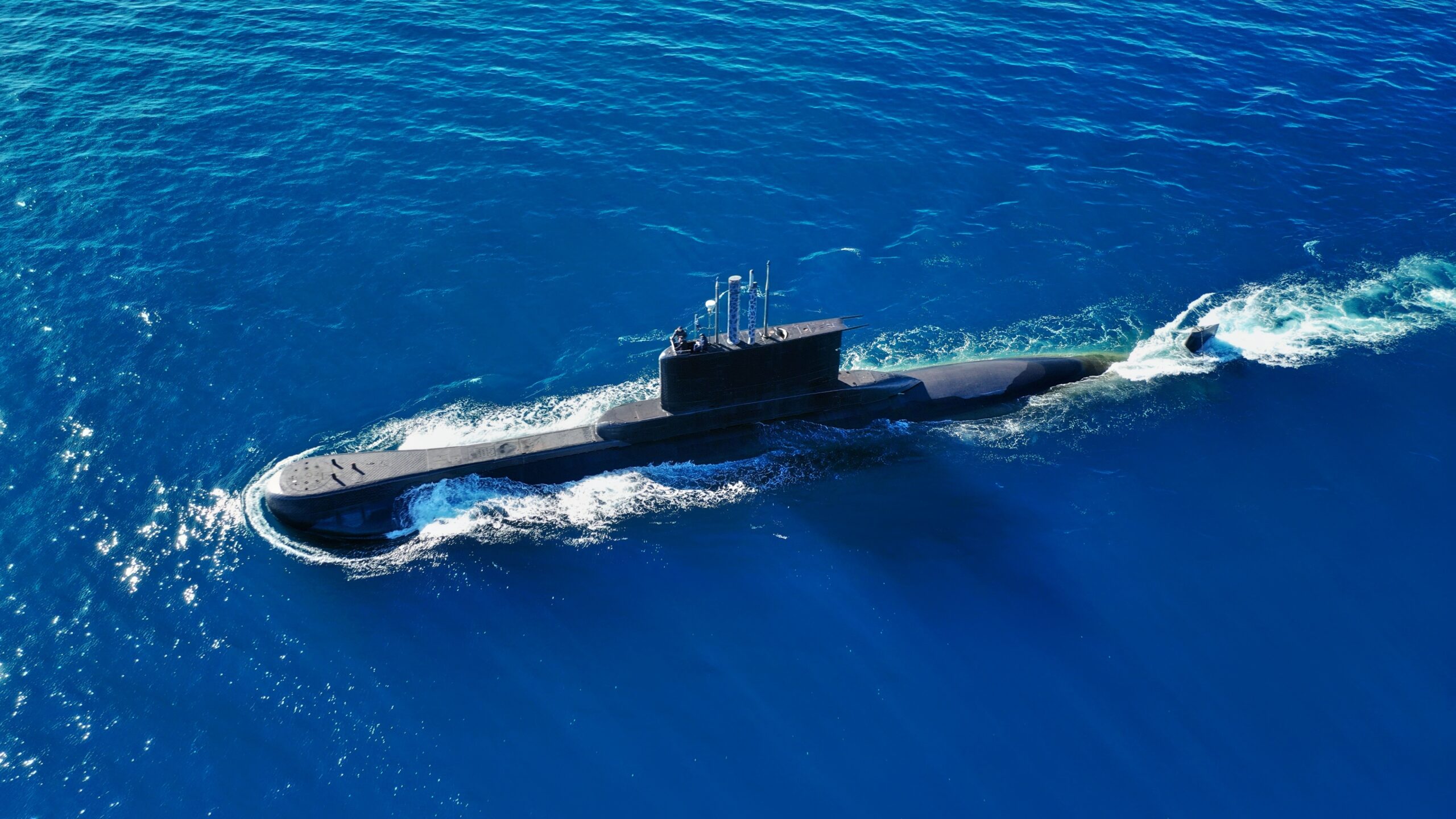
AIP Submarine from Germany. Image Credit: Creative Commons.
Questions of Range and Endurance
Though the promise of AIP technology is tantalizing, it is no panacea.
For navies like the United States, which are primarily blue-water navies tasked with global power projection, the range and endurance advantages of large nuclear-powered submarines negate the potential acoustic advantages of Air-Independent Propulsion.
Despite some persistent submarine building snafus, in particular cost overruns and sliding production schedules, the United States Navy can afford to swallow the costs. Smaller navies with a regional focus cannot.
A Continuing Debate over Submarines: Nuclear vs. AIP
The United States Navy has been an all-nuclear submarine force since it decommissioned the USS Blackjack in 1990.
For the United States, shifting production gears to AIP-equipped submarines would not be practical.
Long lead times for submarine materials, as well as an industry geared toward nuclear propulsion, are high barriers.
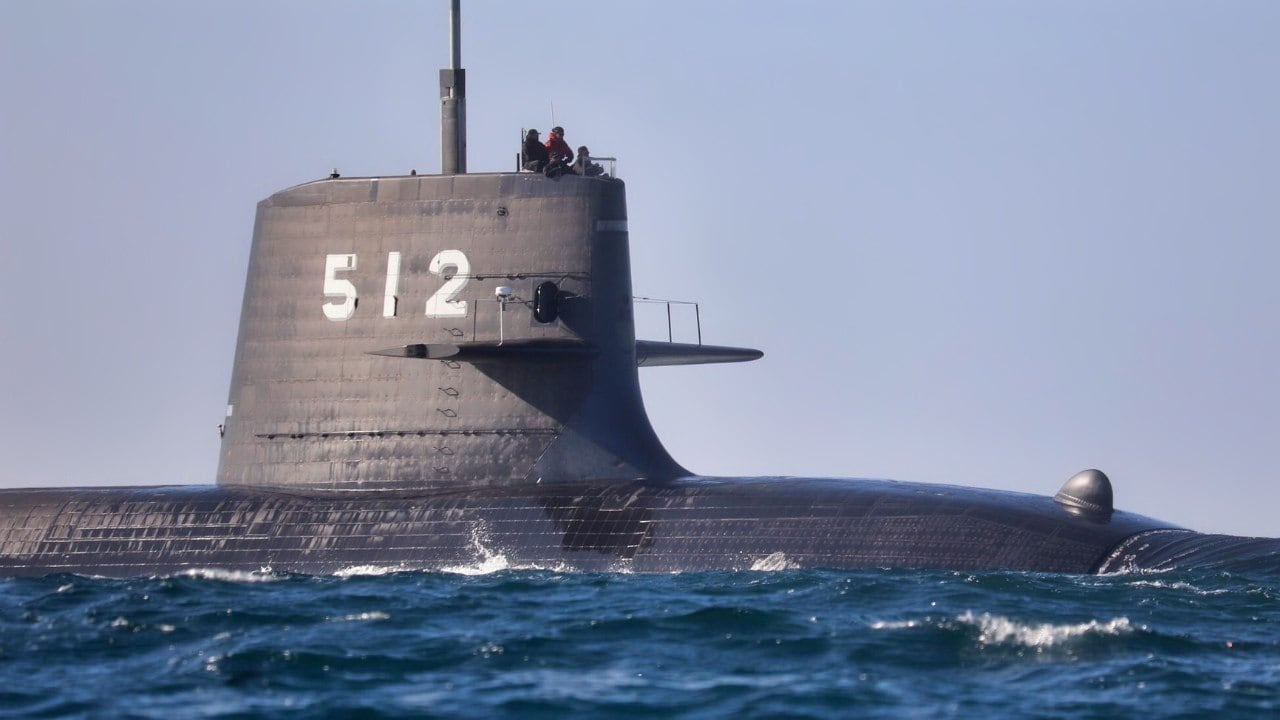
Soryu-Class Japan Submarines. Image Credit: Creative Commons.
Particularly in light of the tripartite AUKUS agreement with Australia and the United Kingdom, the submarines for which American shipbuilders are tasked with building in the future, there would be little to no spare industrial capacity to build specialized AIP-equipped submarines.
But for smaller regional navies, particularly those in Asia such as Japan, South Korea, and the Philippines, and in Europe, especially Sweden, Germany, and Italy, leaning into AIP technology is an observable trend and one that is logically sound, given those countries’ proximity to their geopolitical rivals.
About the Author: Caleb Larson
Caleb Larson is an American multiformat journalist based in Berlin, Germany. His work covers the intersection of conflict and society, focusing on American foreign policy and European security. He has reported from Germany, Russia, and the United States. Most recently, he covered the war in Ukraine, reporting extensively on the war’s shifting battle lines from Donbas and writing on the war’s civilian and humanitarian toll. Previously, he worked as a Defense Reporter for POLITICO Europe. You can follow his latest work on X.