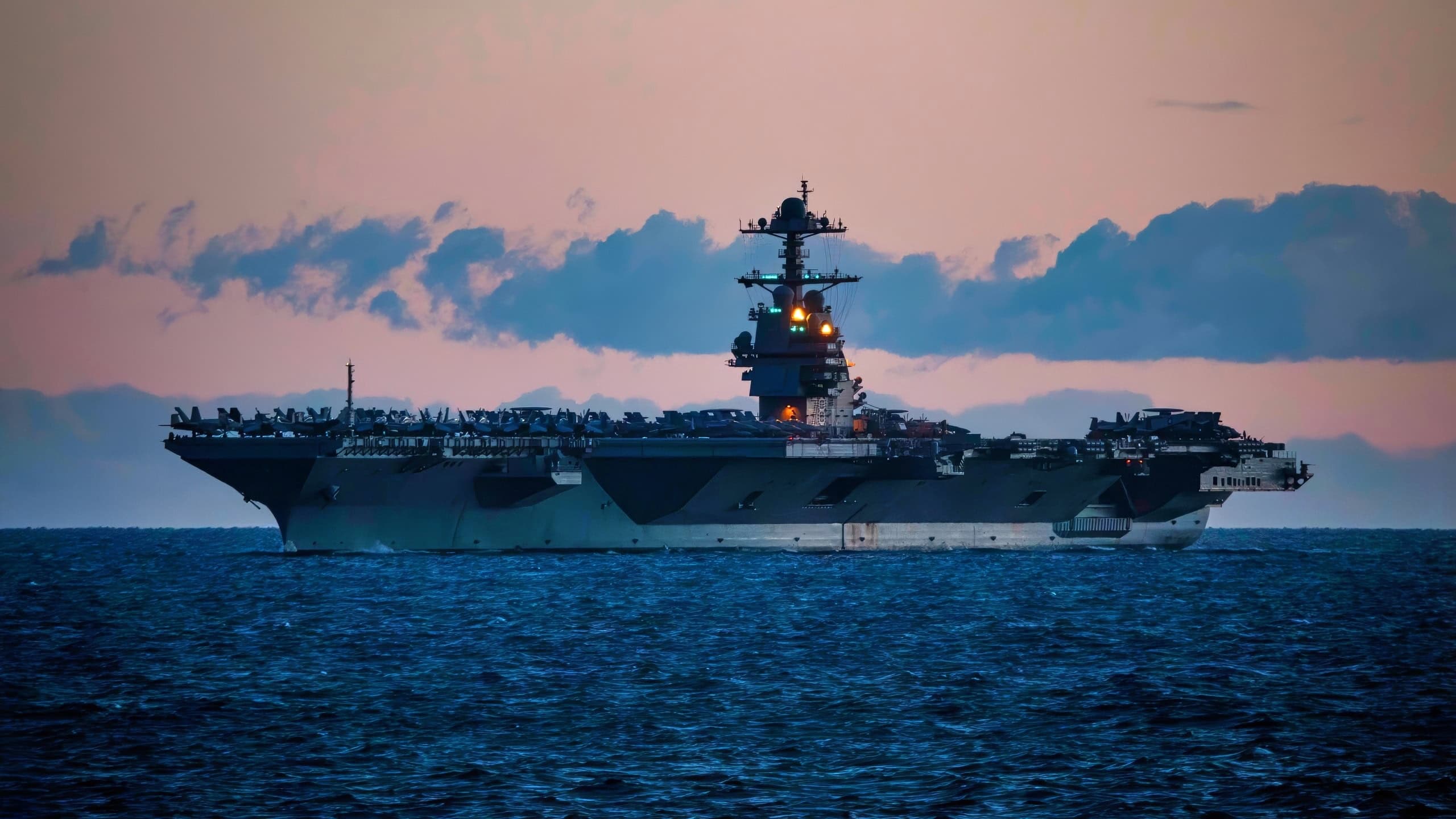
The Psychology of Fear That Surrounds the Strait of Hormuz: The Strait of Hormuz remains at the center of the conflict in Iran. Breaking down the psychology, fear increasingly engulfs the Strait of Hormuz issue. It is more than a traditional cost-benefit analysis in major military conflicts. And it is this dynamic that might decide what happens next in the Iran crisis as well as in global energy markets.
The Fear Factor in the Strait of Hormuz
Due to the ideology of the Islamic Republic, the pressures exerted on many politicians worldwide due to rising energy prices and the ripple effects on relations with the adversaries of the People’s Republic of China (PRC) and Russia, etc., these non-empirical forces exert considerable influence on this situation.
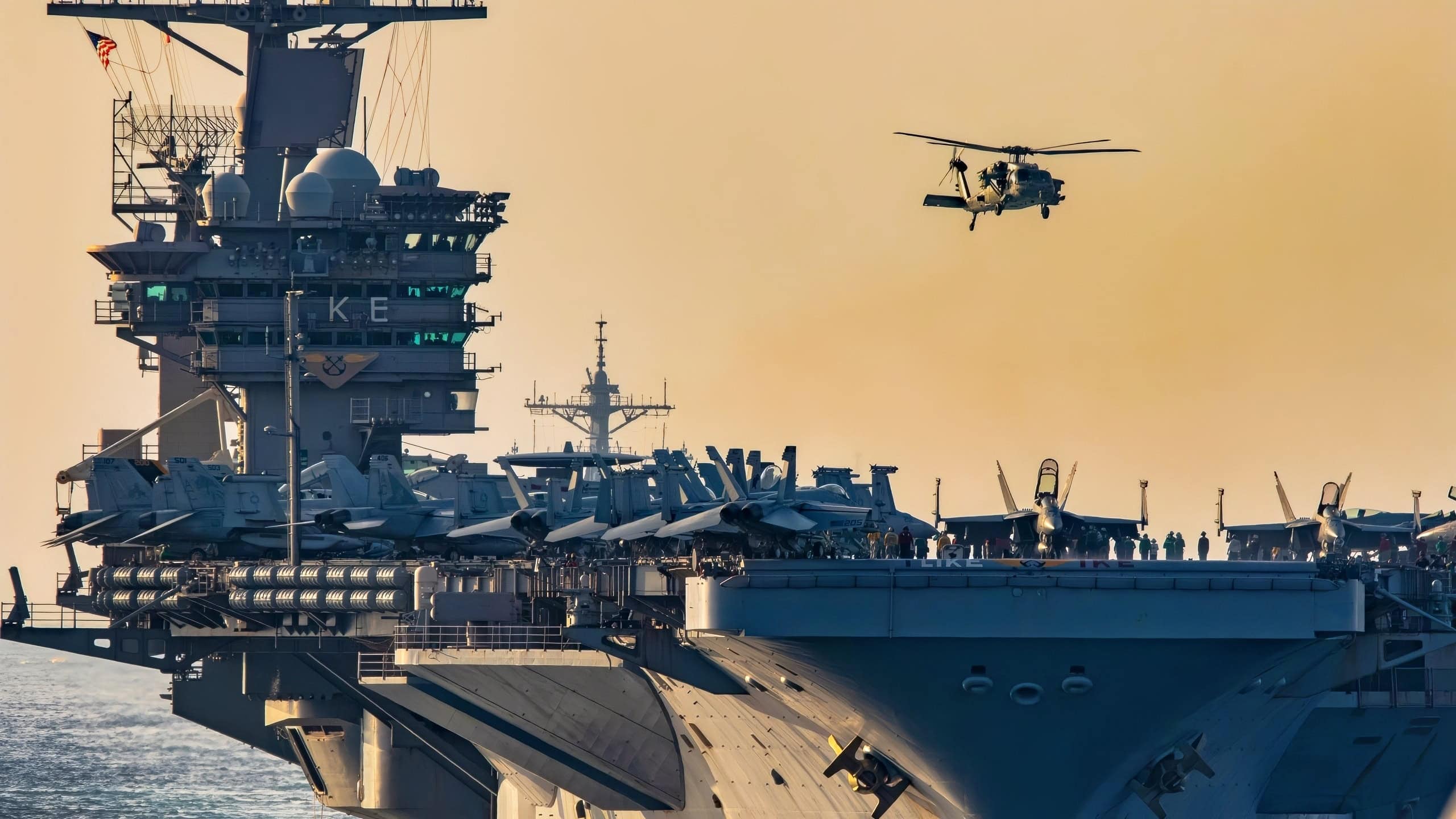
Components of the Dwight D. Eisenhower Carrier Strike Group (IKECSG), guided-missile destroyer USS Stethem (DDG 63) and French Navy frigate FS Languedoc (D 653) transited the Strait of Hormuz. IKECSG is deployed to the U.S. 5th Fleet area of operations to help ensure maritime security and stability in the Middle East Region. (U.S. Navy photo by Electronics Technician 2nd Class Daniel Goodin)
To say that the tensions in the Strait become more complex by the day is an understatement.
But the dilemma is how to undo this Gordian Knot — to reopen the Strait of Hormuz and ensure that actions taken do not make the situation worse.
Accomplishing that task requires some detailed comprehension of just how the minds of Iran’s clerical rulers and its Islamic Revolutionary Guard Corps (IRGC) work in relation to this issue.
A recent essay from the Jewish Institute for National Security of America (JINSA) goes into some detail about the dynamics involved.
What is required is a full realization that Iran’s actions are largely psychological warfare — designed to amplify anxiety and influence shipping markets.
Countering this fear psychology means having a full understanding of several important factors.
This requires “focusing on objective maritime realities, maintaining operational awareness, and engaging in proactive, small acts of defiance against alarmism,” according to these analysts.
What Has Iran Achieved Thus Far
Without physically closing the Strait of Hormuz or denying the sea to the U.S. Navy, Iran has managed to bring Gulf shipping nearly to a halt.
Consequently, the global economy has been upended.
U.S. President Donald Trump’s promises of retribution against Iran have minimal effect in these circumstances.
While the Islamic Republic continues to interfere with the free movement of commerce, say the Israeli analysts, “shippers will refuse to transit these waters as long as the perceived risks remain prohibitive and Iran’s maritime threats appear plausible—even if they no longer nearly as formidable” as they once were.
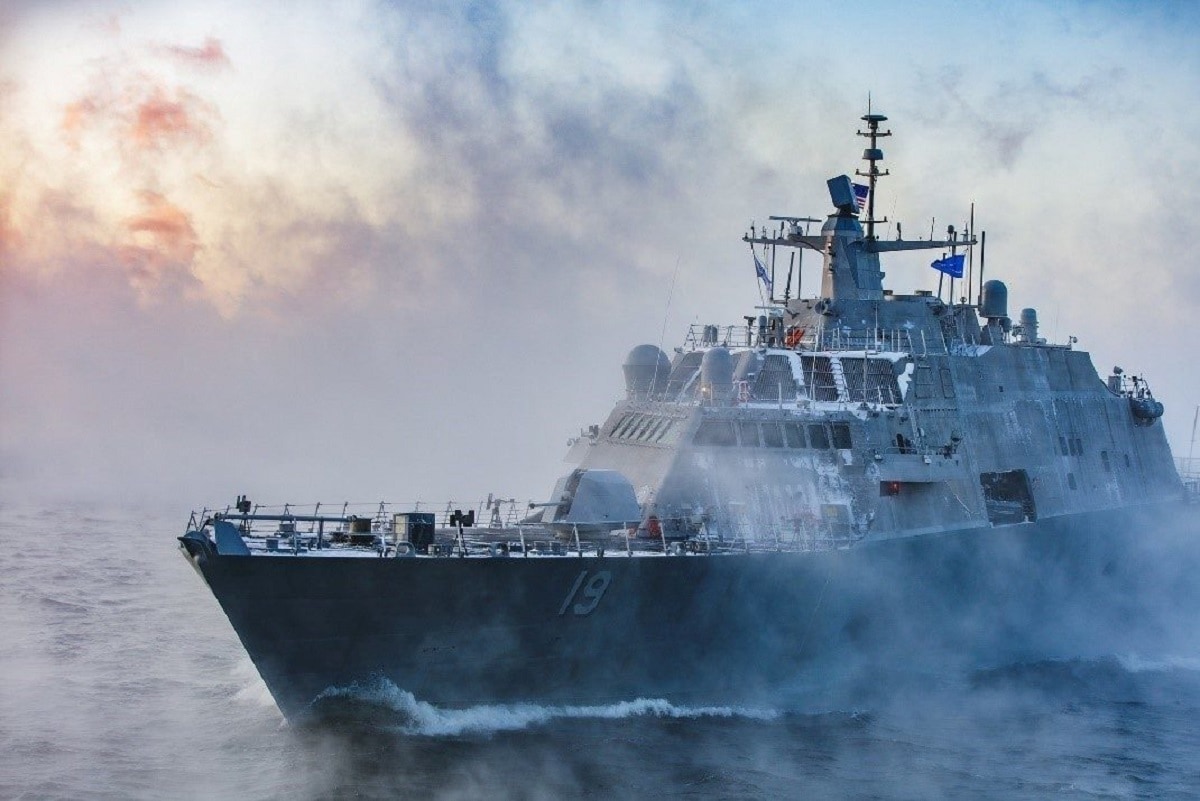
Littoral Combat Ship. Image Credit: Creative Commons.
Just last week, on April 1, the famous World Economic Forum (WEF) organization pointed out that there are additional issues at stake in the world economy with the closure of the Strait, beyond just energy prices. Nine other commodities are seeing their positions on the world market affected by the closure.
“The shipping crisis in the Strait of Hormuz is now “the largest supply disruption in the history of the global oil market”, according to the head of the International Energy Agency, Fatih Birol. But while “focus remains on the 11 million barrels of oil and 140 billion cubic metres of gas usually in daily global circulation, the impact extends far beyond energy,” says the WEF.
“As the conflict in Iran continues, the blockage also exposes a deeper vulnerability: the Middle East’s role as a primary supplier of non-oil commodities. From the fertilizers essential for global food security to the minerals powering the energy transition, the current shortages are reshaping supply chains in real time.”
Ships In a Bottleneck
According to the estimates of the JINSA analysts, the main threats to shipping and to the U.S. forces are “mainly in the Gulf, not the Strait. As its other anti-ship capabilities are degraded, Iran will have greater incentive to prolong the war and raise its costs by dotting the Gulf—currently devoid of U.S. surface ships—with naval mines.
“Just as shipping is easier to stop than to restart in wartime,” state these analysts. “[Sea] mines work in Iran’s favor by being relatively easy to deploy, difficult to clear, and potentially paralyzing to seaborne traffic.”
The current conflict, including Iranian attacks on tankers and other commercial vessels, has shrunk shipping through the Strait by 90 percent and bottled up 600 international trading ships inside the Gulf.
A majority of the 10 percent that remains free to pass through the Gulf are Iranian oil exports, which amount to some 1.0-1.5 million barrels per day, plus ships from the PRC and other friendly countries that Tehran “permits” safe transit.
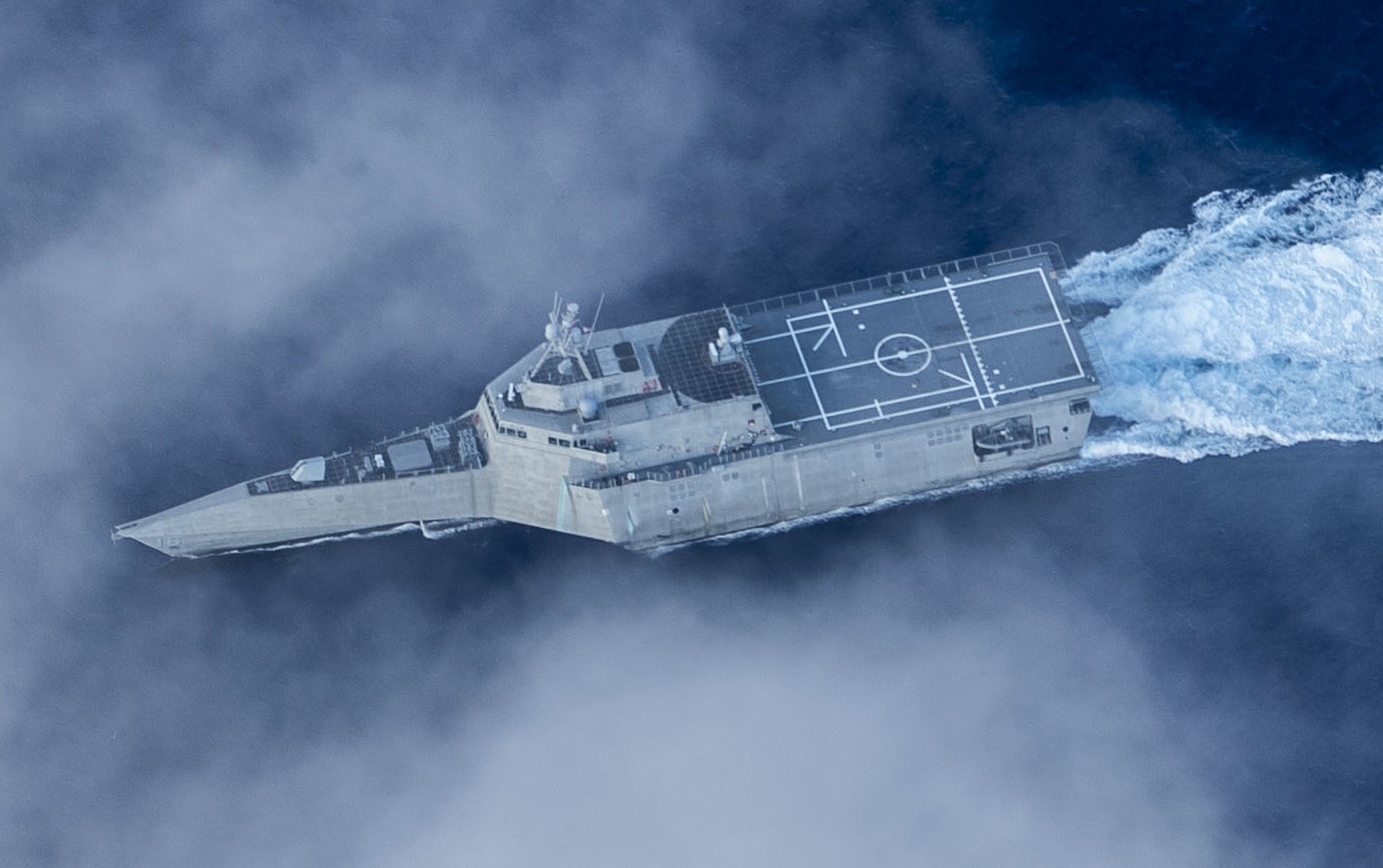
PHILIPPINE SEA (June 13, 2021) The Independence-variant littoral combat ship USS Tulsa (LCS 16) conducts routine operations in the Philippine Sea. Tulsa, part of Destroyer Squadron (DESRON) 7, is on a rotational deployment operating in the U.S. 7th fleet area of operations to enhance interoperability with partners and serve as a ready-response force in support of a free and open Indo-Pacific region. (U.S. Navy photo by Mass Communication Specialist 2nd Class Colby A. Mothershead)
At this point, no U.S. surface ships are operating in the Hormuz or the Gulf, meaning that control of these zones has been ceded to Iran by Washington.
President Trump has issued threats of retaliation against Iran should they interdict commercial ships transiting the Strait.
But the perceived risks of doing so, along with insurance firms refusing to indemnify those vessels, will likely effectively close this waterway anyway.
Until friendly warships and US-flagged vessels show they can sail through the Strait unimpeded, the psychological anxiety holding them back will continue to be in place.
The only way to break this hold is for the U.S. and its allies and partners to reassert naval predominance over this most important of the world’s waterways.
About the Author: Reuben F. Johnson
Reuben F. Johnson has thirty-six years of experience analyzing and reporting on foreign weapons systems, defense technologies, and international arms export policy. Johnson is the Director of Research at the Casimir Pulaski Foundation. He is also a survivor of the Russian invasion of Ukraine in February 2022. He worked for years in the American defense industry as a foreign technology analyst and later as a consultant for the U.S. Department of Defense, the Departments of the Navy and Air Force, and the governments of the United Kingdom and Australia. In 2022-2023, he won two awards in a row for his defense reporting. He holds a bachelor’s degree from DePauw University and a master’s degree from Miami University in Ohio, specializing in Soviet and Russian studies. He lives in Warsaw.