
Beginning December 2026, eligible men will be automatically registered for Selective Service. The self-registration requirement will end, shifting responsibility from the individual to the government—a move that represents bureaucratic modernization but also raises questions about force readiness and civil obligation in modern-day America.
What Actually Changed?
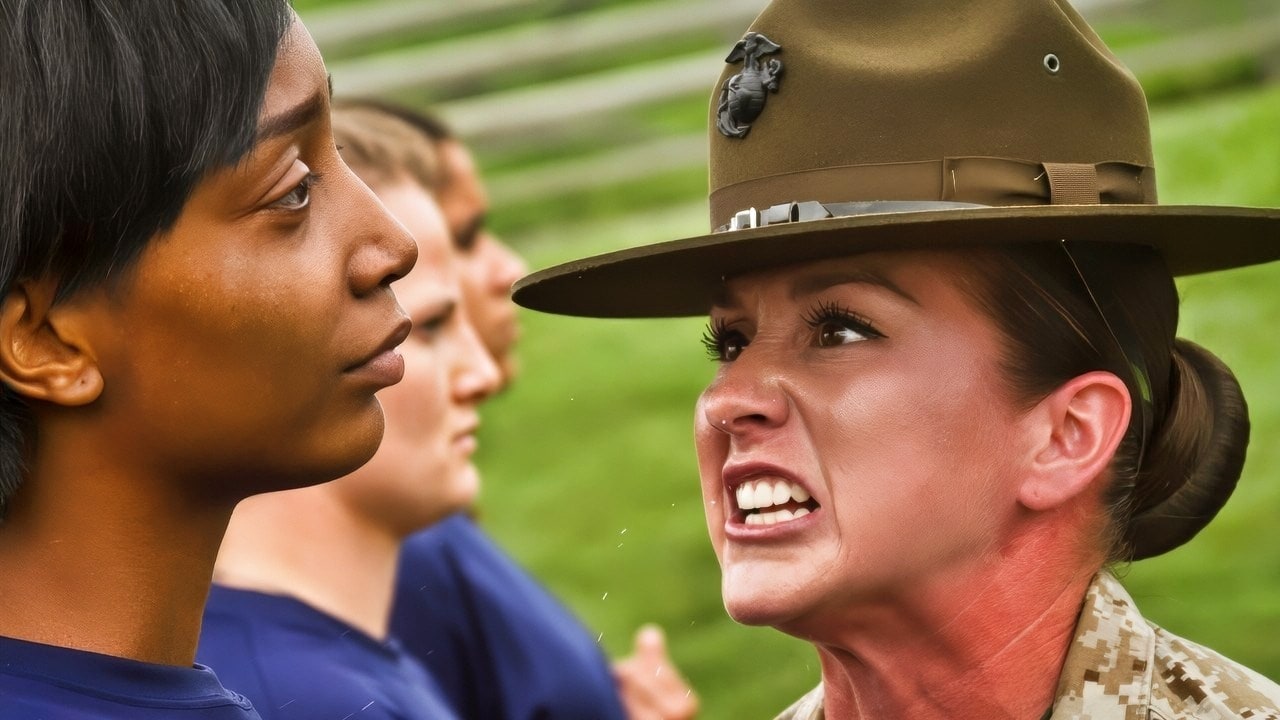
U.S. Marine Corps Sgt. Julie Martinez, a drill instructor with 4th Recruit Training Battalion, Marine Corps Recruit Depot Parris Island, South Carolina and a native of St. George, Utah, encourages a member of the Marine Corps’ Delayed Entry Program to sound off during Recruiting Station Baltimore’s annual Female Pool Function at Fort George G. Meade, Maryland, June 20, 2015. The purpose of the annual Female Pool Function is to build mental and physical toughness among members of the Delayed Entry Program and to maintain their commitment to complete recruit training in order to become United States Marines. (U.S. Marine Corps photo by Sgt. Bryan Nygaard/Released)
In the old system, men aged 18 to 25 were required to register for the draft. Under the new system, the government pulls data from federal databases and automatically registers eligible individuals.
The switch was mandated in the FY2026 NDAA; the proposed rule was submitted on March 30, with a targeted rollout for December 2026. In short, this is just a process change, not a reinstatement of the draft itself.
How the System Will Work
Federal databases will integrate their data, with likely sources including the DMV, SSA, and IRS.
Eligible individuals will be automatically registered. The new system means there will be no need to track non-registrants—because automatic sign-ups won’t be needed.

Gunnery Sgt. Shawn D. Angell is a drill instructor at the Officer Candidate School aboard Marine Corps Base Quantico, Va., dedicated to training, educating, evaluating and screening the many candidates who go through the course and turning them into Marine leaders.
Under the outgoing system, failure to register could result in fines or loss of federal benefits, but those consequences fade with automatic registration. Under the new system, which is passive and comprehensive, sign-ups will not be dependent on civic compliance.
Why the Change Was Made
After 2022, compliance dropped.
And even when compliance was high, the self-registration system was cost-inefficient, requiring investment in advertising and outreach to raise awareness of the individual burden of registering.
Congressional logic here, in switching systems, was to redirect funding toward readiness and away from administrative overhead. The key change is about efficiency, not expansion.
Historical Context
The origins of the draft date to 1917, when the country mobilized for World War I. The draft remained active through the Vietnam War, reaching its peak of cultural relevance and controversy before being suspended in 1975.
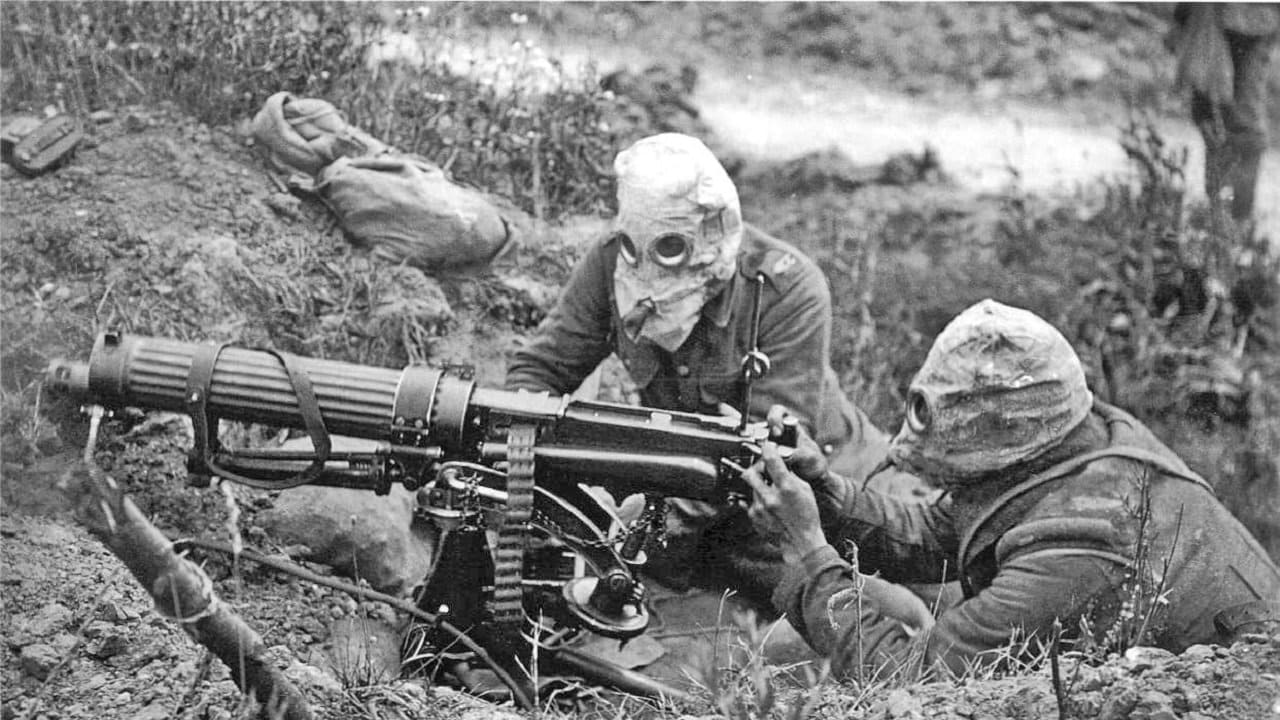
A Maxim Machine Gun Being Used in World War I.
Five years later, in 1980, the Carter administration reinstated registration. But today, the US armed forces rely exclusively on an all-volunteer force; there hasn’t been a draft activation since 1973. So for almost 50 years, the draft has existed as a contingency, not an active tool.
What Has Not Changed
Despite the changes, there is still no active draft—and registration does not equal conscription. Eligible citizens are men between the ages of 18 and 25. Women are still exempt.
To trigger a draft, both Congress and the president will need to act, meaning we are still several steps away from a draft. What’s happening now is simply an administrative reform, not a shift toward imminent conscription.
Pros of Automatic Registration
The new system is simpler and removes the burden from the individual.
Roughly 100% of eligible citizens should be covered, and those who fall through the cracks in the databases will have done so through no fault of their own.
Automatic registration will also be cheaper, requiring less investment in outreach.
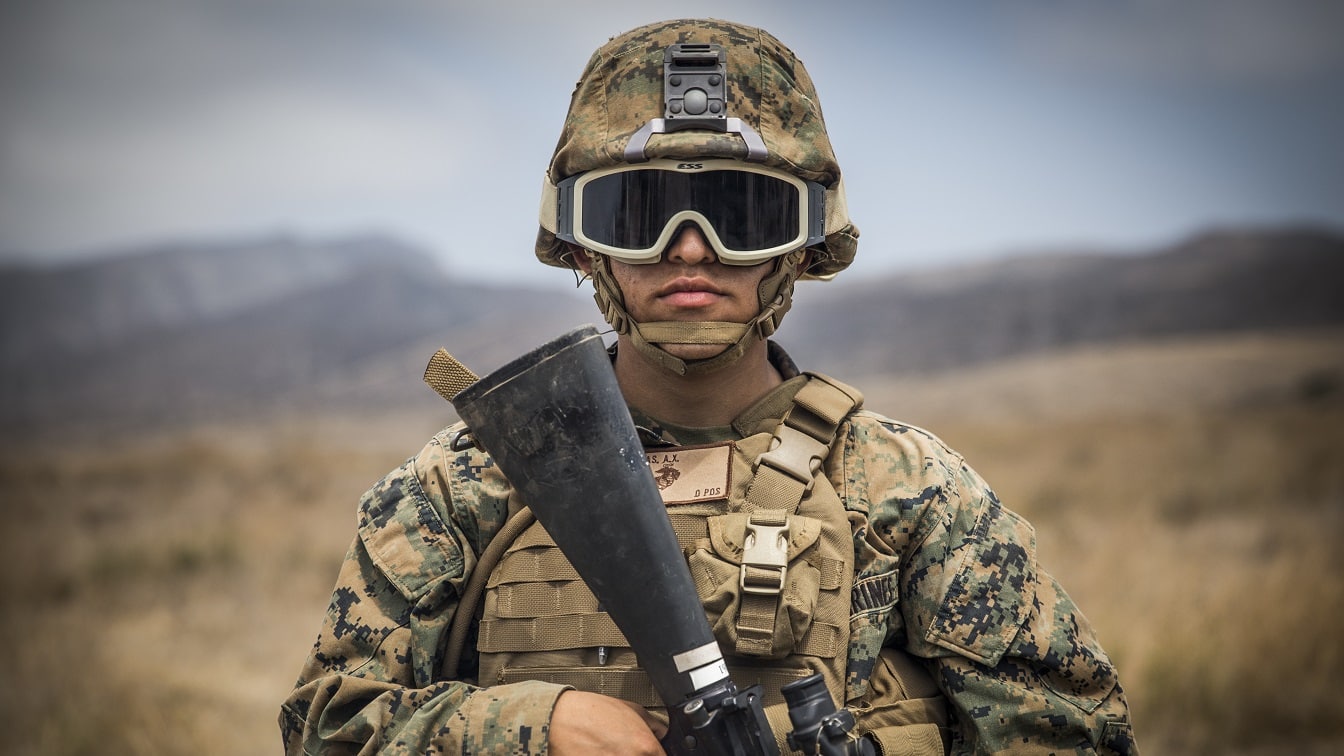
U.S. Marine Corps Lance Cpl. Austin Cardenas, a food service specialist with Combat Service Support Company, I Marine Expeditionary Force Support Battalion, I Marine Expeditionary Force, wears a full combat load during a field exercise (FEX) at Marine Corps Base Camp Pendleton, Calif., Aug. 16, 2018. The FEX exposed battalion Marines to field conditions, and will prepare them to meet operational and training objectives in the upcoming year. (U.S. Marine Corps photo by Lance Cpl. Dalton S. Swanbeck)
Readiness speed increases, too, with the databases intact and compiled, ready to be drawn from. Basically, this is a more efficient system with fewer gaps.
Cons of Automatic Registration
Of course, there is something unsettling about being automatically registered through an online citizen-tracking database for military service.
The new system raises concerns about civil liberties regarding automatic inclusion in the military without consent.
Automatic registration also pushes the program into the shadows, making fewer people aware of the obligation.
The gender disparity is also odd; women are excluded despite being capable of serving across the majority of military positions, from aviation to intelligence to surface warfare.
The shift in registration also sends a signal, suggesting that the US is preparing for conflict.
Strategic Implications
Automatic registration means the US is maintaining a latent mobilization capability.
The military reality, at least for now, is that the US relies entirely on a volunteer force. But future conflicts, perhaps a confrontation in the Indo-Pacific, could be large-scale, requiring the return of the draft. So the system ensures that, if needed, the US can scale manpower quickly.
But does the US need a draft? Modern warfare is increasingly tech-driven and less manpower-intensive.
But that’s another, deeper debate. For now, the US is shifting the mechanics of registration for a draft system that is otherwise unchanged.
MORE – Operation Epic Fury Feels Like A Loss
About the Author: Harrison Kass
Harrison Kass is a writer and attorney focused on national security, technology, and political culture. His work has appeared in City Journal, The Hill, Quillette, The Spectator, and The Cipher Brief. He holds a JD from the University of Oregon and a master’s in Global & Joint Program Studies from NYU. More at harrisonkass.com.