
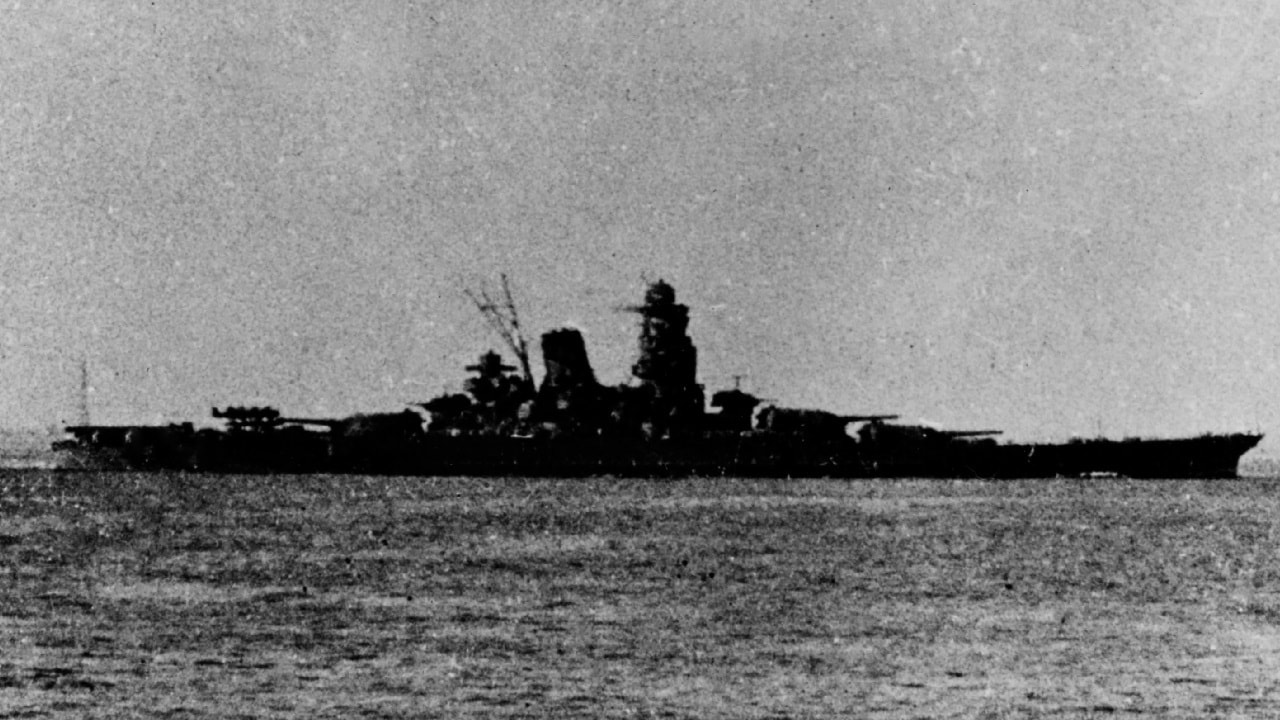
The Yamato-Class Battleships Were Completely Destroyed During WWII: The Musashi was one of four planned Yamato-class battleships for the Imperial Navy of Japan. The Yamato and Musashi, whose hulls were laid down in November 1937 and April 1938, were completed as designed. A third hull, laid down in 1940, was converted to the aircraft carrier Shinano during construction.
Displacing nearly 72,000 long tons at full load, the completed battleships were the heaviest ever constructed. The Yamato-class battlewagons carried the largest naval guns ever fitted to a warship: nine 460-mm naval guns, each capable of firing 1,460-kilogram shells to a distance of 42 kilometers. They were equipped with 6 or 7 floatplanes for reconnaissance.
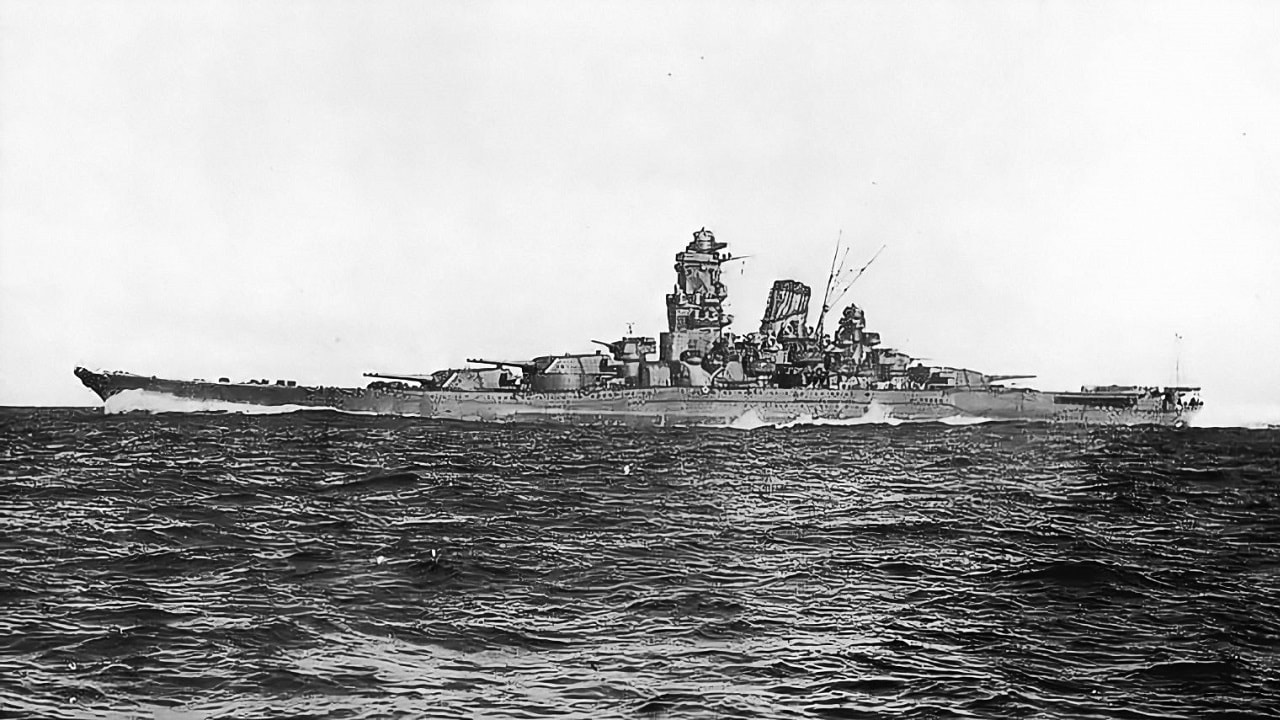
The Musashi was commissioned on August 5, 1942, and the Shinano was commissioned on November 19, 1944.
Due to the threat posed by U.S. submarines and aircraft carriers, the Yamato and Musashi spent most of their careers at naval bases in Brunei, Truk, and Kure.
These were Japan’s most prestigious ships, and they didn’t want to risk losing them. In fact, in early 1944, the Musashi was torpedoed by a U.S. submarine and was forced to return to Japan for repairs.
Yamato-Class: The Musashi Was Big, Powerful, and Fast:
The Yamato-class specs show just how massive these ships were.
The battleships had four sets of Kampon geared steam turbines, each driving one propeller shaft.
The turbines were designed to produce a total of 150,000 shaft horsepower from steam generated by 12 Kampon water-tube boilers.
They set the ship’s maximum speed at 27.5 knots. They had a stowage capacity of 6,300 long tons of fuel oil, giving a range of 7,200 nautical miles at 16 knots.
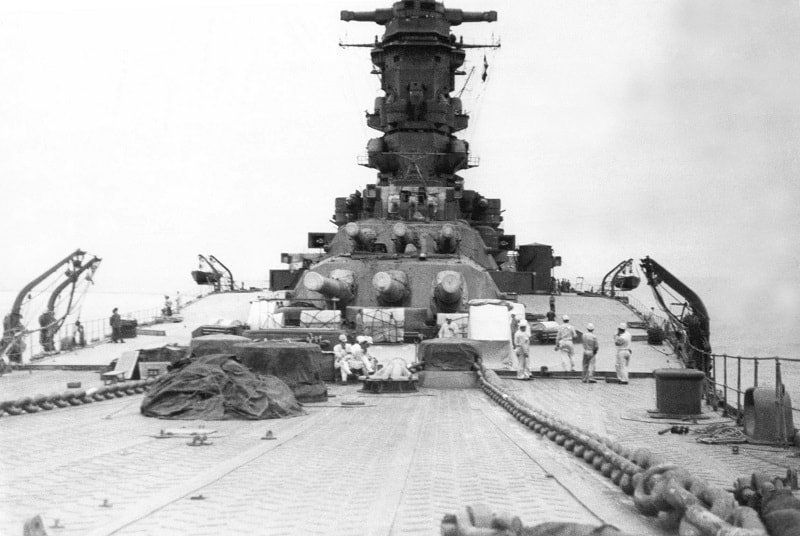
Battleship IJN Musashi, August 1942, taken from the bow.
General characteristics (as built)
Type: Battleship
Displacement: 71,659 long tons (72,809 t) (full load)
Length: 256 m (839 ft 11 in) (waterline)
263 m (862 ft 10 in) (o/a)
Beam: 38.9 m (127 ft 7 in)
Draught: 10.4 m (34 ft 1 in)
Installed power: 12 water-tube boilers, 150,000 shaft horsepower (110 MW)
Propulsion: 4 shafts; 4 steam turbines
Speed: 27 knots (50 km/h; 31 mph)
Range: 7,200 nautical miles (8,300 mi) at 16 knots (18 mph)
Complement: 2,767 officers and crew
Armament:
3 × triple 46 cm (18.1 in) guns
4 × triple 15.5 cm (6.1 in) guns
6 × twin 12.7 cm (5 in) guns
8 × triple 25 mm (0.98 in) AA guns
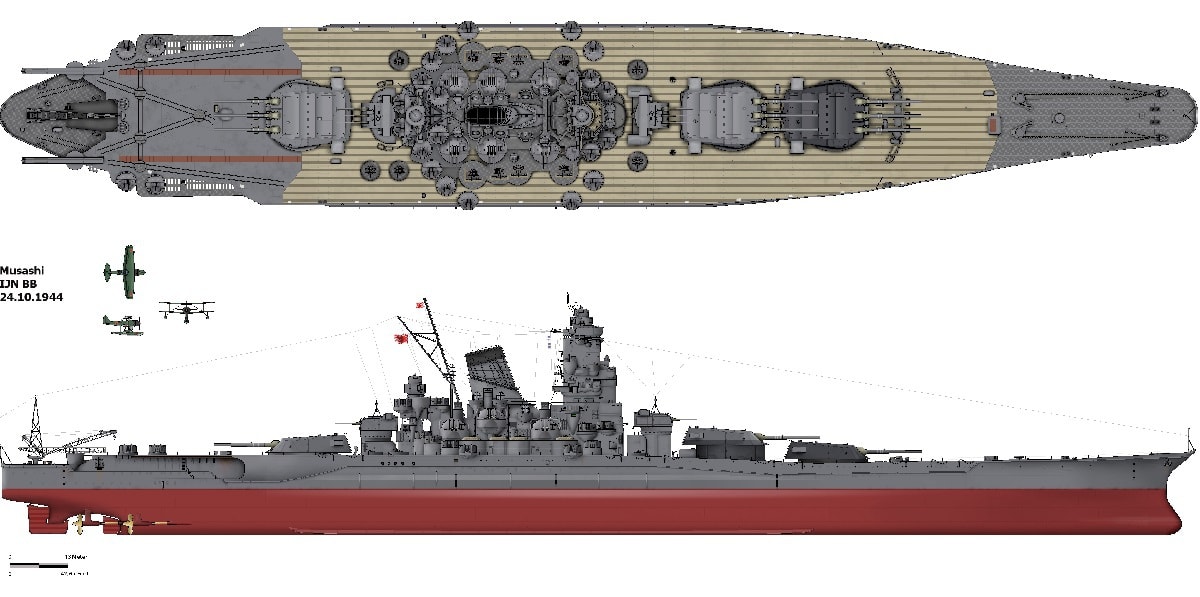
Musashi in 1944
2 × twin 13.2 mm (0.52 in) machine guns
Armor:
650 mm (26 in) main turrets
410 mm (16 in) side armor (400 mm (16 in) planned on Shinano and No. 111), inclined 20 degrees
200 mm (8 in) armored deck
230 mm (9 in) armored deck
Aircraft carried:
4 Aichi E13A, 3 Mitsubishi F1M
2 catapults (Yamato, Musashi)
47 aircraft (Shinano)
The Musashi:
The Musashi was the second ship of the Yamato-class. Until July 1944, she moved among the naval bases at Truk, Yokosuka, Brunei, and Kure. On March 29, 1944, she sustained moderate damage near the bow from a torpedo fired by the submarine USS Tunny (SS-282). After repairs and refitting throughout April 1944, she rejoined the fleet.
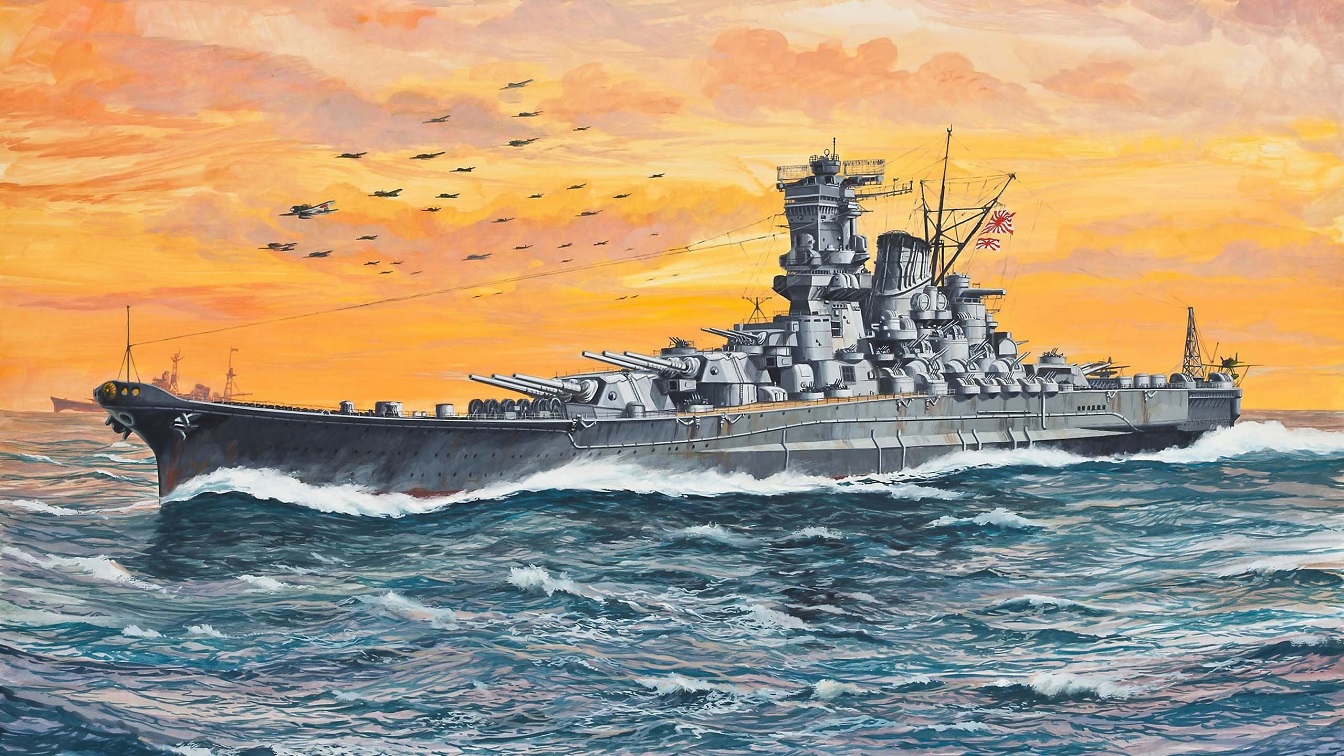
Yamato-Class Battleship/Artist Rendition. Image Credit: Creative Commons.
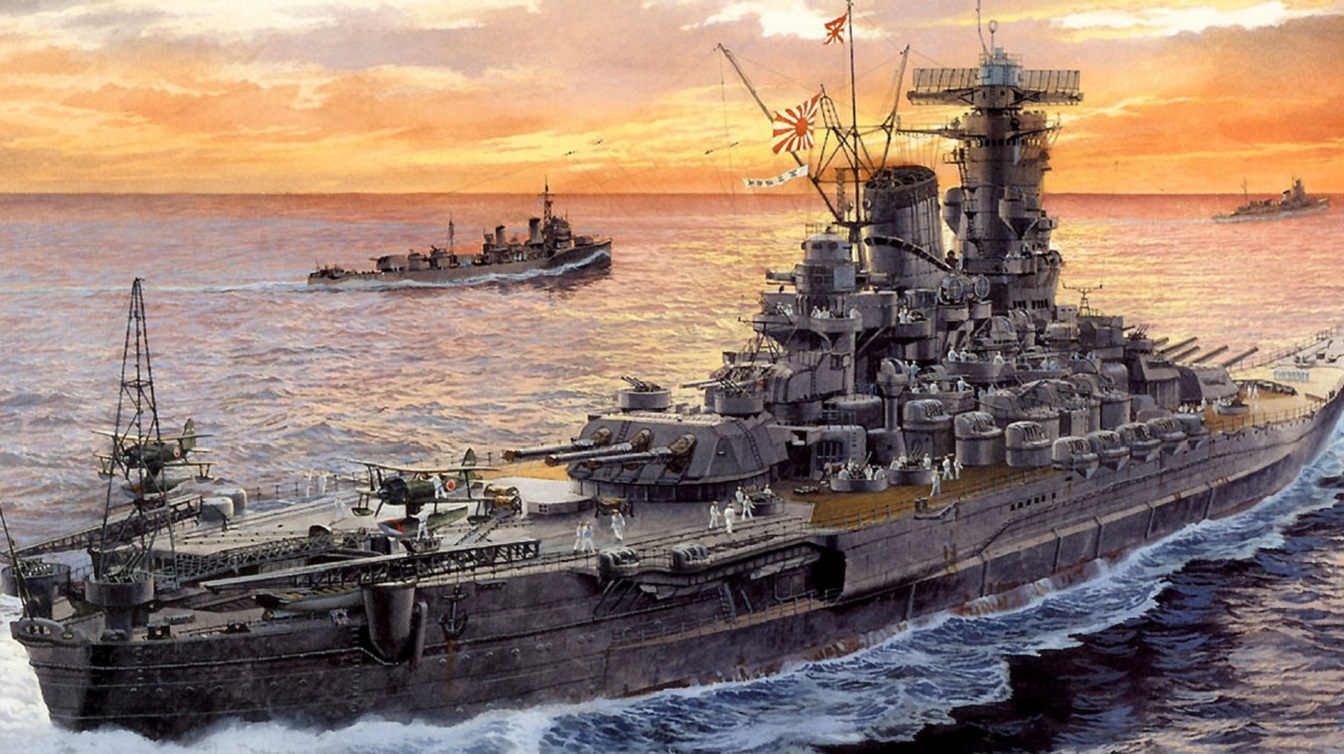
Battleship Yamato. Image Credit: Creative Commons.
In October 1944, she left Brunei as part of Admiral Takeo Kurita’s Center Force during the Battle of Leyte Gulf. The Musashi joined the main Japanese fleet in preparation for “Operation Sho 1”, the planned counterattack against the U.S. landings at Leyte.
The Japanese plan called for carrier-led forces to lure the U.S. carrier fleets north of Leyte, allowing Admiral Kurita’s Center Force to enter Leyte Gulf and destroy U.S. forces landing on the island.
The Musashi, together with the rest of Kurita’s force, departed Brunei for the Philippines on October 22.
On October 23, the Musashi took on 769 survivors from the heavy cruiser Maya, which had been torpedoed and sunk by a U.S. submarine, the USS Dace (SS-247).
The Musashi was sighted by U.S. reconnaissance aircraft on October 24. At approximately 10:37 a.m., eight Helldiver aircraft attacked the Musashi; one scored a direct hit on Turret #1, but the bomb didn’t penetrate.
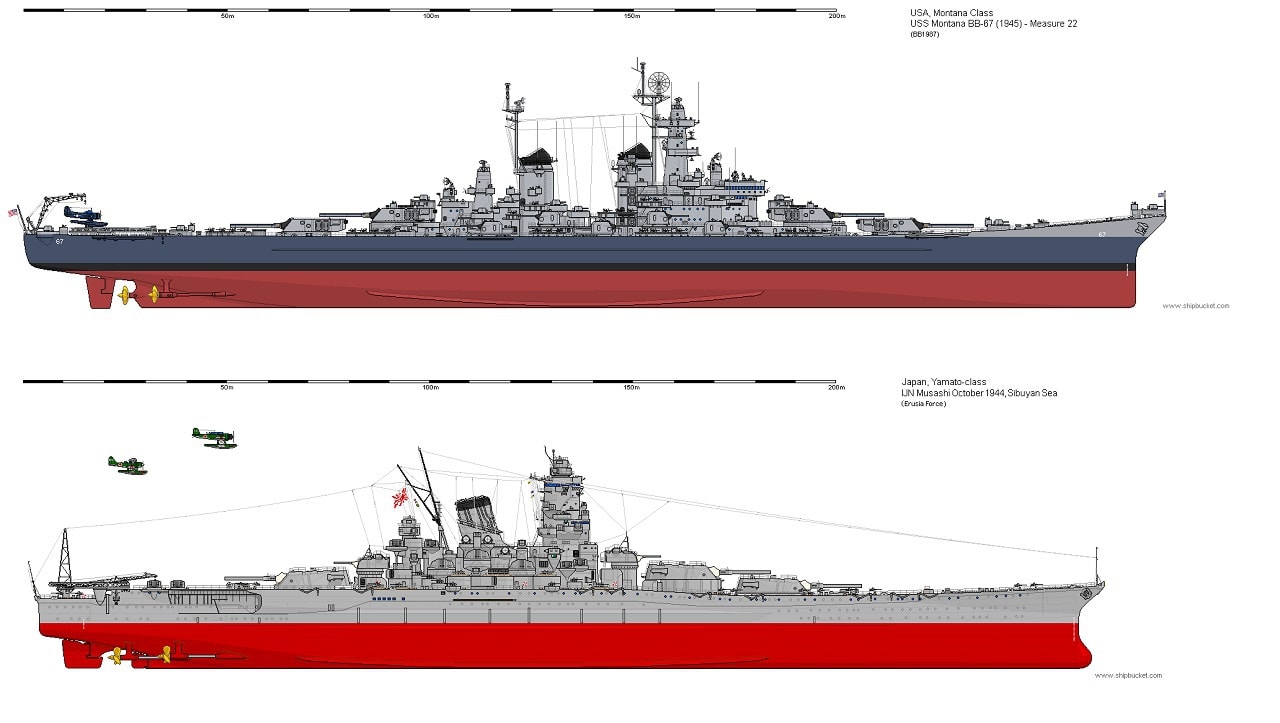
Montana-class compared to a Yamato-class battleship.
Two minutes later, Avenger torpedo bombers attacked. Two were shot down, but one managed a hit. Counterflooding limited the damage to just a one-degree list.
Shortly after noon, the battleship was attacked again, this time by 17 Helldivers and Avengers in two separate attacks a few minutes apart. The ship was rocked by two bombs and three torpedo hits.
At 1:31 p.m., the carriers USS Lexington (CV-2) and Essex (CV-9) attacked the ship with 29 aircraft. The Musashi was hit with four more bombs and four torpedoes, while Hellcat fighters raked the decks with machine gun fire, taking out anti-aircraft positions.
U.S. carriers came in for the kill two hours later, and aircraft savaged the Musashi. During this attack, the ship was hit with 13 bombs and 11 torpedoes; the battleship was doomed.
The Musashi overall took 17 bombs and 19 torpedo hits; she finally capsized and sank at 7:36 p.m., with the loss of 1,023 of her 2,399-man crew.
The Shinano (converted into an aircraft carrier):
The Shinano began as the third ship of the Yamato-class. However, in June 1942, following the Japanese defeat at Midway, construction was suspended, and the hull was gradually rebuilt as an aircraft carrier.

Shinano Aircraft Carrier from Japan.
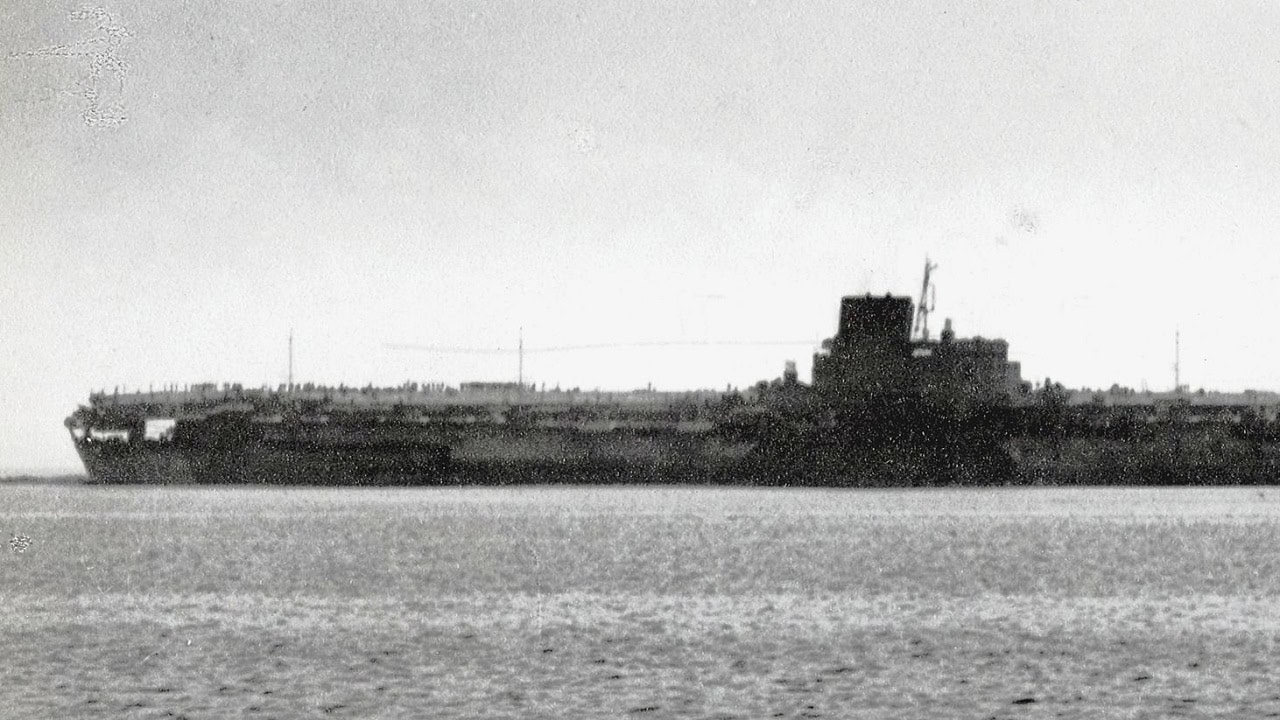
Japanese aircraft carrier Shinano underway during her sea trials.
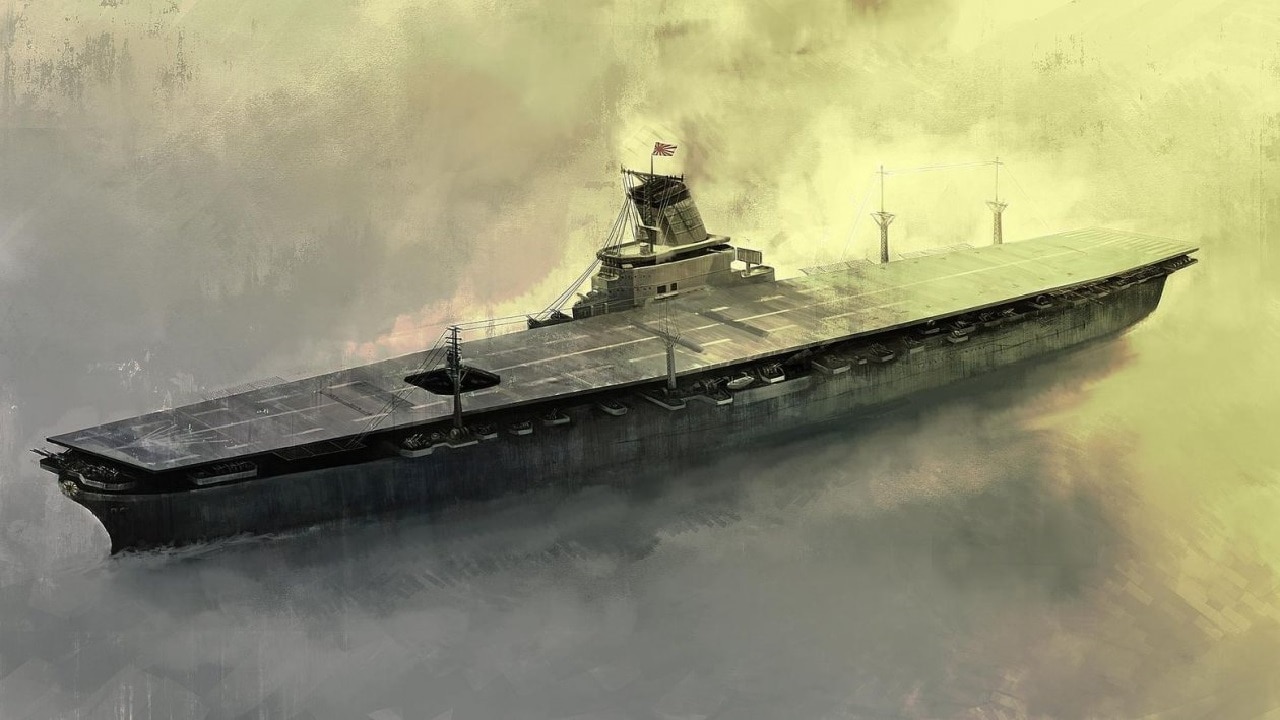
Aircraft Carrier Shinano. Image Credit: Creative Commons.
She was designed as a 64,800-ton support vessel capable of ferrying, repairing, and replenishing the air fleets of other carriers. Although she was initially scheduled for commissioning in early 1945, the ship’s construction was accelerated after the Battle of the Philippine Sea. The Shinano was launched on October 5, 1944, and commissioned on November 19, just over a month later.
Her service life lasted just 10 days. On November 28, en route from Kure Harbor, the Shinano was picked up on sonar by the USS Archerfish (SS-311), commanded by Commander J. F. Enright, as it ran on the surface.
At 3:17 a.m., a spread of six steam torpedoes, set to run at ten feet, was fired at the green carrier. Four of them struck home a minute later. As destroyers maneuvered to contact the Archerfish, the submarine evaded, confident she had dealt a mortal blow. And the Shinano indeed began her death throes, which were to last until late the following morning. At around 10:30 a.m., the Shinano capsized and sank.
The Yamato Suffered A Similar Fate:
After serving as Admiral Yamamoto’s flagship during the Battle of Midway, the Yamato spent the next two years intermittently between Truk and Kure naval bases, with her sister ship Musashi replacing her as the flagship of the Combined Fleet.
During this time, the Yamato, as part of the 1st Battleship Division, was deployed on multiple occasions to counteract U.S. carrier raids on Japanese island bases. On December 25, 1943, she suffered major torpedo damage and was forced to return to Kure for repairs and structural upgrades.
During the Battle of Okinawa, the Yamato was sent on a one-way kamikaze mission as part of Operation Ten-ichi-Go, but before she could get to Okinawa to bring her big guns to bear on U.S. forces, she was spotted, and the Americans launched 386 planes to attack the Yamato and her supporting vessels. On April 7, 1945, the aircraft pounced in three successive attacks.
Ten bomb hits and at least eight torpedo hits rocked the Yamato. She capsized, and then one of her magazines exploded, sending a plume of smoke four miles high. It was seen 124 miles away and took 2,740 of the 3332 crewmembers with her, including Vice-Admiral Seiichi Itō.
The once-proud Imperial Japanese Navy and its battleships were savaged by U.S. airpower and never lived up to their promise.
About the Author: Steve Balestrieri
Steve Balestrieri is a National Security Columnist. He served as a US Army Special Forces NCO and Warrant Officer. In addition to writing on defense, he covers the NFL for PatsFans.com and is a member of the Pro Football Writers of America (PFWA). His work was regularly featured in many military publications.