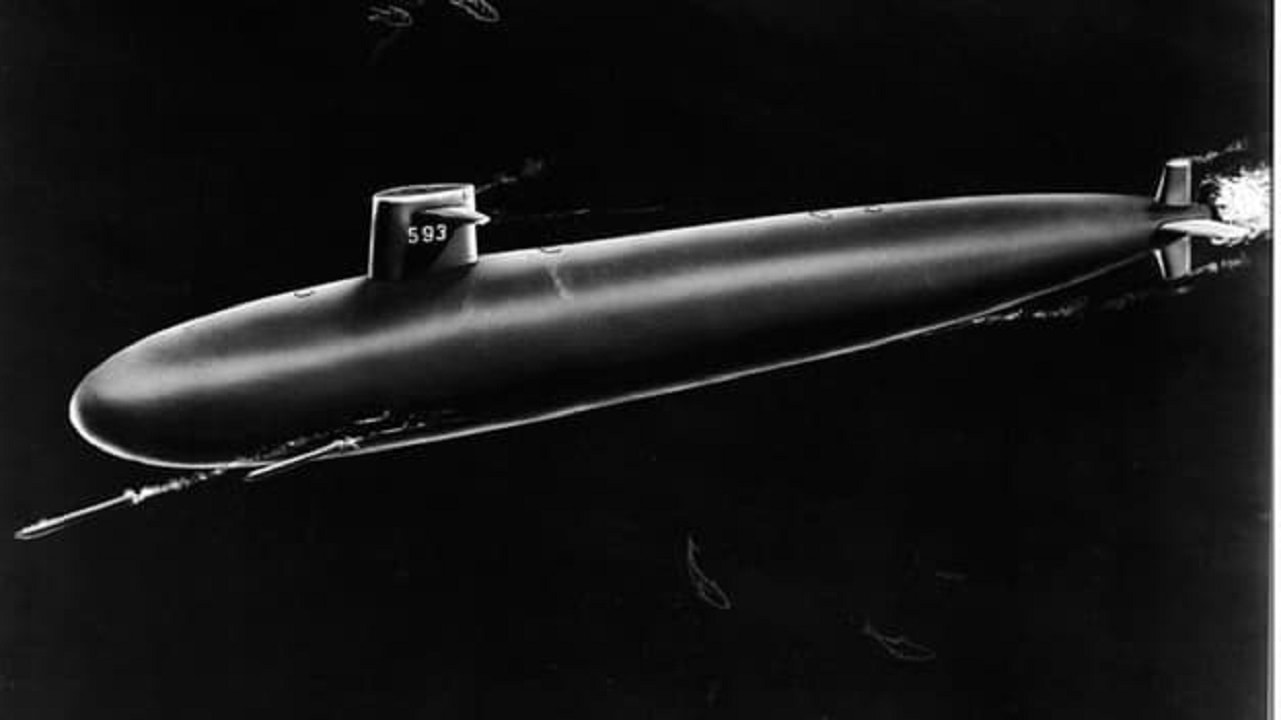
A U.S. Navy Disaster That Won’t Be Forgotten: The USS Thresher was the most sophisticated submarine in the world at the time. It sank because one pipe joint was brazed instead of welded, and 129 men died in a chain of failures that took less than a few minutes.
The USS Thresher Disaster
The USS Thresher (SSN-593) was one of the most advanced submarines in the world in the 1960s.
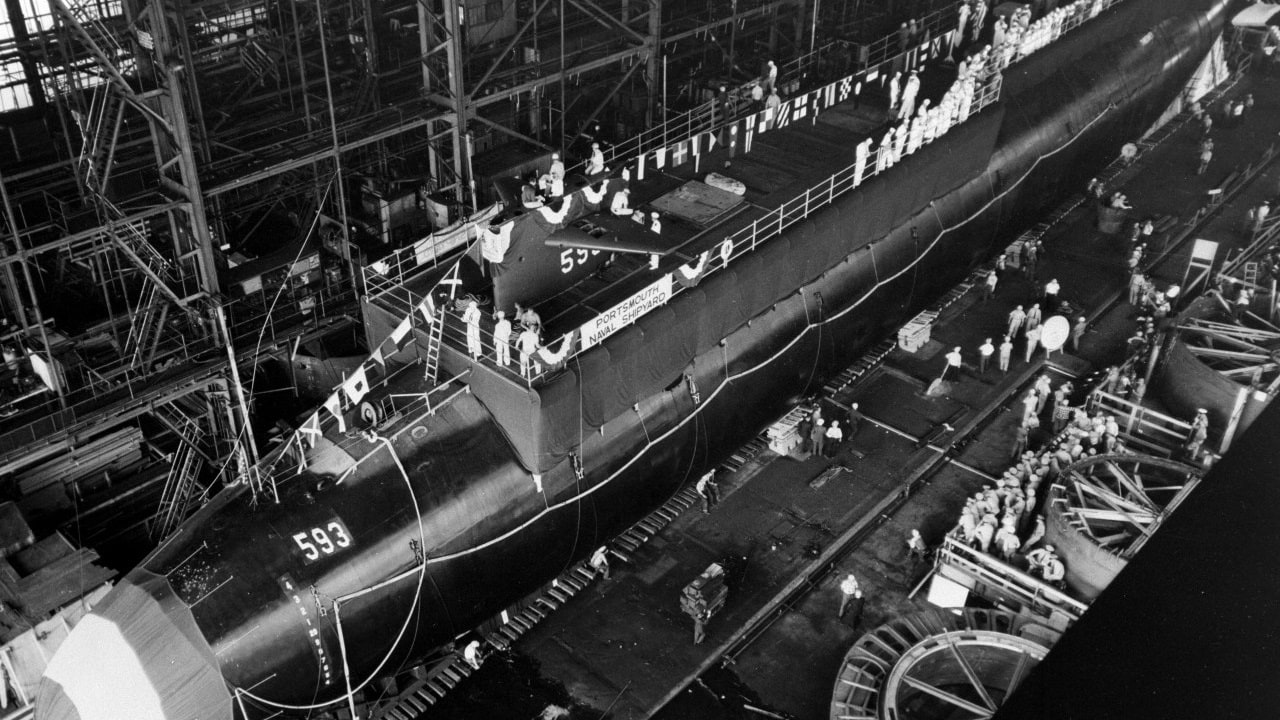
USS Thresher. Image Credit: Creative Commons.
Its loss was an extremely consequential chapter in U.S. naval history. After the USS Thresher disaster resulted in the loss of all hands, the incident forced the Navy to take a clear-eyed look at submarine design, construction, and safety.
Project Nobska
The story of the Thresher began with Project Nobska. Established by the U.S. Navy in 1956, the project brought together the nation’s top physicists and naval authorities to reassess undersea warfare in the nuclear age.
How would the nascent technology of nuclear propulsion change anti-submarine warfare? How would sailors find some of the most destructive weapons ever built? Project Nobska sought answers to these questions.
Project Nobska first concluded that submarines should place an absolute premium on reducing their acoustic signatures and boosting the performance of their sonar arrays, rather than purely improving speed.
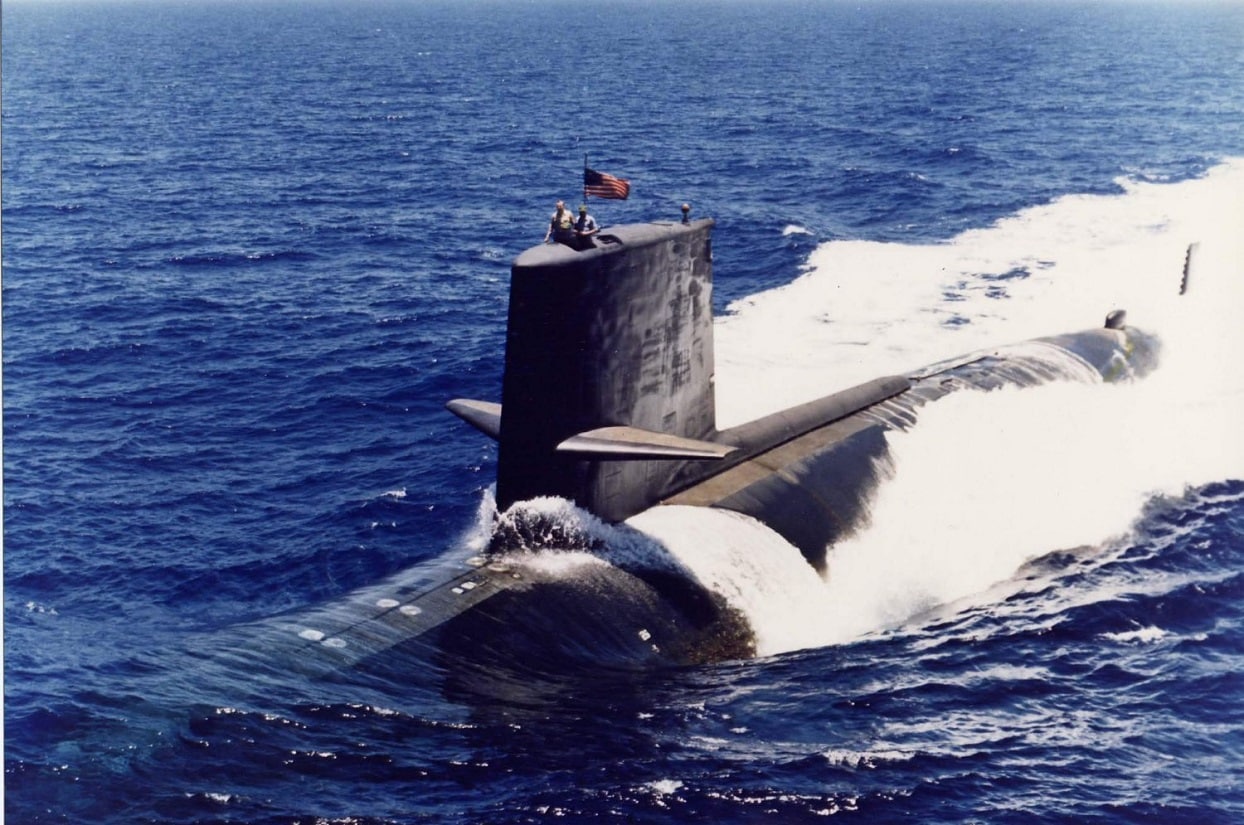
USS Thresher Accident. Image: Creative Commons.
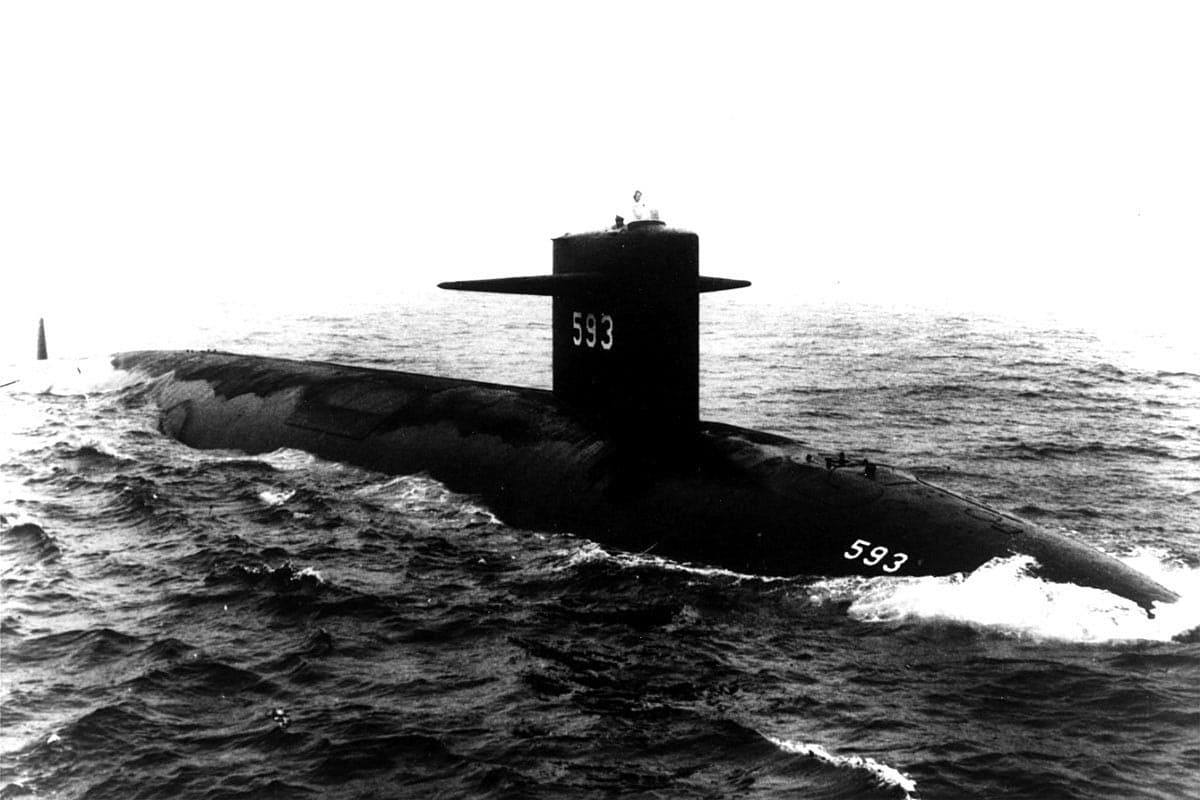
Image: US Navy
Second, they should orient their mission toward hunting down Soviet submarines, rather than serving primarily as surface attack platforms. This was a significant shift from previous submarine designs, which emphasized maneuverability and speed. The result was the Permit-class.
Permit-class
The Permit-class featured a teardrop-shaped hull and a large bow-mounted sonar sphere that was, for its time, very powerful. The class also incorporated the acoustic mitigation measures suggested by Project Nobska.
It marked the first concerted effort by the Navy to build a modern class of anti-submarine warfare submarines. On paper, the class was far more sophisticated than its predecessors or contemporaries, but disaster lurked on the horizon.
The Disaster
On April 10, 1963, the USS Thresher was in the middle of deep-dive tests off the coast of Cape Cod. During one dive, the submarine reported a problem to the USS Skylark (ASR-20), a submarine rescue ship.
Via an underwater telephone connection, the Thresher reported experiencing “minor difficulties.” It attempted to blow its ballast and force a surface.
But just a few moments later, a garbled and difficult-to-follow transmission came through to the Skylark that suggested the submarine had lost control. Contact was severed shortly thereafter. The submarine sank, and all hands—129 sailors and civilian personnel—were lost with the sub.
The Failure
It cannot be known with absolute certainty what exactly went wrong. But the Navy’s investigation of the event, later backed by recorded acoustic data, indicated a chain of failures.
Seawater is believed to have leaked into the engine room through a brazed rather than welded pipe joint. Water spraying on electrical equipment may have caused a factor scram, forcing the reactor to shut down as part of an automatic precaution.
With propulsion lost, the crew tried to blow ballast tanks to the surface—to no avail.
Moisture within the submarine’s high-pressure air system may have caused ice to form within the piping, blocking airflow.
Without power or buoyancy, the submarine sank past crush depth. At extreme depth, the submarine’s hull collapsed.
All on board were most likely killed instantly. The incident was a cascade of failures exacerbated by relatively minor engineering issues. But when combined, they were catastrophic.
The Impact
The incident was among the worst submarine disasters in maritime history. Significant gaps in submarine manufacturing were found during an exhaustive post-incident investigation.
Quality control was inconsistent—inexcusable in any context, but particularly for operations deep under the waves that depend on nuclear reactors for power.
Testing and submarine certification were also lacking, and emergency recovery was inadequate for deep-dive rescues.
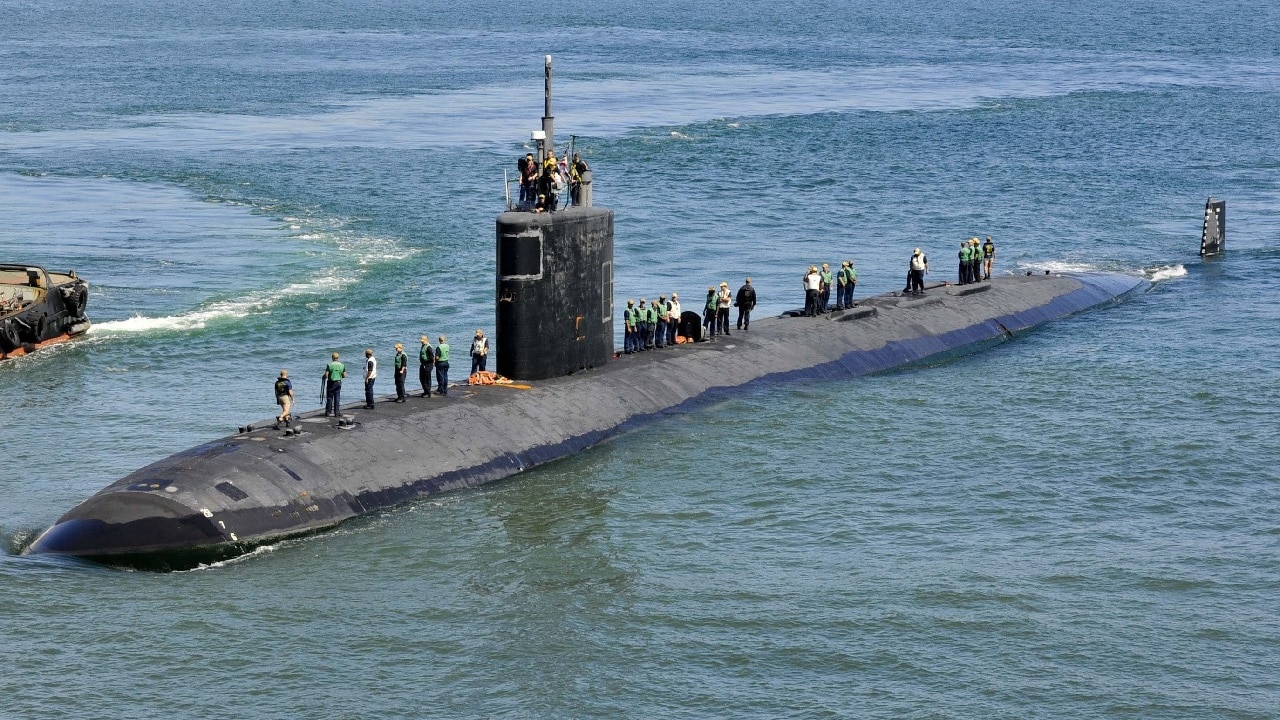
PUERTO PRINCESSA, Philippines – (Dec. 9, 2018) – The Los Angeles-class attack submarine USS Greenville (SSN 772) prepares to moor alongside the submarine tender USS Emory S. Land (AS 39), Dec. 9. Emory S. Land is a forward-deployed expeditionary submarine tender on an extended deployment conducting coordinated tended moorings and afloat maintenance in the U.S. 5th and 7th Fleet areas of operations. (U.S. Navy photo by Mass Communication Specialist 2nd Class Daniel Willoughby/RELEASED)
The investigation was damning, but it kick-started new safety standards that ultimately contributed to the Navy’s shining safety record thanks to the creation of the SUBSAFE program.
SUBSAFE
SUBSAFE changed submarine construction and maintenance in a major way. All components are exposed to the rigors of sea pressures and subject to strict certification standards.
The materials used to build the submarines must be traceable to ensure a chain of responsibility for workmanship. Subsequent submarine designs incorporated redundant and fully tested emergency ballast blow systems.
But the culture changed, too. Concern over speed and cost gave way to engineering discipline and quality control.
The changes paid huge dividends. Following the implementation of the SUBSAFE program, no U.S. Navy submarines have been lost due to flooding or structural failure—this is a remarkable record and a testament to SUBSAFE’s extreme rigor.
Upward and Onward
Project Nobska had pushed the Navy toward a quieter, more sophisticated submarine fleet, but one that relied heavily on complex systems to achieve underwater dominance—without a corresponding increase in reliability and quality of build.
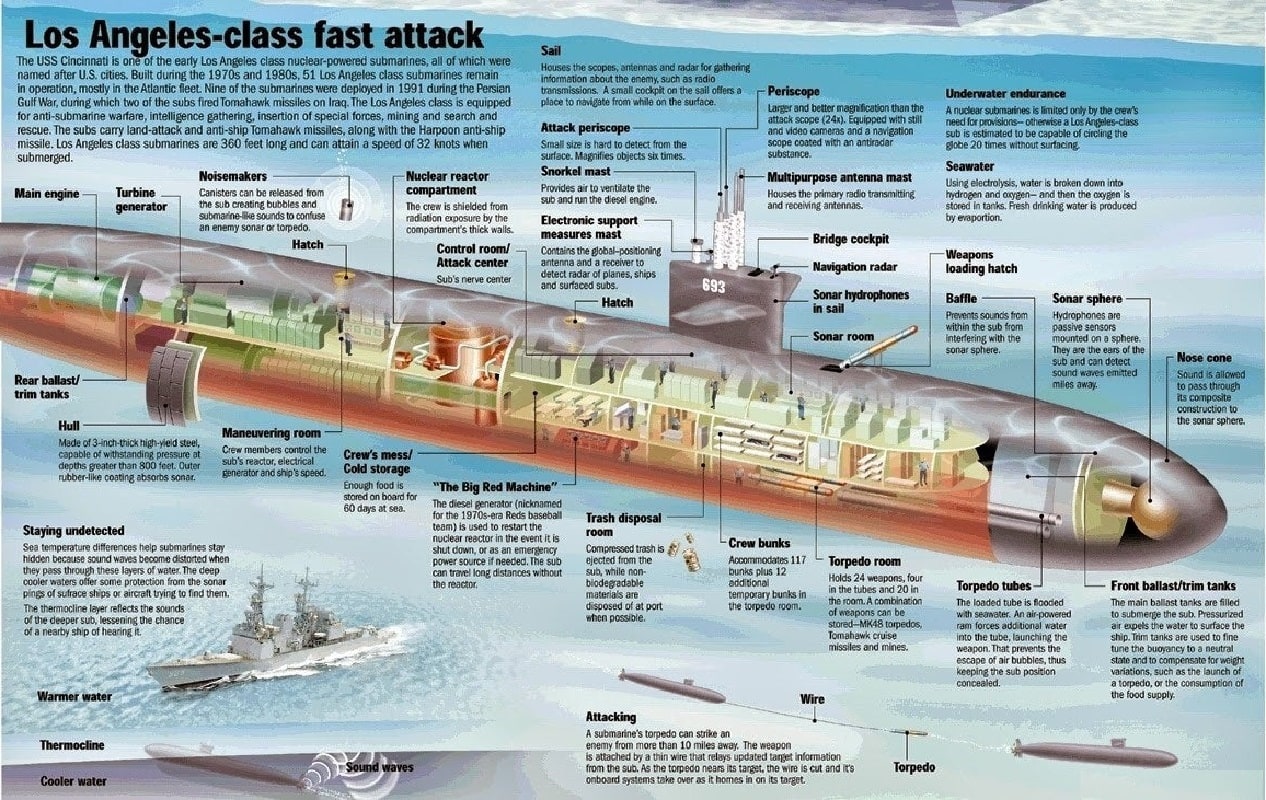
Los Angeles-Class diagram. Image Credit: US Navy.
Consequently, the USS Thresher was the world’s most sophisticated submarine, but it was also vulnerable to mishap. Ultimately, the Thresher forced the Navy to seriously reevaluate the safety of its submarine designs and, consequently, the safety of its sailors.
And given the Navy’s post-Thresher record, SUBSAFE was a success—albeit a costly one.
About the Author: Caleb Larson
Caleb Larson is an American multiformat journalist based in Berlin, Germany. His work covers the intersection of conflict and society, focusing on American foreign policy and European security. He has reported from Germany, Russia, and the United States. Most recently, he covered the war in Ukraine, reporting extensively on the war’s shifting battle lines from Donbas and writing on the war’s civilian and humanitarian toll. Previously, he worked as a Defense Reporter for POLITICO Europe. You can follow his latest work on X.