
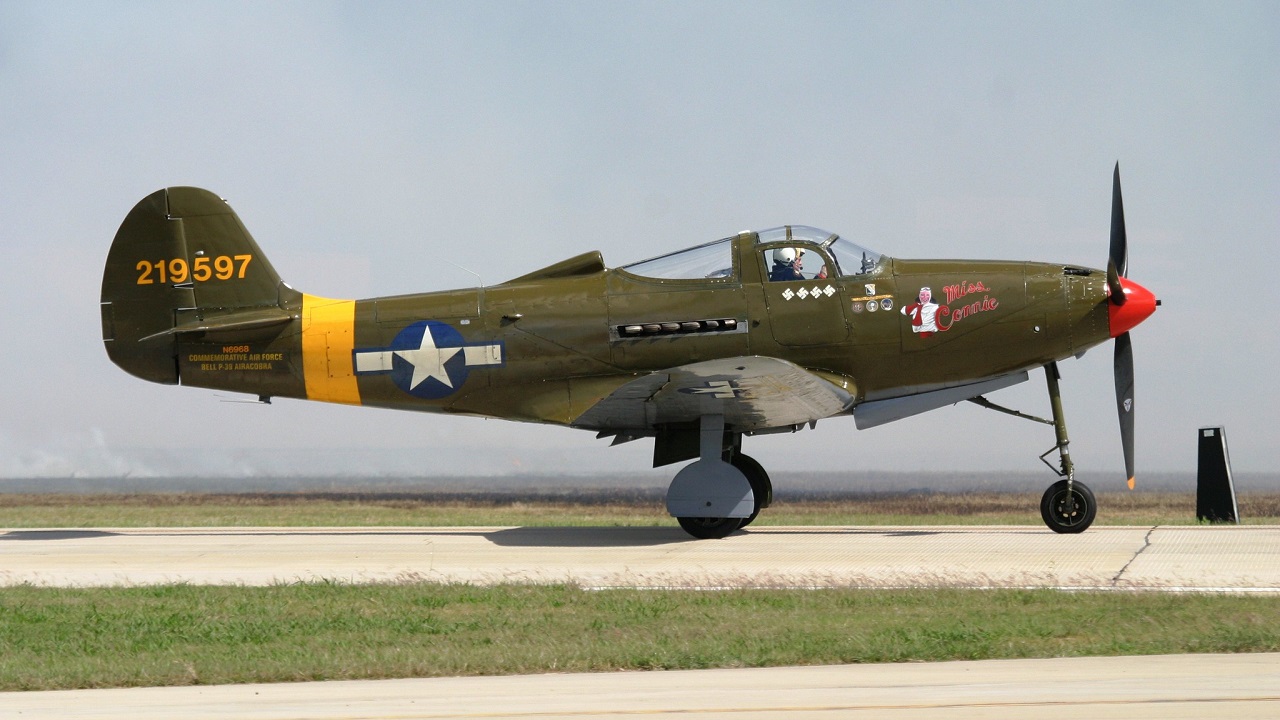
Summary and Key Points: More than 70 years after it sank, an American-built P-39 Airacobra was raised from an Arctic lake near Murmansk — one of several Lend-Lease fighters and Sherman tanks recovered from Russian waters decades after the war, some still holding their pilots’ remains and legible logbooks.
The P-39 Fighter Mystery
Back in 2017, a Russian World War II fighter, a P-39 Airacobra, was pulled out of an arctic lake, more than 70 years after it crashed.
According to a Popular Mechanics report at the time, Russian Navy divers found the P-39 Airacobra, which had crashed into Lake Shukozero near the Russian city of Murmansk. The plane in question was “one of thousands supplied to the Soviet Union during World War II by the United States and Great Britain.”
The Russian Ministry of Defense, at the time, uploaded a video depicting the process of unearthing the fighter plane.
In 1945, near the end of the war, a P-39 piloted by Soviet Air Force pilot Fyodor Varavik crashed into Lake Shukozero during a training mission. The fighter plane recovered in 2017 is believed to be the same one.
Just the Boot
According to an RT report from the summer of 2017, the diving crew had expected to find human remains, even after 72 years, but they only found a portion of the pilot’s furry boot.
“We can see almost all of the front part of the airplane, including the cockpit and engine; only its tail and right wing are missing,” Vice-Admiral Nikolay Evmenov, Commander of Russia’s Northern Fleet, said, according to the RT story.
Per the RT story, there was “evidence of cuts on the medal,” which “gave rise to speculation that the plane may have been stuck in the March ice that still covered the Polar Circle lake and that his comrades-in-arms may have managed to cut Varavikov out.”
Popular Mechanics stated that according to one theory, “the fighter landed on ice as the lake would have been frozen in March, and he was rescued, or had his remains recovered. When the ice thawed, the fighter sank to the bottom of the lake.”
In 2004, a different P39 was fished out of a different Russian lake. This time, it was from Lake Mart-Yavr within the Russian Arctic Circle. This one had been there since 1944. According to a Lend-Lease.net article, this one was discovered by a fisherman who noticed “the silt-covered outline through the crystal clear water.”
“The P39 sat on the bottom of a shallow lake at a depth of 5m, covered and buried up to the top of the propeller spinner in fine silt,” that article said. “Covered in silt, no markings were initially visible but after a little brushing, a red star appeared together with a yellow serial on the fin and rudder. With the serial now known, a search through the archives showed the pilot had disappeared on a transfer flight in November 1944.”
In that case, the pilot’s remains were found in the cockpit, and he was given a burial after 60 years.
Also discovered were some remarkably preserved documents.
“The most amazing discovery was in the document case on the starboard door. The team located the maintenance record book for this P39,” the report said. “Although a few pages had perished, the majority was still legible. Nearly all of the Russian information that follows concerning flight hours/dates, servicing, and pilots’ names comes from this unique document.”
Rescuing the Shermans
Those planes, though, were not the only World War II-era Russian military appliance fished out of the water in the last 25 years.
According to an Atlas Obscura story from 2016, an M4A2 Sherman tank was recovered from the Barents Sea during a military exercise. Another tank had been rescued two years earlier.
The tank had been on a convoy ship, including over 7,000 tons of cargo, when a German U-Boat struck it in March of 1945.
The Sherman Tank website had more details about those tank rescues.
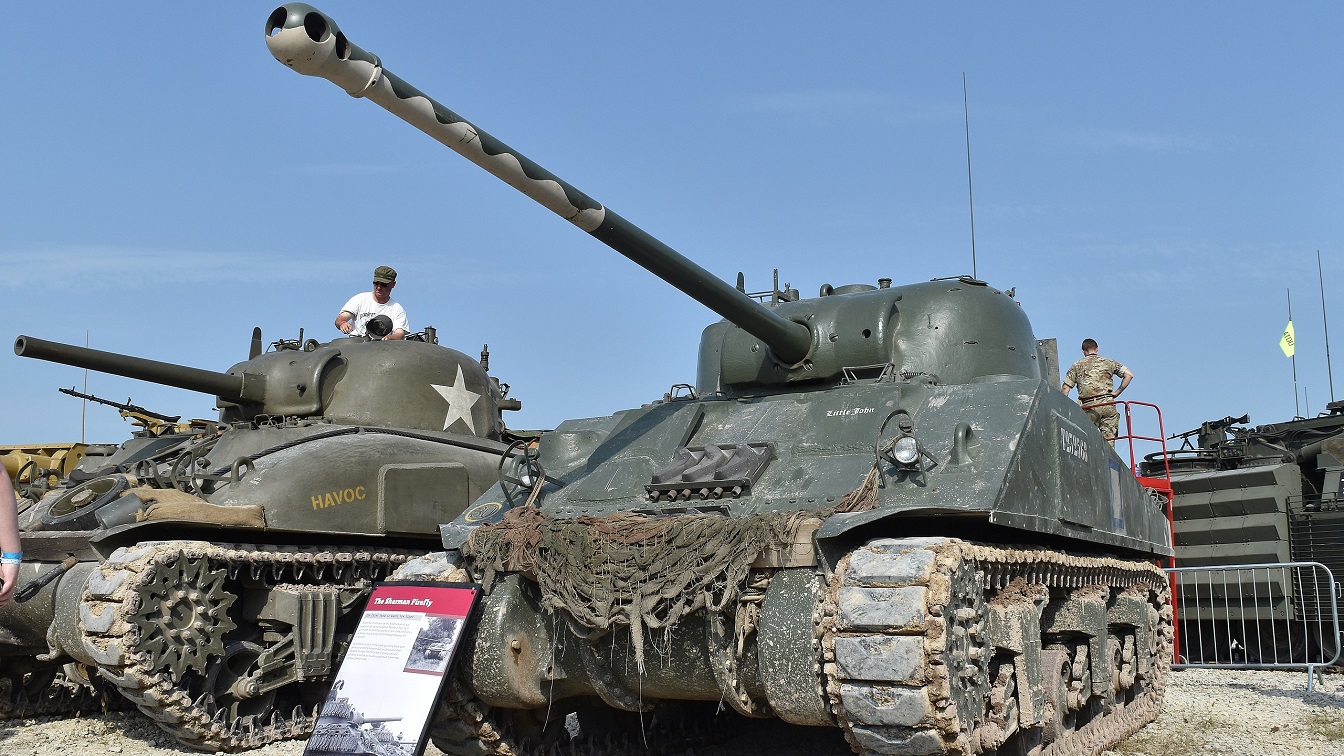
Serial No:- 16912 Official designation:- M4A4 Tank Medium 17Pdr. Total production:- 2,100-2,200 Main armament:- QF 17-pounder Anti-tank Gun The Firefly was a British modification of the M4 Sherman, with a 17 pounder gun replacing the usual 75mm. This gun was able to puncture the armour of a Tiger I or Panther, making the Firefly one of the few Allied tanks genuinely feared by Axis forces. This example comes from the Bastogne Barracks in Belgium, part of the Belgian Royal Military Museum. It was manufactured in the USA in 1942 and delivered to Europe in 1943 carrying the running number ‘USA 3017218’. It was converted to a Firefly in early 1944 and saw British service as ‘T232568’. She is fully operational and is seen in the ‘Tank Park’ after making a guest appearance at TankFest 2019. The Tank Museum, Bovington Camp, Dorset, UK.
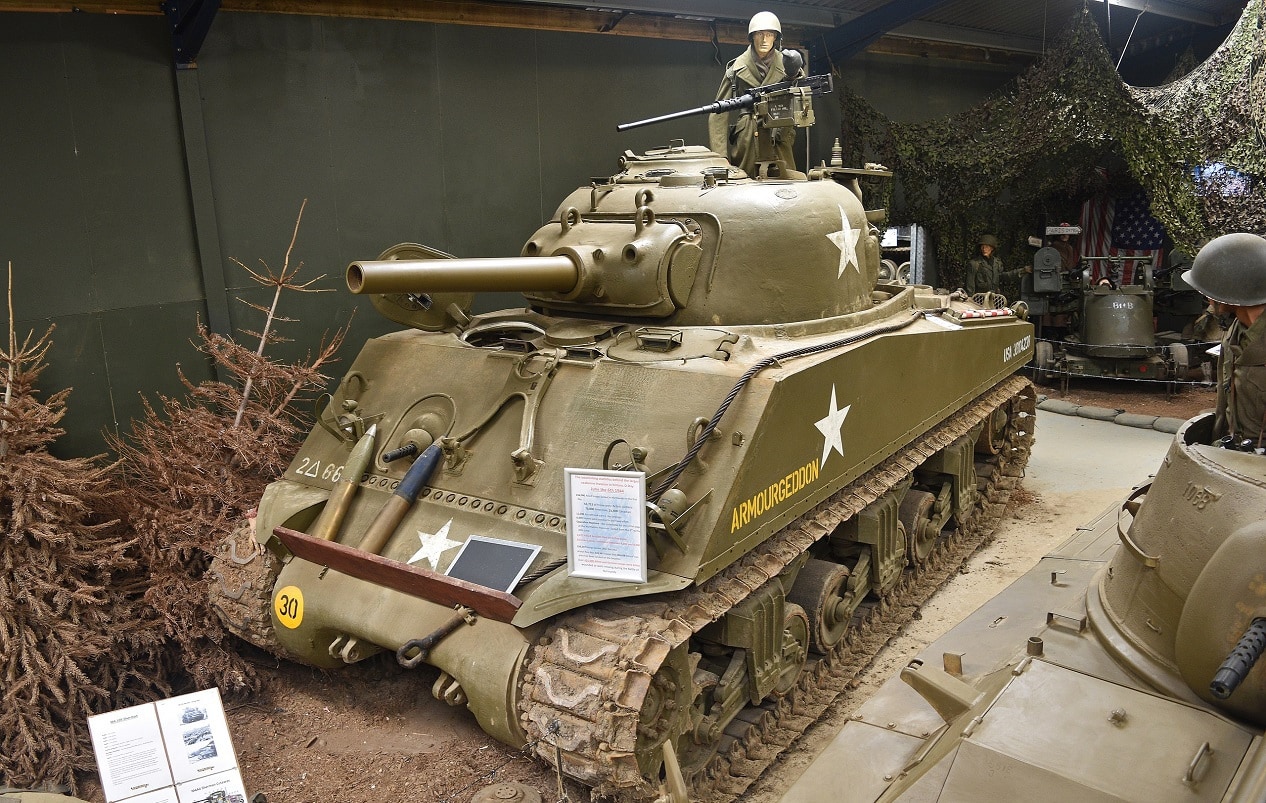
M4 Sherman Tank.

M4 Sherman Tank from WWII Image: Creative Commons.
The Ship was hit by a single torpedo that took out the ship’s engine. It also killed three of her crew,” that account said. “The Captain ordered the ship abandoned due to her dangerous cargo, but a small crew, including the Captain, stayed aboard and tried to save the ship. She was taken under tow, and almost made it in, but sank short of the port. Only one more crewman died of his injuries, and the whole repair crew made it off. In July of 2014, a Sherman was recovered from the wreck, and they say there are two more down there that can be recovered as well.”
Popular Mechanics had reported that the M4A2 was in “surprisingly good shape for having been immersed in salt water for the last 70 years.” This is attributed to U.S. aid in arriving “immaculately packed and secured for travel,” especially against the threat of saltwater corrosion.
About the Airacobra
Bell first designed the Airacobra jet in the 1930s. While Britain rejected it, it gained popularity on the Eastern Front during World War II. Nearly 5,000 of them were shipped to the Soviets under the Lend-Lease agreement.
According to the Military Aviation Museum, “the unusual, mid-engined P-39 Airacobra holds the record for the highest number of enemy aircraft victories attributed to any US-built fighter in history.”
It also notes that the fighter found more favor on the Eastern Front than anywhere else in the war.
“The lack of an efficient turbo-supercharger for its engine meant that the airplane did not perform well at high altitude. However, in the hands of Soviet pilots at low altitude over the Eastern Front, the P-39 made a massive contribution to the war effort.”
That museum has a P-39F, which was also rescued from wreckage during World War II, this time from the Cape York Peninsula in Queensland, Australia, in 1942.
About the Author: Stephen Silver
Stephen Silver is an award-winning journalist, essayist, and film critic, and contributor to the Philadelphia Inquirer, the Jewish Telegraphic Agency, Broad Street Review, and Splice Today. The co-founder of the Philadelphia Film Critics Circle, Stephen lives in suburban Philadelphia with his wife and two sons. For over a decade, Stephen has authored thousands of articles that focus on politics, national security, technology, and the economy. Follow him on X (formerly Twitter) at @StephenSilver, and subscribe to his Substack newsletter.