
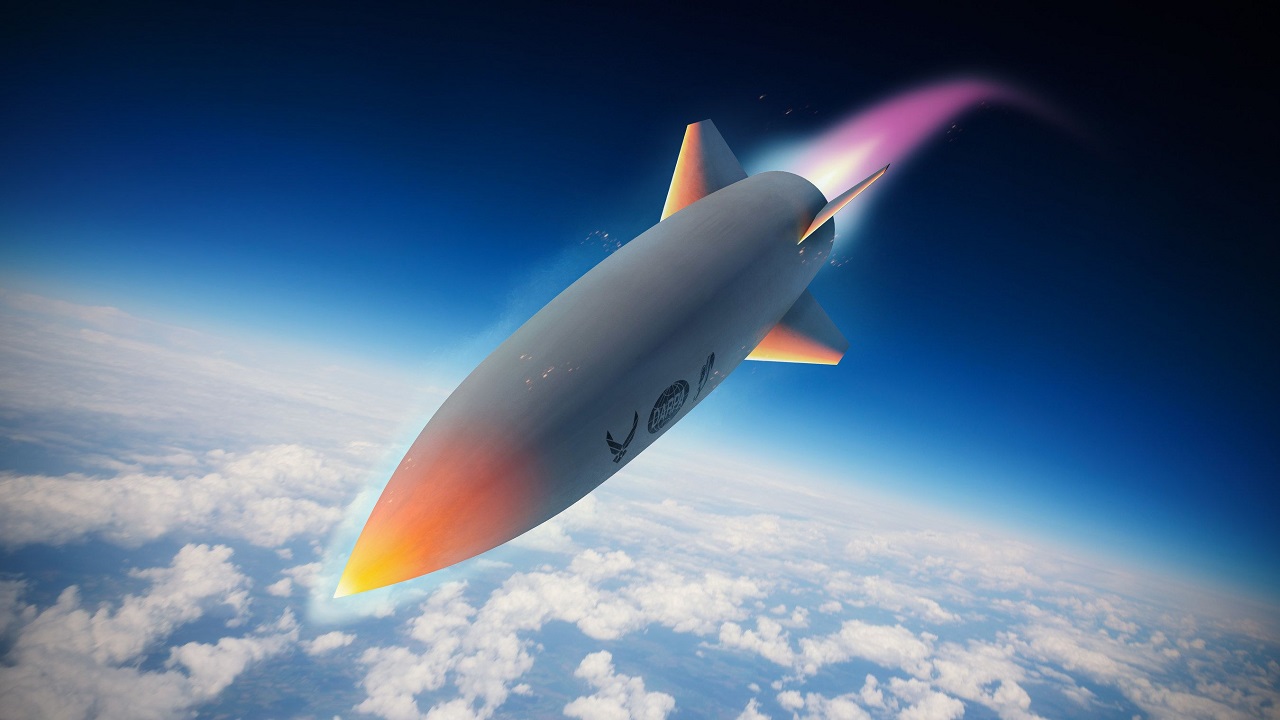
Summary and Key Points: Rocket Lab has a 100 percent success rate testing hypersonic weapons at Mach 5+ — seven for seven — and just signed a $190 million contract for 20 more launches. The tests are building toward the Army’s ‘Dark Eagle,’ a hypersonic missile that can reach Beijing from Guam and Moscow from Western Europe, and that maneuvers at Mach 5, beyond the reach of existing defenses.
Dark Eagle and More Hypersonics Are Coming Soon
The U.S. War Department is using Rocket Lab’s HASTE (Hypersonic Accelerator Suborbital Test Electron), a modified version of the Electron rocket, to conduct frequent, low-cost flight tests of hypersonic glide bodies and scramjet technologies.
The HASTE program is serving as a testbed to accelerate components to speeds over Mach 5 and supporting the development of the Army’s operational Long-Range Hypersonic Weapon (LRHW) “Dark Eagle”, expected to be fielded by late 2026, as well as other services’ hypersonic missiles.
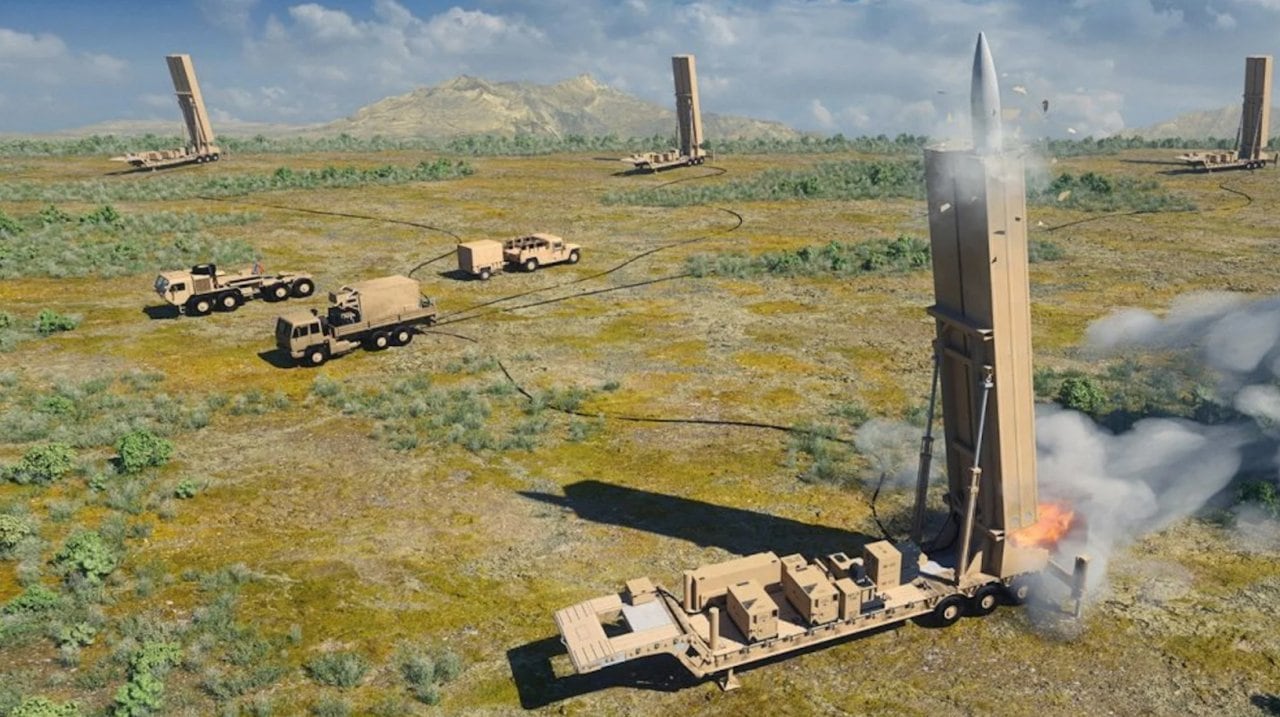
Dark Eagle. Image Credit: Lockheed Martin.
Rocket Lab announced a $190 million contract on March 18 that was issued by the Pentagon’s Test Resource Management Center to launch hypersonic test missions for the Pentagon over the next four years.
On the company’s Facebook profile page, they announced the signing. “Our largest launch contract yet: 20x new HASTE launches for the U.S. Department of War to accelerate hypersonics for America. We’re delivering reliable, modern hypersonic capabilities to the nation with speed and affordability – and the first mission in this block of launches is just months away.”
Rocket Lab has conducted seven successful (Mach 5+) HASTE launches with a 100 percent mission success rate under the MACH-TB program since 2023.
Meet The HASTE Suborbital Hypersonic Glide Vehicle
The HASTE vehicle is one of Rocket Lab’s workhorse Electron rockets, with the components that would place it into orbit stripped out. It added a modified third-stage for suborbital payload deployment, a larger payload capacity of up to 700 kg (1540 lbs), and options for tailored fairings to accommodate larger payloads.
Rocket Labs has used advanced technology, including a carbon-composite structure and 3D-printed Rutherford engines.
Rocket Lab successfully launched HASTE vehicles from NASA’s Wallops Island Flight Facility in Virginia, carrying payloads for the Defense Innovation Unit (DIU) and Missile Defense Agency (MDA) between November and late February.
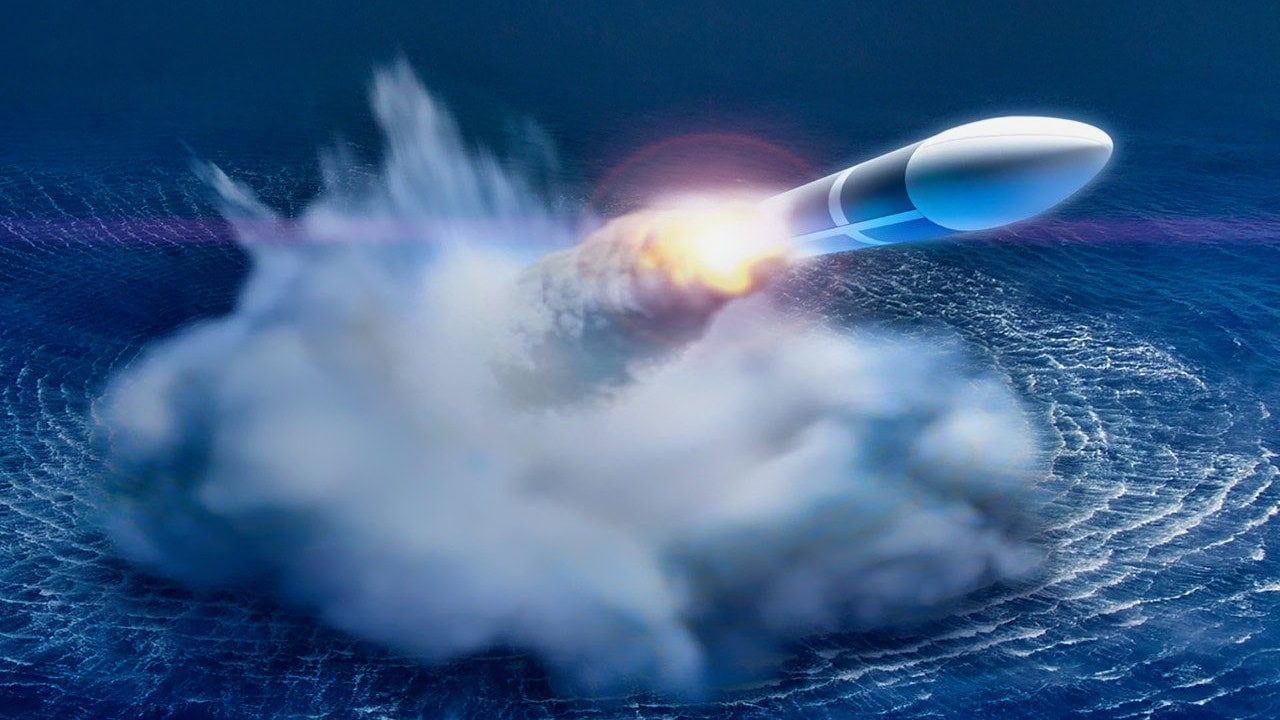
Mako Hypersonic Missile. Image Credit: Creative Commons.
HASTE Missions thus far have tested advanced technologies such as the DART AE scramjet-powered vehicle, designed to evaluate maneuverable, non-ballistic flight.
HASTE can deploy payloads at speeds ranging from 3 km/s (1.86 mi/s) to over 7.5 km/s (4.66 mi/s).
Payloads can be released at altitudes starting around 80 kilometers (approximately 50 miles) and higher.
HASTE Will Be Available To All U.S. Armed Services
All of the services can utilize HASTE, Navy Conventional Prompt Strike, Army Long Range Hypersonic Weapon, Missile Defense Agency, and Air Force hypersonics efforts, all of which draw data from MACH-TB flights.
A modular Experimental Glide Body lets different teams swap in their own sensors, materials, or flight hardware without redesigning the whole vehicle each time.
The program is a U.S. War Department initiative, in partnership with the Naval Surface Warfare Center Crane Division (NSWC Crane). The main objective is to provide an affordable bridge between hypersonic ground tests and system-level flight tests, to reduce overall hypersonic development risks and time, and to enable rapid transition of innovative hypersonic technologies to the warfighter.
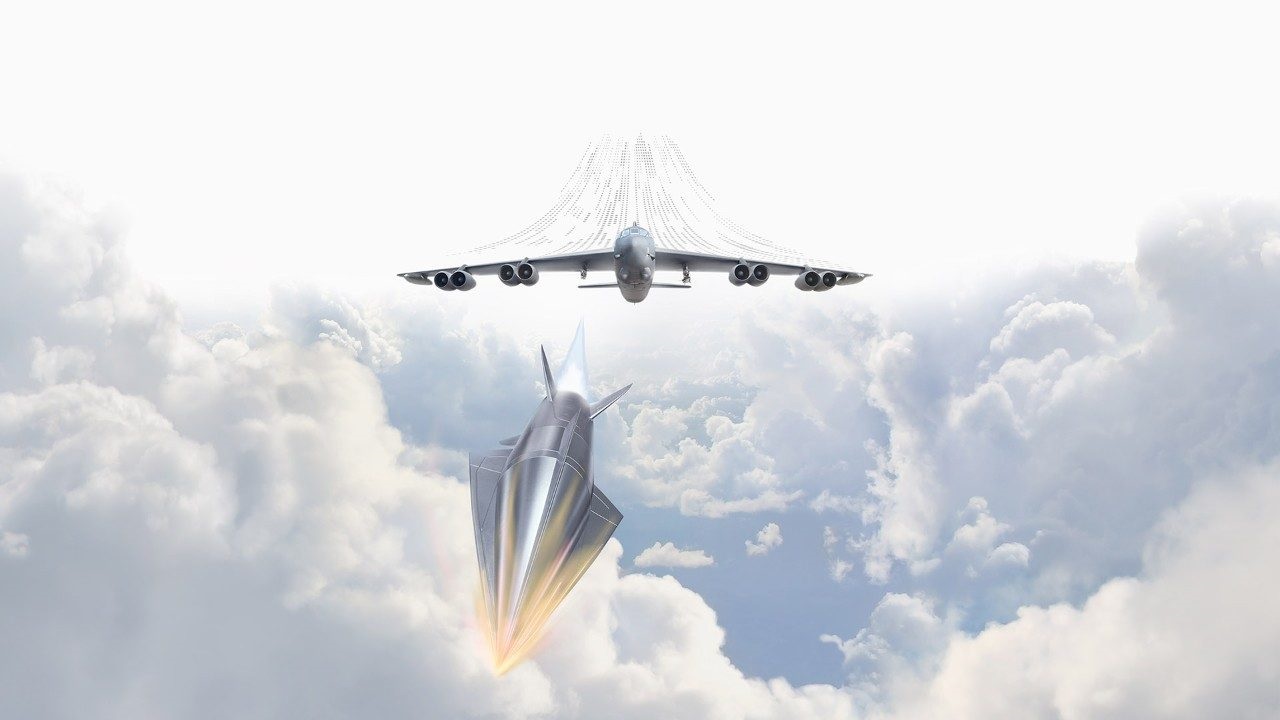
Hypersonic Missile VIA artist rendering. Image Credit: Lockheed Martin.
Space News wrote that, “MACH-TB 2.0 is intended to increase the pace and flexibility of testing by incorporating commercial launch vehicles and reusable platforms. The aim is to move away from one-off, missile-based tests toward a more repeatable system that can support more frequent experimentation.”
The Army’s “Dark Eagle” Hypersonic Missile Program
The Army’s ground-based system, named “Dark Eagle,” should enter service very soon. The missile is designed to travel at speeds above Mach 5 (3,836 mph) and has a range of over 3,500 km (2,715 miles).
The range of the Long-Range Hypersonic Weapon (LRHW) will allow it to launch from Guam and hit mainland China. Or Moscow from Western Europe.
The Rocket Lab HASTE system will act as a rapid, cost-effective suborbital booster to test and validate technologies for the Army’s Dark Eagle LRHW. It enables testing of the Common Hypersonic Glide Body (C-HGB) under realistic hypersonic flight conditions, accelerating development and reducing risk before full-scale operational tests of the 1,700+ mile range missile.
Meet The “Dark Eagle”
According to Army Recognition, a single Dark Eagle battery consists of four transporter erector launchers (TELs) mounted on trailers, each carrying two hypersonic missiles, for a total of eight ready rounds, supported by a battery operations center and associated vehicles. The platform has already been tested successfully on several occasions.
The Dark Eagle system is a surface-to-surface boost-glide missile combining a two-stage rocket booster with a Common Hypersonic Glide Body, which separates during flight and travels at speeds exceeding Mach 5 while maneuvering through the atmosphere.
This glide body is designed to sustain hypersonic velocity while altering trajectory, reducing predictability, and complicating interception by existing missile defense systems.
The reported operational range reaches 3,500 kilometers, allowing coverage of theater-level targets. The system’s flight profile differs from ballistic trajectories by maintaining atmospheric maneuverability rather than following a fixed arc.
About the Author: Steve Balestrieri
Steve Balestrieri is a National Security Columnist. He served as a U.S. Army Special Forces NCO and Warrant Officer. In addition to writing on defense, he covers the NFL for PatsFans.com and is a member of the Pro Football Writers of America (PFWA). His work was regularly featured in many military publications.