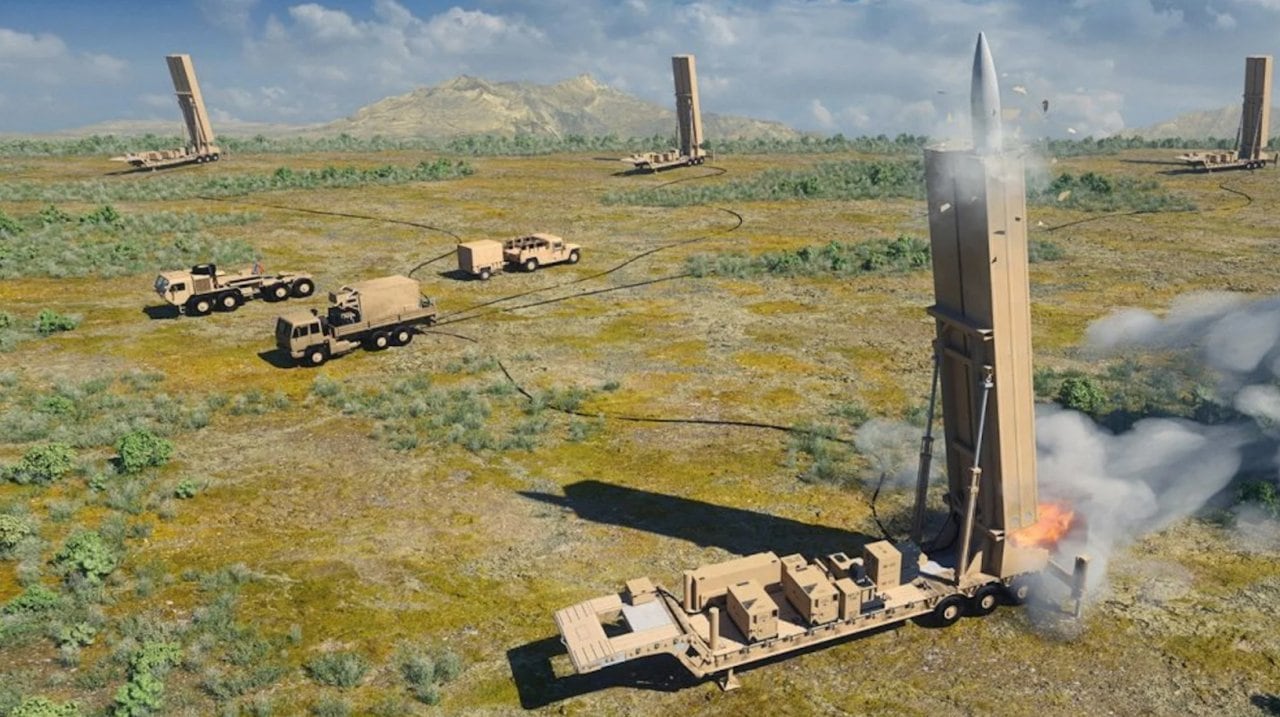
Synopsis: The U.S. Army has declared its Long Range Hypersonic Weapon (LRHW), known as the “Dark Eagle,” operational, marking a significant shift in Pacific capabilities.
-To support this, the service activated Bravo Battery, 1st Battalion, 17th Field Artillery Regiment, the first multi-domain task force unit to operate the system.
-With a range of 1,700 miles and speeds exceeding Mach 5, the mobile Dark Eagle is designed to offset China’s hypersonic advantage, capable of striking targets from locations like Guam or Japan and breaking anti-access “bubbles” around Taiwan.
Countering China: Army Activates New Unit to Operate the Dark Eagle Hypersonic Missile System
The U.S. Army is massively revving up its hypersonic weapons capability in the Pacific to enable U.S. forces to strike targets traveling at Mach 5 for ranges of roughly 1,700 miles.
The service has declared its paradigm-changing Long Range Hypersonic Weapon operational, a milestone that helps the U.S. level the playing field with China in the Pacific.
In support of this mission, the Army has announced that it has activated another unit, which will operate the LRHW, known as the Dark Eagle.
This new unit to get the Dark Eagle, called Bravo Battery, 1st Battalion, 17th Field Artillery Regiment, will be the first “multi-domain task force” to operate the weapon.
The arrival of the weapon greatly expands the U.S. reach into the Pacific theater by extending attack options from Japan, the Philippines, Taiwan, and possibly even Guam.
Added to this offensive power, the US Navy expects to have operational Conventional Prompt Strike hypersonic weapons arming its Zumwalt-class destroyers in 2026 as well.
Chinese Threat and Dark Eagle Hypersonic Weapon
The much-anticipated weapon is indeed arriving now and is expected to be operational at multiple locations in the coming months, something very much needed in the Pacific to offset China’s current advantage in hypersonics.
China’s now operational DF-17, for example, can likely already hold Taiwan, Japan, the Philippines, and even Guam at risk of attack from its mainland, and the PLA-Navy has also test-fired the YJ-20 sea-launched hypersonic weapon from its stealthy Type 055 destroyer.
Beyond these two areas of concern, the PLA Air Force has even armed its H-6 bombers with the YJ-21, an air-launched hypersonic weapon.
In essence, this means the PLA can hold the US and its allies at risk of hypersonic attack from air, land, and sea.
After some developmental challenges, setbacks, and growing pains, the US is now closing the hypersonic gap with China, something of massive significance in the Pacific.
The significance of these developments cannot be underestimated, as many Pentagon weapons developers, wargamers, and observers have expressed concern that the PRC might seek to exploit its hypersonic weapons advantage to create a hypersonic weapons “bubble” around Taiwan, denying access to U.S. and allied forces seeking to intervene.
A maneuver of this kind would, in essence, form an offensive “blockade” through which U.S. warships might not be able to safely travel.
Dark Eagle Attacks Ships
The Dark Eagle, however, could put Chinese warships and ground locations at risk from various locations throughout the Pacific, serving as a deterrent.
Targeting and maneuverability are key elements of the Dark Eagle, as the system is mobile and deployable on a US Air Force C-17 Cargo Plane, so it could quickly reposition as needed to adjust to changing target information.
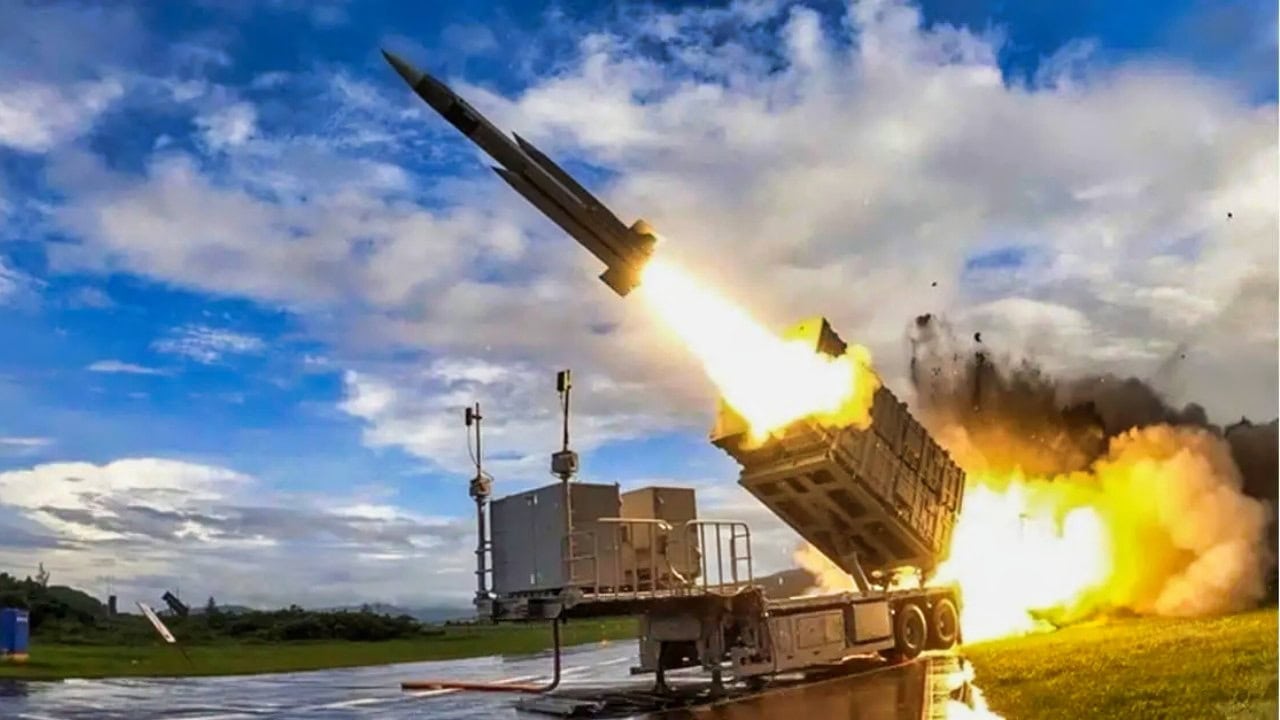
Qingtian Hypersonic Cruise Missile. Screenshot.
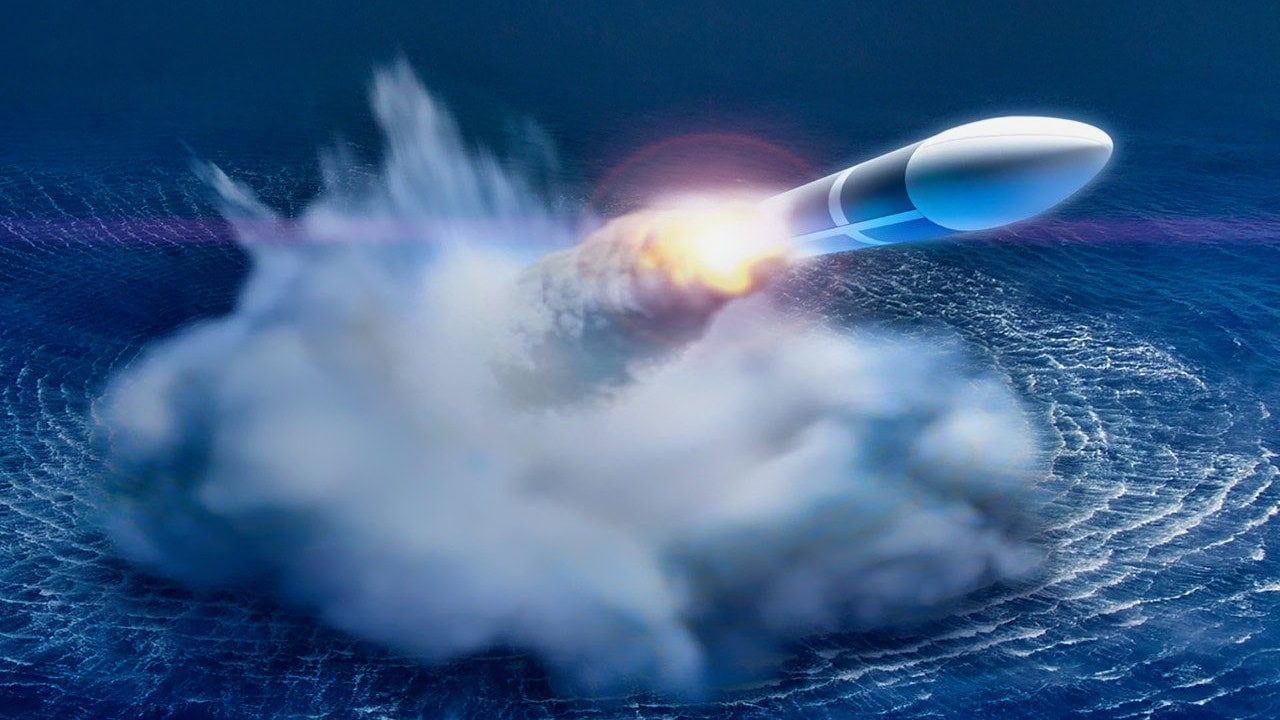
Mako Hypersonic Missile. Image Credit: Creative Commons.
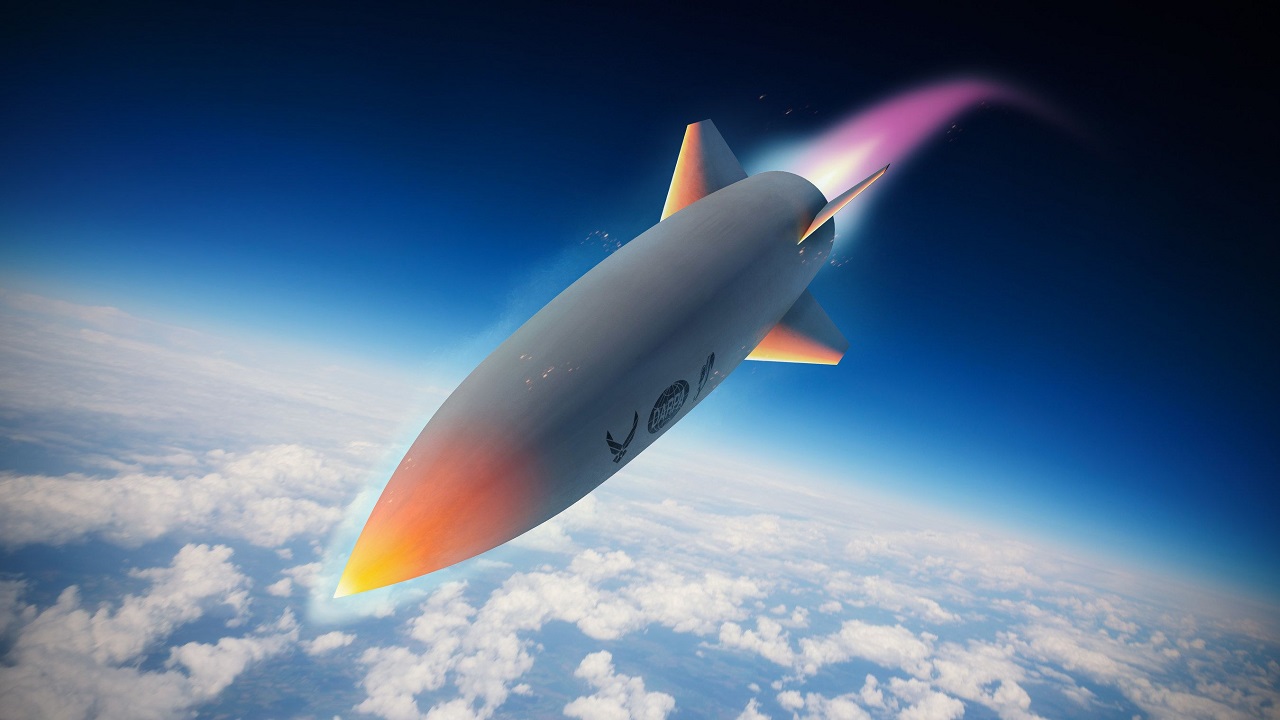
Hypersonic Missile Sample Image VIA DARPA.
Targeting is also being improved, as senior Army leaders publicly said several years ago that Pentagon weapons developers have been working on “tech insertion” software upgrades to eventually enable hypersonic weapons to destroy moving targets.
The PLA could seek to exploit the mismatch and use its hypersonic arsenal to target U.S. warships from a distance, preventing them from coming close enough to engage.
Should the U.S. Navy and Army operate with a commensurate ability to target and destroy PLA forces with hypersonic weapons, then China’s advantage is neutralized or “offset.”
Hypersonic Attack
Offensive hypersonic power is extremely critical, especially at this moment, given that emerging defenses against hypersonic weapons may not yet be mature enough to successfully “intercept” incoming hypersonic missiles.
Therefore, the presence of countervailing offensive hypersonic firepower capability is the optimal deterrent against a hypersonic attack.
Senior Army leaders say the emerging Dark Eagle could hit China from Guam, Moscow from London, and Tehran from Qatar. This targeting range is of great tactical significance, in large measure due to the speed of hypersonic weapons, which means target locations would have very little time to launch countermeasures or any kind of workable defense.
Not only that, hypersonic weapons travel so quickly from one radar aperture or field of view to another that it becomes extremely difficult, if not impossible, to establish a “continuous” target track of the weapon as it transits through space.
About the Author: Kris Osborn
Kris Osborn is the President of Warrior Maven – Center for Military Modernization. Osborn previously served at the Pentagon as a highly qualified expert in the Office of the Assistant Secretary of the Army—Acquisition, Logistics & Technology. Osborn has also worked as an anchor and on-air military specialist at national TV networks. He has appeared as a guest military expert on Fox News, MSNBC, The Military Channel, and The History Channel. He also has a Master’s Degree in Comparative Literature from Columbia University