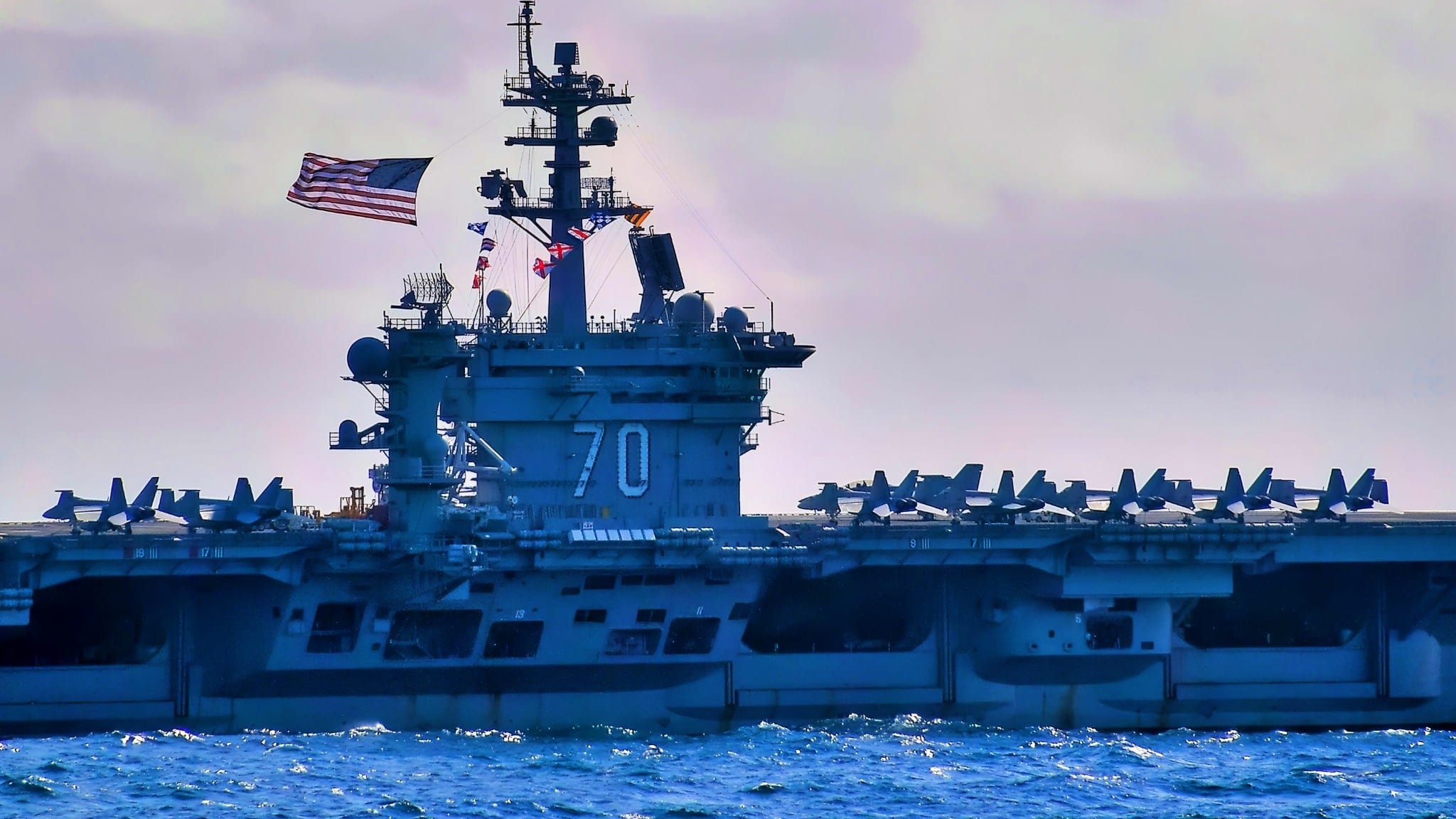
Key Points and Summary – A leaked Pentagon “overmatch” report has reignited a familiar argument: do China’s hypersonic and anti-ship missiles make U.S. aircraft carriers ineffective in the Western Pacific?
-The piece frames the threat around weapons like the DF-26, DF-17, and ship-launched systems associated with Type 055 destroyers, arguing that range and speed alone don’t equal a guaranteed kill.
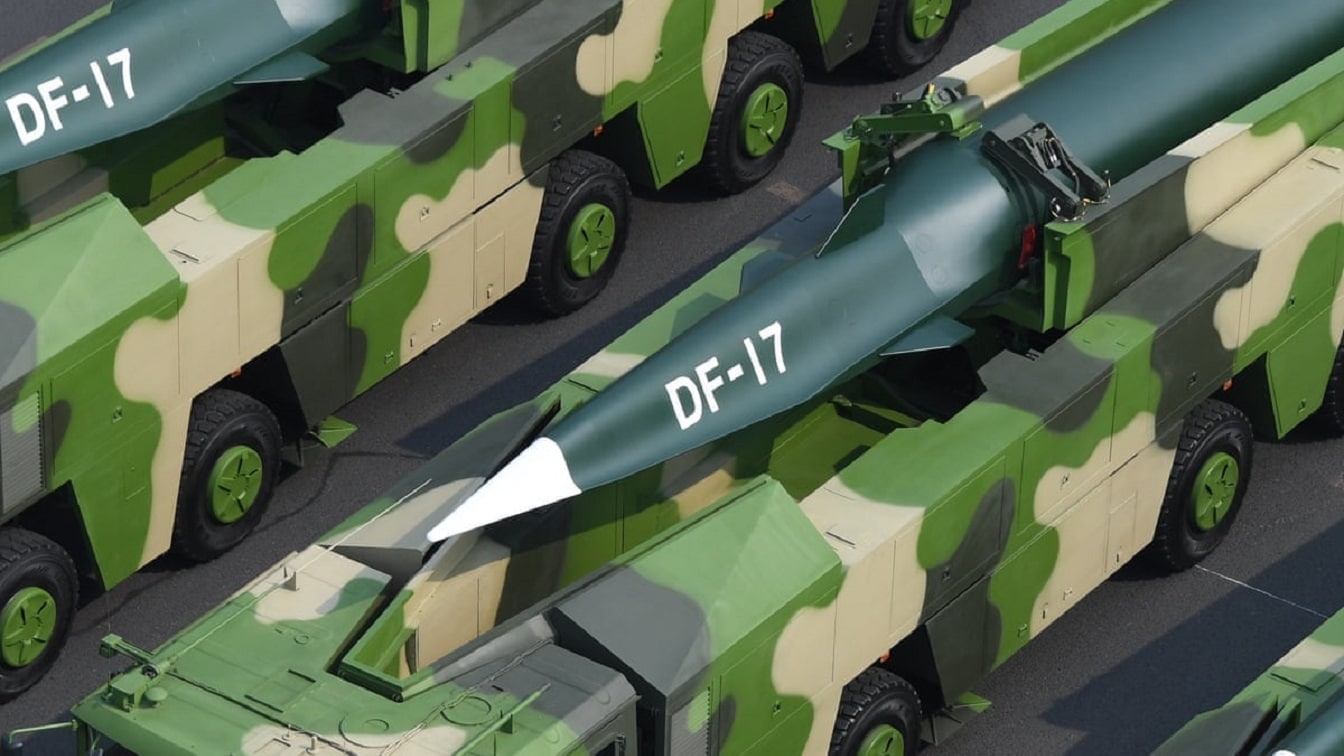
DF-17 Chinese Missile. Image Credit: Creative Commons.
-To actually disable a carrier at distance, China must execute a precise end-to-end targeting and guidance “kill chain” while surviving layered Carrier Strike Group defenses—Aegis, SM-series interceptors, NIFC-CA beyond-the-horizon cueing, and non-kinetic options like electronic warfare and directed energy.
The core issue is whether China can reliably connect sensors to shooters under fire.
Why Hitting a U.S. Aircraft Carrier Is Harder Than “2,000 Miles at Mach 10” for China’s Missiles
The often-debated question of whether Chinese hypersonic and anti-ship missiles make US Navy aircraft carriers obsolete or ineffective is again surfacing with renewed vigor, following numerous reports about the leaked Pentagon “overmatch” report.
This question of carrier vulnerability is by no means new. It needs to be viewed within the broader context of China’s hypersonic arsenal, yet speculation and reactive analysis following the release of the leaked report have taken a familiar tone.
The idea is as simple as it is potentially concerning for the Pentagon, as it is based upon the supposition that China’s often discussed “carrier-killer” anti-ship cruise missiles and hypersonic weapons could effectively target and destroy US Navy carriers out to ranges of 2,000 miles or more off the coast of mainland China.
Specifically, the DF-26 anti-ship missile is said by Chinese state-backed media to be capable of hitting targets with precision out to 2,000 miles.
In an operational sense, or simply within the broader deterrence equation across the Pacific, the key question seems to be whether US Navy carriers can deploy effectively in the South China Sea, the Taiwan Strait, or the Sea of Japan.
Chinese Arsenal of Missiles Ready to Fight Aircraft Carriers
The Chinese media cite China’s DF-17 hypersonic weapon as capable of traveling up to 2,000 miles at Mach 10. China also operates surface warships that launch hypersonic weapons, such as its YJ-21, which has been fired from the PLA Navy’s Type O55 Destroyer in recent years.
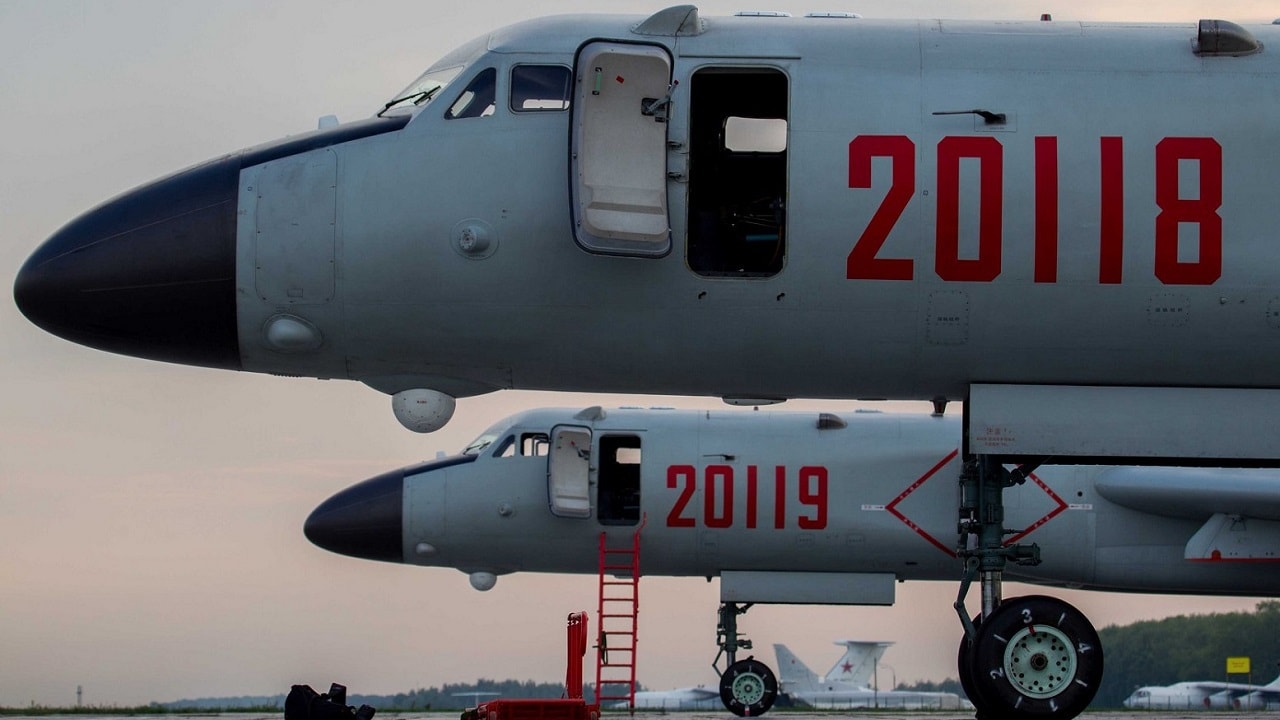
Image of Chinese JH-6 bombers on the ready. Image Credit: Creative Commons.
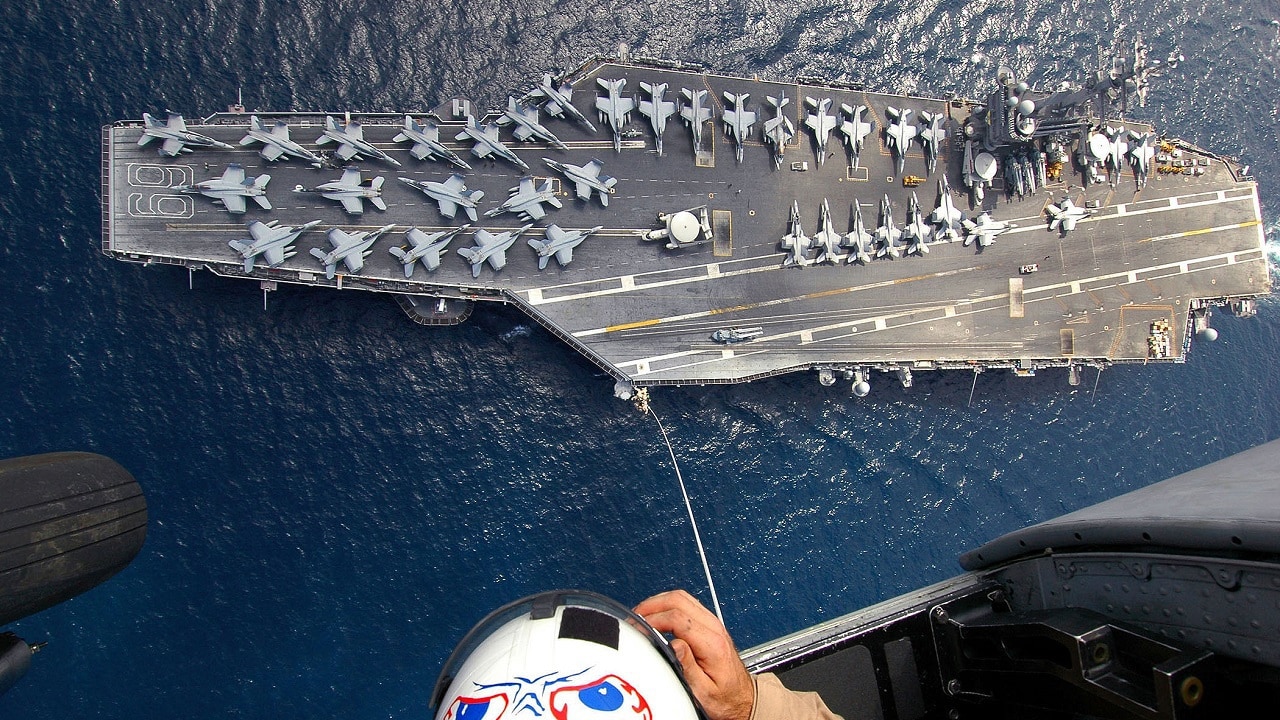
Explosive Ordnance Disposal 1st Class Christopher Courtney assigned to Explosive Ordnance Disposal Mobile Unit Six (EODMU-6), Det. 16 assist his team members during Special Purpose Insertion Extraction (SPIE) training from an SH-60 Seahawk helicopter. The Nimitz-class aircraft carrier USS Dwight D. Eisenhower (CVN-69) is deployed in support of Maritime Security Operations (MSO) and the global war on terrorism.
An air-launched YJ-21 has also armed its H-6K bomber. In total, even a cursory look at China’s expanding arsenal of hypersonic and guided ballistic missiles would indeed indicate a fast-growing threat, particularly given that several never-before-seen Chinese hypersonic weapons were put on display in September 2025 during its parade.
This tactical or strategic possibility or risk has been on the Pentagon’s radar for quite some time, and general comments about the leaked report suggest that wargames and computer simulations of a US-China engagement in the Pacific reinforced the ongoing concern that carriers could be destroyed quickly by Chinese missiles.
US Navy Layered Ship Defenses
Sinking a carrier with an anti-ship missile seems straightforward enough. Yet, the actual task of “hitting” and “disabling” a well-defended carrier 2,000 miles off the coast requires precision, guidance, targeting, and “hardened” sensors.
All of these variables, including potential space connectivity, in-flight maneuvering for hypersonics, and built-in precision-guidance sensors on the missiles themselves, need to operate together in a seamless, synchronized fashion and, perhaps most of all, elude a vast network of layered ship defenses.
US Navy carriers in the Pacific travel with protective Carrier Strike Groups, including cruisers and destroyers armed with integrated ship defenses, including the Aegis radar networked with drones, satellites, and fixed-wing surveillance aircraft, able to “detect” approaching weapons from beyond the horizon.
Carrier Strike Groups operate with both kinetic and non-kinetic defenses, including missiles and lasers. Navy ships operate with long-range interceptors such as the SM-3 Block IIA, which can intercept ICBMs as they re-enter the Earth’s atmosphere in the terminal phase.
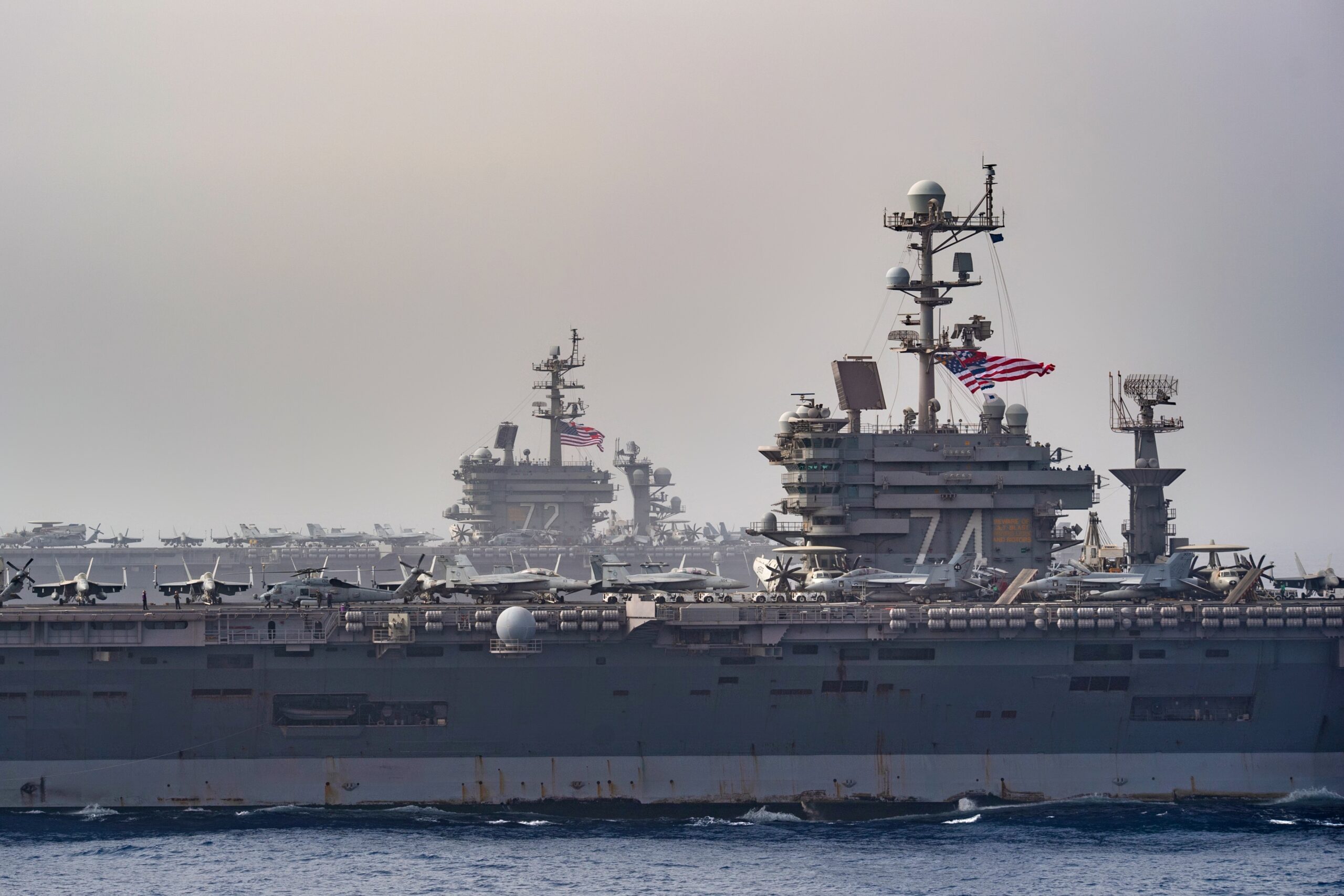
The aircraft carrier USS John C. Stennis (CVN 74) steams alongside the aircraft carrier USS Abraham Lincoln (CVN 72), background, in the Mediterranean Sea, April 24, 2019. The John C. Stennis Carrier Strike Group (CSG) 3 and Abraham Lincoln Carrier Strike Group (CSG) 12 are conducting dual carrier operations, providing opportunity for two strike groups to work together alongside key allies and partners in the U.S. 6th Fleet area of operations. John C. Stennis is underway in the Mediterranean Sea as part of the John C. Stennis Carrier Strike Group (JCSCSG) deployment in support of maritime security cooperation efforts in the U.S. 6th Fleet area of responsibility. (U.S. Navy photo by Mass Communication Specialist 3rd Class Grant G. Grady)
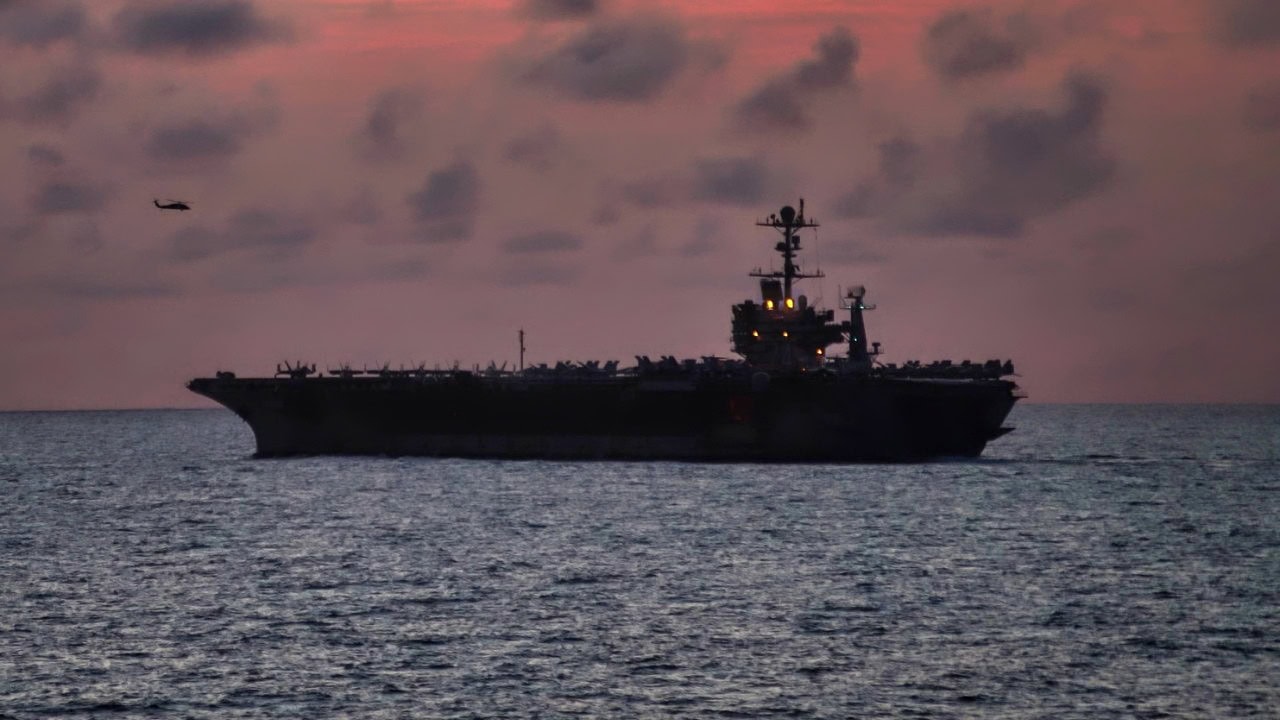
USS John C. Stennis Aircraft Carrier. Image Credit: Creative Commons.
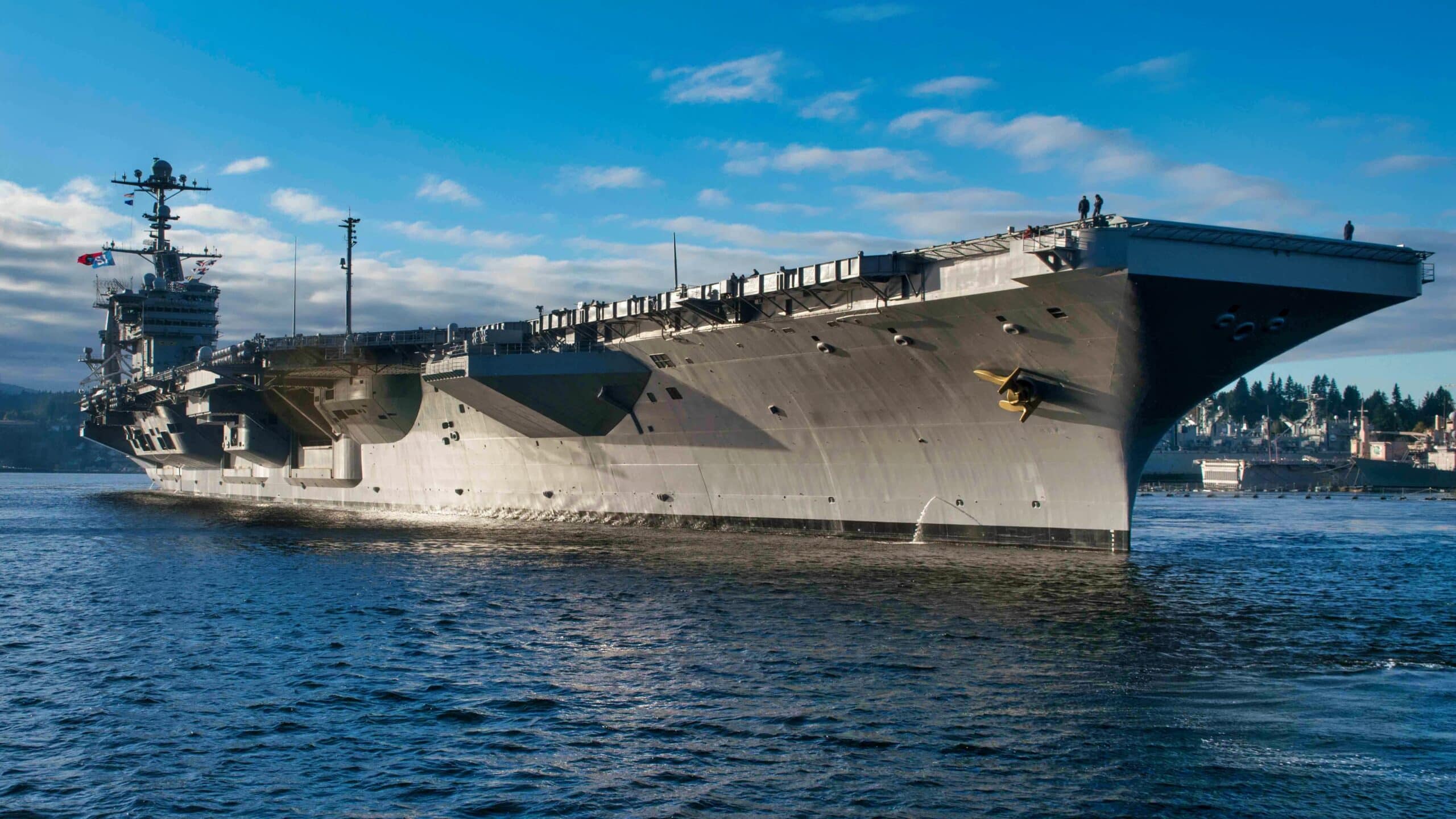
USS John C. Stennis Aircraft Carrier. Image Credit: Creative Commons.
Then there are closer-in interceptors, such as the SM-6 or the sea-skimming Evolved Sea Sparrow Missile Block 2, able to track and destroy cruise missiles flying closer to the surface of the ocean.
Beyond the Horizon
Navy destroyers also operate an integrated system called Naval Integrated Fire Control – Counter Air (NIFC-CA), in which a gateway aerial node, such as an E-2D Hawkeye surveillance plane or an F-35, transmits sensor data to ship-based radar and fire control from beyond the horizon.
With NIFC-CA, ship commanders have a much longer time window to detect incoming threats and decide on an optimal countermeasure; the system connects a ship-based SM-6 interceptor with Aegis radar and ship fire control to launch a defensive weapon earlier in the trajectory or flight path of an approaching missile.
The largest and perhaps most significant ship defenses are arguably those in the non-kinetic family, such as High-Powered Microwave or EW systems, which can potentially identify and “jam” or “disable” the guidance system of an incoming anti-ship missile.
About the Author: U.S. Navy Expert Kris Osborn
Kris Osborn is President of Warrior Maven – Center for Military Modernization. Osborn previously served at the Pentagon as a highly qualified expert in the Office of the Assistant Secretary of the Army—Acquisition, Logistics & Technology. Osborn has also worked as an anchor and on-air military specialist at national TV networks. He has appeared as a guest military expert on Fox News, MSNBC, The Military Channel, and The History Channel. He also has a Masters Degree in Comparative Literature from Columbia University.