
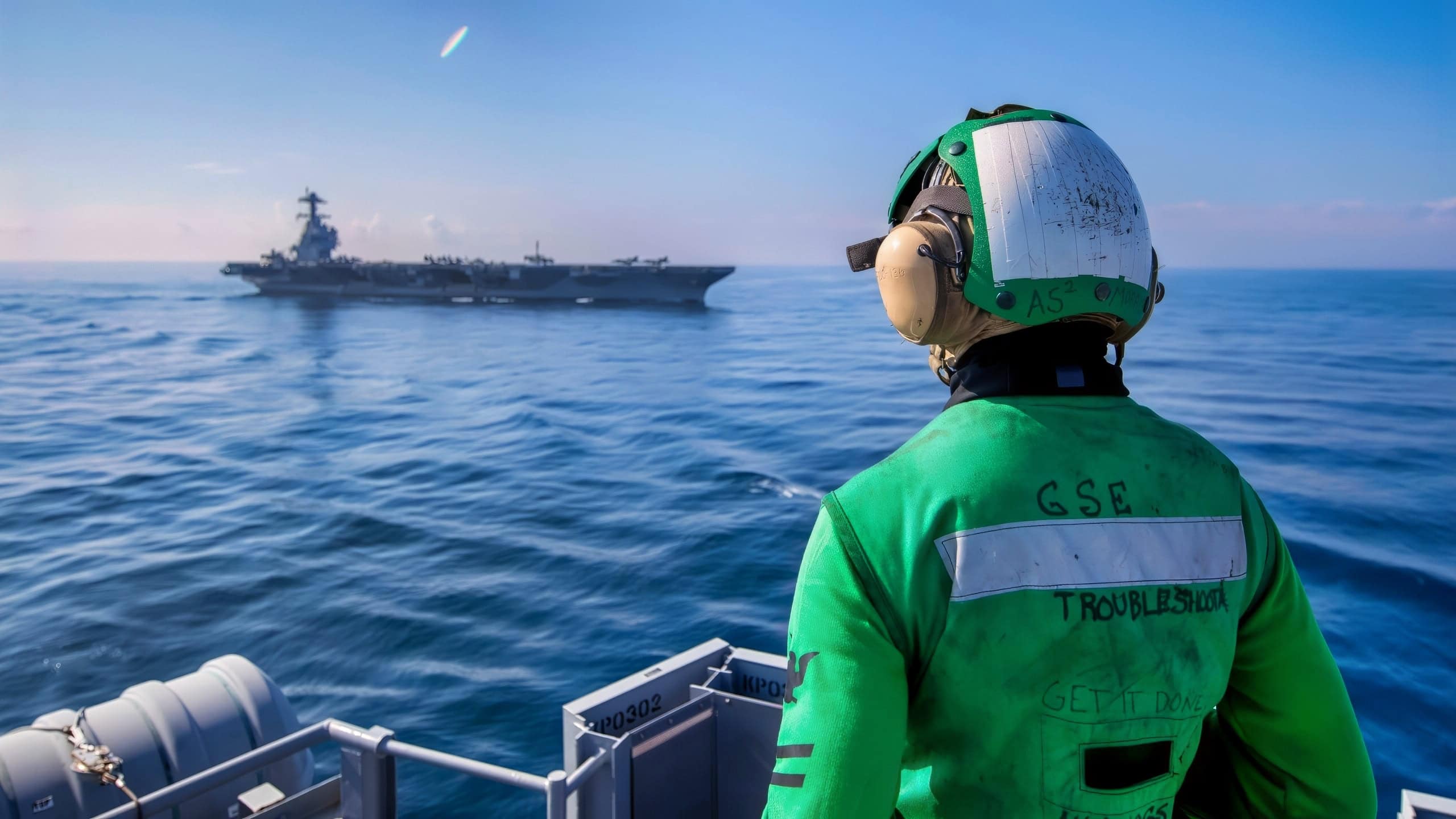
The USS John F. Kennedy was supposed to be the Navy’s lesson learned from the USS Gerald R. Ford’s troubled development. Instead, it’s two years behind schedule at $13.2 billion, delayed by the same Advanced Arresting Gear and weapons elevator problems that plagued the Ford — and the fleet desperately needs it now.
U.S. Navy’s Ford-class Carrier USS John F. Kennedy Hurrying to Active Duty
President John F. Kennedy was a heroic U.S. Navy sailor who worked hard to be the best leader he could be during his time in service. One could say that the Navy was his favorite branch of the military during his presidency. But Kennedy was not always enamored with the chain of command in the Navy during World War II. And he did not always trust what flag officers said when he occupied the White House.
He may have been a bit frustrated with naval brass if he were still alive. That’s because the new Gerald R. Ford-class USS John F. Kennedy super carrier is getting closer to fully entering active duty. However, there are still hurdles it must leap before going to sea full-time on a combat deployment.
Hopefully, It Will Be More Successful Than the USS Gerald R. Ford
The U.S. Navy is trying to speed up the process for the Kennedy supercarrier, but it must be put through its paces, which has taken longer than planned.
This is all the more concerning because the lead ship of the Ford-class, the USS Gerald R. Ford, has endured difficulty during its last deployment.
Its time at sea has been extended from duty in the Caribbean for counter-narcotics operations to a lengthy deployment to the Middle East to support Operation Epic Fury. Then the Ford had to deal with stinky sewage problems and a fire in one of the laundry rooms.
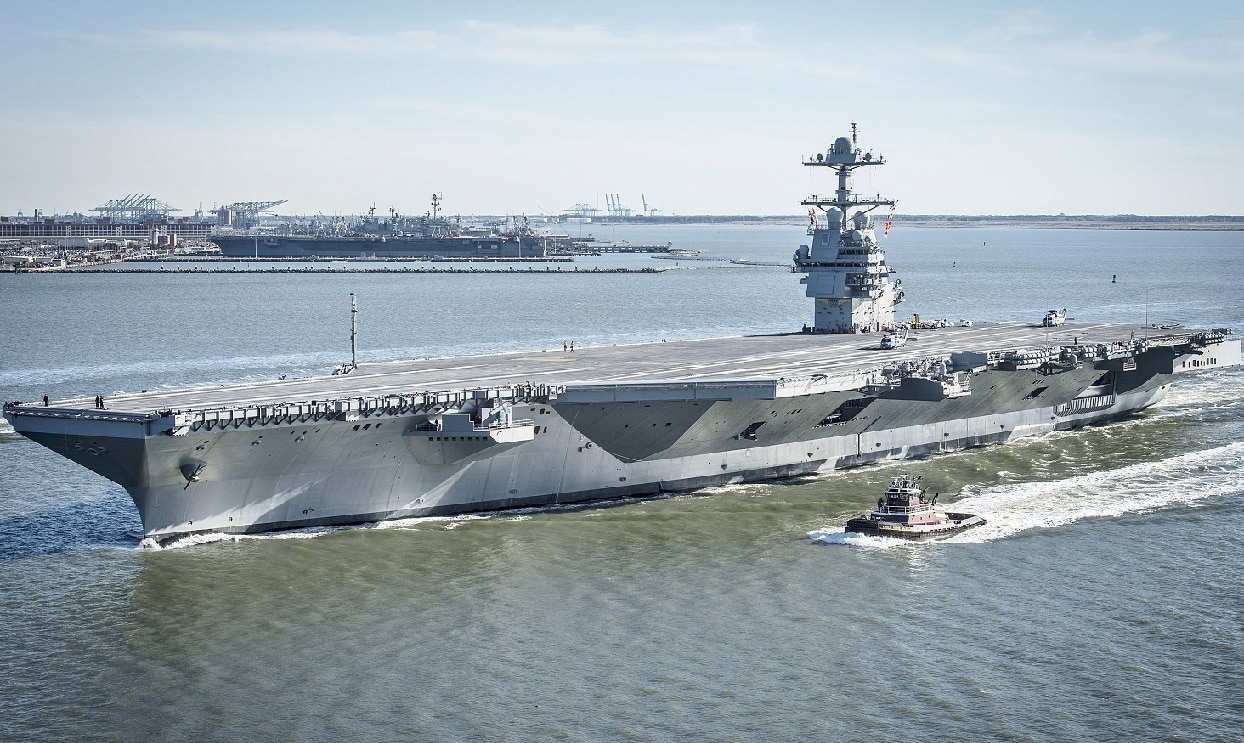
170408-N-WZ792-198 .NEWPORT NEWS, Va. (April 8, 2017) The future USS Gerald R. Ford (CVN 78) underway on its own power for the first time. The first-of-class ship — the first new U.S. aircraft carrier design in 40 years — will spend several days conducting builder’s sea trials, a comprehensive test of many of the ship’s key systems and technologies. (U.S. Navy photo by Mass Communication Specialist 2nd Class Ridge Leoni/Released)
It was diverted to a repair period in Greece and then was sent to Croatia for more work. It has since departed Croatia.
Navy Must Abide by ‘Rule of Thirds’
That puts pressure on the Navy to boost the timetable for the John F. Kennedy. Naval strategists use the “rule of thirds” to plan carrier operations.
At all times, one-third of carriers are at sea, one-third are preparing for deployment, and one-third are undergoing maintenance. With 11 carriers in the fleet, only three to four are typically on a cruise.
The USS Abraham Lincoln is left as the only carrier battling Iran, while the USS George H.W. Bush steams to Central Command soon after circling Africa.
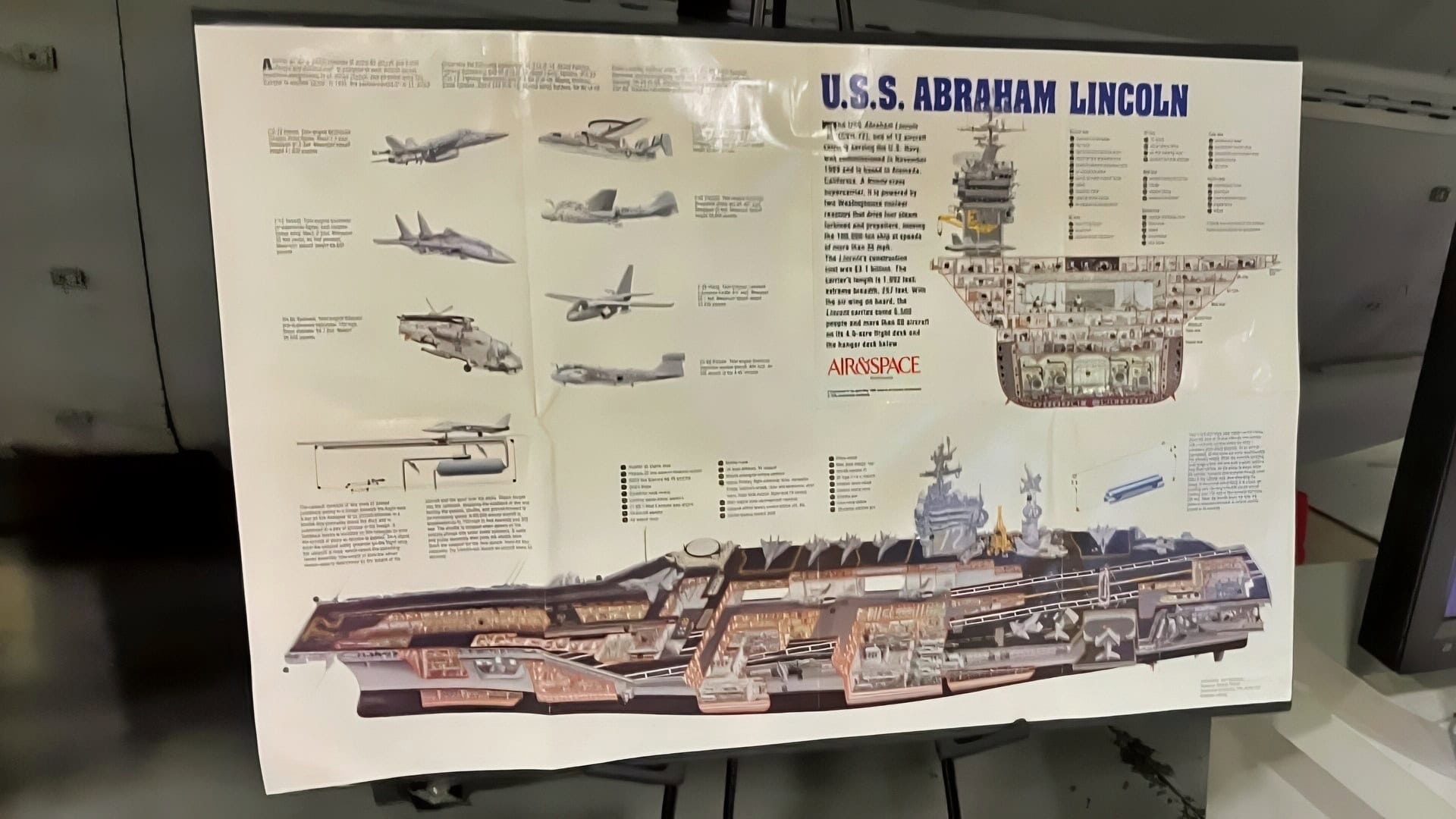
Aviation Museum of Kentucky USS Abraham Lincoln Carrier Photo. 19FortyFive.com Image.
The Navy Will Accept Kennedy In a Year
The USS Nimitz is undergoing one more deployment to South America before it retires. This keeps the total of carriers at 11, but the John F. Kennedy was supposed to be ready sooner. In July of 2025, the Navy announced the Kennedy would be delayed by two years before it was ready for active duty. It will now be delivered in March 2027.
“The CVN 79 delivery date shifted from July 2025 to March 2027 [preliminary acceptance TBD] to support completion of Advanced Arresting Gear (AAG) certification and continued Advanced Weapons Elevator (AWE) work,” according to the latest FY 2026 shipbuilding budget book, as noted by the U.S. Naval Institute.
Workers Are Toiling as Fast as They Can
A Navy spokesperson said the service is conducting work as quickly as possible and is “coordinating closely with stakeholders to ensure the fastest possible transition to fleet operations and a combat-capable carrier.”
The good news is that the Kennedy has met an important milestone this year. The carrier completed sea builder trials in February.
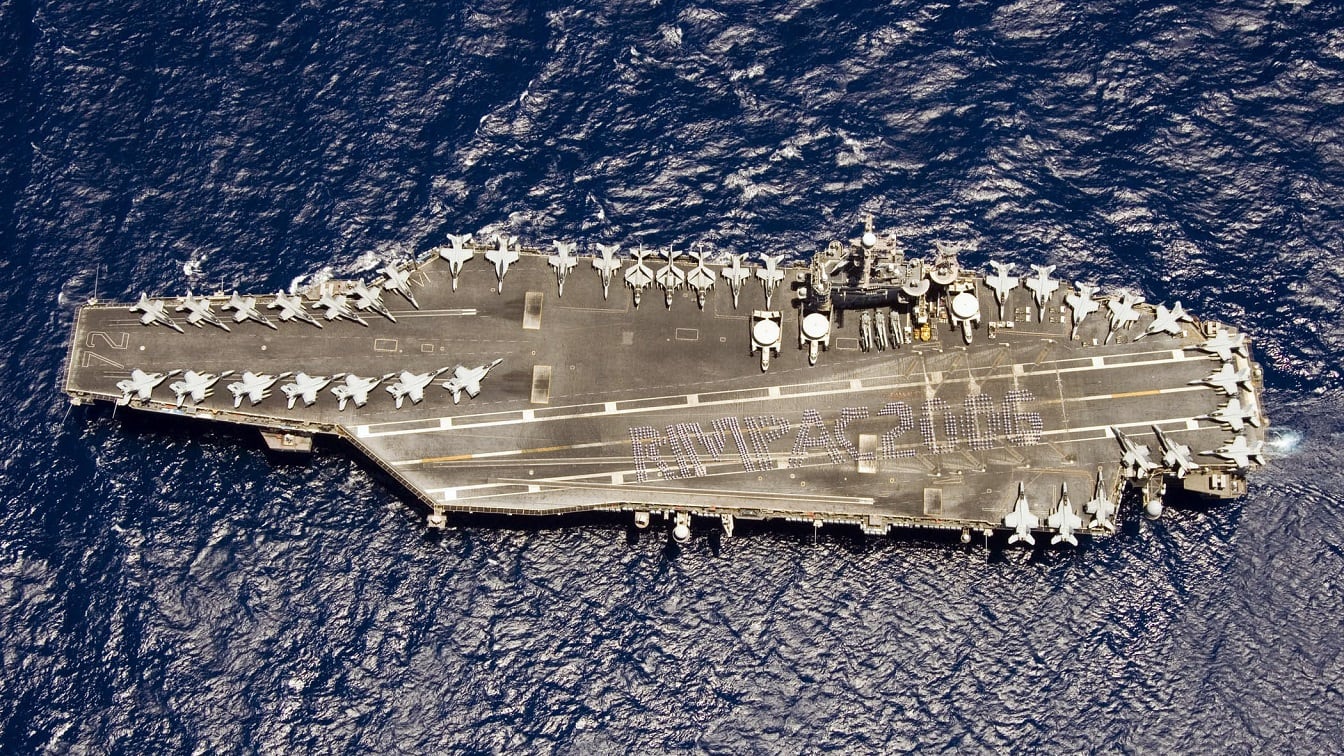
Aerial overhead view of US Navy (USN) Sailors aboard the USN Nimitz Class Aircraft Carrier USS ABRAHAM LINCOLN (CVN 72) spelling out RIMPAC 2006 on the flight deck of the ship during a photo exercise during Exercise Rim of the Pacific (RIMPAC) 2006 in the Pacific Ocean (POC). The exercise is designed to increase the tactical proficiency of participating units in a wide array of combined sea operations. RIMPAC 2006 brings together military forces from Australia (AUS), Canada (CAN), Chile (CHL), Peru (PER), Japan (JPN), the Republic of Korea (KOR), United Kingdom (UK) and the United States (US).
Thousands of People Had a Hand In the Kennedys’ construction.
“Seeing this Navy-industry team take CVN 79 to sea for the first time was nothing short of thrilling,” said Rear Admiral Casey Moton, Program Executive Officer for Aircraft Carriers. “Thanks to the tireless efforts of thousands of proud American workers across the maritime industrial base, we are one step closer to delivering another Gerald R. Ford-class aircraft carrier to the fleet,” according to a Navy news release.
‘Fast Cruise’ Is a Good Sign
After this phase of the new construction was complete, the Kennedy completed a five-day “Fast Cruise” to test the new additions and give the sailors a taste of what a deployment would be like.
Acceptance Trials Are Next
This mini-shakedown cruise will provide engineers, technicians, and specialists with the opportunity to gather data on what can be improved and what is operating efficiently. The next milestone in the Kennedy service life will be “acceptance trials.”
These at-sea inspections are a critical step in a carrier’s early life cycle. The nuclear reactors will be tested, the weapons systems will be evaluated, and the radar will be run through its paces.
First, work will be completed at Newport News Shipbuilding this spring. “The U.S. Navy’s Board of Inspection and Survey marks one of the last installments in a vessel’s journey before officially being delivered to the U.S. Navy,” according to the Navy Times.
Delays Have Been Frustrating
The John F. Kennedy was originally launched in 2019.
This has been a long road for the Ford-class carrier, and acceptance trials cannot come fast enough. There is still some construction to be done, but the five-day “Fast Cruise” is a good sign that the timelines are being met after delays with the Advanced Arresting Gear and the Advanced Weapons Elevator. These two systems have been pesky problems for the USS Gerald R. Ford as well.
The new carrier is 1,092 feet long and weighs 100,000 tons. “The Kennedys’ overall procurement cost was $13.2 billion,” a December 2025 Congressional Research Service report revealed, as Navy News noted.
President Kennedy would have been mollified by these updates on the progress of his namesake carrier.
The flat-top will be a marvel during its first official deployment. Having the Kennedy in “go mode” has the Navy excited about the possibility of it sailing in the Middle East, Europe, or the Indo-Pacific. The geopolitical hot spots are prolific, and the more carriers the Navy can get at sea, the better.
About the Author: Dr. Brent M. Eastwood
Author of now over 3,500 articles on defense issues, Brent M. Eastwood, PhD, is the author of Don’t Turn Your Back On the World: A Conservative Foreign Policy and Humans, Machines, and Data: Future Trends in Warfare, plus two other books. Brent was the founder and CEO of a tech firm that predicted world events using artificial intelligence. He served as a legislative fellow for U.S. Senator Tim Scott and advised the senator on defense and foreign policy issues. He has taught at American University, George Washington University, and George Mason University. Brent is a former U.S. Army Infantry officer. He can be followed on X @BMEastwood.