
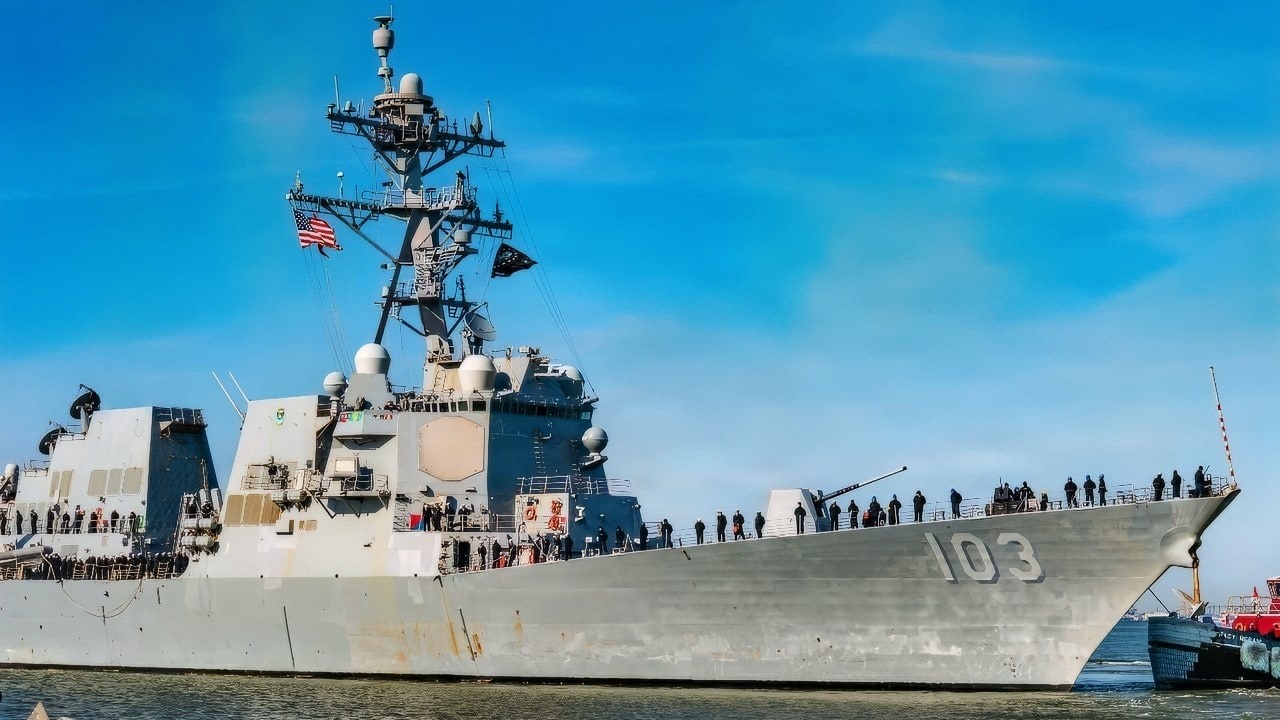
Iran just announced the Strait of Hormuz is open for commercial shipping — and oil prices crashed 13% to $88 per barrel within hours. But the opening is conditional: Iran tied it to the ceasefire with Lebanon, Trump’s blockade on Iranian shipping remains in full force, and the mines Iran lost track of are still being cleared.
Is the Strait of Hormuz Crisis Over? Well, Not Exactly
Iranian Foreign Minister Abbas Araghchi announced on Friday that passage through the Strait of Hormuz was once again permitted, and that the strait would remain open for commercial vessels for the duration of a U.S.-brokered ceasefire between Lebanon and Israel. U.S. President Donald Trump publicly announced the news in a statement published on Truth Social and recirculated by Rapid Response 47.
“The Strait of Hormuz is completely open and ready for business and full passage, but the naval blockade will remain in full force and effect as it pertains to Iran, ?only, until such time as our transaction with Iran is 100% complete,” the president wrote.
The announcement has already triggered a global market response, with oil prices falling by 13% and Brent crude dropping to around $88 per barrel, its lowest level since early March. But for how long is it open, and what exactly does “open” mean?
What Open Means – and What It Doesn’t
Friday’s announcement does not indicate a return to normal maritime conditions, but it does mean that commercial vessels are currently permitted to transit the strait through designated lanes coordinated with Iranian authorities, and without active interdiction threats.
What’s more, the operational environment is still militarized, with a heavy U.S. military presence. The United States continues to enforce a naval blockade specifically targeting Iranian shipping, with President Trump announcing that the blockade – which is placing increasing strain on the Iranian economy – will remain “in full force” until a deal is reached.
Among the reasons traffic through the strait has collapsed over the last month was not just the threat of attack, but the presence of Iranian naval mines. Throughout the conflict, Iranian forces laid multiple kinds of mines in the strait, including drifting and tethered variants that created an uncertain threat environment across critical transit routes.
Even Iran itself reportedly lost track of some of the mines it had deployed, complicating any attempt to reopen the strait and contributing to a near-total halt in traffic as ship operators refused to risk transit through waters that could not be declared safe. The result has been a de facto closure, with hundreds of vessels stranded or rerouted in recent weeks, and even limited movement requiring coordination and escort support, while accepting significant risk.
U.S. Central Command confirmed earlier this week that naval assets had begun clearing minefields to establish safe shipping corridors, while recent reporting also indicates that Iran had begun removing mines as part of an agreement with the United States. In a Truth Social post also issued on Friday, President Trump announced that Iran, with the support of the U.S., “has removed, or is removing, all sea mines.”
Why Oil Prices Just Plummeted
The scale of the fall in oil prices reflects just how important the Strait of Hormuz is to the global economy.
The waterway carries roughly one-fifth of global oil supply, making it the single most important maritime chokepoint in the global energy system – and that’s precisely why the Iranians have held it hostage following the destruction of its air force and navy.
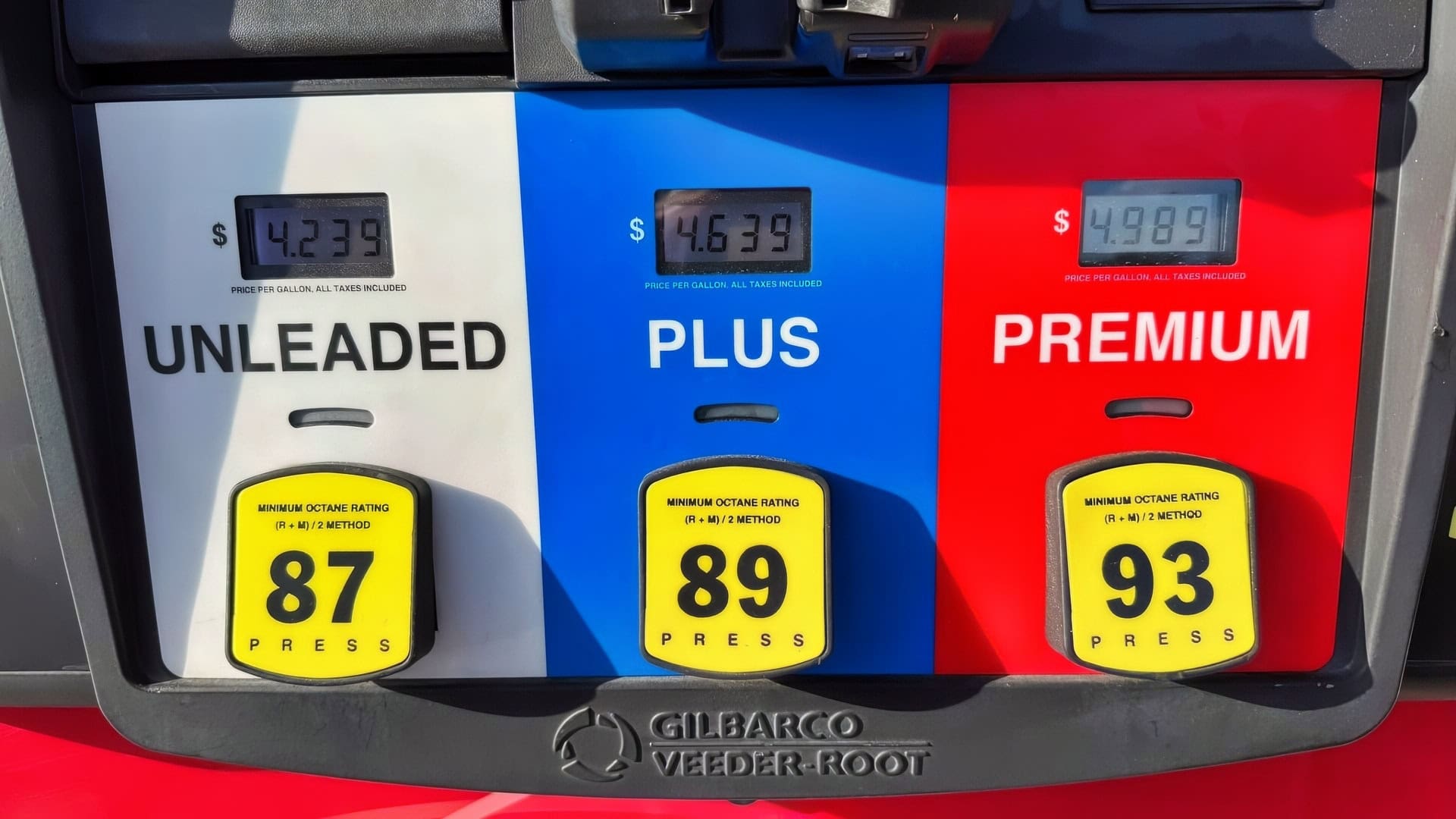
Gas Prices Outside of Walt Disney World. Taken by Harry J. Kazianis for 19FortyFive.com on 4/5/2026.
During the peak of the crisis, disruptions to shipping in the region pushed oil prices above $120 per barrel, creating one of the largest supply shocks in modern energy markets.
The reopening does not mean supply has fully recovered yet, though, with hundreds of tankers still delayed and shipping companies still assessing security risks before resuming normal transit.
Prices are falling, however, because the worst-case scenario – a sustained closure of Hormuz – is assessed to be less likely and is therefore being priced out. Markets are not reacting to stability, which is not yet guaranteed, but to a reduction in the probability of a catastrophic disruption.
Does Lebanon Now Determine the Future Of Hormuz?
Speaking in an interview carried by Iranian state media and reported by Reuters, Iranian Foreign Minister Abbas Araghchi said that commercial shipping through the Strait of Hormuz would remain open only under the current ceasefire conditions, making the strait’s opening dependent on ongoing de-escalation efforts between Lebanon and Israel. Araghchi said that passage through the strait was “completely open” for commercial vessels as long as current conditions hold, referring to the ceasefire framework that prevents Israel from continuing to target Iranian proxies in Lebanon.
Israeli strikes against Lebanon were part of a strategy to degrade Iranian power by targeting its proxies, including Hezbollah, which is its main force inside Lebanon. The group plays a central role in Iran’s regional strategy, having been built with Iranian support in the 1980s and continuing to receive funding, weapons, and training from Iran’s Islamic Revolutionary Guard Corps. Hezbollah operates as both a military force and a political organization. It has seats in Lebanon’s parliament, participates in governing coalitions, and even controls areas in southern Lebanon and parts of Beirut where it runs its own security and logistics networks.
Its military capability is also significant. Estimates place its force size at roughly 40,000 to 50,000 fighters, with an arsenal that includes more than 100,000 rockets and missiles.
That combination of military strength and political influence means that Hezbollah can operate independently of the Lebanese government in many respects, and in practice, it has more freedom of action than the Lebanese Armed Forces in parts of the country. This is why Lebanon matters in this context, and why the regime in Iran insists that Israel refrains from continued strikes against one of its strongest proxies.
Europe Moves to Secure Hormuz – But May Be Too Late
European leaders are also moving to secure the Strait of Hormuz, and while their planning may prove to be long-term, their response comes much later than U.S. President Donald Trump had anticipated or hoped for. On Friday, French President Emmanuel Macron and British Prime Minister Keir Starmer publicly welcomed the reopening of the strait but said the current arrangement is insufficient.
Speaking after a meeting in Paris involving around 50 countries and international organizations, Macron said that all parties must ensure the “full, immediate and unconditional reopening” of the waterway, while Starmer stated that any agreement must become “lasting and workable.”
“It’s good news that the Strait of Hormuz has now reopened. This must be a long lasting and workable solution, without tolls or restrictions on routes. Today we announced our joint plan with France and other international partners to protect freedom of navigation. We need to see a return to peace and stability, and a permanent ceasefire,” Starmer wrote in an X post on Friday.
Both leaders confirmed that planning is underway for a multinational maritime security mission designed to protect shipping in the Gulf. Starmer said the force would deploy “as soon as conditions allow,” with military planners set to meet in London in the coming days to develop the framework.
The timing, however, raises questions about Europe’s relevance in the conflict. The strait has already reopened under a U.S.-Iran agreement, with American naval forces maintaining control of access and Iran setting the terms of the Lebanon ceasefire. That leaves Europe attempting to build a security framework after the key actors have already established one, and a lasting deal finally looks to be in sight.
About the Author: Jack Buckby
Jack Buckby is a British researcher and analyst specializing in defense and national security, based in New York. His work focuses on military capability, procurement, and strategic competition, producing and editing analysis for policy and defense audiences. He brings extensive editorial experience, with a career output spanning over 1,000 articles at 19FortyFive and National Security Journal, and has previously authored books and papers on extremism and deradicalization.