
In 2012, the UAE’s Abu Dhabi Crude Oil Pipeline went operational — 236 miles of steel moving 1.5 million barrels per day, completely clear of the Strait of Hormuz. Washington didn’t notice, and a decade later, the world is in an oil crisis because nobody scaled the solution that was already in place.
How to Solve the Strait of Hormuz Crisis and Not Start World War III
In 2008, the United Arab Emirates began laying pipe across 236 miles of desert, and Washington didn’t notice. When the Abu Dhabi Crude Oil Pipeline went operational four years later — capable of moving 1.5 million barrels a day entirely clear of the Strait of Hormuz — policy circles filed it away as an energy infrastructure story and moved on.
It wasn’t. It was a geopolitical judgment rendered in steel and concrete.
That distinction matters now more than ever, as the Hormuz bypass question moves from the think-tank circuit to genuine policy debate.
The argument for pipeline infrastructure as a long-term answer to Iran’s chokehold on global energy is not hypothetical.
It is partially operational. And the actors who built it did so for reasons that make the strategy far more durable than anything Washington might engineer from the outside.
Why the Gulf States Already Did the Work
Riyadh and Abu Dhabi did not build bypass infrastructure because the State Department asked them to.
They built it because rational actors with significant shares of the world’s proven reserves don’t sleep easily when their entire export revenue stream can be interdicted at a 21-mile bottleneck by a hostile neighbor.
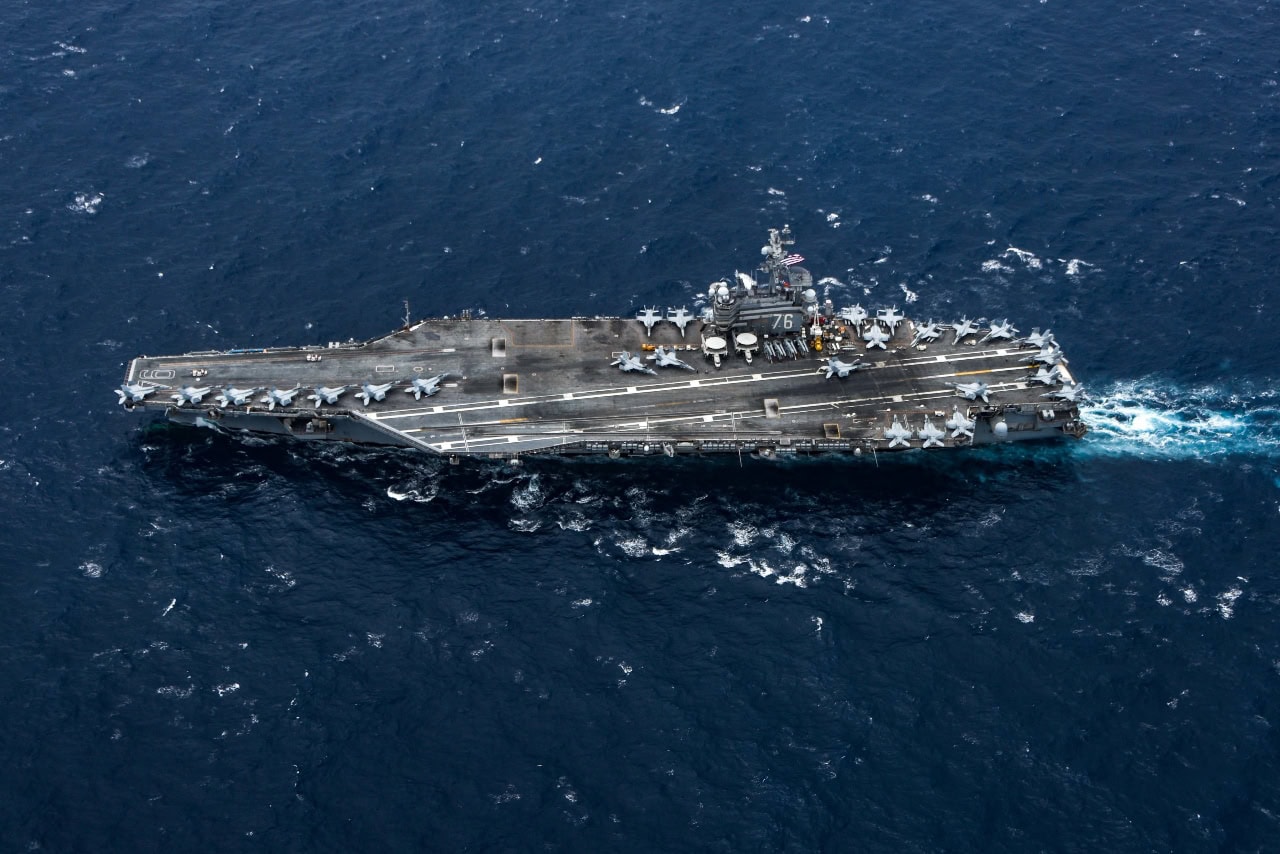
210624-N-BR419-1091 INDIAN OCEAN (June 24, 2021) The U.S. Navy’s only forward-deployed aircraft carrier, USS Ronald Reagan (CVN 76), steams in the Indian Ocean. Ronald Reagan, the flagship of Carrier Strike Group 5, provides a combat-ready force that protects and defends the United States, as well as the collective maritime interests of its allies and partners in the Indo-Pacific region. (U.S. Navy photo by Mass Communication Specialist Seaman Oswald Felix Jr.)
Saudi Arabia’s Petroline — running from Abqaiq to Yanbu on the Red Sea — has been moving crude since the 1980s, with capacity approaching five million barrels per day.
The UAE’s Fujairah line followed. Both run well below their throughput ceilings. Neither country built this to accommodate Western comfort. They built it for themselves.
That is precisely why the strategy is worth accelerating. Western policy does not need to persuade anyone against their interests. The groundwork is already laid, the motivation is already there, and investment is already moving — slowly.
Providing capital, technology partnerships, and diplomatic alignment behind infrastructure that Gulf producers want anyway is about as low-friction a policy lift as foreign policy ever offers.
The strategic logic is also simpler than critics allow. Iran’s leverage over Hormuz does not require an actual closure to be effective. The threat alone spikes markets, inflates risk premiums, and constrains the options of any government dependent on Gulf energy flows.
Credible bypass capacity doesn’t have to make Hormuz irrelevant — it has to make the threat less decisive.
A chokehold from which 25 or 30 percent of volume can be redirected is a weaker instrument than one that holds everything hostage.
And a credible commitment to expanding that capacity communicates something important to Tehran: the clock on its leverage is running.
Where the Argument Runs Into Trouble
The case is strong. It is not clean.
The most immediate problem with the Saudi route is that it doesn’t escape a chokepoint — it trades one for another. Petroline terminates at Yanbu on the Red Sea. At that point, tankers must transit the Bab al-Mandab Strait, the slim channel between Yemen and Djibouti.
Houthis, Iranian proxies, have harassed commercial traffic there with drones and missiles since late 2023. That passage is not a bailout. It’s another chokepoint run by different people.

Dec. 4, 2017) Sailors man the rails as the Navy’s forward-deployed aircraft carrier, USS Ronald Reagan (CVN 76), arrives at Commander, Fleet Activities Yokosuka after a scheduled patrol. The Ronald Reagan Carrier Strike Group conducted 87 days of strike group operations in the Western Pacific, including the waters south of Japan, the Philippine Sea and the South China Sea. Ronald Reagan provides a combat-ready force, which protects and defends the collective maritime interests of the U.S. and its allies and partners in the Indo-Asia-Pacific region. (U.S. Navy photo by Mass Communication Specialist 2nd Class Janweb B. Lagazo/Released)
Redirecting crude through Yanbu without a parallel, sustained commitment to Red Sea security doesn’t solve the problem. It relocates it. The UAE’s Fujairah terminal is the cleaner model: it opens directly to the Gulf of Oman with no secondary chokepoint. That is the approach worth scaling, not the Saudi Red Sea route alone.
Fixed pipelines are also targetable. The 2019 Abqaiq attack demonstrated what sophisticated drone and missile strikes can do to Saudi energy infrastructure. A longer network is a longer target. Hardening and redundancy have to be design priorities from the outset, not retrofits under pressure.
The gas problem tends to get elided in these discussions, and it shouldn’t. The pipeline bypass case works for crude oil. For LNG, it largely doesn’t. Qatar is the world’s largest LNG exporter, shipping roughly 80 million tons a year, nearly all of it through Hormuz.
That gas cannot be rerouted overland the way crude can. LNG requires cryogenic handling, dedicated export terminals, and purpose-built receiving infrastructure at the destination.
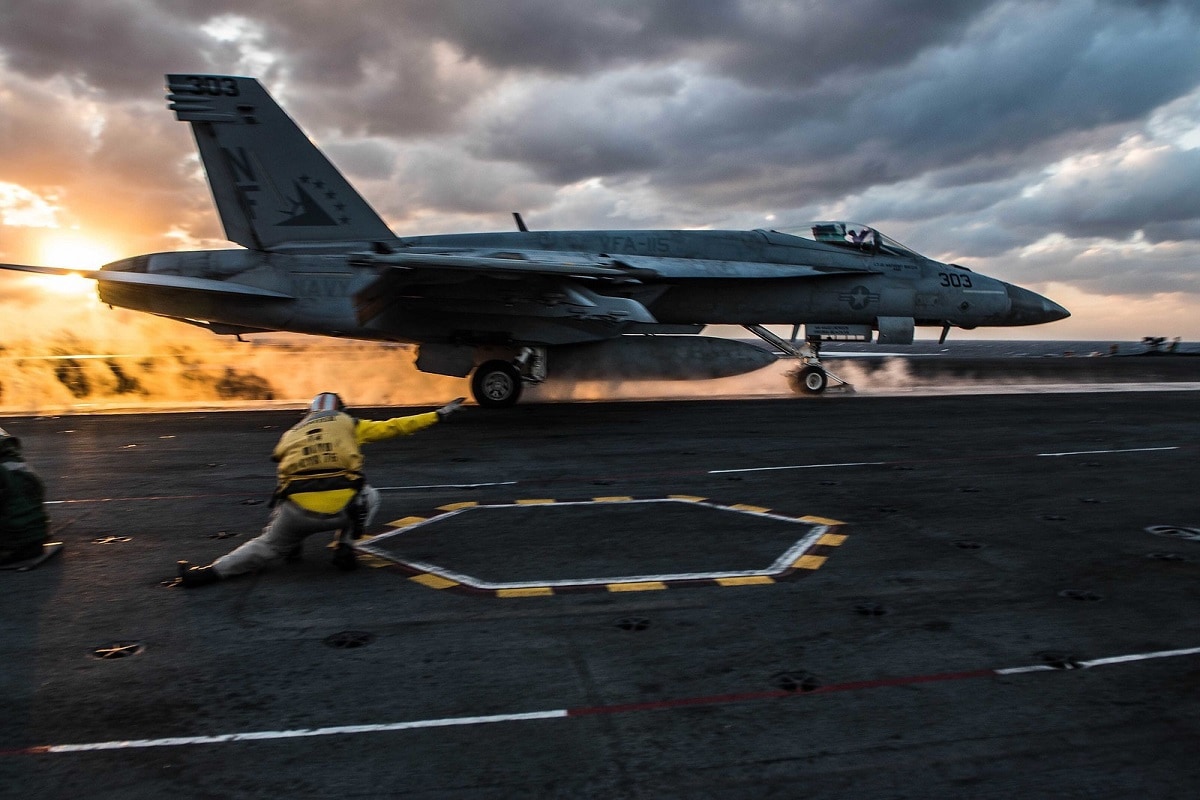
A U.S. Navy F/A-18E Super Hornet of Strike Fighter Squadron (VFA) 115 launches from the flight deck of the aircraft carrier USS Ronald Reagan (CVN 76) in the western Pacific Ocean Nov. 11, 2017. The Ronald Reagan, Theodore Roosevelt and Nimitz strike groups are underway conducting flight operations in international waters as part of a three-carrier strike force exercise. The U.S. Pacific Fleet has patrolled the Indo-Pacific region routinely for more than 70 years promoting regional security, stability and prosperity. (U.S. Navy photo by Mass Communication Specialist 2nd Class Janweb B. Lagazo)www.dvids.hub.net
None of that exists in scalable form outside the Gulf. Iran’s leverage over gas markets through the Strait is a separate, harder problem — and pretending the pipeline argument resolves it does more damage to the case than acknowledging it plainly.
Finally, the financing environment is more difficult than it was a decade ago. Long-lived hydrocarbon infrastructure investment faces ESG headwinds and energy transition pressures that are real constraints, not mere rhetoric. The capital will not organize itself.
The Earthmovers Didn’t Wait
The immediate policy ask is not complicated. The UAE’s Fujairah terminal is Hormuz-free, underutilized, and already proven at scale. Gulf producers want to expand it. They have the motivation and have already put in the money. What they need from Washington is capital, technology, and diplomatic cover — none of which requires a new doctrine or a new bureaucracy.
The Gulf producers have the desire, the capital, and a 10-year head start. Washington has leverage it hasn’t exercised and a policy it hasn’t supported. That is a decision, not a reality. It needs to be viewed as such
About the Author: Dr. Andrew Latham
Andrew Latham is a non-resident fellow at Defense Priorities and a professor of international relations and political theory at Macalester College in Saint Paul, MN. You can follow him on X: @aakatham. He writes a daily column for 19FortyFive.com.