
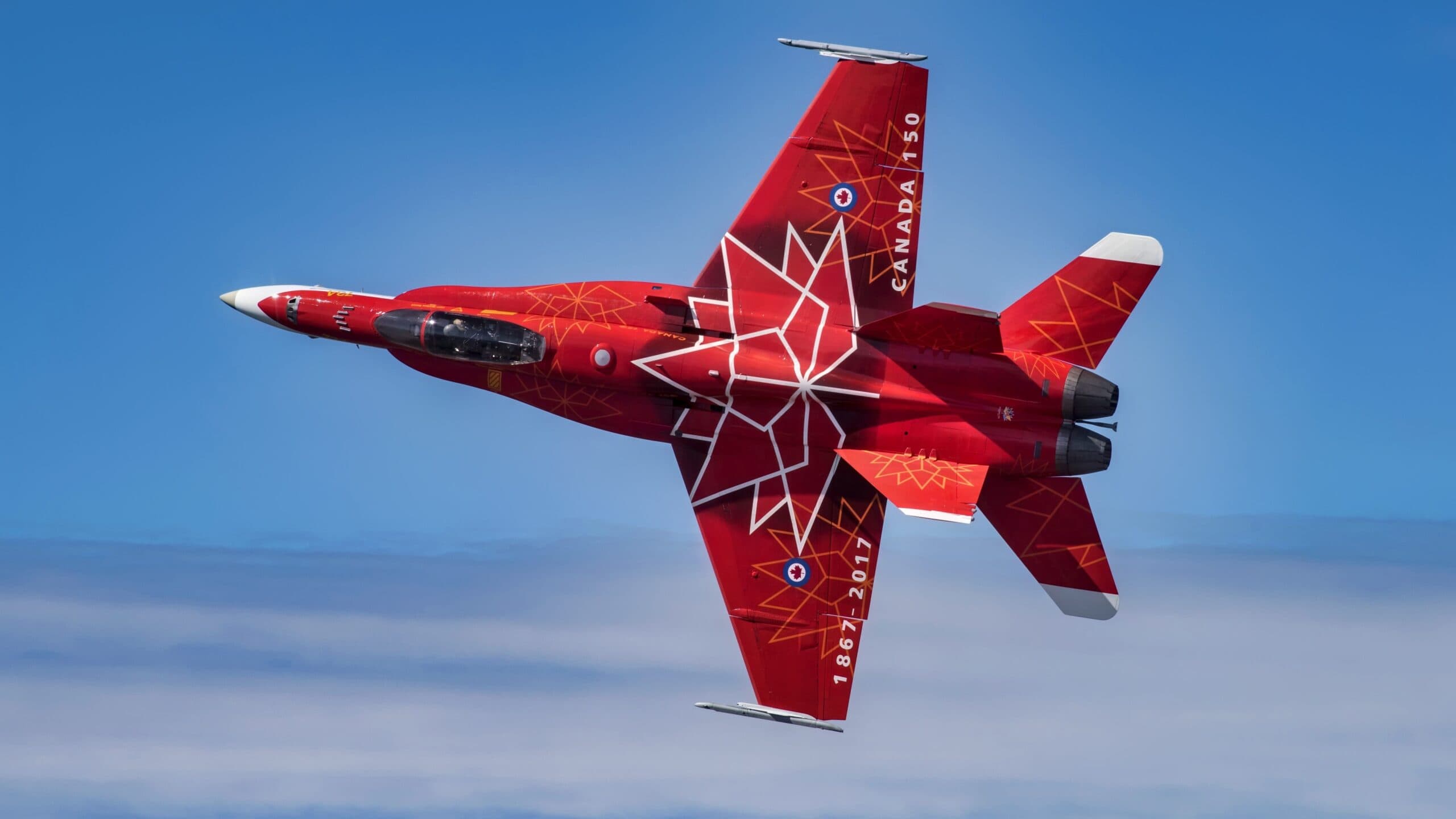
Canada will integrate the AIM-120D-3 missile into its CF-18 fleet. The timing coincides with Canada’s transition to a new fleet, presumably of F-35s, and extends the relevance of the aging fourth-generation CF-18s amid rising Arctic and NATO demands.
CF-18 Upgrade Coming: Context of the Fleet
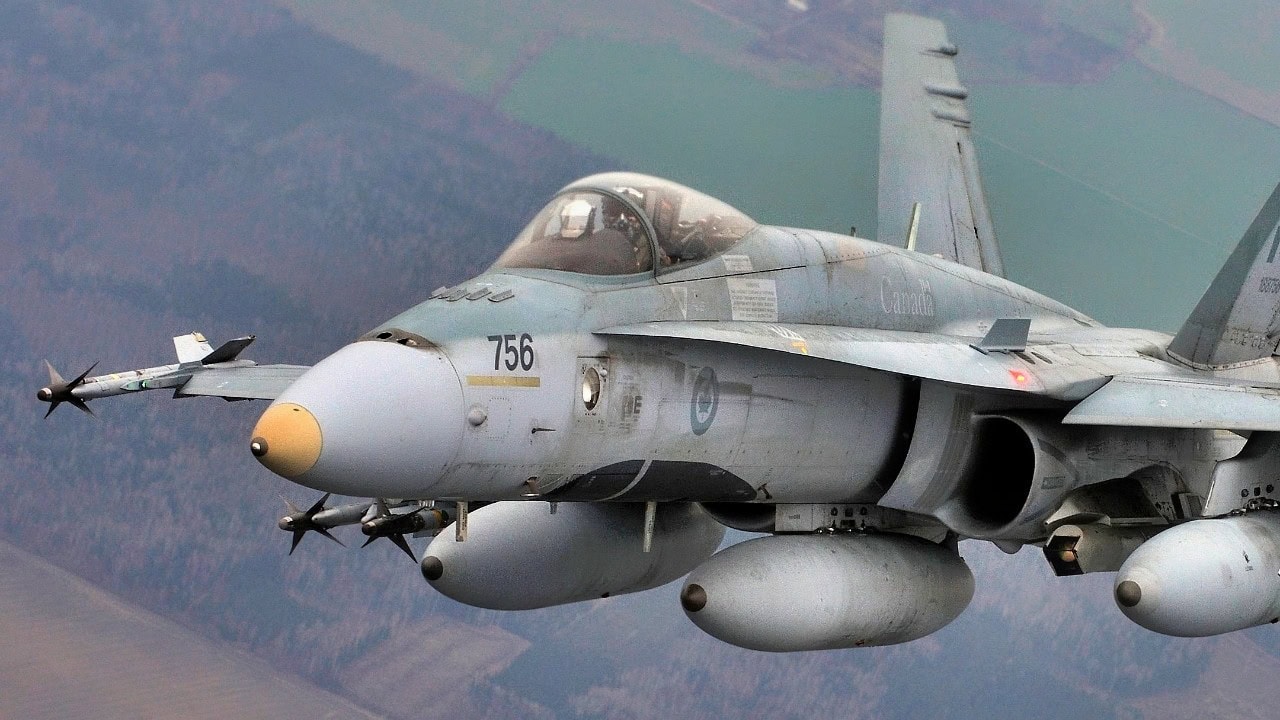
A CF-18 Hornet from the Canadian Air Task Force Lithuania flies over Lithuania on November 20, 2014 for the NATO Baltic Air Policing Block 36 during Operation REASSURANCE.
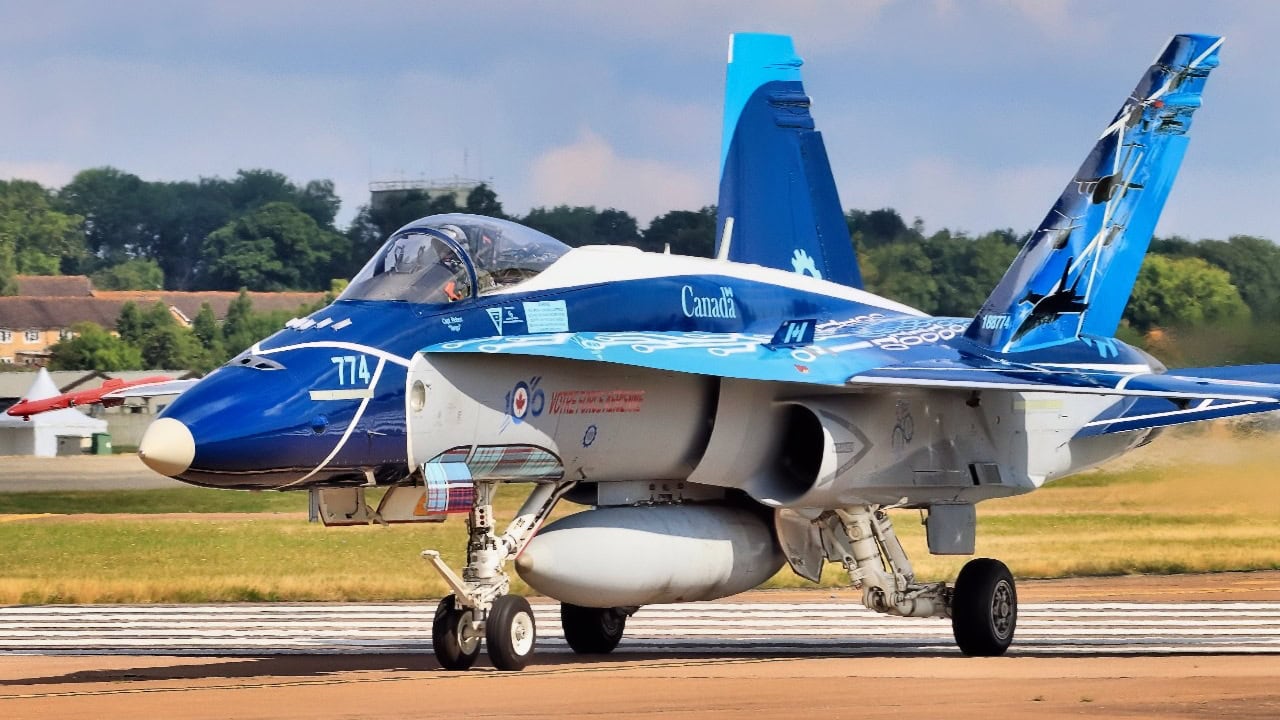
CF-18 Canada Air Force.
The Royal Canadian Air Force relies on the CF-18, a modified version of the F/A-18A/B variant. The jet has been reliable, serving in a variety of roles, including air policing, NORAD interception, and NATO deployments.
The airframes are old, but the platform is essential to Canada’s force structure—hence the Hornet Extension Project, which will help maintain the fleet’s relevance until a replacement can arrive.
AIM-120D-3 Tech Specs
The AIM-120D-3 is a beyond-visual-range (BVR) air-to-air missile with active radar homing. Its estimated range is more than 100 miles, and with its inertial navigation guidance system, the missile can adjust mid-course using datalink updates from the launching aircraft. For the terminal phase, the AIM-120D-3 uses active radar. The D-3 upgrades include improved GPS accuracy, enhanced anti-jamming capability, and better electronic counter-countermeasures. In short, the D-3 was optimized for contested electronic environments.
Integration Challenges
But the AIM-120D-3 is not just a plug-and-play device; it requires avionics integration and fire control updates. Testing will occur at Tyndall Air Force Base to assess radar compatibility, mission computer updates, and weapons interface. This is a complex, multi-agency effort, involving the RCAF, U.S. labs, and contractors. So while integrating modern weapons onto legacy jets makes sense from a tactical and strategic perspective, it is a technically intensive process.
Tactically, the update is worth it.
The new missiles give the CF-18 a greater engagement range, improving survivability by providing a first-shot advantage. (In BVR combat, the first shooter often wins.)
The CF-18’s stand-off interception is improved, too, with enhanced ability to intercept bombers and cruise missile carriers. The upgrade follows the trend of networked warfare, enabling offboard targeting by airborne early warning aircraft and other fighters. The upgrade enhances the platform’s relevance by mitigating the jet’s fourth-generation limitations with a modern missile system.
Strategically, the missile upgrade also matters.
The RCAF is charged with defending the Arctic, which is characterized by vast distances requiring long-range engagements. Because of the Arctic’s scale, faster interception is critical.
The RCAF also fills an important role defending the North American continent through NORAD, so it needs a credible interception capability. NATO contribution is another factor.
The new missile system enhances interoperability between the CF-18 fleet and allied systems, allowing for smoother participation in coalition air operations. All of this buys the Canadians time during the transition period.
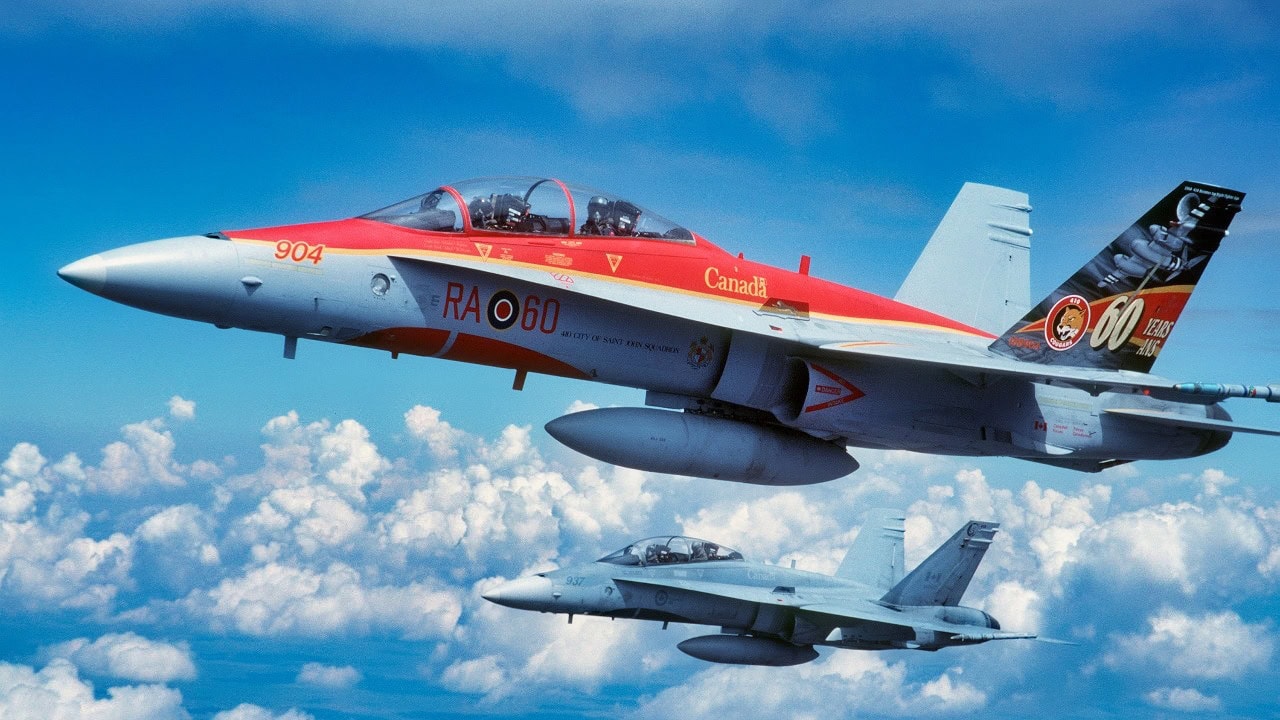
Two Canadian Forces, 410 Squadron CF-188B Multi-Role Fighters, one painted in special anniversary colors, flying over the Utah Test and Training Range (UTTR) for planned engagements during the Tiger Meet of the Americas. The Inaugural Tiger Meet of the Americas brought together flying units from throughout North America that have a Tiger or large cat as their unit symbol. The Tiger Meet of the Americas closely mirrors the North Atlantic Treaty Organization (NATO)/Europe Tiger Meet in its goal of fostering camaraderie, teamwork and tactics familiarization.
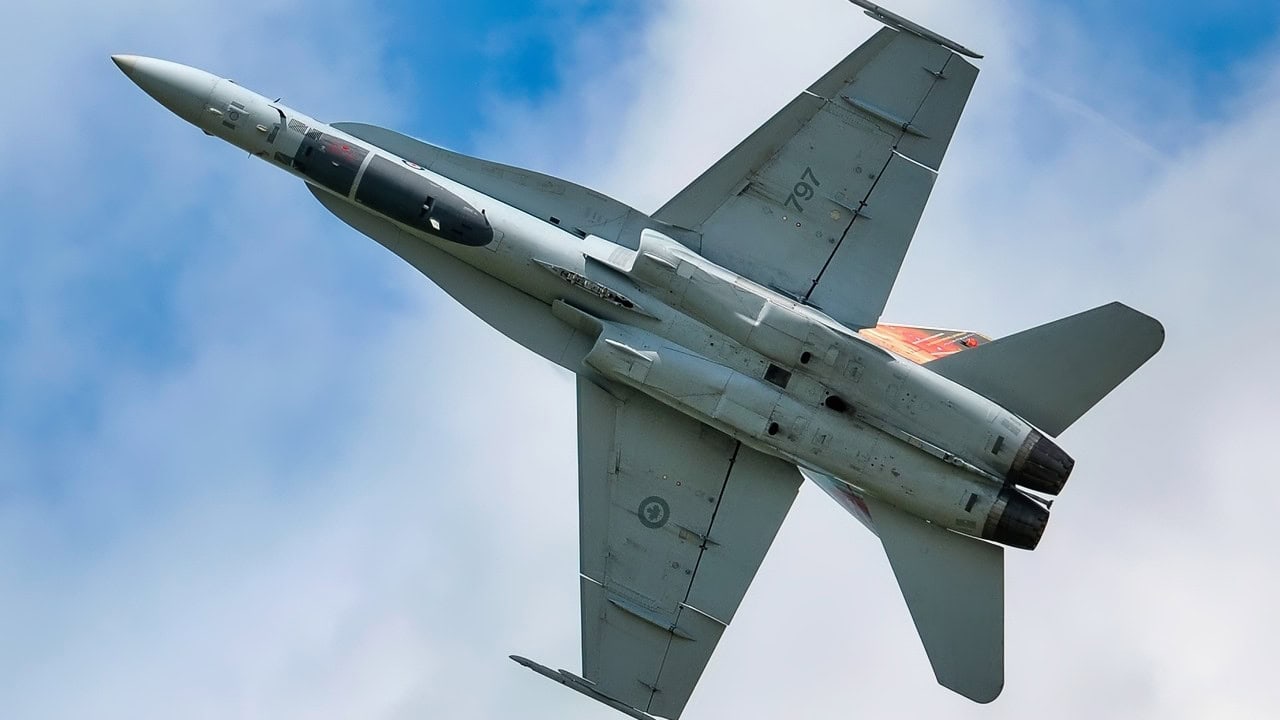
Canada CF-18 Hornet Fighter
Ongoing Limitations
Missile upgrades or not, the CF-18 is still a non-stealth platform that is highly vulnerable to advanced air defenses. The jet’s radar is still limited, too. The CF-18 has a survivability gap, especially against fifth-generation fighters. And a missile upgrade cannot fully compensate for an aging platform with old radar and high visibility.
The upgrade follows a broader trend in which weapons are modernized to boost an aging airframe.
Missiles and sensor systems now decide BVR engagements more than the airframes themselves.
This modernization approach is more cost-efficient than buying new aircraft or designing a clean-sheet aircraft. Missile modernization extends the service life of legacy fleets, maximizing the value of an investment already made.
This approach is common across NATO; similar upgrades have been made for the F-16 and F/A-18 fleets.
The upgrade also aligns with a broader shift towards distributed air combat, in which fighters act as nodes in a larger sensor-shooter network rather than isolated platforms competing one-on-one with adversary fighters.
In this networked framework, even legacy fighters such as the CF-18, which can’t necessarily outmaneuver a modern air superiority fighter, can remain relevant by providing targeting data or serving as launch platforms for advanced weapons.
Indeed, modernization is no longer just about replacing aircraft, but about integrating them into a more capable, networked structure.
In sum, the AIM-120D-3 doesn’t transform the CF-18—but it does significantly enhance the platform.
About the Author: Harrison Kass
Harrison Kass is a writer and attorney focused on national security, technology, and political culture. His work has appeared in City Journal, The Hill, Quillette, The Spectator, and The Cipher Brief. He holds a JD from the University of Oregon and a master’s in Global & Joint Program Studies from NYU. More at harrisonkass.com.