
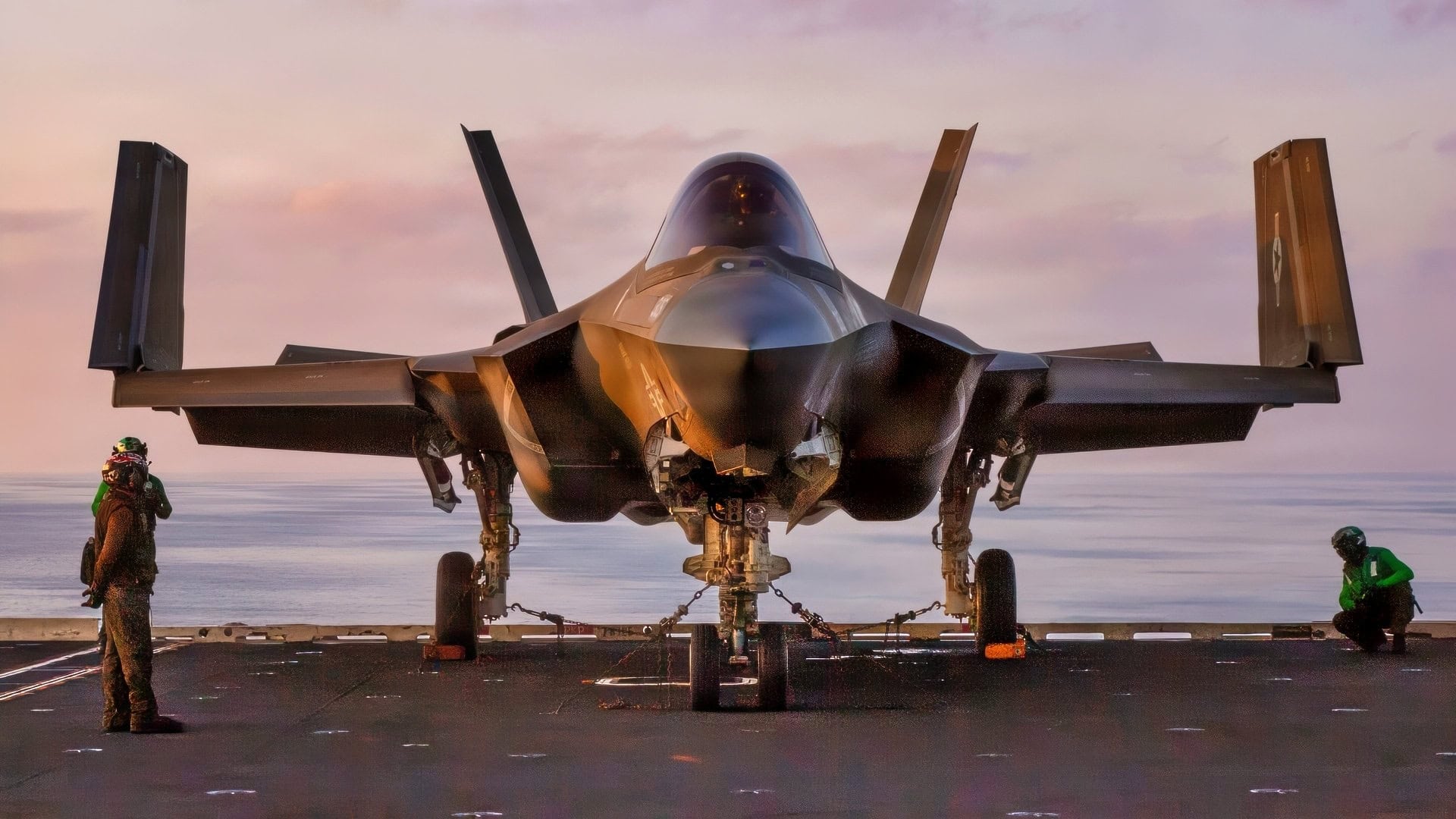
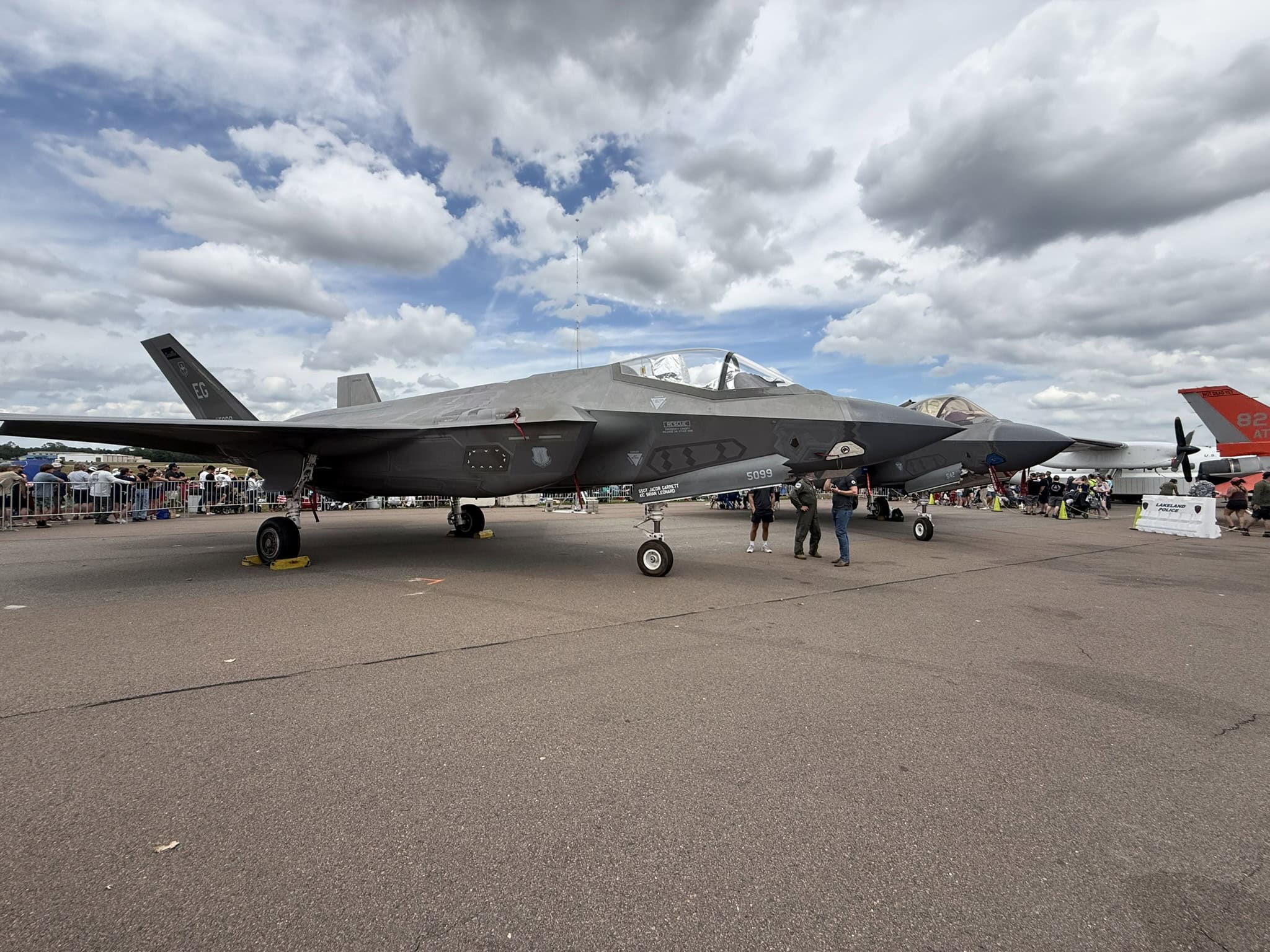
The Sun ’n Fun Airshow in Lakeland, Florida, featured the F-35C, a carrier-based variant with larger wings and reinforced landing gear, making for a variant that is visually distinct from the A- and B-variants. 19FortyFive was there and presents the images in this article of the F-35C for your viewing pleasure. And though the F-35C’s appearance looks clean and minimal, the jet hides a great deal of complexity. What does it feel like to fly such a complex jet?
F-35C: It Flies Itself? Well, To Some Extent
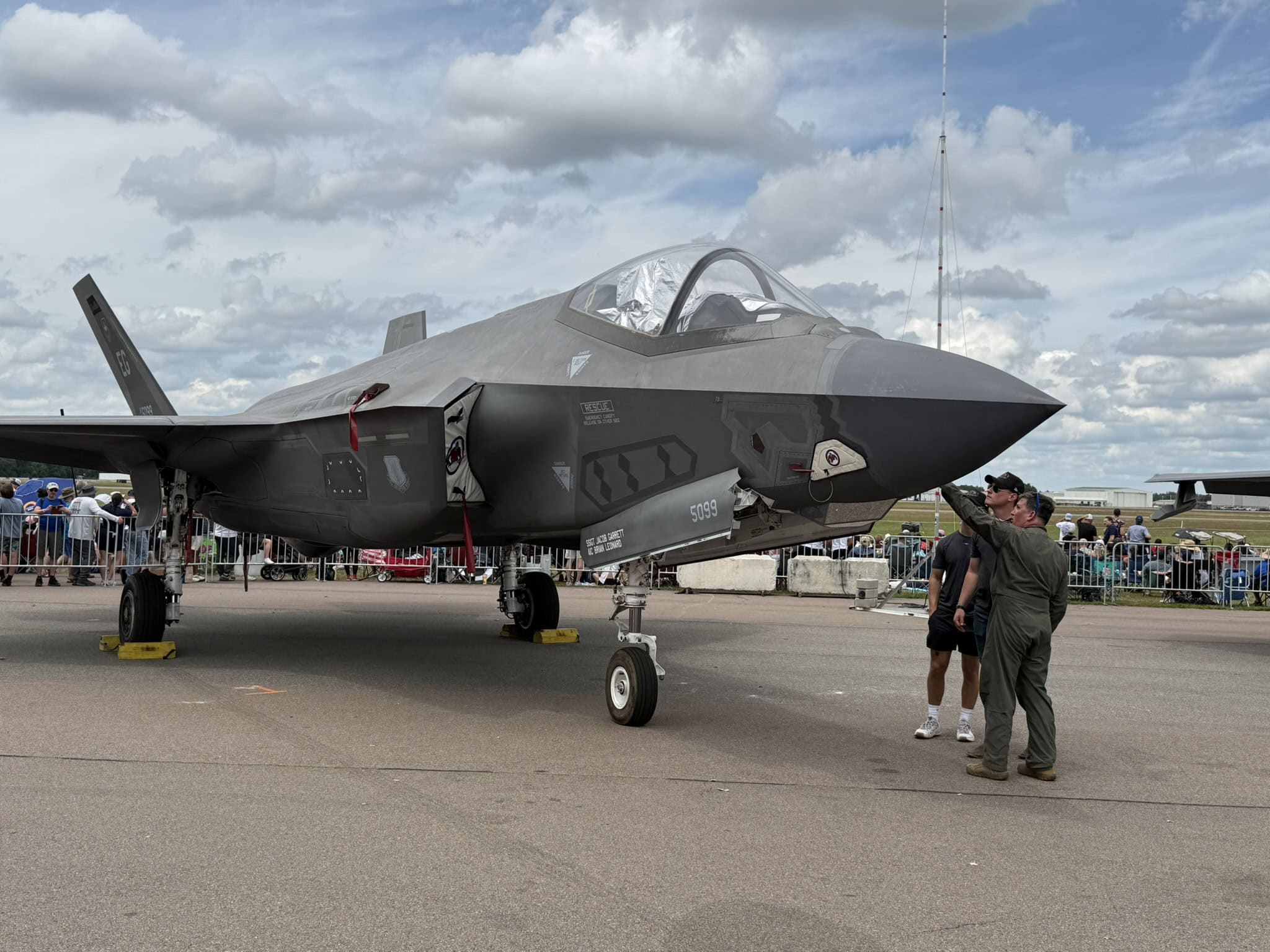
F-35C at Lakeland, Florida Airshow. Image Credit: 19FortyFive.com
Pilots describe the fighter as easy to fly, with the pilot often acting as a mission manager. The advanced fly-by-wire system allows the aircraft to handle stability automatically without the need for constant micro-inputs.
The pilot, meanwhile, manages the mission. So this is less of a stick-and-rudder, old-school pilot at the helm and more of a systems orchestrator. In effect, the F-35C symbolizes the transition, currently underway, from manned to autonomous aircraft.
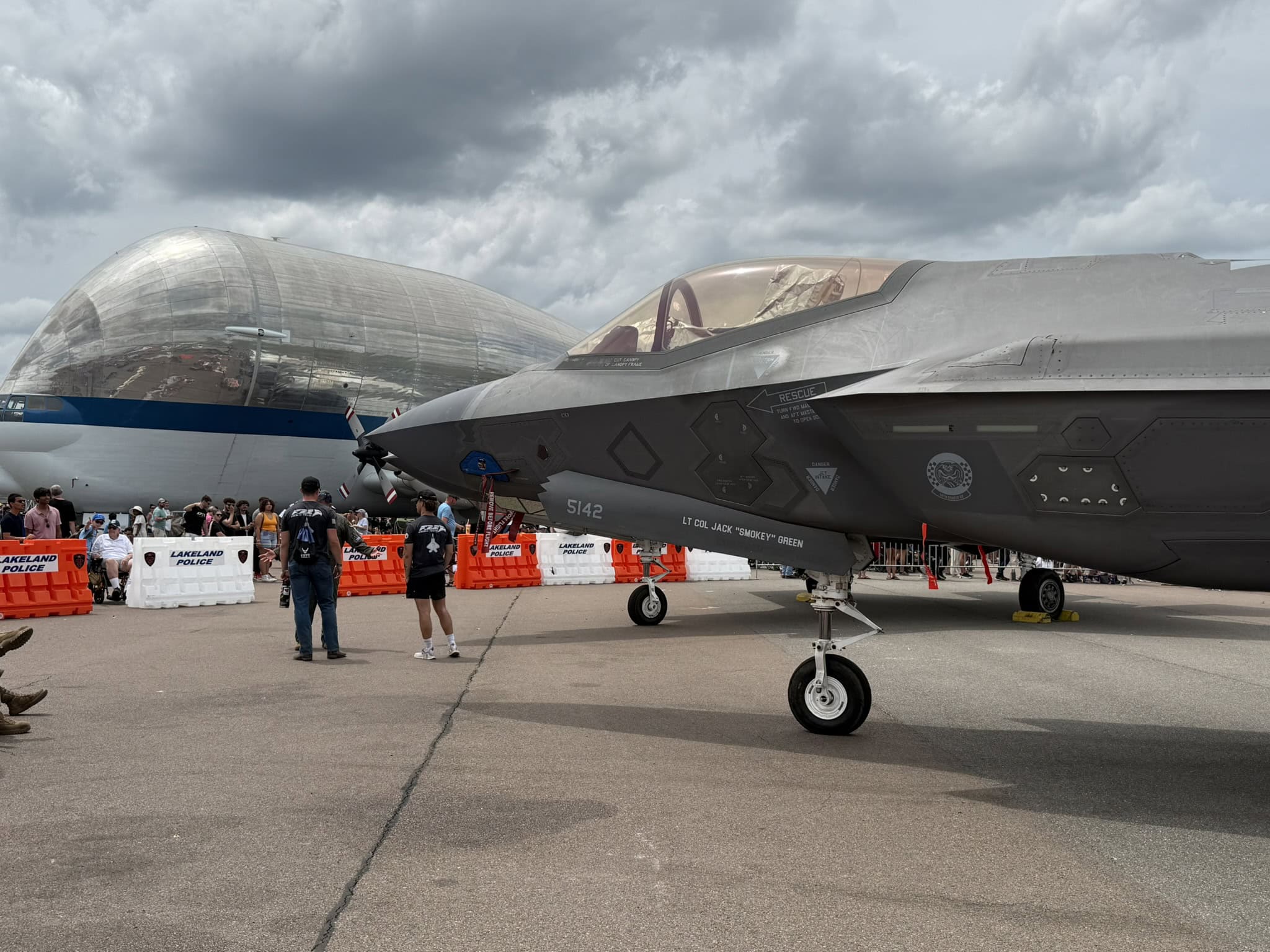
F-35C and Super Guppy at Lakeland, Florida Airshow. Image Credit: 19FortyFive.com. Taken on March 19, 2026.
Flight Controls
The fly-by-wire system means the controls are fully digital with no direct mechanical linkage. The side-stick controller requires minimal movements.
The inputs are limited to software-guided control laws that keep the aircraft within strict angle-of-attack (AoA) and G-load limits.
The result is an aircraft that feels extremely stable to handle, with smooth and predictable flight characteristics. Even at high AoA (the F-35C can exceed 50 degrees), the aircraft remains controllable and stable.
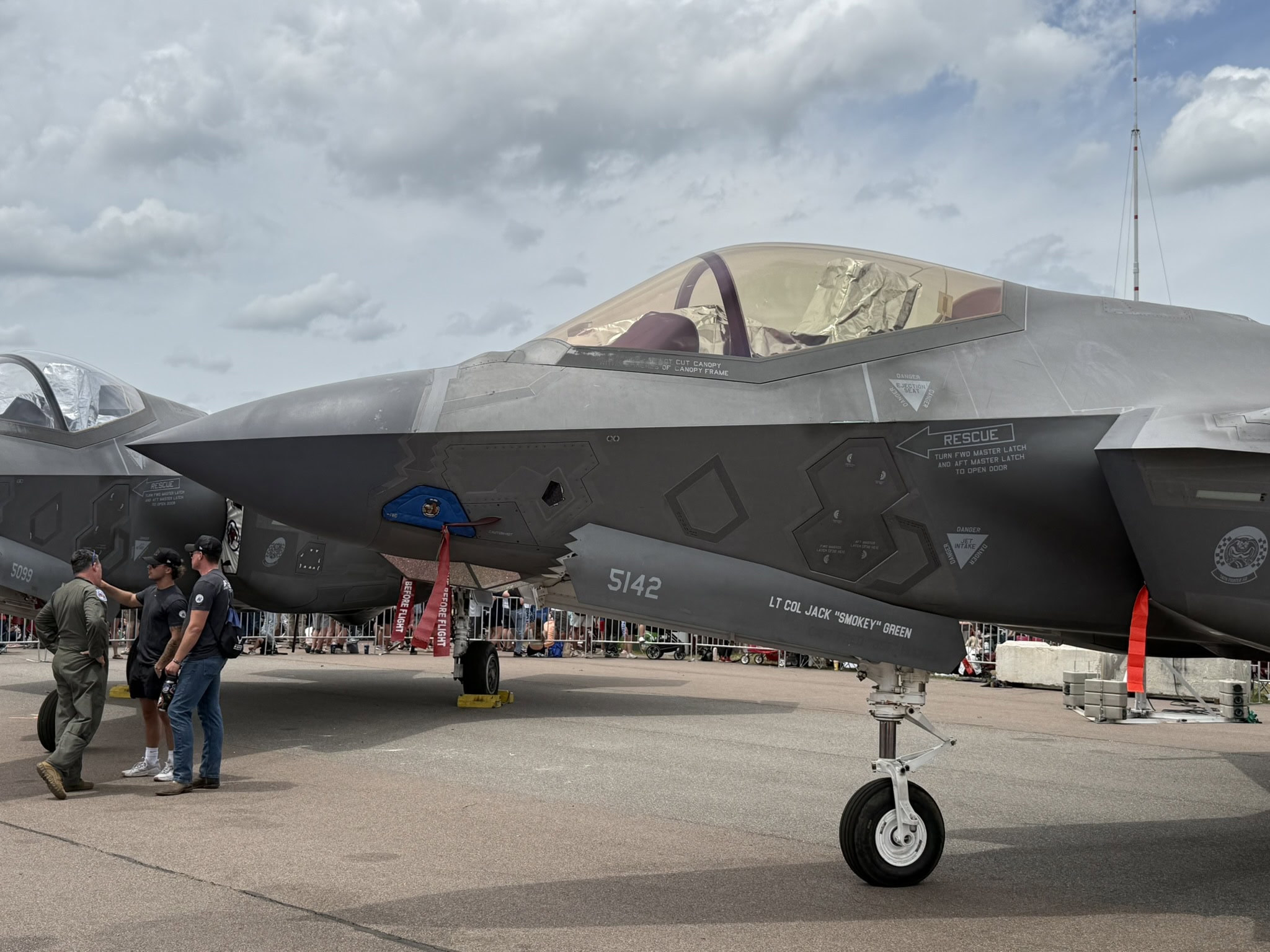
F-35C at Lakeland, Florida Airshow. Image Credit: 19FortyFive.com
The fighter is also built for low-speed handling, enabling the precise approach control required for carrier operations.
The jet has assisted landing systems, further reducing the pilot’s burden. The aircraft prioritizes stability and control over raw pilot input.
Power and Performance
The fighter is outfitted with a single Pratt & Whitney F135 engine offering 43,000 pounds of thrust.
The engine enables powerful acceleration and strong vertical performance. The throttle response is immediate and highly responsive. The top speed is Mach 1.6. Pilots describe the aircraft’s power as significant but controlled and never overwhelming.
Cockpit Experience
The F-35C is built around the concept that the pilot is a systems manager; the cockpit is arranged accordingly. The display system features a panoramic touchscreen that replaces multiple legacy gauges.
F-35C at Lakeland, Florida Airshow. Image Credit: 19FortyFive.com
The HMDS helmet system allows the pilot to see through the aircraft and also displays targeting and flight data. Sensor fusion combines radar, IR, and EW into a single picture.
This results in reduced cognitive load and prioritized information. Basically, the cockpit is a data environment rather than the traditional flight deck you might expect in a fourth-generation fighter.
Stealth and Flight Profile
Weapons are stored internally to maintain a low radar signature.
Similarly, flight behavior is geared towards avoiding detection rather than outrunning threats. Tactically, the fighter relies on BVR engagement in sensor-first combat.
Accordingly, the flight experience is shaped by invisibility rather than high-G maneuverability. The F-35C’s wings were designed larger to offer improved lift.
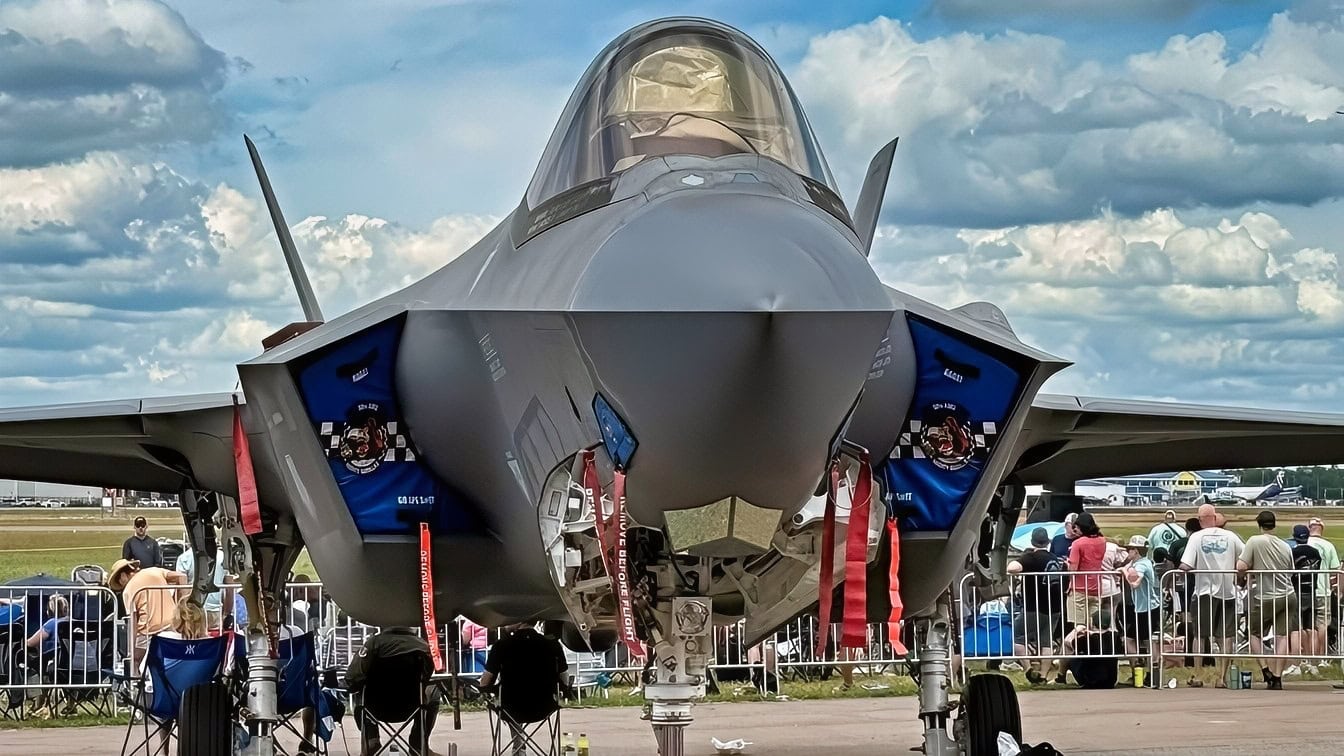
F-35C Lakeland Airshow Photo 19FortyFive Image Taken on 4/19/2026.
Similarly, the landing gear is reinforced to handle the strain of repeated carrier impacts.
The tail hook was also included, of course, to offer precision landing ability. The approach system is the Delta Flight Path system, which provides automated glide-slope control.
The result is an aircraft for which carrier ops are highly assisted—but still demanding.
Tactically, the F-35C is used for stealth strike missions, ISR, and air superiority.
The combat approach is to detect and shoot first. Networking is a huge component of the F-35C’s tactical and strategic abilities, with the pilot acting as a node in a larger combat network.
Limitations of the F-35C
Of course, the F-35C does have limitations.
Namely, the jet was not designed for dogfighting or close-in maneuvering. And to maintain a stealth profile, carrying all weapons internally, the F-35C has only a limited payload.
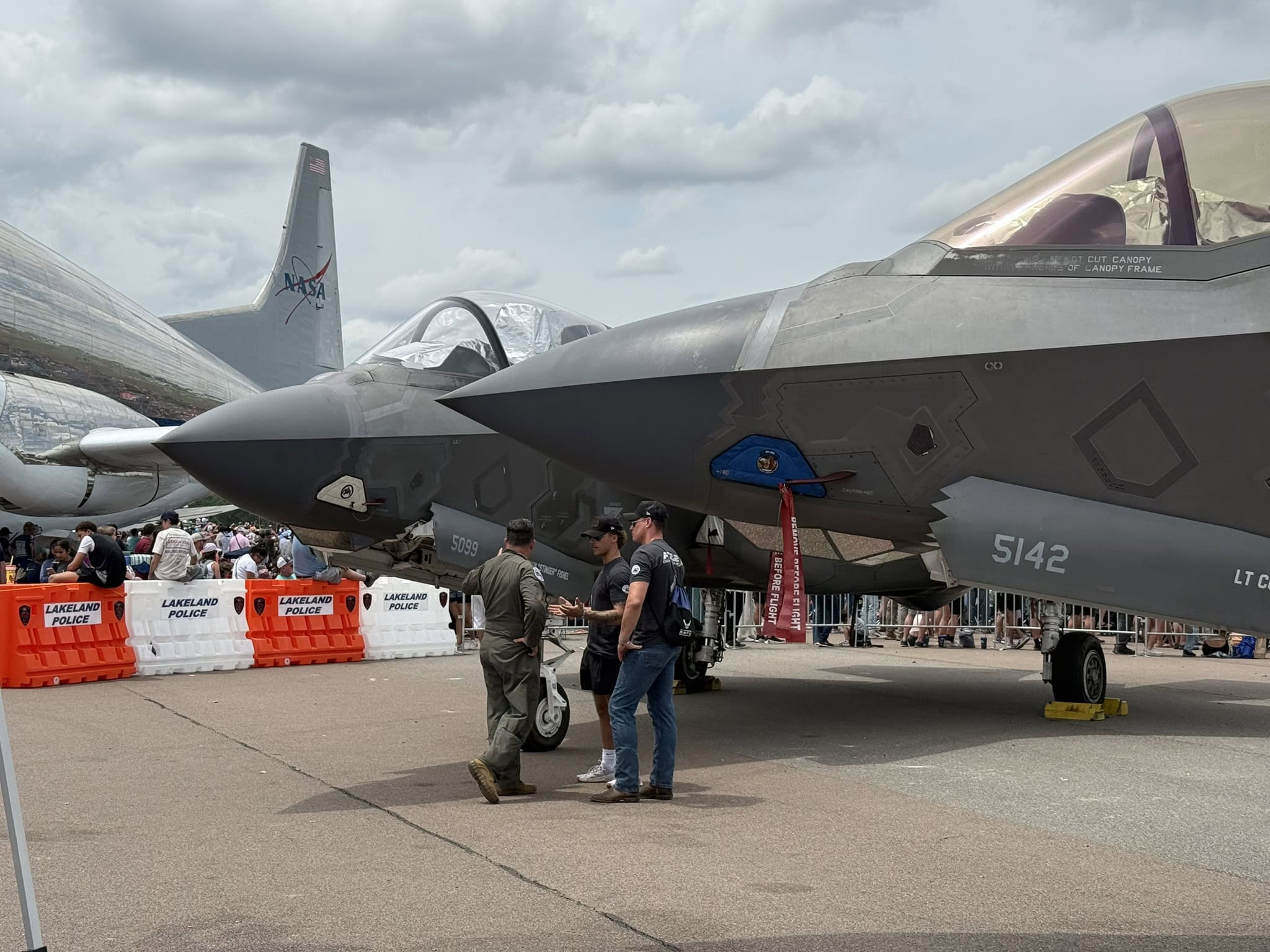
F-35C. Image Credit: 19FortyFive.com taken on 4/19/2026.
The F-35C is also heavily dependent on software. In short, the aircraft’s limitations relate to raw performance; the jet is a systems manager, not a kinetic powerhouse.
Still, pilots enjoy the F-35C for its ability to make complex missions easier. The experience is less physical and more cognitive, with less flying and more managing relative to legacy jets.
Essentially, flying the F-35 redefines what it means to be a fighter pilot. Because the jet is not about feel but about capability, which is often closely related to software systems.
About the Author: Harrison Kass
Harrison Kass is a writer and attorney focused on national security, technology, and political culture. His work has appeared in City Journal, The Hill, Quillette, The Spectator, and The Cipher Brief. He holds a JD from the University of Oregon and a master’s in Global & Joint Program Studies from NYU. More at harrisonkass.com.