
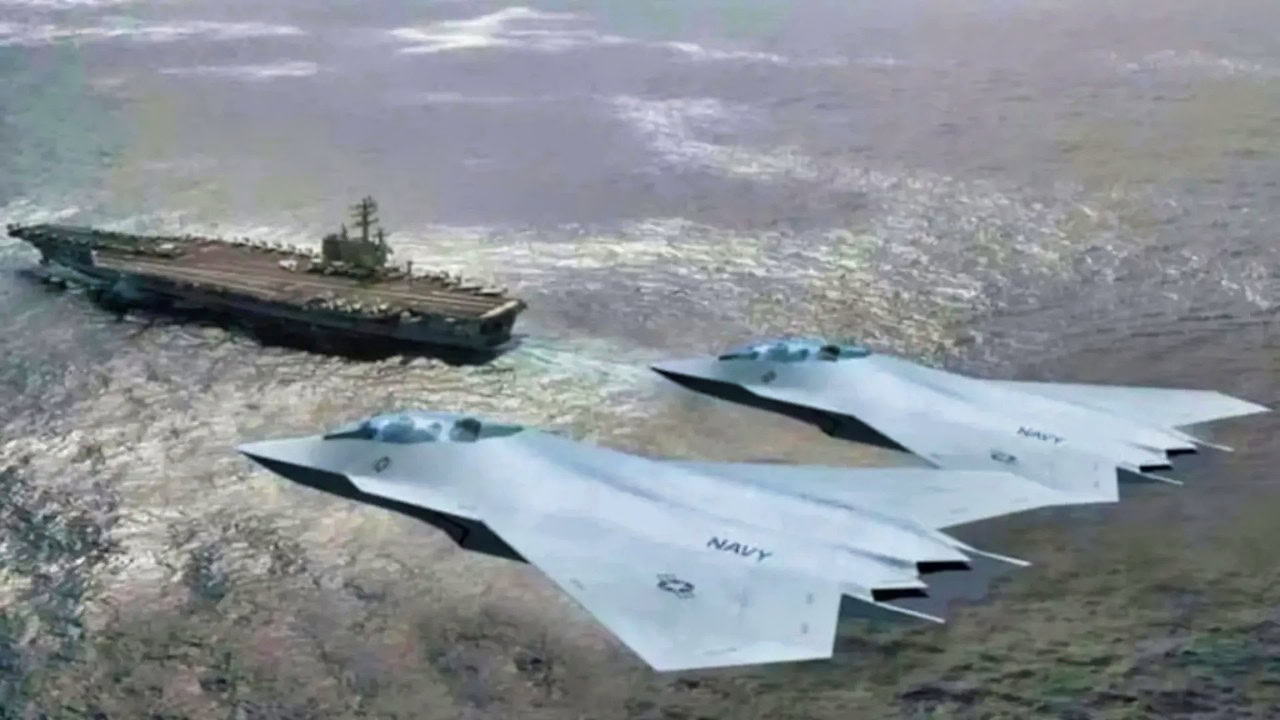
Northrop Grumman has released a new promotional video showing a notional design for the U.S. Navy’s secretive F/A-XX next-generation carrier fighter, just hours after Chief of Naval Operations Adm. Daryl Caudle said the service expects to choose a winning contractor by August.
The F/A-XX program has spent months in uncertainty over budget pressure and industrial constraints – but now, with Boeing and Northrop Grumman believed to be the remaining finalists, the Navy appears close to selecting the aircraft intended to replace the Boeing F/A-18E/F Super Hornet in the 2030s.
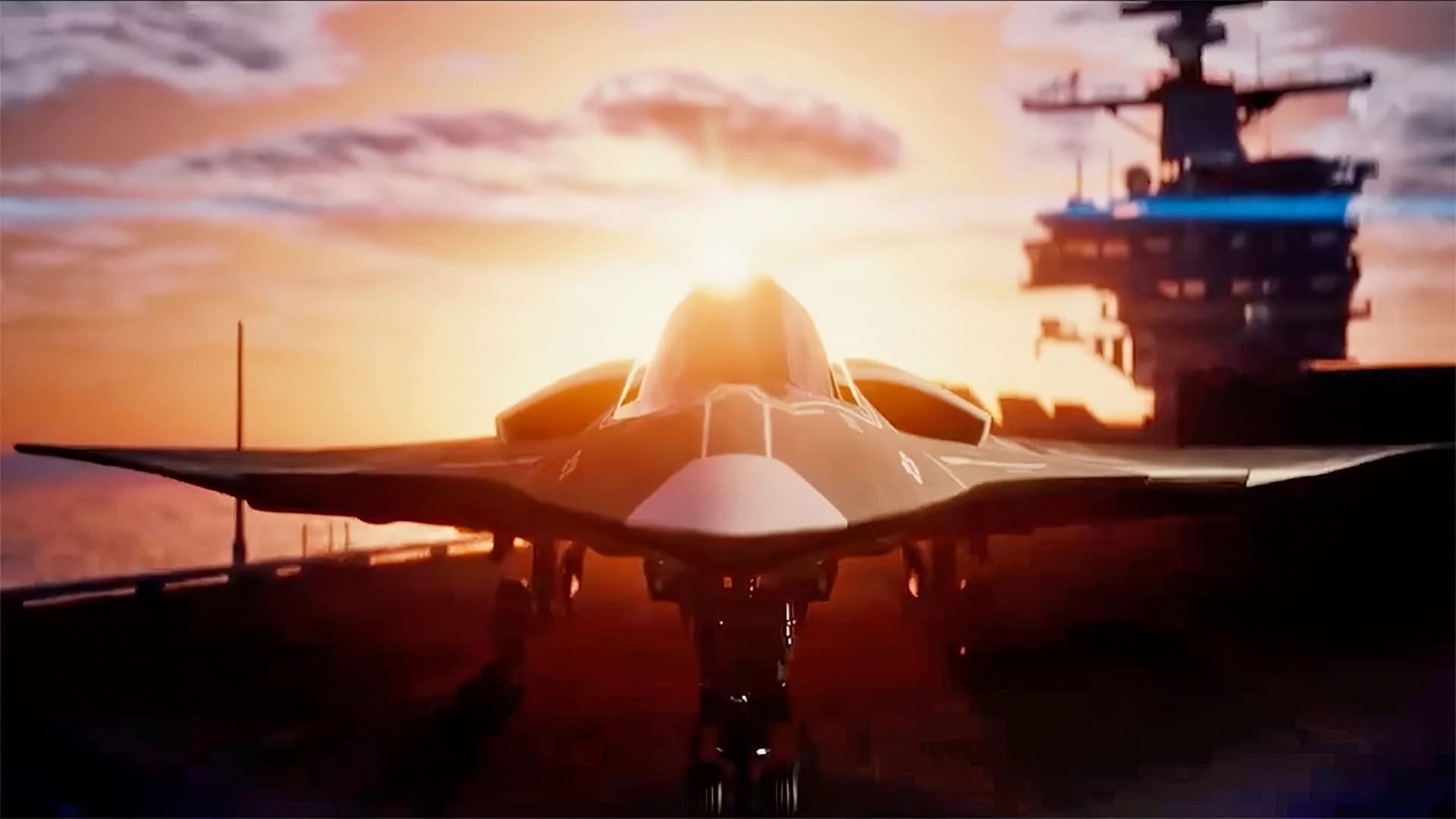
FA-XX Fighter Video Screenshot. Image Credit: NG Video Screencap.
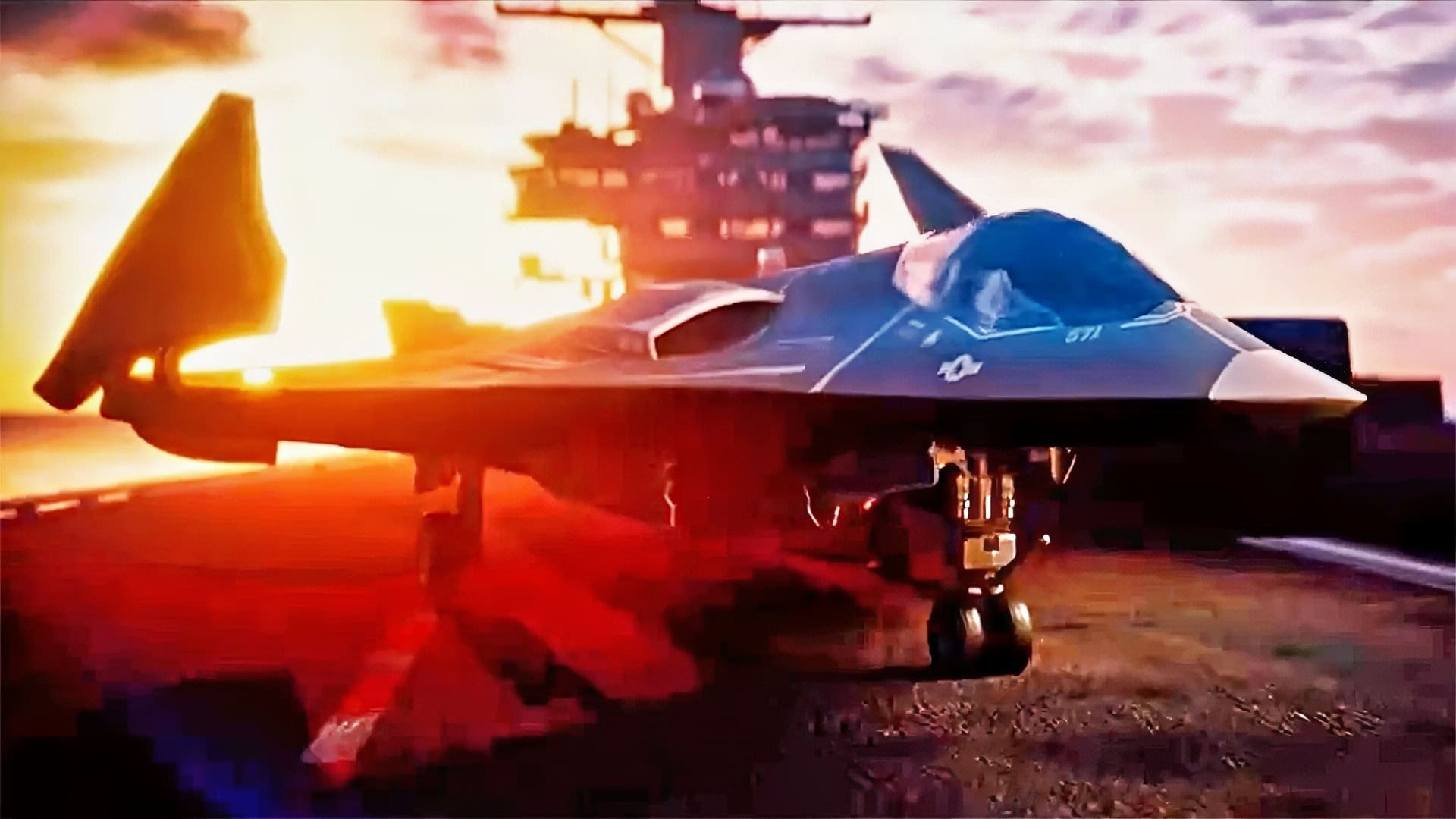
FA-XX Fighter Screenshot from X
The new video does not reveal the actual classified design, but it does offer clues about how Northrop envisions the next-generation carrier-based fighter jet. It is stealthy, carrier-ready, long-range, and built to fight future wars against advanced air defenses.
What the New Video Showed
The video, posted by Northrop Grumman on X, carried the line: “We’re bringing tomorrow’s horizon into focus, faster, stronger, and ready when the warfighter needs it.” It appears to show the same notional design the company first teased in 2025, but this time with more angles and detail.
The aircraft shown is tailless, meaning it lacks traditional vertical stabilizers. Vertical tails can increase radar reflections, making an aircraft less stealthy, while tailless designs offer a significantly better low-observable profile.
The concept also shows air intakes mounted high on the fuselage behind the cockpit – another feature typically associated with stealthy designs, as it helps shield the engine faces from radar.
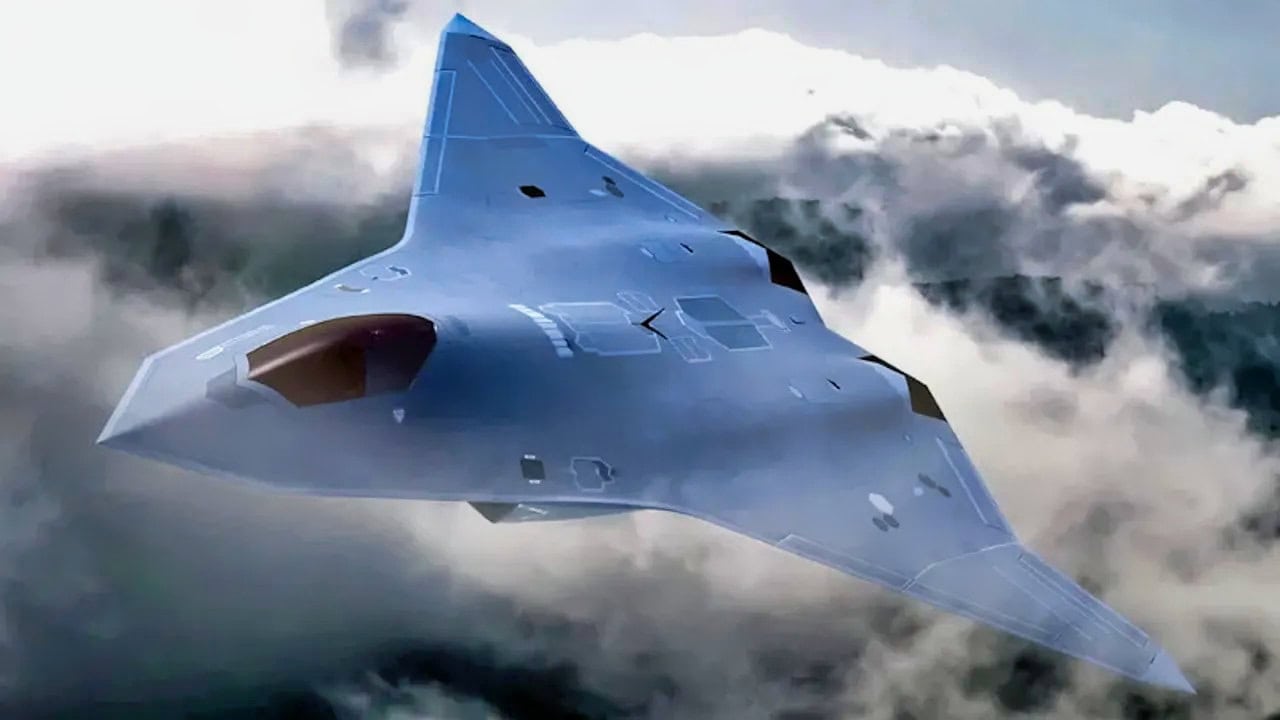
F/A-XX. Image Credit: Creative Commons.
In the clip, the jet is seen on a carrier deck with folding wings, twin-wheel nose gear, and a launch bar that’s used for catapult takeoffs. Those are all core naval aviation requirements, and not unique features to Northrop’s design.
Folding wings allow more aircraft to be stored aboard crowded carriers, while the reinforced landing gear is necessary for arrested recoveries and repeated catapult launches.
Possible weapons bay doors are also visible under the fuselage.
Internal weapons bays are critical to stealth fighters because externally carried missiles and bombs create radar reflections and drag.
It’s worth noting, however, that defense contractors routinely edit public renderings to avoid revealing classified designs, meaning that what is seen in the video is likely not the exact design of the concept aircraft shown to the Navy.
Why the Navy Wants F/A-XX
The Navy’s carrier air wings were built around the assumption that American aircraft could operate close enough to enemy territory to strike effectively.
That assumption is now under pressure, however, with China now fielding long-range anti-ship ballistic missiles, dense air defense systems, and modern fighters. It is also expanding its naval aviation forces to push U.S. carriers farther from contested areas.
Those changes create an immediate range problem. If carriers must remain farther offshore for survivability, their aircraft need a greater combat radius.
Existing Super Hornets do not provide the kind of reach many analysts say will be required in a Pacific conflict without heavy tanker support – and tankers themselves are vulnerable targets.
The F/A-XX is therefore expected to combine stealth, larger fuel capacity, advanced sensors, networking, and the ability to control uncrewed collaborative aircraft.
It will effectively function in a similar way to the upcoming NGAD F-47 fighter – a long-range fighter aircraft that also works as a communications node.
A Decision Is Coming In August
Speaking to reporters on April 20 at Sea-Air-Space 2026, Chief of Naval Operations Adm. Daryl Caudle said the Navy expects to make an F/A-XX downselect in August, meaning that multiple competing bids will be narrowed to one winner.
The program can then move on to the next major contract phase.
Earlier this month, Defense Secretary Pete Hegseth reportedly approved moving ahead with the decision process after months of delays and internal debate over priorities and funding.
Lockheed Martin, builder of the F-35 Lightning II, has reportedly been eliminated from the competition – leaving Northrop Grumman and Boeing as the most likely remaining contenders.
Will Budget Uncertainty Continue?
Even as the Navy moves toward an August contract decision, the F/A-XX program’s recent funding history shows how close it came to stalling.
In its fiscal year 2026 budget request, released in 2025, the Navy asked for only $74 million for F/A-XX – far below the $3.45 billion provided for the Air Force’s F-47 next-generation fighter effort. U.S. lawmakers later intervened, adding $940 million through regular appropriations and another $750 million through separate legislation.

Shown is a graphical artist rendering of the Next Generation Air Dominance (NGAD) Platform. The rendering highlights the Air Force’s sixth generation fighter, the F-47. The NGAD Platform will bring lethal, next-generation technologies to ensure air superiority for the Joint Force in any conflict. (U.S. Air Force graphic)
For fiscal year 2027, budget documents indicate the Navy is requesting just $140 million for F/A-XX, while the Air Force plans to seek about $5 billion for F-47 development.
That means Congress may again face pressure to add funding if the Navy wants its future carrier fighter to remain on schedule after the expected August downselect.
About the author: Jack Buckby
Jack Buckby is a British researcher and analyst specializing in defense and national security, based in New York. His work focuses on military capability, procurement, and strategic competition, producing and editing analysis for policy and defense audiences. He brings extensive editorial experience, with a career output spanning over 1,000 articles at 19FortyFive and National Security Journal, and has previously authored books and papers on extremism and deradicalization.