
The world’s eyes may be on what’s happening in Iran, and whether the ceasefire there will continue. But Russia’s war with Ukraine remains an active conflict, and it had a flare-up on Monday.
According to CBS News, Russia’s strategic bombers and fighter jets flew over the Baltic Sea on Monday and were then intercepted by NATO jets.
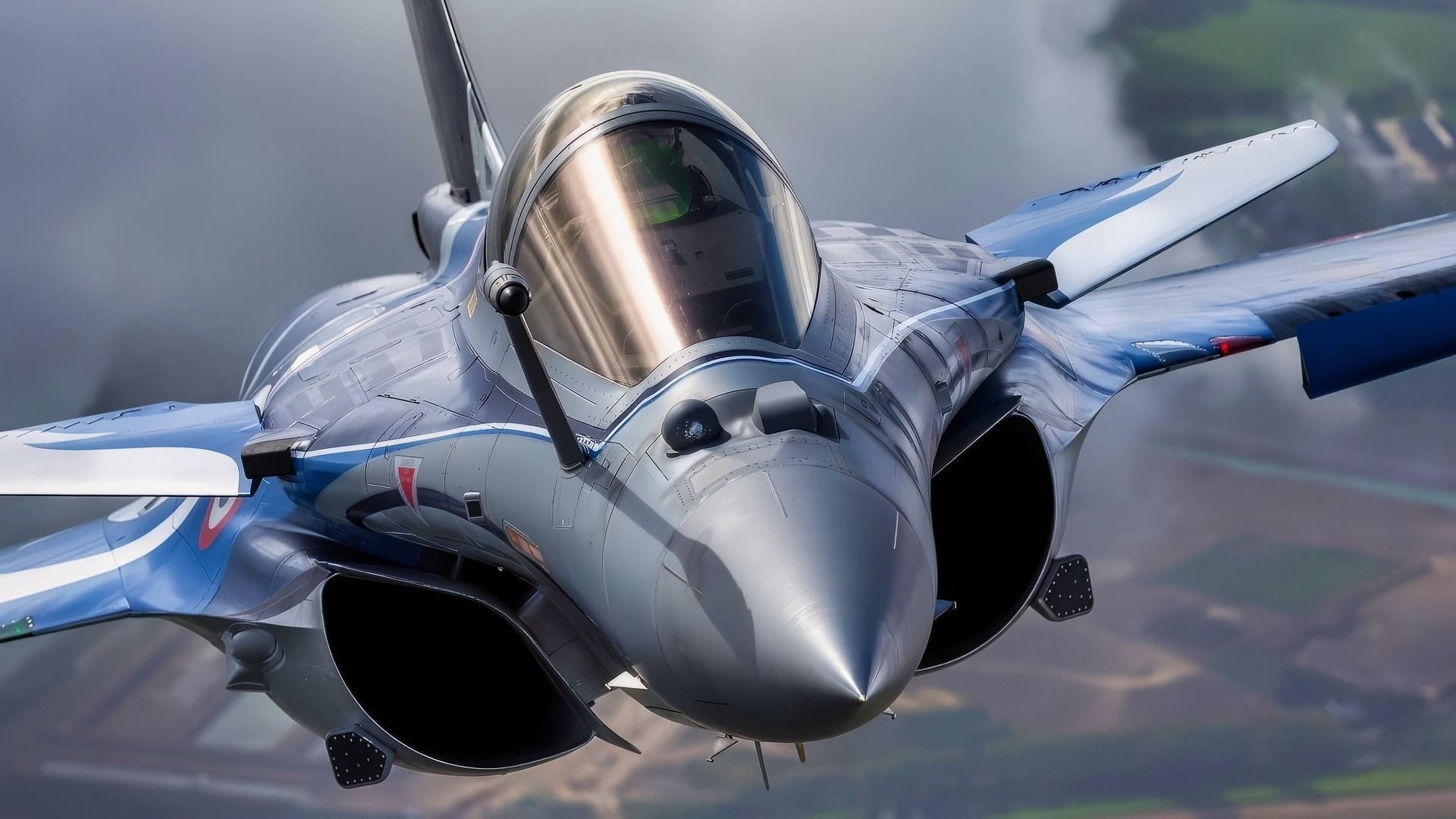
“French Rafale fighters were deployed from a Lithuanian air base where they are stationed as part of a decades-long NATO air-policing effort,” CBS News reported, in a story that included material from the Associated Press, as an AP reporter was embedded at the time with the French detachment at the Šiauliai Air Base in Lithuania.
Indeed, it was an effort that included several NATO members.
“The fighters armed with air-to-air missiles joined jets from Sweden, Finland, Poland, Denmark, and Romania. They all took to the skies to inspect and keep watch on the Russian flight.”
During the mission, Russia deployed a pair of supersonic Tu-22M3s and 10 fighters, comprising both SU-30s and SU-35s.
What the Interception Looked Like From the Ground
According to the CBS/AP account, a pair of two-man crews of the French Dassault Rafale fighter jets “were seen racing in two vans to the planes’ hangars from the headquarters building the French detachment uses during its four-month deployment on the air base.”
The pilots had been on “stand by” and already suited up when they got the order to take off.
Dassault Rafale Fighter. Image Credit: Creative Commons.
The Russian Response
CBS quoted the Russian Defense Ministry as stating that the bombers’ flight had been planned and had gone over neutral airspace in the Baltic Sea.
“At certain stages of the route, the long-range bombers were accompanied by fighters of foreign states,” the ministry said, per CBS News. “Crews of long-range aviation regularly conduct flights over the neutral waters of the Arctic, the North Atlantic, the Pacific Ocean, as well as the Baltic and Black Seas. All flights of Russian Aerospace Forces aircraft are carried out in strict compliance with international rules for the use of airspace.”
It is not a rare occurrence for NATO to scramble jets when Russian planes get near NATO airspace.
Even before the start of the Russia/Ukraine war in early 2022, CBS noted that NATO was intercepting Russian jets nearly 300 times a year, usually in Northern Europe.

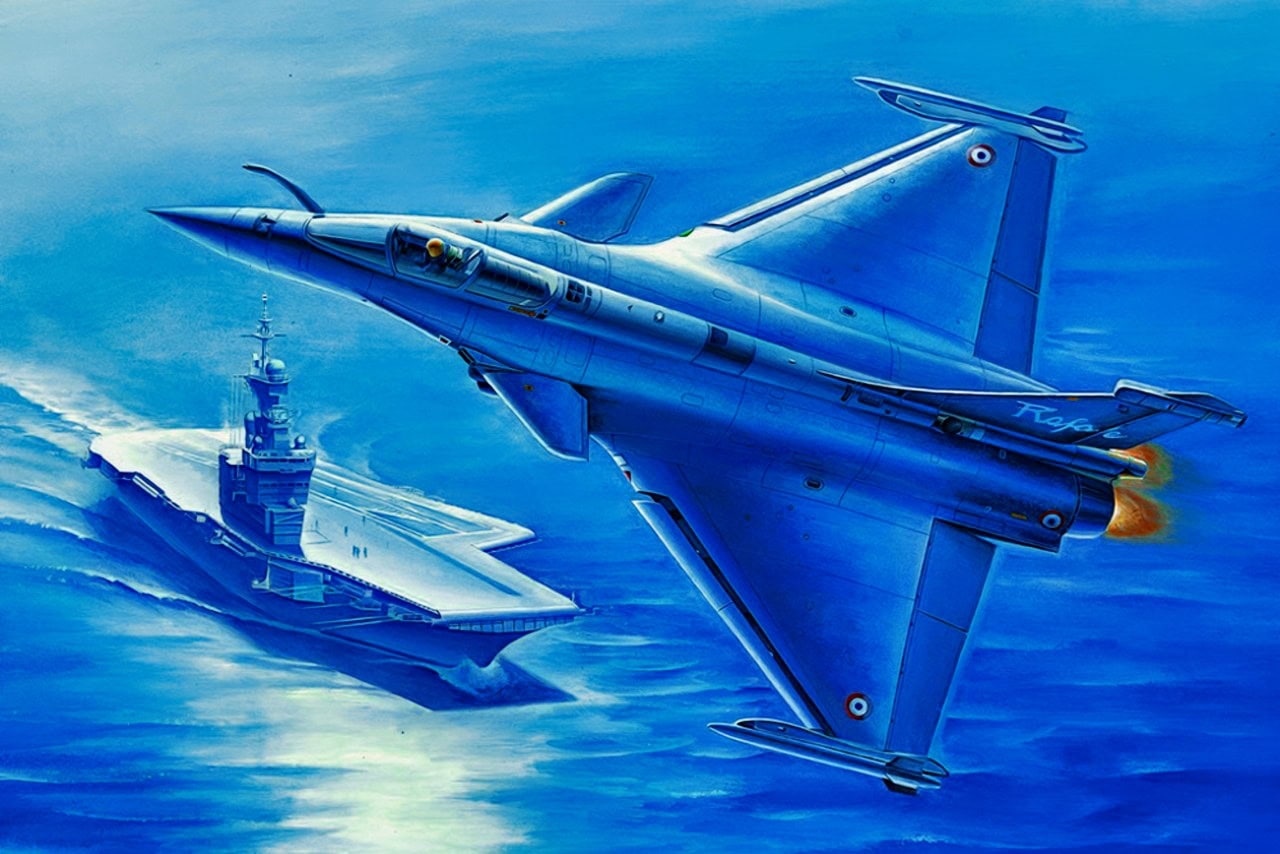
Dassault Rafale Artist Image. Image Credit: Creative Commons.
Lithuania’s Defense Ministry told the CBS and AP that “NATO jets were scrambled four times from April 13-19 to intercept Russian aircraft that violated flight rules that included turning off flight transponders and flying without a flight plan.”
Where Things Stand With the Russia/Ukraine War
The war between Russia and Ukraine has now been going on for more than four years. Donald Trump, upon his return to office in early 2025, had promised, on various occasions, to end the war on Day 1 or close to it, but such a peace has proved rather elusive.
There were multiple rounds of direct peace talks earlier this year, but they yielded little progress, and in recent months, the world’s eyes have been on the Middle East, not Russia and Ukraine.
Even the Trump Administration’s envoy Steven Witkoff, who had been participating in those talks, has instead been dealing with the Middle East peace talks.
The last time the sides met was in February, and little progress was made.
While more talks were scheduled, they were postponed and ultimately never held, as the war in the Middle East began in late February.
What’s Next?
The Associated Press reported on Wednesday that Ukraine is making a new push for direct peace talks, including face-to-face talks between Russian President Vladimir Putin and Ukraine’s Volodymyr Zelenskyy.
Ukrainian Foreign Minister Andrii Sybiha told the press this week that Ukraine has reached out to Turkey to facilitate talks and is willing to meet anywhere other than Russia or Belarus. Turkey has, in fact, been proposed as a venue, as they took place in Istanbul earlier this year.
“We are … advocating for a (summit) meeting now to bring new momentum to diplomacy,” the ministry told reporters.
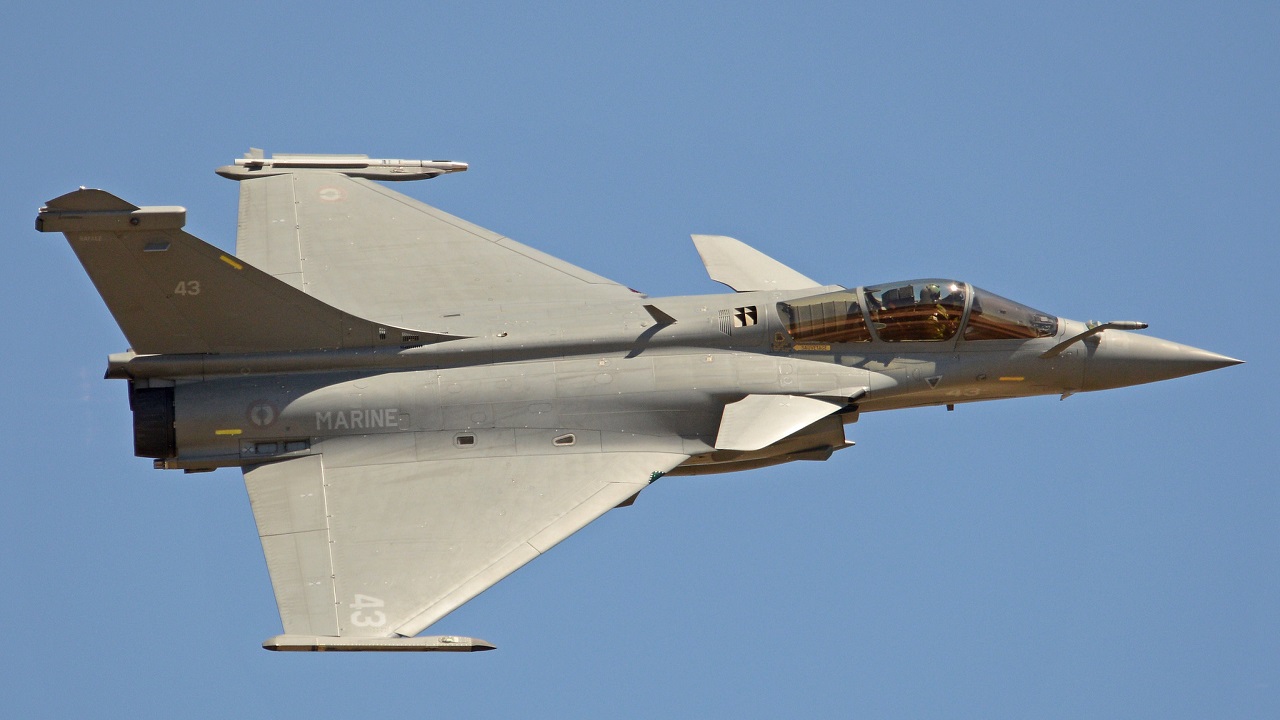
Operated by Flottille 12F, Aeronavale, based at Landivisiau.
Seen during a practice display routine at Zaragoza Air Base, Spain, during the 2016 NATO Tiger Meet (NTM).
However, it appears interest is more lukewarm on the Russian side.
According to the Kyiv Independent, Foreign Minister Sergey Lavrov said on April 18 that Russia is not prioritizing resuming peace talks.
“At this point, the issue of resuming negotiations is not our top priority. We haven’t forced negotiations on anyone,” Lavrov said, per the report. “We have always operated on the principle that if our partner is ready, we’re ready.”
The Kyiv Independent also noted the “limited availability” of Witkoff and Jared Kushner, the president’s son-in-law, who are overseeing the talks with Iran. One U.S. official recently stated that a visit to Ukraine by the two envoys was “possible.”
Will “Donnyland” Do It?
Meanwhile, there is another development in Ukraine’s quest to get the U.S. back to the table, or at least to gain the favor of the White House.
According to the New York Times, Ukraine is attempting something tried and true: Naming something after Donald Trump.
“In Ukraine peace talks in recent months, Ukrainian officials have suggested that the slice of the country’s Donbas region that Russia is still fighting for could be named ‘Donnyland,’” the Times reported.
The Donbas region, in Eastern Ukraine, is disputed, with Russia claiming it. The name would be after both “Donald Trump” and “Donbas.”
“When a Ukrainian negotiator first mentioned the term, partly in jest, it was as part of an attempt to convince the Trump administration to push back more against Russia’s territorial demands, according to three of the people familiar with the talks,” the Times reported.
It’s part of a growing trend that extends beyond Russia and Ukraine, with world leaders appealing to the president’s vanity.
About the Author: Stephen Silver
Stephen Silver is an award-winning journalist, essayist, and film critic, and contributor to the Philadelphia Inquirer, the Jewish Telegraphic Agency, Broad Street Review, and Splice Today. The co-founder of the Philadelphia Film Critics Circle, Stephen lives in suburban Philadelphia with his wife and two sons. For over a decade, Stephen has authored thousands of articles that focus on politics, national security, technology, and the economy. Follow him on X (formerly Twitter) at @StephenSilver, and subscribe to his Substack newsletter.