
The two-week ceasefire between the United States and Iran expires tonight. No deal has been reached. No formal extension has been agreed. Vance is already wheels-up for Islamabad — heading to a second round of talks with a delegation Tehran still hasn’t officially confirmed will show up.
The question isn’t whether the war resumes. It’s where the trip wire is, and who stumbles across it first.
The answer is in the Strait of Hormuz.
The Iran Truce That Wasn’t
Call it what it was. For two weeks, both sides fought under a ceasefire banner. Iran targeted ships in the Strait.
The U.S. attacked and boarded an Iranian vessel trying to run the naval blockade. The IRGC kept its guns pointed at anything that moved without Tehran’s permission. The U.S. Navy kept interdicting.
This was not a pause in conflict. It was a conflict conducted under different labels.
The structural breakdown came fast. The first round of Islamabad talks lasted 21 hours across three sessions and produced nothing. When Vance walked out on April 12, he said Iran refused to commit to not developing nuclear weapons.
Iran’s Parliament Speaker said Washington was demanding a table of surrender. Washington proposed a 20-year pause on uranium enrichment. Tehran offered five years, maximum. That gap didn’t close in Islamabad, and it won’t close in a second round. Iran has already indicated it won’t attend.
Trump imposed the naval blockade on April 13, five days into the ceasefire period. Iran responded by briefly reopening the strait, then closing it again on April 18, citing the blockade as a fundamental violation of the truce framework. Tehran’s foreign ministry called the U.S. approach a media game aimed at pressuring Iran through a blame campaign. Iran’s president announced publicly that his country does not submit to force.
This is not a negotiation approaching a deal. It is two sides measuring each other’s pain tolerance before someone makes a mistake.
The Trip Wire: Welcome to the Strait of Hormuz
The Strait of Hormuz is now a live confrontation zone.
On one side, the U.S. Navy is enforcing a blockade. On the other hand, IRGC units are enforcing their own closure. Commercial vessels caught in between.
War-risk premiums have already increased by nearly 1,900% since February. Iranian-linked ships are attempting to run the blockade. American warships are interdicting them. The whole system running hot, at close quarters, in a 21-mile-wide waterway with no standing communication channel on either side has shown any inclination to use.
The math on accidental escalation is not reassuring.
The specific scenario to watch: an IRGC fast-attack craft or UAV swarm strikes a U.S. Navy vessel — even a glancing hit, even an ambiguous one. Rules of engagement in a live blockade zone don’t allow for extended deliberation.
A strike on an American warship triggers a kinetic response within the hour, almost certainly against IRGC naval assets. From there, the escalation ladder has very few rungs before it reaches Iranian coastal infrastructure or a broader naval confrontation, neither of which has been officially authorized.
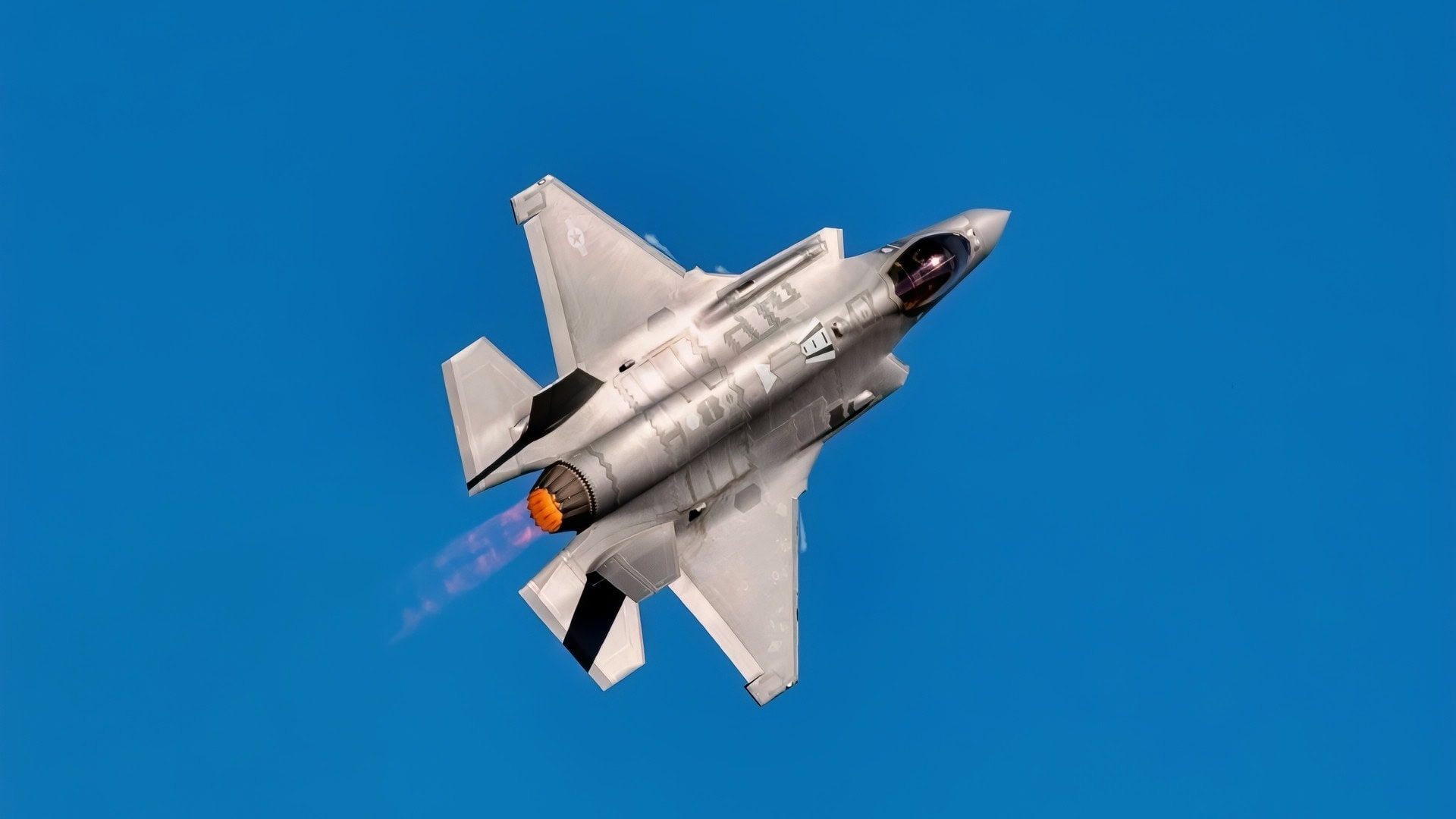
The F-22 Raptor performs a demonstration at the Mather Airshow in Sacramento, California, Sept. 23, 2018. The P-38 is a World War I-era fighter aircraft that was developed for the Army Air Corps. (U.S. Air Force photo by Senior Airman Lauren Parsons/Released)
The communication problem makes this worse. There is no hotline between CENTCOM and the IRGC. No deconfliction channel. No mechanism for either side to signal restraint before a local commander’s decision becomes a theater-level event. In that environment, the difference between an incident and a war is measured in minutes, not days.
American casualties in the Strait remove every remaining diplomatic option. Trump told reporters this week that lots of bombs will start going off if there’s no deal. A dead American sailor makes that a commitment he can’t walk back.
The secondary trip wire is Israel. Netanyahu has shown no appetite for waiting while diplomats negotiate. A unilateral Israeli strike on Iranian reconstitution activity — missile sites, enrichment infrastructure, whatever Tehran has rebuilt since February 28 — pulls Washington back into active combat regardless of where ceasefire talks stand.
Both trip wires are live. Both are plausible within days, not weeks.
The Political Problem
Here is where the strategic picture and the political reality collide — and where the path back from the brink gets significantly narrower.
Neither side can step back from its stated position without paying a serious domestic cost. Pezeshkian’s statement that Iranians do not submit to force was not negotiating language.
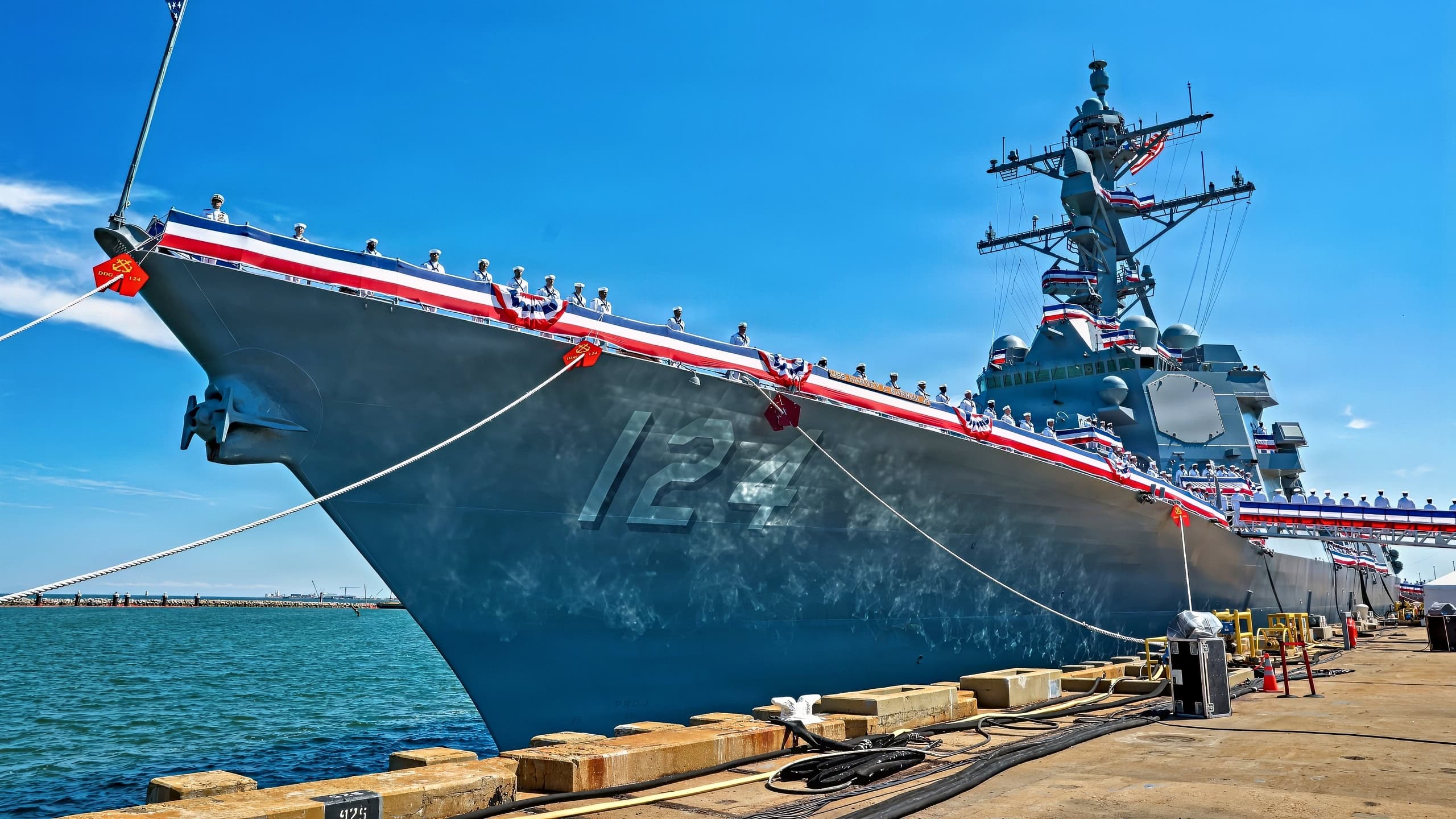
(April 11, 2026) – Sailors man the rails aboard the Navy’s newest Arleigh Burke-class guided-missile destroyer USS Harvey C. Barnum Jr. (DDG 124) during the commissioning ceremony in Norfolk, Virginia, April 11, 2026. The warship bears the name of a living Medal of Honor recipient, retired Col. Harvey C. “Barney” Barnum Jr. (U.S. Navy photo by Mass Communication Specialist 1st Class Theoplis Stewart)
It was a commitment made to a domestic audience in a country that just lost its supreme leader and absorbed the heaviest bombing campaign in its modern history.
Reopening the strait without a deal can be described as a win for Tehran, but it reads as capitulation. That is not a concession the current Iranian leadership can survive politically.
Trump is not in a simpler position. He has staked his public rhetoric on total Iranian denuclearization and an open strait as the definition of American victory. He has threatened Iran’s civilization.
He has called a ceasefire extension highly unlikely. A partial deal — face-saving ambiguity on enrichment timelines, some negotiated formula on the strait’s status — will be framed immediately as capitulation by the same political flank that has been demanding maximalist outcomes since February 28. Trump knows what that looks like. So does his base.
Both leaders have made commitments that constrain them. The space for a quiet, pragmatic off-ramp is narrower tonight than it was two weeks ago.
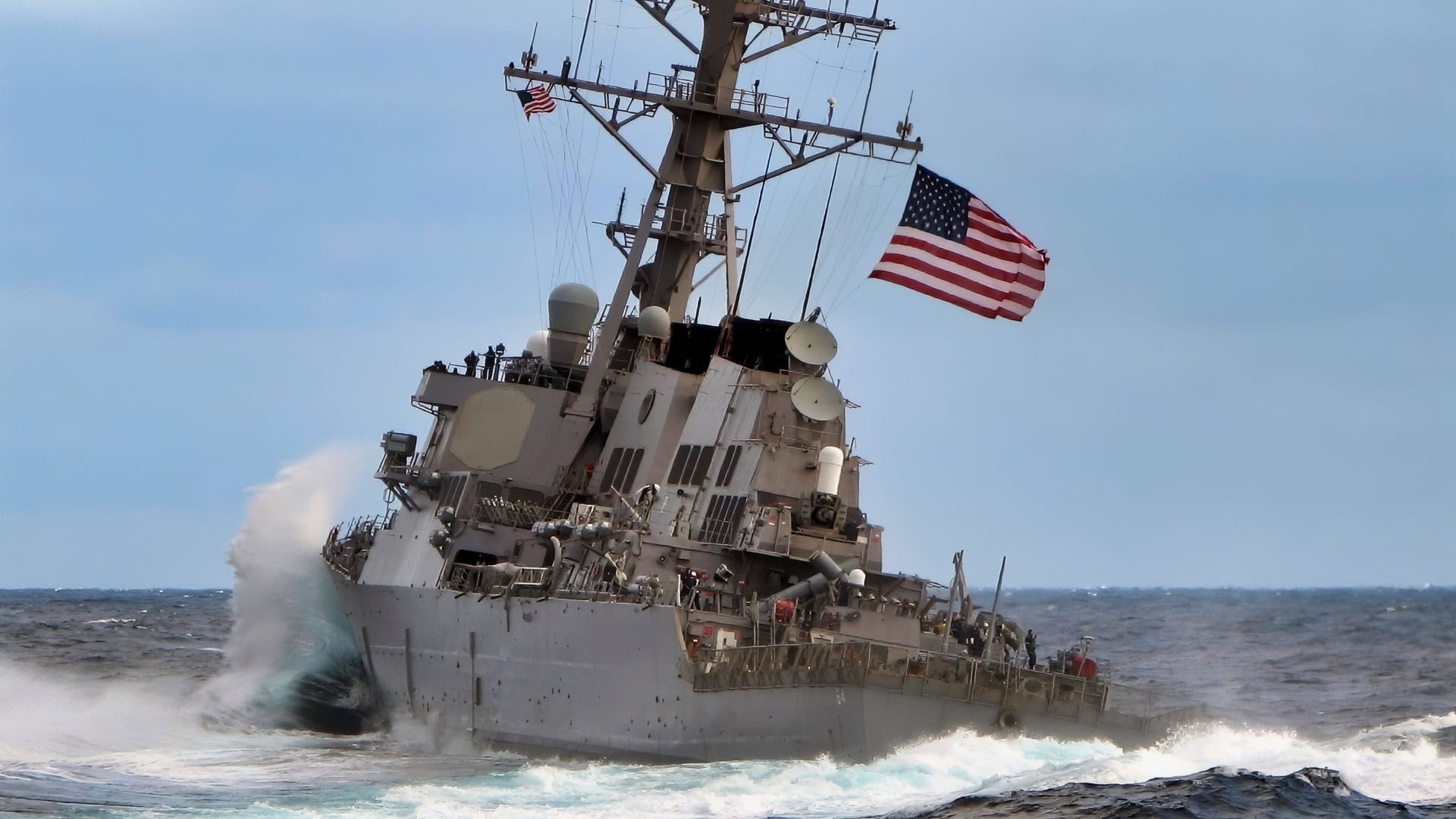
(Jan. 16, 2010) Waves crash over the bow of the guided-missile destroyer USS Carney (DDG 64). Carney is part of the Eisenhower Carrier Strike Group and is deployed as part of an on-going rotation of forward-deployed forces to support maritime security operations in the U.S. 5th and 6th Fleet areas of responsibility. (U.S. Navy photo by Master at Arms Chief Chief Anthony J. Sganga/Released)
What Comes Next
What happens in Islamabad doesn’t matter anymore.
The next war doesn’t start in a conference room. It starts in the Strait — an IRGC commander who misreads an American vessel’s intentions, a drone that finds its target, a U.S. sailor who doesn’t come home.
The conditions that might prevent that outcome — communication channels, political flexibility, decision time — are precisely what this conflict has stripped away on both sides.
What remains is two militaries in close contact, two leaders who have run out of room to maneuver, and a 21-mile waterway where the next mistake writes the next chapter.
Stop watching Islamabad. Watch the Strait of Hormuz.
About the Author: Dr. Andrew Latham
Andrew Latham is a professor of international relations and political theory at Macalester College in Saint Paul, MN. You can follow him on X: @aakatham. He writes a daily column for 19FortyFive.com.