
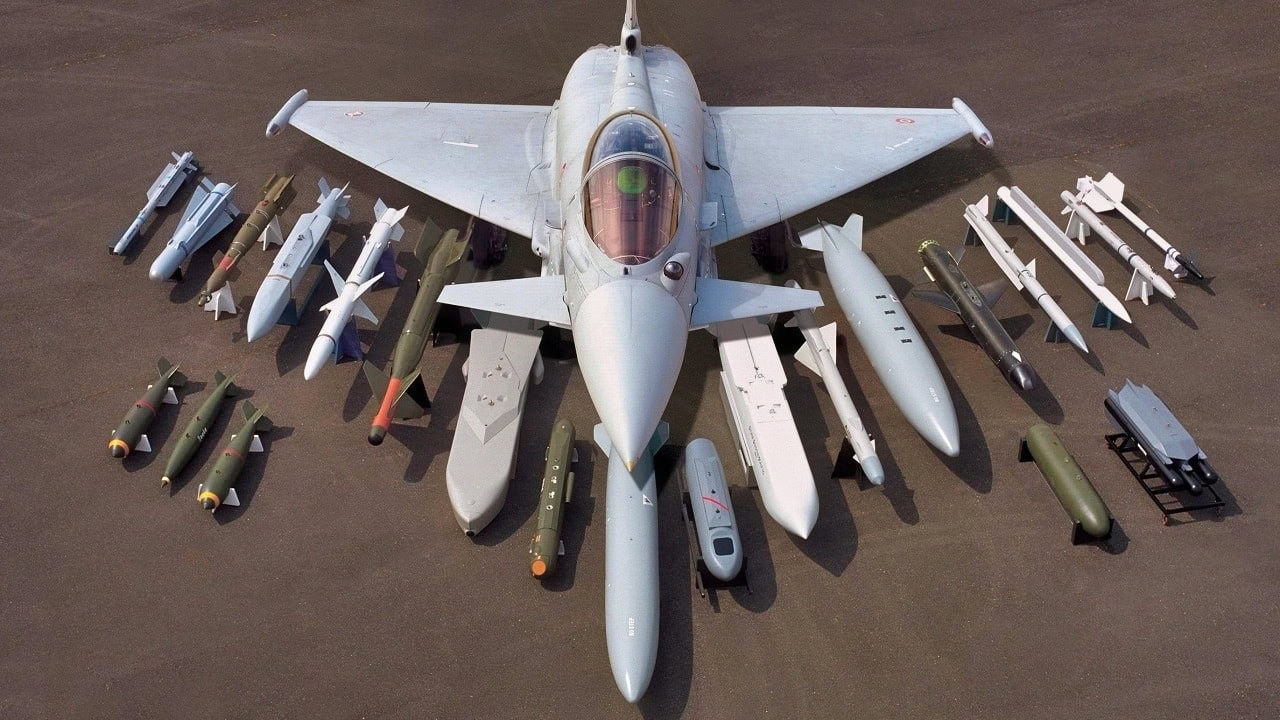
The Eurofighter Typhoon is still going strong, despite its status as a 4.5 Generation fighter rather than a 5th-generation stealth fighter.
It’s the end product of a consortium of defense firms from four NATO member nations: Great Britain’s BAE Systems, France’s Airbus, Italy’s Leonardo, and the joint holding company Eurofighter Jagdflugzeug GmbH, headquartered in Hallbergmoos, Germany.
Meanwhile, on the North American side of the Atlantic, fellow NATO member Canada is still dithering on whether to (A) continue buying U.S.-made Gen 5 F-35s or (B) jump over to Swedish-made Gen 4.5 Saab 39 Gripens as replacements for its aging CF-18 Hornet fleet.
Which in turn begs the question: Why doesn’t Canada consider the Eurofighter as an alternative?
The short answer is: The Royal Canadian Air Force (RCAF) *did* consider the Typhoon several years ago, but that prospect fell through for reasons we shall now discuss.
Canadian Typhoon Disqualifier #1: The Ayes, or Rather the 2-Eyes (Don’t) Have It
Airbus was the Eurofighter consortium member that pulled the product from the RCAF running, doing so way back in 2019, citing two primary factors.
As quoted by Chris Thatcher (no relation to the late former UK Prime Minister Margaret Thatcher as far as we can tell) in an August 30, 2019, article for Skies Mag titled “Typhoon withdrawn from Canadian fighter competition,” “’ First, a detailed review has led the parties to conclude that NORAD security requirements continue to place too significant of a cost on platforms whose manufacture and repair chains sit outside the United States-Canada 2-EYES community.’”
2-EYES is the Can-Am connection for shared intelligence.
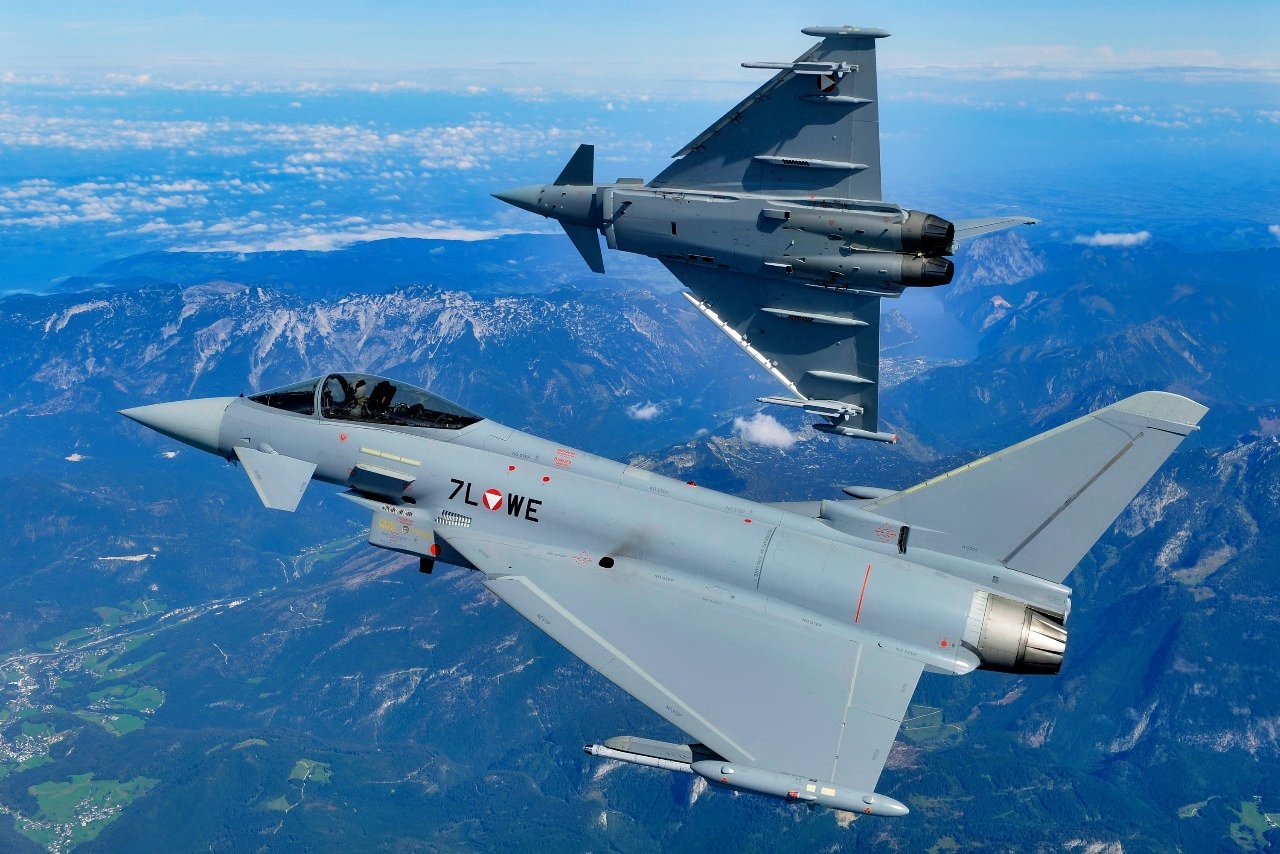
Eurofighter Typhoon. Image Credit: Creative Commons.
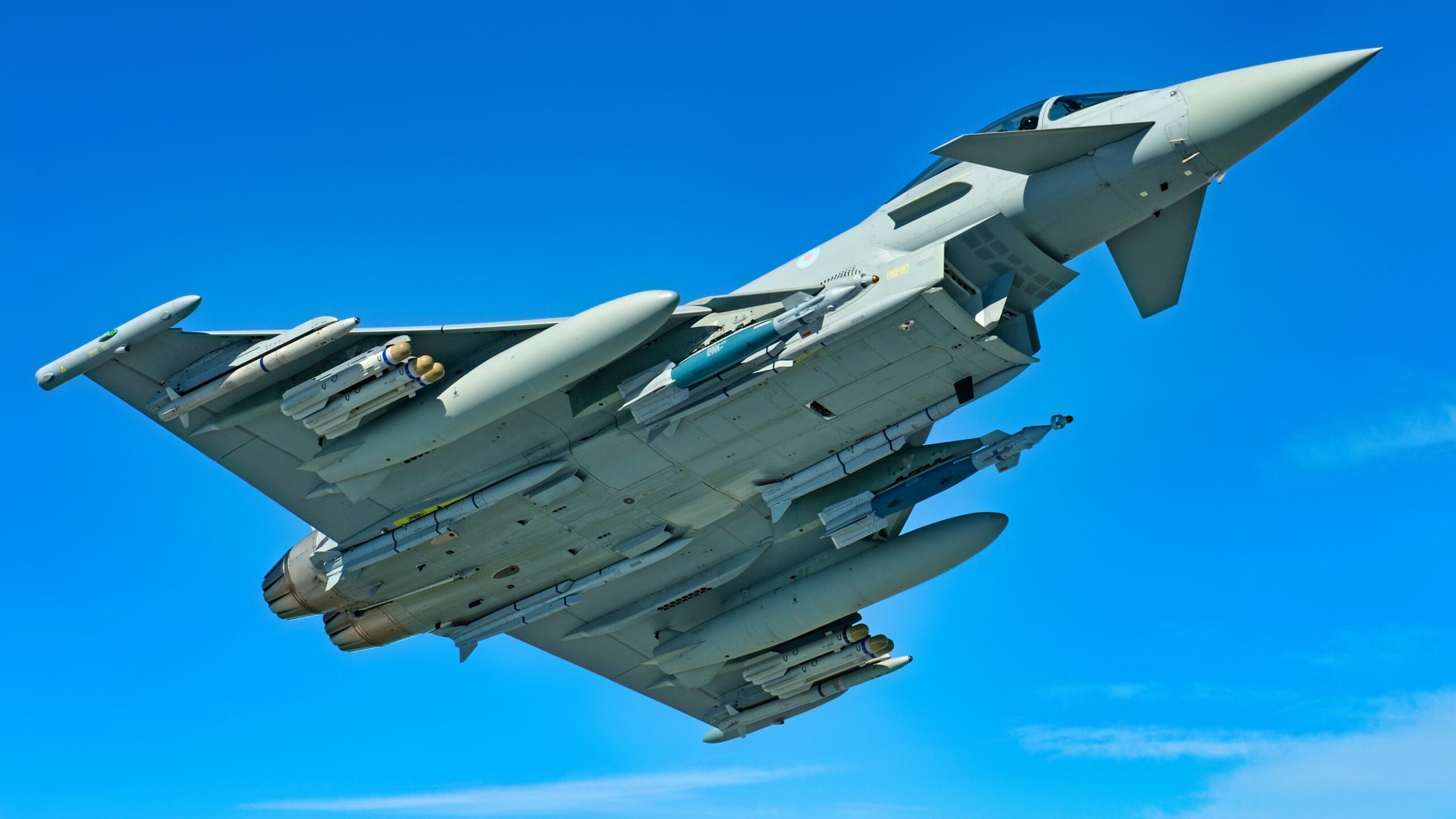
Eurofighter Typhoon. Image Credit: Creative Commons.
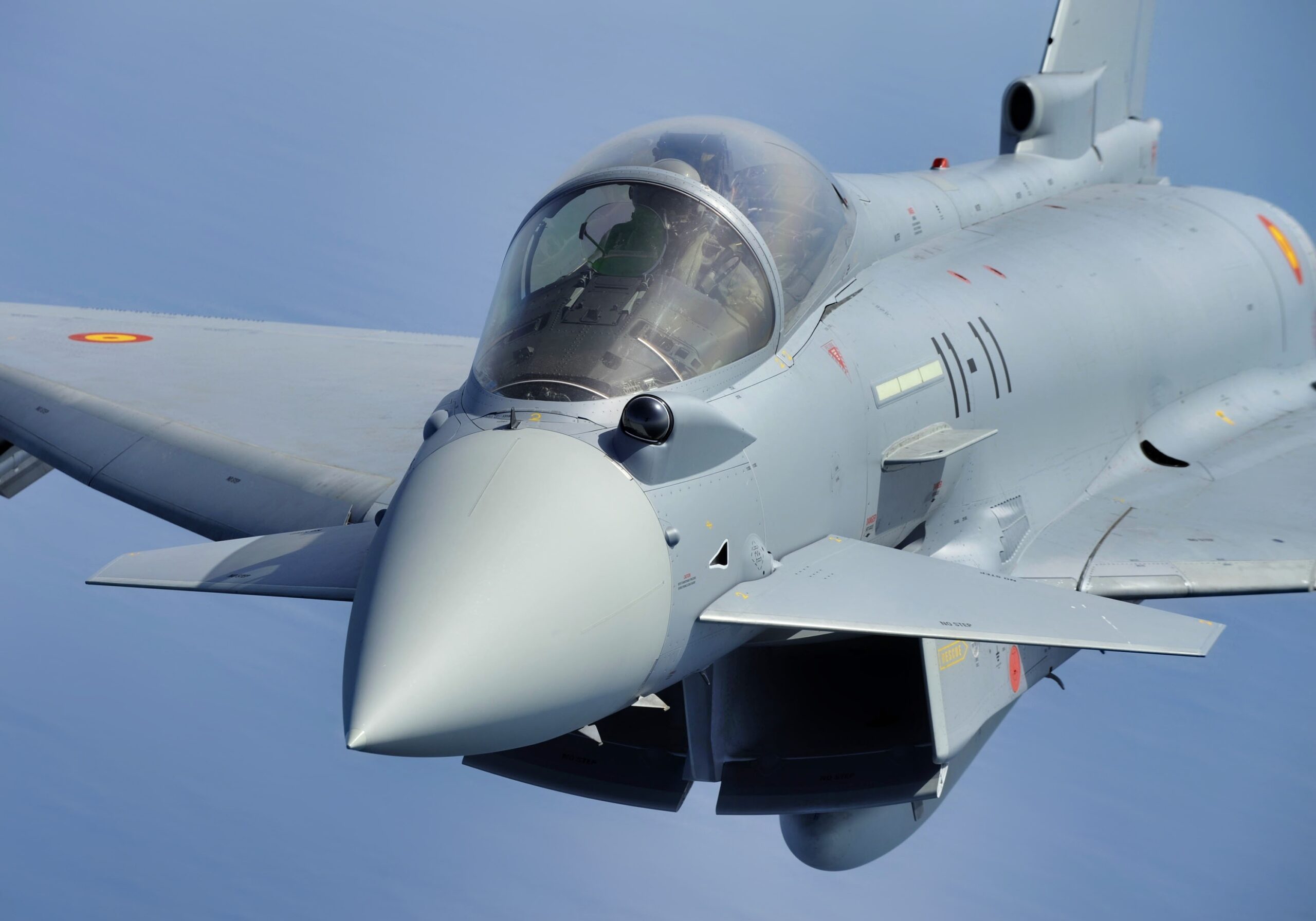
Eurofighter Typhoon Fighter. Image Credit: Creative Commons.
It in turn comprises 40 percent of the membership of the Five Eyes (FVEY) alliance, along with the UK, Australia, and New Zealand. France is conspicuous by its absence from that quintet (despite the large Francophone community in the province of Quebec) just as it’s conspicuous by its absence from the AUKUS submarine deal.
The FVEY member nations agree to share all signals intelligence (SIGINT) by default, and the alliance is arguably the world’s most powerful intelligence-sharing partnership. (The State of Surveillance website conspiratorially and cynically adds that there’s “The crucial loophole: they can spy on each other’s citizens and share that data back, bypassing domestic privacy laws.”)
Canada’s official SIGINT agency, the Communications Security Establishment (CSE) — which has been known to pride itself on being “Canada’s most secret intelligence agency” — is that country’s primary contributor to 2-EYES and FVEY. In addition, Canadian Forces Station Alert holds the distinction of being the most northerly permanently inhabited settlement on earth.
Canadian Typhoon Disqualifier #2: Perceived Favoritism Toward Lockheed Martin
The second half of Airbus’s rationale for pulling out of the CF-18 replacement race was “the significant recent revision of industrial technological benefits (ITB) obligations [that] does not sufficiently value the binding commitments the Typhoon Canada package was willing to make, and which were one of its major points of focus.”
That was most likely an allusion to arrangements made by the Canadian government to allow Lockheed Martin to remain in the running. (Lockheed Martin’s famed “Skunk Works” division is, of course, the manufacturer of the F-35 Lightning II).
Canadian law on defense procurement requires a foreign company to commit to investing the equivalent of the contract value into local businesses to benefit the Canadian economy. However, that law runs counter to the rules of the Joint Strike Fighter (JSF) consortium (of which Canada is a member), which prohibit partner countries from requiring economic benefits as a prerequisite or quid pro quo for the purchase of warbirds.
After pressure from the U.S, which threatened not to enter the tender, Ottawa agreed to drop its conditions.
The RCAF’s requirements for the new jets emphasized multirole capability, i.e., strategic attack and ground attack in addition to air-to-air combat. This was also interpreted as stacking the deck in favor of the F-35.
Airbus wasn’t the only French firm to pull its offering from the $19 billion RCAF fighter contract competition. Dassault Aviation—arguably France’s most successful fighter plane manufacturer of all time—had been considering offering its vaunted Rafale jet to Canada, but reneged on that back in 2019.
For their part, Saab and Boeing had also complained about pro-Lockheed favoritism.
Not All Was Lost for Airbus in Canada
Airbus’s withdrawal of the Eurofighter did not amount to a total falling out between that firm and the Canadian government.
Eau contraire. The late Monsieur Simon Jacques (1974 – 2022), then-president of Airbus Defence and Space Canada (and a Royal Canadian Navy veteran), affirmed in a statement that “Airbus Defence and Space is proud of our longstanding partnership with the government of Canada, and of serving our fifth home country’s aerospace priorities for over three decades. Together we continue in our focus of supporting the men and women of the Canadian Armed Forces, growing skilled aerospace jobs across the country, and spurring innovation in the Canadian aerospace sector.”
Monsieur Jacques’s statement of commitment was manifested in the fact that Airbus continued the process of delivering 16 fixed-wing search and rescue aircraft, the CC-295 Kingfisher, to replace the de Havilland CC-115 Buffalo and Lockheed CC-130H Hercules, and was positioned for the RCAF’s Future Aircrew Training Program.
The Present State of the RCAF Fighter Fleet and the Eurofighter Program
Eventually, Boeing pulled its F/A-18E/F Super Hornet from the RCAF fighter competition, which meant that CF-18 drivers would be somewhat deprived of the convenience of consistency and continuity. Nowadays, that leaves the F-35 and the Saab JAS 39 Gripen as the only contenders to replace the older Hornets.
The CF-18, aka the CF-188A, was first delivered to the RCAF in 1982; according to the World Directory of Modern Military Aircraft (WDMMA), there are still 72 CF-18s in service, along with 7 F/A-18As. Combined, these two Hornet variants comprise 20 percent of the RCAF’s total strength of 390 airframes, thus ranking it 26th out of 129 individual air services from 103 countries tracked by the site.
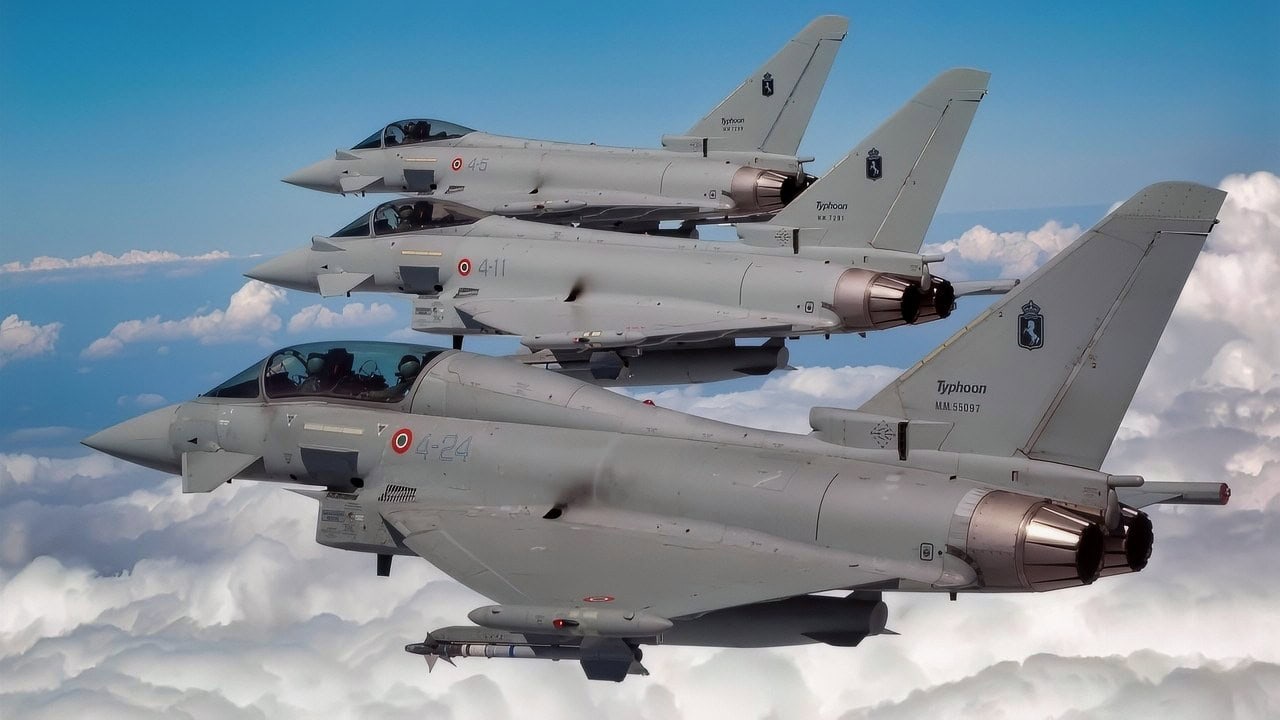
Eurofighter Typhoon Aircraft NATO. Image Credit: Creative Commons.
What sometimes gets lost in the shuffle of the Lightning II vs. Gripen debate is that the Canadian government has already paid for 16 F-35s; this is a done deal, regardless of how the Lockheed Martin vs. Saab/U.S. vs. Sweden debate is finally settled.
Meanwhile, the Canadian pullout hasn’t negatively impacted the financial viability of the Eurofighter program.
It’s currently used by multiple countries, not just European ones; besides the UK, Austria, Italy, Germany, Türkiye, and Spain, it’s also used by the Arab Gulf Cooperation Council (GCC) states of Saudi Arabia, Oman, Kuwait, and Qatar.
Over 600 have been produced to date. And according to the Royal Aeronautical Society (RAeS), the Typhoon recently surpassed one million flying hours, and “Between 2024 and 2025, around 80% of combat-aircraft missions conducted by operator countries were flown by these aircraft.”
About the Author: Christian D. Orr
Christian D. Orr is a Senior Defense Editor. He is a former Air Force Security Forces officer, Federal law enforcement officer, and private military contractor (with assignments worked in Iraq, the United Arab Emirates, Kosovo, Japan, Germany, and the Pentagon). Chris holds a B.A. in International Relations from the University of Southern California (USC) and an M.A. in Intelligence Studies (with a concentration in Terrorism Studies) from American Military University (AMU). He is also the author of the book “Five Decades of a Fabulous Firearm: Celebrating the 50th Anniversary of the Beretta 92 Pistol Series,” the second edition of which was recently published.