
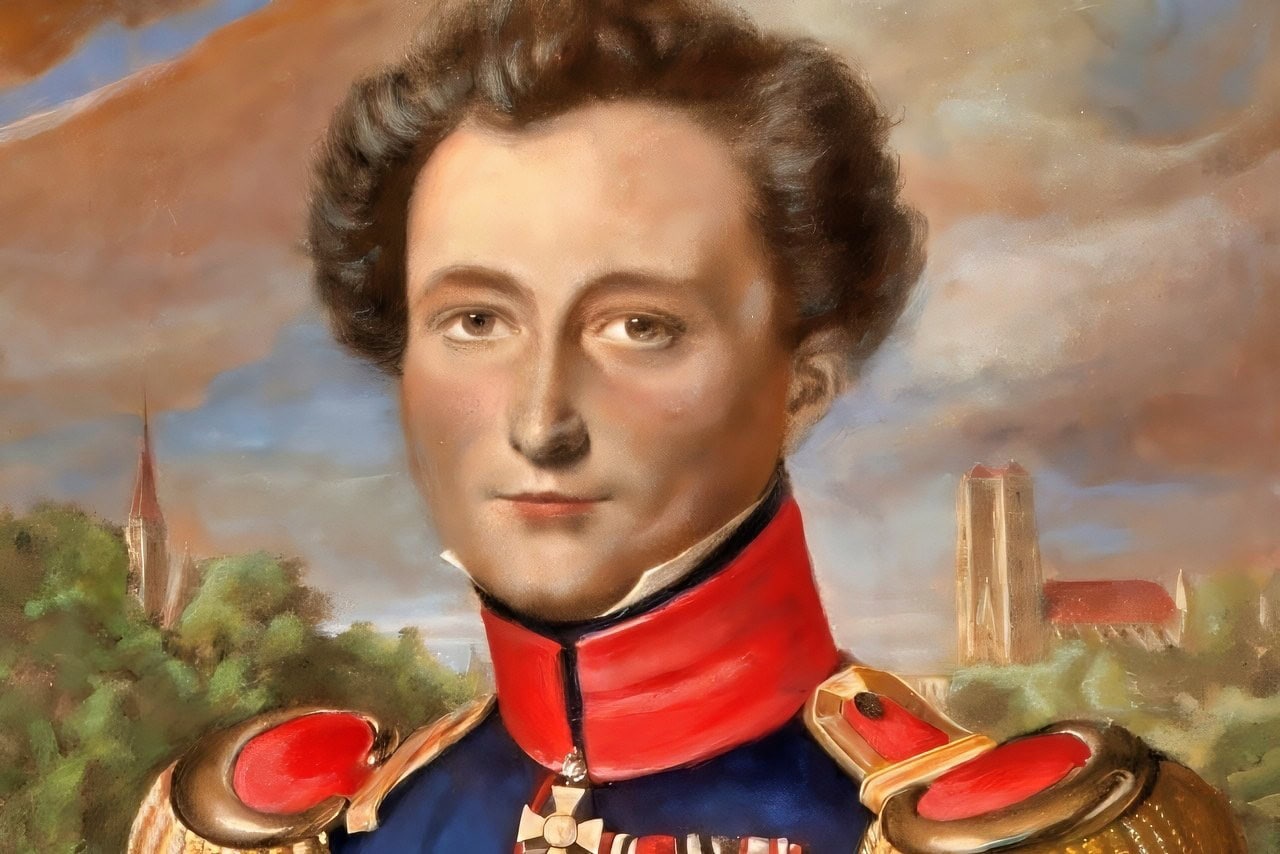
“Never forget that no military leader has ever become great without audacity.” – Carl von Clausewitz
That quote is attributed to Carl von Clausewitz, Prussian general of the late 18th and early 19th centuries, who is arguably right up there with Sun Tzu and Thucydides as one of the top three best-known war philosophers of all time.
Indeed, American strategic thinker Bernard Brodie described Clausewitz’s treatise“ On War” (Vom Kriege) as “not simply the greatest, but the only great book about war.”
Cannon Firing. Image Credit: Creative Commons.
Thanks to the 1995 submarine movie Crimson Tide, Hollywood audiences will be familiar with his saying War is the continuation of politics by other means,” although according to the Online Library of Liberty (OLL), the actual correct quote is “WAR IS A MERE CONTINUATION OF POLICY BY OTHER MEANS.”
Von Clausewitz has also been immortalized by his references to “friction” and “the fog of war.” But famous quotes and proverbs notwithstanding, what do we know about Carl von Clausewitz, the individual human being and soldier?
Carl von Clausewitz’s Early Life and Fatherly Influence
He was born Carl Philipp Gottlieb Clausewitz on June 1, 1780, in Burg bei Magdeburg, Prussia, the fourth and youngest son of a family that made claims of nobility status—hence the eventual “von”—but was actually middle class, which would later cause young Carl some initial friction (if you will) when courting his future beloved wife, Countess Marie Sophie Gräfin von Brühl, a bona fide noblewoman who herself was quite well-versed in statecraft military affairs in her own right—Clausewitz treated her as an intellectual partner and equal—and ended up publishing her husband’s famous book the year after his death.
Carl’s father, Friedrich, was also a soldier, more specifically an officer in the Prussian Army.
Going back to the family’s middle class as opposed to true blueblood roots, Friedrich was rather lucky to receive that officer’s commission, as the Prussian Army of the Napoleonic Army was much luck the British Army of that era, wherein it was extremely rare for a non-nobleman to become an officer; Frederick the Great bestowed that exception to policy upon Carl’s father “during the desperate circumstances of the Seven Years’ War when Prussia needed to relax its aristocratic military barriers,” as noted by the Ancient War History website.
By contrast, the French Army under Napoleon Bonaparte was far more egalitarian, opening opportunities for enlisted troops to rise through the ranks and cross over into the officer corps.

Napoleon with the Crown. Image Credit: Creative Commons.
In any event, there can be little doubt that Friedrich Clausewitz’s rise to the commissioned ranks helped to plant the proverbial seeds and make it feasible for his son to attain his own commission.
Initial Military Career: Boy Soldier and Officer
In today’s “civilized” world, the use of child soldiers is rightly considered an anathema, an utterly abhorrent human rights violation.
But back in the Napoleonic era, which coincided with the later portion of the so-called Enlightenment, Western militaries found it perfectly socially acceptable not only to send young lads off to war, but even to give some of them officers’ commissions before they reached their 18th birthday.
By contrast, during the medieval era, the so-called “Dark Ages,” squires weren’t typically knighted until they reached 20 or 21.
Carl von Clausewitz was a perfect example of this now unthinkable practice.
In 1792, at the tender and barely pubescent age of 12, he joined Prince Ferdinand’s Regiment (34th Regiment) in Potsdam as a lance corporal, determined to make the military his life’s work and vocation.
The precocious adolescent’s audacity, ambition, initiative, and intelligence quickly left a positive impression on his chain of command, as evidenced by his being commissioned as a Leutnant (lieutenant) at age 15.
This was a battlefield commission, as he had received his “baptism of fire” at the age of 13 during the War of the First Coalition.
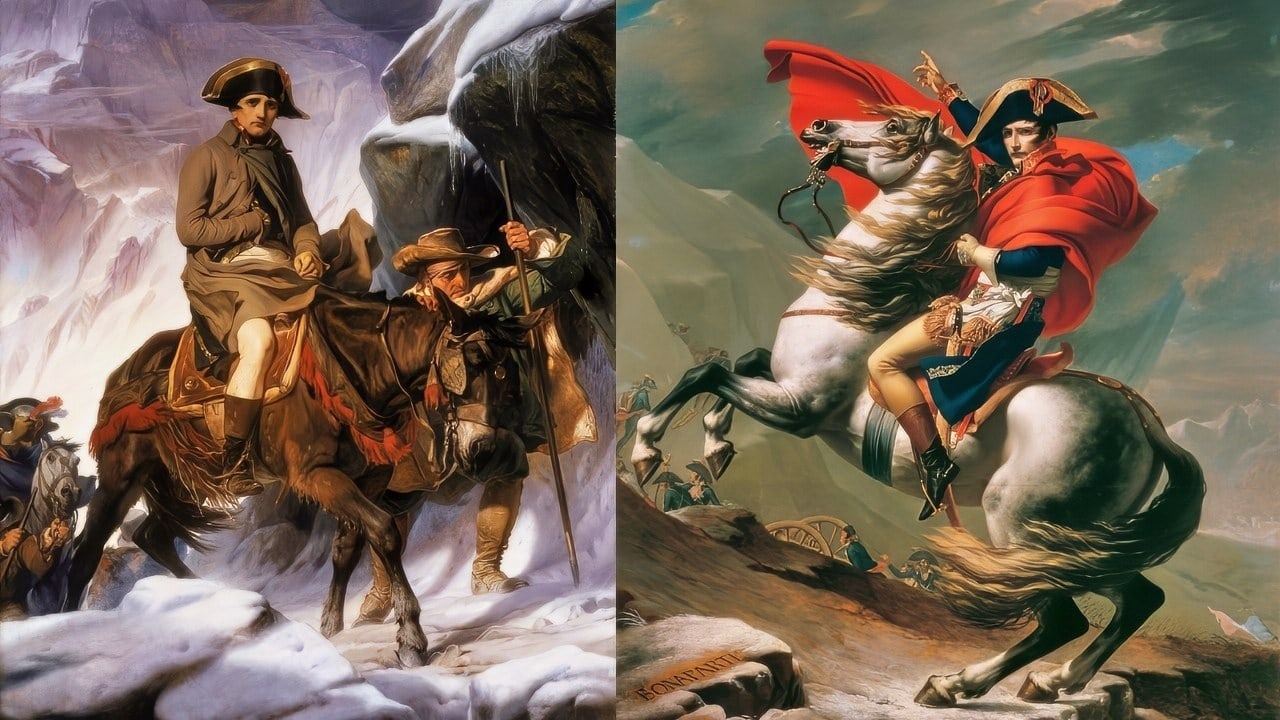
Napoleon Quote of The Day Two Looks. Image Credit: Creative Commons.
Growing Up and Climbing the Ranks: Adult Officer and Warrior-Scholar
In 1801, by which time he reached his 21st birthday, Leutnant von Clausewitz’s superiors decided to make sure he had a formal military education commensurate with his rank, so they sent him to the Prussian War College, from whence he graduated with distinction in 1803
In 1805, he was promoted to Hauptman (Captain)…and a year later, he became a prisoner of war, captured by French forces on October 28, 1806, during the Jena Campaign.
Two years later, Clausewitz was released from his imprisonment.
He soon became closely associated with reform-minded Prussian officers and was promoted to the rank of staff captain. In 1810, at the age of 30, he attained the rank of major and was appointed as an instructor in staff duties at the Berlin War Academy; that same year, he finally married Countess Marie Sophie after seven years of courtship.
Shortly before this assignment to the hallowed halls of academia, he had already been tasked with teaching military subjects to the Crown Prince, who would later become King Friedrich Wilhelm IV.
He briefly left the Prussian Army in protest and became a podpolkovnik (lieutenant colonel) in the Russian Army from 1812 to 1815, whereupon he played a major role in Napoleon’s defeat at the Battle of Wavre, which contributed to the Battle of Waterloo being a disaster for the French Empire.
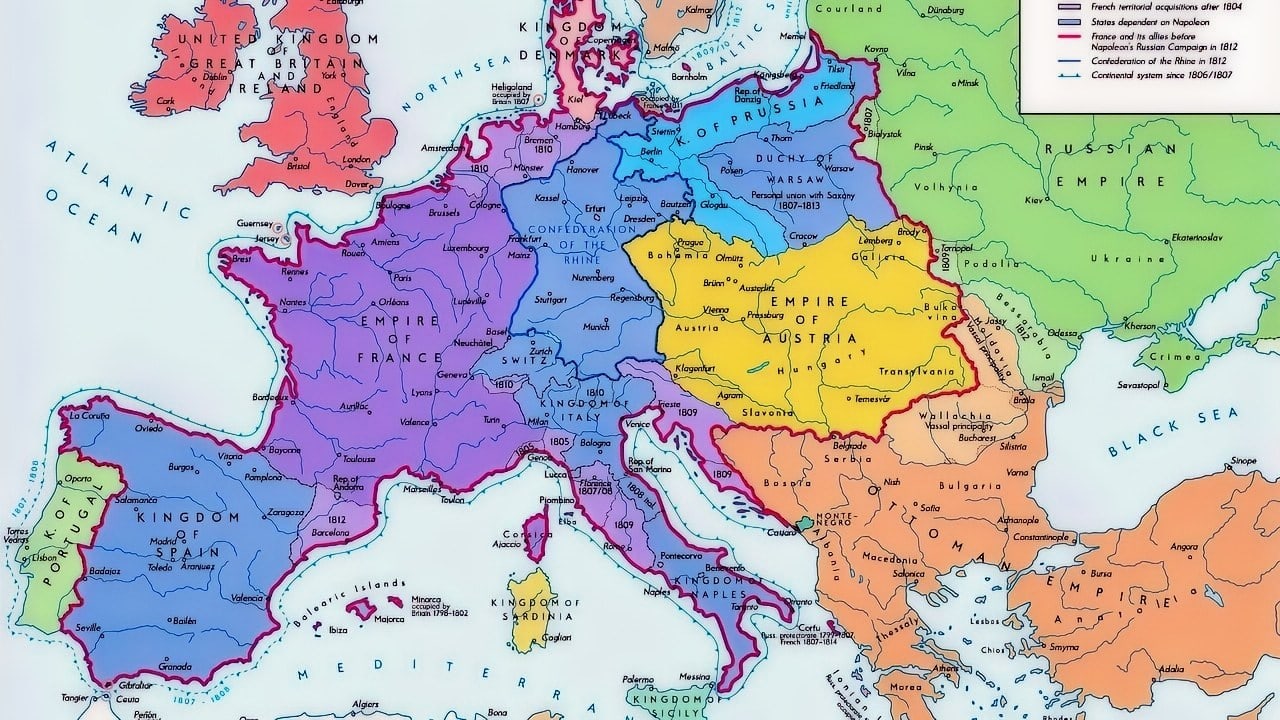
Map of Napoleon’s Empire. Image Credit: Creative Commons.
The Prussian Army rewarded Clausewitz by reinstating him.
For good measure, in 1818, he was appointed commandant of the War Academy and was promoted to Generalmajor (major general).
Death and Burials
Yes, “burials” plural, not singular.
Carl von Clausewitz died of cholera at the age of 51 at Breslau, Province of Silesia.
He was initially laid to rest in the military cemetery in that city, but then he was disinterred and taken to his final resting place in his childhood hometown of Burg.
His beloved widow outlived him by three years and three months, passing away at the age of 56, with the exact cause of her death unknown.
According to Clausewitz.com, “At the foot of the cross is a large marble slab that marks the grave of Marie Sophie, his wife. He is evidently buried beneath her. The gravesite is well maintained and surrounded on three sides by evergreen trees.”
Lasting Legacy
Clausewitz’s “On War,” in general, and the “politics by other means” quote in particular, are quite popular in civilian international relations scholarship and in military officers’ professional military education (PME) courses.
During the 1990s, the Clausewitz proverb was a topic of discussion in the USC School of International Relations, particularly in IR 210: Introductory Analysis, taught by the esteemed Dr. Steven Lamy.
Clausewitz’s words of wisdom weren’t limited to the IR faculty; they also came up prominently in a Multidisciplinary Activities course titled “The Art and Adventure of Leadership,” co-taught by then-University President Dr. Steven B. Sample and leadership guru Dr. Warren Bennis.
Christian D. Orr, Defense Expert
Christian D. Orr is a Senior Defense Editor. He is a former Air Force Security Forces officer, Federal law enforcement officer, and private military contractor (with assignments worked in Iraq, the United Arab Emirates, Kosovo, Japan, Germany, and the Pentagon). Chris holds a B.A. in International Relations from the University of Southern California (USC) and an M.A. in Intelligence Studies (with a concentration in Terrorism Studies) from American Military University (AMU). He is also the author of the book “Five Decades of a Fabulous Firearm: Celebrating the 50th Anniversary of the Beretta 92 Pistol Series,” the second edition of which was recently published.