
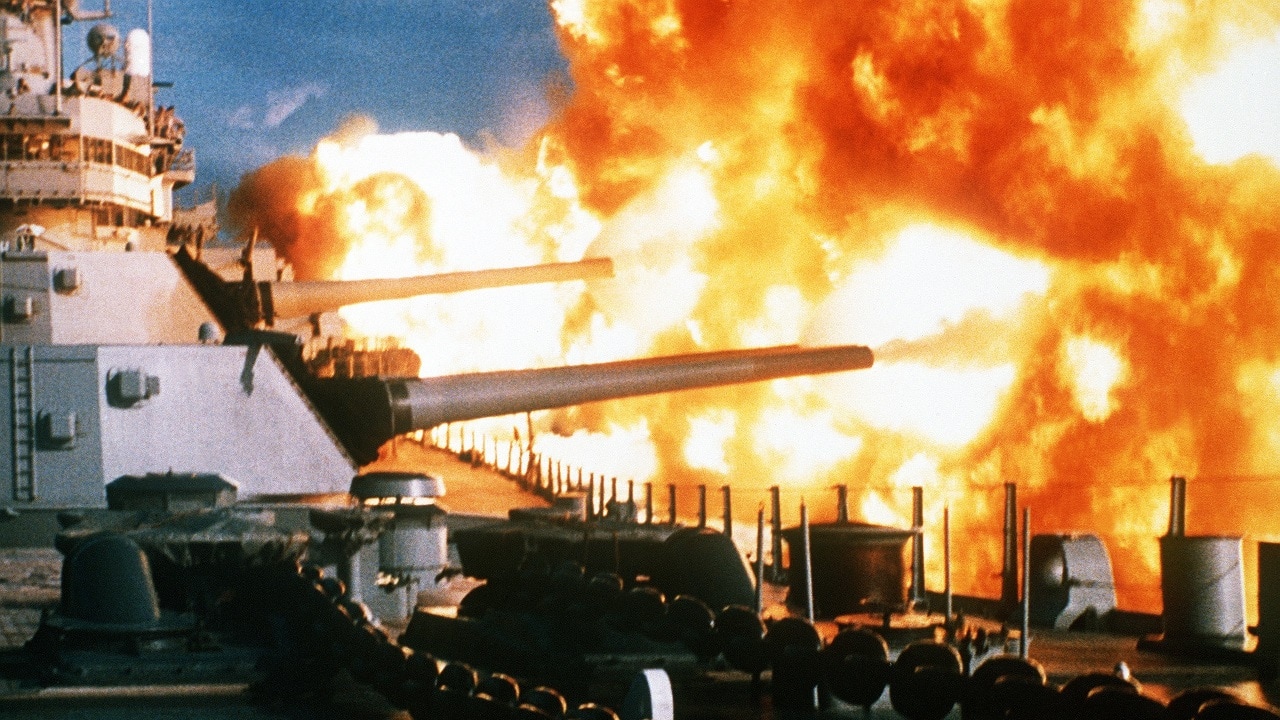
There is something almost theatrical about the way USS New Jersey kept refusing to retire. But sitting standing on the deck of the USS Iowa last summer, I came to the conclusion that the Iowa-class had seen its day. But the history of these battleships, the best ever to sail, is something I just keep turning back to in my writing. And I would argue, in fact, USS New Jersey might just be the best of the best.
USS New Jersey: The Best Battleship Ever Would Not Go Away
Four times the Navy hauled down her colors. Four times, somebody — a war, a president, a crisis in some corner of the globe nobody had budgeted for — pulled her back out of the mothball fleet, replaced her electronics, found her another mission, and sent her back to sea.
By the time she was finally decommissioned for good in February 1991, she had been in commission for 21 years across four separate active periods, more than any other Iowa-class battleship, and she had earned 19 battle and campaign stars across five wars and conflicts.
That last number is the headline: No American battleship has ever been more decorated.
The story of “Big J” is not just the story of one battleship. It is the story of how the United States Navy kept changing its mind about what battleships were for — and how, every time the Navy thought it had finally figured out the answer, the world handed it a new question that only a 45,000-ton hull with nine 16-inch guns could answer.
A Battleship Born From The Two-Ocean Navy Act
The Iowa-class was born in 1938, designed by the Preliminary Design Branch of the Bureau of Construction and Repair as the U.S. Navy’s answer to a problem nobody yet had: a fast battleship that could keep up with aircraft carriers, escort them through contested waters, and still slug it out with any capital ship the Imperial Japanese Navy could put to sea. The class would eventually consist of six planned hulls, of which only four were completed — Iowa, New Jersey, Missouri, and Wisconsin.
USS New Jersey was ordered on July 4, 1939. Her keel was laid down at the Philadelphia Navy Yard on September 16, 1940, with former Navy Secretary Charles Edison personally welding the first two keel plates together. Edison, the son of inventor Thomas Edison, had pushed during his time at the Navy Department to build the Iowas in the first place — and President Franklin Roosevelt later named the second hull after his home state in part to repay a political favor that had helped deliver Pennsylvania and New Jersey in the 1940 election.
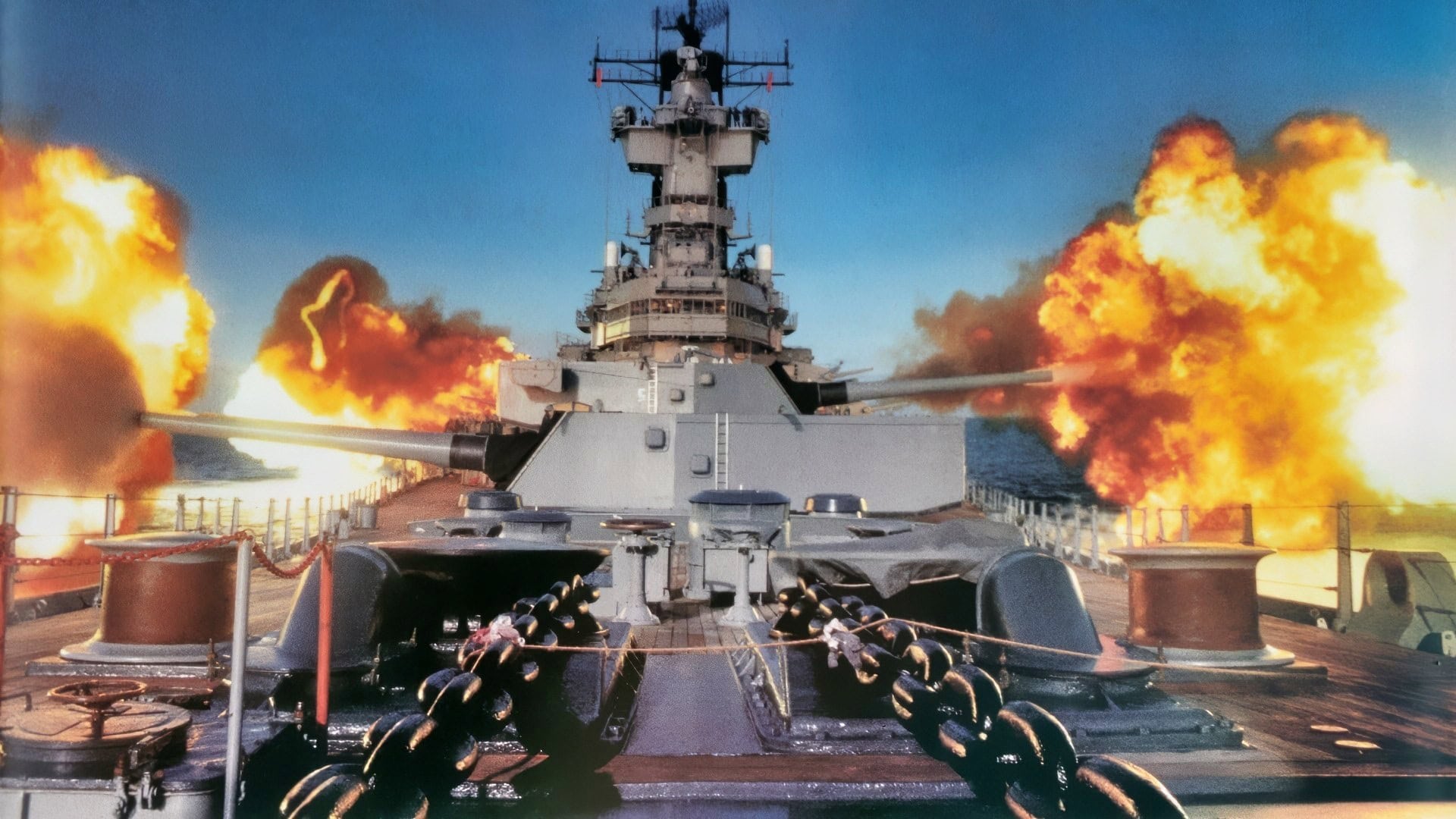
Copy negative of the US Navy (USN) Iowa Class (as built) Battleship USS NEW JERSEY (BB 62) firing a 21-gun broadside. Exact date shot unknown. Image Credit: Creative Commons.
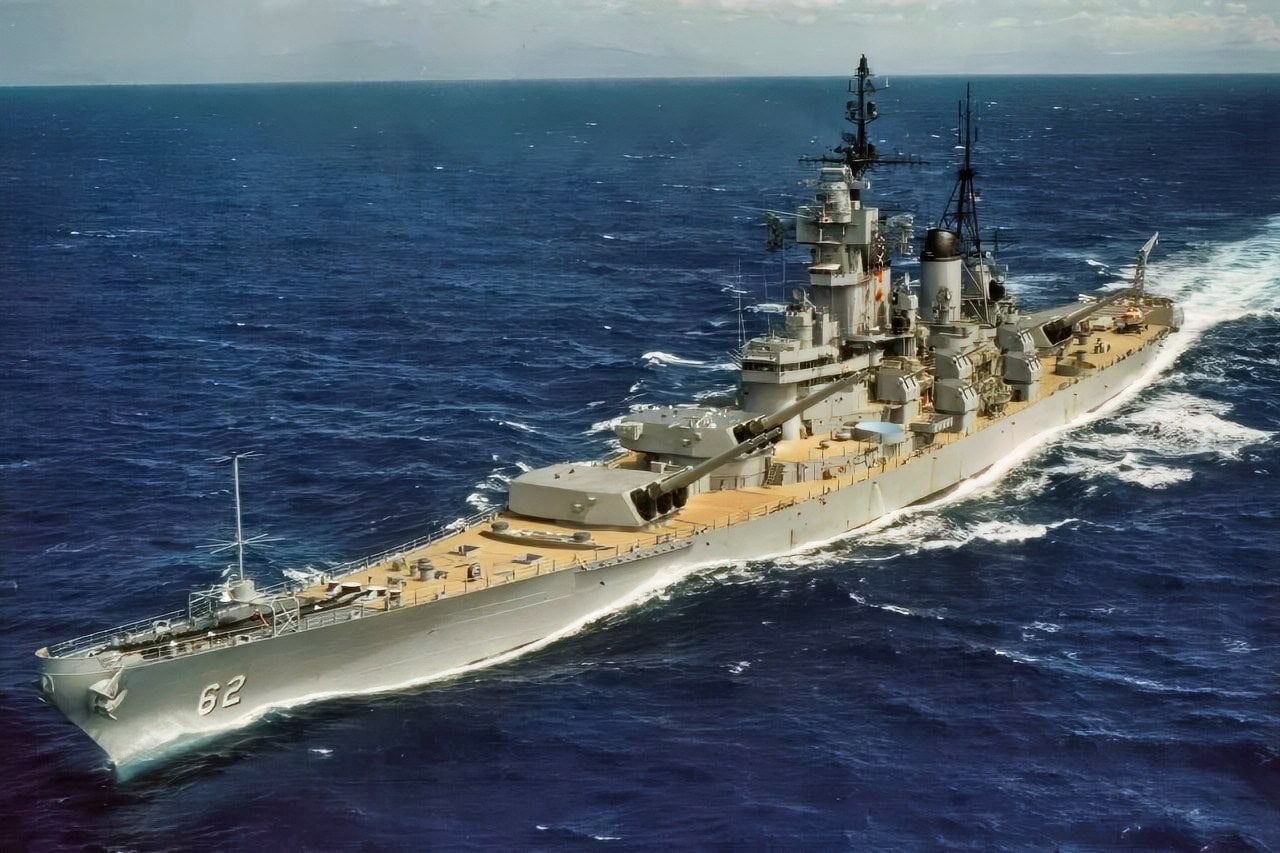
USS New Jersey Battleship. Image Credit: Creative Commons.
Before the Philadelphia yard could even begin construction, the slipway had to be lengthened by 325 feet and reinforced. New Jersey was 12 percent longer and 30 percent heavier than USS Washington (BB-56), the previous battleship the yard had built. She would displace roughly 45,000 tons, run 887 feet from bow to stern, and carry a crew of more than 1,900. Her main battery would be the most fearsome ever fitted to an American warship: nine 16-inch/50 caliber Mark 7 guns in three turrets, capable of firing 2,700-pound armor-piercing shells out to 23 miles. Her secondary battery of twenty 5-inch/38-caliber guns could reach out to 9 miles. Everything about her was overbuilt, on purpose.
The yard finished her nine months ahead of schedule. She slid down the ways on December 7, 1942 — the first anniversary of Pearl Harbor — and commissioned at Philadelphia on May 23, 1943, with Captain Carl F. Holden in command.
She was the second Iowa-class hull to enter the fleet. The war she had been built to fight was already two years old.
The Pacific War and USS New Jersey: Flagship For Spruance And Halsey
After working up in the western Atlantic and Caribbean, New Jersey transited the Panama Canal on January 7, 1944, bound for the Pacific. Three weeks later she joined Task Group 58.2 for the assault on the Marshall Islands, screening fast carriers as they hammered Kwajalein and Eniwetok.
By February 4, 1944, she was the flagship of the Fifth Fleet under Admiral Raymond A. Spruance — the most senior tactical command in the Pacific war.
What followed was the kind of service record that earned the ship her nine World War II battle stars. At Truk on February 16, 1944, her fire control system tracked the Japanese destroyer Nowaki at 35,700 yards and straddled her — the longest-ranged main-battery straddle ever recorded. She protected carriers during the Battle of the Philippine Sea in June 1944.
She became Admiral William F. Halsey’s flagship for the Third Fleet in August. She rode through the typhoon that nearly destroyed Halsey’s task force off the Philippines in December. At Leyte Gulf — the largest naval battle in human history — she steamed north with Halsey in pursuit of Admiral Ozawa’s decoy carriers, contributing to the destruction of Japanese naval aviation as a coherent force.
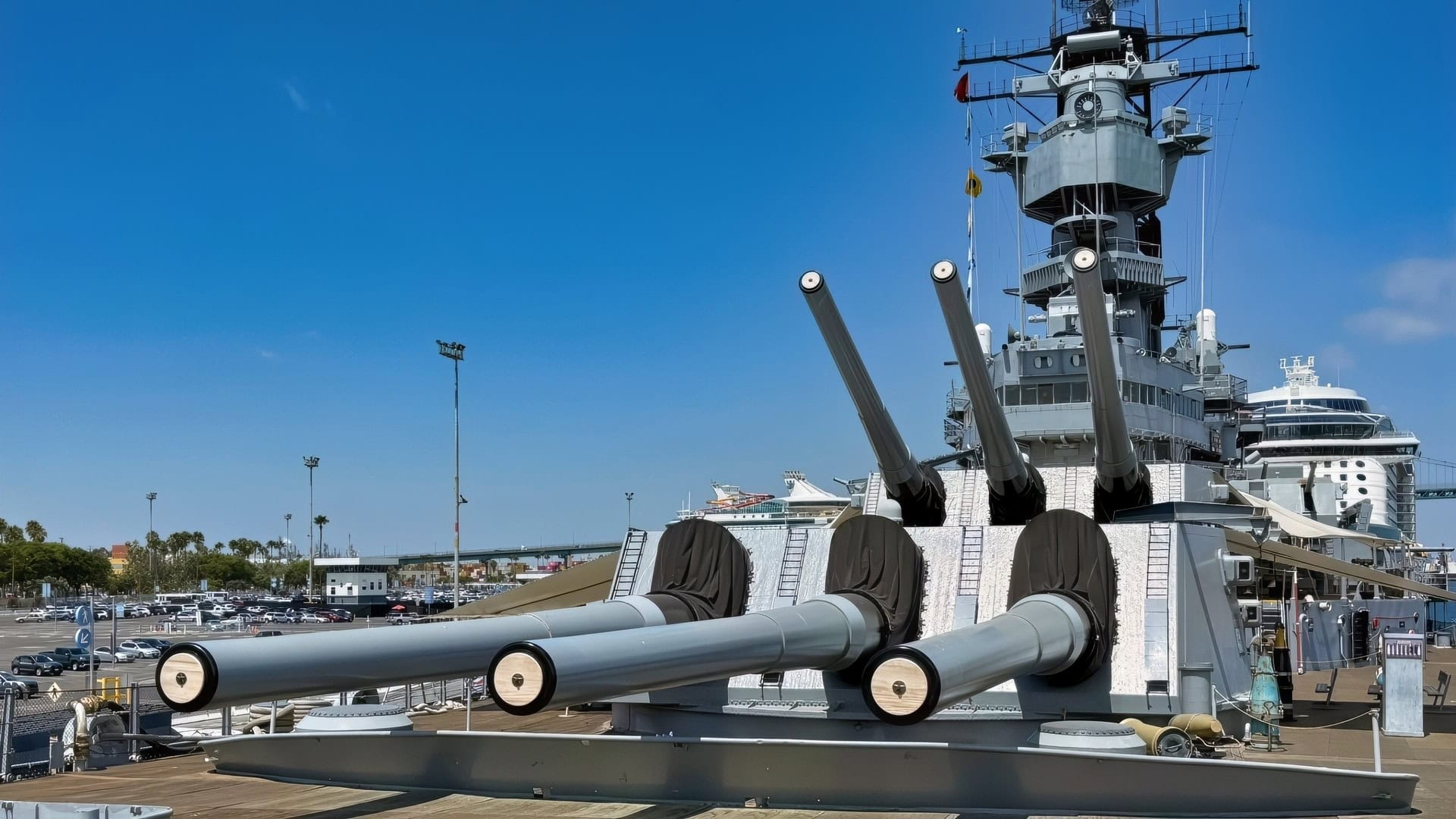
USS Iowa Battleship Guns 19FortyFive.com Image
She bombarded Iwo Jima as Marines went ashore in February 1945. She bombarded Okinawa that spring. When the war ended, she sailed into Tokyo Bay on September 17, 1945, and served as flagship for several admirals during the early occupation. She brought nearly a thousand troops home as part of Operation Magic Carpet, arriving in San Francisco on February 10, 1946.
She was decommissioned on June 30, 1948. The Navy assumed she would never sail again. That’s going to be a recurring theme in this article.
Korea: Out Of Mothballs, Back On The Gunline for USS New Jersey
Two years into peacetime, North Korean forces crossed the 38th parallel. By November 1950, New Jersey was back in commission, the Navy having decided that a war demanding shore bombardment of fortified coastal positions was a battleship’s natural environment.
She conducted two combat tours in Korea, one in 1951 and a second in 1953, with a European cruise sandwiched between them in the summer of 1952. The pattern of her work in Korea would become a template she returned to later: harassing fire by night, destruction of identified targets by day.
She bombarded Wonsan, Yangyang, and Kansong. She destroyed bridges, dams, gun emplacements, mortar positions, pillboxes, ammunition dumps, and sections of railroad. On October 1, 1951, General Omar Bradley, then Chairman of the Joint Chiefs of Staff, came aboard to confer with Vice Admiral Harold Martin while the ship was on the gunline.
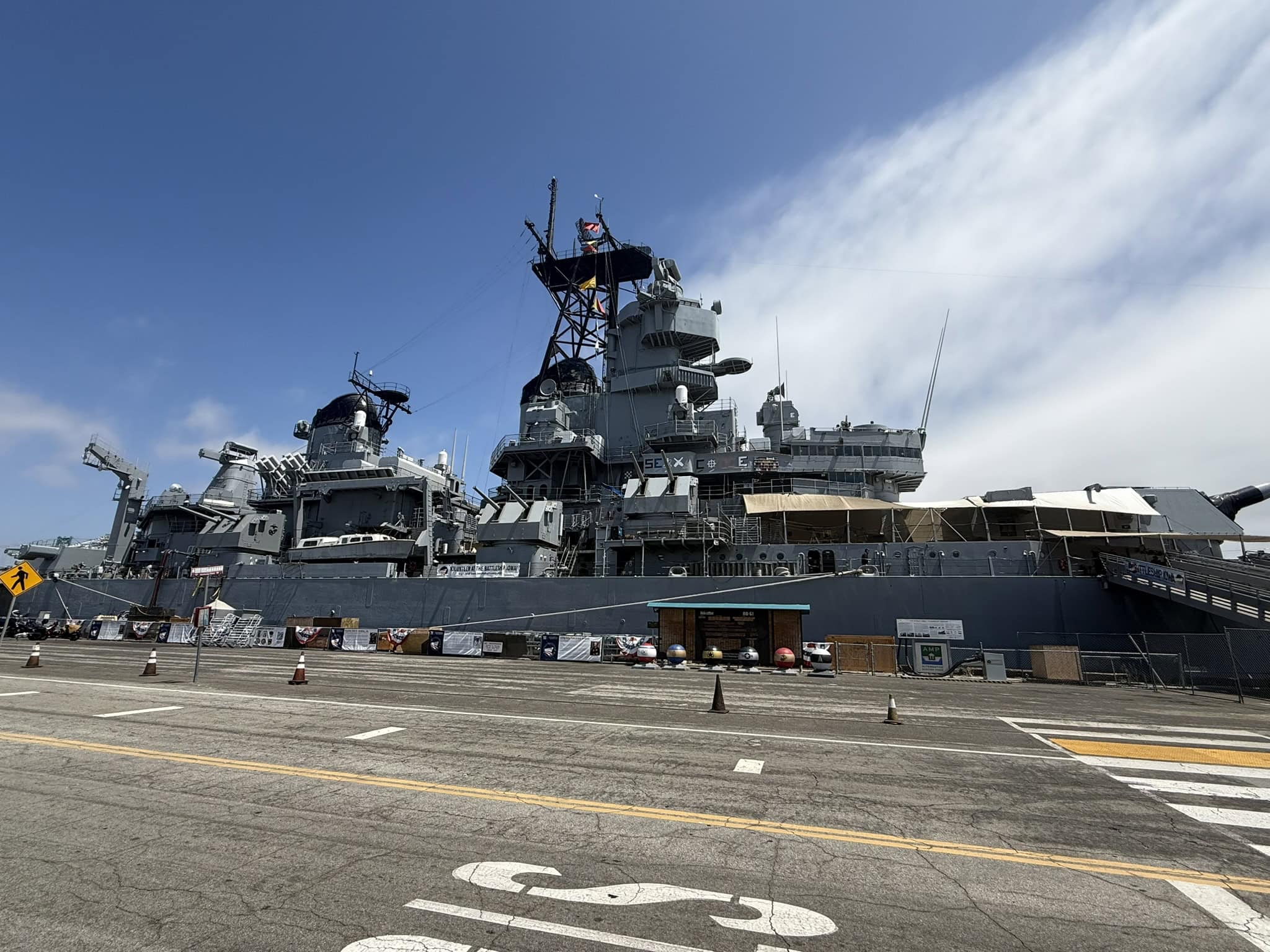
USS Iowa Battleship visit by Harry J. Kazianis for 19FortyFive.com. Taken back in August 15, 2025.
She earned four battle stars for her service in Korea.
She was decommissioned again on August 21, 1957.
The Navy assumed, again, that she would never sail again. You know what happens next.
Vietnam: The World’s Only Active Battleship
By 1967, the Vietnam War had created a problem that the carrier-centric Navy of the late 1950s and early 1960s had not anticipated. American aircraft were taking heavy losses over North Vietnam. Surface gunfire support along the coast required ships that could deliver heavy ordnance against fortified targets in any weather, day or night, without exposing pilots to surface-to-air missiles.
On May 31, 1967, Secretary of Defense Robert McNamara authorized a study of what it would take to reactivate USS New Jersey from mothballs. The study came back favorable.
In August, McNamara made the call: New Jersey would be brought back specifically to provide naval gunfire support in Southeast Asia. Of the four Iowas in reserve, she was selected because she was in the best material condition — having received an extensive overhaul before her last decommissioning. Missouri had a speed restriction from a 1950 grounding. Wisconsin had suffered a fire that destroyed key fire-control wiring. Iowa was in worse shape than New Jersey.
Recommissioned at Philadelphia on April 6, 1968, she sailed for the western Pacific that summer.
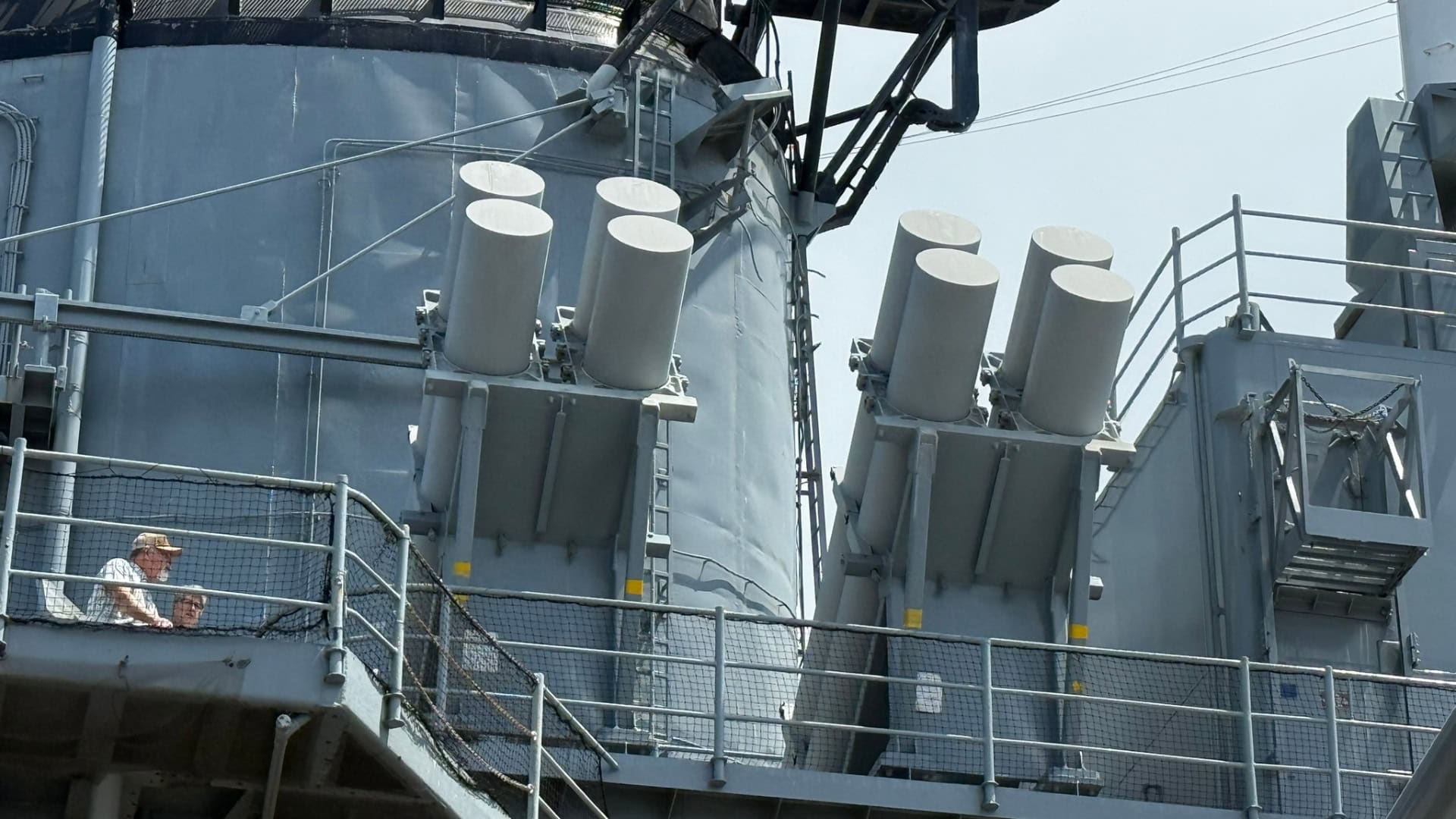
U.S. Navy Iowa-Class Battleship Missile Launchers 19FortyFive.com Image
During sea trials, she set a battleship world speed record, sustaining 35.2 knots for six straight hours. She arrived on the gunline near the 17th parallel in late September 1968 and fired her first shots in combat in over sixteen years on September 30.
What followed was the most concentrated period of heavy-caliber shore bombardment of the entire Vietnam War. In her first two months on the line, she expended nearly 10,000 rounds of ammunition against Communist targets — over 3,000 of them 16-inch shells. By the time she departed Vietnamese waters in April 1969, she had fired 5,688 rounds of 16-inch ammunition and 14,891 rounds of 5-inch — main-battery totals approaching everything she had fired in World War II and Korea combined. Her single most destructive bombardment came in November 1968, when she spent two days hammering Viet Cong storage areas near Quang Ngai and was credited with destroying 182 structures and 54 bunkers.
She was preparing for a second Vietnam tour when the Nixon administration ordered her inactivated. She was decommissioned on December 17, 1969. Her last commanding officer, Captain Robert C. Peniston, told her crew: “Rest well, yet sleep lightly; and hear the call, if again sounded, to provide fire power for freedom.”
She earned the Navy Unit Commendation and additional battle stars for Vietnam.
The Navy, for the third time, assumed she would never sail again. Yeah, right.
Reagan’s Battleship: Tomahawks, Beirut, And The 600-Ship Navy
The third assumption was the wrong one too.
When Ronald Reagan took office in 1981, his administration’s planned naval expansion — the 600-ship Navy — required more hulls than the shipbuilding industrial base could deliver in a reasonable time. The four Iowas, sitting at anchor in Bremerton and Philadelphia and elsewhere, were the obvious answer. They were paid for. Their hulls were sound. With modernization, they could be the most heavily armed surface combatants on the planet.
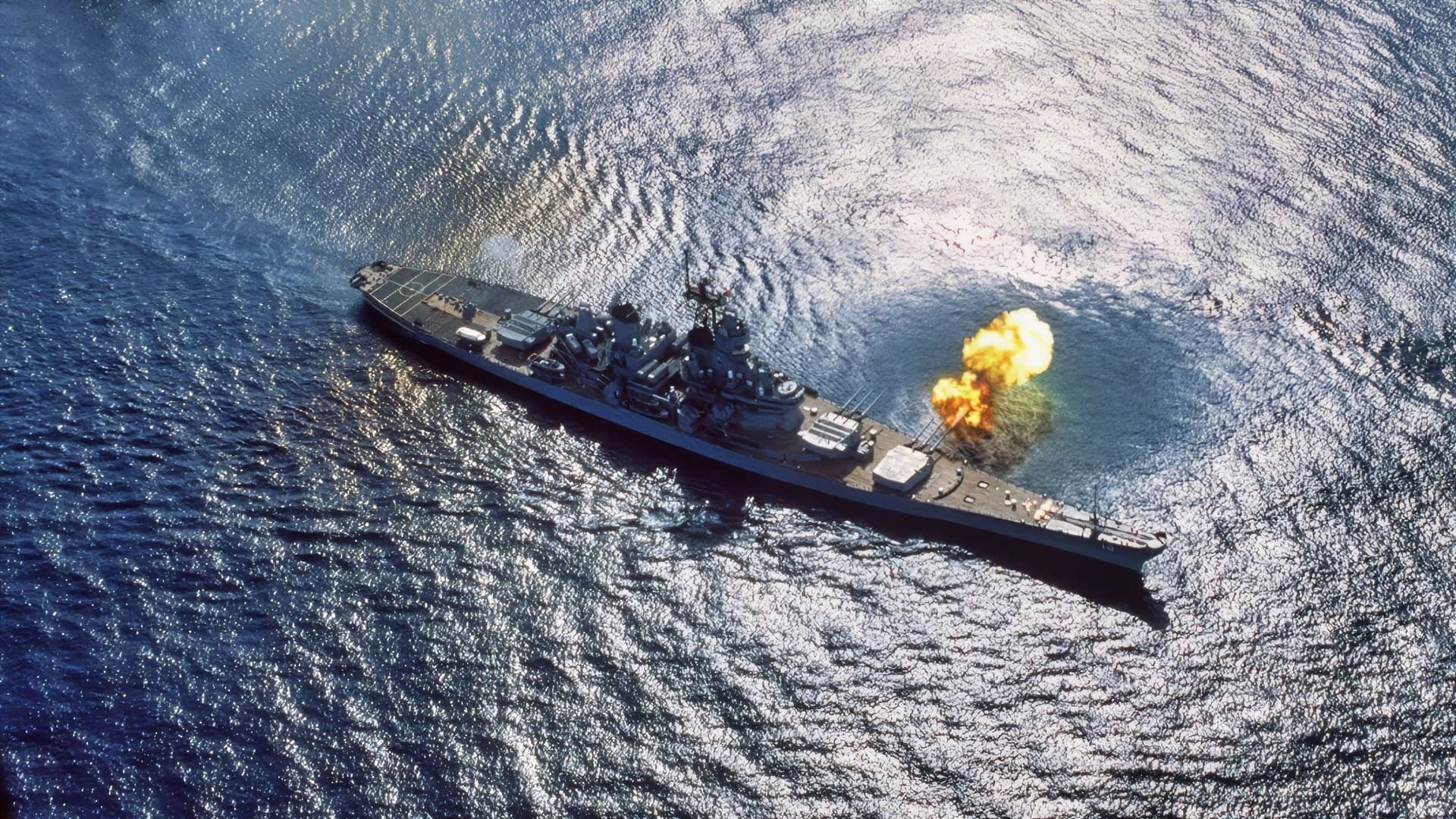
Iowa-Class Battleship USS Iowa. Image Credit: Creative Commons.
New Jersey was the first to come back. After modernization at Long Beach Naval Shipyard — which removed four of her 5-inch mounts to make room for armored box launchers carrying BGM-109 Tomahawk cruise missiles, added Harpoon anti-ship missiles, fitted Phalanx close-in weapon systems for missile defense, and modernized her radar and electronics — she was recommissioned at Long Beach on December 28, 1982. Reagan presided over the ceremony personally, the only sitting president to ever commission a battleship. He called her “still in the prime of life, a Gallant Lady, the New Jersey.”
She was the first warship ever to fire a Tomahawk. The first battleship ever to fire a Harpoon. The first to mount the Phalanx Close-In Weapon System. I have some pictures below of what that modernization looked like, onboard USS Iowa.
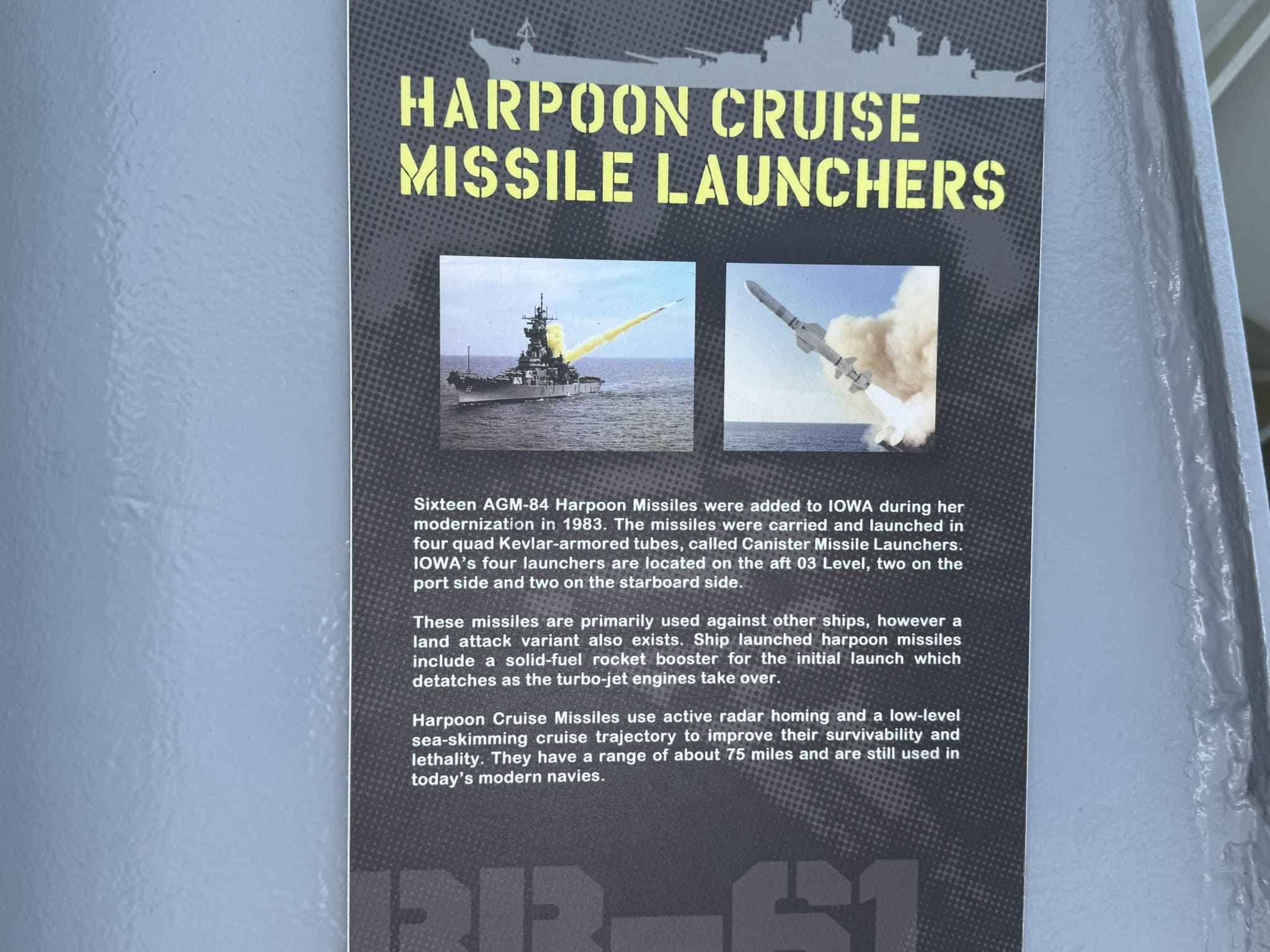
USS Iowa Battleship visit by Harry J. Kazianis for 19FortyFive.com. Taken back in August 15, 2025.
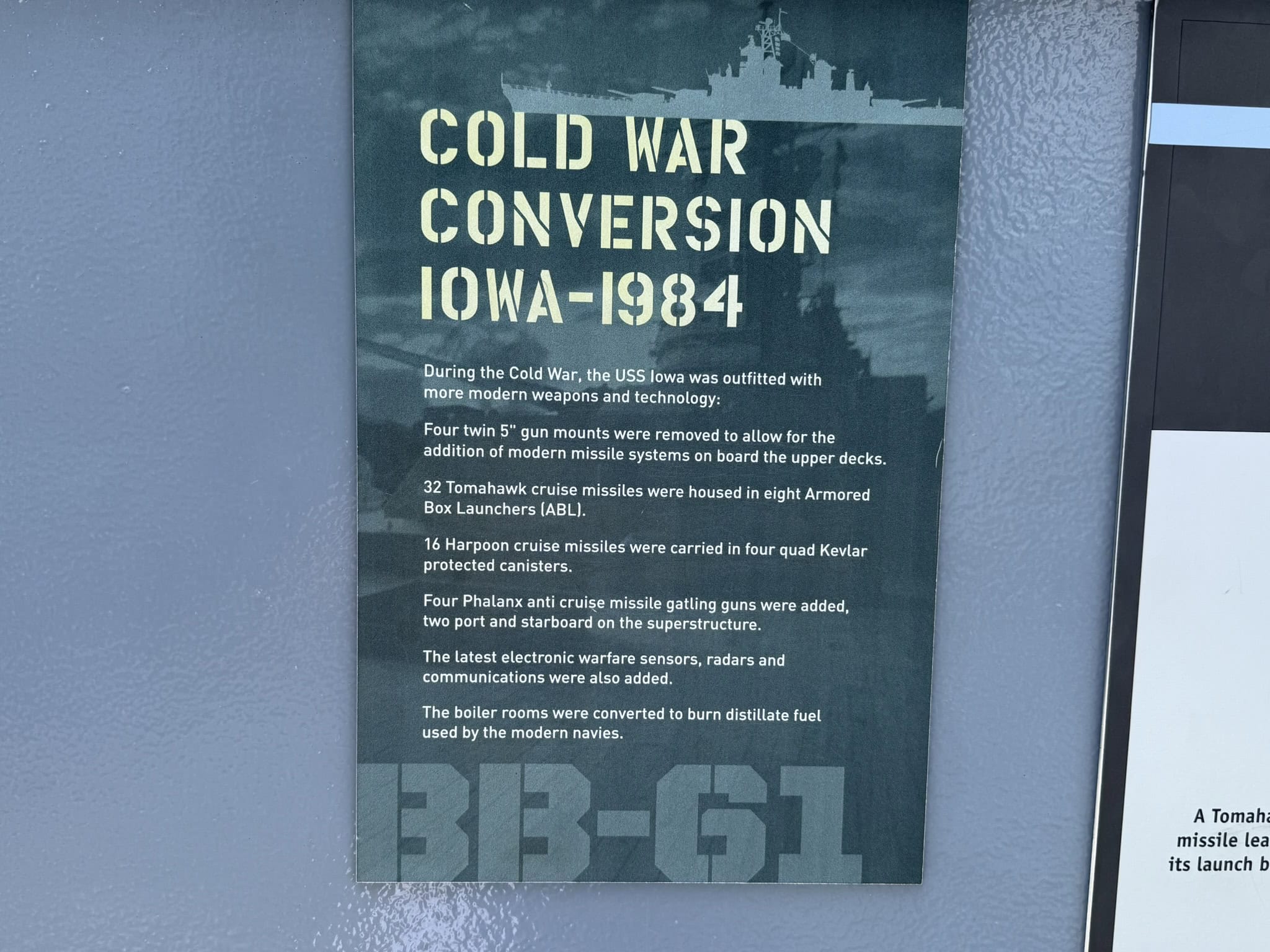
USS Iowa Battleship visit by Harry J. Kazianis for 19FortyFive.com. Taken back in August 15, 2025.
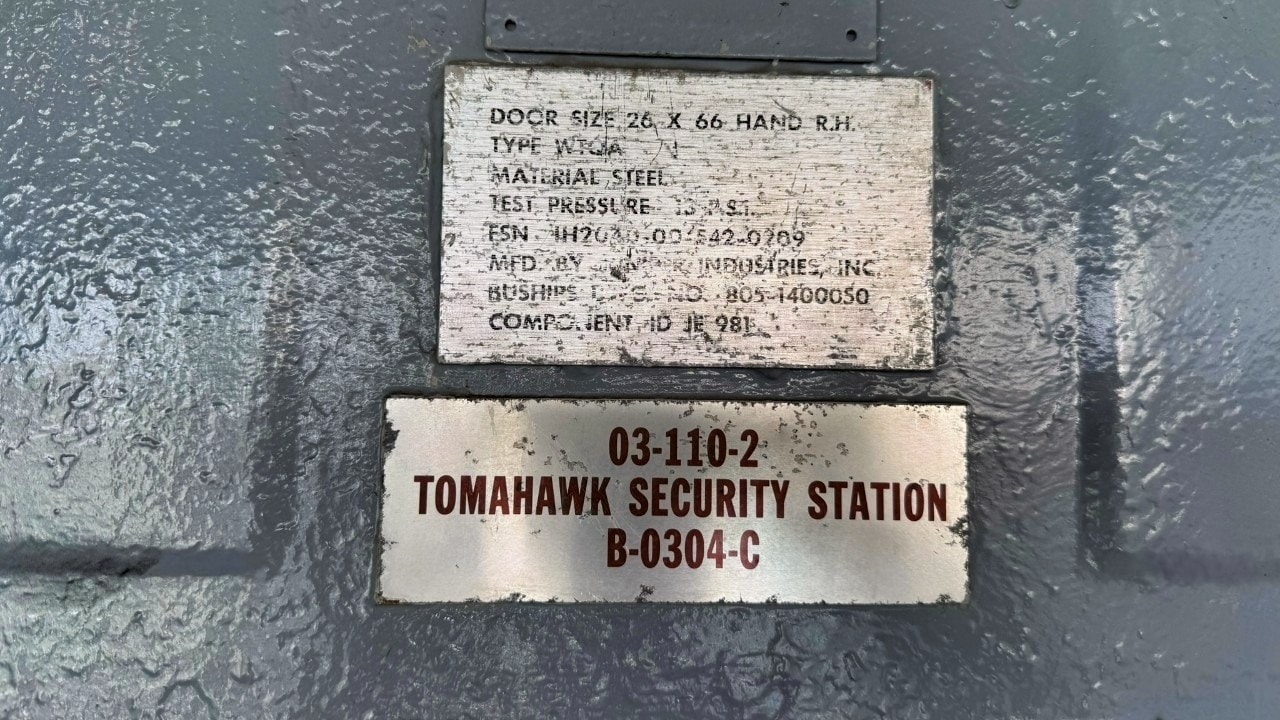
Battleship USS Iowa Tomahawk Missile Container. Taken by Harry J. Kazianis for 19FortyFive.com abord USS Iowa.
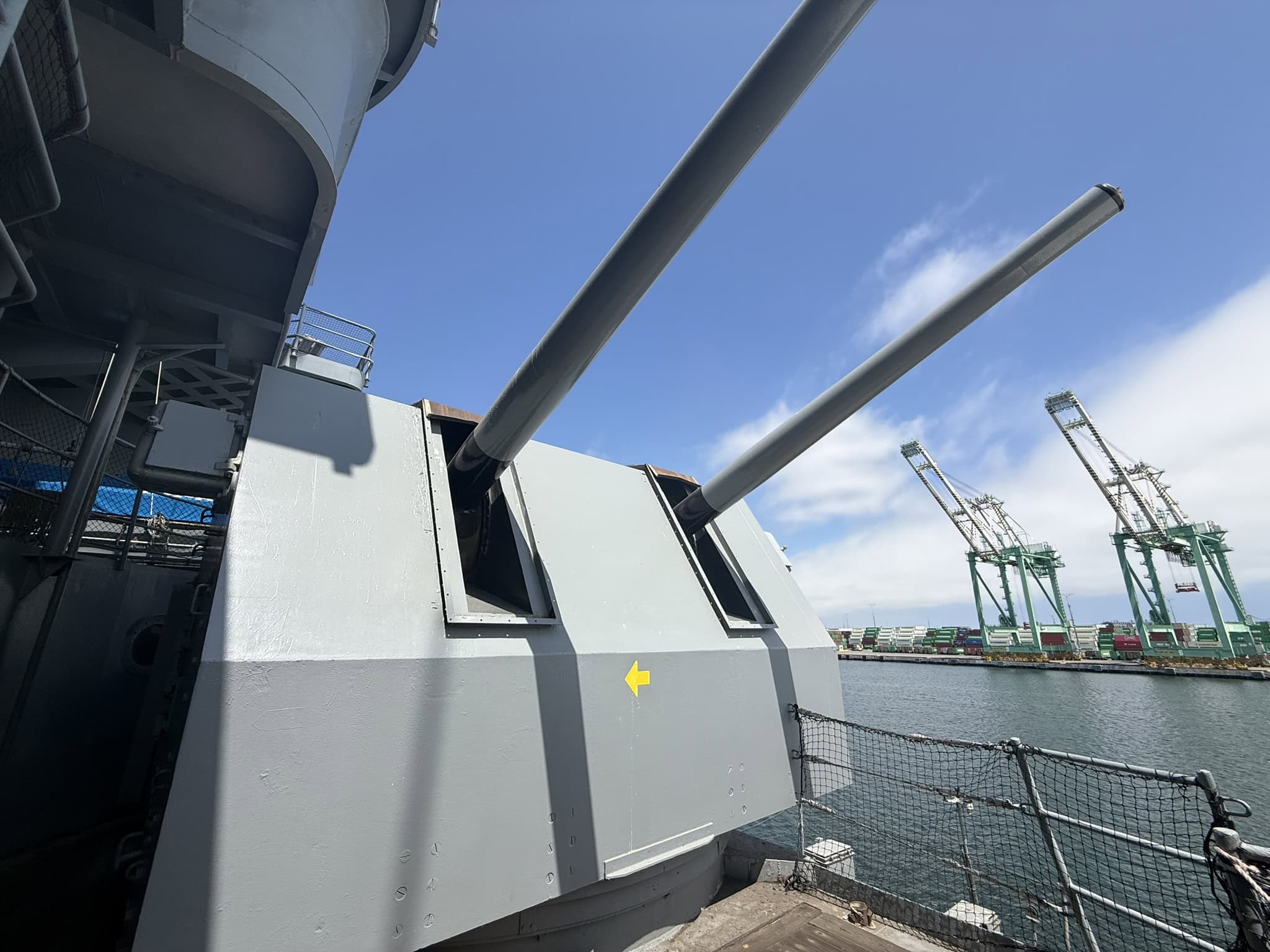
USS Iowa. 19FortyFive.com Original Image Taken in July of 2025.
She was also, almost immediately, back at war.
In September 1983 — after her shakedown cruise had been interrupted by political flare-ups in Central America — she was diverted to the eastern Mediterranean to support the U.S. Marines deployed as part of the Multinational Force in Lebanon.
She arrived off Beirut on September 25. On October 23, a suicide truck bomb destroyed the Marine barracks at Beirut International Airport, killing 241 American service members. On December 14, New Jersey fired 11 16-inch shells at antiaircraft positions that had targeted U.S. reconnaissance aircraft — the first time 16-inch projectiles had been fired in combat anywhere in the world since her own Vietnam tour ended in 1969.
The bigger event came on February 8, 1984. Over a nine-hour period, New Jersey fired 288 16-inch rounds — each shell weighing as much as a Volkswagen Beetle — at Druze and Syrian positions in the Beqaa Valley east of Beirut. Roughly 30 of those shells landed on a Syrian command post, killing the general commanding Syrian forces in Lebanon and several of his senior officers. It was the heaviest American shore bombardment since Korea.
The accuracy of the bombardment was, frankly, mixed. Many rounds were missed because of unreliable powder bags from World War II–era stocks. The mission ended in a strategic failure that nobody in the Reagan administration cared to advertise: by late February, the Marines had withdrawn from Lebanon, and the Multinational Force was finished as a coherent project. But the shooting itself — for sheer volume of heavy ordnance delivered in a short period — was a reminder of what a battleship could still do that nothing else in the fleet could.
She deployed again to the western Pacific in 1986 and made her final operational cruise in 1989-1990, becoming the first battleship ever to enter the Persian Gulf. She participated in PacEx ’89, the largest peacetime naval exercise since World War II.
The Final Decommissioning, And A Museum In Camden
The end came not in combat but in the federal budget.
The Cold War was over. The 600-ship Navy was being unwound. The Iowas were enormous, expensive to crew and operate, and — with the Soviet surface fleet dissolving alongside the Soviet Union itself — increasingly difficult to justify on a strict cost-benefit basis. New Jersey was decommissioned for the final time on February 8, 1991.
Her Iowa-class sisters Missouri and Wisconsin fired the war shots she missed in Operation Desert Storm later that year, sending Tomahawks and 16-inch shells against Iraqi targets along the Kuwaiti coast.
She was towed to Bremerton, Washington, and sat in reserve. Congress argued for years over what to do with her. She was struck from the Naval Vessel Register in 1995, restored to it as a mobilization asset by an act of Congress, and finally struck again in January 1999 when Iowa replaced her on the mobilization list.
On September 12, 1999, she began her final voyage — a 5,800-mile tow from Bremerton through the Panama Canal to the Philadelphia Naval Shipyard, where she arrived on November 11, 1999, with more than 25,000 admirers lining the banks of the Delaware River. After a contested fight between competing New Jersey cities, the Home Port Alliance of Camden won the right to host her as a museum.
She opened to the public as the Battleship New Jersey Museum and Memorial in October 2001. She is moored at 62 Battleship Place, on the Camden waterfront across from Philadelphia, and you can still walk her teak deck, climb to her bridge, and stand inside Turret II — the same turret whose 16-inch guns once threw shells the size of small cars at targets in the Marshall Islands, North Korea, the I Corps Tactical Zone, and the Beqaa Valley.
What “Big J” Meant — And What She Still Means
It is tempting to read New Jersey’s career as a story of narrowly avoided obsolescence. As I keep finding, the truth is more interesting.
She was a battleship in a century when battleships supposedly no longer mattered. Aircraft carriers had displaced her by the time she commissioned in 1943. Missiles had supposedly displaced naval gunfire by the time she returned to Korea. Precision-guided air-delivered ordnance had supposedly displaced shore bombardment by the time she came back for Vietnam. Every reactivation took place in a Navy that, on paper, had moved past what New Jersey did best.
And every reactivation answered a question the post-battleship Navy could not. How do you bombard a fortified coastline in weather that grounds the carrier air wing? How do you put 2,700 pounds of armor-piercing steel through a hardened bunker that a 500-pound bomb cannot crack? How do you keep delivering heavy ordnance, hour after hour, day after day, when the air-defense environment makes manned strike unacceptably risky?
The answer in 1943, in 1951, in 1968, in 1983 — and arguably in some scenarios today — was the same answer.
You send a battleship.
Whether the Pentagon ever again chooses to send one is a different question, and a longer one. The Iowas are too old, too manpower-intensive, and too expensive to seriously consider returning to active service in the 21st century. Just go, as I did, to the USS Iowa out in Long Beach; she is in rough shape, but normal for a warship sitting for years in the water.
But the requirement that drove their reactivation — sustained, weather-independent, high-volume heavy fire support against a fortified coast — has not gone away. The U.S. Navy simply does not have a current answer for it.
USS New Jersey is now a museum. She has been in a museum longer than she was ever in commission. But the four-war career bolted to her superstructure in battle stars and unit citations is a record no surface combatant in American history has ever matched, and almost certainly never will. She is the most decorated battleship in U.S. Navy history, the only American battleship to fire shots in anger during the Vietnam War, and the only American battleship ever recommissioned by a sitting president.
And for me, that means she is the greatest of all the Iowa-class, of all the battleships to sail.
About the Author: Harry J. Kazianis
Harry J. Kazianis (@Grecianformula) was the former Senior Director of National Security Affairs at the Center for the National Interest (CFTNI), a foreign policy think tank founded by Richard Nixon based in Washington, DC. Harry has over a decade of experience in think tanks and national security publishing. His ideas have been published in the NY Times, The Washington Post, The Wall Street Journal, CNN, and many other outlets worldwide. He has held positions at CSIS, the Heritage Foundation, the University of Nottingham, and several other institutions related to national security research and studies. He is the former Executive Editor of the National Interest and the Diplomat. He holds a Master’s degree focusing on international affairs from Harvard University. Kazianis is Editor-In-Chief of 19FortyFive.

