
Russia pocketed several billion dollars in the first two weeks after the Strait of Hormuz closed. That figure is worth sitting with — real money, attached to real barrels, flowing into accounts that fund a real war now in its fourth year. The temptation to dismiss it as a temporary market anomaly is understandable. It is also wrong.
But here’s the question that actually matters: can Moscow get that money from the bank to the battlefield? Because that pipeline — the one running from petrodollar windfall to functioning war machine — has serious structural problems that the revenue figures don’t reveal.
Iran War Helps Russia: Give the Bull Case Its Due
Start with what the optimists get right, because they’re not wrong about the first part.
When U.S.-Israeli strikes on Iranian nuclear facilities triggered the Hormuz crisis, Brent crude spiked hard and fast. Russia moved quickly — selling stranded oil stockpiles at spot-market premiums, capturing the kind of windfall that comes once in a sanctions era. The budget consequences were immediate and significant.
Moscow had been quietly planning spending cuts heading into spring. Those plans disappeared. Defense budget lines held. The fiscal squeeze that had been visibly tightening throughout late 2025 loosened — not dramatically, but enough to matter.
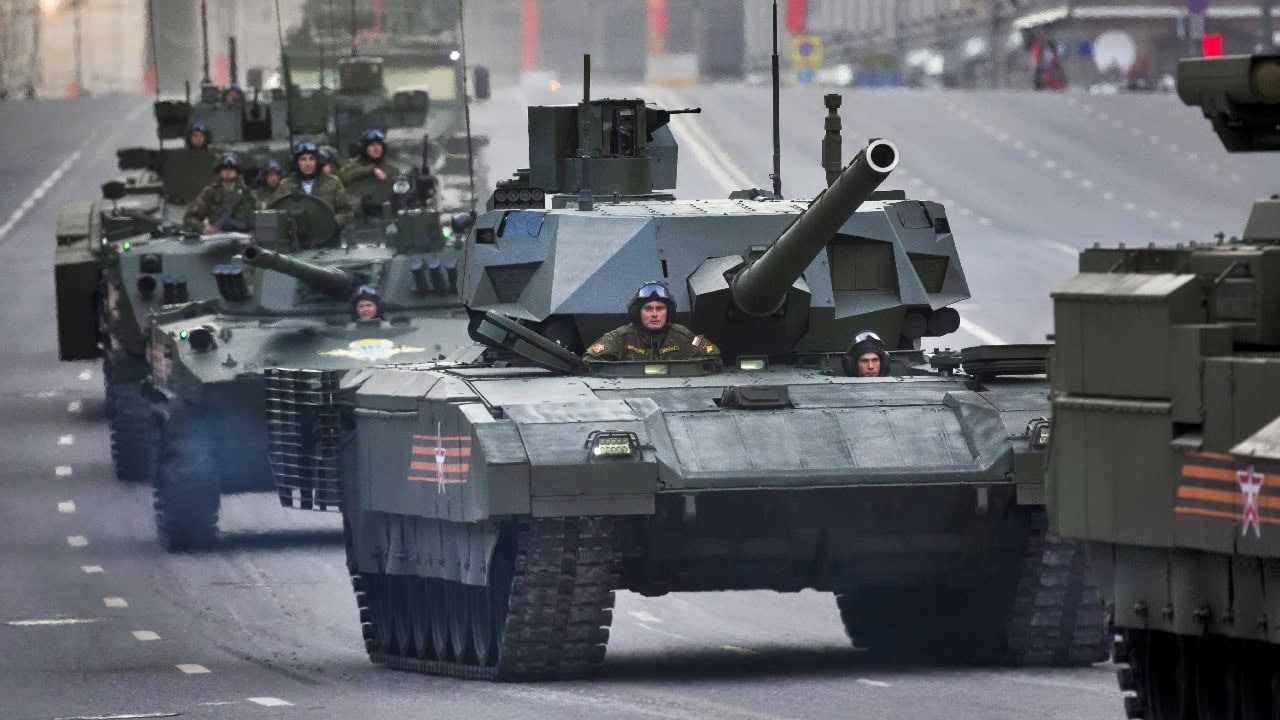
T-14 Armata Tank from Russia. Image Credit: Creative Commons.
On paper, that looks like exactly the war-funding mechanism Putin needed. Western analysts have spent three years trying to break Russia’s financial spine. The Iran crisis handed Moscow a temporary victory. That’s nothing.
But paper is where the good news for Russia ends.
Three Places the Money Disappears
The revenue is real. What it can actually buy is a different story, and that story has three chapters.
First: Ukraine has been hitting the tap. Russian energy infrastructure has been operating under sustained Ukrainian drone and missile pressure throughout the conflict — and not abstractly.
Strikes on refinery capacity at facilities feeding Black Sea export routes have repeatedly forced output reductions and rerouting that costs time and volume. Russia cannot fully monetize elevated oil prices if it cannot fully export elevated volumes. Kyiv has effectively constructed a second sanctions layer through kinetic means, and it’s been more consistently enforced than anything Brussels manages. Higher prices at the wellhead don’t help if the route to the tanker is compromised.
Second: sanctions friction doesn’t dissolve because oil prices rise. The price cap mechanism and secondary sanctions on Russian buyers remain structurally intact. Russia’s shadow fleet — the workaround Moscow spent two years assembling — has finite capacity. India and China, the buyers keeping Russian exports alive, haven’t stopped demanding steep discounts just because Brent jumped.
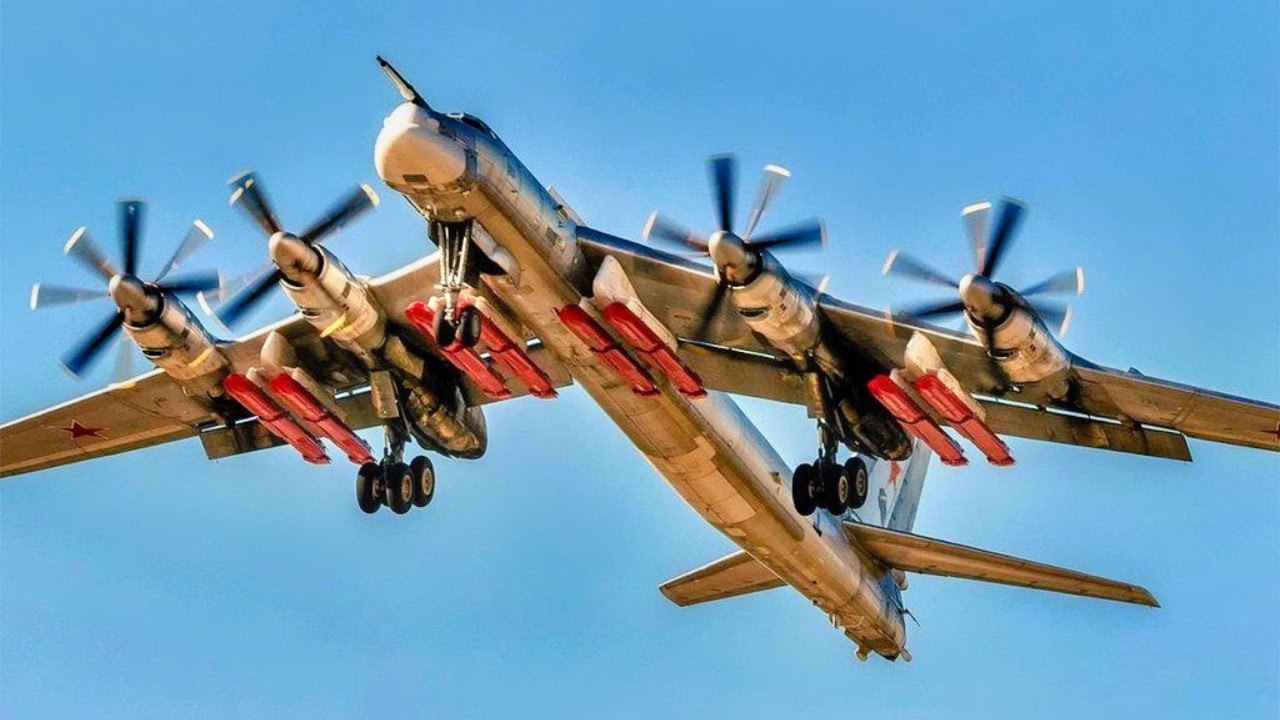
Tu-95 Bomber from Russia. Image Credit: Creative Commons.
And the ruble’s chronic weakness means dollar-denominated revenues take a haircut the moment they’re converted into domestic purchasing power. Think of it as a supply chain problem: revenue at the wellhead doesn’t automatically equal funding at the factory gate. There’s a lot of distance between those two points, and that distance costs money at every step.
Third — and this is the one that matters most for anyone who thinks seriously about industrial warfare — Russia’s defense production bottleneck was never primarily financial. It’s machine tools. It’s microelectronics. It’s skilled labor that the mobilization and emigration waves of 2022 and 2023 pulled out of the manufacturing base and haven’t been replaced.
Artillery shell production, drone components, and any munition requiring precision guidance all face input shortages that a larger ruble balance cannot solve, because the inputs are sanctioned and the workarounds are slow and expensive, regardless of what oil is trading at. Cash doesn’t buy what you can’t legally source. Russia’s procurement officers have known this for two years.
What Russia Actually Got
The windfall is real as fiscal relief. It is not a war-winning capital injection, and conflating the two is how analysts make expensive mistakes.
What Putin actually received from the Iran crisis is political breathing room — domestically, where the economic friction was beginning to generate visible coalition stress, and diplomatically, where the appearance of financial stability matters. Russia got a tourniquet, not a transfusion. It stopped some bleeding. It did not rebuild the patient.

Su-57 Felon Fighter from Russian Air Force.
It did not solve the manpower attrition problem, as Russian units ground through eastern Ukraine. It did not repair the industrial input shortage. It did not accelerate weapons production timelines in any measurable way. It did not crack the sanctions architecture, which remains structurally intact even if temporarily embarrassed by the oil price spike.
The Window That’s Already Closing
Here’s what can’t happen now: Washington cannot look at Russia’s improved fiscal position and conclude that the economic pressure campaign has run its course.
That would be the wrong lesson — and a costly one. Every month that sanctions enforcement loosens, Russia’s shadow fleet gets more sophisticated, its buyer relationships more entrenched, its workarounds more normalized. The adaptation problem is real: what looks like temporary relief has a way of becoming permanent infrastructure if the pressure doesn’t return quickly enough to prevent it.
Shadow fleet enforcement needs to tighten now — not next quarter. Secondary sanctions pressure on Russian oil buyers needs to intensify precisely because Moscow has found temporary relief and will use that relief to harden its evasion architecture. The Iran crisis should accelerate that campaign.
The windfall is real. The gap between Russia’s bank account and its battlefield is also real. The only question is whether Washington moves fast enough to keep it that way.
About the Author: Dr. Andrew Latham
Andrew Latham is a professor of international relations and political theory at Macalester College in Saint Paul, MN. You can follow him on X: @aakatham. He writes a daily column for 19FortyFive.com.