Ukraine’s Ministry of Defense’s Main Directorate of Intelligence, also known by its acronym GUR, recently released information on Russia’s S-71K missile. Their dissection of downed and recovered munitions points to creative wartime innovations on the part of Russia — but also suggests that Russia’s weapons producers are feeling a production squeeze.
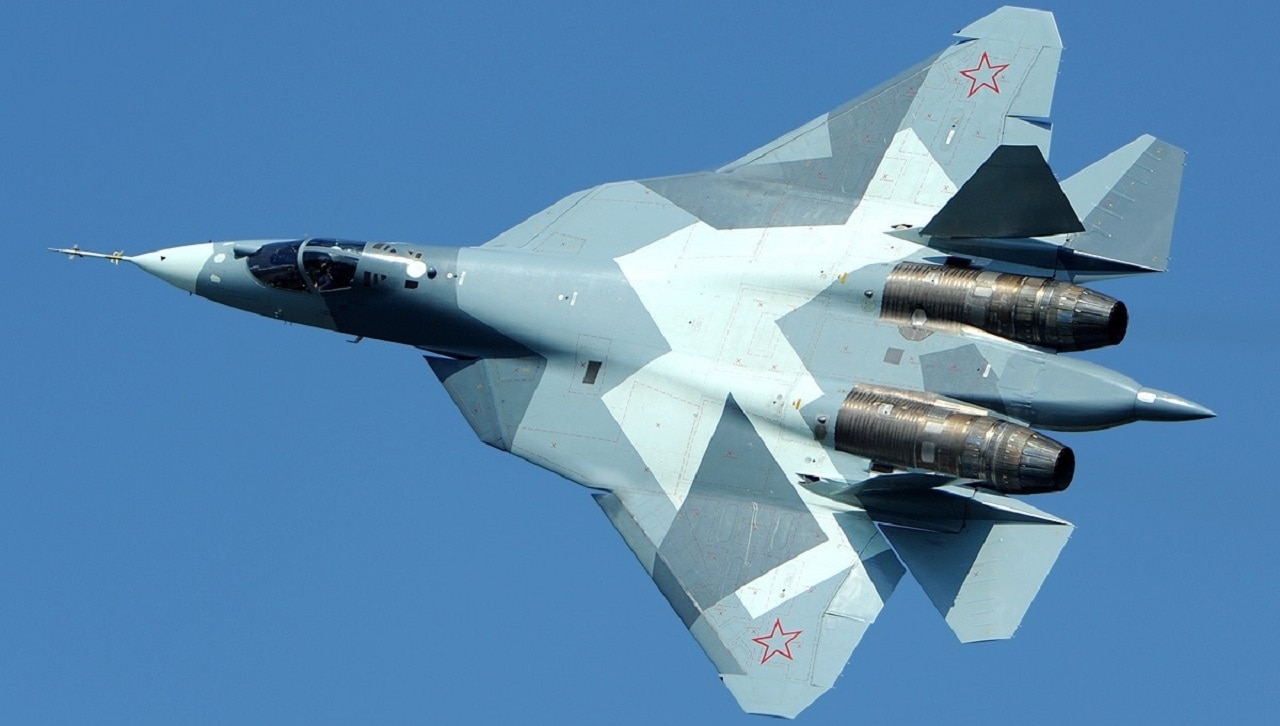
An interactive breakdown of the S-71K released by GUR includes a 3D model with a drop-down menu that explains the components and materials identified in the S-71K design. GUR has released similar information on other Russian platforms in the past, including Russia’s Su-57, a notionally fifth-generation stealth fighter. GUR notes that the S-71K was explicitly designed for operational use with the Su-57.
Recycled Components
A number of components in the S-71K are evidently repurposed from other weapons and platforms.
Photographs of the S-71K show that the missile’s warhead is not a newly-produced explosive, but a repurposed free-fall bomb, a 551-pound OFAB-250-270 high-explosive fragmentation bomb, designed during the Cold War but contained within the S-71K’s potentially lower-observable airframe.
Foreign Parts, Destructive Results
Speaking to The Kyiv Independent, Ukraine’s leading English-language newspaper, Andrii Kharuk, a Ukrainian military historian and defense expert, explained that some components of the S-71K indicate a lack of domestic sourcing options.
“Traditional cruise missiles are expensive,” Kharuk said. Russia builds Kalibr and Kh-101 missiles, which it has fired at Ukrainian targets, both civilian and military. “What we are now seeing is a concept of simpler, cheaper missiles that can be launched in greater numbers.”
The S-71K is made from a variety of components and materials, as are most missiles.
But the extensive use of composites, such as fiberglass, puts the S-71K in a sort of in-between category, essentially bridging the gap between Shahed drones and more typical cruise missiles.
Mass-production has been a crucial component of this war for both sides, and the S-71K is “designed to saturate air defenses,” Kharuk added.
Russia has attempted to wear down Kyiv’s supply of precious air interceptors through massed attacks of Shahed drones, cruise missiles, and other weaponry, part of a larger strategic bid to leave the country defenseless.
The S-71K’s range may be around 300 kilometers, but “the main critical component is the jet engine,” Kharuk explained, pointing to a component bottleneck that may be difficult to surmount in the future. Though the Soviet Union, and today’s Russia, have historically enjoyed aerospace primacy, Russia’s ability to sustain production of miniature turbojet engines, like those that power the S-71K, is questionable.
But, the “vast majority” of the electronic components that go into the S-71K are sourced from outside Russia, and include parts “manufactured in the United States, China, Switzerland, Japan, Germany, Taiwan, and Ireland.”
Sanctions evasion has been a problem since the beginning of Russia’s full-scale invasion of Ukraine in 2022, and remains so today. “Continued access to foreign technologies and components allows the aggressor state to develop new weapons and scale their use in the war against Ukraine.
A GUR assessment of the S-71K places its range at around 300 kilometers (about 185 miles) at Mach 0.6 at an estimated altitude of 27,000 feet.

Su-57 and Su-75 Checkmate Russian Air Force.

Su-57 Felon Fighter from Russian Air Force.
While GUR notes that, in its estimation, the S-71K was intended for use with the Su-57, given both platforms’ clear attempts to reduce radar detectability, Russia has relied on a variety of other aircraft to launch cruise missiles from the air, and GUR does not specify if Su-57s were used for the S-71K’s deployment in Ukraine.
But if the S-71K is produced in large quantities, it would seem likely for Russia to deploy the weapon on other platforms.
Production Squeeze
It is unclear what role the S-71K will play in the future. But thanks to its relatively simple design and the use of existing components, the S-71K is clearly intended for mass production.
Like the American military’s use of JDAM kits to convert free-fall munitions into precision-guided platforms, the S-71K may provide a workaround for the challenges of producing high-tech precision weapons at scale.
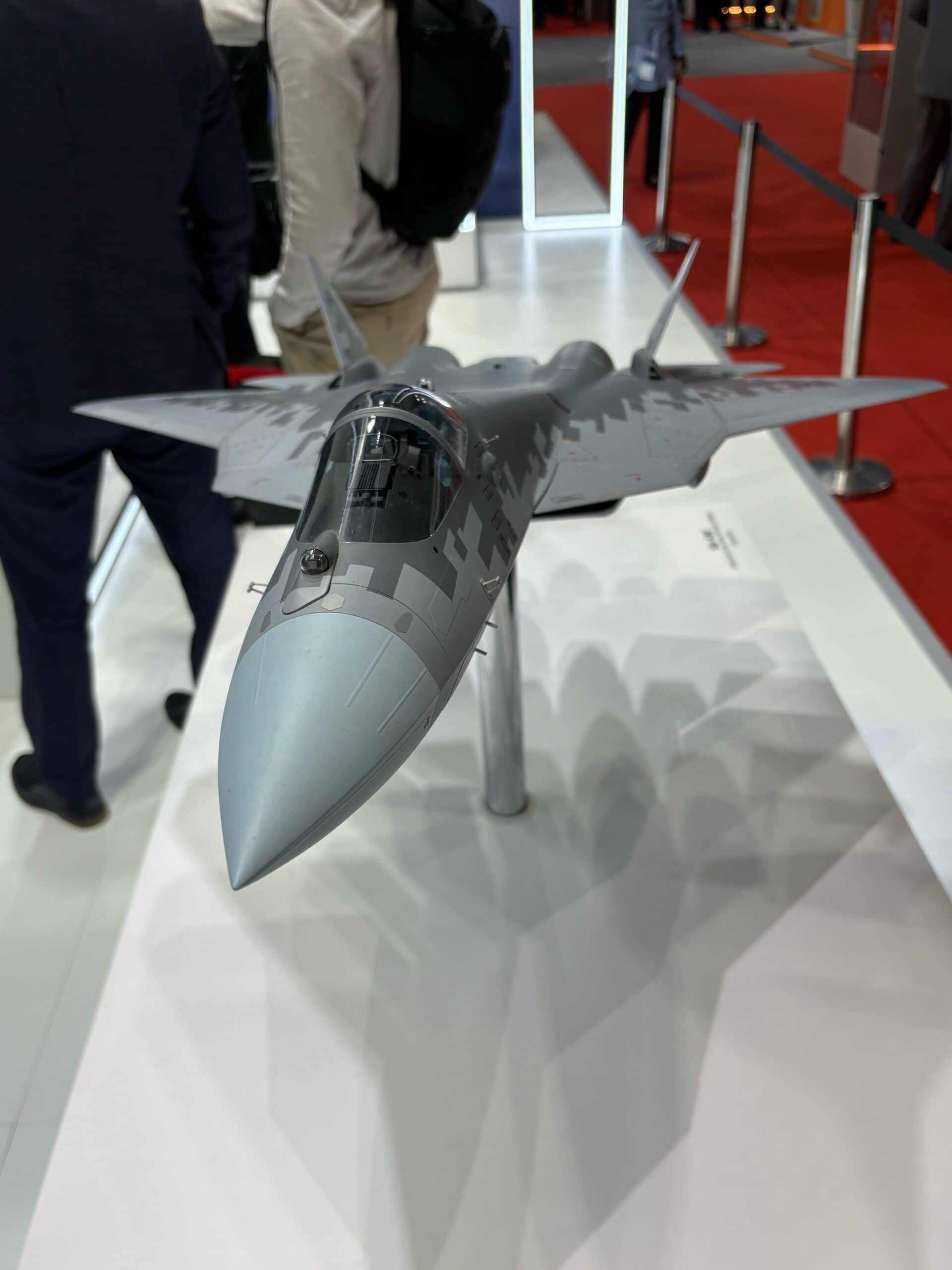
Su-57 Model 19FortyFive Original Photo
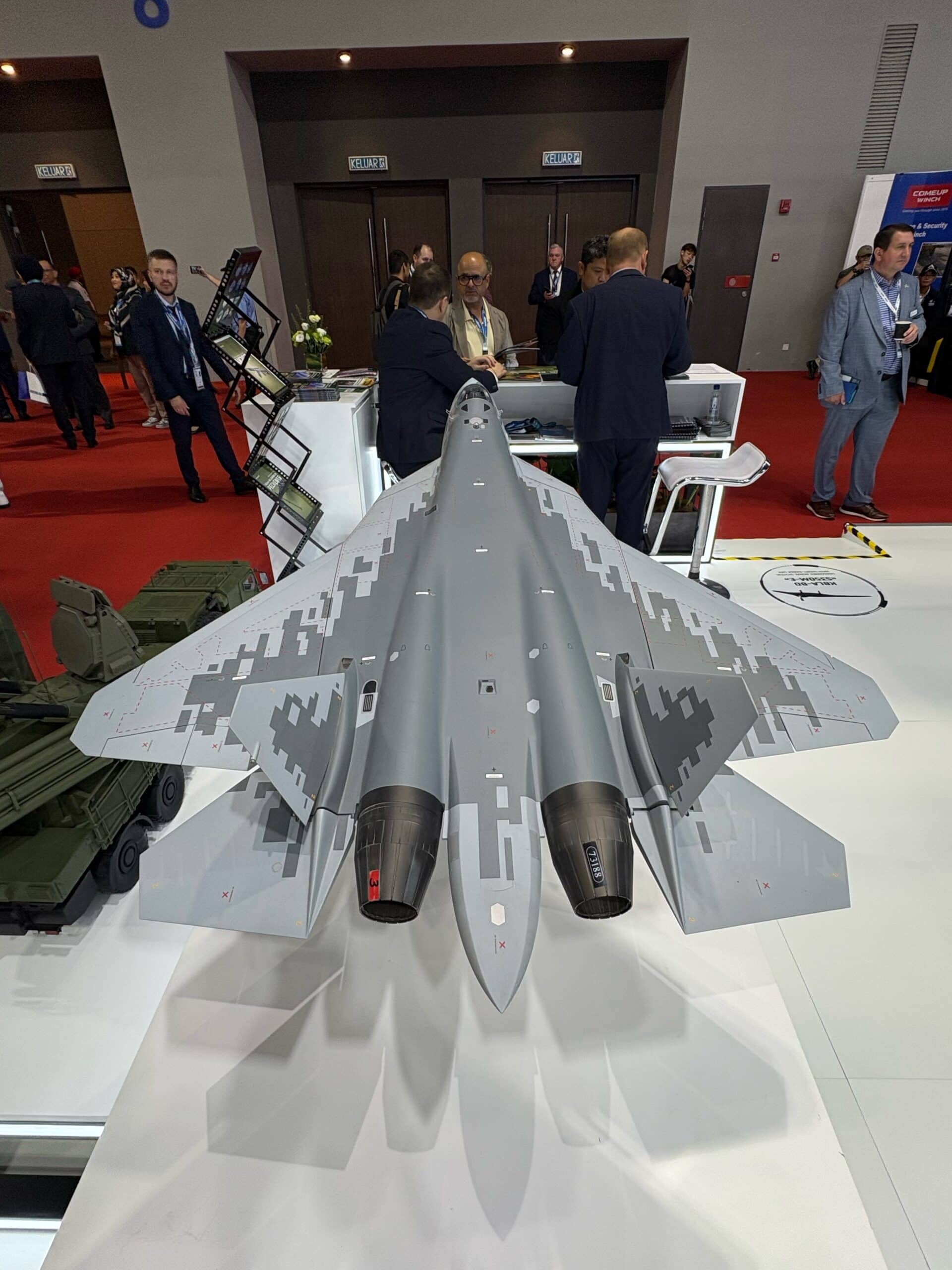
Su-57 Model 19FortyFive Original Photo
Perhaps not a dedicated stealth munition, the S-71K’s incorporation of some radar-defeating features may complicate Ukrainian air defenses at least in the short term, in particular at a time when air defense assets are difficult to come by, given the need for those American-made munitions in the Middle East and in other theaters around the world.
About the Author: Caleb Larson
Caleb Larson is an American multiformat journalist based in Berlin, Germany. His work covers the intersection of conflict and society, focusing on American foreign policy and European security. He has reported from Germany, Russia, and the United States. Most recently, he covered the war in Ukraine, reporting extensively on the war’s shifting battle lines from Donbas and writing on the war’s civilian and humanitarian toll. Previously, he worked as a Defense Reporter for POLITICO Europe. You can follow his latest work on X.