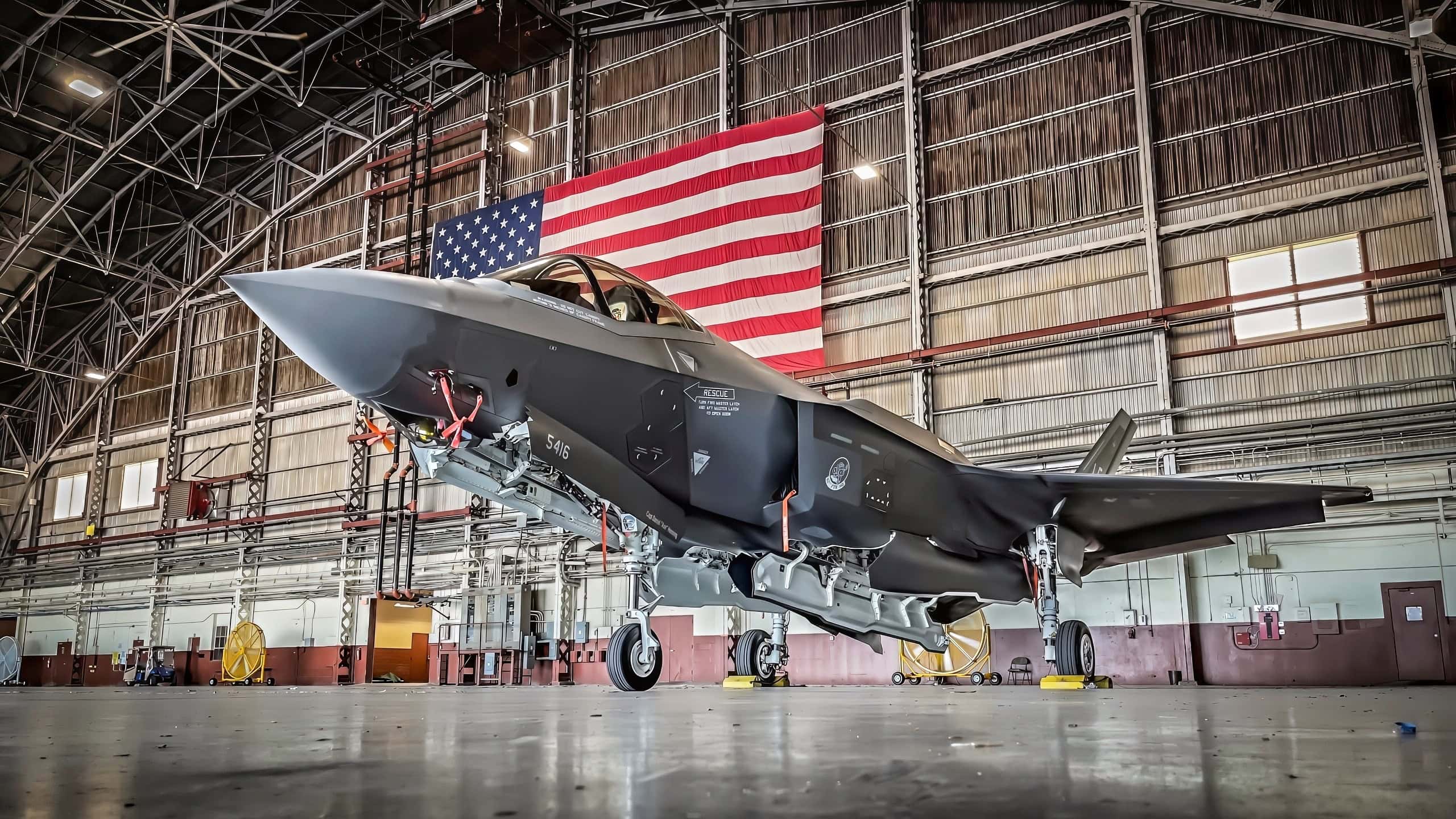
President Donald Trump just submitted the largest defense budget request in American history—a staggering $1.5 trillion that includes a massive expansion of nuclear weapons infrastructure, the new F-47 sixth-generation fighter, and dispersed B-21 Raider stealth bomber bases across America. The signal is unmistakable: the Pentagon is quietly mobilizing for great-power war – as in what looks like World War III – and it’s coming far sooner than most Americans realize.
$1.5 Trillion for a War with Russia or China?
The United States is clearly preparing for a major, great-power war happening soon, as in the next few years. Already, the president with the dubious distinction of having the largest defense budget request in history, President Donald Trump, has put forward a request for an even larger defense budget: an astonishing $1.5 trillion.
Decades of Neglect
This request comes at a time when the United States finds itself locked in a war with the Islamic Republic of Iran that has not gone exactly as was planned (that’s another topic for another essay, though).
With the US militarily engaged in combat operations in the Middle East, locked in a frozen proxy conflict with Russia over Ukraine, periodically attacking various Latin American states, and in a silent cold war with the People’s Republic of China, the demands placed upon the US military are at the highest they’ve been since the Cold War–and the US military is at the nadir of capabilities in the modern era.
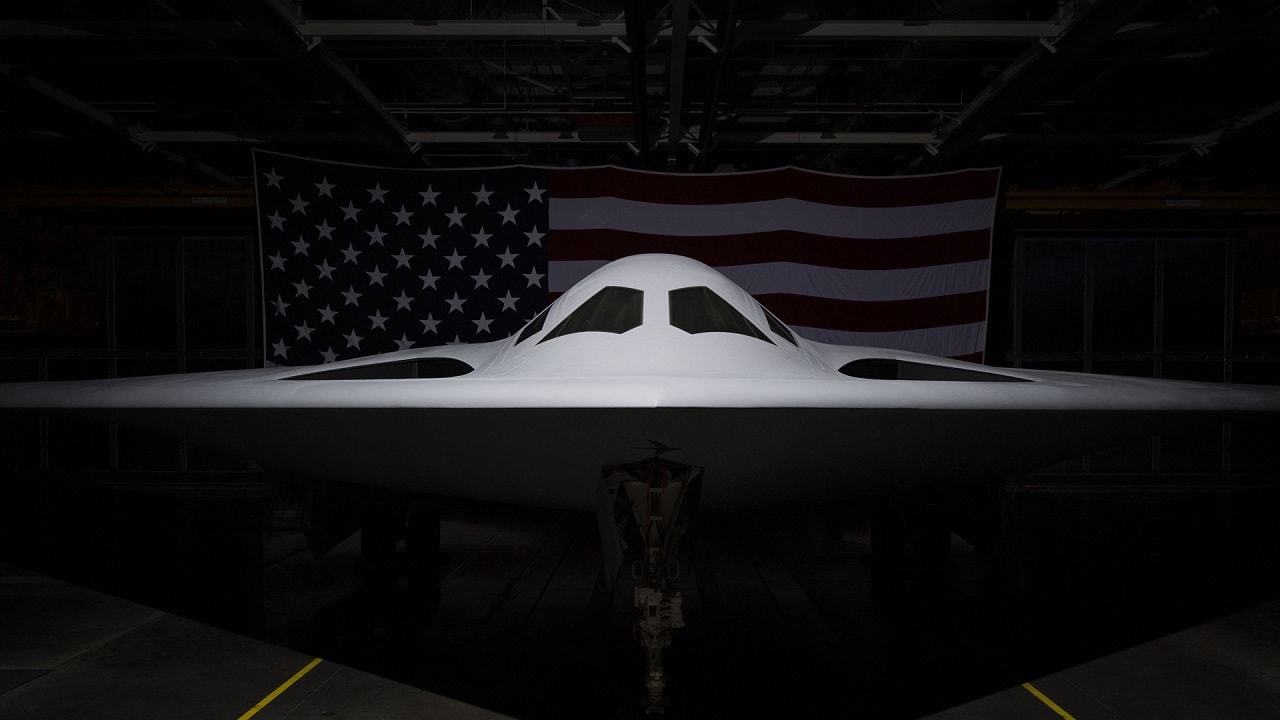
B-21 Raider. Image Credit: U.S. Air Force.
On paper, it makes sense that the Trump administration would be pushing hard for more funds.
Of course, the Pentagon gave little thought as to whether those increased funds would make the kind of difference that the Trump administration thinks they will. After all, the US military remains the most lavishly funded fighting force in the world. Yet its capabilities continue to decline year over year. Something doesn’t add up.
One of the most interesting aspects of the request, though, is a construction surge. The Pentagon, notably the Department of the Air Force, is requesting an increase from $13 billion to $26.7 billion for its construction program. The key driver for this request is the need to update their infrastructure rapidly. Notably, there’s about $55 billion in deferred maintenance across the Air Force (up from $30 billion in 2022).
In other words, since the end of the Cold War, the Air Force has prioritized exquisite platforms, such as missiles and jets, over critical military infrastructure. Now the bill has come due. And it’s coming due at the moment when a great power war seems to be at hand.
The F-47 Fighter is Forcing a Radical Overhaul in US Air Force Spending
The F-47, a sixth-generation warplane, is the root cause of these radical infrastructure changes. Since the first flight target for the F-47 is 2028, Nellis Air Force Base requires around $730 million for upgraded facilities to maintain the Next-Generation Air Dominance (NGAD) program. Nellis needs stealth repair facilities, advanced simulators for pilot training, weapons storage, and a massive “apron complex” (which will cost the Air Force around $192 million).
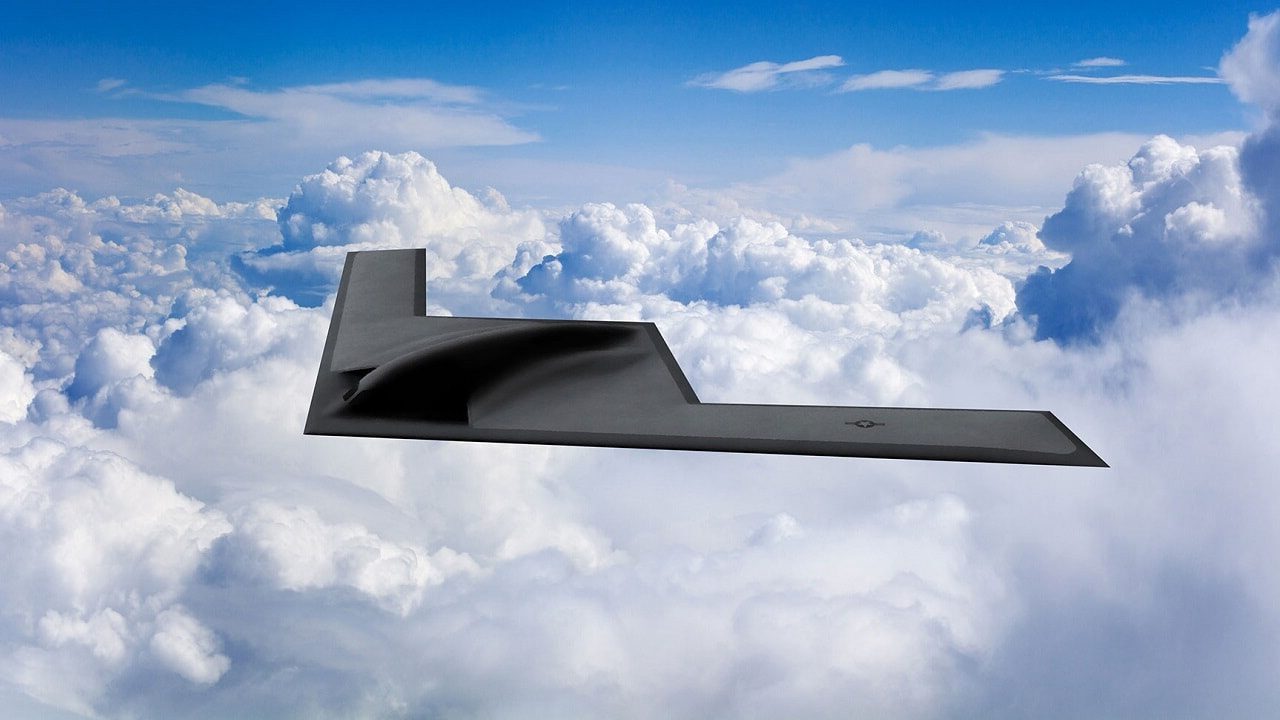
B-21 Raider Stealth Bomber. Image Credit: Creative Commons.
Nellis is a key facility because it sits next to the Nevada Test and Training Range, which is the largest training battlespace in the so-called “Free World.” By placing their systems at Nellis, the Air Force is effectively shifting testing and operational integration for next-generation systems, like the F-47, away from the iconic Edwards Air Force Base. But Nellis cannot support the F-47s in their current condition.
The B-21 Raider and the Rise of Dispersed Nuclear Bases in America
Meanwhile, the Air Force must have the infrastructure to support the new B-21 Raider long-range stealth bomber. To meet these needs, the USAF is expanding critical infrastructure at Ellsworth Air Force Base, Whiteman Air Force Base, and Dyess Air Force Base. Whiteman is where the soon-to-be-retired B-2 Spirit long-range stealth bombers are based, and Dyess is where the legendary B-1 Lancer long-range bombers are located. The B-21 will supposedly replace both the B-1s and B-2s in their respective bases over time.
At all three of these facilities, the Air Force must install new stealth maintenance hubs and training systems. Interestingly, the decision to ramp up infrastructure for the new B-21s at three bases indicates a real doctrinal shift for the air service. Clearly, the USAF is hardening and dispersing its nuclear-capable bomber force.
That’s unsurprising, considering how the Ukrainians (with the help of the US) demonstrated last year the way in which cheap drone swarms deployed from civilian semitrucks can wreak havoc on nuclear-capable bombers sitting parked at Russian airbases deep within Russia.
What’s more, the Americans themselves proved that nuclear weapons facilities are not protected when B-2 Spirit bombers damaged Iran’s suspected nuclear weapons facilities last year during the 12-Day War. Lastly, the advent of hypersonic weapons ensures that not even US facilities deep within the continental US are immune to precision strike.
Dispersing America’s nuclear bomber capabilities is the smartest move under these conditions (especially since the US lacks reliable counter-drone and anti-hypersonic weapons defenses).
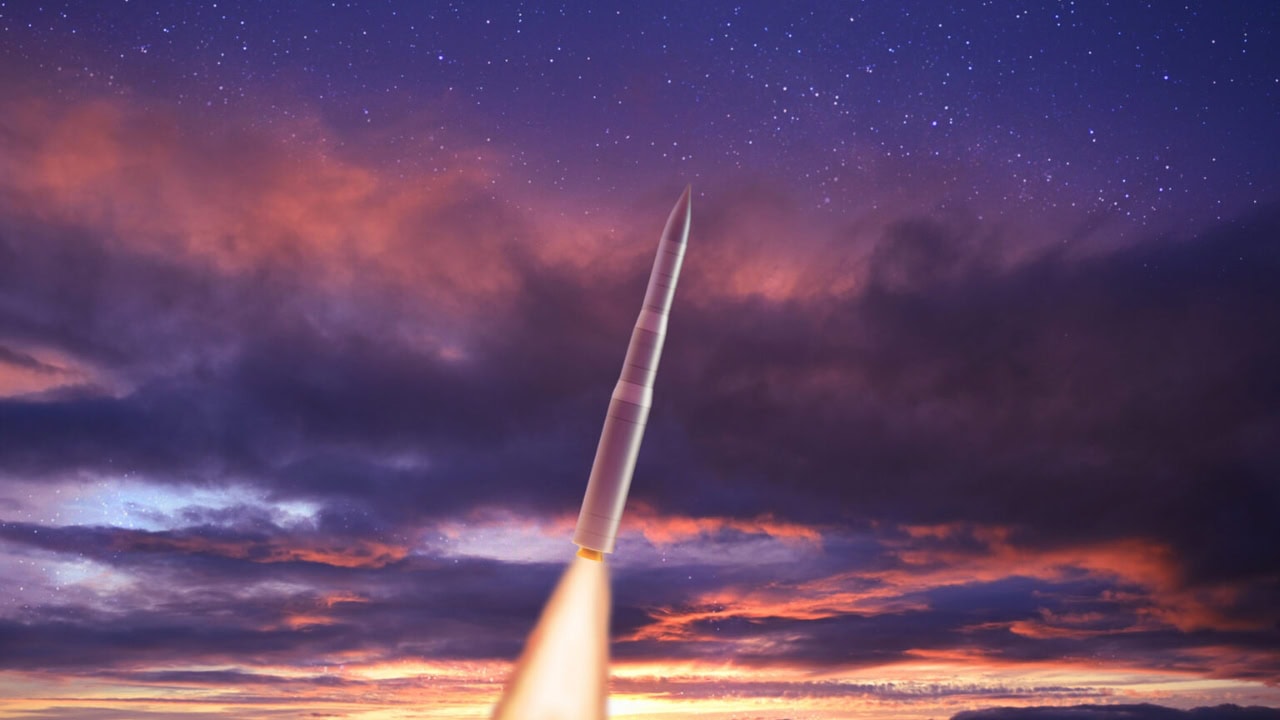
Sentinel ICBM U.S. Air Force
Space is Now a Warfighting Domain
Anyway, the United States Space Force, which falls under the Department of the Air Force, is seeing significant increases in spending for new operations centers across multiple bases. For instance, these spending jumps are going from $570 million to a staggering $1.8 billion. In fact, the Air Force is spending $700 million on the famous Redstone Arsenal in Alabama, which many believe will soon become the new Space Command Headquarters.
These massive spending increases could not come soon enough, as space is no longer just a support domain for the other terrestrial strategic domains (land, sea, air, and even cyber). Space is itself a warfighting domain. Space Force needs newer facilities that can better control satellites, missile-warning systems, space-based intelligence, surveillance, and reconnaissance (ISR), and potential future counterspace operations (missions in which Space Force targets satellites and other space systems belonging to rival states in orbit).
The Sentinel ICBM: The Most Complex Nuclear Build in US History
Most importantly, the Air Force is engaging what amounts to a monster buildup of the new Sentinel intercontinental ballistic missile (ICBM) program. This new nuclear weapons project requires a staggering 450 new missile silos, a significant increase in new command-and-control infrastructure, and hundreds of miles of buried cabling.
For Fiscal Year 2027, the Air Force wants $632 million allocated to F.E. Warren Air Force Base, $232 million for Minot Air Force Base, and another $138.5 million for Malmstrom Air Force Base.
China & Russia are Driving America’s Nuclear Awakening
The increases in spending–and the advances with the Sentinel missile itself–are the reaction to years of ignoring the importance of nuclear weapons. Today, the Russian Federation possesses both the largest and most advanced (notably in non-strategic nuclear weapons) nuclear weapons arsenal in the world.
The US is the second-largest and most advanced nuclear force in the world. But even China is today challenging America’s status as the second-largest, most advanced nuclear weapons arsenal in the world. In fact, Beijing’s nuclear forces have been on an incredible nuclear weapons buildup in the last five years alone (that’s not to mention the overflight of key US nuclear weapons silos by that infernal surveillance balloon sent by China in 2022).
Sadly, the US has allowed its nuclear weapons capability to wither on the vine for far too long–so long that even this increase in spending might be insufficient, especially considering that there are drastic delays in the Sentinel program. Nevertheless, the Air Force is leading the way in preparing for what is clear: the advent of a third world war far sooner than most civilians realize.
Housing, Morale, and the Reality of Long Wars
And the Air Force isn’t only expanding its bases, support infrastructure, and nuclear missile silos. The new Air Force budget includes a massive $1.3 billion increase for housing. That’s a significant expansion of funding for on-base housing that has been a long time coming.
After all, for decades, the living facilities on most bases have deteriorated. By increasing spending on the Air Force’s deteriorating living facilities to such a high level, the Air Force hopes to retain personnel in a tight labor market, better support long-duration deployments, and ensure its force is better sustained under stress.
In a prolonged struggle, personnel endurance becomes decisive.
So, this budget unveils some uncomfortable truths: the US military has let its infrastructure rot since the end of the Cold War. Now it’s trying to fix all that rot at once–during a period of rising global warfare. The advent of next-generation platforms, such as the F-47, the B-21, and the Sentinel ICBM, is forcing urgency in the Air Force. In other words, what you’re witnessing is a quiet mobilization toward a truly global, great power conflict.
These moves are all prewar positioning on a scale not seen since the 1940s. It’s also an attempt by the Pentagon to activate America’s otherwise sclerotic industrial base. What’s more, these changes include strategic dispersal of forces.
What you’re witnessing is the physical manifestation of the US Armed Forces realizing they are wholly unprepared for sustained, high-intensity conflict. In such a conflict, US bases will suffer, logistics will break down, and survivability will matter more than ever. Judging from how strained America’s stockpiles of key weapons systems have been in both the Ukraine and Iran Wars, the new budget is the Pentagon’s way of admitting they are unprepared for the great power conflict that is clearly upon us.
A Quiet Mobilization for Great Power Conflict
Sadly, time is not on America’s side. Nor is there any evidence that the broken defense industrial base will rise to the occasion, as the Pentagon clearly believes that splurging $1.5 trillion will. Rather than racing toward WWIII, a better solution would be for the US to disengage from these multiple combat fronts, reprioritize its own hemisphere, and restore its industrial capacity over the next decade, insulating itself from the ravages of Eurasia during that time, and only contemplating reengaging Eurasia militarily once it has more fully modernized itself and stabilized its society.
That is unlikely to happen, given the way the Trump administration is calling for rapid, increased defense spending at levels never seen before. Americans can only hope that the new defense budget request doesn’t end up breaking the US economically the way that the bloated defense budgets of the old Soviet Union ultimately spurred the USSR’s collapse in the 1980s.
About the Author: Brandon J. Weichert
Brandon J. Weichert is the Senior National Security Editor at 19FortyFive.com. Recently, Weichert became the editor of the “NatSec Guy” section at Emerald. TV. He was previously the senior national security editor at The National Interest. Weichert hosts The National Security Hour on iHeartRadio, where he discusses national security policy every Wednesday at 8 pm Eastern. He hosts a companion show on Rumble entitled “National Security Talk.” Weichert consults regularly with various government institutions and private organizations on geopolitical issues. His writings have appeared in numerous publications, among them Popular Mechanics, National Review, MSN, and The American Spectator. And his books include Winning Space: How America Remains a Superpower, Biohacked: China’s Race to Control Life, and The Shadow War: Iran’s Quest for Supremacy. Weichert’s newest book, A Disaster of Our Own Making: How the West Lost Ukraine, is available for purchase at any bookstore. Follow him via Twitter/X @WeTheBrandon.