

Benjamin Franklin said it best: “Money has never made man happy, nor will it, there is nothing in its nature to produce happiness.” The face on the U.S. $100 bill—diplomat, inventor, statesman, and one of America’s Founding Fathers—believed that wealth fails to generate true contentment because it stimulates greed instead of fulfillment.
Monday Wealth Quote of the Day by Benjamin Franklin
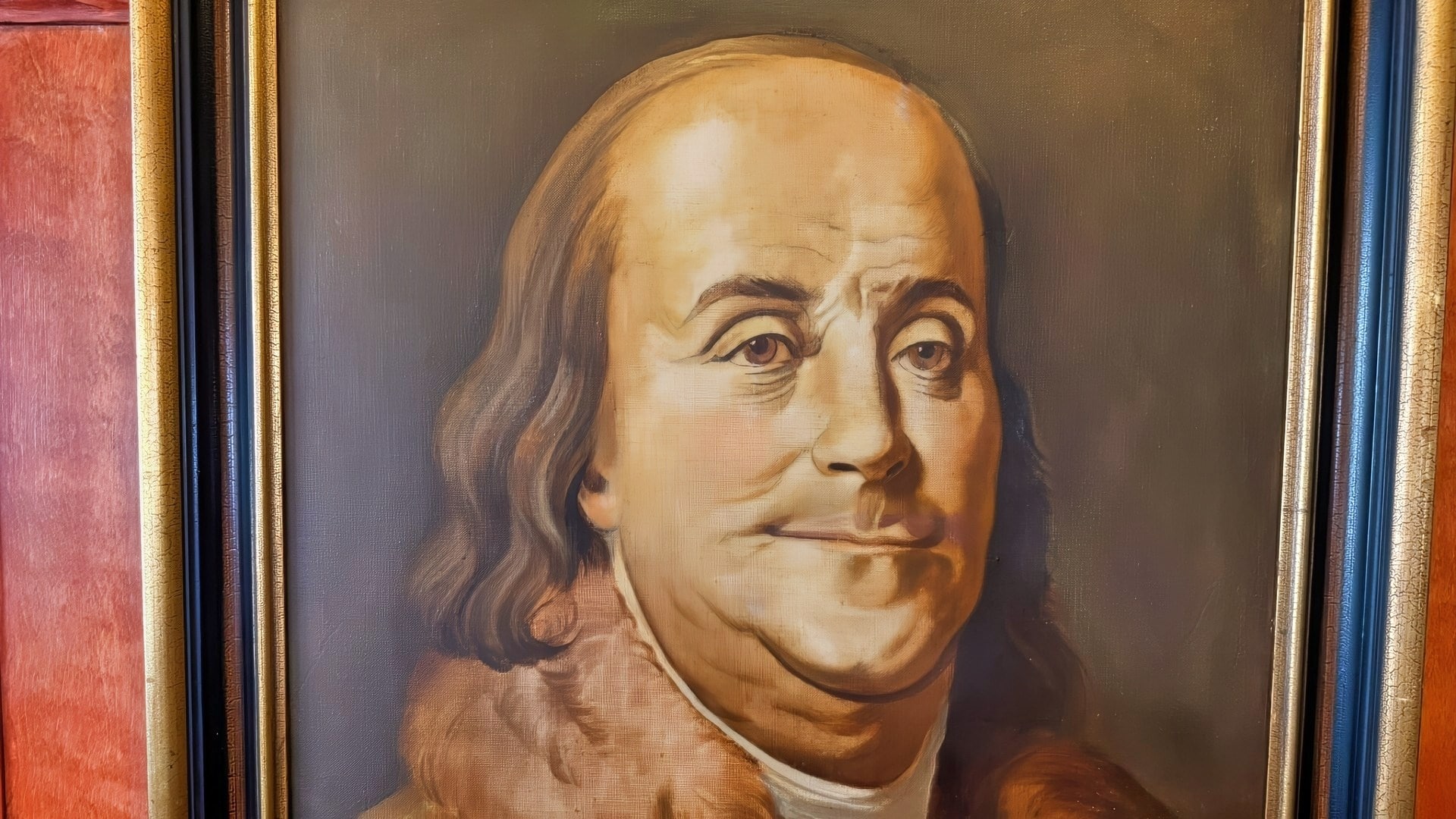
Benjamin Franklin 19FortyFive Image. Taken by Harry J. Kazianis at the Hall of Presidents at Walt Disney World, Florida.
“Money Has Never Made Man Happy, Nor Will It,…” — Benjamin Franklin
This is another one of my favorite quotes attributed to Benjamin Franklin. The quote in its entirety is “Money has never made man happy, nor will it, there is nothing in its nature to produce happiness.”
Franklin was one of the most influential of the United States’ Founding Fathers, as a diplomat, inventor, and statesman. And despite being the face on the US Treasury’s $100 bill, he believed that money cannot produce happiness because it creates an endless desire for more, rather than filling a void.
Franklin argued that wealth fails to generate true contentment because, by its nature, it stimulates greed instead of fulfillment.
Meaning Of the Quote
Franklin’s quote, “Money never made a man happy yet, nor will it. There is nothing in its nature to produce happiness,” means that wealth, in and of itself, is an insatiable, fleeting pursuit rather than a source of genuine contentment.
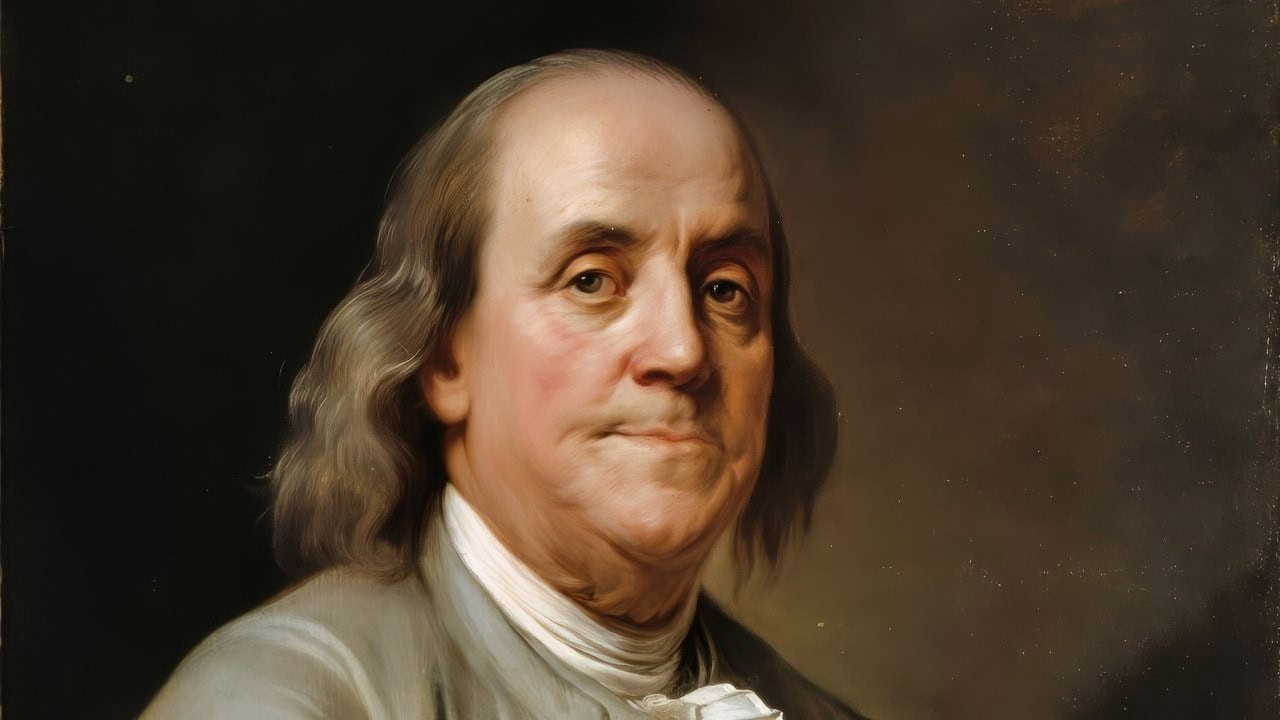
Benjamin Franklin. Image Credit: Creative Commons.
He believed that accumulating money often increases greed rather than filling a “vacuum” of satisfaction.
Franklin Knew Being Poor And Wealthy
In Frankin’s life he experienced both the issues with being poor and the excesses of the wealthy. And he saw that the endless desire for more wealth only served to deepen the desire for more rather than the fulfillment of attaining wealth.
Instead, he believed that virtue, not wealth or social status, was a stable foundation for true happiness.
Indeed, it was Franklin’s scientific discoveries, diplomatic triumphs, and unwavering commitment to civic virtue that defined his legacy, not his wealth or social status. He charmed French society by wearing a simple marten-fur cap and simple clothing instead of the fashionable wigs of the day, which was seen as charmingly rustic and unpretentious.
Instead, Parisians were taken in by his sharp wit and charisma. He knew that money could do a lot of good, but he also warned that small, habitual expenses (dainties, fine clothes) lead to poverty: “Many a little makes a mickle”.
Some of his quotes on wealth and money were posted in Poor Richard’s Almanac.
“If you know how to spend less than you get, you have the philosopher’s stone.”
“He that is rich need not live sparingly, and he that can live sparingly need not be rich.”
“Creditors have better memories than debtors.”
“Buy what thou hast no need of, and e’er long thou shalt sell thy necessaries.”
‘Keep thy shop, and thy shop will keep thee.”
“Beware of little expenses: a small leak will sink a great ship.”
Franklin’s Early Life
Franklin was born in Boston in 1706 and was apprenticed to his brother, a printer, at age 12. In 1729, Franklin became the colony of Pennsylvania’s official printer of currency.
He began publishing Poor Richard’s Almanac and the Pennsylvania Gazette, one of the colonies’ first and best newspapers. By 1748, Franklin had become more interested in inventions and science than publishing.
He spent time in London representing Pennsylvania in its dispute with England, and later in France. He returned to America in March 1775, with war on the horizon.
He served on the Second Continental Congress and helped draft the Declaration of Independence.
Franklin Advocated For the 13 Colonies In London
Prior to the Revolution and during the French and Indian War, Franklin was sent to London to argue about the heavy taxes that Parliament was levying on the colonies, especially the Stamp Act.
Parliament was turning a deaf ear toward Franklin and the colonies in America, even as he tried to argue that the small colonies contributed as much manpower to the war, about 25,000 troops as the British Army did.

George Washington Portrait. Image Credit: Creative Commons.
However, unlike his reception in France later, he was not popular in London, and was generally ridiculed there.
America’s First Ambassador
During the Revolutionary War, Benjamin Franklin was a key member of the Founding Fathers, serving as a diplomat in France to secure vital military and financial aid.
Franklin helped draft the Declaration of Independence and was a key member of the Committee of Five with John Adams, Roger Sherman, Robert Livingston, and the document’s primary author, Thomas Jefferson, who reviewed and edited Jefferson’s initial draft.
He famously changed “sacred and undeniable” to “self-evident” to ground rights in reason, and he was also one of the few Founding Fathers to sign the Declaration of Independence, the Treaty of Paris, and the Constitution. He helped shape the document’s language, removing controversial passages.
Franklin Convinced France To Support American Independence:
Franklin was a delegate to the Continental Congress and helped organize defenses and militia during the French and Indian War, where the first inkling of independence was born out of necessity, embodying the spirit of the Enlightenment and New World ideals.
In 1754, he used his press to circulate the famous “Join or Die” cartoon in an attempt to rally the colonies against the French. While at the congress, Franklin proposed the Albany Plan, which failed at the time but later inspired the Articles of Confederation and the unification of the colonies.
Franklin was the US’s diplomat in France (1776-1785). Appointed as America’s representative. Franklin’s popularity and skill charmed French society, becoming a popular figure for the Americans in Europe.
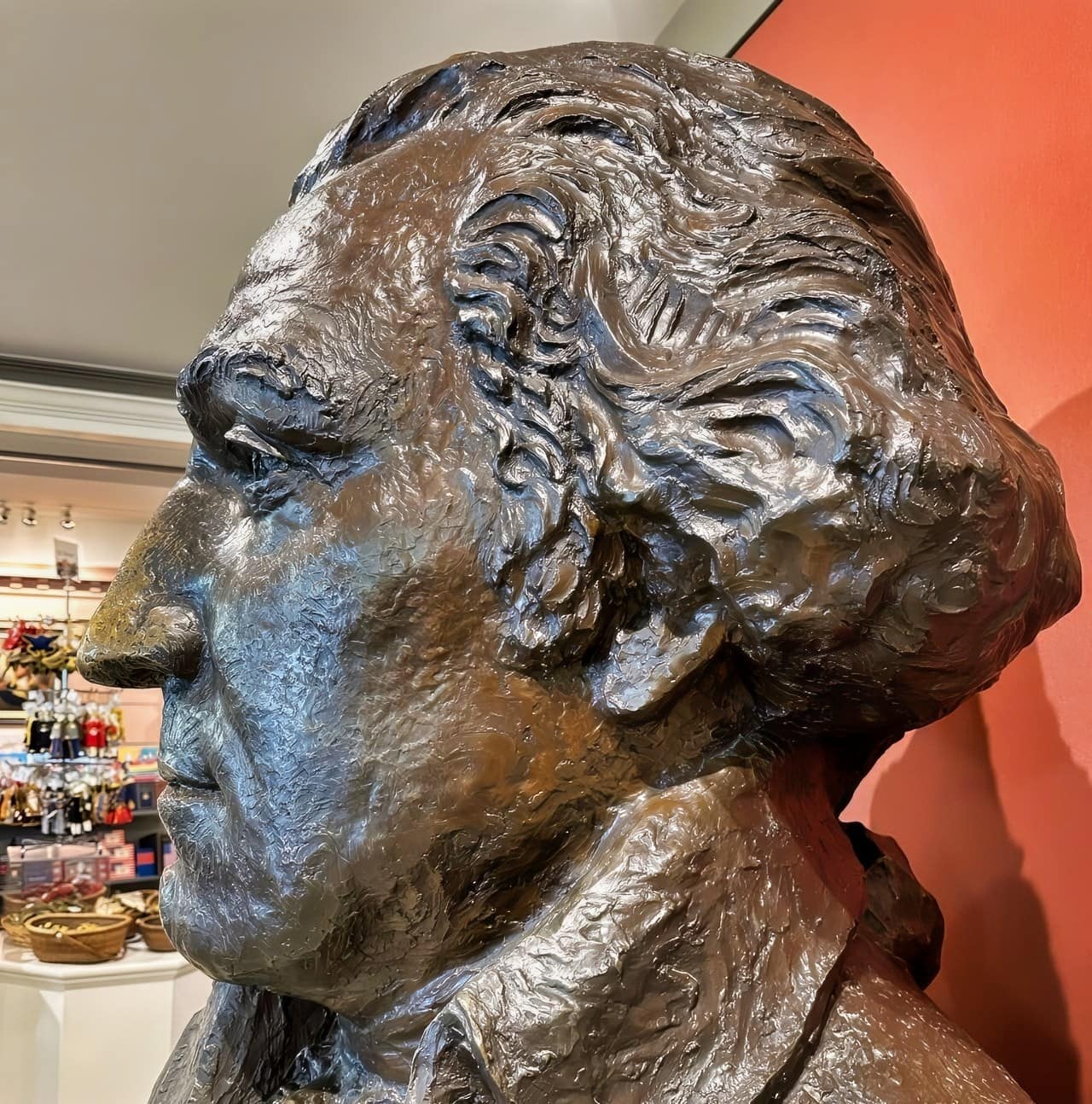
George Washington Bust at Mount Vernon. Image taken by Harry J. Kazianis for 19FortyFive back in 2022.
His persuasive diplomacy and international renown after the first American battlefield success at Saratoga convinced France to recognize American independence and conclude an alliance with the thirteen American states in 1778.
He died and was buried in Philadelphia in 1790.
Despite his upbringing, he was successful in life, but he never forgot his struggles. And his belief system was evident in his writings, in which he sought balance, moderation, and inner well-being, valuing virtue over money. It is why so many of his quotes remain valuable today.
About the Author: Steve Balestrieri
Steve Balestrieri is a National Security Columnist. He served as a US Army Special Forces NCO and Warrant Officer. In addition to writing on defense, he covers the NFL for PatsFans.com and is a member of the Pro Football Writers of America (PFWA). His work was regularly featured in many military publications.